
Sony's Alpha Strike: Designing the A700
With the launch of Sony's new Alpha A700, they aim to raise their stake in the DSLR market to 10%. To find out the impact of this newcomer, we interviewed Mr. Keiichi Ishizuka, Sony's Deputy Senior GM of the digital imaging group to share with us more design and feature highlights of the A700 and their roll out strategy.
Introduction
We were privileged to have been able to catch-up with Mr. Keiichi Ishizuka who is Deputy Senior General Manager - AMC (Alpha Mount Camera) Division, Digital Imaging Business Group of Sony Corporation. Previously from Konica Minolta, he has been with Sony since May 2006 and has been working with cameras since 1978. Over the last 10 years, he has specialized in designing interchangeable lenses. In fact, he was one of the few involved in developing the Dynax 7000 for Minolta, the world's first autofocus camera. A man of vast experience in this field, we were most interested in getting his thoughts about Sony's Alpha lineup and finding out more about the new A700 DSLR.
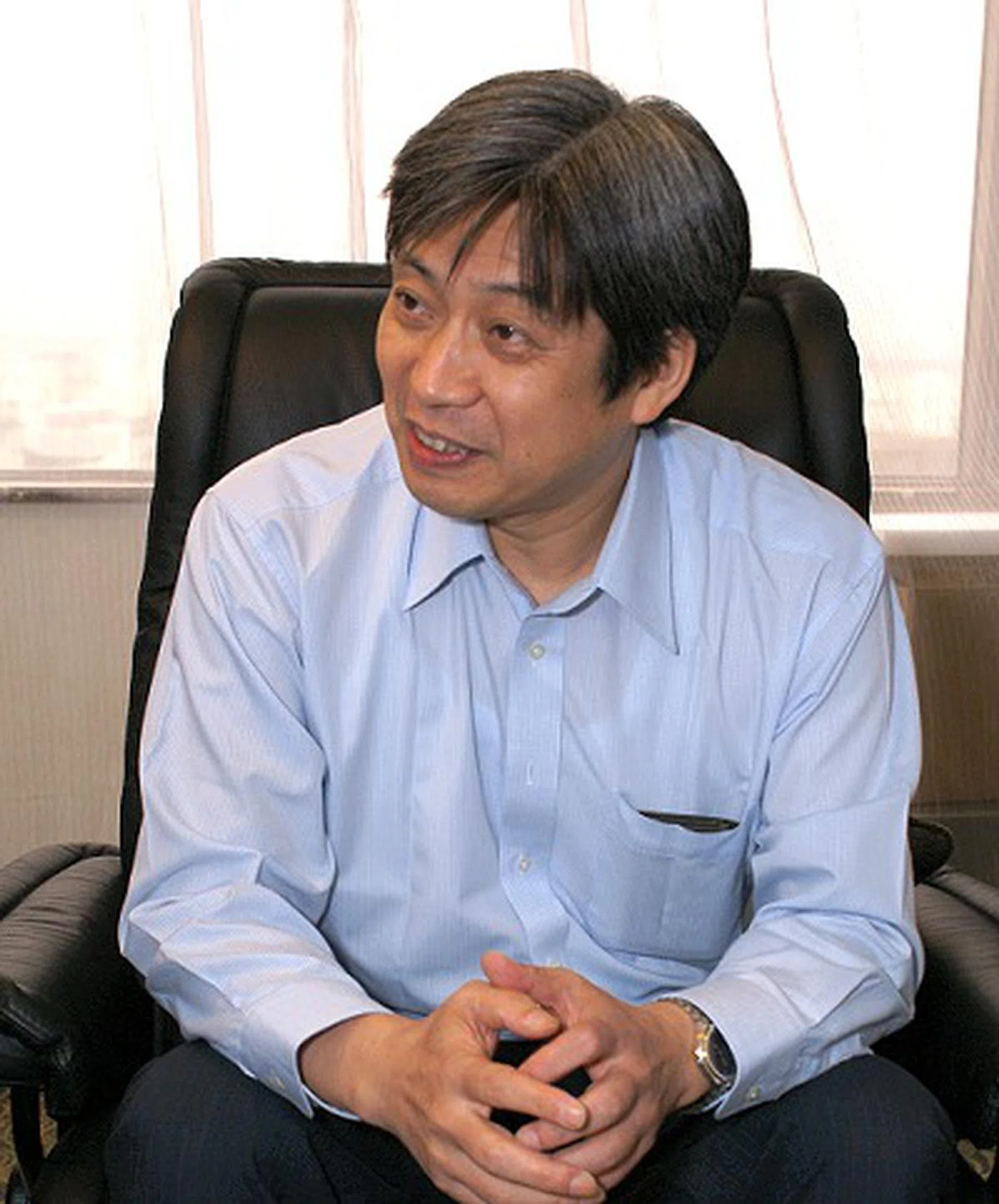
Mr. Keiichi Ishizuka, Deputy Senior GM of Sony's AMC Division shared his insights and features of the Sony Alpha A700 DSLR.
HWZ: Having inherited the Konica Minolta legacy, where do you see the Alpha line moving towards?
Mr. Keiichi Ishizuka: Konica Minolta cameras number around 16 million pieces in the market right now and this is its legacy. We also have an excess of interchangeable lenses in the market and so many customers that have accepted Konica Minolta. So based on this established technology and reputation we put Sony's strengths and electronics inside the camera body and try and maintain the current strengths of the system. This is our strategy.
HWZ: Can the Alpha put up a strong fight when pitted against other brands?
Ishizuka: Firstly, we aim to bring new products and a level of satisfaction to customers who own our cameras. Secondly, we bring new technology that only Sony can provide. We develop the image sensor and engine and the LCD panel. We are the only manufacturer that can devise technology for the entire device. We also have collaboration with Carl Zeiss for our lenses.
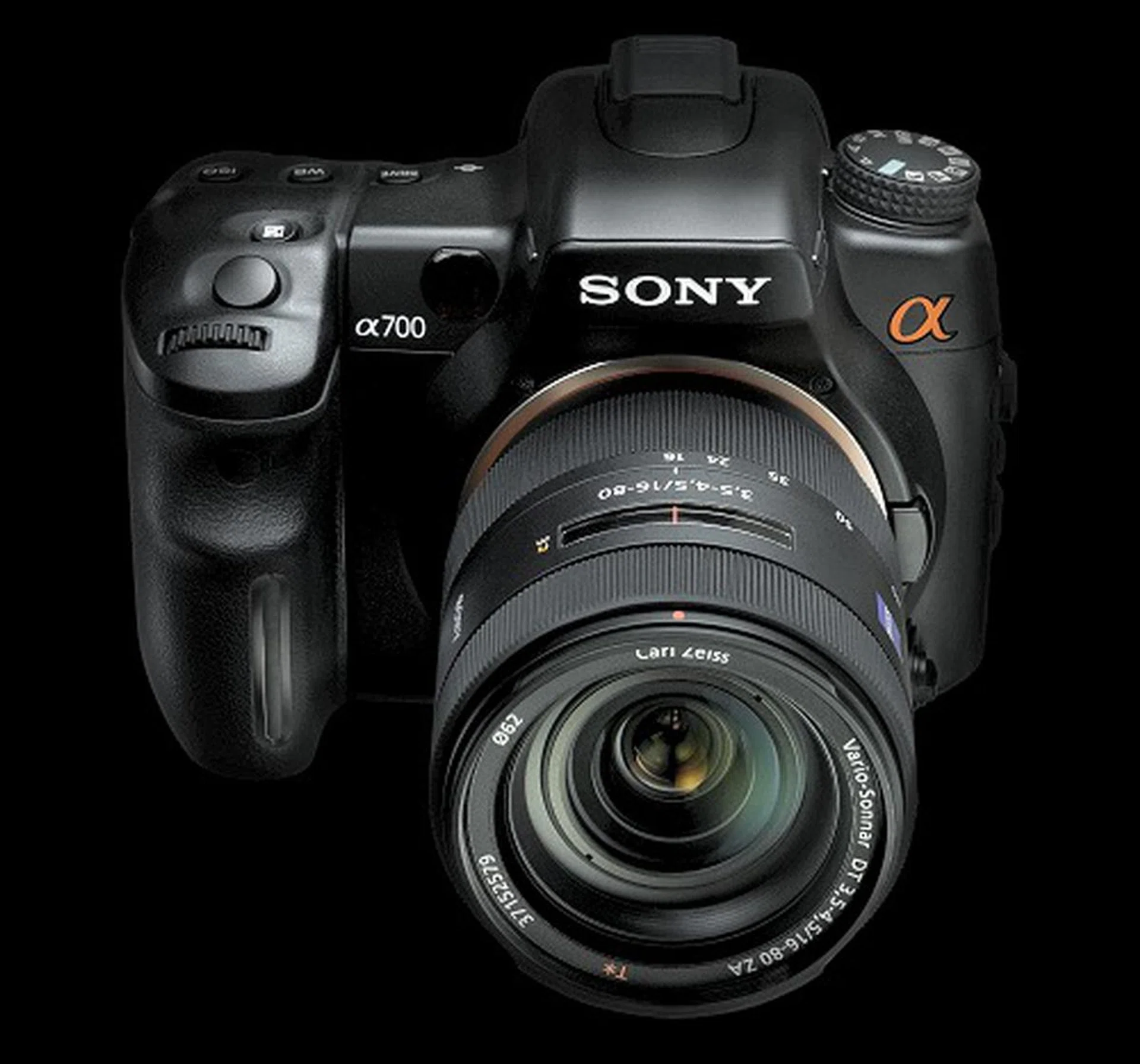
On the Alpha A700's Features and Design Considerations
HWZ: If you could highlight one strong feature of the A700, what would it be and why?
Ishizuka: The number one feature in the A700 is its picture quality. We have developed a new EXMOR CMOS image sensor with a resolution of 12.24MP. The main feature of this sensor is its low noise technology. We've implemented the A/D converter inside the sensor which makes this a very fast sensor. We have dramatically reduced noise, especially in the high ISO range. In addition, we've also developed a new BIONZ image processor which reproduces high quality pictures in high speed. Based on these two technologies, we've realized high quality with low noise. This is the number one feature on the A700.
The next thing we took into consideration is the enjoyment of a picture after it has been taken by the camera. In this field, we have strength and uniqueness because we have experience in our product lineup with the Bravia and VAIO. This product has a new feature called Photo TV HD. The A700 also has a built in HDMI terminal so we can connect the camera to the TV directly. The camera and our TV will synchronize to reproduce the best quality of still image. This is the new trend; Showing large images on a high-definition TV.
Our BIONZ processor has also been newly developed with a new engine for this camera. We've developed new features to meet the requirements of the new EXMOR CMOS sensor.
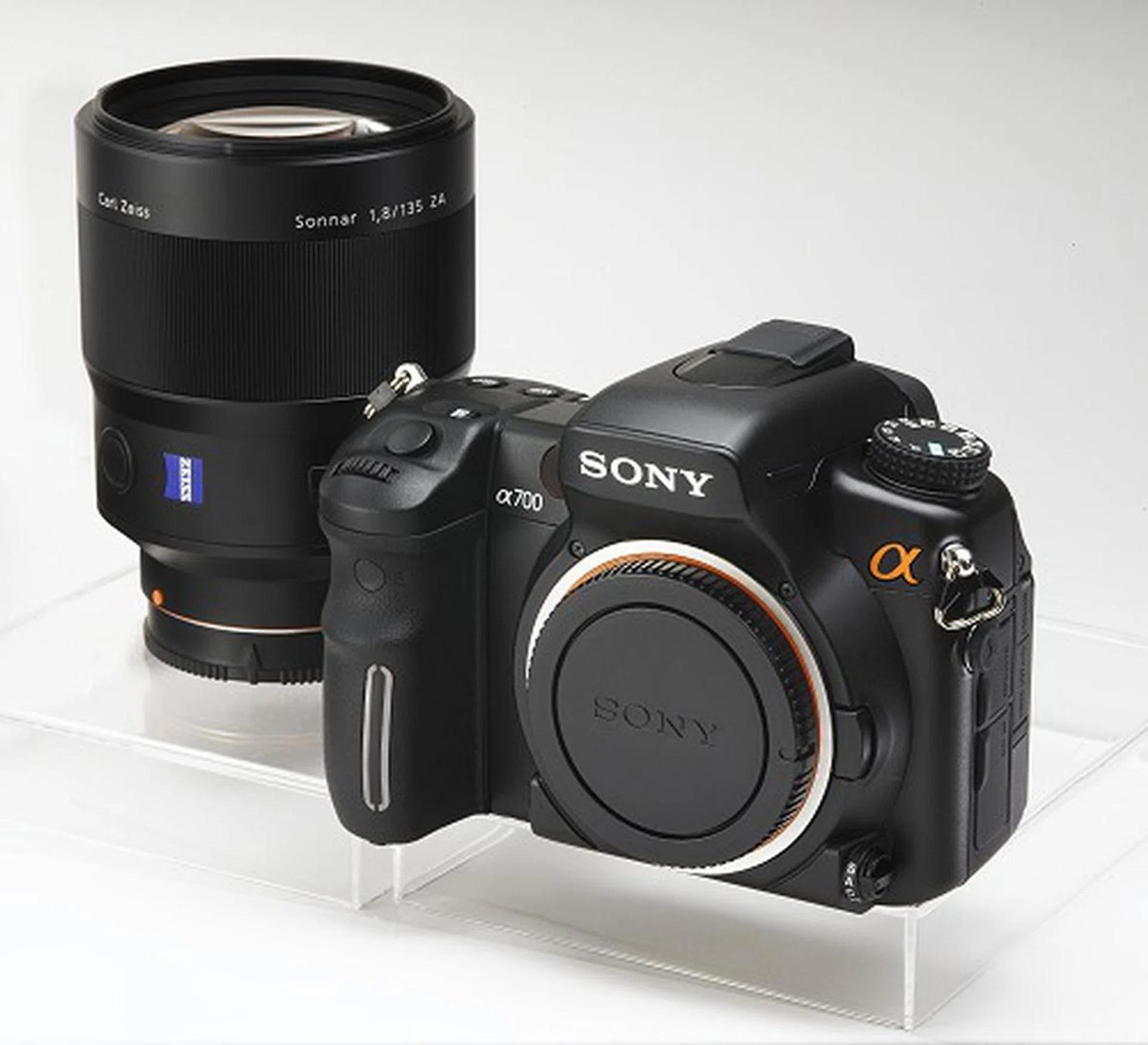
HWZ: What were some of the considerations you had to make when starting to design the A700?
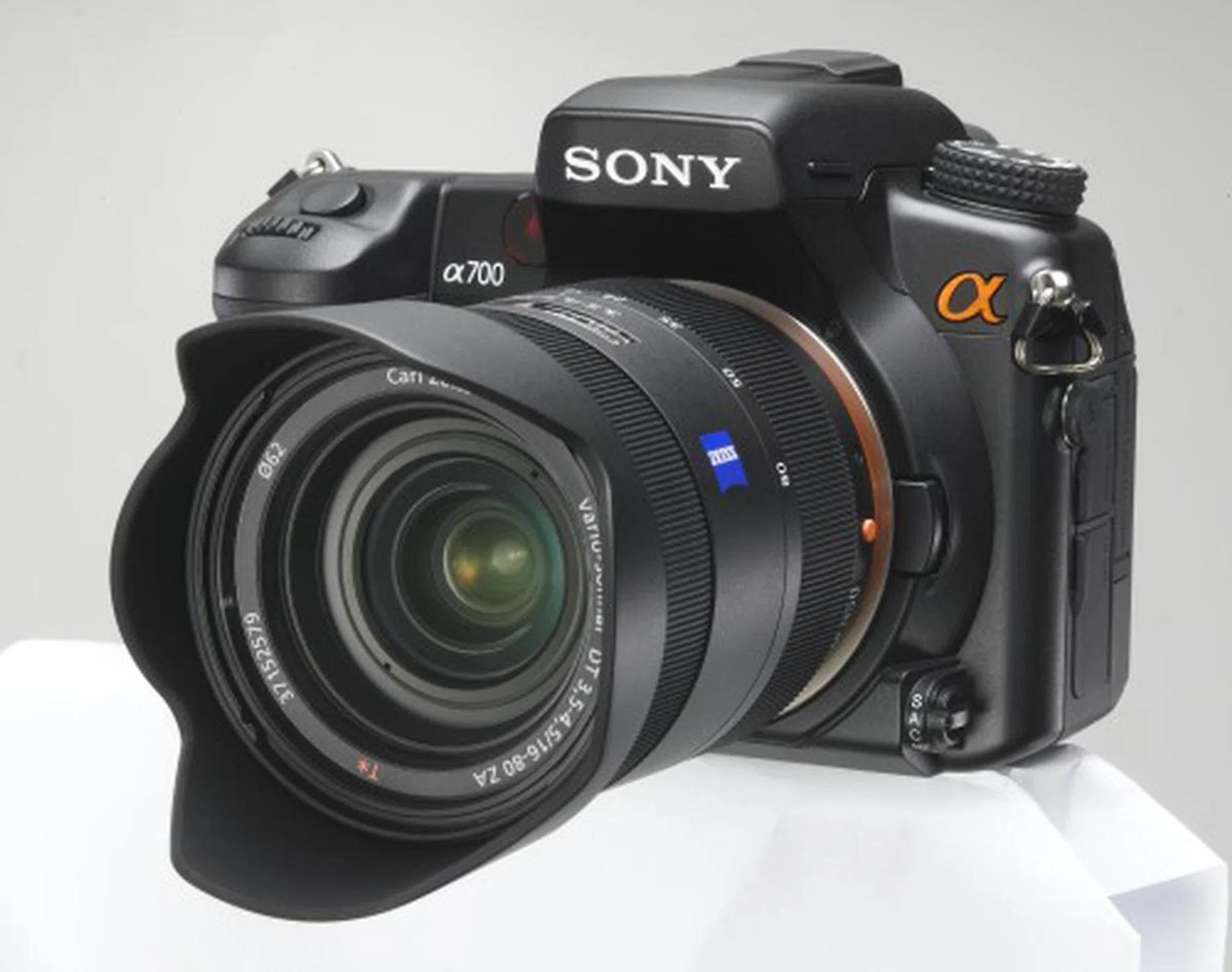
Ishizuka: This is our mid-ranged DSLR offering. Generally in this class of product, we prioritize balancing the strength of the body with a wealth of functions. Weight is a consideration but we don't concentrate too much on that. We did however set up a target weight of less than 700g while keeping the product strength and features in tact in the body. Our aim with this camera is to allow it to be carried around easily by the average photographer. This was the reason the Alpha 700 was named as such.
Our next consideration is the way the shutter sounds. Our engineers aimed to develop a product with a pleasing shutter sound. We put in a good deal of effort in developing the way the shutter sounds. Although the actual effect of the shutter sound on a person's feelings is difficult to analyze, this proved to be one of the biggest problems. The solution to this problem lay in a co-development with our camera engineers and audio engineers. This is one of the assets of Sony. The approach of a camera engineer and an audio engineer are completely different in analyzing the situation of what makes a comfortable sound. Through our customer feedback, we've discovered that the way the shutter sounds is an important factor for long term comfort. That's why we insisted on improving the shutter sound.
HWZ: What was the main motivator for the switch from a CCD sensor on the A100 to a CMOS one in the A700?
Ishizuka: Our main reason was how to maintain high speeds with low noise. We have compared solutions from both the CCD and CMOS technology. Finally, due to the advantage of speed and low noise we decide to choose a CMOS sensor. Our product has a 12MP resolution which is higher than the A100's 10MP.
Another reason was the operating temperature of the CMOS sensor, especially after continuous shooting. Sometimes, CCD image sensors can get a little high in temperature. The CMOS sensor has the advantage of a temperature curve. We found that speed and picture quality was kept in good balance using a CMOS sensor.
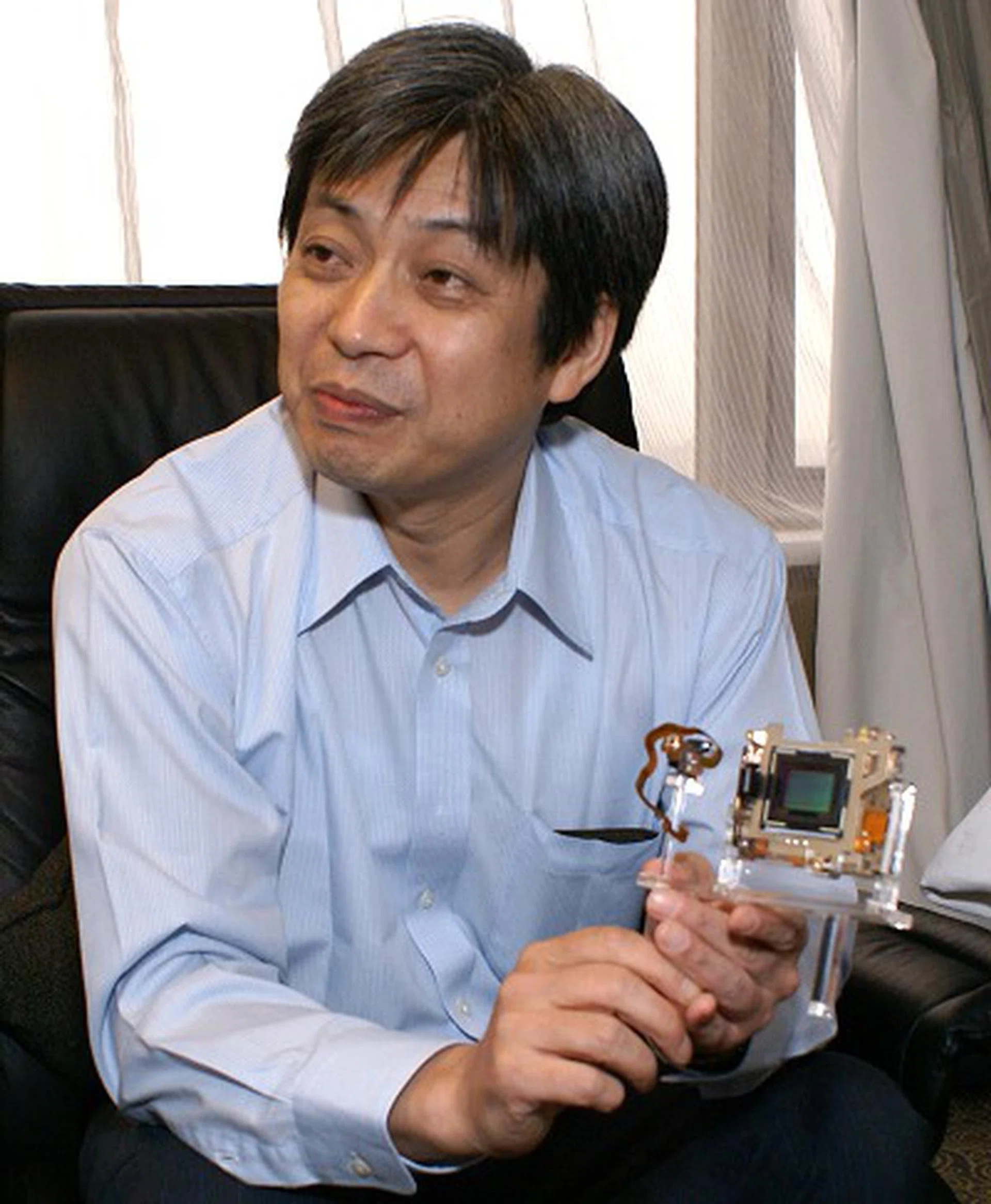
In his hands, Mr. Keiichi Ishizuka holds the Alpha A700's CMOS sensor module.
HWZ: Tell us more about the Exmor CMOS sensor and the Bionz processor. How do these innovations for the Alpha compare when put up against your competitors?
Ishizuka: Normally, an A/D converter is placed outside on a separate circuit. We've placed the A/D converter inside the sensor. The construction of the CMOS sensor is like this. On the front, there are many silicon cells. We then place 4000 A/D converters on the back side of the cell. Between the A/D converter and the front sensor, we've also added a noise reduction layer inside the chip. This is a revolutionary technology. Even before a signal leaves a chip, we have already minimized noise levels.
If you buy an A/D converter from Akihabara in Tokyo, it will cost around 50 Japanese Yen (S$0.63). The A700's sensor has 4000 of these in its sensor.
Normally noise reduction is applied to an image after the Analogue to Digital conversion. This is the general process. However, our strength is our application of noise reduction in the Analogue process. In the analogue state especially, the outside environment negatively influences noise levels therefore the most effective way to reduce noise is to ensure proper noise reduction of the analogue signal. Therefore we placed the noise reduction circuit inside the sensor. This is why we can reduce noise so well.
The advantage that Sony has is that we can get the latest sensor manufactured faster. An advantage of this in the future is that we can produce image sensors which best fit our DSLRs. We can introduce so many future technologies inside future image sensors. This is an advantage that Sony has for the development of the CMOS sensor.
HWZ: Tell us more about the Memory Recall (MR) function.
Ishizuka: The memory recall function allows us to keep our favorite settings and recall them quickly to avoid many settings changes. We can tweak the settings through the menu. There are allowances for three different sets of settings. If we want to keep a current setting, you merely rotate the dial to the MR position and easily select one of the three custom settings.
For example, if I generally take landscapes but occasionally take portraits, it's easier to change between Portrait and Landscape scene modes or single shot and burst mode. Normally, we need to change a variety of picture setting for different situation and this takes time. In this case, if we use Memory Recall, a simple switch between modes will suffice. MR allows for the memorization of over 20 settings.
HWZ: The new vertical grip seems made for the photographer in mind, with every button strategically placed for easy access. With this new development, will future Alpha products undergo the same treatment?
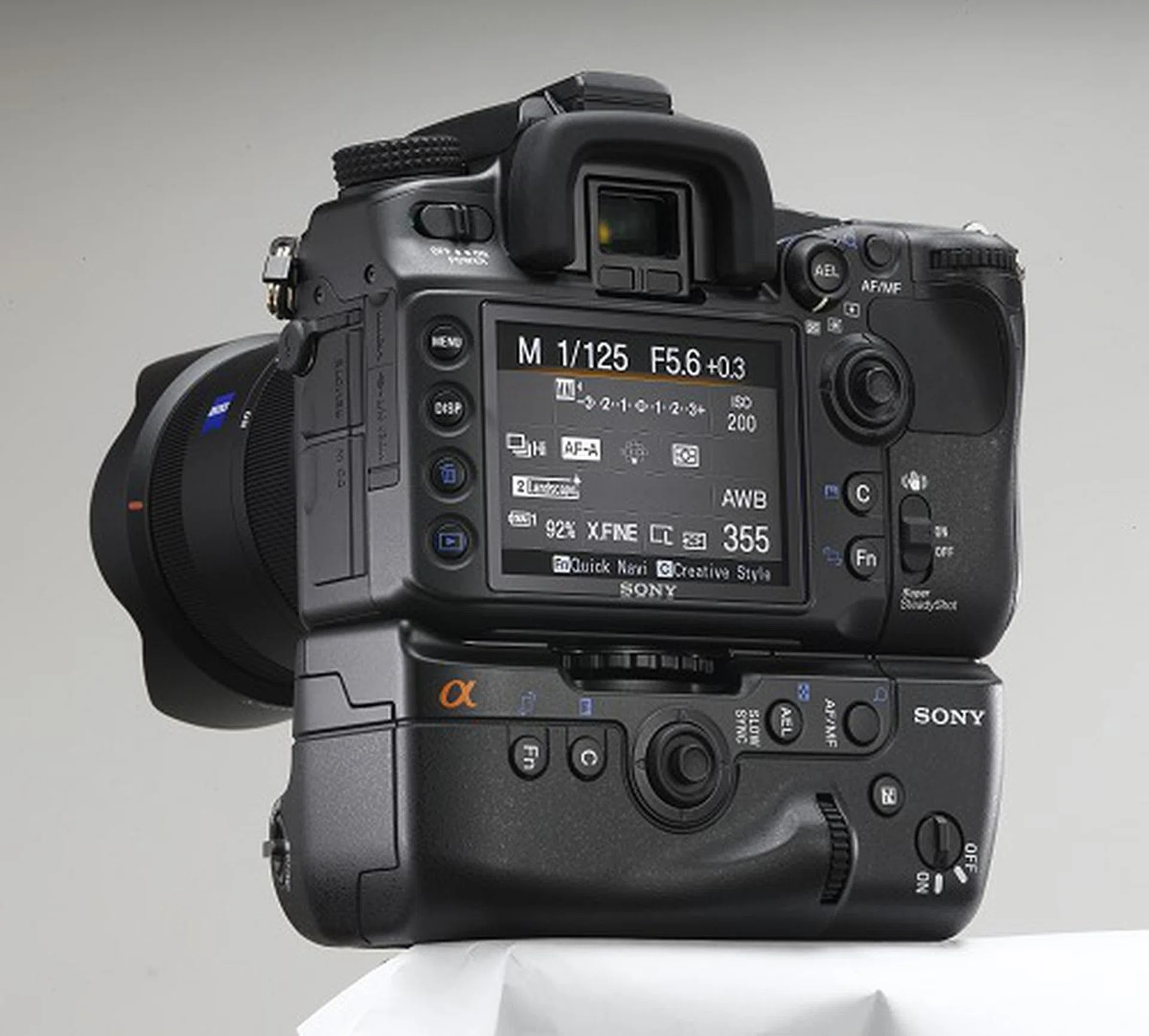
Ishizuka: Our philosophy for design the vertical grip was to retain the same holding position and operation as when the camera is used horizontally with special attention to the shutter release button which is more natural than on other cameras. Competing products usually have the shutter button in a much higher position when used vertically. Our priority was to have a design that was easier to hold. This will be something we will be bringing forward on our future high-end product lines.
Parting Notes of the Alpha A700 and Looking Ahead
HWZ: The A700 already boasts a range of highly impressive features. What are some of the future technologies Sony might be looking into for the Alpha line?
Ishizuka: The target we have for Sony's DSLR line in the future is to meet the demands of a variety of customers, from professionals to entry-level users. How do we meet such a demand? This is our theme for the future. Demand of our customers are different and depend on the amount of photographic knowledge. We are developing attractive features to meet each of our customer categories.
We disclosed a concept model at the last PMA. At the time, we announced that there'll be one or two products launched this year. We have already announced that we'll release a flagship model. We can't disclose any of its details at this moment but the release of this model is on schedule and we will reveal more information as soon as possible.
Also, although we have not announced a successor to our entry level A100, we are also developing such a product. Do expect Sony to bring newer and more attractive models.
HWZ: Is there anything else you would like to share with us about the A700?
Ishizuka: A feature we'd like to highlight is the improved Dynamic Range Optimizer. (DRO) Although the Alpha 100 shared this feature, we improved it a lot. This is unique to Sony as our competitors don't have this feature. The effectiveness of DRO is best shown in a backlit situation. Normally in a picture, when there's a mixture of highlights and dark areas, the areas with low light will turn out very dark. By using DRO though, only the dark parts are enhanced in a scene.
The camera analyses 1200 areas of an image and analyses the dark areas and bright areas and determines the best gain position for each of those areas and then automatically adjusts the exposure as well.
These technologies are improving based on Sony's technological experience and Konica Minolta's film development technology.
The main reason why we need DRO is to come closer to what the human eye sees. The human eye can recognize the a wide range of light conditions, dark to light, but image sensor lack this ability so when we take a picture the results aren't the same as what the human brain sees. In the usual case, we make adjustments using photo editing software. This takes time. So we developed this function to minimize the time it takes to attain that final result.
HWZ: Could you comment on Sony's roll out strategy for the Alpha series and how the company intends to raise market share?
Ishizuka: Sony launched the A100 last year so it has been a year since that. The SLR business however has been around for much longer. It takes time to build customer confidence because of the long histories that our competitors have.
Now we're releasing our mid-ranged product and soon we'll be unveiling our flagship product. We will try to continue to bring more attractive products to meet customer expectations for a long time to come. We would like to emphasize this message to the market to build customer confidence.
Right now, the brand image that Sony has is one of an electronics manufacturer. With our CyberShot and HandyCam, we've tried to build a reputation as a camera manufacturer so we expect the market to evaluate our products so we can establish a position among our competitors. DSLRs are also representative of our camera brand image so we try to bring the best quality product to the market.
Our articles may contain affiliate links. If you buy through these links, we may earn a small commission.