
Fujifilm X-Pro1 Launch & Interview with Product Manager: Hiroshi Kawahara
Fujifilm's first mirrorless system camera, the X-Pro1, finally reaches Singapore. Besides revealing the camera's local price, we also scored an interview with X-Pro1 product manager Hiroshi Kawahara, who tells us how the X100 has changed the X-Pro1, where that RAW button went and why the X-Pro1 has no in-built stabilization.
Fujifilm X-Pro1 Launched in Singapore

Fujifilm's highly anticipated camera the X-Pro1 has just been launched in Singapore. The camera which we first had a hands-on in CES 2012, will be available in March, and will retail for S$2400 (body only). Lenses will be sold separately, at S$900 to S$1000 each. Three prime lenses will be available at launch, the XF 18mm F2 R, the XF 35mm F1.4 R and the XF 60mm F2.4 R Macro.
The X-Pro1 is Fujifilm's first mirrorless system camera, and it introduces a new mount - the X-mount - into the mirrorless system camera market. It comes with a brand-new APS-C sized Fujifilm X-Trans CMOS sensor, with a 1.5x crop. That makes the above mentioned lenses the 35mm equivalents of 27mm (for the 18mm F2), 53mm (for the 35mm F1.4) and 91mm (for the 60mm F2.4). The aperture diaphragm blades are rounded off rather than cut off, which Fujifilm promises should deliver a sharper image (and more pleasant bokeh when shooting wide open with these fast primes).
The X-Pro1 is neither dust nor splash-proof, but the body construction is solid, made of die-cast magnesium alloy. The shutter speed dial and exposure compensation control are precision-milled from solid metal and the overall design has been considered with feedback from photographers who used the X100 (we speak more about that in ).
The X-Pro1, like the X100 and X10 before it, isn't a cheap camera. At S$2400 for the body alone it's even more expensive than a Nikon D300s (S$2388) or Canon 7D (S$2249) DSLR camera, and the most expensive mirrorless system camera on the market - discounting a Leica M9, which, depending on how you look at it, is also a mirrorless interchangeable-lens camera. The M9 and the M8 are the only other mirrorless system cameras besides the X-Pro1 to offer an optical viewfinder. Besides the M9's larger full-frame sensor, it also has a larger price, S$11388 for the body alone. Compared to that, the X-Pro1 might appeal to enthusiasts looking for a digital rangefinder-style camera that is more affordable.
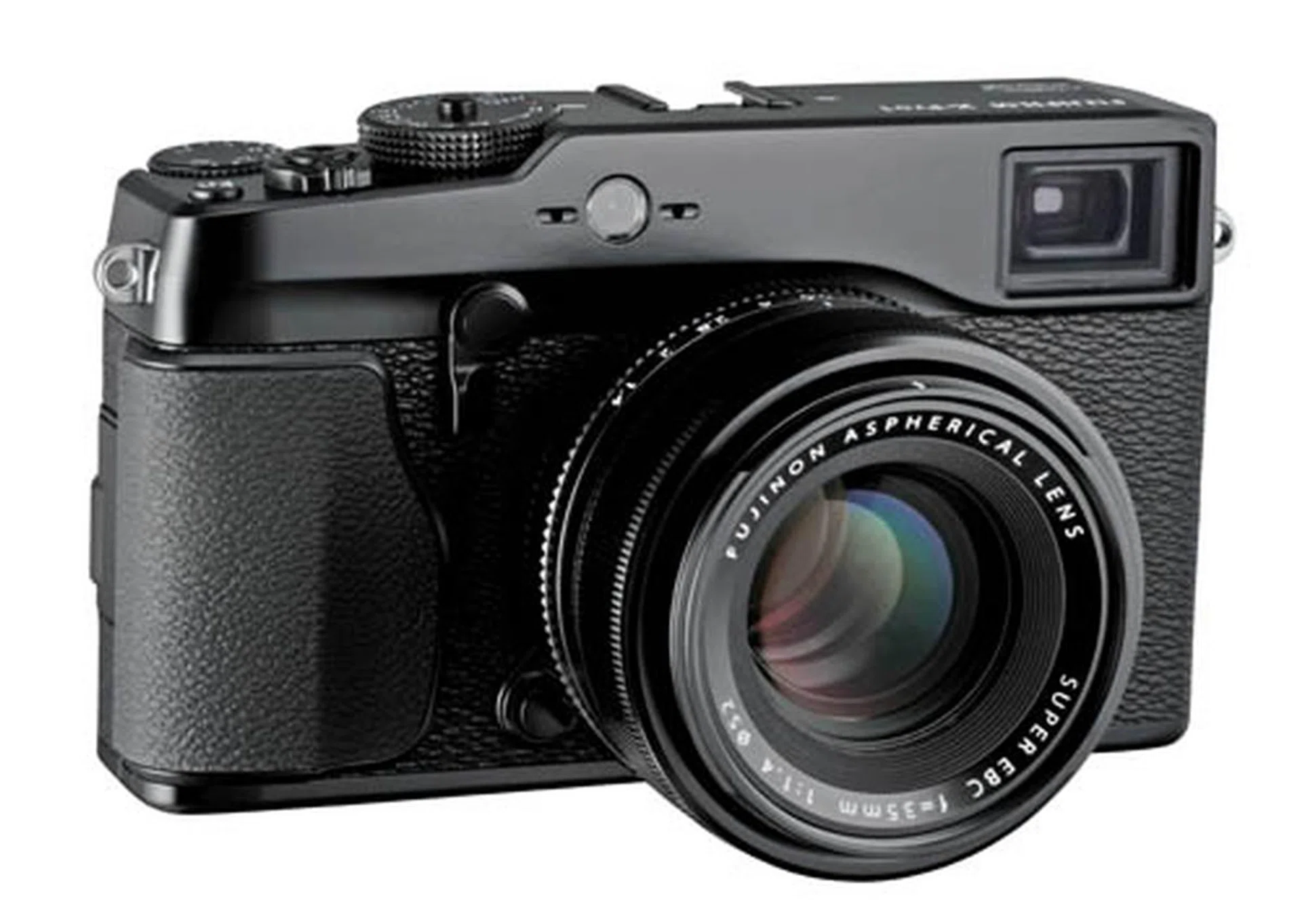
The X-Pro1 is Fujifilm's first mirrorless interchangeable-lens camera.
Hybrid Viewfinder with Magnifying System
Like the X100, the X-Pro1 comes with a hybrid viewfinder, which can switch between being an optical and electronic viewfinder. When a XF-series lens is attached to the X-Pro1, both the viewfinder magnification and the bright frame (the white outline) sizes automatically switch to support the lens' focal length. Viewfinder magnification switches to 0.37x for the 18mm lens and to 0.6x for the 35mm and 60mm lens.
How the magnification will work when telephoto lenses are mounted was unclear, as the answer seemed to be lost in translation, but we gather that only the bright frame sizes will shift as the lens zooms and not the viewfinder magnification. For that, the user will need to switch over to using the electronic viewfinder.
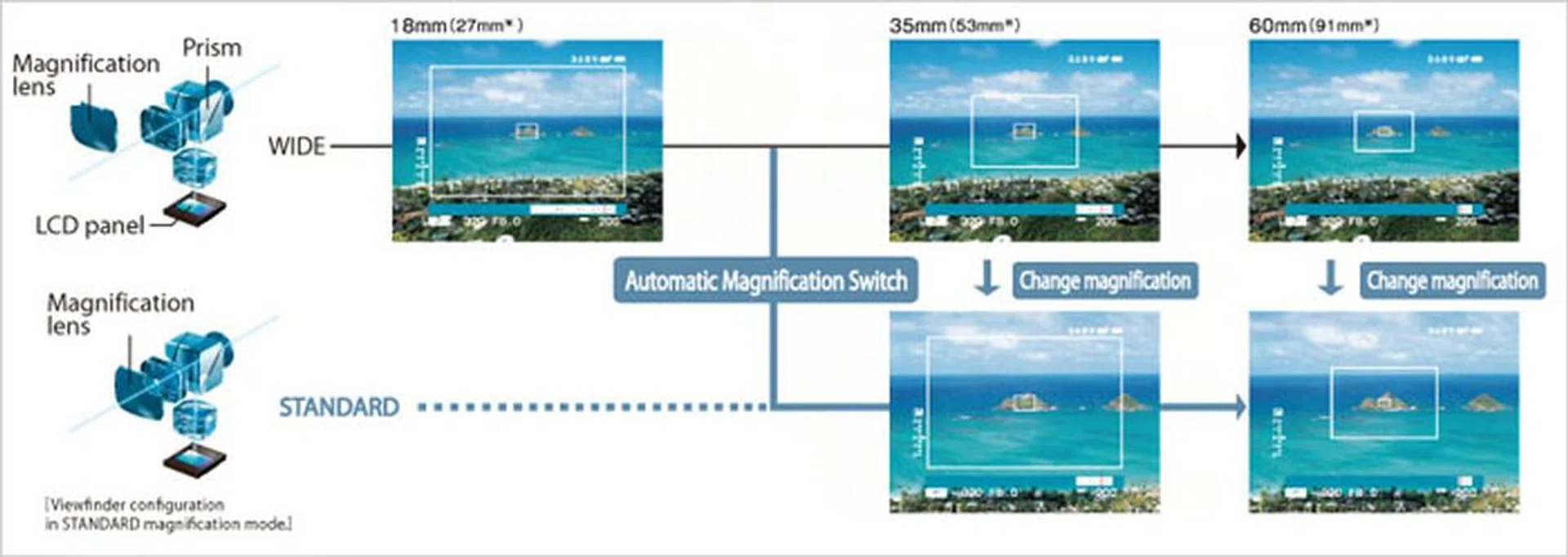
From what we heard at the launch, only the bright frame's (the white outline) size will change when you zoom using a telephoto lens. Image source: Fujifilm.
New X-Trans CMOS Image Sensor
The X-Pro1 comes with a brand-new X-Trans CMOS image sensor, which does away with the optical low-pass filter seen in almost every digital camera today. The low-pass filter reduces the appearance of moiré artifacts, which can appear in photographs of repeating patterns (see below for an example). This happens because the digital image sensor itself is a grid, and when two grids overlap at an angle or have slightly different sizes, a moiré pattern is created. The benefit of having an optical low-pass filter comes at the cost of blurring of fine image detail in the final photograph.
The X-Pro1 does away with the low-pass filter altogether, promising to solve the problem of moiré with its new color filter array. Inspired by the random arrangement of fine film grain, the new array's RGB pixels are arranged in 6 x 6 pixel sets with a high degree of randomness. According to Fujifilm, increasing randomness eliminates the cause of moiré, and results in higher resolution as well as better color reproduction.
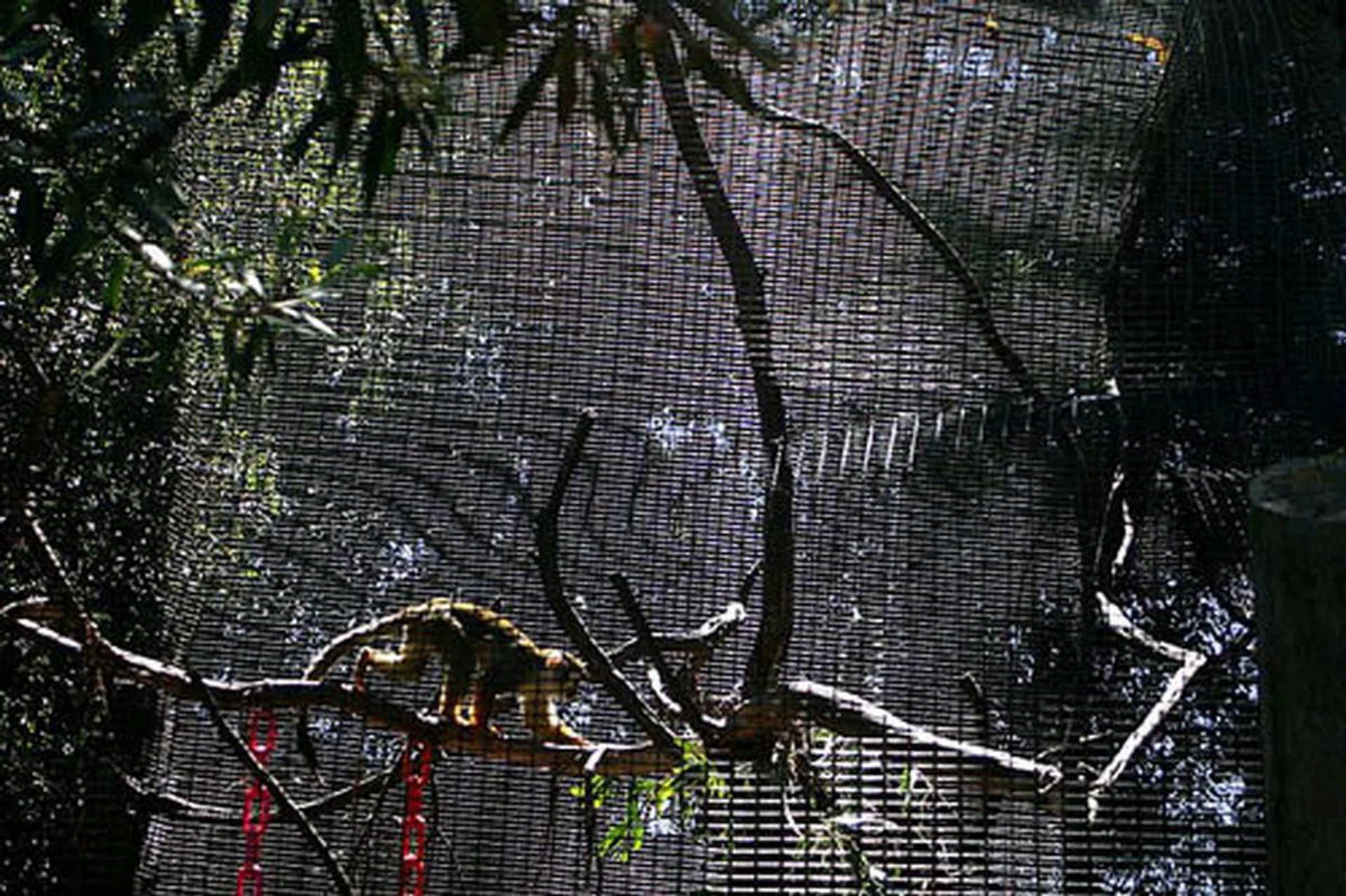
An example of a moiré pattern captured when photographing a repeating pattern. Image source: Mbz1, Wikipedia.
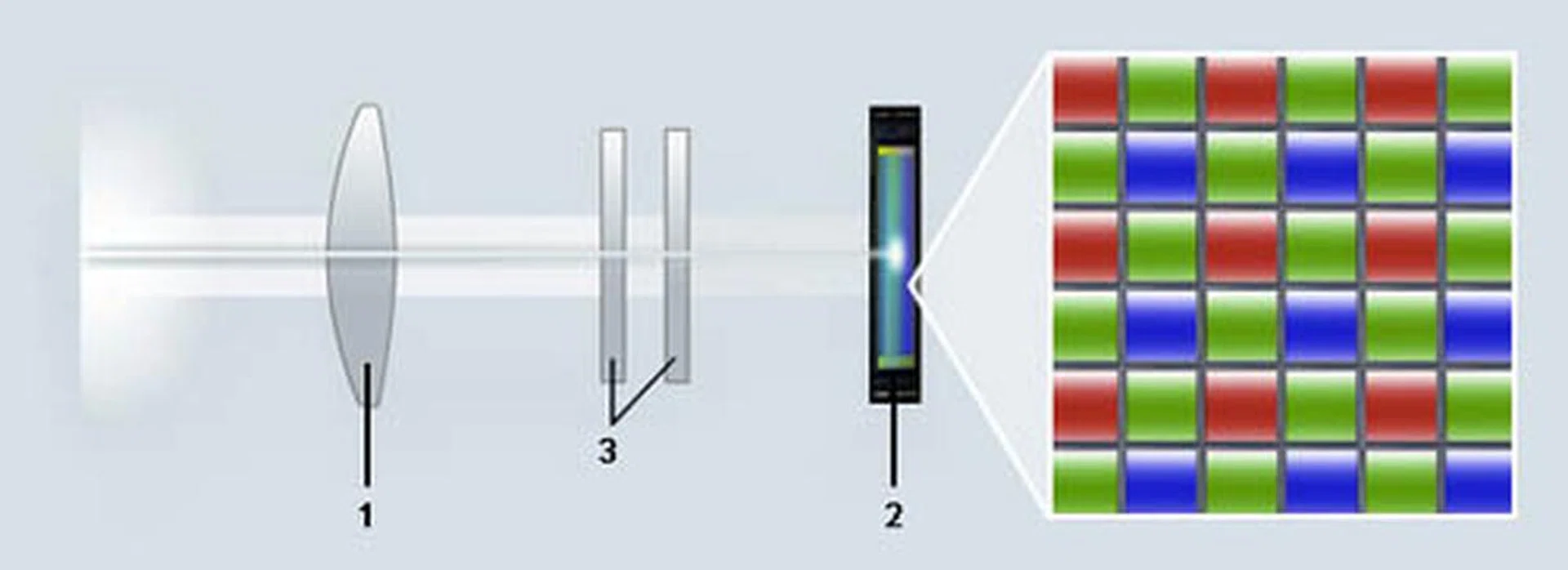
An optical low-pass filter (3) helps to remove moiré patterns but also introduces slight blurring of fine detail in the final photograph. Image source: Fujifilm.
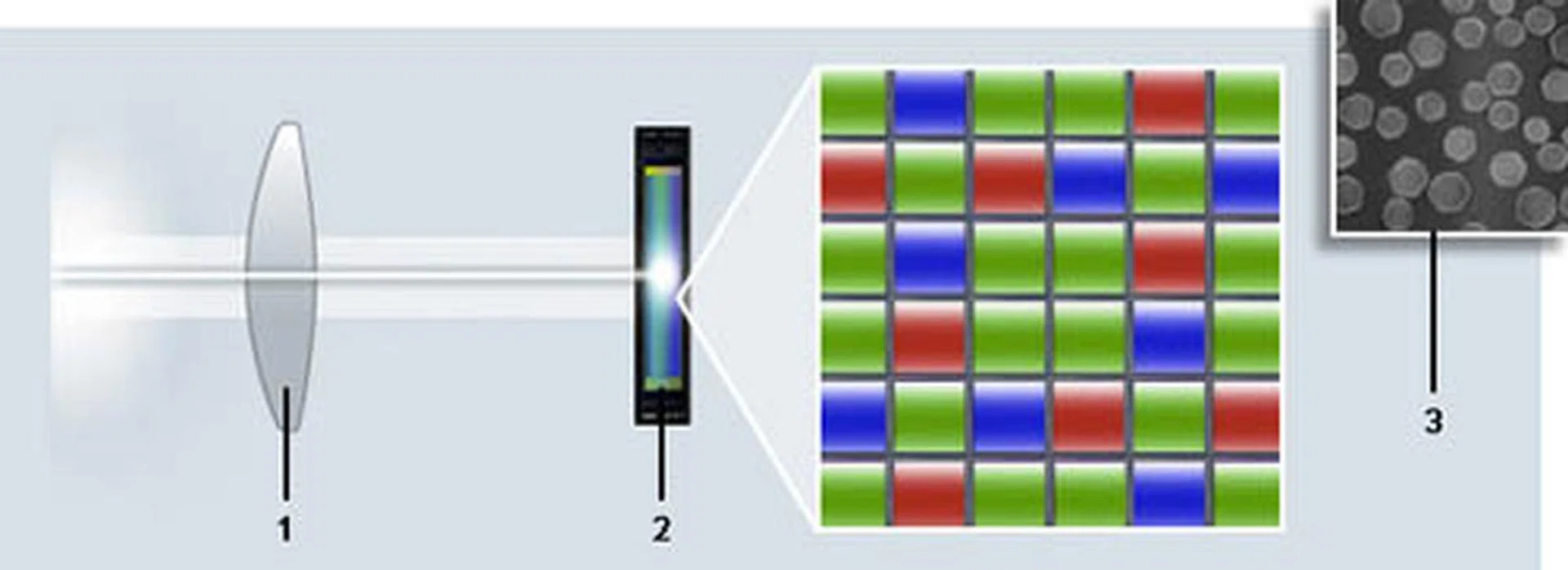
The X-Pro1 does away with the optical low-pass filter altogether. The random arrangement of the RGB pixels in the new sensor (2), inspired by the randomness of film (3), promises to reduce the presence of moiré and deliver higher color reproduction fidelity. Image source: Fujifilm.
Two More Lenses to Launch in 2012
According to a product road map which Fujifilm showed at the event, two more lenses - a 14mm (21mm in 35mm equivalent) and a 18-72mm F4 IS (27-108mm in 35mm) - will be launched in 2012. Four more are expected in 2013, a pancake 28mm F2.8 (42mm in 35mm), a 23mm F2 (34.5mm in 35mm), a telephoto 70-200mm F4 OIS (105-300mm in 35mm) and a wide zoom 12-24mm F4 OIS (18-36mm in 35mm). The final specifications of these lenses are still to be confirmed.
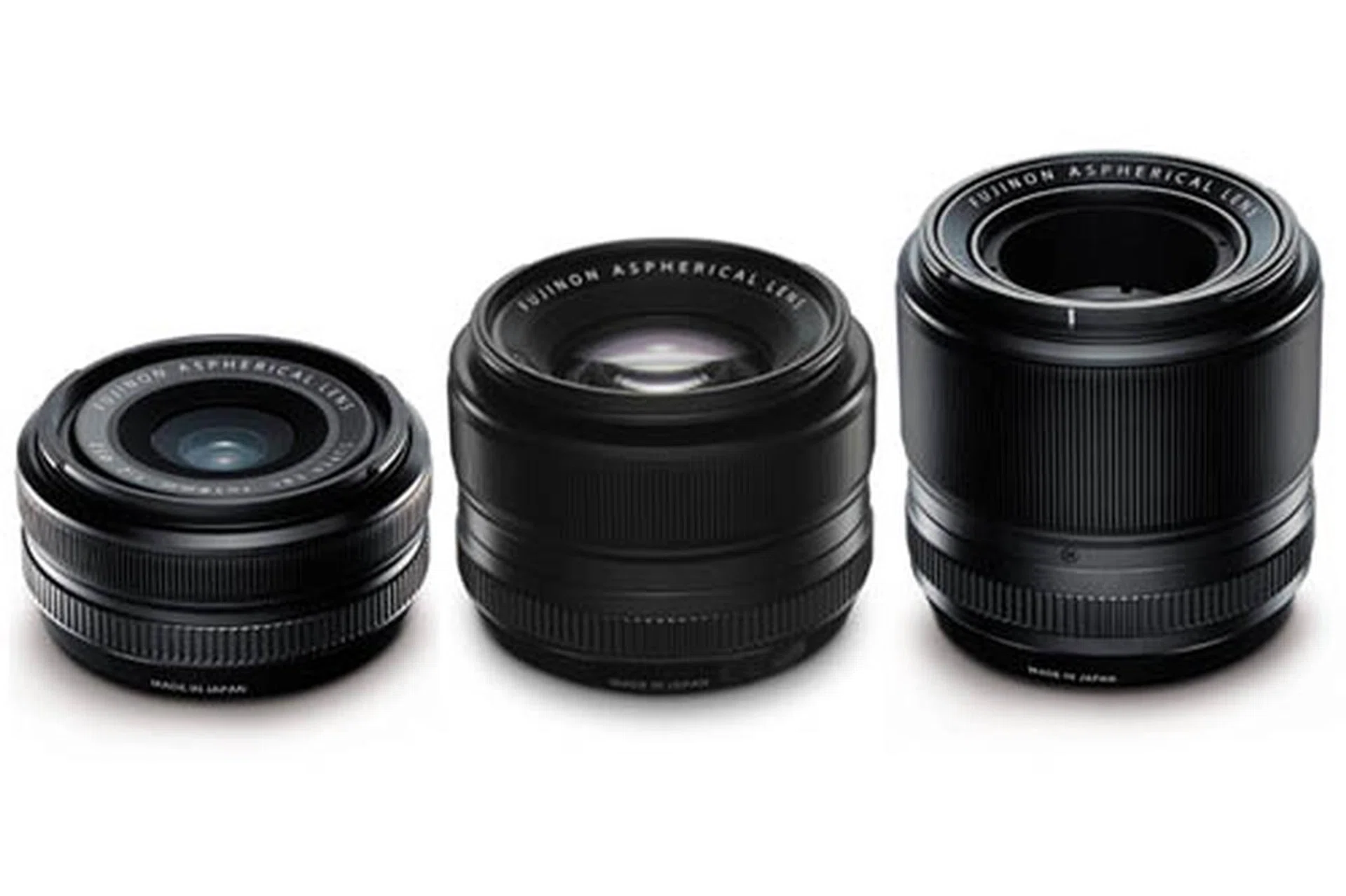
Three lenses will be available at launch, a 18mm F2 (left), a 35mm F1.4 (middle) and a 60mm F2.4 Macro (right).
Additional Accessories, Sold Separately
Additional accessories for the X-Pro1 will be available at launch. These include a hand grip (HG-XPro1), a shoe mount flash (EF-X20), a leather case (LC-XPro1) and two protective filters, one 39mm and the other 52mm in diameter.
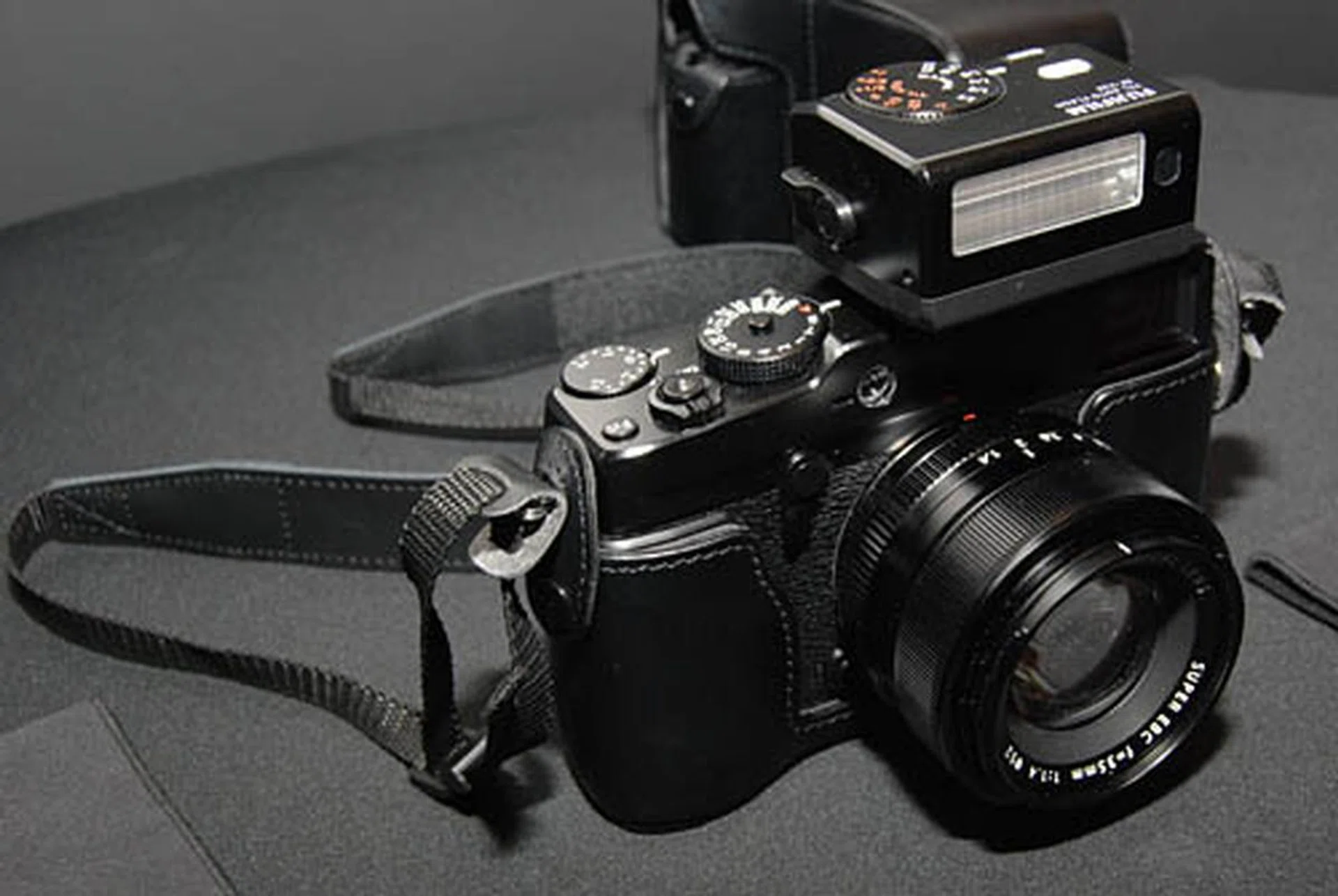
The shoe mount flash EF-X20, seen here mounted on the X-Pro1, will be sold separately. The X-Pro1 does not come with a built-in flash.
Interview with X-Pro1 Product Manager: Hiroshi Kawahara

Hiroshi Kawahara (third from left) was one of the designers of the X100 and has played a pivotal role in the design of the X-Pro1.
We sat down with Hiroshi Kawahara, operations manager of the products planning division at Fujifilm. Kawahara was one of the designers of the X100 and has played a major role in the X-Pro1's product design. We quizzed him about what Fujifilm has learned from the X100, why there isn't any image stabilization in the X-Pro1 and whether the sluggish auto-focus we experienced with the X100 and X10 has been improved.
You mentioned during your presentation that the X-Pro1 has been in development for three years, earlier than the X100. Why was the X100 then released first, ahead of the X-Pro1?
Kawahara: One reason was that we took a lot of time to develop the interchangeable lens mount for the X-Pro1. The other reason is a marketing issue, if we had suddenly launched the X-Pro1 first; we didn't have the confidence that it would be accepted by our customers. So we launched the X100 first, and even then we didn't have the confidence that our customers would accept the camera. But fortunately many customers did and the X100 has sold very well. Now, we have the confidence that a high quality camera like the X-Pro1 can be accepted by our customers.
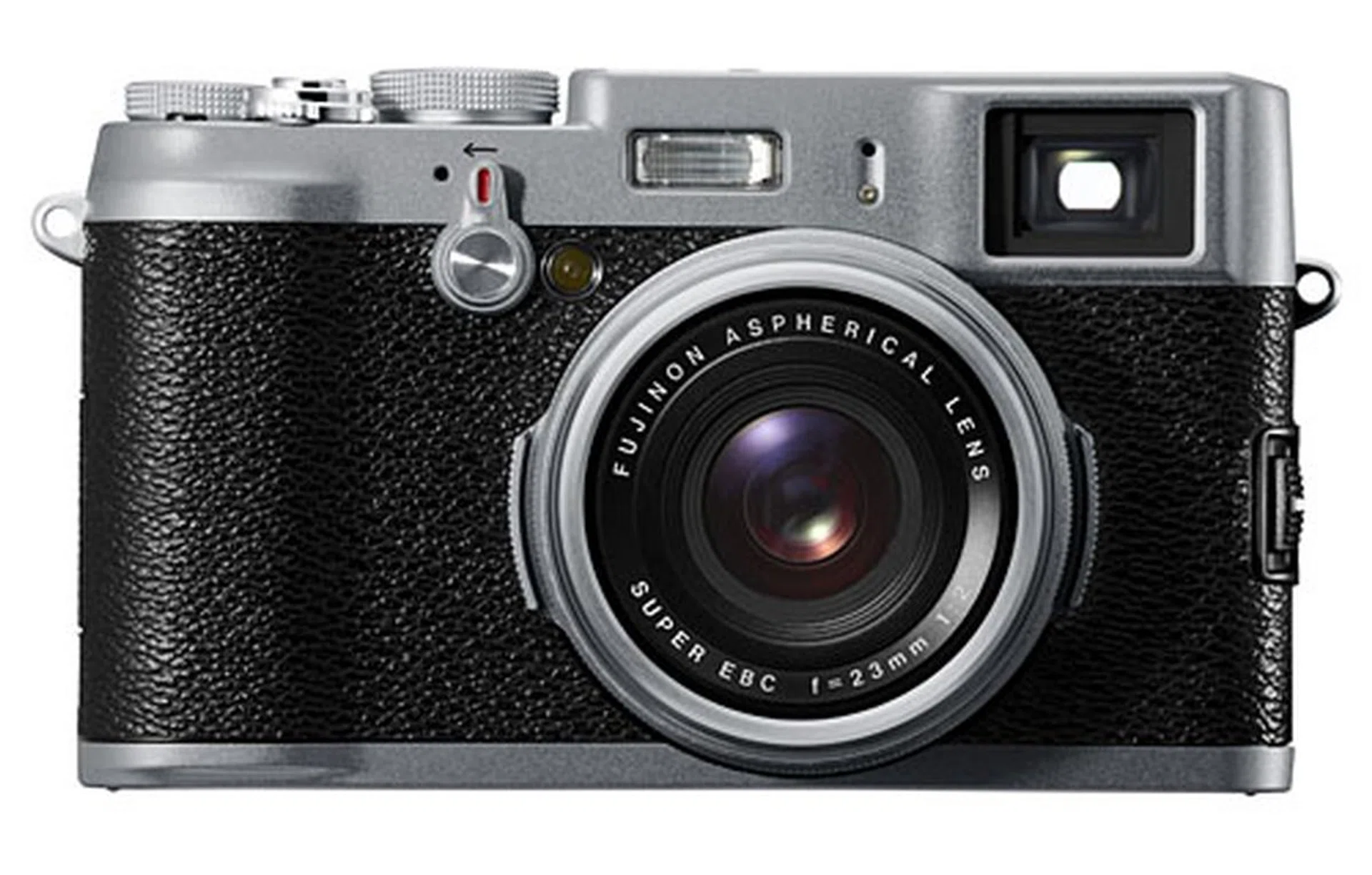
The Fujifilm X100, which was released in early 2011.
You also said that changes were made to the X-Pro1 based on feedback from photographers who used the X100. Could you give us some specific examples of those changes?
Kawahara: The X100's shutter speed dial didn't have a lock button, and some photographers requested for one on the X-Pro1. The X100 had a button on the back right of the camera, and some photographers said that when holding the camera they would accidentally hit the button, so it has been removed on the X-Pro1. The X100's had a scroll wheel on the back, but the X-Pro1 has a d-pad, which many photographers said was easier to use.
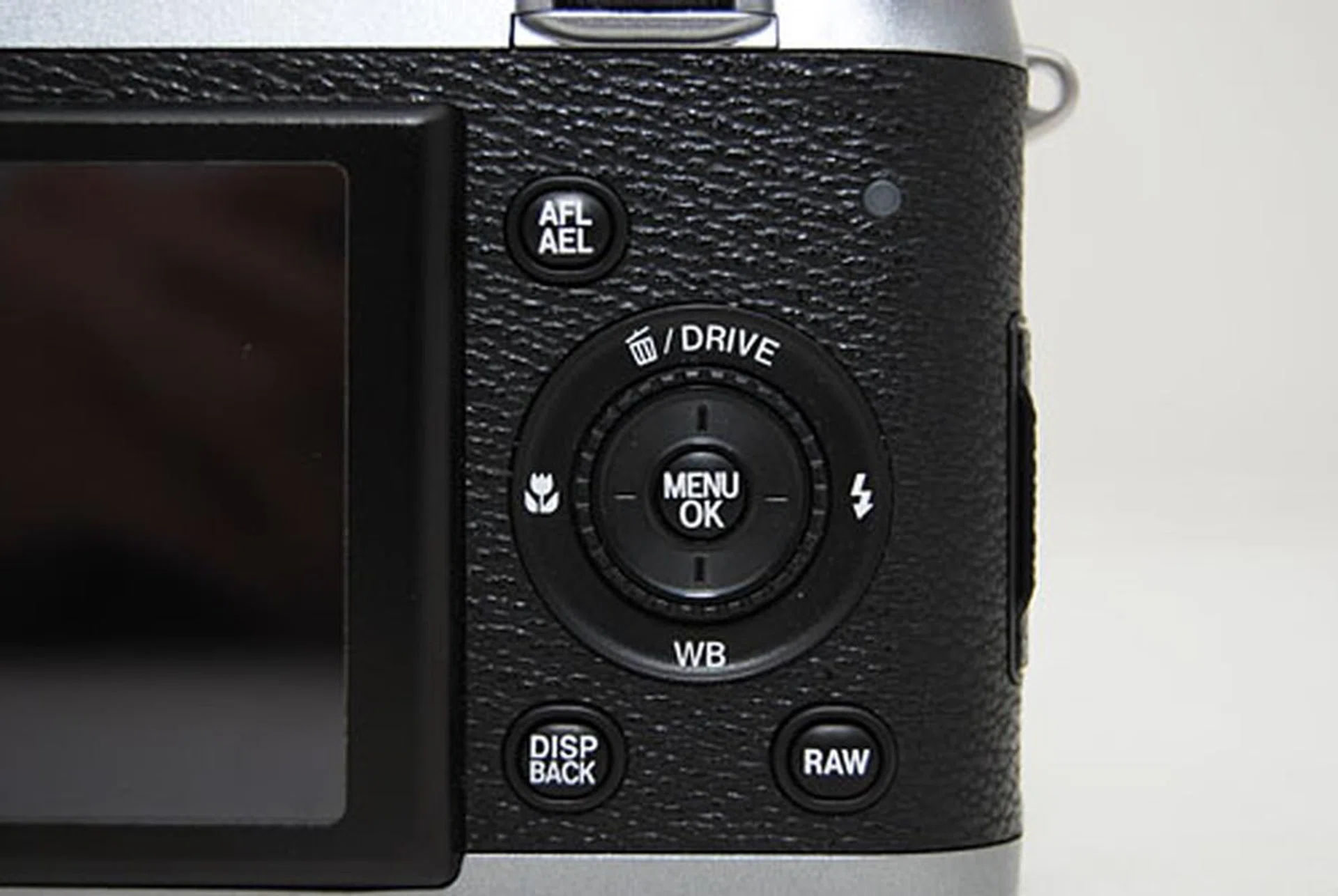
The X100 had a RAW button on the bottom right, which has been removed based on photographers' feedback.
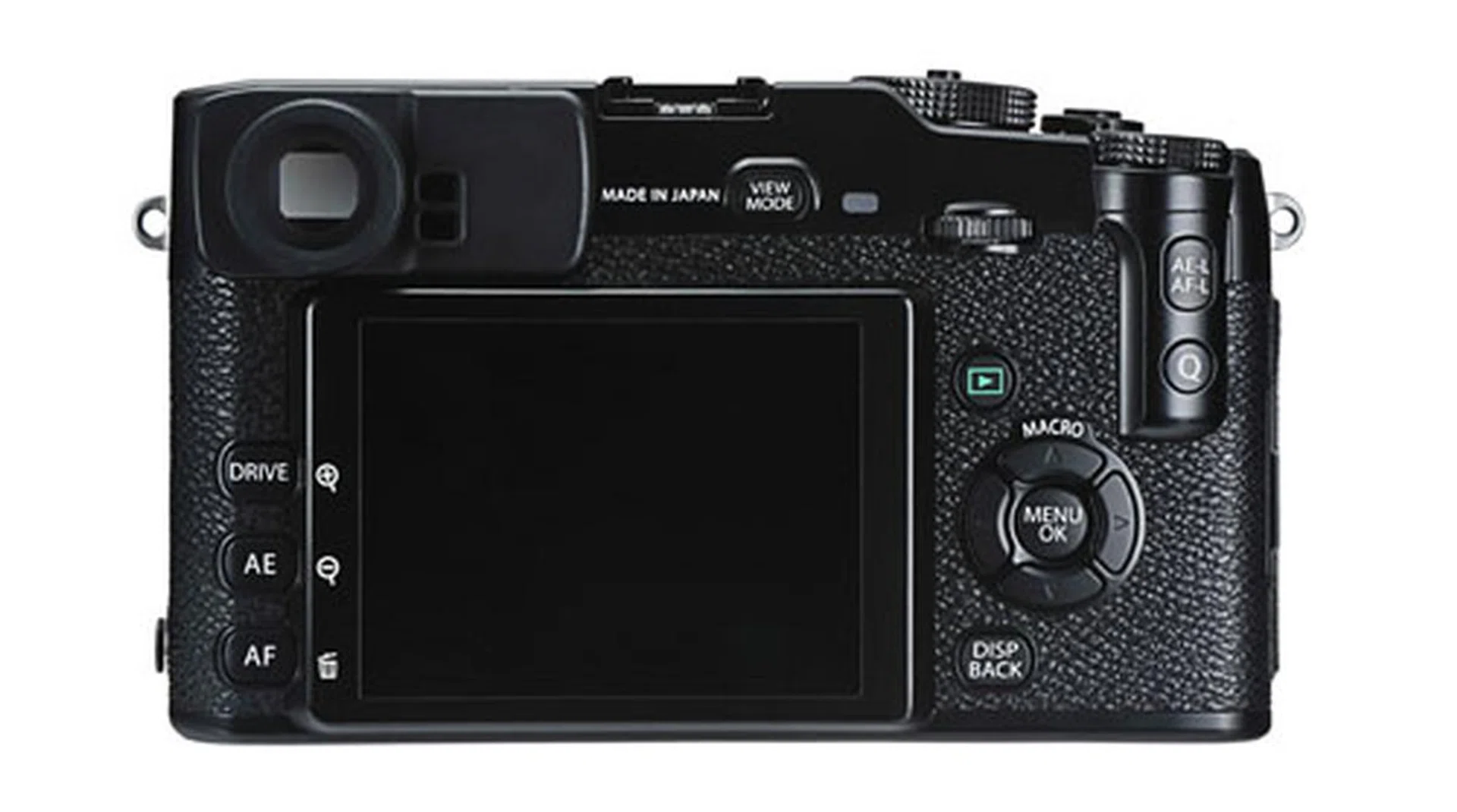
The back right of the camera is now button-less, which should provide for a better grip, as well as remove any chances of accidentally pressing a button with your palm.
Wasn't the inclusion of a RAW button a little strange?
Kawahara: You think so? RAW development was a feature of the X100 - users could develop RAW images in-camera, without having to use software on a PC. I wanted to appeal to this feature with the RAW button. Photographers could develop RAW images conveniently with the X100 while on the move. The RAW button has been removed from the X-Pro1, but users can program the Function button (on the top plate) for the same command if they want.
Why isn't image stabilization included in the camera or in the three prime lenses being launched?
Kawahara: The size of the lens was of utmost importance to us. The three prime lenses being launched are very bright lenses with single focal lengths. We asked many professional photographers, they told us they didn't need image stabilization and that smaller-sized lenses was of higher priority. But they also said that they want image stabilization in zoom lenses, on that we agreed.
Editor's note: A 18-72mm F4 IS (27-108mm in 35mm equivalent) is in development and is scheduled to launch later in 2012. The lens will come with image stabilization (IS). Two more lenses, a telephoto 70-200mm F4 OIS (105-300mm in 35mm) and a wide zoom 12-24mm F4 OIS (18-36mm in 35mm), will come with optical image stabilization (OIS).
Has anything been done to improve the speed and accuracy of the auto-focus system in the X-Pro1?
Kawahara: We believe that the accuracy of the auto-focus on both the X100 and X10 is quite good, and we believe that AF speeds on the X-Pro1 should be the best among the three cameras.
Editor's note: At this point, our time was up and we couldn't clarify further. To Fujifilm's credit, the auto-focus on the X100 and X10 is quite fast and accurate as long as you manually dictate the AF point. But once you switch to Multi-area AF, the two cameras seem to struggle with finding the correct subject to focus on, which was the point we wanted to make. We will have to seek our answer with the camera itself, look for our review of the X-Pro1, coming soon.

Our articles may contain affiliate links. If you buy through these links, we may earn a small commission.