
5 things that stand out on the new Nikon D7500 DSLR
The latest D7500 from Nikon looks like a promising camera, borrowing features from the D500 rather than just improving on what was present in the D7200. We sum up the key features that stood out to us the most.
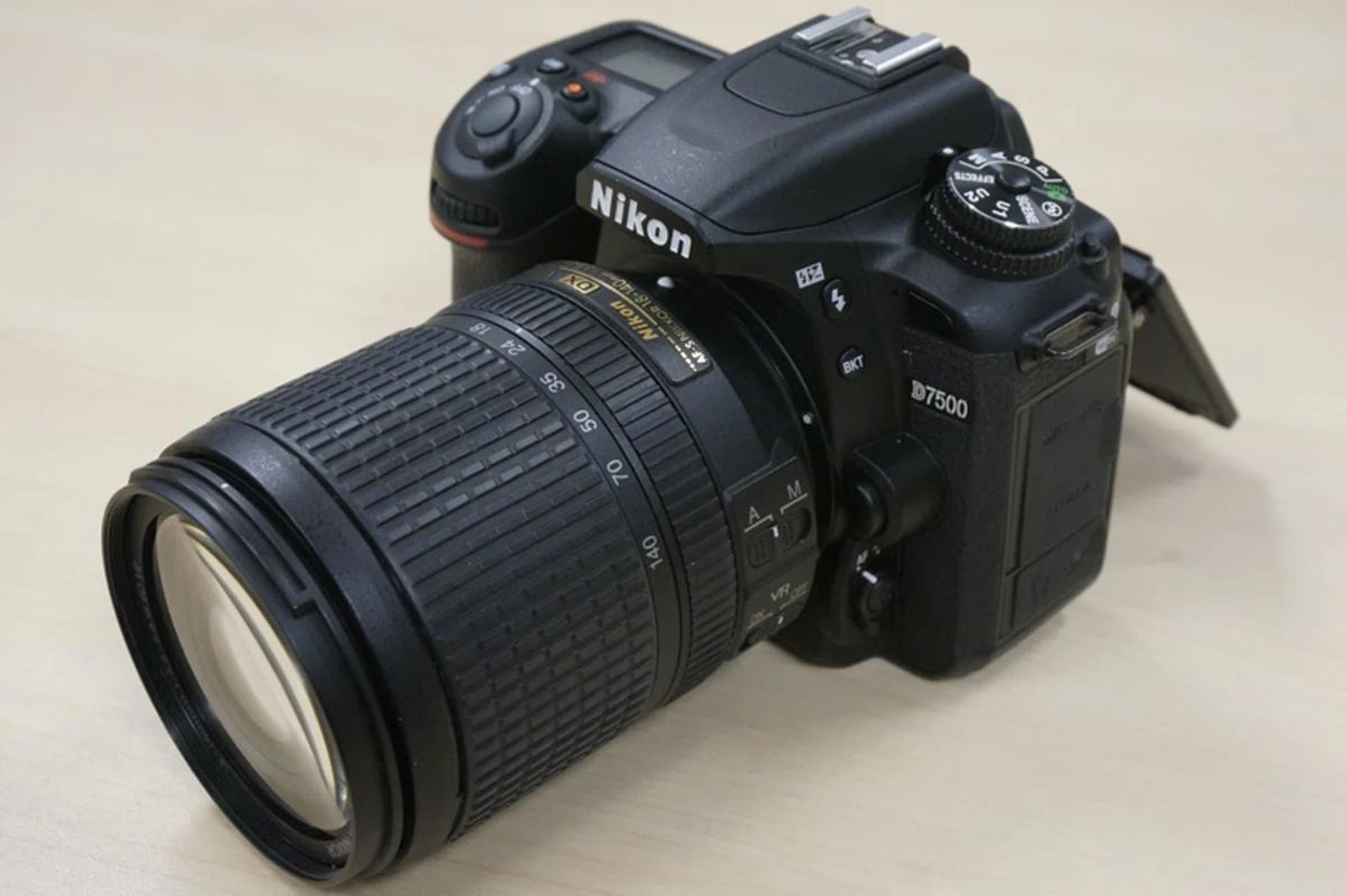
Nikon's latest APS-C camera, the D7500, seems to be quite an impressive shooter, borrowing heavily from the D500 before it. We had a brief amount of time with the international beta version, so here our impressions on what stood out to us most when we compare it to the D7200 it replaces.
1. New LCD screen design
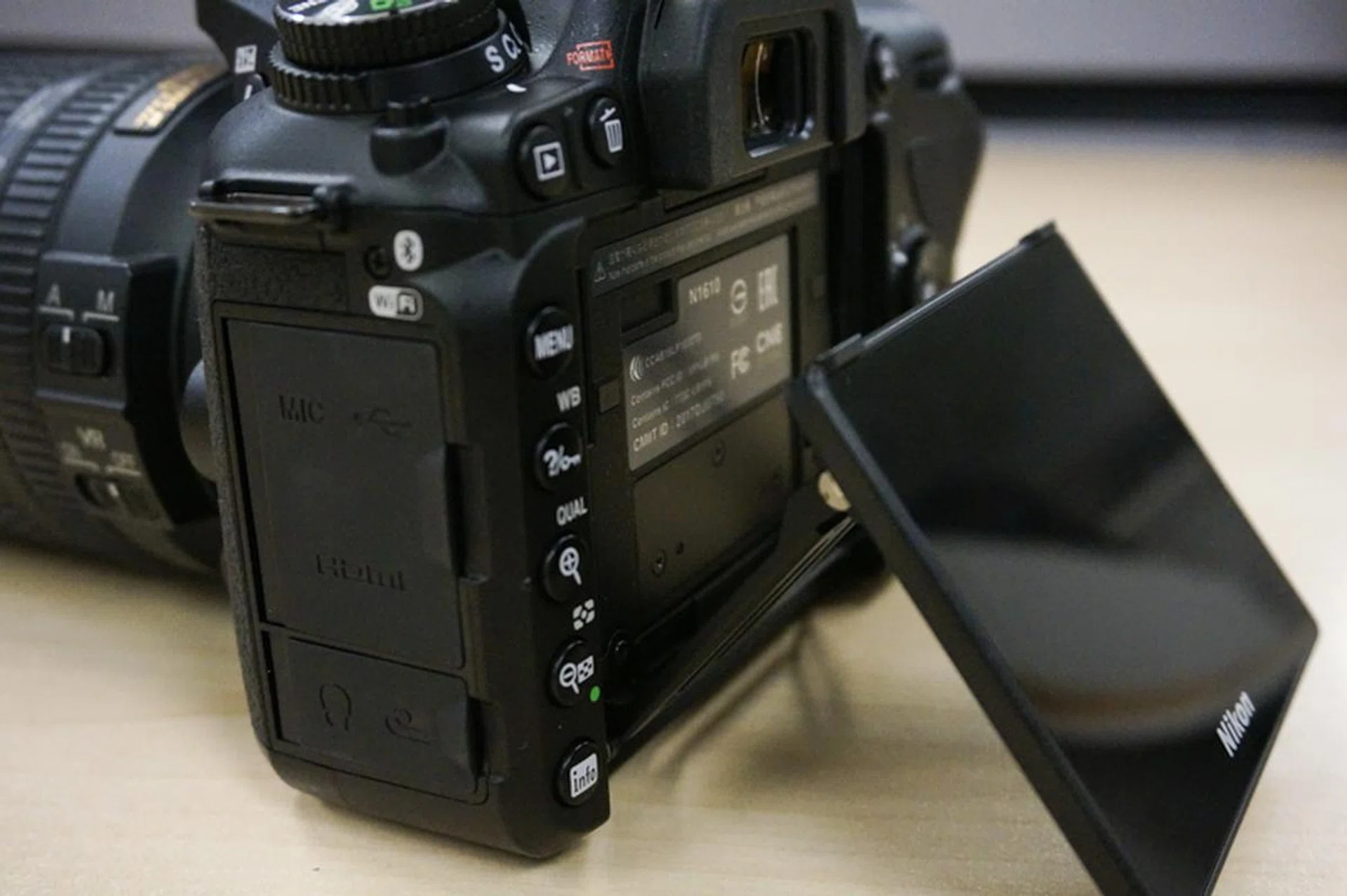
The D7500 finally gets a rear LCD that tilts.
It appears Nikon has come up with a new rear LCD design for the D7500. It’s now similar to the one on the D500, and tilts upwards quite a bit. That’s definitely an improvement over the D7200, which had a fixed rear LCD. With video and Live View shooting becoming more of a staple these days, moving away from a fixed LCD gives you much more flexibility to embrace videography on capable cameras such as the D7500.
2. Full touch controls on the rear LCD
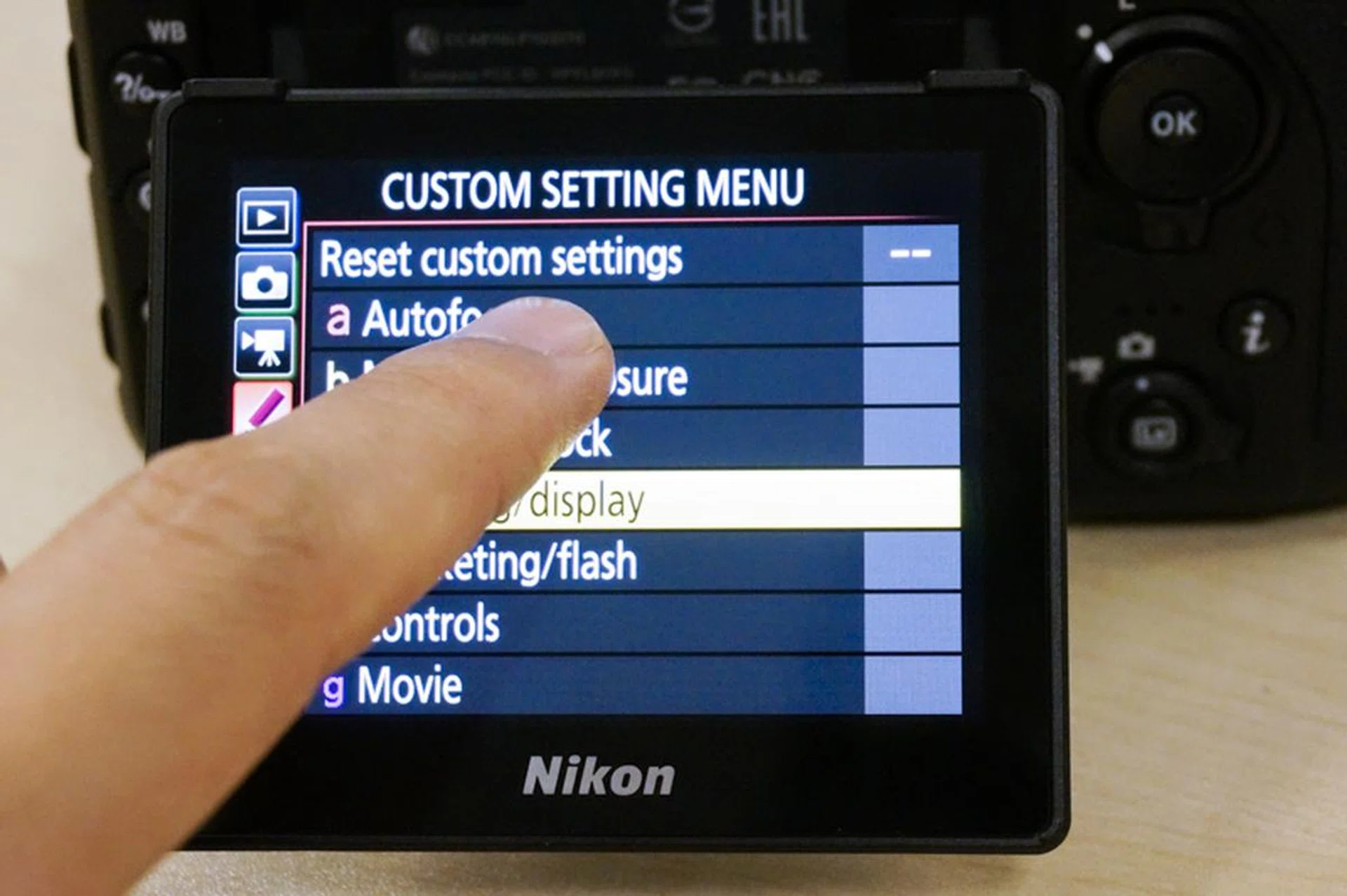
Now you can use touch to navigate all the menus of the camera.
As with the D500, the D7500’s rear LCD also supports touch controls. Unlike the D500 though, the D7500’s rear LCD supports touch throughout the menus and playback, so you can use it just like you would use your smart phone.
3. Incredible High ISO settings
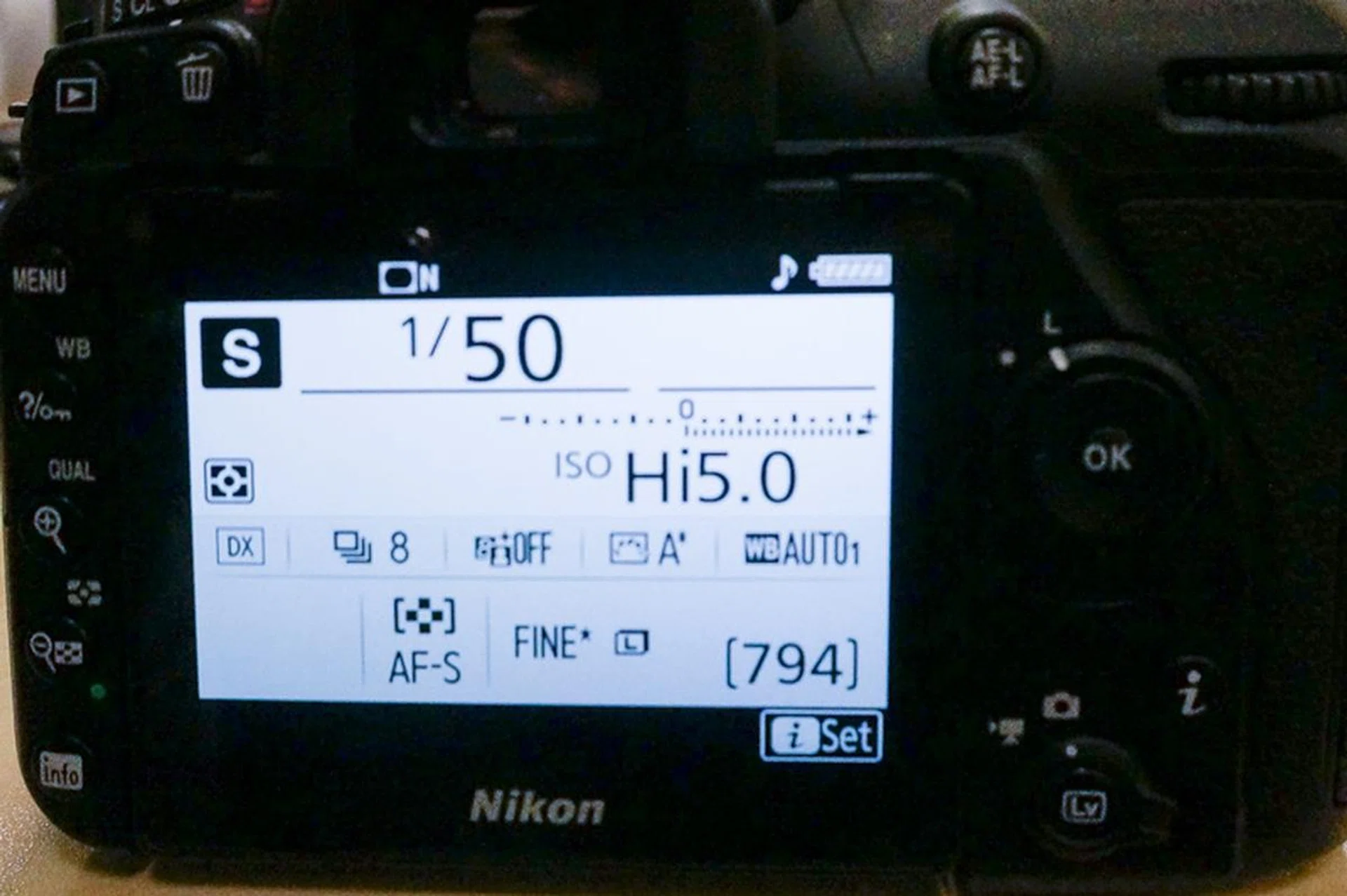
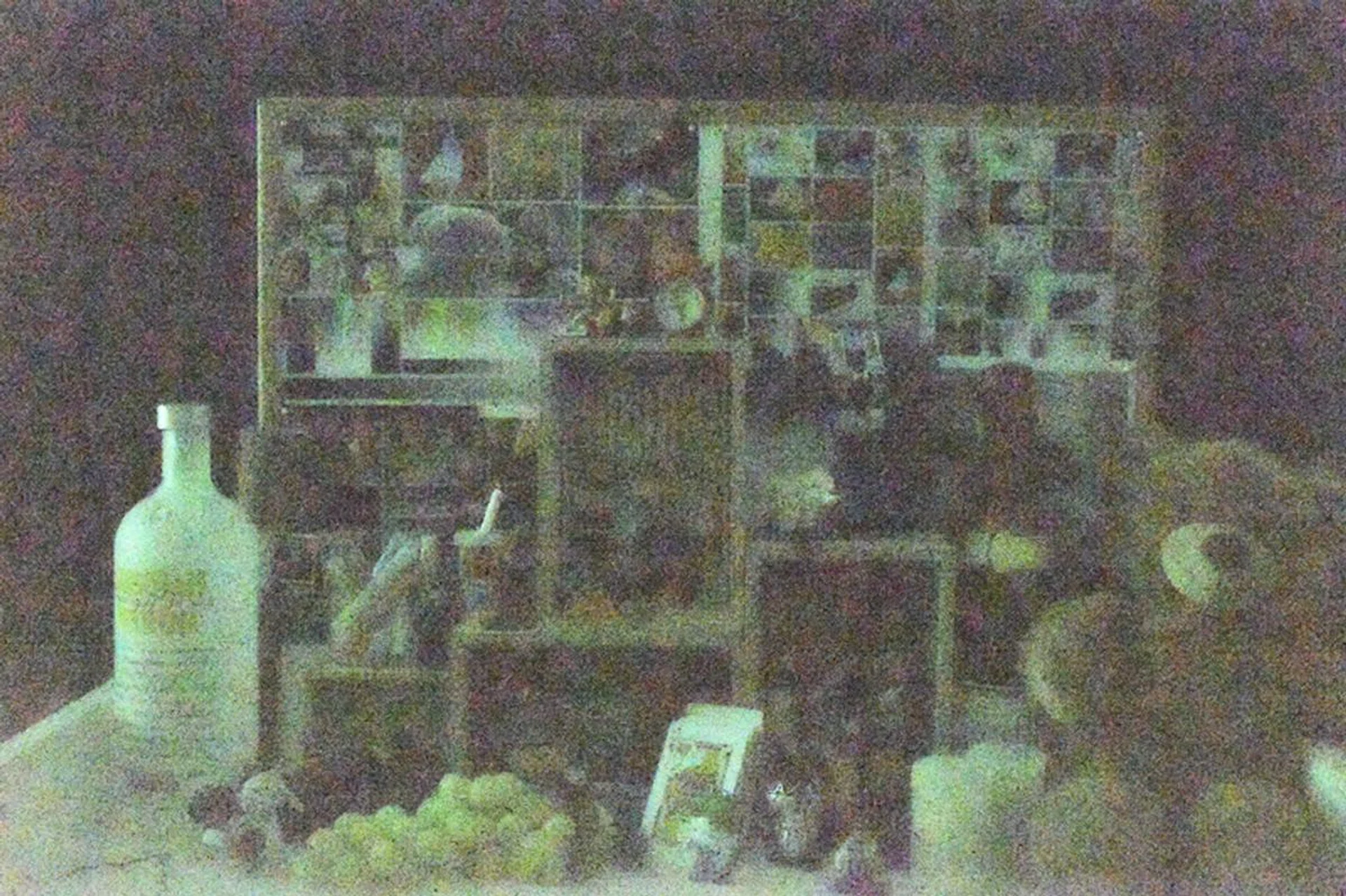
27mm at f/5.6, 1/250s, ISO 1,640,000 (Image taken with a beta model of the D7500)
Something else the D7500 seems to have gained from the D500, is superlative High ISO capabilities. Where the D7200 could only manage a max sensitivity of 25,600 (expandable to 102,400 in black & white), the D7500 goes up to ISO 51,200 natively, expandable to ISO 1,640,000 (Hi 5)! Of course, you're not going to be shooting at that level, but it does give an indication of the high ISO capabilities possible with this camera. The shot above was taken in close-to pitch black darkness, with the only light source streaking in from below a door some four meters behind us to illuminate the room (and the scene).
4. In-camera Image Stabilization (for video)
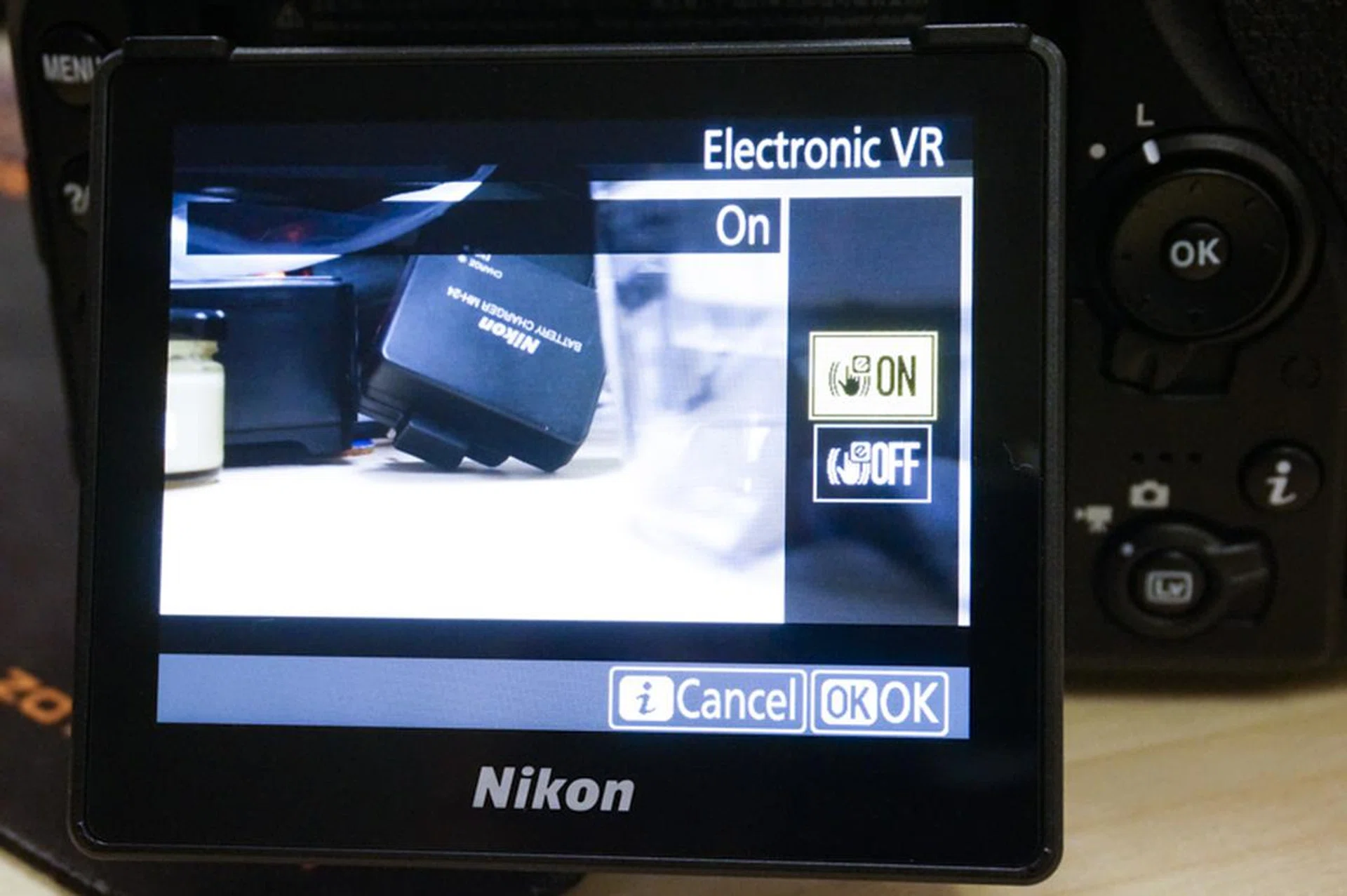
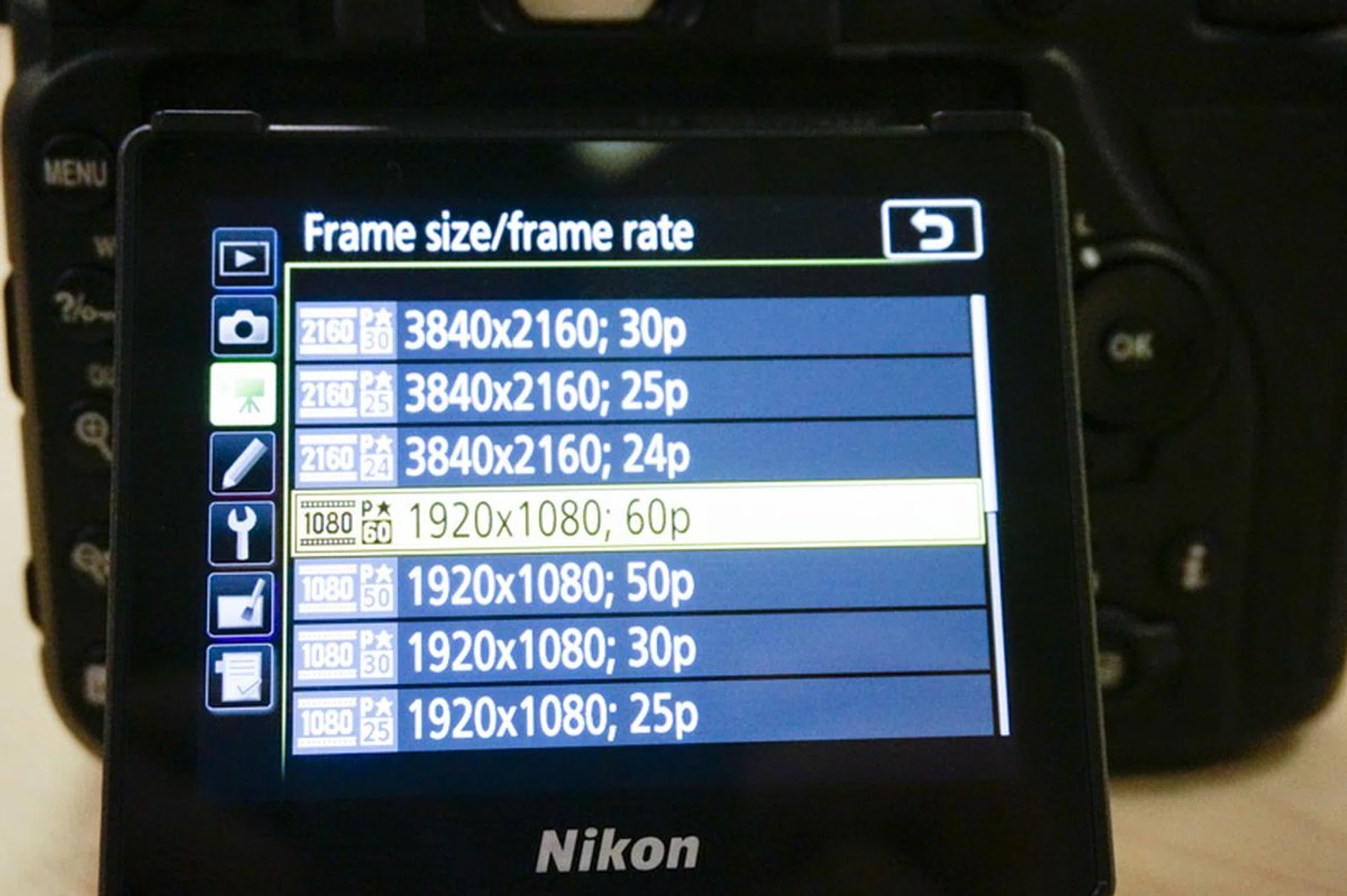
You have to capture below 4K quality for the video stabilizing option.
Another feature gained from the D500, the D7500 also offers the option of in-camera image stabilization for video. However it does seems like the support is limited to footage shot in Full HD resolutions and below, as the option becomes greyed out if you try to shoot in 4K. That's likely because it's digital stabilization and so requires cropping into the frame somewhat to stabilize the video.
5. Single SD card slot

Only one slot means no in-camera backup of images.
This is the one change we didn’t like so much. The D7500 now only has a single card slot, unlike the dual card slot offerings on the D7200. Having two card slots allows for more flexibility, and is almost a given on any semi-professional camera, so not having this option is a loss.
Given that the set in our hand is still a pre-retail model, there may be some changes in the final image quality, so we'll leave out any serious image comparison till we get the final production version. Before we go though, here are the basic specs for the new camera:-
Lens mount | Nikon F mount (with AF coupling and AF contacts) |
Effective Pixels | 20.9 million |
Image processing Engine | EXPEED 5 |
Shutter speed | 1/8000 to 30 s in steps of 1/3 or 1/2 EV, bulb, time, X250 |
Flash sync speed | X=1/250 s; synchronizes with shutter at 1/320 s or slower (flash range drops at speeds
between 1/250 and 1/320 s) |
ISO sensitivity | ISO 100 to 51200 in steps of 1/3 or 1/2 EV; can also be set to approx. 0.3, 0.5, 0.7
or 1 EV (ISO 50 equivalent) below ISO 100 or to approx. 0.3, 0.5, 0.7, 1, 2, 3, 4 or 5 EV
(ISO 1640000 equivalent) above ISO 51200; auto ISO sensitivity control available |
Autofocus | Nikon Advanced Multi-CAM 3500 II autofocus sensor module with TTL phase detection,
fine-tuning, 51 focus points (including 15 cross-type sensors; f/8 supported by one
sensor), and AF-assist illuminator (range approx. 0.5 to 3 m/1 ft 8 in. to 9 ft 10 in.) |
Movie sizes and frame rates | 3840 × 2160 (4K UHD); 30p (progressive), 25p, 24p 1920 × 1080; 60p, 50p, 30p, 25p, 24p • 1280 × 720; 60p, 50p |
Battery | One EN-EL15a Rechargeable Li-ion Battery |
Size | 135.5 × 104 × 72.5 mm |
Weight | Approx. 720 gwith battery and memory card but without body cap; approx.
640 g(camera body only) |
Hopefully retail units reach us soon, then we'll really be able to put the camera through its paces!
Our articles may contain affiliate links. If you buy through these links, we may earn a small commission.