
Generative AI to be taught to all Ngee Ann Poly students from 2026
Students at Ngee Ann Polytechnic will learn how to use generative artificial intelligence to prepare them for the workplace.
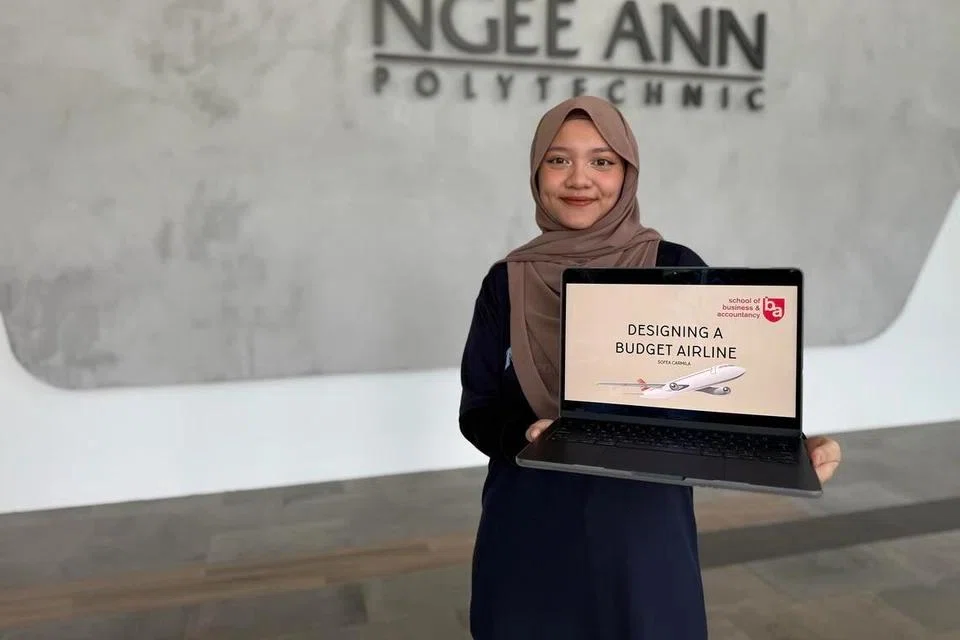
All students at Ngee Ann Polytechnic (NP) will learn how to use generative artificial intelligence, or Gen AI, from January, to prepare them for workplaces where the technology is increasingly part of everyday work.
Instead of being taught as a standalone subject, Gen AI will be embedded across the curriculum, with all students – regardless of their course of study – using it every year in at least one module through a structured approach.
Modelled on the PAIR framework – short for problem, AI, interaction and reflection – developed by Professor Oguz Acar, an expert in Gen AI at King’s College London, the approach will guide students through four steps: defining a problem clearly, selecting appropriate AI tools, testing them through hands-on use, and reflecting on how the technology influences their thinking and decisions.
The aim, NP said, is to ensure that AI supports human judgment, creativity and problem-solving rather than replacing them.
Students will be taught to consider the ethical use of AI, including verifying accuracy and understanding its limitations. NP hopes to develop graduates who are confident in using new technologies yet able to make independent decisions in fast-changing workplaces.
Other local polytechnics have introduced AI into their curricula.
At Republic Polytechnic, Gen AI is embedded across all diploma courses, with students introduced to AI fundamentals and critical thinking, and AI tools used in discipline-specific ways.
Singapore Polytechnic equips all students with basic AI literacy through a common core curriculum. Nanyang Polytechnic has embedded baseline Gen AI training into all diploma programmes since October 2025.
Temasek Polytechnic launched an experimental design studio in January 2024, giving design students a space to learn and experiment with Gen AI.
NP principal and chief executive Lim Kok Kiang said the polytechnic has been building its AI capabilities since 2022, starting with a Gen AI hub and AI-focused tracks in its information technology courses.
“AI is evolving very quickly, and our curriculum has to evolve with it,” he added.
While mastering AI tools is important, it is equally crucial for students to learn how to frame problems well, think critically and use AI responsibly, he said.
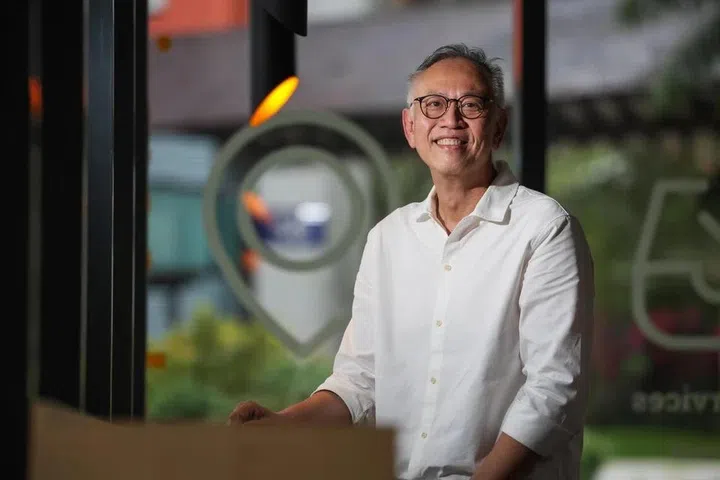
Ngee Ann Poly principal and chief executive Lim Kok Kiang.
Mr Lim added that NP’s approach is designed to be simple and flexible, allowing it to be applied across different subjects and encouraging lecturers and students to learn alongside one another.
“At times, the young learner may be more digitally savvy than the domain expert, but the two can come together… It’s no longer just about teaching but about facilitating learning,” he said, noting that this approach allows fundamentals to be taught while encouraging experimentation.
Purposeful usage
Third-year NP student Sofea Carmila Rohaizat, 19, was initially hesitant to try Gen AI tools, fearing they might affect her grades or lead to accusations of academic misconduct.
“I didn’t know what was allowed and what wasn’t… I heard stories of students whose reports were flagged and ended up getting zero, and that really scared me. So I stayed away from it in Year 1,” said Ms Sofea, who is pursuing a diploma in tourism and resort management.
Her perspective changed in her second year, when she was encouraged to use AI as part of an individual assignment.
During her time at Sentosa Development Corp in 2025, as an events and programming intern, she used AI tools like ChatGPT and Gemini to refine event ideas and social media mock-ups, which she felt enhanced her communication and critical thinking skills.
“Although using AI will help us tremendously, we need to know where our limits are. At the end of the day, we must feel rewarded for earning this diploma.
“Gen AI can only do so much, but as humans, we can do so much more,” she said.
Ms Sofea plans to pursue data analytics at the National University of Singapore and believes the PAIR framework will benefit her in both her future studies and professional life.
As part of NP’s AI overhaul, the school is updating its diploma offerings. This includes the launch of a diploma in computing with law, the first polytechnic programme of its kind here.
The programme is designed to meet a growing demand for professionals who can bridge technology with legal work, as law firms, companies and public agencies increasingly adopt digital tools.
NP plans to admit 40 students for its first cohort in 2026. They will learn software development, cybersecurity, AI and database management, alongside contract law, corporate governance, intellectual property and data protection.
The diploma was developed in response to rapid changes in the legal sector, said Mr Lim, as law firms and technology start-ups invest more heavily in AI and digital tools.
It is supported by industry partners including Rajah & Tann Singapore and the Singapore Academy of Law, which will provide mentorship, insights and internship opportunities.
Mr Lim added that the skills gained will also benefit graduates beyond the legal tech sector.
“A grounding in law is increasingly important today, as governance and accountability matter across industries. Even for those entering the ICT sector, this knowledge can help them stand out and make more informed, responsible decisions,” he added.
Final-year ICT student, Mr Elvis Chan, 21, is now on a six-month internship in Vietnam as an AI engineer.

Final-year NP ICT student Elvis Chan interning as an AI Engineer
Working with a start-up focused on legal work, his role as an AI agent intern involves supporting tasks such as drafting contracts and agreements.
Despite having little prior legal knowledge, he has been able to automate legal document generation and streamline workflows, highlighting the demand for talent who can bridge tech and law.
Through this internship, he has observed the growing importance of AI in legal work, along with the ethical and regulatory responsibilities.
Said Mr Chan: “Today, many industries no longer operate purely within one discipline, and legal technology is increasingly intertwined. Instead of forcing students to choose between law or technology, the new diploma allows them to develop a strong foundation in both areas from the start.”
NP’s School of Engineering has also updated its curriculum to keep pace with the growing complexity of modern infrastructure and industrial systems.
All engineering students will receive a stronger foundation in AI starting from April and will have an option to take cross-disciplinary specialisations that expose them to emerging fields while retaining core engineering skills.
New offerings include a space technology programme, which equips students with skills in systems design, electronics and data-driven applications.
There is also a diploma-level operational technology cybersecurity track, focused on safeguarding critical infrastructure such as power, water and transport systems.
Collectively, these new initiatives reflect NP’s focus on evolving education alongside technological and industrial shifts, said Mr Lim.
“By embedding AI literacy across disciplines, linking learning to emerging sectors, and encouraging ethical and adaptive thinking, we are committed to equipping our learners with the skills and perspectives to navigate complex environments and contribute impactfully to society.”
Note: This article was written by Elisha Tushara and first appeared in The Straits Times on 5 January 2026.
Source: The Straits Times