
Tech Talk: Will video conferencing displace business travel post Covid-19?
Business communication has been deeply impacted by Covid-19. Can the ever-evolving tools and platforms replace business travel and key events?
Note: This feature was first published on 20 May 2020.

Image courtesy of Logitech
Business communication in a virus hit world
In 2003 when SARS first hit Asia, businesses introduced travel bans to protect staff and prevent the disease from spreading to uninfected staff. At the time the use of alternatives like video conferencing had been heralded for keeping staff in touch with each other despite the chaos happening around them.
At the end of 2019, Wuhan, a city in China’s Hubei province announced that it had discovered a new respiratory infectious disease, COVID-19 or what was first called the Novel-coronavirus-2.
As it spread globally, businesses and governments worldwide began to issue travel advisories banning work teams and individuals, especially those who had been to China recently, from mingling and possibly cross-infecting each other.
As concerns and the number of infections grew, it began impacting more than just work travel. Global events like GSMA’s annual Mobile World Congress, Tokyo Games Show, Computex 2020, Apple WWDC and many others have either cancelled, postponed or converted their event to a virtual event format.
Businesses, starting with those in China, began telling staff to work from home to reduce the chances of the virus spreading.
Banning travel is one thing, but communications must still go on.
According to Preeti Wadhwani, Research Manager at Global Market Insights (GMI), increased internet penetration has given rise to more video conferencing platforms.
Following SARS many companies developed real-time quality monitoring tools, such as HipChat, Google Hangouts, and Skype, for multi-vendor and complex video environments to improve their networking and quality issues.
Businesses and employees still need to work and communicate with each other and customers. While phone calls alone are insufficient, there are solutions and vendors have developed tools that can make things easier.
The right communication tools
As network speeds and stability have improved over the years, we've seen the rise of IP telephony and with that, a rise in initially Voice over IP (VoIP) and now Video over IP communications or video conferencing as we're using it here.
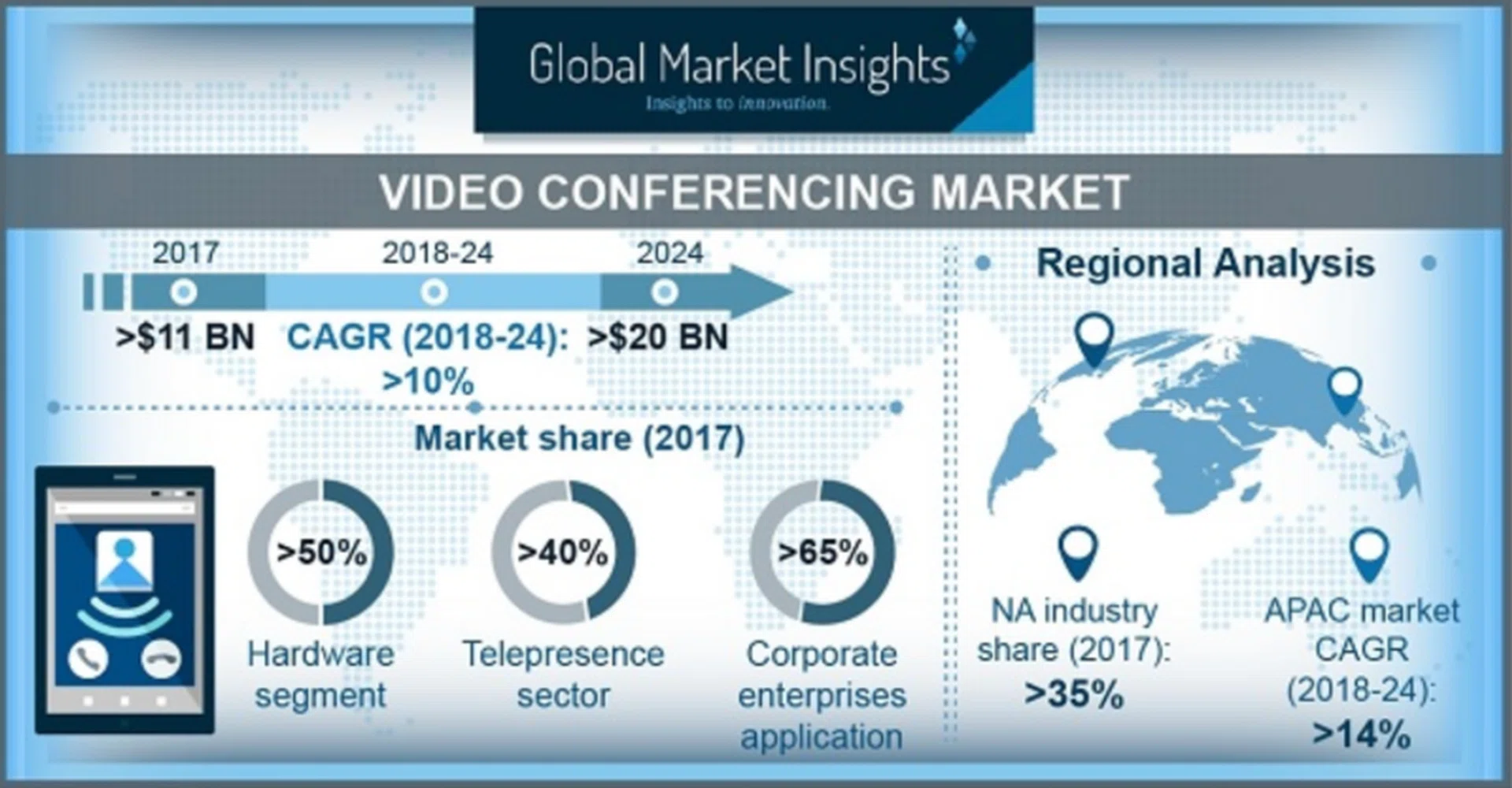
The Video Conferencing Market size is anticipated to grow at a CAGR of more than 10% from 2018 to 2024. Image courtesy of GMI
But finding what is right, especially these days, isn’t always easy.
“Think about it: we are dealing with a quad generational workforce,” Aruna Ravichandran, VP Marketing, Cisco Collaboration said, “Four generations, who each have different communications needs and priorities. You need one platform that lets every worker communicate in the way he or she wants—you don’t need disparate, unconnected tools that one generation uses, and the others are excluded from.”
Sami Ammous, Vice President for East Asia and the Pacific at Avaya said that back in 2003, when SARS first hit, video conferencing required the use of dedicated rooms and facilities; now nearly everyone has access to video conferencing on their smartphone or tablet. “We are far more comfortable with the technology, it is easier and cheaper to use, and there are added features like session recording and document sharing, which has increased the benefits of video conferencing,” he added.

StarHub is receiving increasing customer requests for collaboration tools - Charlie Chan, Chief of Enterprise Business Group, StarHub.
Charlie Chan, Chief of Enterprise Business Group, StarHub said that StarHub is receiving increasing customer requests for collaboration tools (web and video conferencing) and services that allow fixed voice communications for their employees to be contactable at their fixed-line number while working remotely. However, he cautioned that video conferencing tools will not fully replace business travel as face-to-face deal negotiations and closures are still required.
Technological innovations, such as AI, VR, and advanced video compression formats, have helped in improving the quality of video conferencing solutions, Preeti Wadhwani said. For example, Jabra specializing in audio & video equipment and owned by GN Audio launched Jabra Panacast, a 4K 180-degree video conferencing camera, in partnership with Zoom Video Communications, Inc. The solution integrates AI-enabled intelligent panoramic video that can read body language and make eye contact, thereby delivering in-person meeting conferencing experience, Wadhwani added.
Finding out what really works
According to Bryan Lee, Logitech’s Video Conferencing Category & Business Manager for South East Asia, the industry has moved from the expensive, complex video conferencing hardware systems, into cloud-based platforms on subscription models, such as Microsoft Teams, Zoom, and Google Meet. “While video conferencing cannot replace face-to-face meeting completely, but it is the next best option available,” Lee said, “On top of that, there are productivity and cost-saving benefits to consider.”
But understanding the real business needs is something often overlooked said Samir Sayed, Managing Director, ASEAN & Korea at Poly. He cautioned that too many organizations just try to just throw money at video conferencing solutions without taking the time to figure out their firm’s actual needs.
Although video conferencing has several benefits for business communication, it does not fully replace travel, Preeti Wadhwani cautioned. "Drawbacks, such as poor connections, dropped calls, and disorienting lags, have limited video conferencing replacement for physical meetings," she said, "The lack of security & privacy, technical complexities, lack of sync between time zones, and dependency on cameras & microphones have also resulted in the less adoption of video conferencing as a replacement for business travel."
SMBs facing the challenges with smaller budgets
Tech vendors aren’t the only companies supporting businesses affected by the travel ban.

Image courtesy of StarHub
StarHub announced that the SMB customers of StarHub would receive a free subscription to the softphone app of its cloud telephony solution, from mid-February until 1 September 2020. Chan said, “For the continuation of business in times of emergency, companies may need to arrange for their employees to work remotely. Seamless communication is therefore essential to ensure minimal disruption to business operations.”
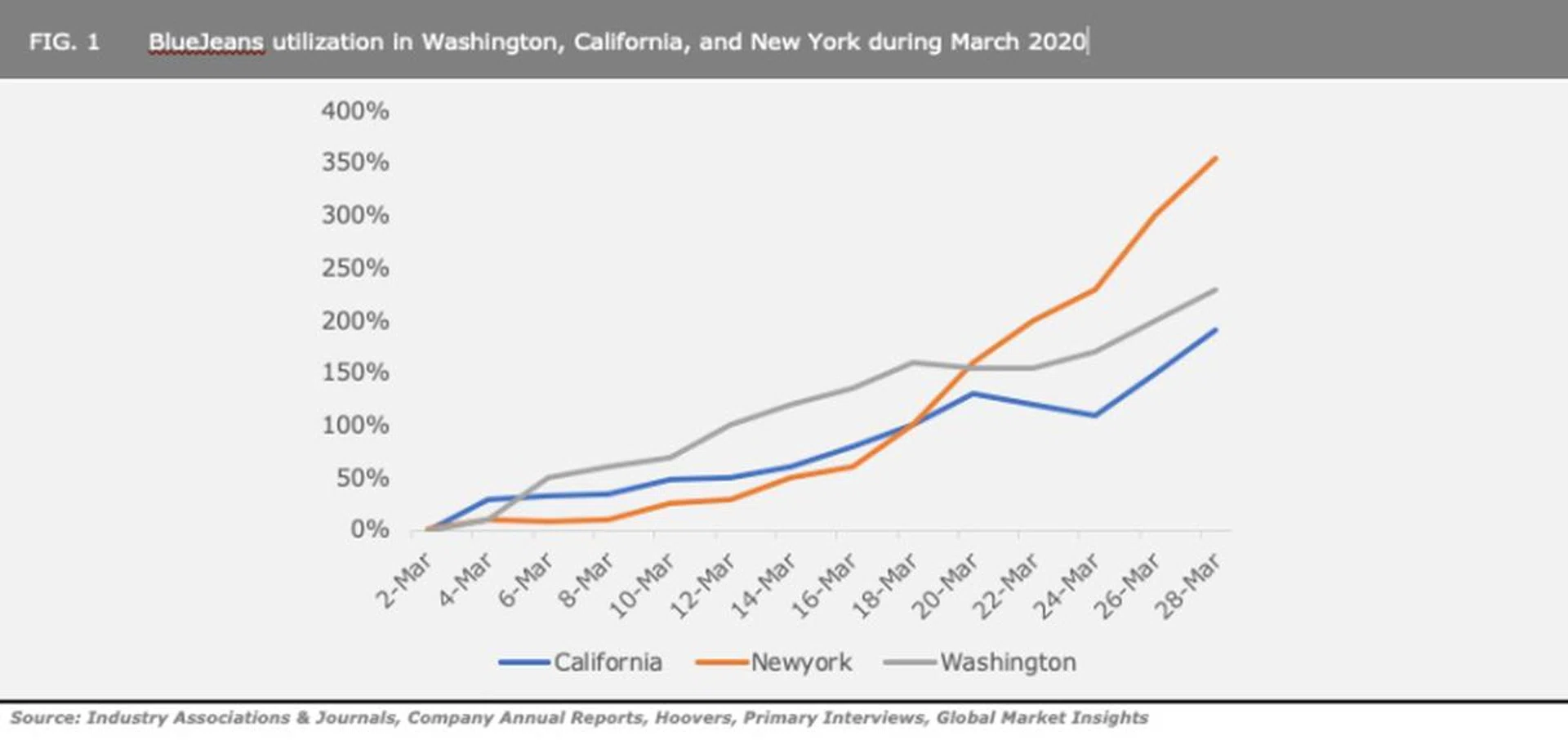
You can see the rapid rise of video conferencing use here. Image courtesy of GMI
Do you really need to pay for Video?

Image courtesy of Avaya
The problem with voice Bryan Lee said was that it often failed to engage as it lacked visual cues. This often led to attendees to do something else rather than concentrate on the person taking, When one is on video, there is a higher tendency for them to focus on the meeting, instead of multitasking.
But, Lee said, many companies are not equipped with video conferencing solutions that allow them to seamlessly communicate within, and outside of their organisation. Solutions like Microsoft Teams, Zoom and Google Meet are some examples which allow internal and external communication.
When moving from a free to a paid video conferencing solution, Sami Ammous, Managing Director ASEAN at Avaya said that the suitability of meetings for a video conference is driven more by the nature of the meeting than the number of people attending. “For instance, if you are providing training or a technical update, a session where only one or two people are speaking, then you can have a large audience attend the video conference.”
Free solutions may work reasonably well for very small businesses, Charlie Chan, Chief of Enterprise Business Group, StarHub said, but mid-sized businesses tend to use more sophisticated enterprise solutions. A key differentiator of paid services is the ability to offer a direct call option for the audio connection, he explained. “While a web conference can be supported even over a poor network connection, a poor voice connection will result in ineffective and frustrating conversations,” Chan said.
Chan also cautioned businesses not to try to have too many attendees in a single call. “The practical limit is generally 15-30 users. Above that range, the effectiveness of the meeting drops significantly. Video conferencing platforms generally will show only the speaker or up to about 6 parties. It is noted that the quality of video streaming is dependent on the connectivity that the users subscribe to as the data consumption is more intensive. More often than not, users will disable the video for a better quality voice and/or document sharing experience,” he said.
Will you need to worry about security?
But being a business means that security is always a business concern. Having a third party listening in on calls, the integrity of data as it is being shared or even where the data is stored are all common concerns. The apps themselves need to be secure as Zoom found out.
However, enterprise-grade video conferencing solutions provide better security than those used by consumers. The moderator will have more visibility to which parties are on a call and some solutions also allow the moderator to kick out unrecognized individuals and lock a conference so that no one else can join. Some organisations have concerns about data sovereignty, as data on most cloud services are not retained in Singapore. For those customers, on-premise video conferencing solutions can be obtained, allowing companies to retain full control of the conferencing environment.
For Cisco’s Ravichandran, team collaboration tools aren’t just the way you share documents. “AI and machine learning turn these tools into virtual assistants that create real-time transcripts, take notes, capture decisions and action items, even automatically update records in other tools the team uses,” he said. As AI and ML perform more of the organizational work, workers are freed up to take on higher-level tasks. Using smartboards, brainstorming sessions can be saved and then picked up in the next collaborative session between employees across geographies.
Is it here for good?
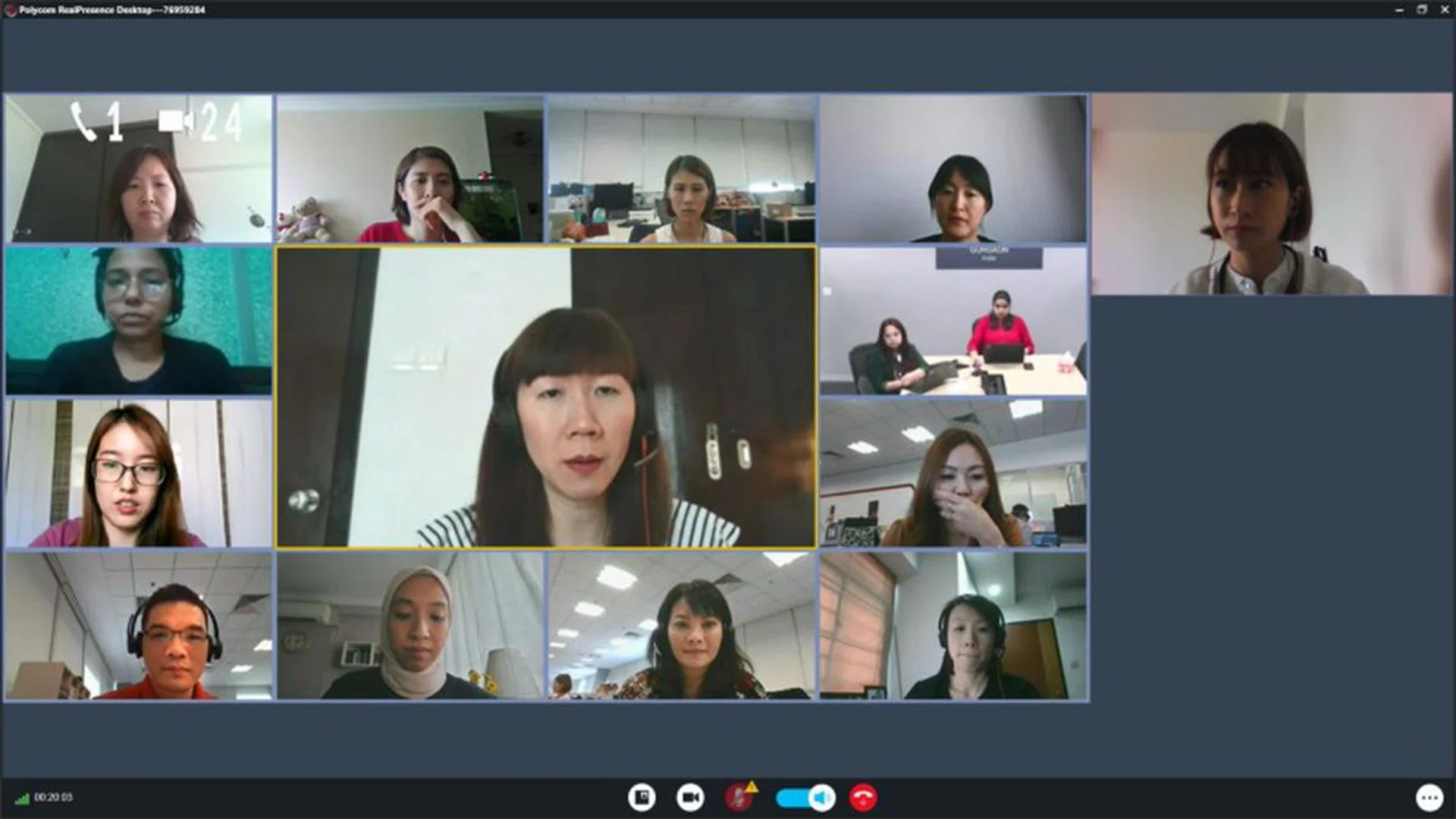
Image courtesy of Poly
Curbs on travel being issued by governments are increasingly suggesting video conferencing as a replacement tool. A report by New Centre from Korea, The Korea Trade-Investment Promotion Agency, or KOTRA is helping Korean businesses keeping communication going with video conferencing and KOTRA itself is planning to expand its video counselling software so it can hold up to 50 meetings at the same time. The US Centre for Disease Control reminded businesses to ensure they have the information technology and infrastructure needed to support multiple employees who may be able to work from home.
Right now, many of us are working from home as governments impose movement restriction orders. Even students and schools have had to resort to home-based learning with video conferencing tools like Zoom. Although that had some initial teething issues, it is slowly making its way back into use.
At the end of SARS, all the talk was around the benefits video conferencing had brought to businesses and how it had kept everyone in touch and working together.
Ammous from Avaya said that COVID-19 and SARS are similar in the way they impacted business travel as both saw companies lean on video-conferencing to handle disruptions to physical meetings. But he added that videoconferencing has come a very long way since 2003. It is lower cost, higher quality and easier to use on multiple devices. The combination of the broader impact on travel and the ubiquity of conferencing solutions will lead companies to rethink their need for travel in general, and whether technology can be the preferred method of collaboration.
But will businesses forego travel in the long run or only in times like these?

Samir Sayed, Managing Director, ASEAN & Korea at Poly. Image courtesy of Poly
Has business travel gone the way of the dodo?
Foregoing travel in these situations is the sensible thing to do, said Poly’s Sayed. “But they do need to make sure that for businesses to continue operating productively, employers need to be more aware of the tools and technologies that are available today that can help them spend more time on growing the business, instead of recruiting IT experts to help figure out how to make things work.”
But is video conferencing entrenched enough to displace business travels?
While there are signs that the technology is increasing its foothold in businesses, mankind, unfortunately, has a very short memory.
Looking back at the SARS period, for example, while business travel was curtailed during the period the virus was active, it soon returned to normal levels once fears had died. Things could be different this time around. Let’s hope things change for the better.
Don't miss reading these resources!
Read Next (1): Transcribe your video conference in-meeting notes automatically with AI!
Read Next (2): Get these virtual backgrounds to spice up your video calls!
Read Next (3): Video hosting tips you never knew for Google Meet
Read Next (4): How to secure any video conferencing app
Read Next (5): How to create stronger passwords that are harder to crack
Read Next (6): Protecting remote work environments
Our articles may contain affiliate links. If you buy through these links, we may earn a small commission.