
Note: This review was first published on 27 August 2025.
I’m old enough to remember when MPVs were popular. Cars like the Honda Stream and Toyota Estima were the dream cars of many families. But then, they were replaced by SUVs, which, to me, make less sense because they are neither as practical nor as economical. At any rate, MPVs are making a comeback these days as luxury family vehicles, and I think the Xpeng X9 might just be one of the best.
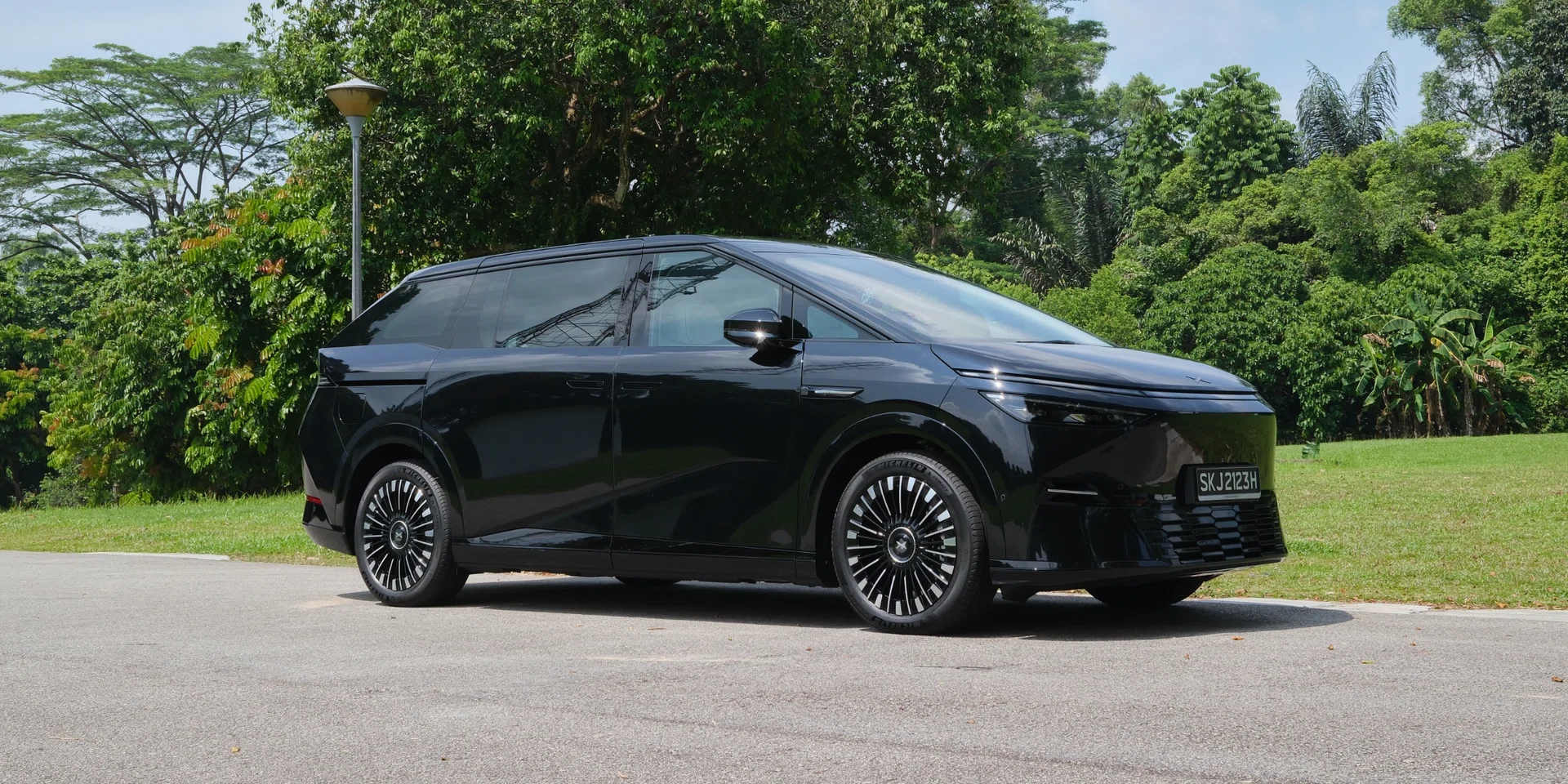
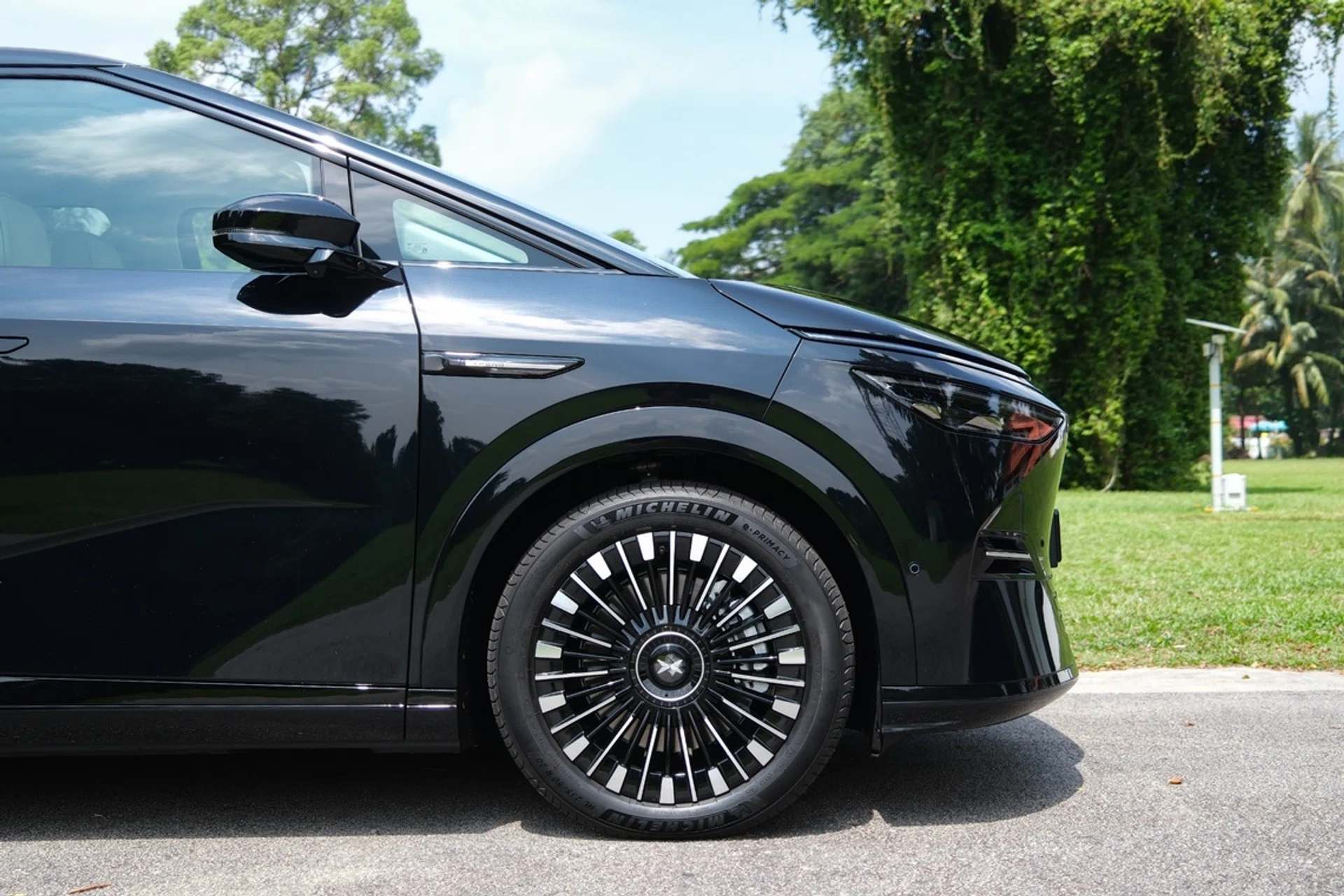
The Xpeng X9 is huge. At 5.3m long and nearly 2m wide, it’ll dwarf most cars on the road. Parking is a pain because most lots are too small, but manoeuvring in tight spaces is not, because the X9 has rear-wheel steer. For a car this size, its turning circle is impressively small. And with its army of sensors and cameras, even tight carparks were not too much of an issue.

The styling is pretty generic. Maybe it’s just me, but because EVs don’t need a large grille for cooling, most EVs look somewhat same-ish to me. There is, however, one interesting styling flourish, and that’s the steeply sloped rear windscreen. Not only does it give the X9 a more interesting side profile, but it also makes it look sleeker than the competition.
The design of the rear windscreen does mean there’s less vertical height in the boot, but Xpeng has mitigated this somewhat by giving it a very low boot floor, so it remains usable – just not for very tall items. The rear seats can also be electrically folded to expand the X9’s carry capacity to over 2,500L. If you have the strength to pick it up, chances are, it’ll fit in the back of the X9.
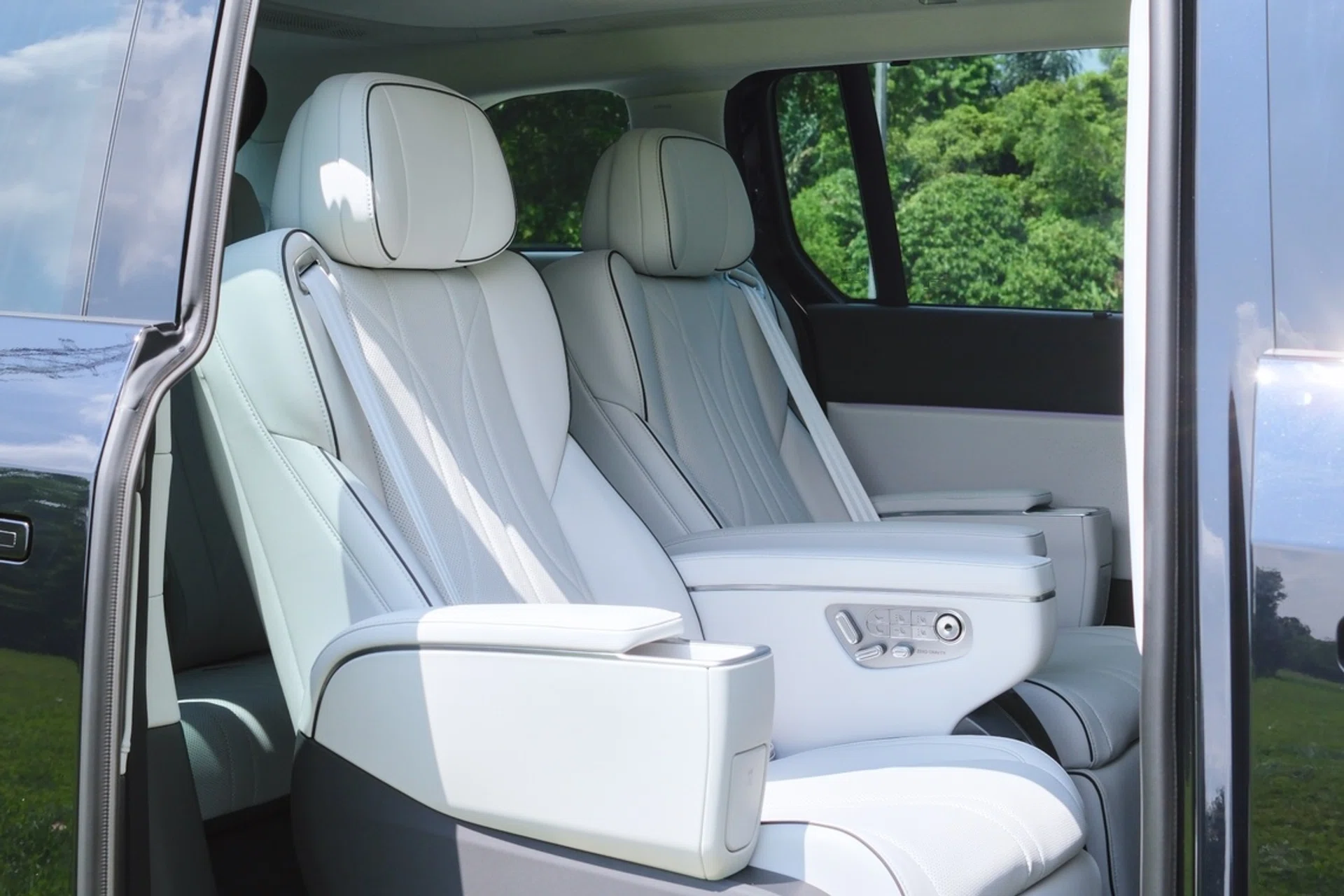
In the second row, you’d find two extremely comfy captain seats.
Passengers will travel in comfort in the X9. The second row passenger seats are captain chairs that are clad in soft leather. It’s plush, highly adjustable, and features heating, ventilation, and massaging functions. It also has a “zero gravity” position, which supposedly puts you in a position that minimises stress and weight on the body. I found it extremely agreeable.
To entertain passengers, the X9 has a 21.4-inch ceiling-mounted screen, which is one of the largest you’d find in any car. It’s a high-quality display, and when coupled with the excellent 23-speaker Xopera sound system and extremely comfy chairs, it means long journeys will not be a problem.
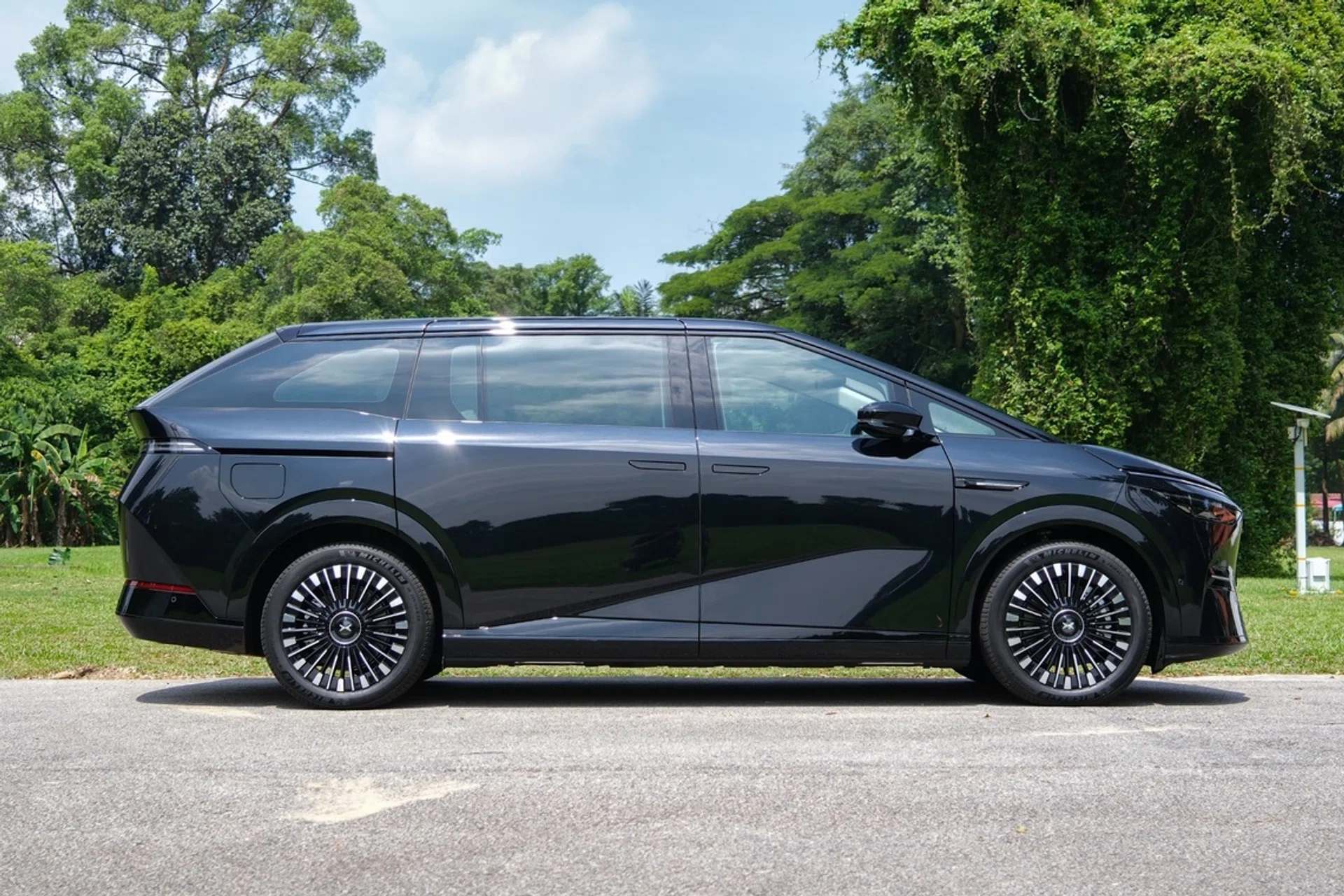
The X9 is very long. Also note the slooping rear windscreen.
The version I’m testing is the Premium Seat version, which has slightly narrower captain chairs. There’s a Grand Seat version, which has wider seats in the second row. Even so, it’s hardly what you’d call cramp, and the upside to the narrower Premium seats is you can move in between them to get to the third row – you can’t do that with the Premium Seat version.
As long as passengers in the second row don’t get greedy and recline their seats entirely, the third row is genuinely usable. What you need to know is that there’s more room in the third row of the X9 than in the back seat of most compact sedans and hatchbacks. I’m 1.8m tall and I could sit back there quite easily.
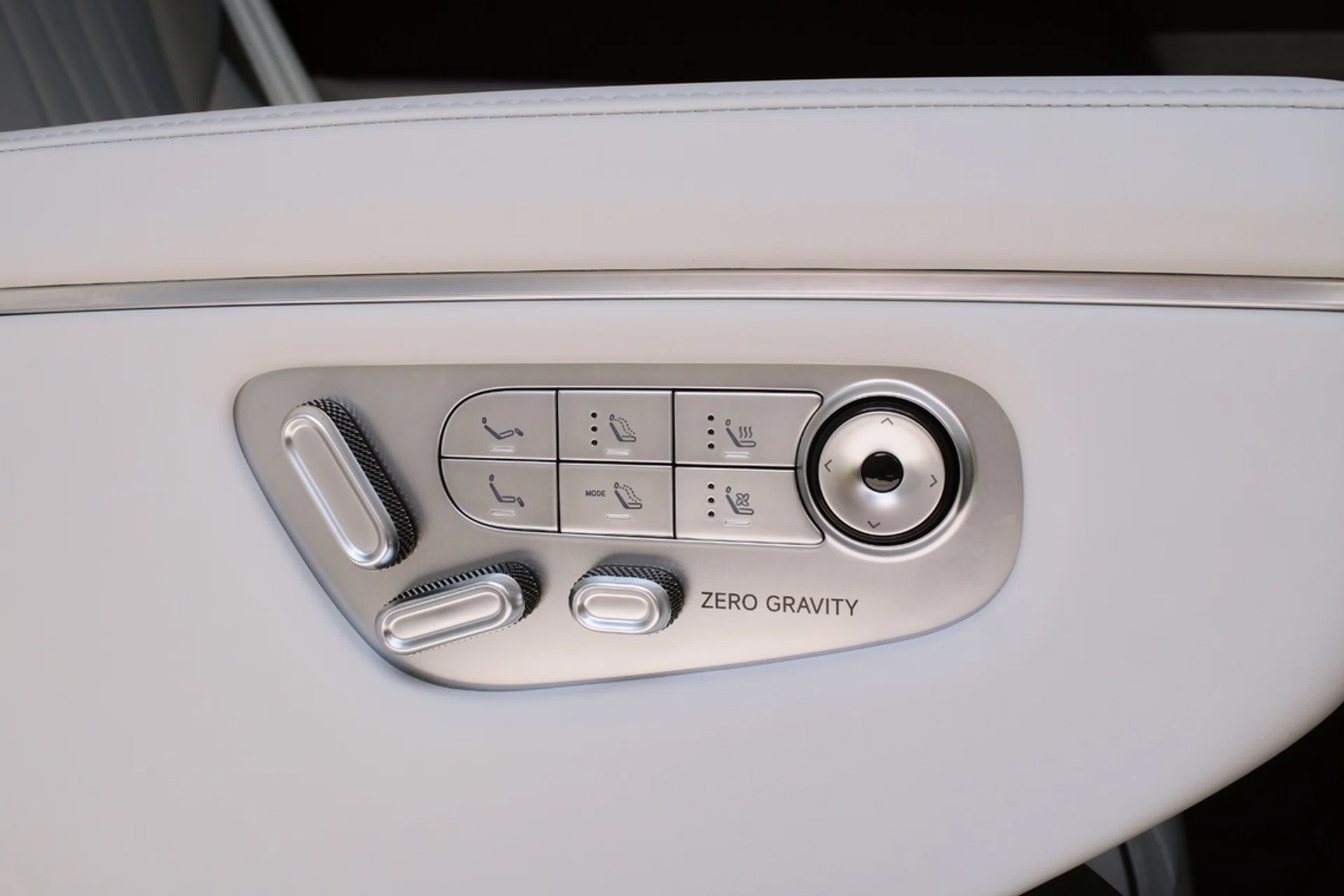
The captain chairs have loads of adjustability, heating, ventilation, and massage functions.
The ride is sublime. Like so many cars of its class, the X9 is equipped with air suspension, but it’s one of the best-tuned systems I’ve experienced. In the Standard mode, it exhibits very little of the floaty feeling that plagues other cars with similar setups, which makes you feel like you are in a boat lost at sea. Body motion is well-controlled and soaks up bumps, creases, and undulations in the road expertly. The Standard mode is so well-judged that it’s pointless to use the Comfort and Sport modes. Comfort is much too soft, while Sport is comically stiff.
While the ride is a thing of wonder, the handling is less impressive. The steering feels vague no matter what setting it’s in. And like most other cars that weigh this much (well over 2,500kg), it has a great sense of inertia. It absolutely does not like to be hurried into direction changes.
The air suspension is expertly tuned and extremly comfortable.
Xpeng claims a power output of 315hp and a 0-100km/h time of 7.8 seconds. These numbers might look pedestrian, but having experienced 600hp in the Zeekr 009, I can assure you that the X9’s power figure is much more sensible. The X9 never feels slow; it just feels like it has the right amount of grunt in relation to its weight and handling setup. If you think you need more power, I’m not sure I want to share roads with you.
A more sensible power output also means better range (and lower road tax). In my weekend with it, I covered over 380km and was left with 22% of charge. At this point, the car’s computer estimated that I had about 130km of range left. That seems a bit pessimistic, because based on the trip computer, I averaged about a very remarkable 16.5kWh/100km, which means I should be able to clock 600km if I fully drain the X9’s 101.5kWh battery. Either way, the X9 should be able to cover over 500km when fully charged.
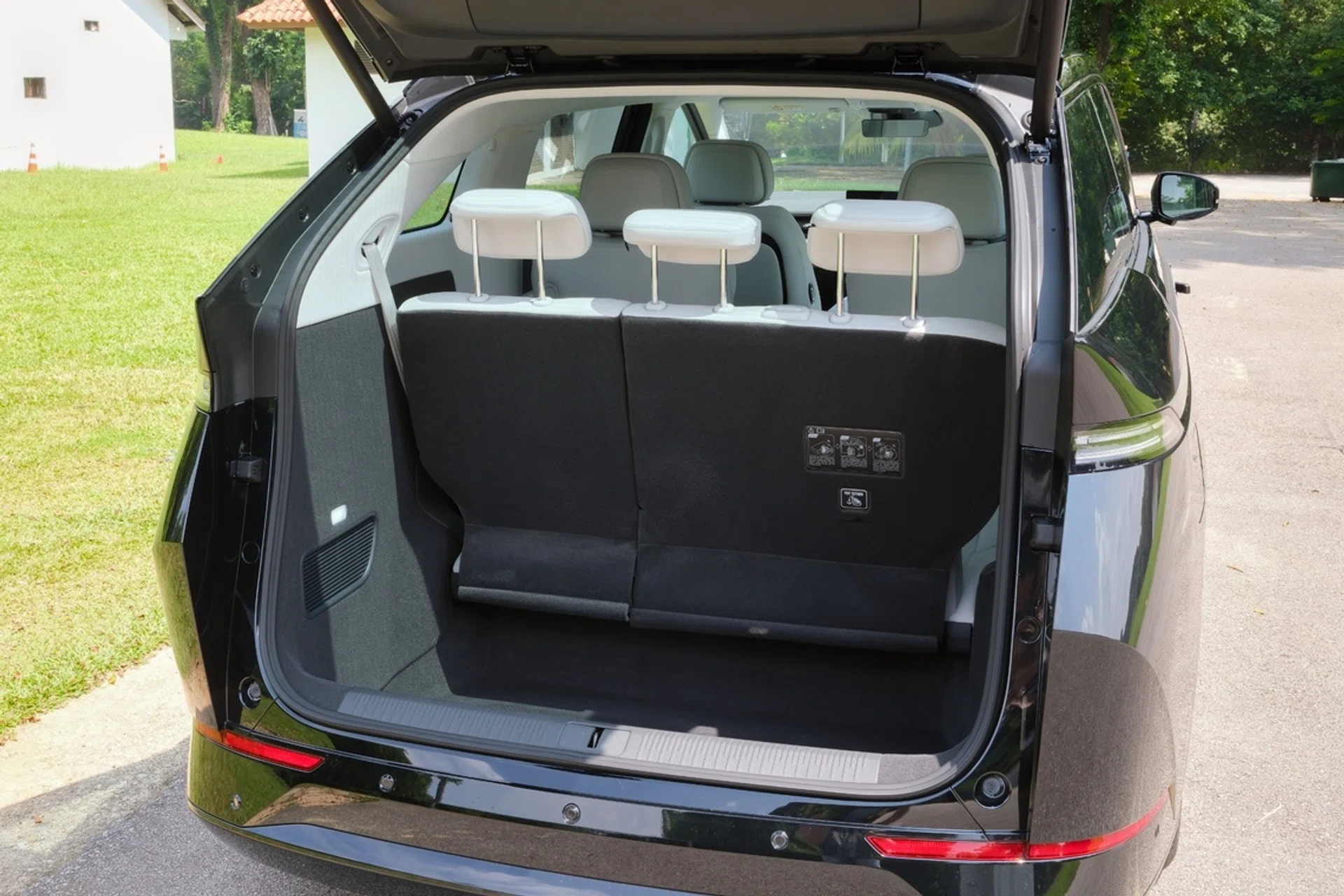
The sloping rear windscreen does slightly compromise boot space, but it’s still big enough for a couple of luggage.
All things considered, the Xpeng X9 really is a very complete luxury MPV. It’s not perfect. It doesn’t handle well, boot space is a tad compromised, and some will be disappointed with its lack of a frunk. But crucially, it has perky performance, decent range, loads of features, and will easily seat six or seven in comfort. Anyone who needs to transport a large family should put the X9 on their shortlist.
Availability and pricing
The Xpeng X9 is available now and available in two variants: Premium Seat and Grand Seat. The Premium Seat variant is S$340,999, while the Grand Seat variant is S$355,999. The main difference lies in the second row captain chairs. Both versions have the same single-motor drivetrain. To schedule a test drive and for more information, visit the Xpeng website.