
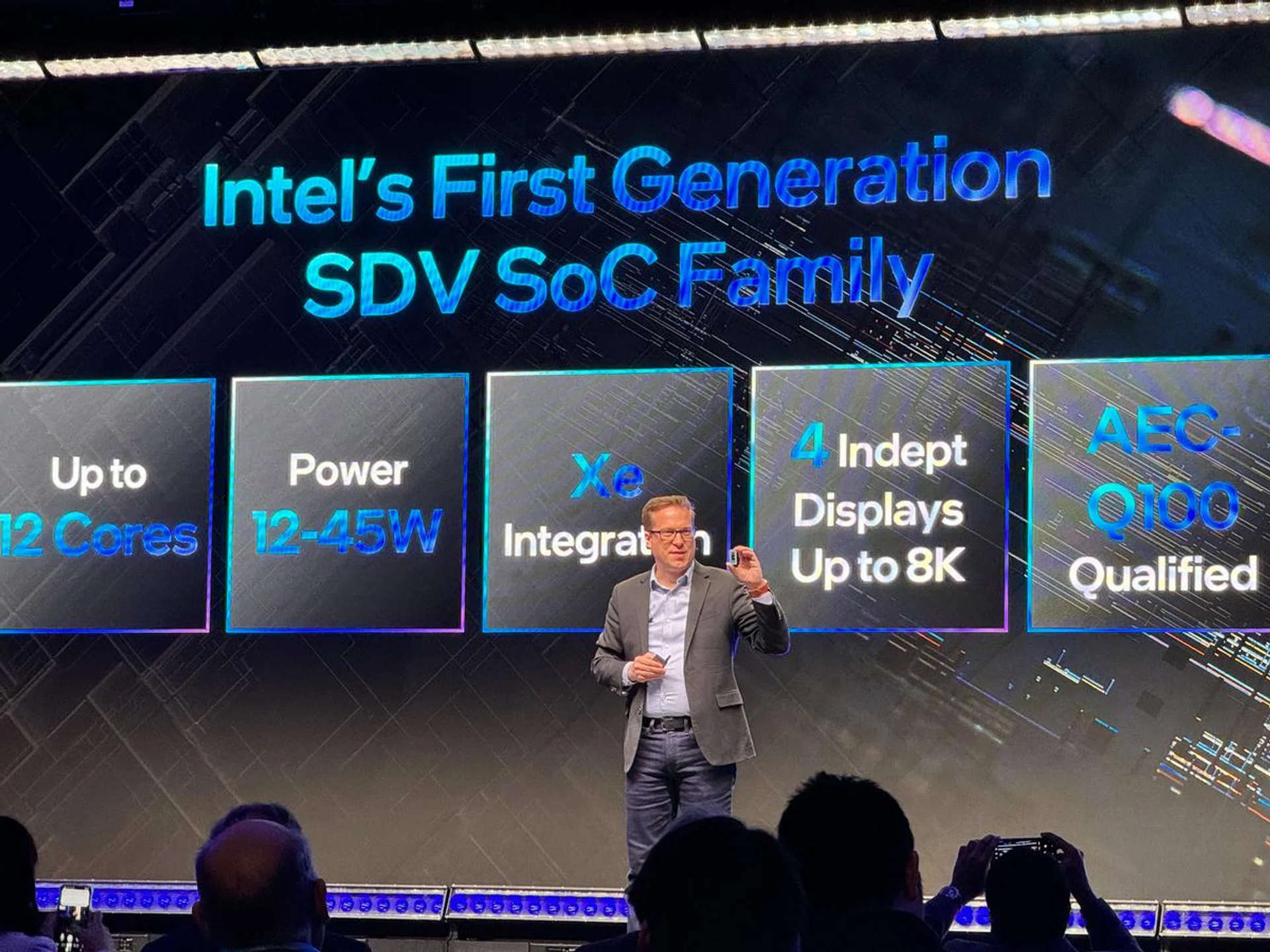
John Weast, VP and GM for Intel Automotive, introduced the company's first AI-enhanced SoCs for software-defined vehicles (SDV).
At CES 2024, Intel’s VP and GM of its Automotive division, Jack Weast, unveiled an ambitious plan to extend its AI expertise into the automotive industry. This includes the acquisition of Silicon Mobility, a specialist in system-on-chips (SoCs) for electric vehicle (EV) energy management, and underlines the tech giant’s determined push into the automotive market. This move, coupled with the unveiling of a new series of AI-enhanced, software-defined vehicle SoCs, signals a strategic expansion beyond Intel's traditional domain.
Intel’s takeover of Silicon Mobility is not simply a business-as-usual acquisition but a strategic alignment with the emerging trends in EV technology and energy efficiency. Renowned for its fabless semiconductor expertise, Silicon Mobility will allow Intel to tap into its suite of SoCs integrated with advanced software algorithms and accelerators specifically designed for optimising energy delivery in vehicles.
What stands out during Weast’s keynote was the introduction of Intel's new AI-enhanced SoCs for software-defined vehicles (SDV). These chips, drawing from Intel’s AI PC roadmap, are engineered to power a range of in-vehicle AI applications that reshape our driving experience. The capabilities of these SoCs extend beyond conventional automotive expectations, encompassing features such as driver and passenger monitoring, which are increasingly sought after by automotive makers for their potential to boost safety and enhance user experience.
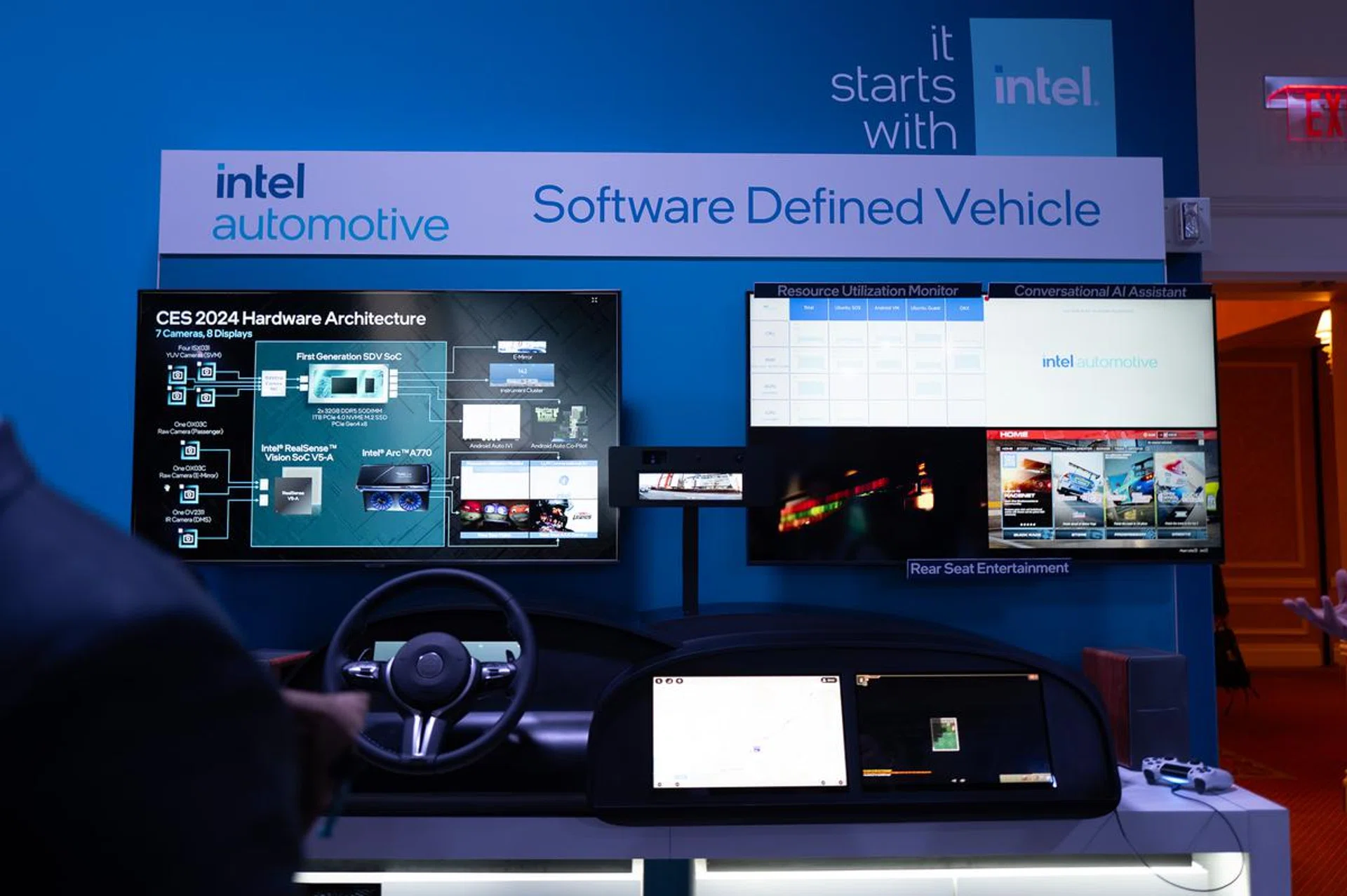
At its CES 2024 booth, Intel demonstrated a variety of functions such as generative AI, e-mirrors, high-definition video conferencing, and gaming, all operating in tandem across different operating systems.
Intel's showcase of these SoCs running multiple advanced workloads simultaneously at its booth was nothing short of impressive. The demonstration included a variety of functions, such as generative AI, e-mirrors, high-definition video conferencing, and gaming, all operating in tandem across different operating systems. It was a great display of technical capability and an interesting peek at the future of automotive experiences.
Weast aptly summarised the tech giant’s vision: "We are bringing the AI PC to the car". His statement really captures what Intel is aiming to do – they're taking the advanced AI from computers and putting it into cars. However, Weast also added a dose of realism, acknowledging the complexities involved. "We can’t just put a PC in a car. We know that automakers need to be able to re-architect their vehicle, as I mentioned, to be software-defined.”
Intel's approach goes beyond mere product development; it's about redefining the vehicle's very architecture. The idea is to transform cars into software-defined platforms, capable of integrating and adapting to evolving technologies and user needs. Weast adds: "Nobody’s really been doing software-defined quite right yet. We have a unique perspective and a unique set of capabilities that we think can help the industry transition their vehicles to be truly software-defined."
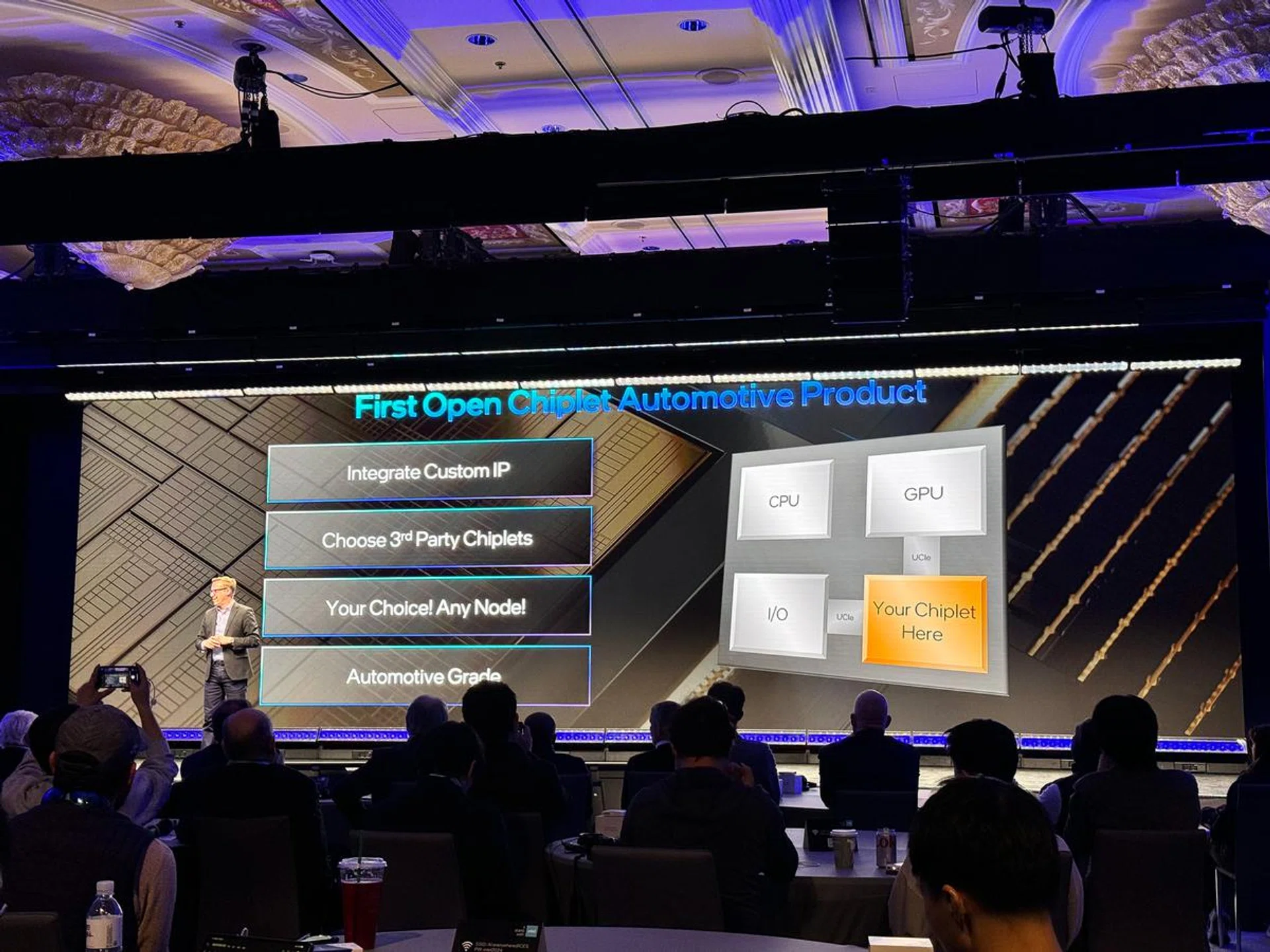
Intel's open automotive chiplet platform is based on the Universal Chiplet Interconnect Express.
Intel also shared its new open automotive chiplet platform during the keynote. Based on the Universal Chiplet Interconnect Express, it’s another pioneering initiative. This platform will enable the integration of third-party chiplets into Intel's automotive products, breaking the traditional bounds of monolithic SoCs. This modular approach is about technological innovation as much as it’s about Intel’s aim to foster flexibility and creativity within the automotive industry, by offering manufacturers the ability to develop custom solutions more efficiently and cost-effectively.
However, the real test for Intel lies in the adoption of its technologies by the automotive industry. The market is fiercely competitive, with companies like Qualcomm and NVIDIA also making significant inroads into the SDV space. AMD, Intel's primary competitor, is similarly eyeing the automotive market. So, while Intel's integrated strategy – combining new SoC developments, the strategic acquisition of Silicon Mobility, and an innovative open chiplet platform – positions it as a formidable player, its success hinges on the industry's reception and creating a robust ecosystem around its offerings.
Weast's vision for Intel's role in the automotive sector is ambitious. "I think there’s a lot of opportunities for AI to enhance the vehicle experience and make tech a little less obtrusive," he said. "And have it be more predictive and fit more seamlessly into the driving or passenger experience."
Intel is making the right moves. The industry's response will ultimately determine their impact.
Our articles may contain affiliate links. If you buy through these links, we may earn a small commission.