
Note: This feature was first published on 27 June 2023.
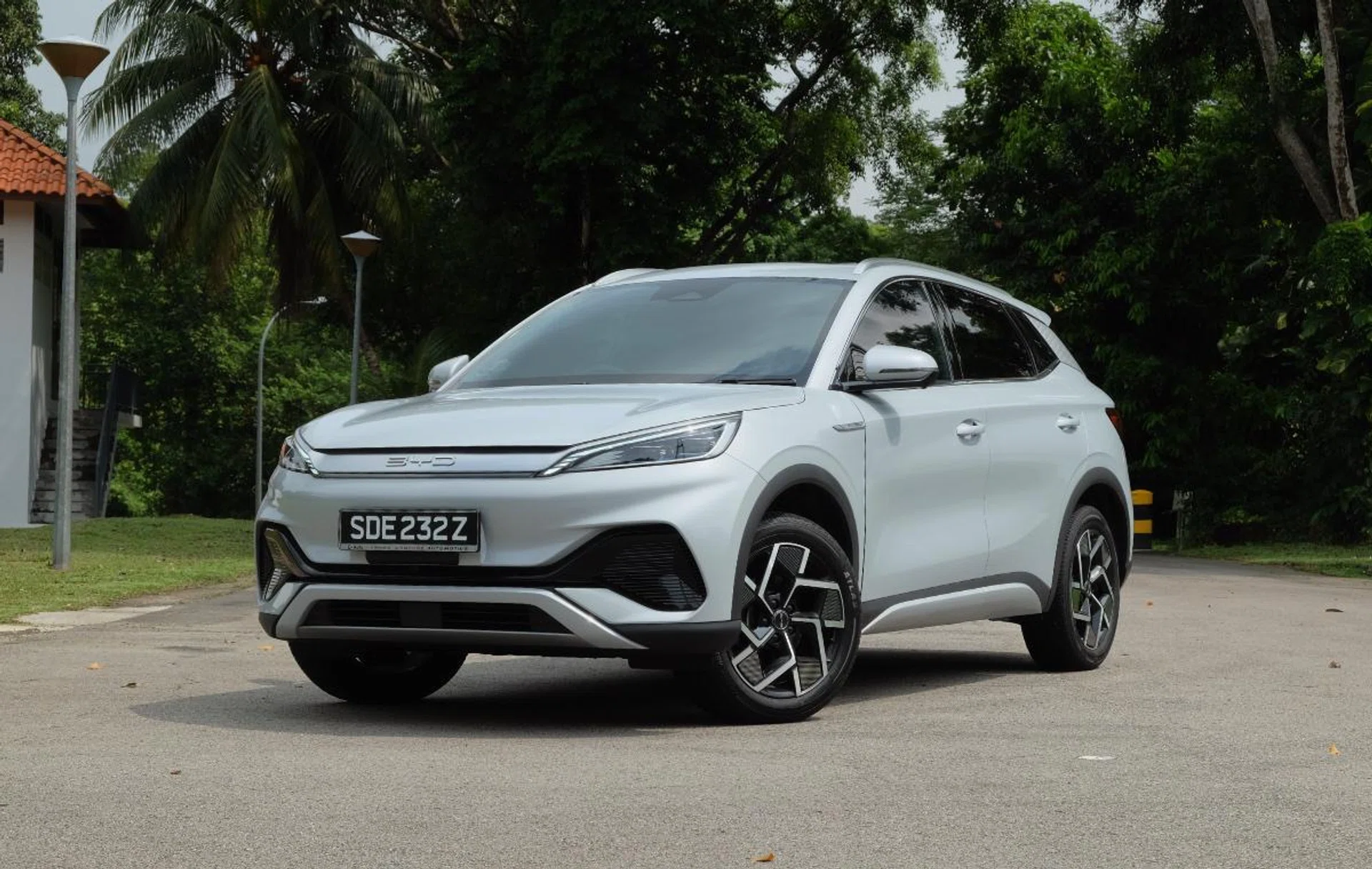
The newest version of the Atto 3 qualifies it for a cheaper Cat A COE.
Electrical motoring on a budget
Because of the unique way in which our COE is structured, the prices of cars have always been inextricably linked to their power output. The more powerful a car, the more it’ll cost because registering it will require a pricier Category B COE. One way to get around this predicament is to introduce lower-power versions of cars so that they’ll qualify for a less costly Category A COE. And this is exactly what BYD’s newest Atto 3 is about.
The TL;DR version:
Minor range and interior styling issues aside, the Atto 3 packs a load of features and is a surprisingly sensible choice for anyone who's looking to get an affordable (relatively speaking) electric SUV.
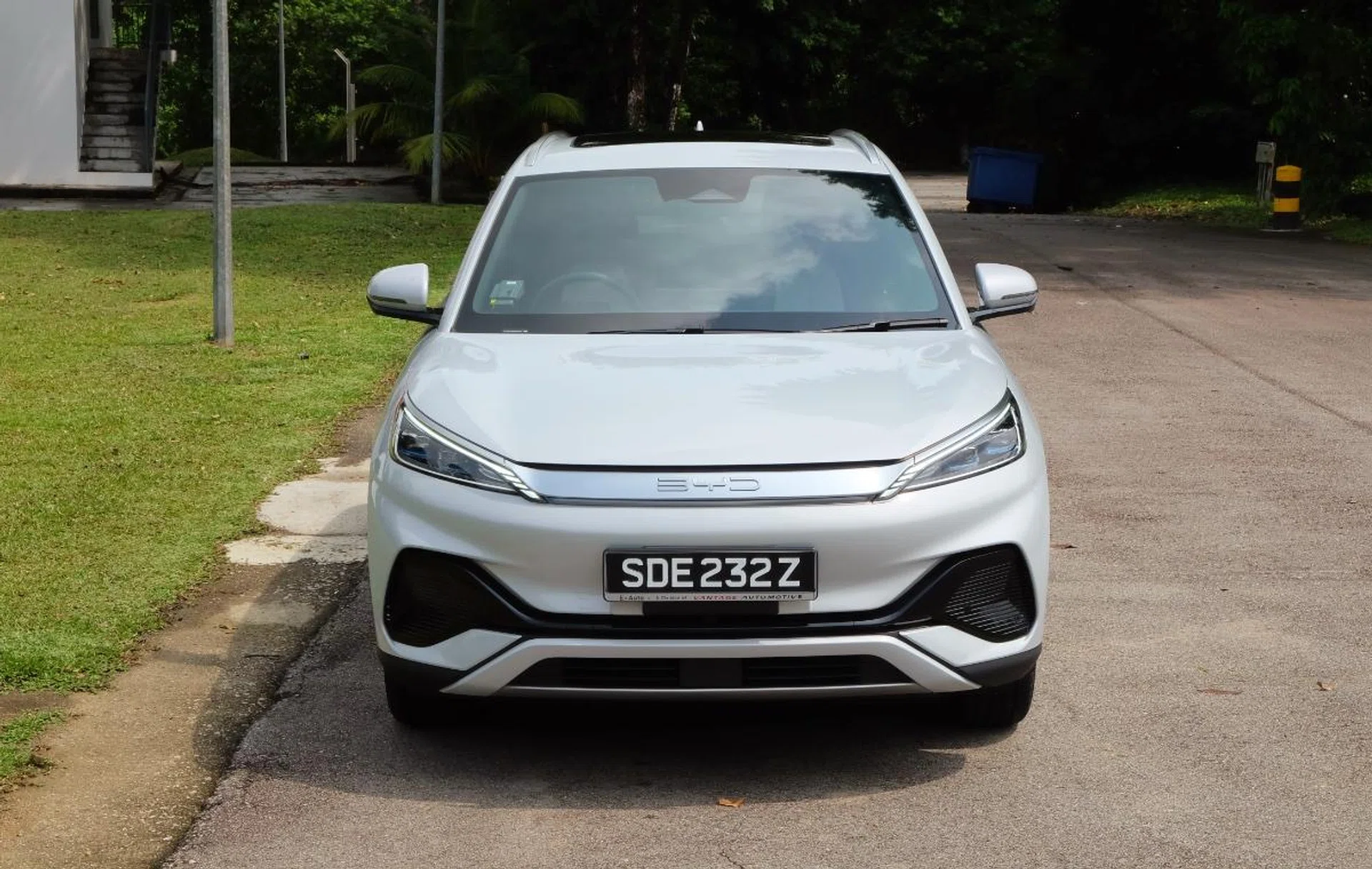
The Atto 3 isn't bad-looking but it does look quite generic and same-same.
This new version of the Atto 3 has been detuned so that it meets the requirements for a Cat A COE. How much power? The hint is in the name – Atto 3 (100kW). Power is down from 150kW to 100kW. This simple move allows BYD to sell this version of the Atto 3 for about S$23,000 less – which translates to savings of around 11%. But apart from the detuned motor, did BYD do anything else to get prices down?
The surprising answer is no. The 100kW is visually indistinguishable from the 150kW. They come in the same colours, have the same head and tail lights, the same wheels, and even their interiors are identical. You don’t miss out on any features, too – safety features like adaptive cruise control, blind spot detection, 360-degree cameras, and camera warnings are all intact. Really, the only difference is the less powerful electric motor.
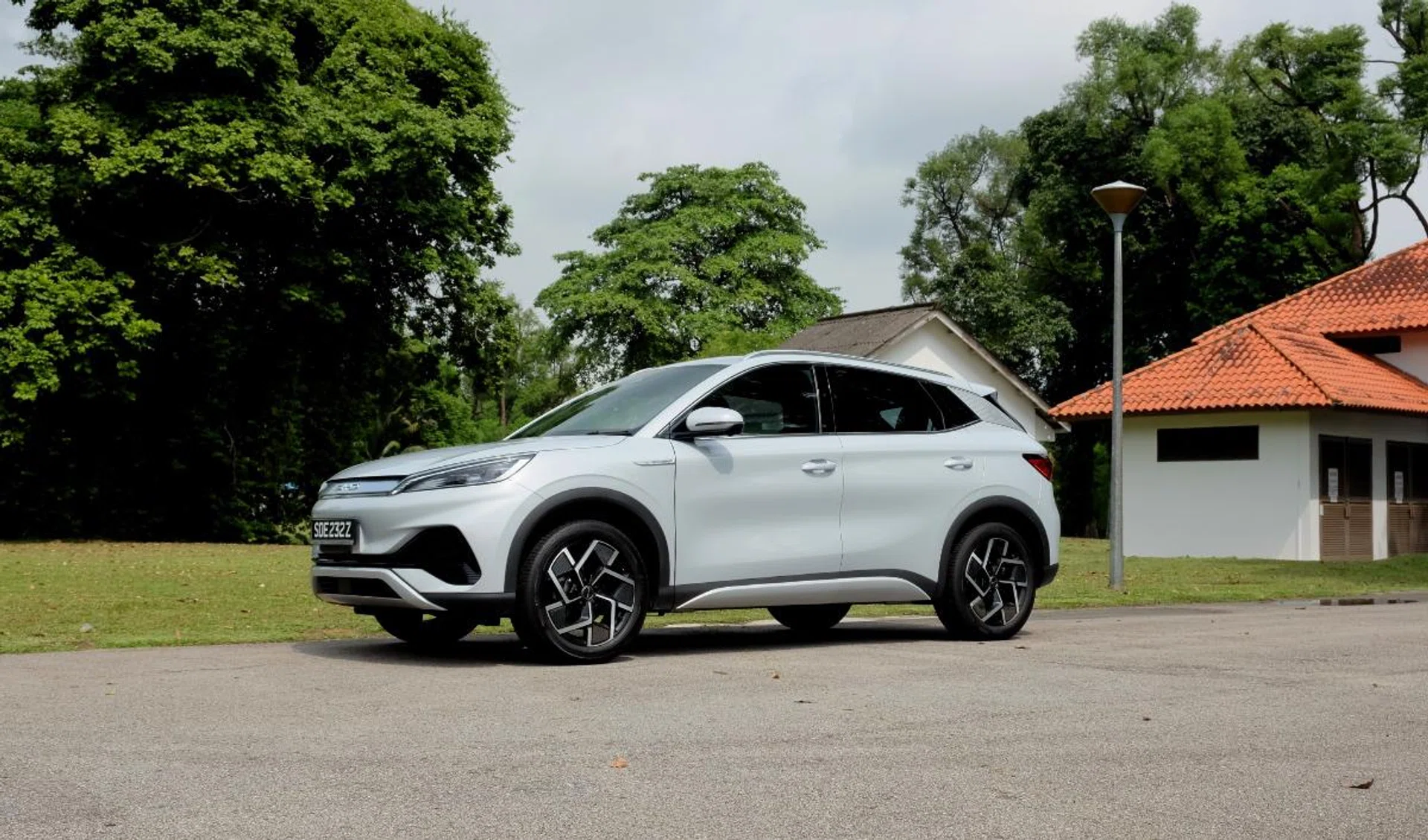
The new 100kW version of the Atto 3 is visually indistinguishable from the 150kW version. There's no difference in equipment, trim, and there isn't even a "100kW" badge that gives the game away.
If you pore through the spec sheets, you’ll notice the 100kW Atto 3 is significantly slower than the 150kW version to 100km/h, but those numbers are misleading because this 100kW version is actually fairly rapid up to 50-60km/h. In reality, this Atto 3 is perfectly suited for our roads, particularly city-driving, where low-end torque delivery is more important than horsepower. With 310nm of torque to spare from zip (interestingly, the same as the 150kW version), the Atto 3 feels sprightly and eager whenever you take off from the traffic lights. It’s only beyond highway speeds that its performance starts tapering.
On the outside, it’s not a bad-looking car, but it does look somewhat generic and samey. You can see a bit of Hyundai Kona and Tesla Model Y in it. Whether that’s a good thing or not, you’ll have to decide for yourself. The insides, however, can be divisive. Let’s start with the seats, which are unusually sporty and snug for a family crossover SUV. It’s certainly plush and mostly comfy but doesn’t quite square with the character of the car. And then there’s the quirky design of components like the door bins and centre aircon vents. The former has strings running through them which are apparently inspired by the Chinese gu zheng, while the latter has been styled to look like dumbbells.
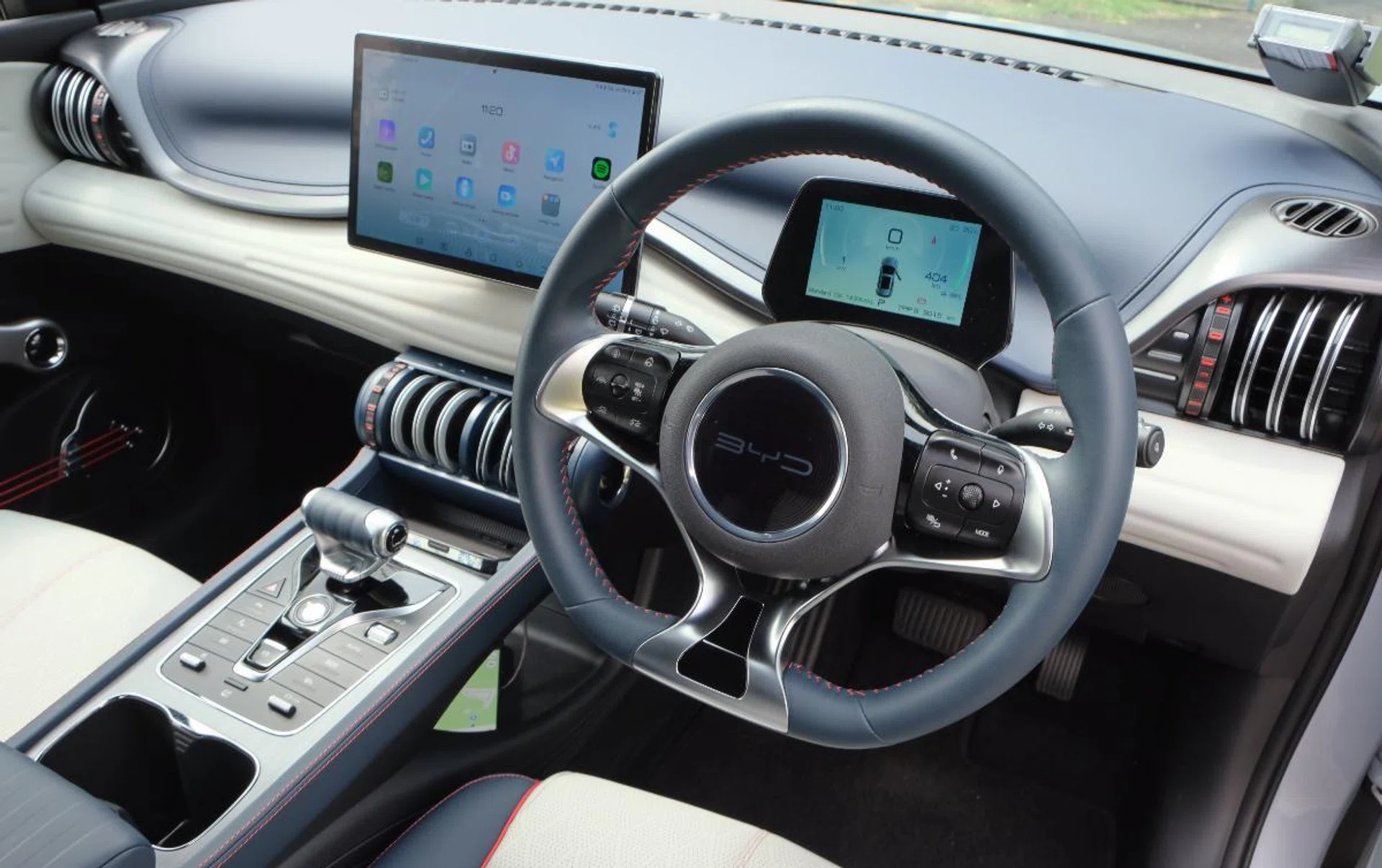
The interior is quite unconventional, to say the least.
The quirky interior design choices don’t stop there. The Atto 3 must have the tiniest instrument cluster I’ve seen. It’s a mere 5 inches in size, and it’s tacked on top of the steering wheel column. There are smartphones with larger displays, and it means those hard of sight might have a tough time reading it. The infotainment display, however, is large. It’s nearly 13 inches in size and is motorised, so it can rotate and be read in either portrait or landscape modes. Though it may sound superfluous – gimmicky, even – but using it in a portrait orientation lets you see more of what’s “ahead” when you are using the built-in navigation app.
At the time when I tested the car, only Apple CarPlay was supported. But I was told that by the time this review will be published, support for wireless Android Auto will be added as well – the entire infotainment system is based on Android, after all. CarPlay works as expected but note that it only supports wired and not wireless CarPlay. Additionally, CarPlay isn’t designed to take advantage of the Atto 3’s rotating display so it can only be used in a landscape orientation.
For a family-oriented crossover SUV, the ride is sufficiently plush. It’s no limo, but it deals with bumps and undulations in a dignified manner. There is some roll if you corner hard, but, crucially, it doesn’t pitch too wildly under acceleration or braking – something that plagues many clumsily set up SUVs.
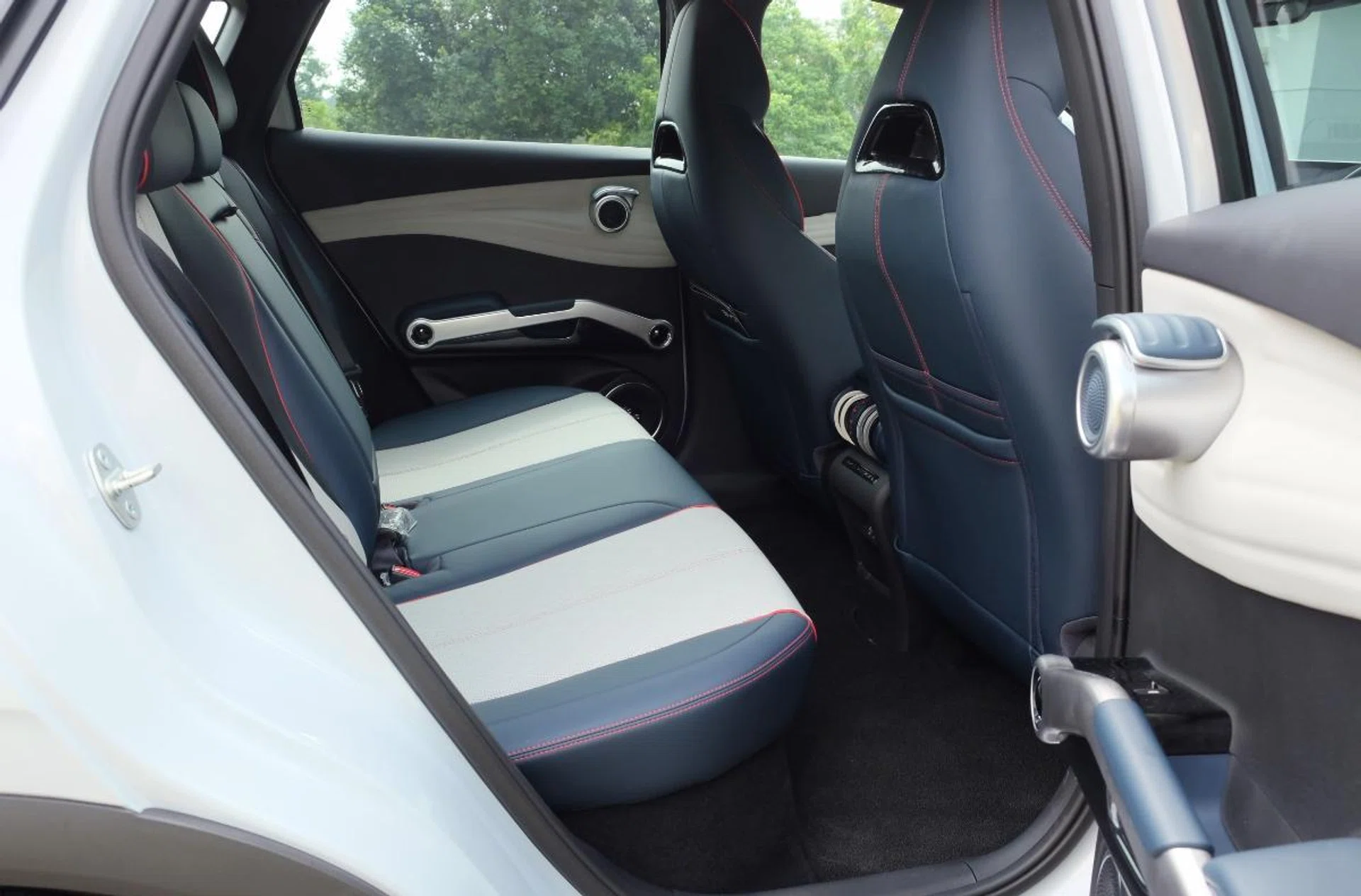
Rear legroom is very good.
Practicality is generally good. Rear passengers have quite a bit of legroom, and headroom is sufficient for most average-sized adults. To give a greater sense of airiness, there’s a large panoramic sunroof. And while it may not have a frunk, the rear luggage space is rated at a very usable 440L. And this expands to 1,340L if you fold the rear seats down. Speaking of which, the floor of the rear boot can be raised to create a completely flat surface when you fold the rear seats down. This can be handy for transporting certain extra-large items.
The Atto 3 also packs a lot of features for what is supposedly an entry-level electric car. Safety features include your usual blind spot detection, front collision warning, and lane keep assist, but it also features adaptive cruise control – something usually found only on pricier cars. It also has a 360-degree camera that can be handy in older car parks which can be uncomfortably tight (One Raffles Place, anyone?).
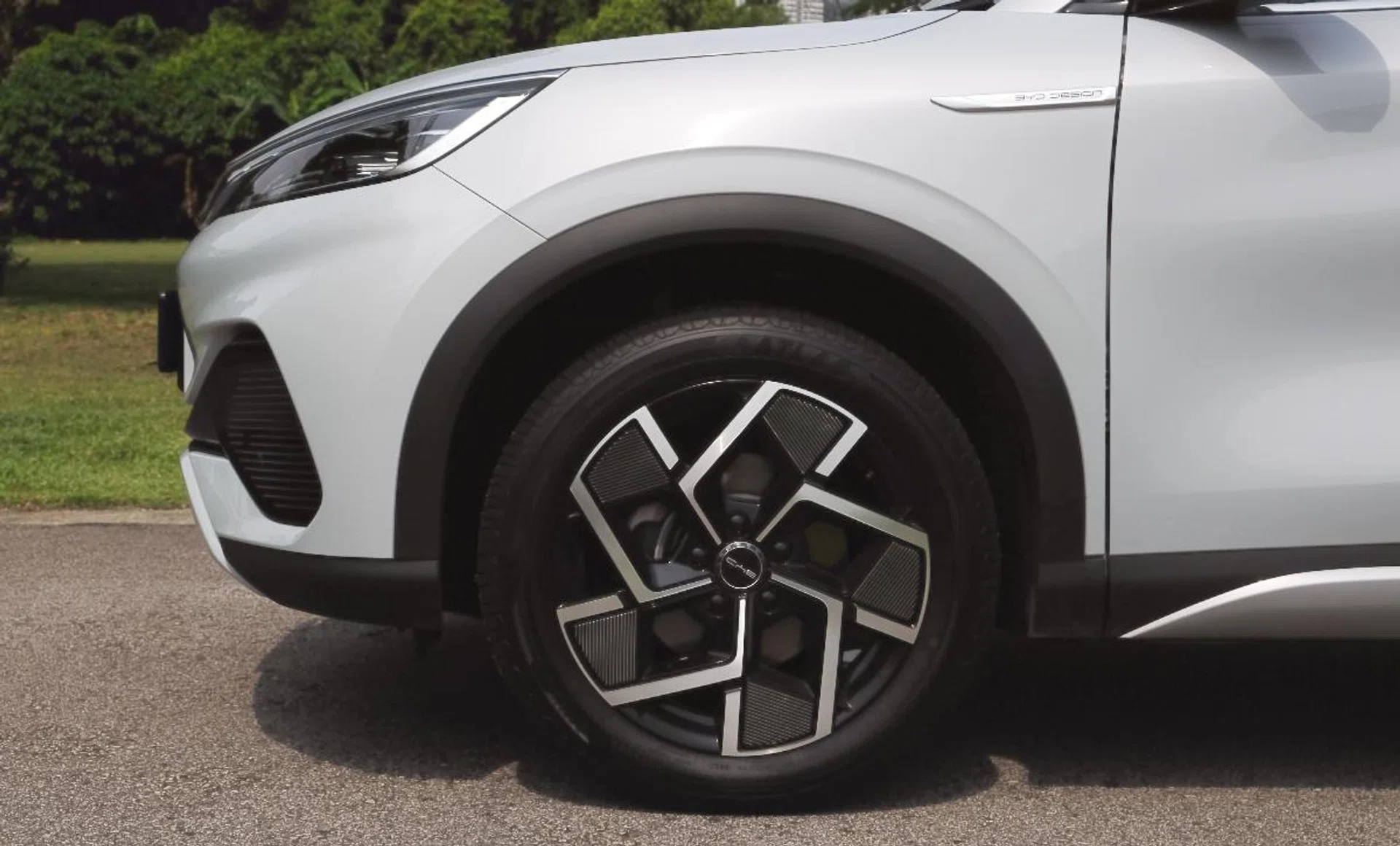
The Atto 3 comes with 18-inch wheels.
What’s not so fantastic, however, in terms of practicality, is range. BYD claims the Atto 3’s 60.5kWh battery will return at least 400km on a full charge. But during my weekend with it, I covered slightly less than 250km using 70% of the charge. Using a bit of man math, that means I’ll get around 350km on a full charge, probably much less if I want to charge it early and ensure I don’t run too dangerously low on juice.
I’ve been accused of having a lead-heavy right foot, but even the long-term average power consumption figure on the trip computer of the car I was testing reads 15.5kWh/100km. This means most drivers should expect to get about 390km on a full charge, which is still some way off of BYD’s claims of 420km in the WTLP Combined cycle and 565km in the WLTP City cycle. It’s not terrible by any means, but it could be an inconvenience, particularly for drivers who don’t have easy access to a charger. Interestingly, the 15.5kWh/100km figure is quite accurate with BYD's own claims that the car would consume around 16kWh/100km, so maybe the problem lies with the way the WLPT figures are derived.
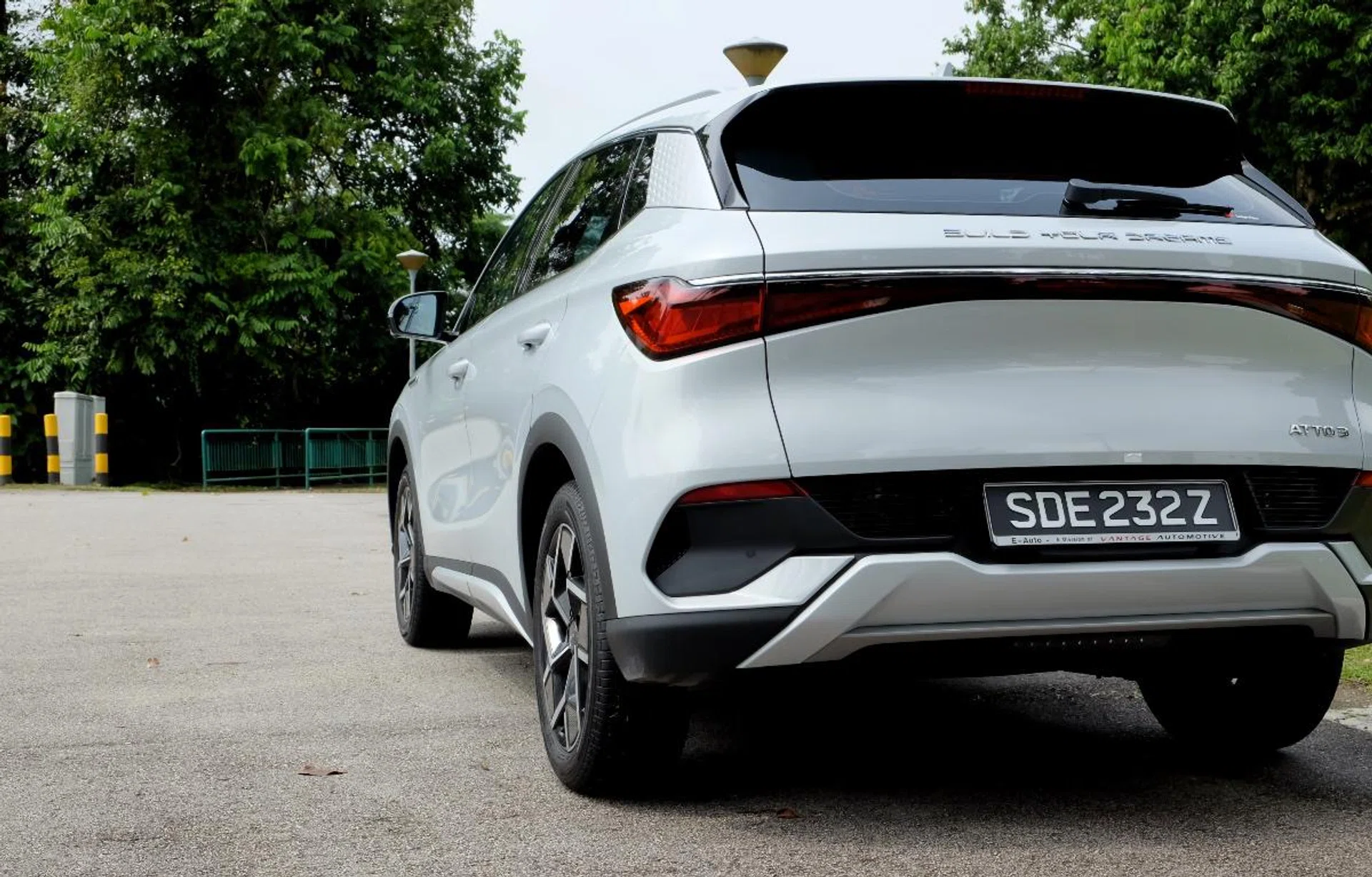
Range is not the greatest. In my tests, I think you will struggle to get more than 400km on a full charge.
Fortunately, because the Atto 3 is built on BYD’s new e-Platform 3.0, it means it supports up to 80kW DC fast charging. If you can find a suitable fast charger, it can get from 30% to 80% charge in around 30 minutes. With the more commonly available 50kW charger, expect to go from 20% to 80% in around 42 minutes, which isn’t too difficult to plan around.
The Atto 3 will likely tick many boxes for people who are looking for a sensible electric car. Granted, the interior might not be to everyone’s tastes, however there’s no denying that it packs a lot of features and, somewhat dodgy range aside, is highly practical. The current state of our COE prices doesn’t help but the Atto 3 is a logical and responsible choice for anyone who’s looking to get an entry-level electric car right now.
The good |
|
The bad |
|
Pricing and availability
The BYD Atto 3 (100kW) is available now and prices start at S$171,888 inclusive COE.
Note: Prices are correct at the time of publishing.
Our articles may contain affiliate links. If you buy through these links, we may earn a small commission.