

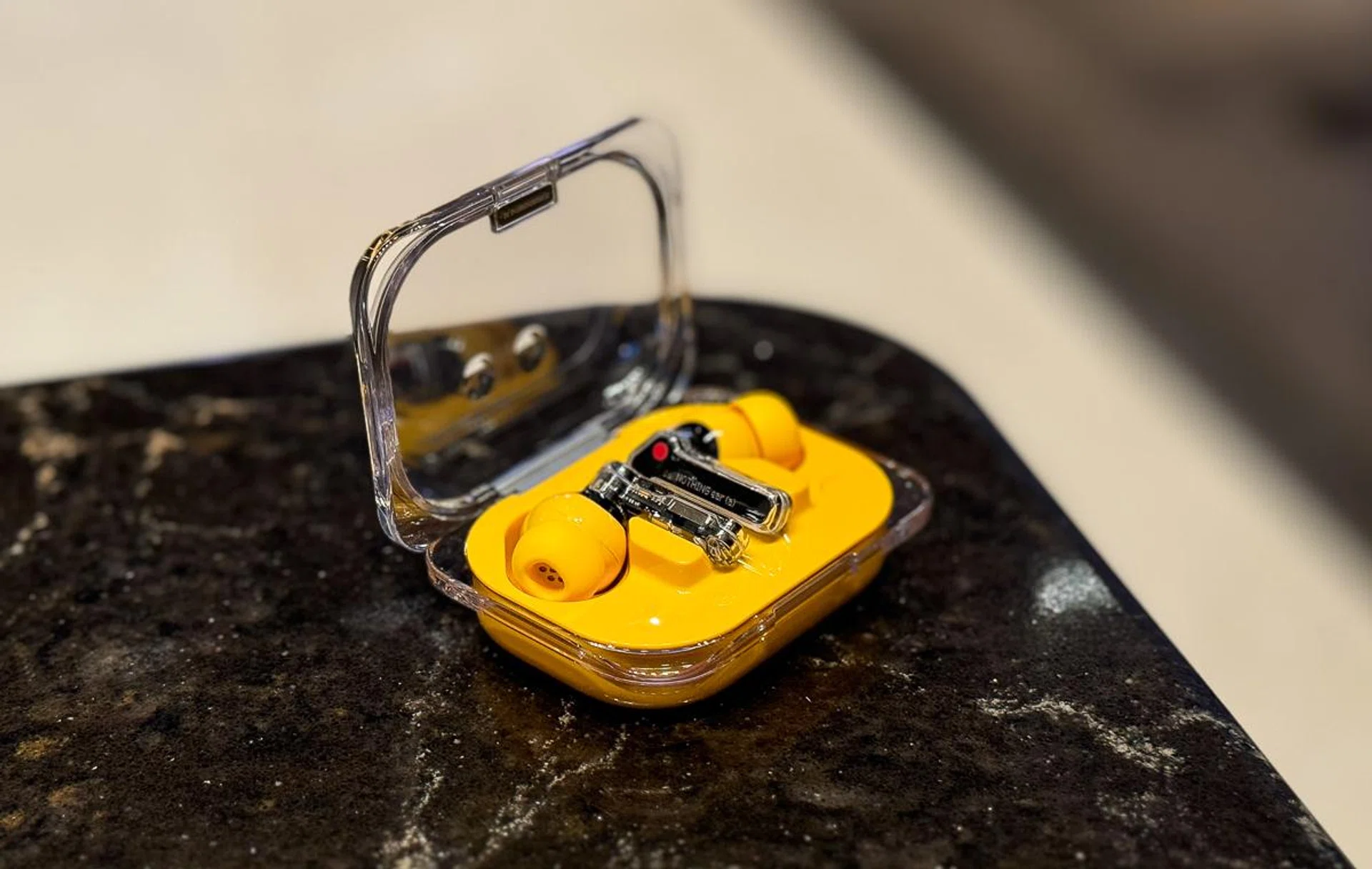
Nothing Ear (a) in yellow. Photo: HWZ.
After being thoroughly impressed with the Nothing Ear true wireless earbuds (S$229), it’s time to turn our focus to the more affordable Nothing Ear (a) earbuds retailing for just S$159. Released at the same time as the Nothing Ear, most people might overlook these earbuds in favour of its bigger brother, but the truth is that the Nothing Ear (a) offers much of the same niceties that you get with its more expensive counterpart at a lower price point.
In case you’re confused with Nothing’s naming scheme, the Nothing Ear (a) is replacing the Nothing Ear (stick) in the lineup with a similar price point. However, these have an in-ear design, which could suggest that Nothing didn’t feel the open-ear earbud design was working for them.
The TL;DR version:
At S$159, these earbuds offer good ANC, decent sound quality, and features like multipoint. They are very competitive in their price range.
Note: You can find the Nothing Ear (a) on Lazada, Shopee, the Nothing online store, and authorised retailers.
While the charging case retains the unique transparent design, Nothing has made it a little smaller and more pocketable by making it slightly longer but also thinner. It certainly fits better into the pocket of my jeans while leaving a less noticeable bulge.
Inside, there’s an 11mm dynamic driver with the same dual-chamber design as the Nothing Ear, which allows for better airflow thanks to the two extra vents. However, Nothing has opted for a PMI + TPU diaphragm here, most likely to keep costs low.
If you're wondering what those abbreviations mean, polymethacrylimide (PMI) is a polymer and Thermoplastic Polyurethane (TPU) is an elastic, polyurethane plastic. This does result in a different sound, most likely due to the differences in rigidity versus the ceramic driver in the Nothing Ear, which we’ll talk about later.
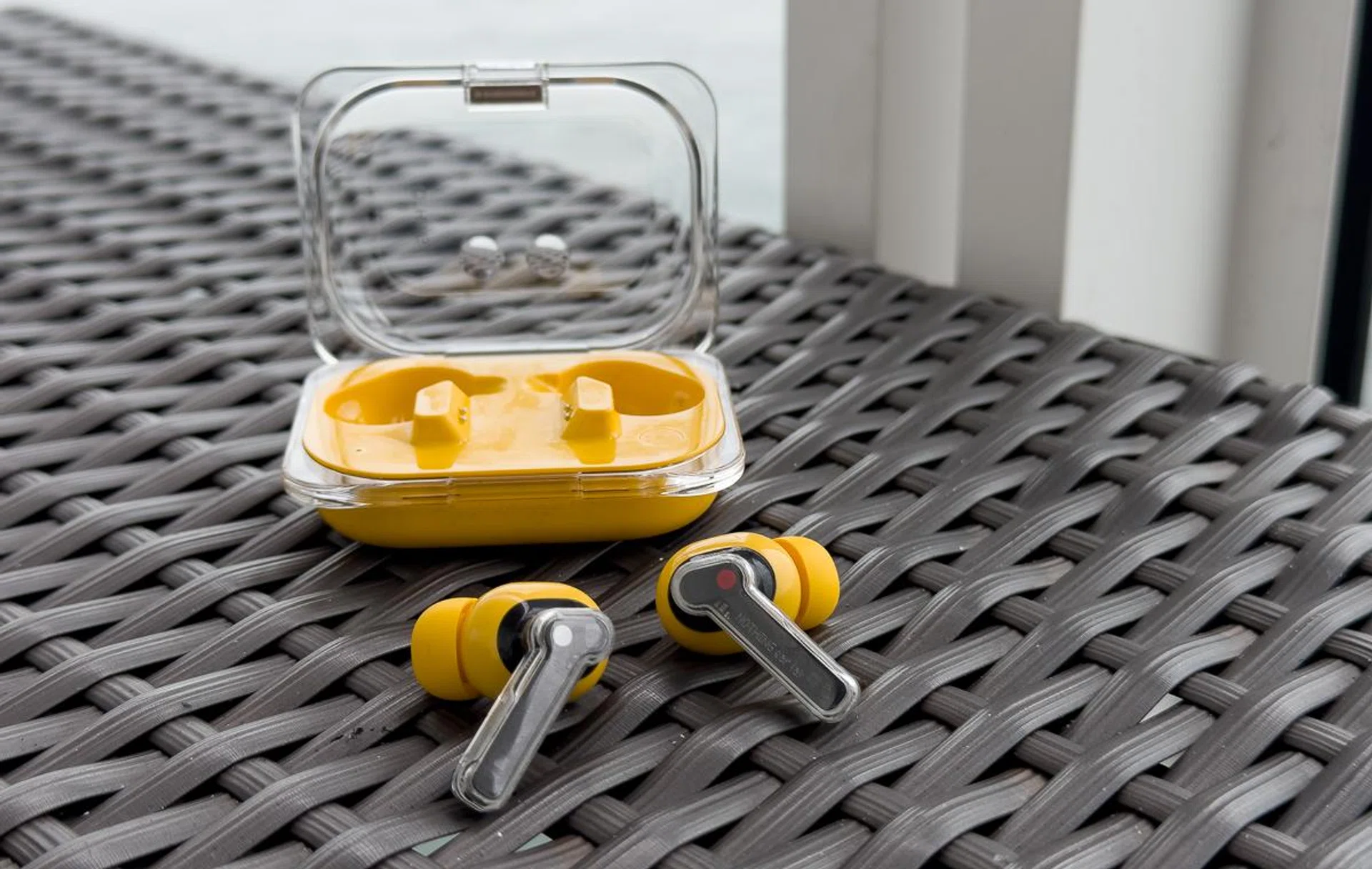
Catching the sea breeze with the Nothing Ear (a). Photo: HWZ.
The earbuds weigh 4.8g per side, with the charging case coming in at 39.6g, which is quite a bit lighter than the Nothing Ear’s case at 51.9g. The earbuds are just as comfortable to wear, with a similar profile to the Nothing Ear. The earbuds also retain the signature transparent stem design, which stands out nicely against the yellow shell of the earbuds.
Speaking of which, the Nothing Ear (a) comes in the standard black and white colours, but also in a funky yellow which I really like. People who are tired of the monotonous black and white colours will certainly enjoy having a pop of colour with the yellow earbuds.
Features

These earbuds have some nice features. Photo: HWZ.
At S$159, the Nothing Ear (a) actually offers the usual stuff you’d expect from flagship earbuds, such as ANC, a basic equaliser, decent control customisation, multipoint connectivity, in-ear detection and more.
But more than that, one standout feature that Nothing has for its earbuds is ChatGPT integration. If you’re using a Nothing Phone and download the ChatGPT app, you’ll be able to use ChatGPT instead of the standard voice assistant, making it super handy for people looking to get quick answers verbally. However, it’s still not ideal as a voice assistant replacement since you can’t get ChatGPT to call a contact or send a message.
Similar to the Nothing Ear, I couldn’t quite get a perfect seal with the Nothing Ear (a), which did affect the effectiveness of the ANC for me. This is a very personal thing, however, as everybody’s ears are different, but it’s worth pointing out.
The controls on the Nothing Ear (a) are identical to the Nothing Ear, with a pressure-based system that allows for controls via presses on the stem. It works well and it's almost impossible for false inputs to be registered.
The ANC itself is very good. Nothing claims the same 45dB of noise cancellation, and while I did still hear chatter and high-pitched sounds like cutlery clinking on plates, I’ll chalk it up to diminished performance because of the imperfect seal I got. For people who manage to get ideal seals, I believe the ANC performance will be much better.
The Transparency mode is just as good as the Nothing Ear’s, with a relatively natural sound that is good enough for the wearer to hold conversations without having to remove the earbuds.
Three mics on each earbud combine with Nothing’s Clear Voice technology for noise reduction and they offer decent performance during calls. Background noises do get removed, to a certain extent, and my voice came across clearly enough during calls and did not sound too artificial or tinny.
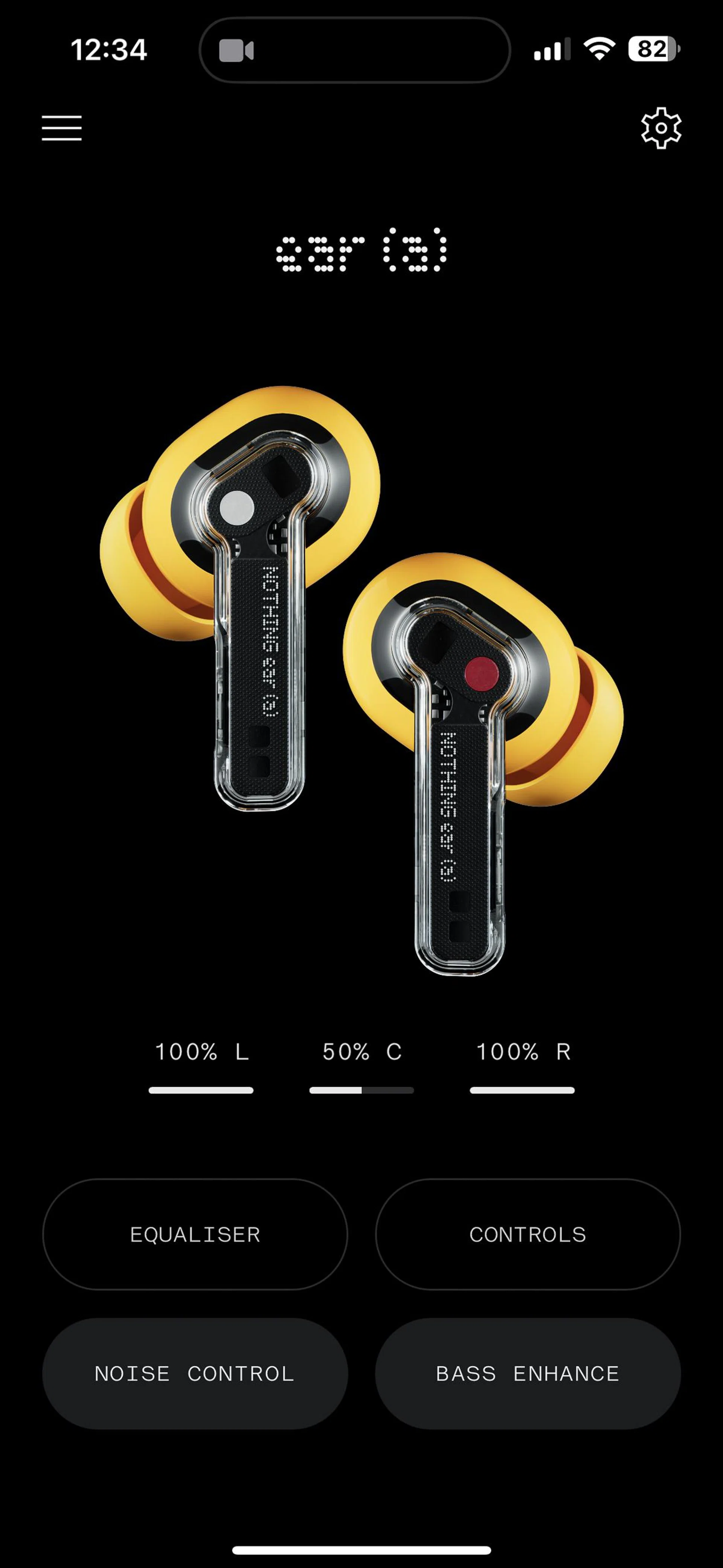
Nothing X app. Photo: HWZ.
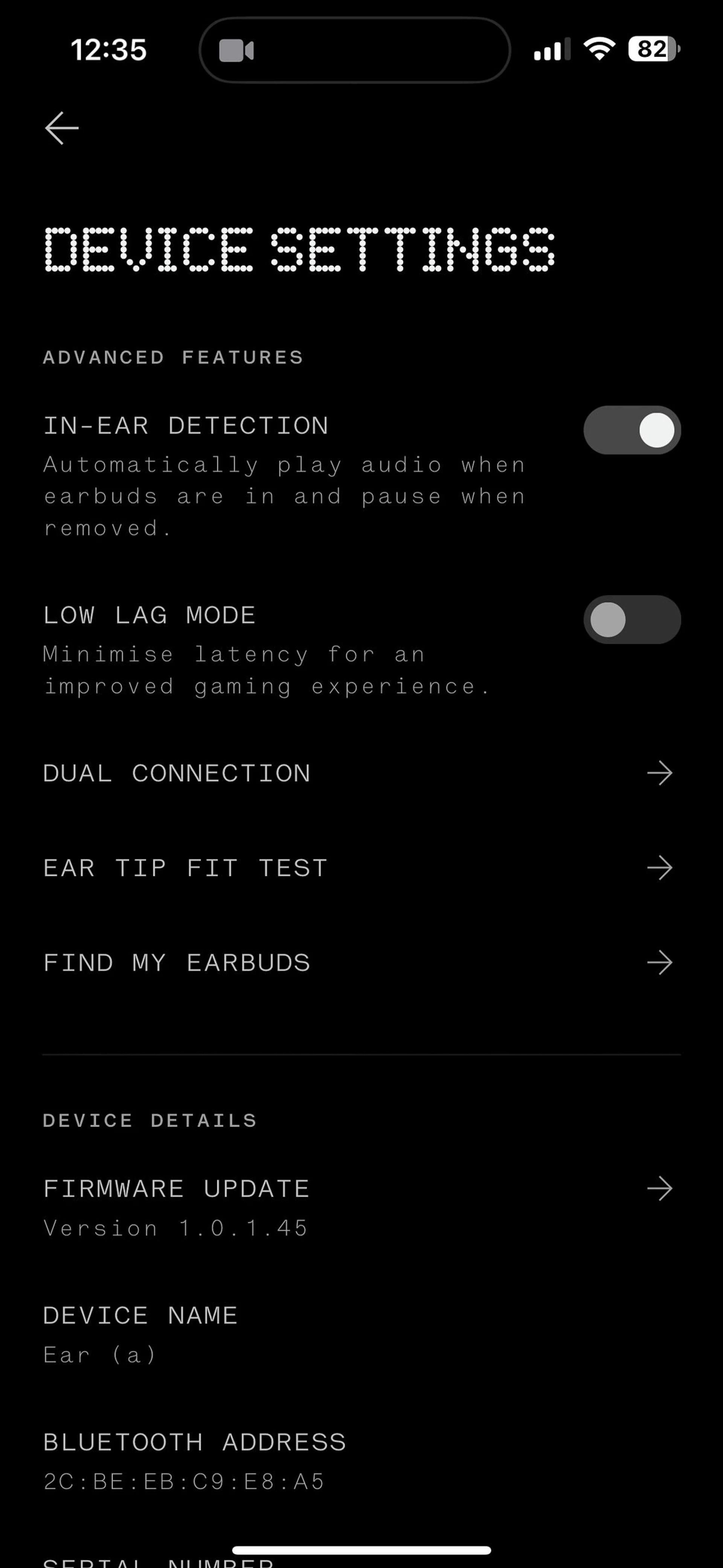
Nothing X app. Photo: HWZ.
All of the features can be activated or adjusted via the Nothing X app, which offers support for all of Nothing’s earbuds. You don’t get the hearing test custom EQ feature, but most of the other features like Bass Boost, Find My Earbuds or the Ear Tip Fit Test are present.
The earbuds still retain the IP54 dust and water resistance rating, which is excellent considering its price point. However, the charging case only has an IPX2 rating, which is still a step up from most other charging cases since most of them don’t even offer a sliver of protection.
Wireless and audio performance
While the Nothing Ear (a) is missing the LHDC 5.0 codec, it still supports the usual SBC and AAC in addition to LDAC for high-res listening. Of course, that’s assuming your phone supports it. The earbuds support Bluetooth 5.3, and connectivity is solid with no stuttering or dropouts. There's also support for multipoint connection – for up to two devices – which is super handy if you want to connect to your phone and another device at the same time.
Battery life is rather average, lasting just around five hours on a single charge if you have ANC turned on. It does go up to around nine hours with ANC off, however, so that’s an option to prolong your battery life if required. There’s also fast charging, with 10 minutes of charge giving 10 hours of playback time with ANC off. There’s no wireless charging here, but I didn’t expect it at this price point anyway.
As for audio quality, it is noticeably not as great as the Nothing Ear. That’s to be expected, however, because it would be cannibalising sales from the Nothing Ear if it were to sound just as good. The PMI + TPU diaphragm doesn’t provide as much detail and clarity as the ceramic driver in the Nothing Ear, resulting in a more muffled sound.
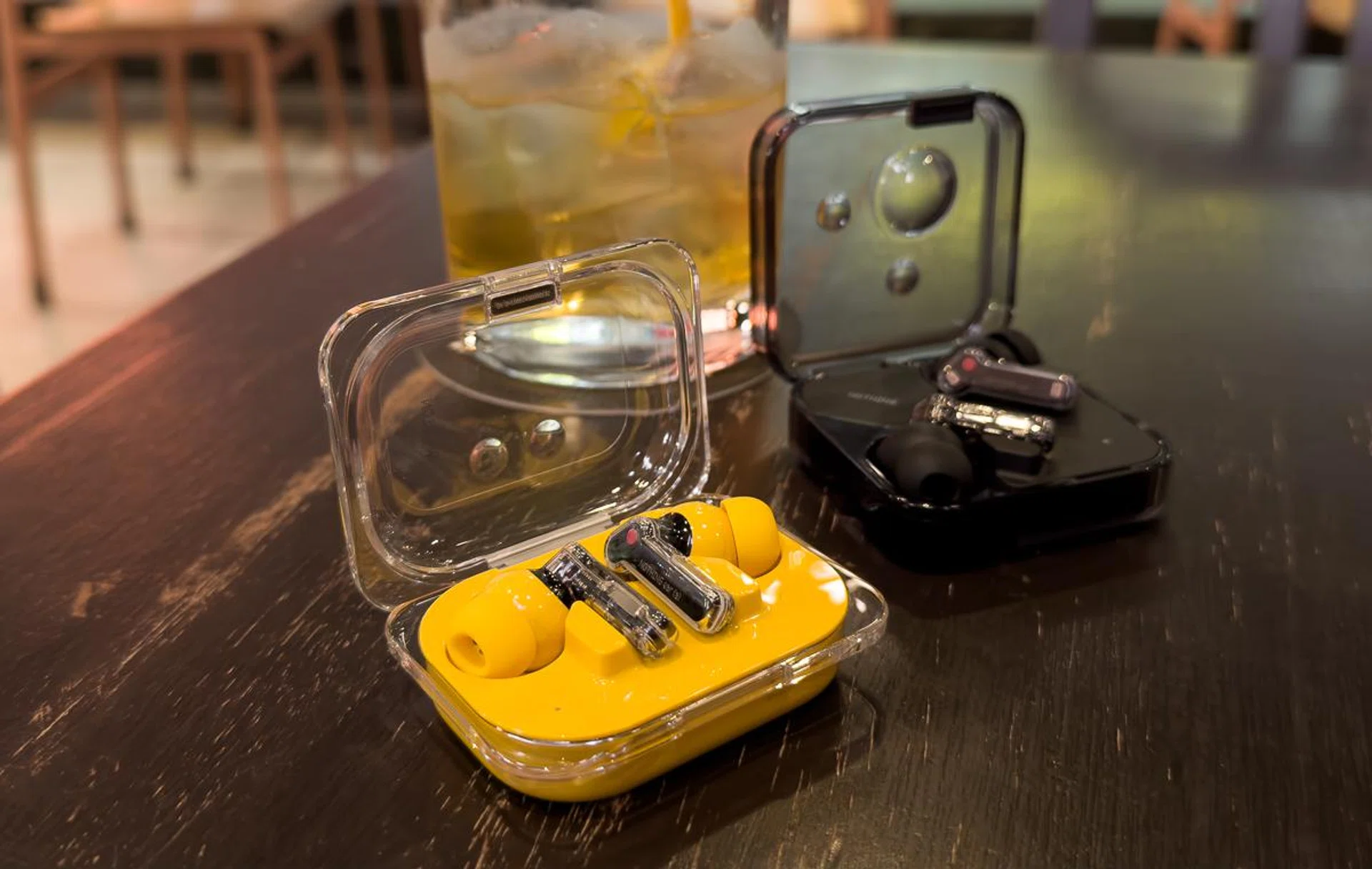
Nothing Ear (a) in front, Nothing Ear in the back. Photo: HWZ.
That doesn’t mean it sounds bad though. You have to keep in mind that we’re comparing it to a more expensive product that impressed us earlier this year. While you might not get as crisp a sound, the overall sound signature is quite palatable, with a meaty bass that really punches above expectations.
The mids do have a touch of warmth and even though you might not get as perfect a presentation as on other earbuds, it’s generally adequate for people who aren’t too fussy with wanting to hear every little detail. The treble is the area that takes the biggest hit, in my opinion, with reduced air and shimmer in the high frequencies. It’s not too big a deal since it can be tweaked somewhat in the equaliser, but for treble-lovers like myself, the stock sound can be a bit underwhelming.
Conclusion
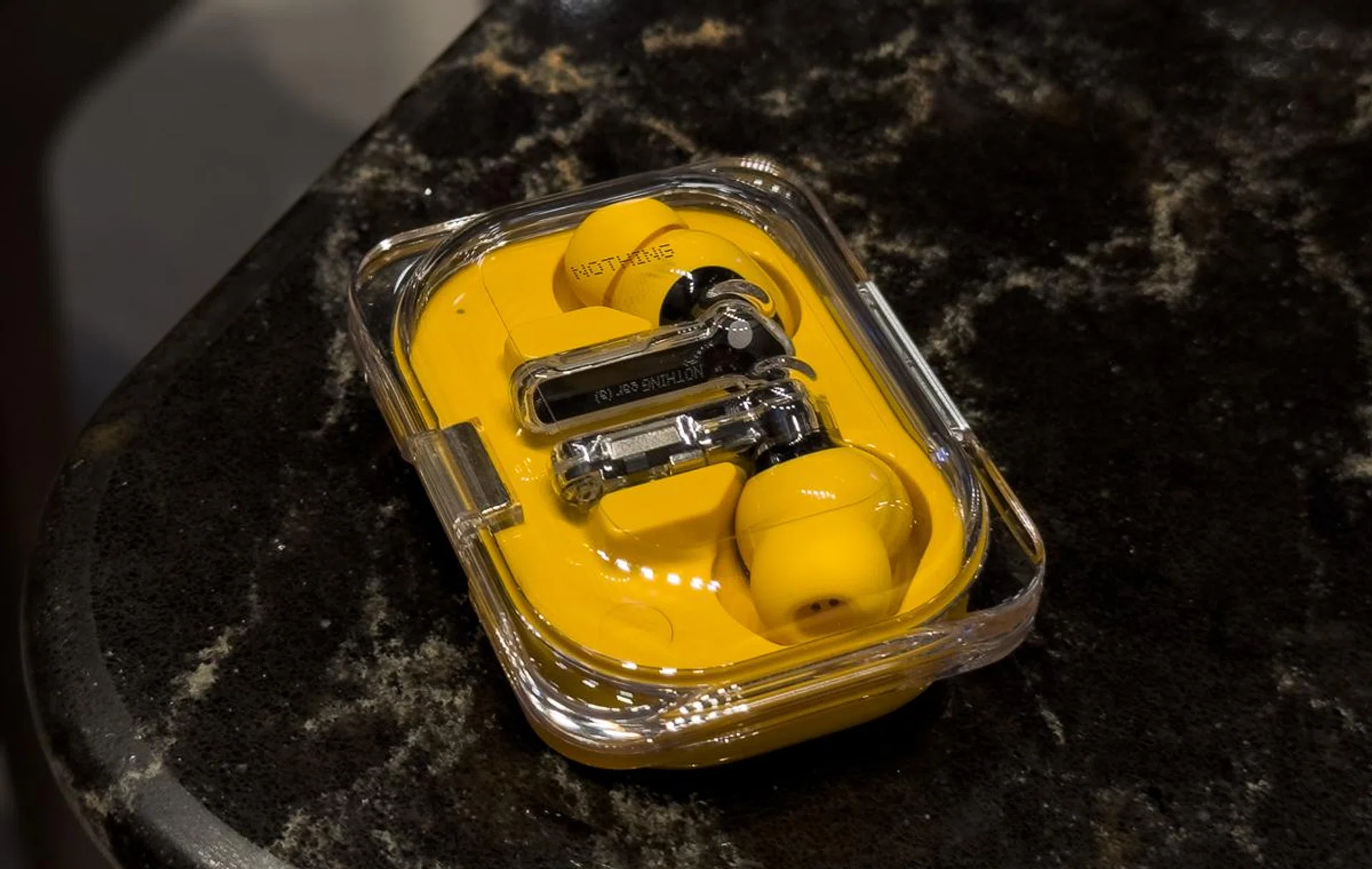
Nothing Ear (a). Photo: HWZ.
The Nothing Ear (a) can be a good pick-up if you’re not too fussy about sound quality. Readers looking for a pair of fuss-free earbuds to bring out and about while commuting, working, or travelling, will be hard-pressed to find alternatives that match the Ear (a)'s feature set and performance. The ANC works well, especially if you’re able to get a good passive seal with the earbuds. Furthermore, features like LDAC support, multipoint connectivity and a comprehensive control customisation system are features you typically don’t see at the S$159 price point. All in all, the Nothing Ear (a) is a competent and great value-for-money set of earbuds.
Note: You can find the Nothing Ear (a) on Lazada, Shopee, the Nothing online store, and authorised retailers.
Our articles may contain affiliate links. If you buy through these links, we may earn a small commission.