
Note: This review was first published on 24 December 2025.
If you’re confused by Nothing’s product naming scheme, you’re not alone. While its latest ANC-capable Nothing Ear (3) is the latest offering, it’s not even the third generation of Nothing’s flagship earbuds. The actual third model is the Nothing Ear (review here).
Our trial with Nothing Ear (3) made us realise that it was only the beginning of Nothing’s puzzling earbuds approach, which we’ll uncover in this review.
Looking nicer counts for something
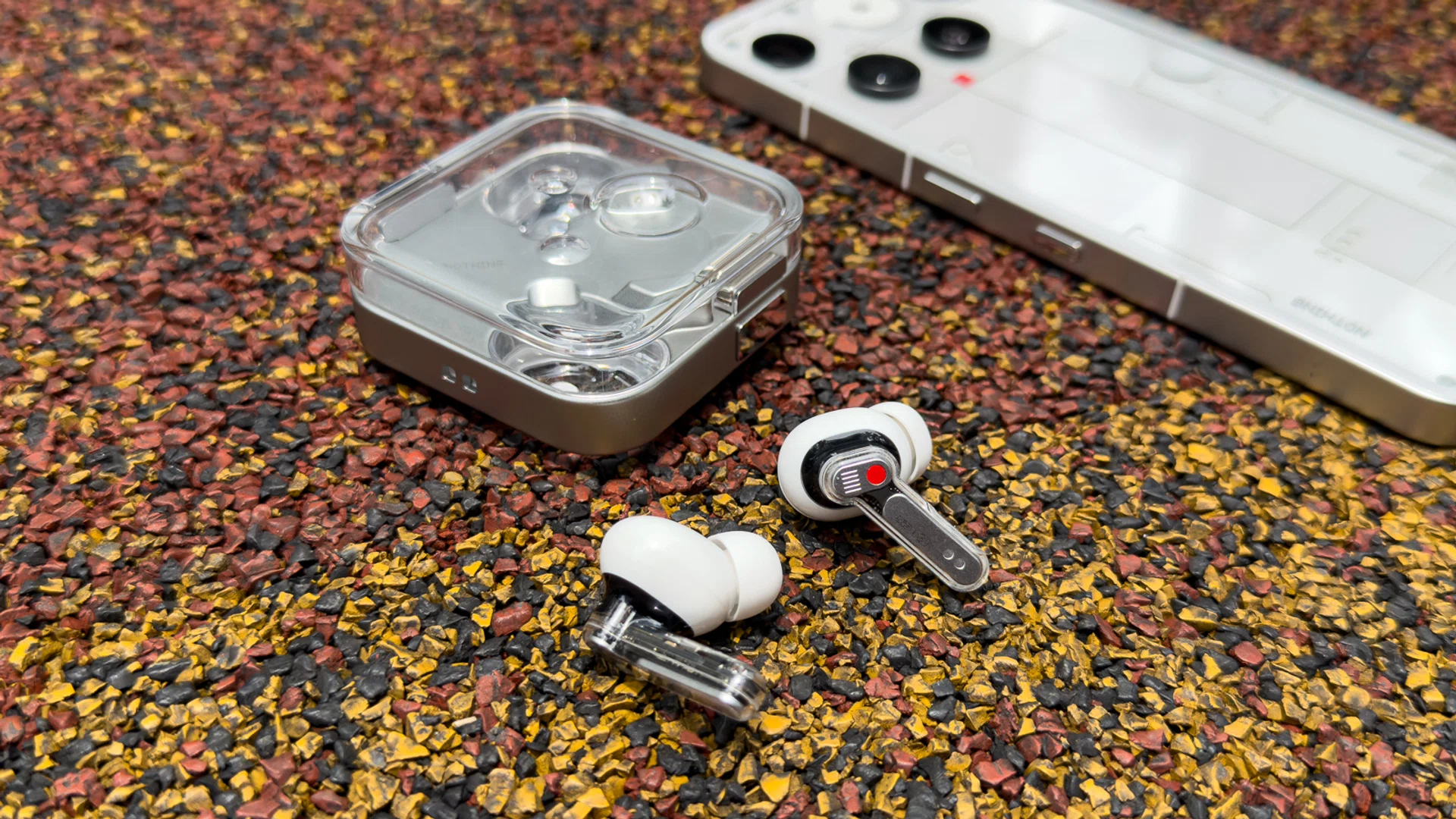
We’ll be fair and admit that there are nice upgrades here. The new earbuds feature metallic accents on the charging case, a new Super Mic feature that lets you use the charging case as a microphone, and a new 12mm driver.
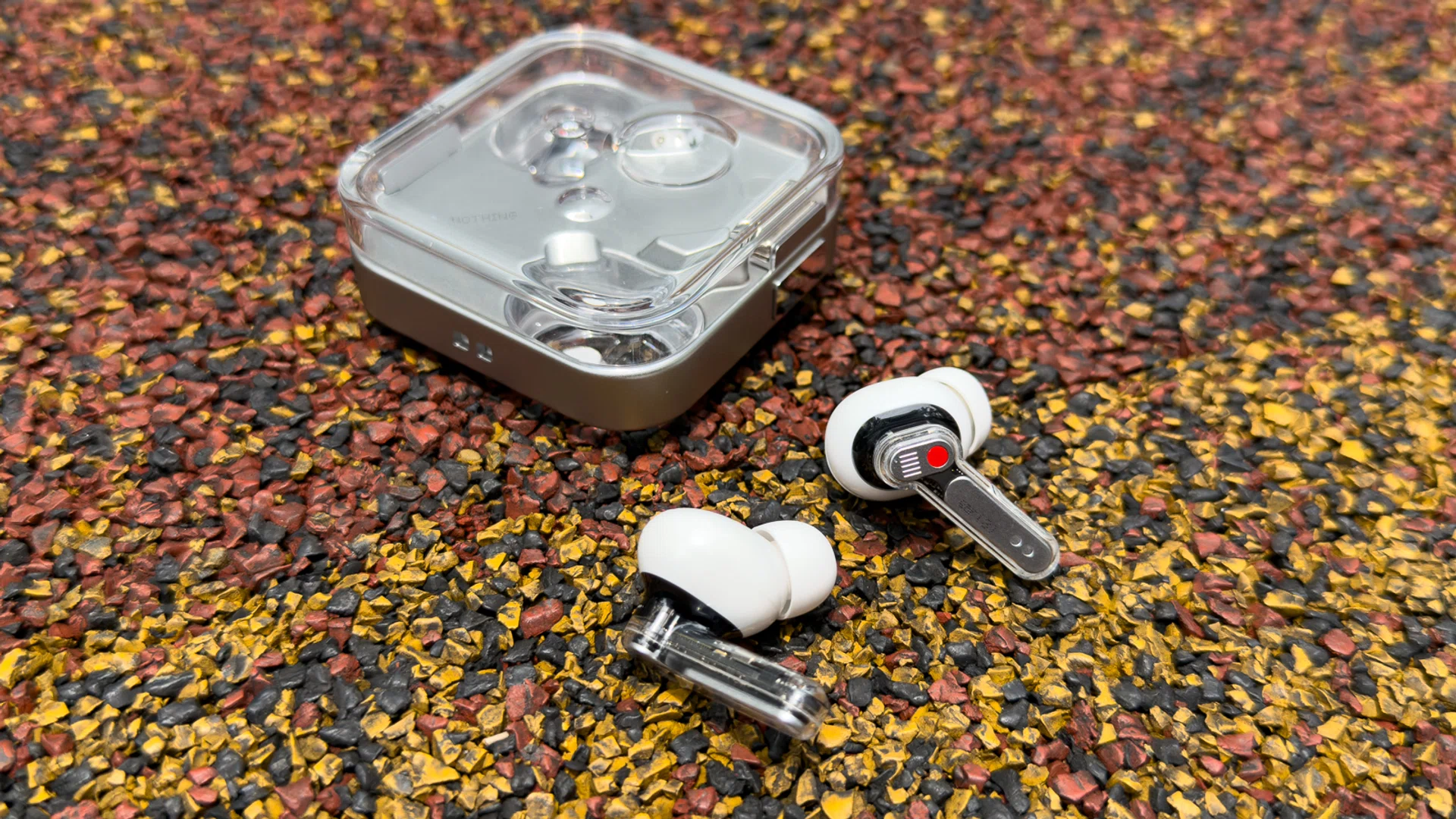
The charging case is still very similar to before with the same transparent design. However, Nothing updated its appearance with matte metal accents that reduce its plastic sheen and add a touch of class.
We’re keeping this section short because our hands-on article provided a comprehensive overview and summary of the earbuds.
Push-to-talk
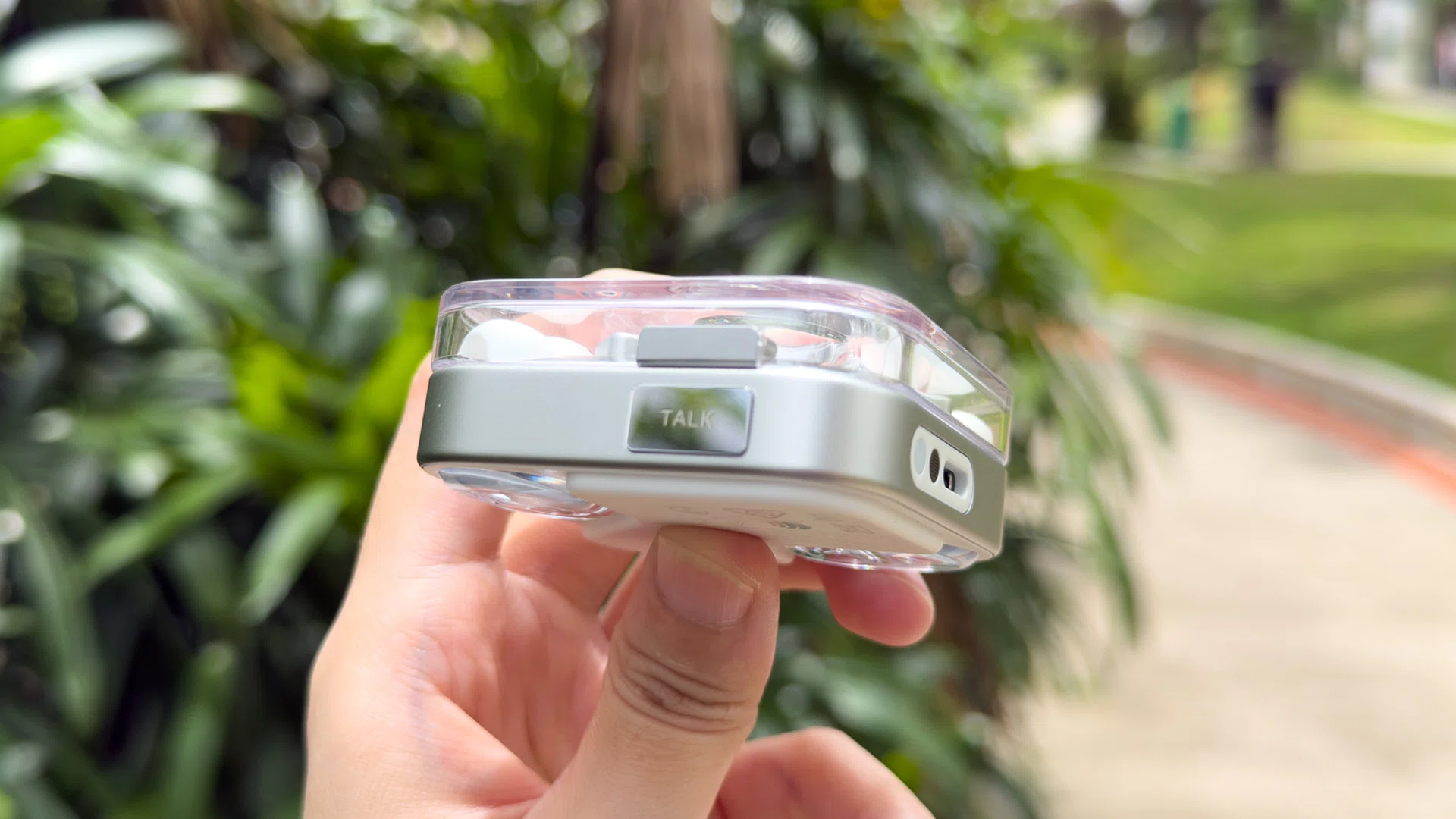
Nothing Ear (3) charging case
You’ll also notice a new button on the side of the charging case with the word “TALK” on it. This activates the microphone in the charging case.
It’s designed for short voice memos, and also supports a double-click to toggle on for longer phone calls. If you’re wondering which way the mic faces, it’s toward the USB-C charging port.
A few things have to change to accommodate this added feature. First, the charging case (74.1g) is now heavier than before (51.9g). While it’s noticeably heavier, an added feature feels like a worthwhile trade-off.
The earbuds are also slightly heavier at 5.2g each, likely due to the metal accents and a larger 12mm dynamic driver utilising a PMI+TPU diaphragm, similar to the more affordable Nothing Ear (a).
What feels odd is that Nothing is moving away from the superior ceramic drivers that they’ve been using for the last few flagship earbuds. We’ll talk more about how this switch has affected sound quality later.
Connectivity, app, and durability
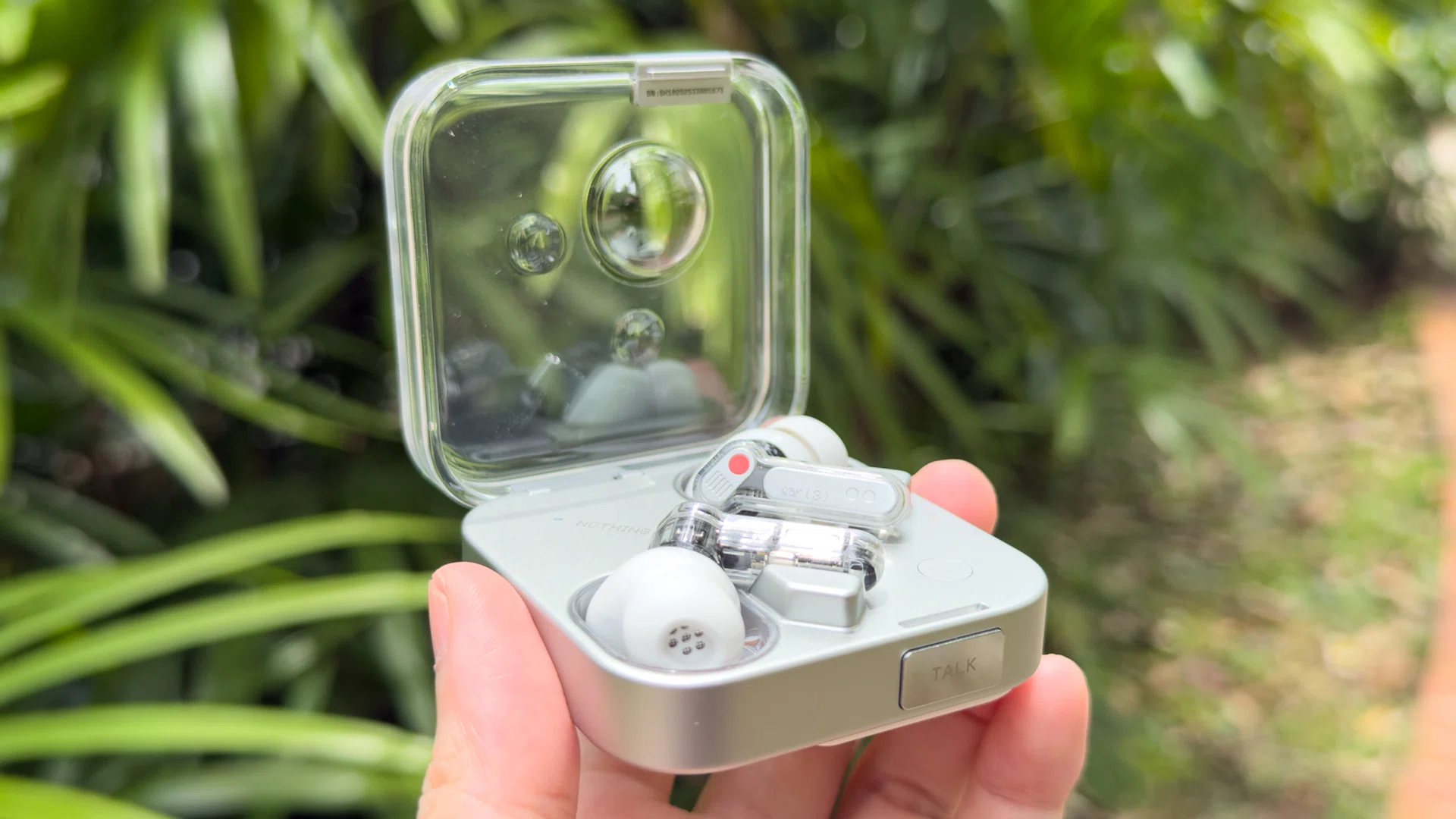
Nothing Ear (3)
Just like the Nothing Ear, the Ear (3) comes with a bunch of features like Google Fast Pair, multipoint connectivity, in-ear detection, low lag mode and active noise cancellation.
The company claimed that the Ear (3) can cancel out up to 45dB of noise thanks to the three-microphone array in each earbud. The ANC removes background noise quite effectively, and Transparency mode is also decent for short conversations.
In addition to those three microphones, there’s a new bone-conducting voice pickup unit (VPU). That supposedly carries voice clearly and reduces environmental noise, since it follows the vibrations you make when you speak. The earbuds' microphone quality is serviceable; it reduces wind noise, but it’s not perfect because it occasionally clips my voice. That feels like a step forward and two steps back, since a microphone that can’t pick your voice in full isn’t much of a microphone at all.
I was also surprised by the quality of Super Mic’s recordings, considering the effort Nothing put into an add-on like this. The quality was even lower than the earbuds’ mic, with one sole exception: If you’re in a quiet environment, the charging case microphones do perform better than the earbuds.
In everyday situations, however, the Super Mic doesn’t cancel nearly as much background noise. When it did, it muffled my voice, even though I could still see its receiver clearly. We judge that the VPU offers better voice pickup and environmental noise rejection, and the Super Mic feels redundant given its unclear use case and suboptimal noise-cancellation or voice clarity. Bear in mind that Nothing Ear (3) is also pricier than its predecessors.
The compatible Nothing X app offers software updates, control customisation, and more. Beyond its basic equaliser function, there’s also a parametric EQ feature that allows you to control values, which is excellent and much needed, due to Nothing’s tuning for these earbuds.
There’s IP54 dust and water resistance for both the earbuds and the case, and just like before, there’s ChatGPT integration if you’re using a Nothing device with the earbuds. However, you still can’t use ChatGPT to make calendar events, send texts, call contacts or anything that you’d traditionally want with a voice assistant.
Wireless and audio performance
Nothing has removed LHDC support from the Ear (3), so it’s only left with SBC, AAC and LDAC. Even though it’s a shame that there’s no more LHDC support, most phones typically do support LDAC, so it’s not too big of a loss. The earbuds do get an upgrade to Bluetooth 5.4, which is nice.
Multipoint connectivity, or Dual Connection (Nothing’s marketing name for this feature) is still available and works well when switching between phones and other devices like a laptop or computer. The connection is generally solid with no dropouts, stuttering or latency.
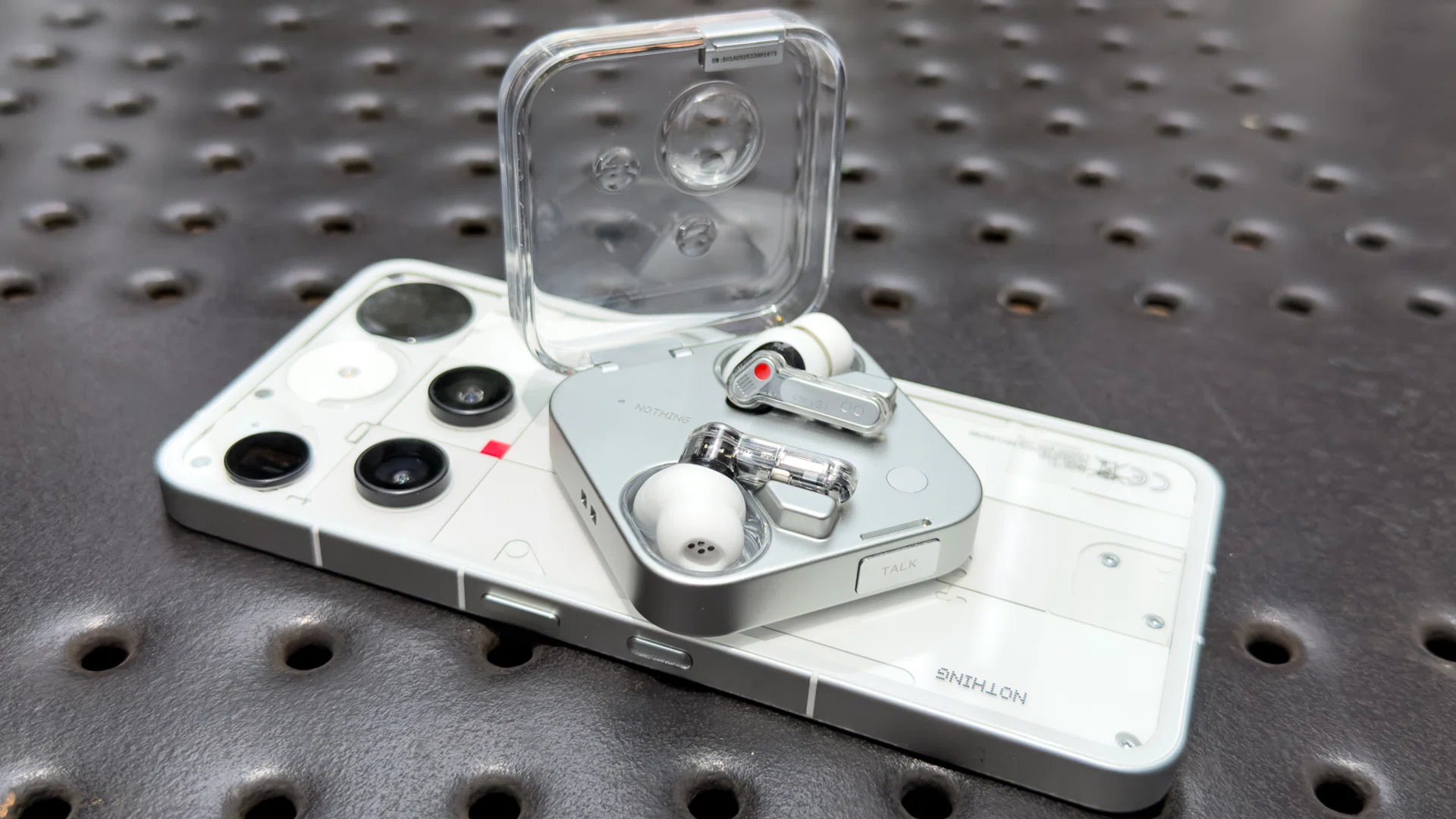
Nothing Ear (3) with Nothing Phone (3)
Unfortunately, the battery life is below average. With the AAC codec and ANC turned on, the earbuds are supposed to last around 5.5 hours, which was the maximum I could eke out of them. If you want high-res LDAC and ANC, that will further reduce the earbuds’ battery life to 3.5 hours.
The USB-C charging speed is decent, with all components fully charged in 67 minutes. There’s also wireless charging, but it takes up to 120 minutes to reach a full charge, according to Nothing.
The audio performance is quite different from the predecessor Nothing Ear earbuds, no doubt due in part to the change in diaphragm material. Ceramic is pricey and pretty, but its TPU alternative gives the bass a huge boost while also elevating the treble. These changes give the Nothing Ear (3) an unmistakable V-shaped sound signature with a significant dip in the mids.
At times, the mids sounded recessed or overshadowed, and it affects vocal-reliant songs. The elevated treble makes up for it with energetic highs that are crisp, and borderline harsh depending on how the song is mastered.
We recommend using the EQ feature (either the simple equaliser or the advanced parametric EQ) to reduce bass and, if needed, treble, to help earbuds handle your phone audio reasonably.
Aside from the aggressive V-shaped signature, the earbuds are actually quite decent in clarity and spaciousness. The soundstage is noticeably wider. Once you sort out the EQ, it reveals fairly impressive detail and clarity. Vocals can also come to the forefront once the lows are adjusted, and the overall sound isn’t bad.
So it bears repeating once more: remember to tweak the sound to your liking. Don’t simply use it right out of the box with no adjustments.
Conclusion: Doing something is not always better than Nothing
Nothing Ear (3)
At about S$30 more than its predecessor, for a push-button microphone that’s less versatile than its default earbuds' microphone, we think Nothing has made a lot of weird decisions with the Nothing Ear (3).
Having to do without LHDC support and shifting away from ceramic drivers might feel annoying if you’re a stickler for detail. But its transgressions are far more than just audiophile pedantry.
Its aggressively tuned sound signature might throw off casual users, and its really short battery life does not help it. Then, there is also a case microphone nobody asked for, topped off with a product name designed to mix up its product sequence.
If only Nothing hadn’t raised prices (it’s S$30 more than its predecessor), these could be written off as minor grievances. For example, if you don’t like the quality given by its push-button microphone, don’t use it. If you want high-res audio, there’s still LDAC. But the privilege of paying more only to work around it feels like buyer’s remorse, especially when you can buy its less-problematic predecessor instead.
There are also other non-negotiables to using the eabuds.To really make the most of its good audio quality, you must tweak the sound signature, which requires its app on your phone. There’s also nothing you can really do about its shorter-than-normal battery life, other than to avoid using high-quality transmission.
From S$199 for the Nothing Ear (2) to the S$229 for the Nothing Ear, the Nothing Ear (3) is also more expensive at S$259. Perhaps Nothing thinks its fanbase is blindly loyal, but the dollar does not discriminate. We don’t see the point in paying more and still having to do more to make the Nothing Ear (3) play well.
Note: You can find the Nothing Ear (3) on Lazada, the Nothing online store, and authorised retailers.