
Note: This review was first published on 24 March 2025.
Huawei's phone business has been enjoying a resurgence lately, but if you're not keen on using a phone that doesn't have Google Mobile Services, the Chinese company is actually still producing one product line that works well and can be used anywhere and with most devices. If you guessed earbuds, you’re correct. Huawei’s FreeBuds lineup has typically been good value for money, lets see if the new FreeBuds Pro 4 upholds this tradition.
The TL;DR version:
If you need earbuds with great microphones, the Huawei FreeBuds Pro 4 offers that in spades. Sound quality and ANC are pretty decent too, but its high price makes it a less attractive option than some of its rivals.
Note: You can find the Huawei FreeBuds Pro 4 on Lazada and Shopee.
With a dual-driver setup with both a planar diaphragm tweeter and an 11mm dynamic driver, the FreeBuds Pro 4 pairs nice hardware with great optimisation for microphone quality and support for high-res L2HC and LDAC codecs.
These earbuds were launched in late 2024, and they are the successor to great earbuds like the FreeBuds Pro 3 and FreeBuds Pro 2, which was a nominee for our 2023 Tech Awards for best wireless earbuds. Naturally, we have high expections for the FreeBuds Pro 4.
Design and comfort
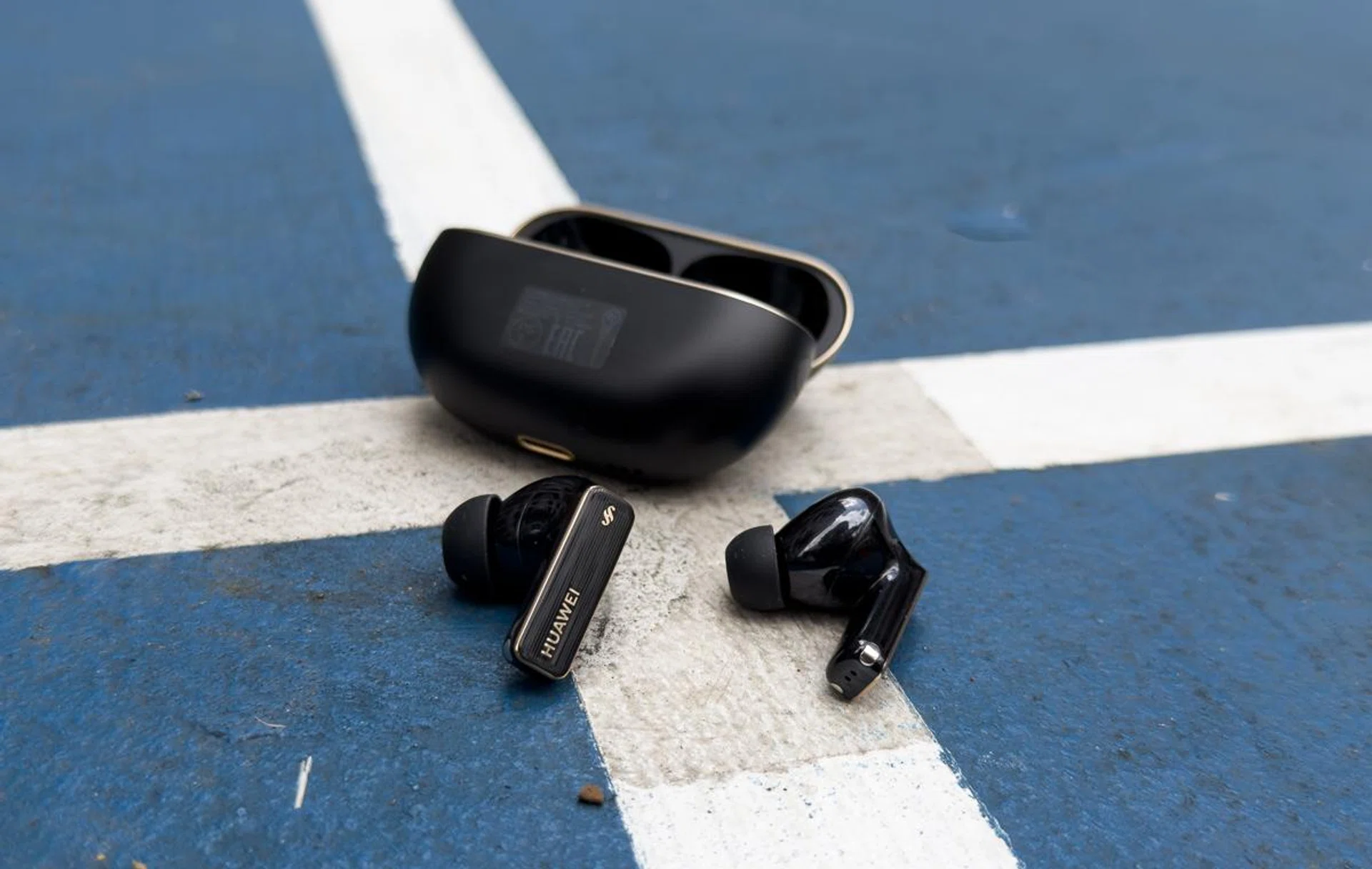
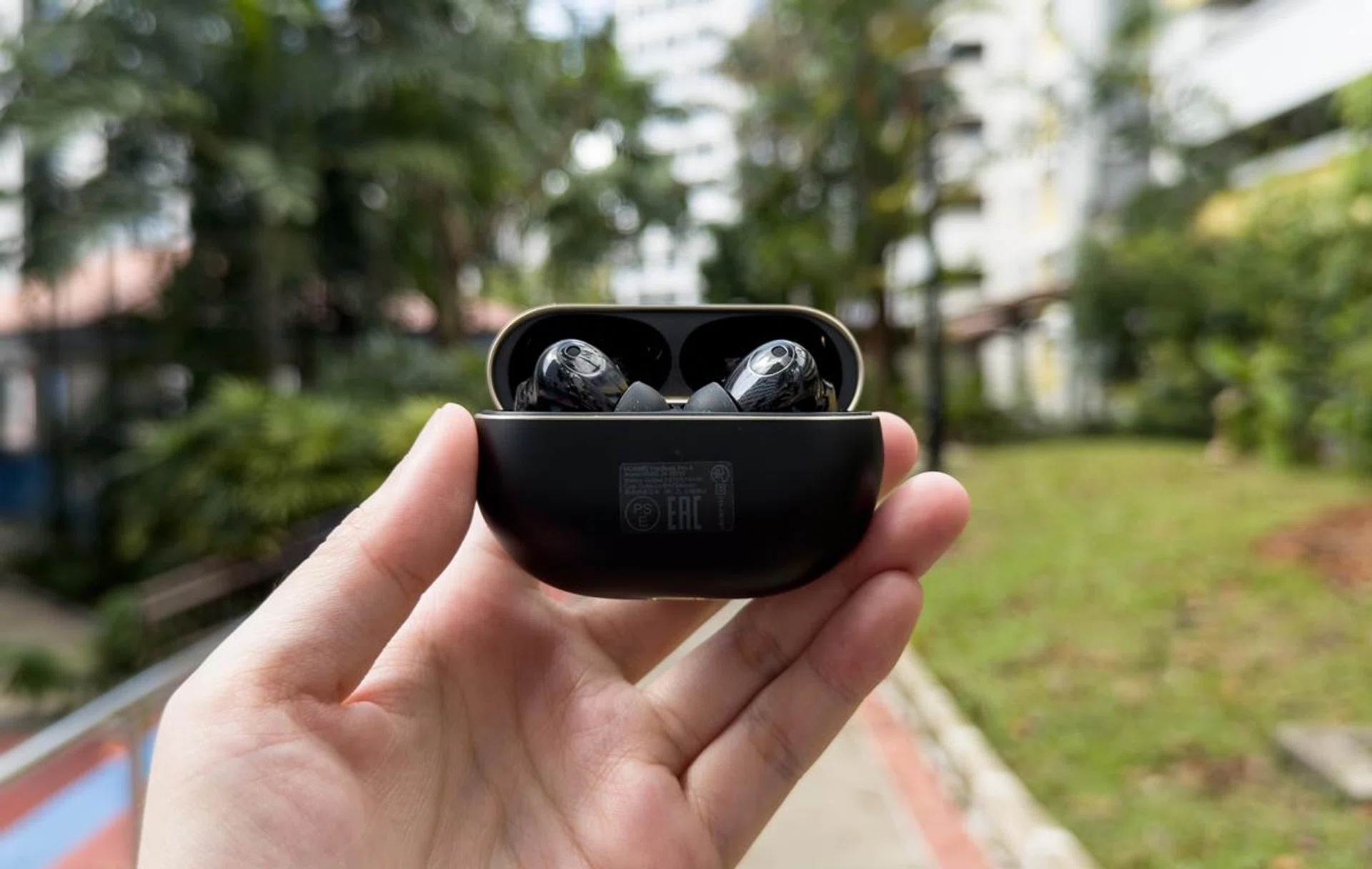
The FreeBuds Pro lineup has had a very similar look ever since the very start. While some people might think it’s a bit boring, I think that there’s no need to fix what’s not broken. The charging case is sleek and easy to put into a pocket, and it offers both USB-C and wireless charging capabilities. That being said, there’s a little aesthetic change where the lid is now set at an angle so that you can easily reach into the open case and pull out the earbuds. It’s a very minor detail, but it does make for a more visually interesting design.
Huawei FreeBuds Pro 4. Photo: HWZ.
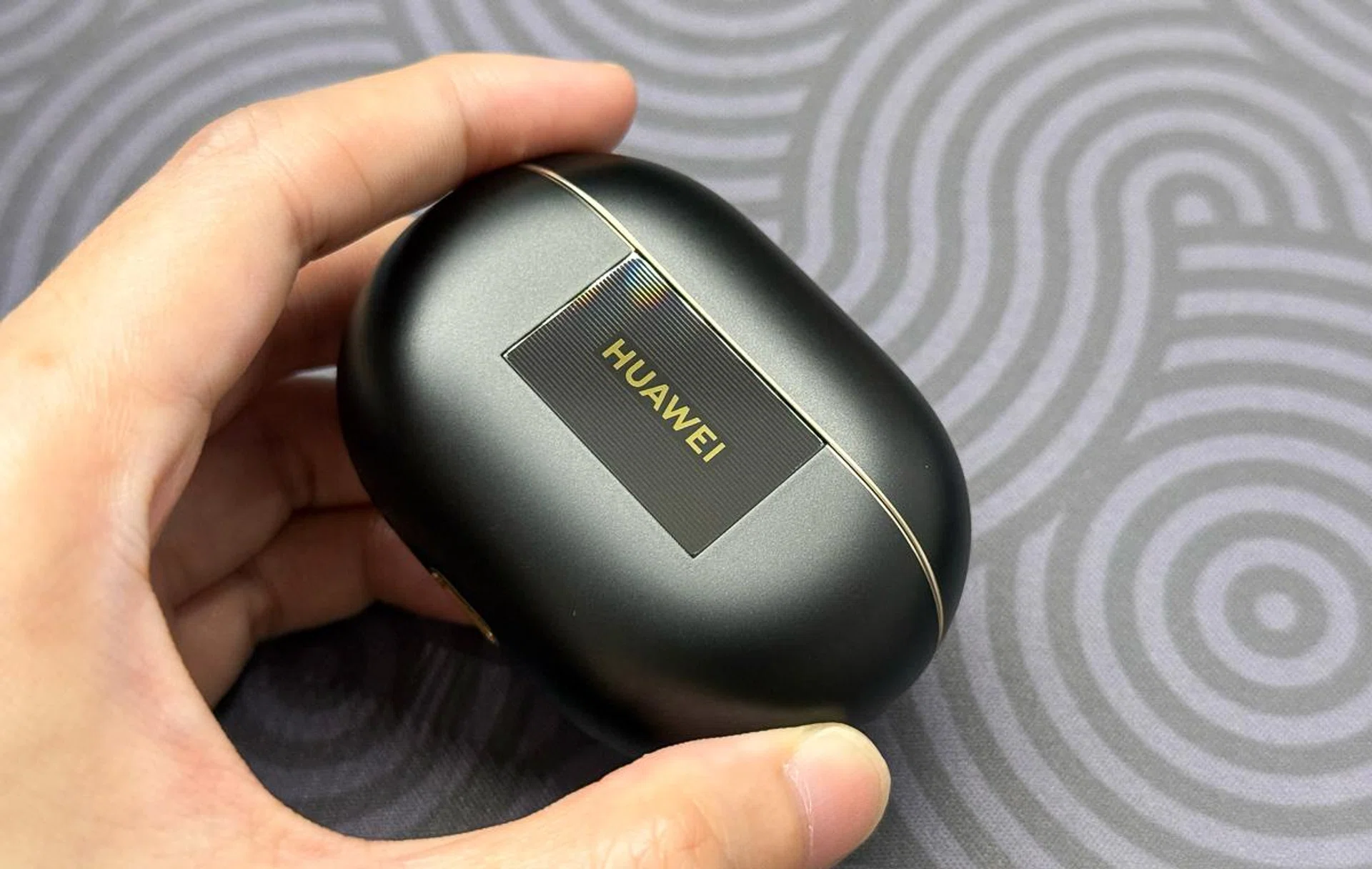
The shiny square Huawei logo is set on the rear of the case, with the charging indicator light demarcating the front. There’s a sticker under the light with the device information and certifications, but it can be peeled off so that the case looks cleaner. There are three colours, Black, White and Green, and all three come with the same gold accents around the lid and USB-C port.
The earbuds themselves look fantastic as well. The Silver String Design, as Huawei calls it, is laser engraved on the stems and the square logo on the case, and it is covered with a glossy finish. It does get a little smudged with skin oils, but the design helps to disguise it a bit.
Huawei FreeBuds Pro 4. Photo: HWZ.
The touch controls are on the inner sides of the stem, and it’s intuitive and responsive. The control scheme is similar to the AirPods Pro 2nd Gen earbuds, with squeezes and taps to control media, skip tracks, activate ANC or transparency and upward or downward slides to control volume. There is (very limited) control customisation through Huawei’s AI Life app, and we’ll talk more about it shortly.
There’s IP54 dust and water resistance on the earbuds, but the case isn’t rated so you’ll still want to be careful.
Features
Regardless of whether you have a Huawei phone or not, you’ll want to download the AI Life app to make sure you get every bit of functionality from these earbuds.
Limited pinch controls. Photo: HWZ.
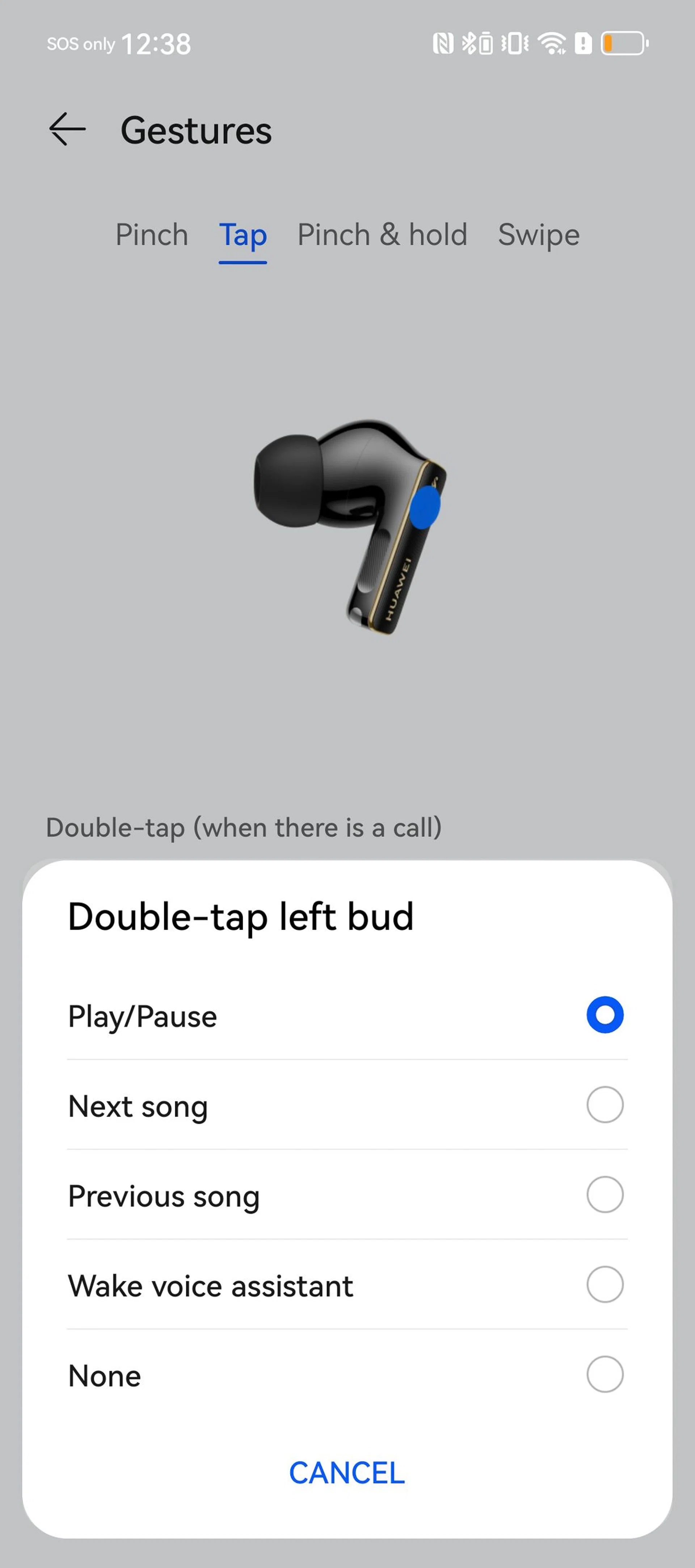
You get more choices for taps. Photo: HWZ.
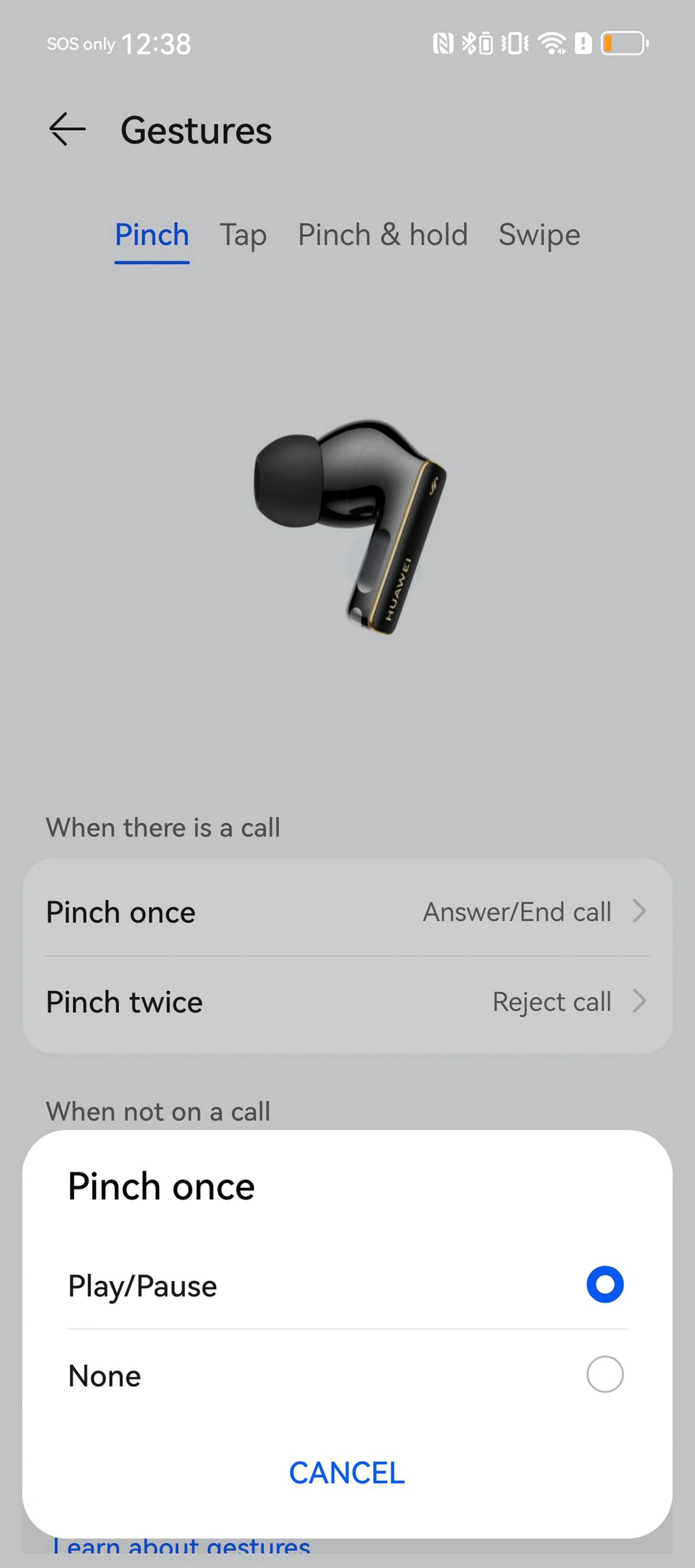
Let’s talk about my biggest software problem with these first, the control customisation. After being spoiled with the level of customisation from other brands like Sennheiser, the FreeBuds Pro 4 are immensely disappointing because the control customisation is limited.
For the pinch controls, there is only the option between a single function and turning it off. Taps are a little better, with a lot of options for double tap, but there’s no option to enable a single tap. This might not be a dealbreaker for most people, but if you’re coming from a pair of earbuds that give you a lot of freedom in this aspect, it might be frustrating.
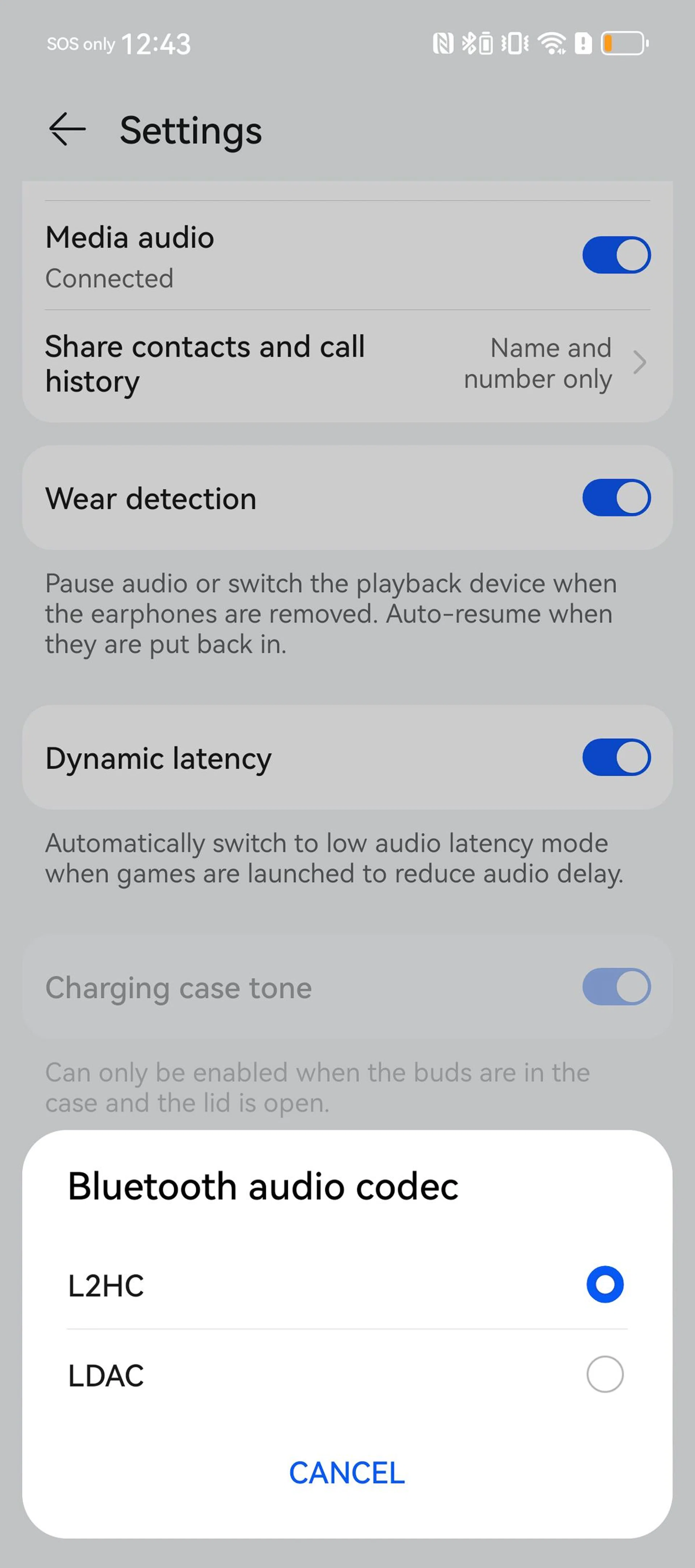
Bluetooth audio codecs. Photo: HWZ.
Aside from that, everything else is relatively normal. You get the option to choose between the L2HC and LDAC high-res codecs in the settings, adjust the level of ANC, and whether you want spatial audio turned on or not. There’s multipoint connectivity as well, and if you’re deep into the Huawei ecosystem, you’ll be able to switch between more than just two devices.
ANC works very well with low-pitched rumbles. I mostly left it on the dynamic setting so that it adjusts automatically for me depending on my environment. However, I did use these earbuds on a few plane rides as well and I felt that setting them to the Ultra mode worked best. If you’re someone who wants the best ANC at all times, it would be ideal to just keep it on Ultra. In noisier settings with a lot of high-pitched sounds like a cafe, ambient noise did creep in from time to time, but if you’re listening to music at a normal volume, it’s typically not an issue.
There’s also a Huawei Sound section, which houses the equaliser function and a bunch of presets. If none of those tickle your fancy, there’s also the option to create your own setting with a 10-bar EQ. If you tap into the small “Sound Quality” button under that, you get to tell the earbuds whether to prioritise connection quality or sound quality and whether you want the microphones to reduce ambient noise or capture everything when on calls or recording audio.
The microphone performance is excellent. The earbuds have a three-mic array paired with a reverse bone conduction microphone, which helps to pick up the wearer’s voice clearly and isolate it from ambient sound that you might not want. Huawei’s marketing materials for the FreeBuds Pro 4 show a person holding a work call while standing in the mosh pit of a concert, and while I don’t think that’s quite doable in real life, the microphones do manage to cancel out a lot of ambient noise like cars going by, cafe noise, and the like.
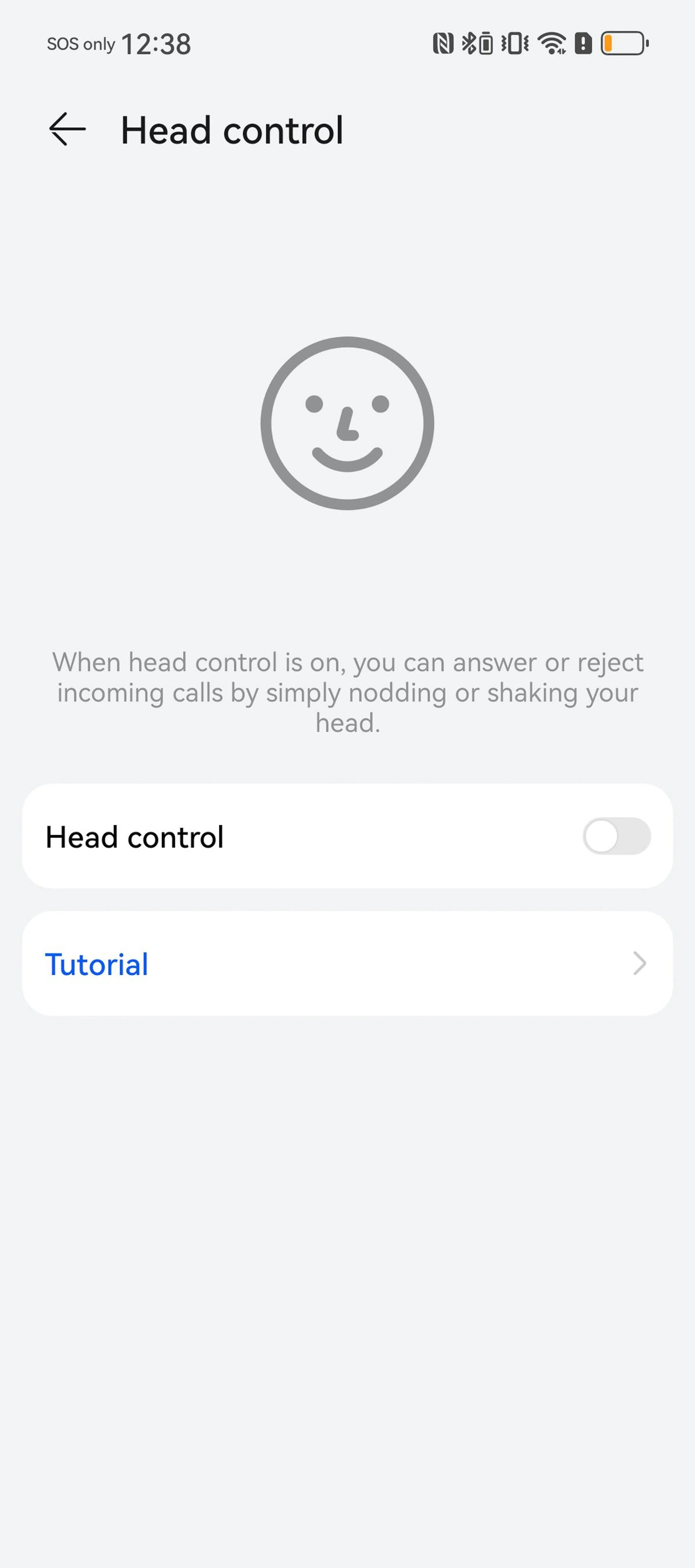
Head control. Photo: HWZ.
There’s also Head Control, where you can choose to turn on the ability to nod to accept calls or shake your head to reject. I’ve found it does require a bit of a stronger nod or shake for the earbuds to pick it up, so it's probably not very useful unless you don’t mind the odd stares and weird looks in public.
The earbuds support Bluetooth 5.2 and also the SBC, AAC, L2HC 4.0 and LDAC codecs. Battery life isn’t great, however, with just 5 hours of battery life on a full charge with ANC turned on while using the AAC codec. It drops even further to just 4.5 hours if you have ANC turned on while using the higher resolution L2HC or LDAC codecs.
Wireless and audio performance
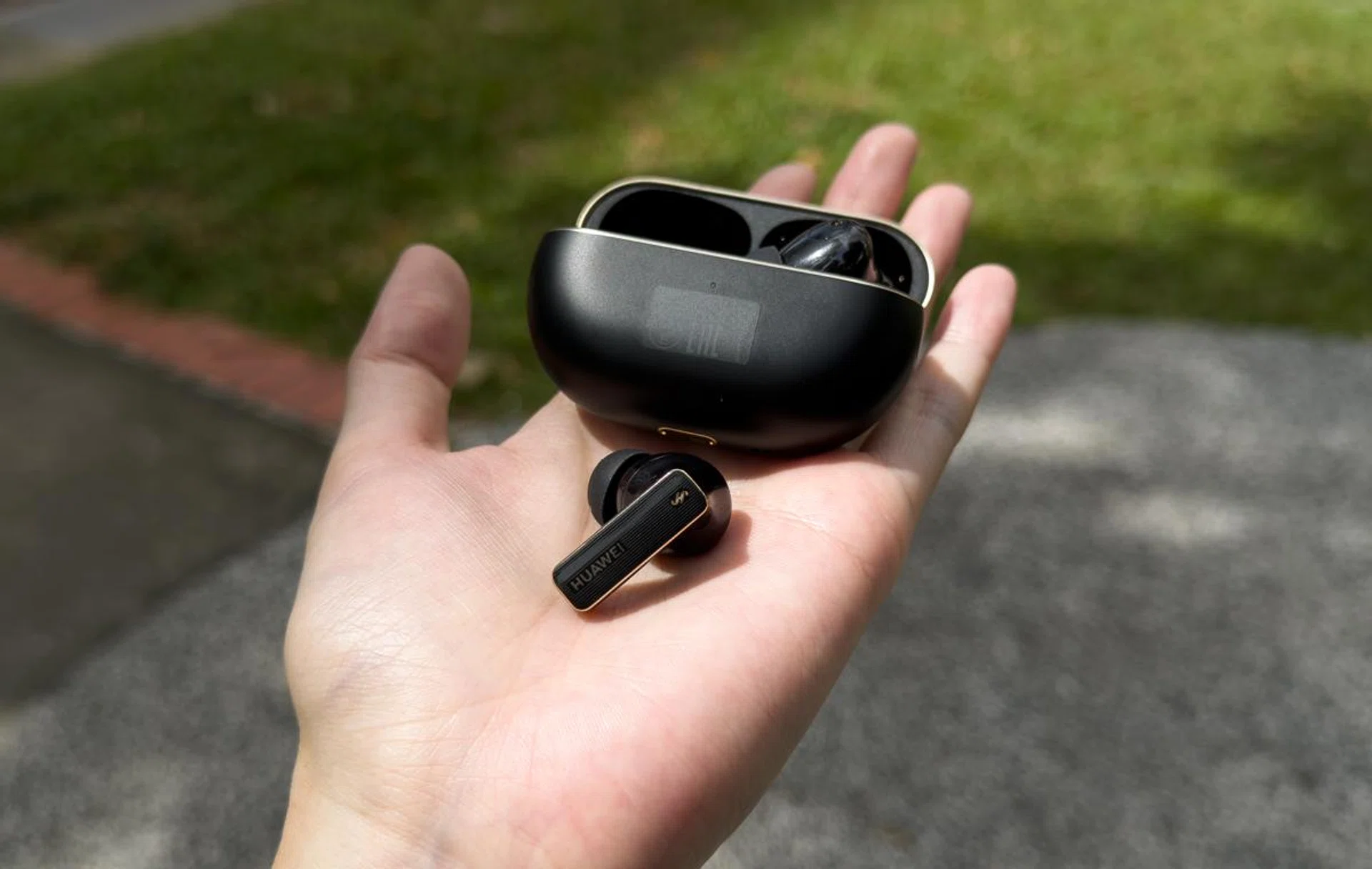
Huawei FreeBuds Pro 4. Photo: HWZ.
As mentioned, these earbuds have a dual-driver design with a planar diaphragm tweeter and a 10mm dynamic driver. We mostly tested the earbuds on the default EQ preset and with ANC turned on, and swapped between both the silicone and foam ear tips provided. Testing was done on both a Huawei Pura 70 Ultra on the L2HC codec and an iPhone 16 Pro on AAC, although we mostly stuck to the Pura 70 Ultra for the higher-res codec.
On the default preset with silicone tips, the earbuds sound pleasant enough. The overall sound signature is very similar to the Huawei FreeBuds Pro 3. There’s a decent thump in the bass and the sub-bass has good extension. There’s a nice warmth in the mids, with good detail retention.
There’s a good amount of air and space in the highs, but it’s not particularly bright or energetic. However, female vocals still sounded quite good. The vocals do feel like one of the best parts of these earbuds, with a more forward presentation that lets you hear the crispness and timbre of the singers’ voices.
Moving on to the foam tips, the sound oddly feels blunted across all frequency regions. Listening to Michael Jackson’s Billie Jean, I was surprised by how unenergetic the song sounded. This is a song that’s on the louder side with a good amount of energy in the treble, but the FreeBuds Pro 4 with the foam tips made it feel much tamer.
Treble, in general, feels like it’s been dampened with the foam tips. Cymbals, high-hats, violins and flutes don’t have the same shimmer and sparkle. This might be a good thing for people who are more sensitive to sibilance, but it’s a downside for me since I like really energetic and sparkly treble.
This resulted in a bit of a conundrum for me since the foam tips do provide better passive noise isolation to help the ANC work more effectively, but I much preferred the sound when using the silicone ear tips.
I do have to give a thumbs up to the soundstage, it’s generally quite wide and open regardless of which tips I had on. That said, the silicone tips provided a cleaner sound with better resolution and accuracy, so that might be the optimal choice for people looking for a more detailed sound.
Our Take
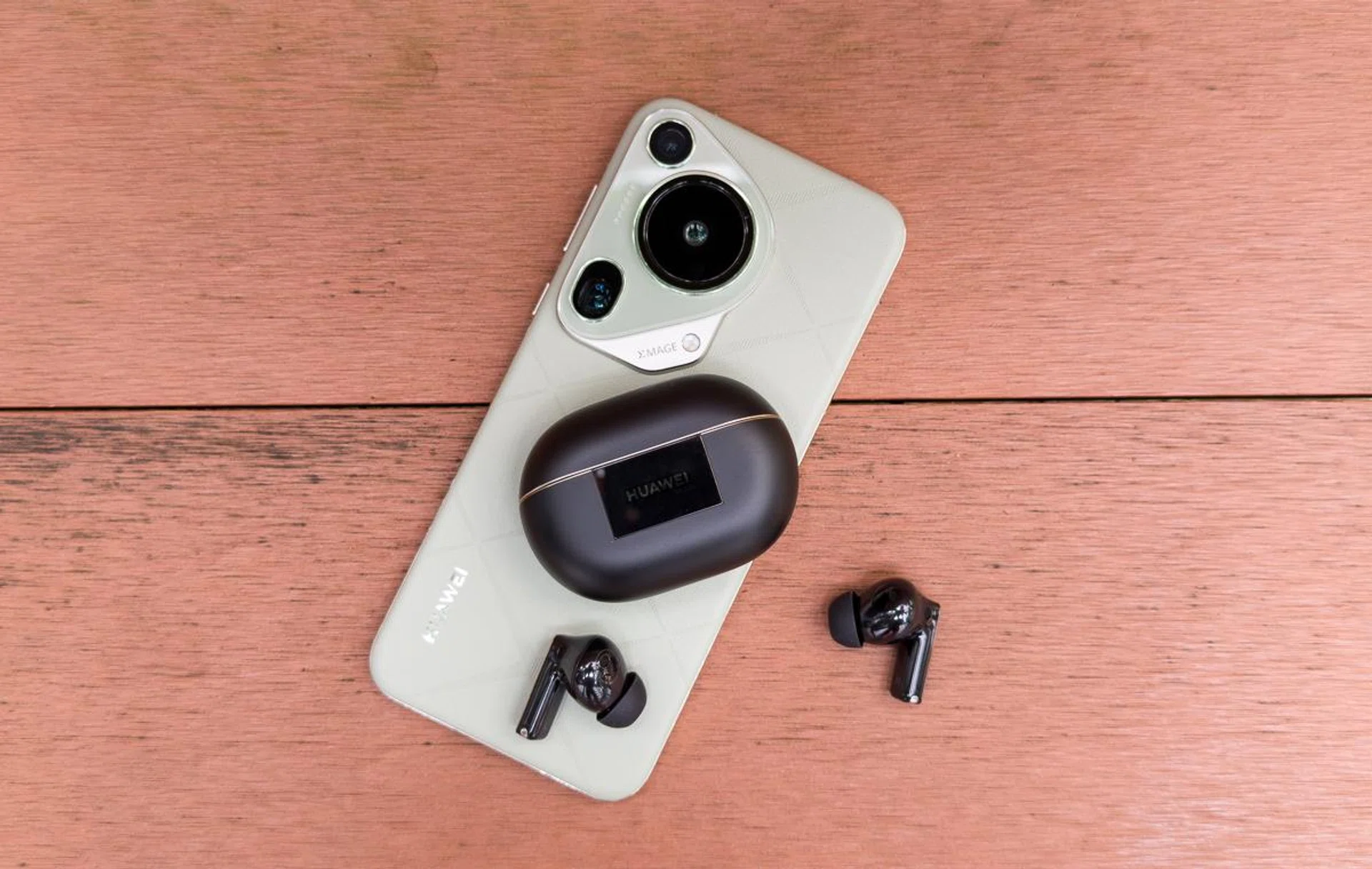
Huawei FreeBuds Pro 4. Photo: HWZ.
If you’re looking for a pair of earbuds to mostly take calls with, the Huawei FreeBuds Pro 4 have to be one of the top options. The microphone quality on these earbuds is astonishing, with excellent voice pickup and ambient noise cancellation.
However, if you’re looking for a flagship product with top-notch sound quality, it can be a bit hard to recommend these. The sound signature isn’t bad — it’s relatively balanced with good detail and a wide soundstage — but it isn’t particularly appealing with the foam tips. But a great selling point is that the earbuds support LDAC in addition to Huawei’s proprietary L2HC codec, so users with an Android device will be able to get high-res audio no matter what.
The real dealbreaker, however, is the short battery life. At just 5 hours on AAC with ANC turned on, it’s one of the shortest-lasting true wireless earbuds on the market, especially in 2025. While it might be perfectly fine for short commutes, you’ll be annoyed if you bring these on longer flights or overnight bus rides and have to charge them halfway.
With a retail price of S$298, these aren’t cheap. There are great (albeit older) options that can also be found close to that price, such as the Sony WF-1000XM5 (discounted to S$296.10 at the time of writing), the newer Creative Aurvana Ace Mimi (S$189) or even the Nothing Ear (S$229) are also viable and more affordable alternatives. Still, we would say that the microphones on the FreeBuds Pro 4 beat all of these options hands down.
Note: The Huawei FreeBuds Pro 4 retails at S$298 and is available for purchase at Lazada and Shopee.
Our articles may contain affiliate links. If you buy through these links, we may earn a small commission.