


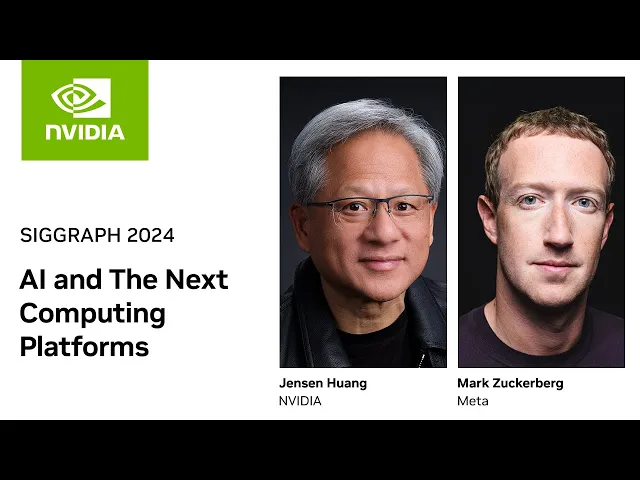
This marks the first time Mark Zuckerberg has appeared at SIGGRAPH. Photo: NVIDIA
Speaking at the SIGGRAPH 2024 conference alongside NVIDIA CEO Jensen Huang, Mark Zuckerberg had much to say about the advancement in AI. One that particularly stood out during the hour-long segment was when he outlined his expectations for advanced wearables.
During the talk, he unveiled his vision for the next generation of AI-powered Ray-Ban smart glasses, going so much as to predict that they will become an widely-used consumer product in the future.

The latest generation of the Meta smart glasses. Photo: Ray-Ban
The Meta CEO believes that display-less AI glasses priced around USD$300 will become “a really big product” that could eventually reach hundreds of millions of users. These next-generation devices are expected to offer a range of AI-powered capabilities that go beyond the current Ray-Ban Meta Smart Glasses.
For those who don’t know, the Ray-Ban Meta Smart Glasses are the result of a collaboration between Meta and EssilorLuxottica, the parent company of Ray-Ban. The current generation which was released in 2023 is capable of recording video at 1080p resolution at 60 frames per second. Equipped with a Qualcomm Snapdragon AR1 Gen 1 processor, one of the standout features is the ability to livestream hands-free directly to Facebook and Instagram, opening up a variety of possibilities for content creation.
According to Zuckerberg, future models will feature “super interactive AI” that users can converse with naturally. He highlighted that currently, AI is being used on a turn-by-turn basis involving a prompt by the user followed by a response from the AI. This would potentially change as AI evolves and is able to process data straight from the user's viewpoint via the onboard camera.
He had mentioned several potential functionalities of the future glasses, including:
- Visual language understanding, allowing the AI to interpret and describe the wearer’s surroundings
- Real-time translation, enabling conversations across language barriers
- Advanced camera sensors for capturing photos and videos
- Video calling functionality, integrated with apps such as WhatsApp
While some models may include displays, specifically holographic displays, Zuckerberg did mention that the display-less versions would offer a more streamlined form factor, bearing a resemblance towards standard eyewear. The focus is on creating glasses that “look great” while packing in as much technology as possible within the frames of the glasses.
It's still a while to go till we get a glimpse of these new pair of glasses that could potentially be as commonplace as smartphones are today. Wearable tech is already seeing plenty of interest and with companies rapidly developing their AI capabilities, it won't be surprising if we begin to hear more about AI-powered glasses.
Our articles may contain affiliate links. If you buy through these links, we may earn a small commission.