
Here’s why you should take all the hype around the Tesla Model 3 with a pinch of salt
To say that the Tesla Model 3 was well-received would be an understatement. The car racked up over 325,000 reservations in its first week, and has been hailed as the vehicle to take electric vehicles to the mainstream. But that may not actually be the case. Here's why the hype may be overblown.

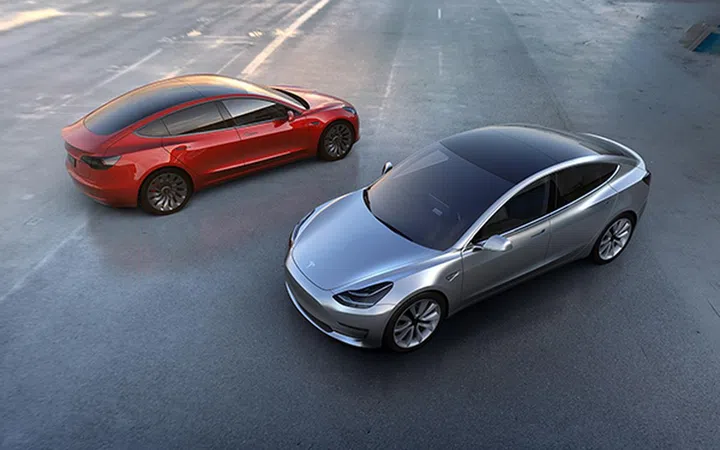
According to Tesla, the Model 3 marks the first time that electric vehicles entered the mainstream. (Image Source: Tesla Motors)
Tesla’s new Model 3 electric vehicle has been alternately hailed as a design triumph and a history-making moment in which EVs truly entered the mainstream. In a blogpost ambitiously-titled “The Week that Electric Vehicles Went Mainstream”, Tesla talked about the “incredible” excitement surrounding the Model 3, and how it had received over 325,000 reservations for the US$35,000 Model 3.
That figure translates to a staggering US$14 billion in future sales, making it the single biggest one-week launch ever of any product. So far, so good. But there’s a catch – the Model 3 isn’t expected to begin production until the tail-end of 2017, more than a year and a half from its official unveiling.
This means that hundreds of thousands of people just put down a US$1,000 deposit on a car that they haven’t even seen in the flesh. And on the day Model 3 reservations opened, queues formed outside Tesla showrooms around the world that would give Apple a run for its money.
A lot of this speaks to an Apple-esque hype around a new product. Thanks to Tesla, the public saw that EVs could actually, for want of a better word, be cool. But this is a company that delayed the Model X for two years, and if everything doesn’t go as planned, Tesla could stand to lose a lot of these refundable deposits and set a lot of its customers up for a huge disappointment.
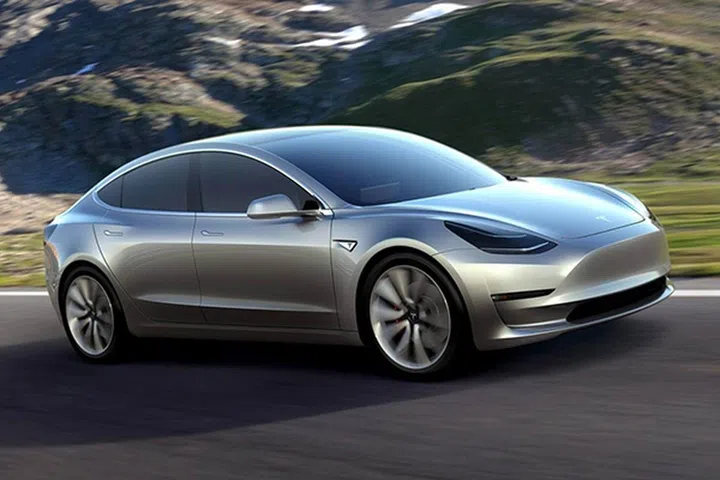
It's not difficult to see why the Model 3's design has captivated customers around the world. (Image Source: Tesla Motors)
The fact that Tesla is marketing the Model 3 as a mainstream vehicle could also further inflame potential problems. These customers are likely to be far more dependent on their vehicles than the affluent buyers that the Model S and X appealed to, which means they are probably less tolerant of delays and reliability issues. As it turns out, Tesla has actually had a lot of the latter – the Model S ranks as one of the worst used cars to buy, and Tesla forums are replete with complaints of things like cracking windshields and malfunctioning door handles.
In addition, CEO Elon Musk has said that he plans to scale up Tesla’s production capacity from 50,000 units in 2015 to 500,000 units by 2020 in order to meet demand. That’s a gargantuan task, which might even exacerbate Tesla’s quality struggles and increase the chance of defects.
As it stands, a third of customers who reserved the Model X are still holding off on converting their US$5,000 pre-order into an actual purchase because of the aforementioned quality control problems. If the same happens for the Model 3, Tesla’s projected US$14 billion in sales could be winnowed down to a paltrier figure.
But whatever the case, we’re still rooting for Tesla. It will be a huge success story if it manages to roll out the Model 3 as promised, and then – only then – will the EV have really become mainstream.
Our articles may contain affiliate links. If you buy through these links, we may earn a small commission.