
CeBIT Hannover 2006 (Part 3)
In this third installment of our CeBIT Hannover 2006 tour, we bring you news from Cooler Master, Biostar, ECS and EPoX.
Cooler Master's Casings
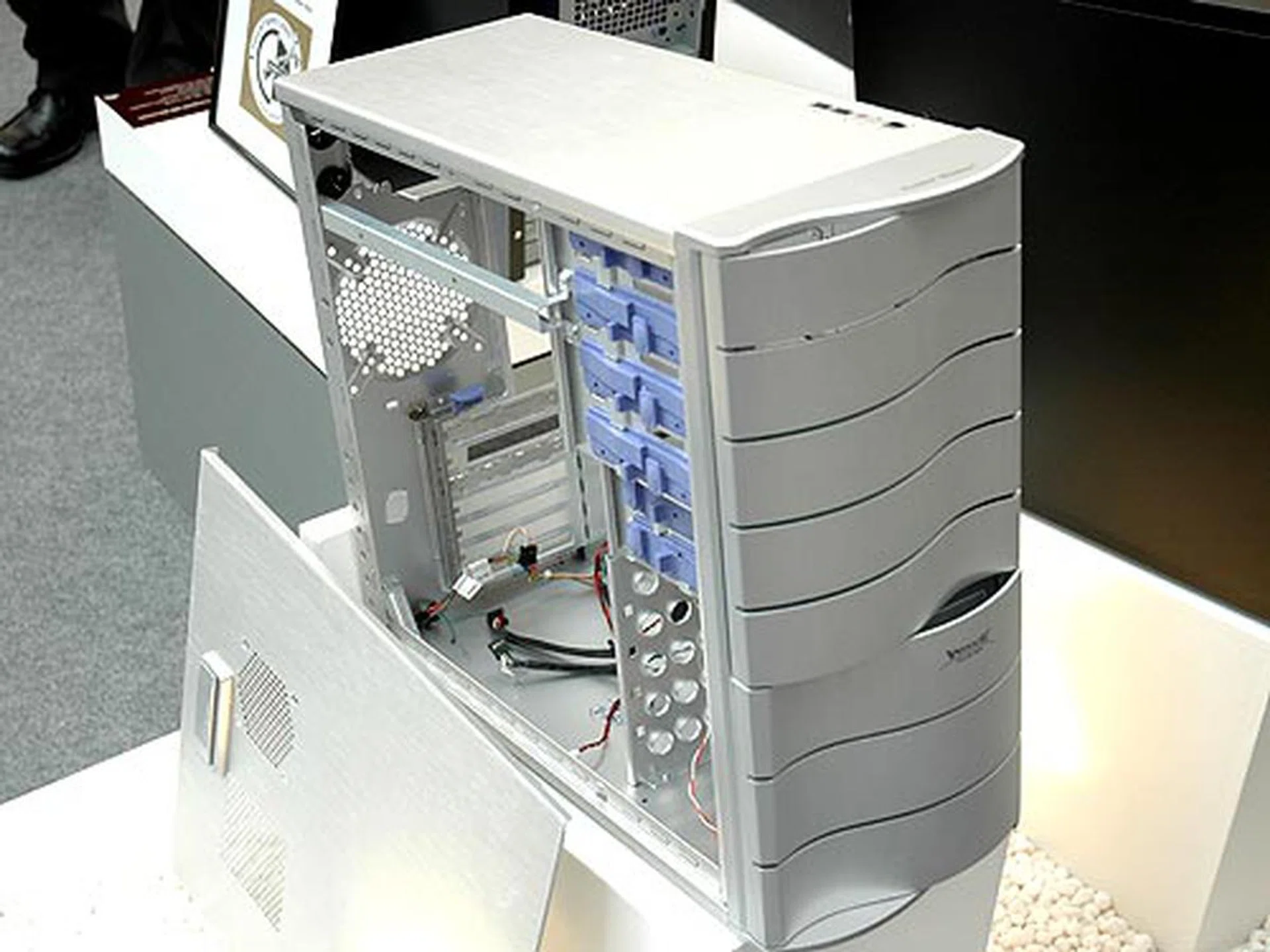
Cooler Master's Wave Master makes a return with the new Wave Master II 631 that gives you even more flexible curves. The casing adopts a screw-less assembly design and it features large 120mm fans in the front and rear panels. There are also holes at the rear for water-cooling tubes in and out of the casing. The Wave Master II 631 comes with four 5.25-inch external bays, two 3.5-inch external bays and four 3.5-inch internal bays.
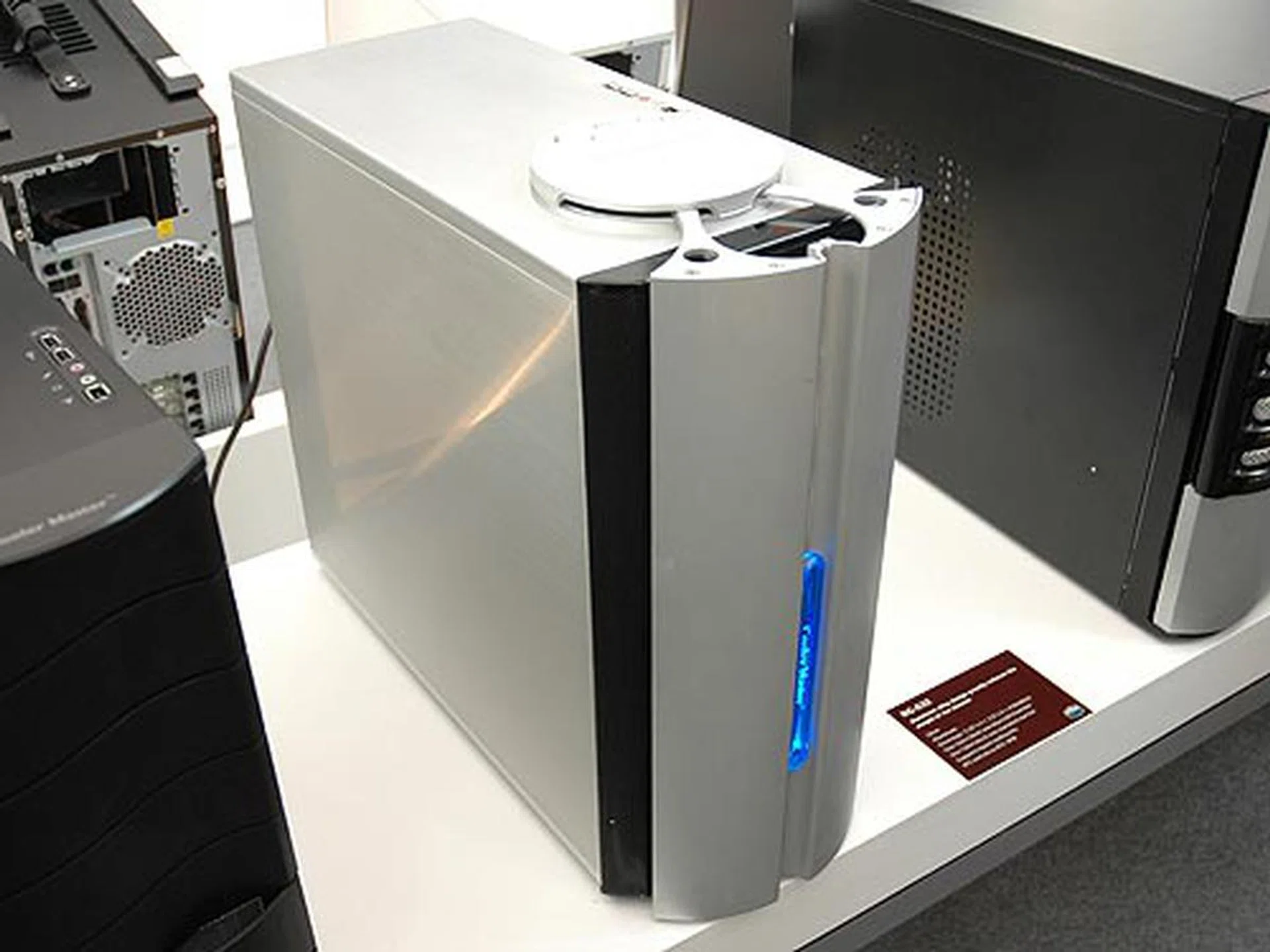
Yet another solid aluminum casing design from Cooler Master is the RC-632. It comes with large intake and exhaust 120mm fans in the front and back. The casing features a center-splitting front panel door that makes it uniquely different from other casings. It comes with four 5.25-inch external bays, two 3.5-inch external bays and four 3.5-inch internal bays.
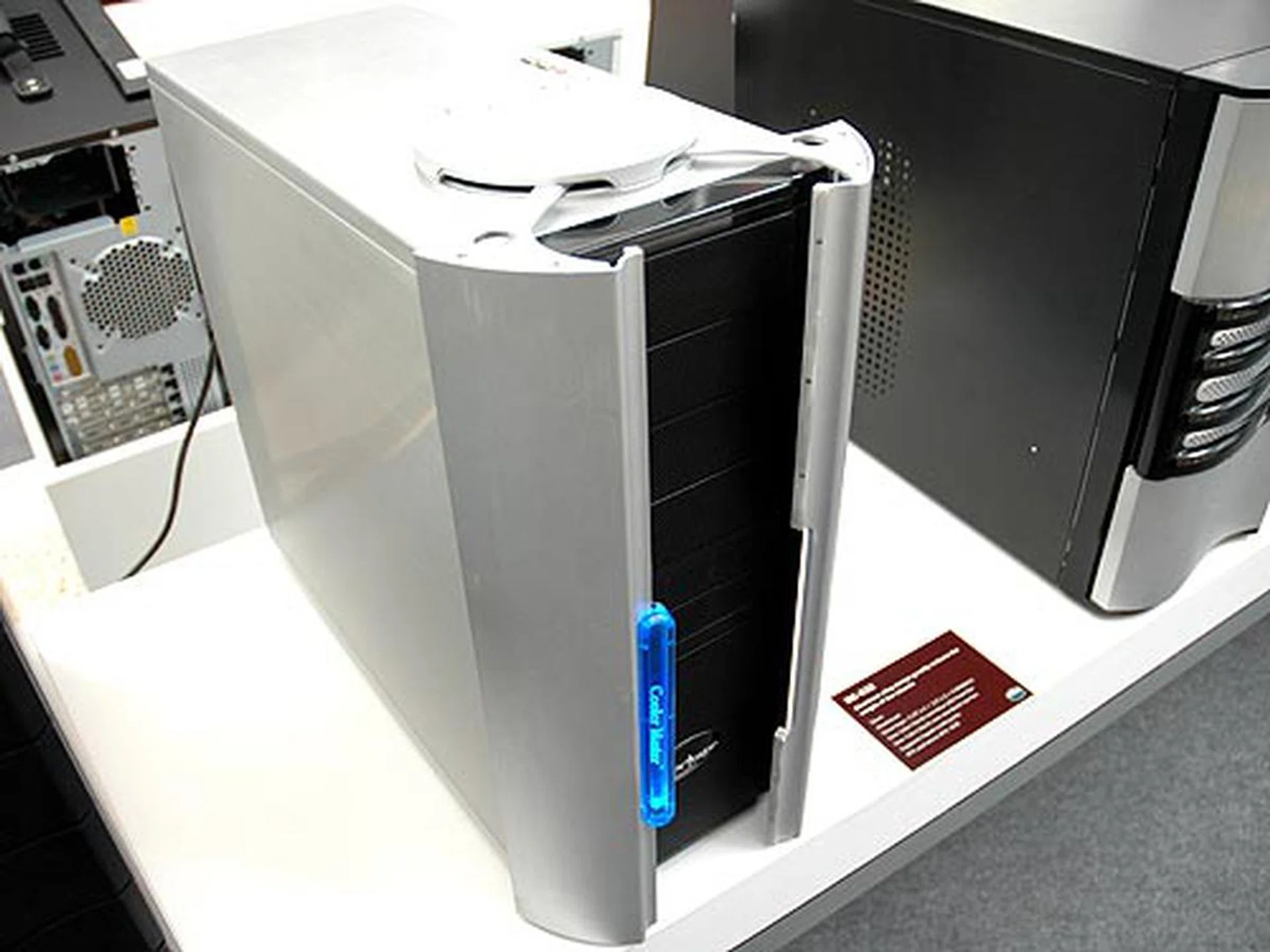
Here's another view of the RC-632 with the front panel doors opened.
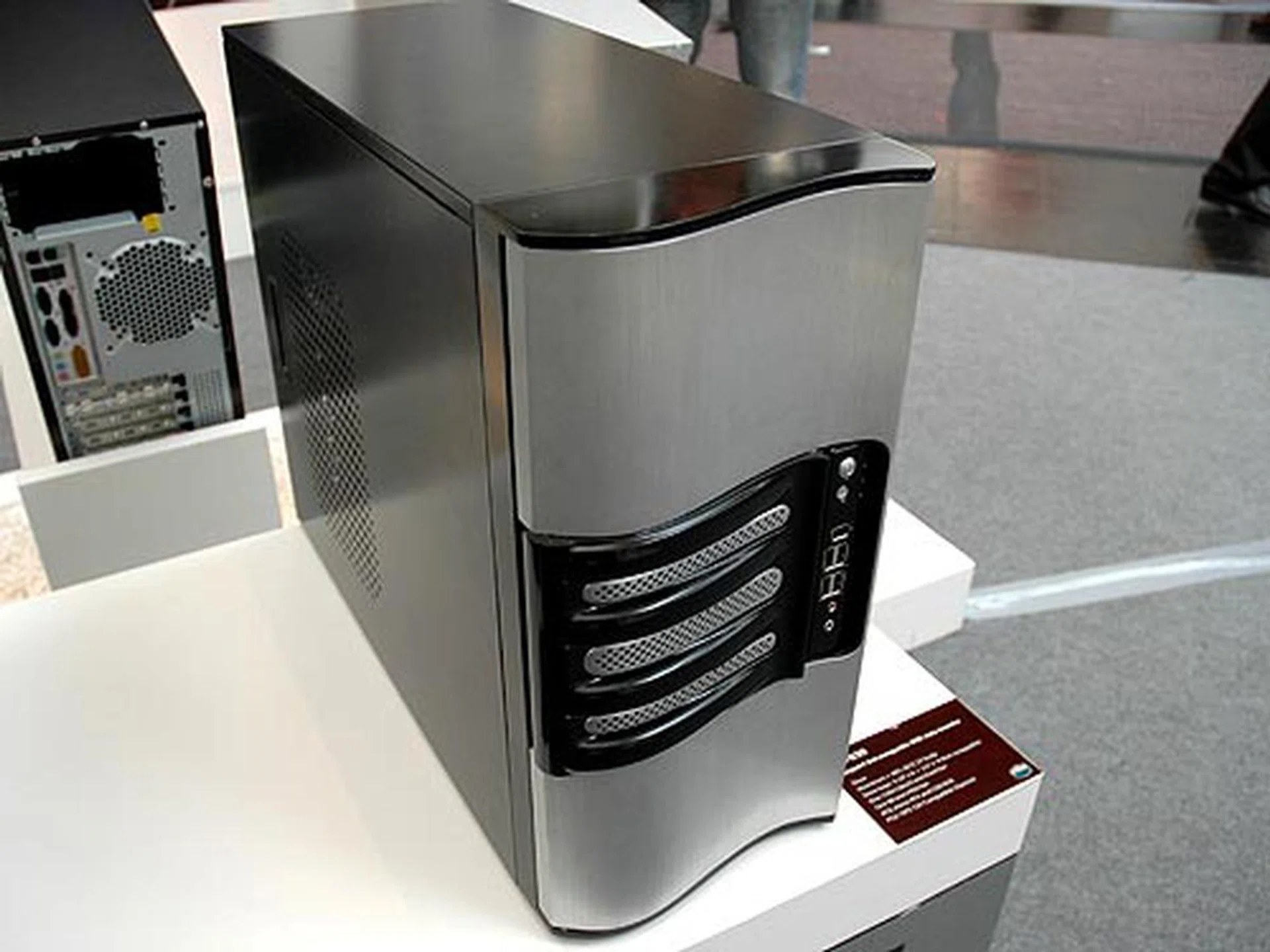
The RC-930 is a large casing capable of housing large server motherboards up to 12-inch x 10.5-inch. Designed for the entry-level server market, this heavy 16kg chassis features four hot swappable SATA drive bays. Besides that, it also comes with six external 5.25-inch bays for even more storage expansion.
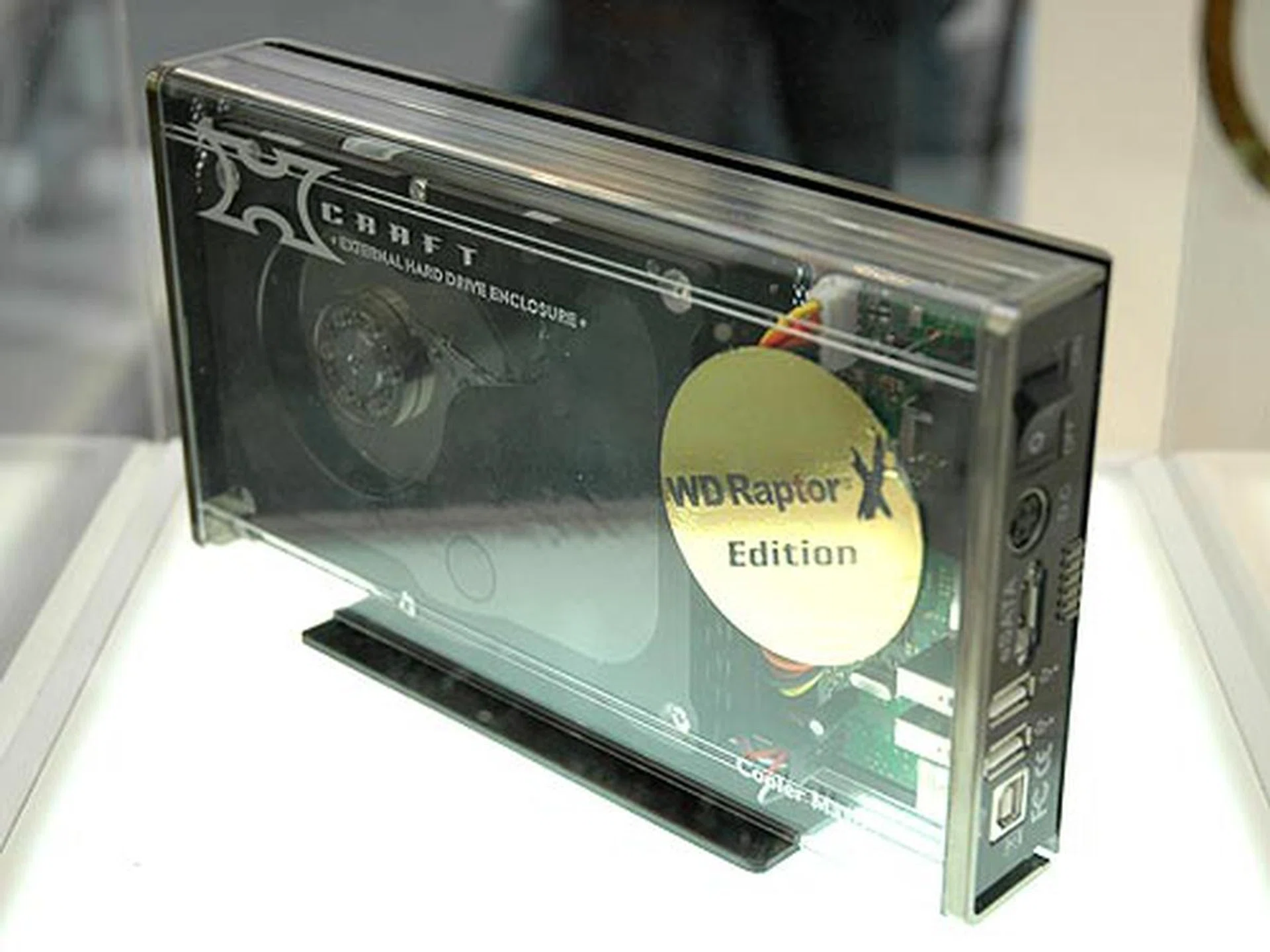
Cooler Master's external HDD enclosure known as the X Craft 350 comes with several interface options. Above is the chassis with a WD Raptor hard disk drive connected using eSATA. This particular model also features a USB 2.0 port for systems without the newer eSATA interfaces.
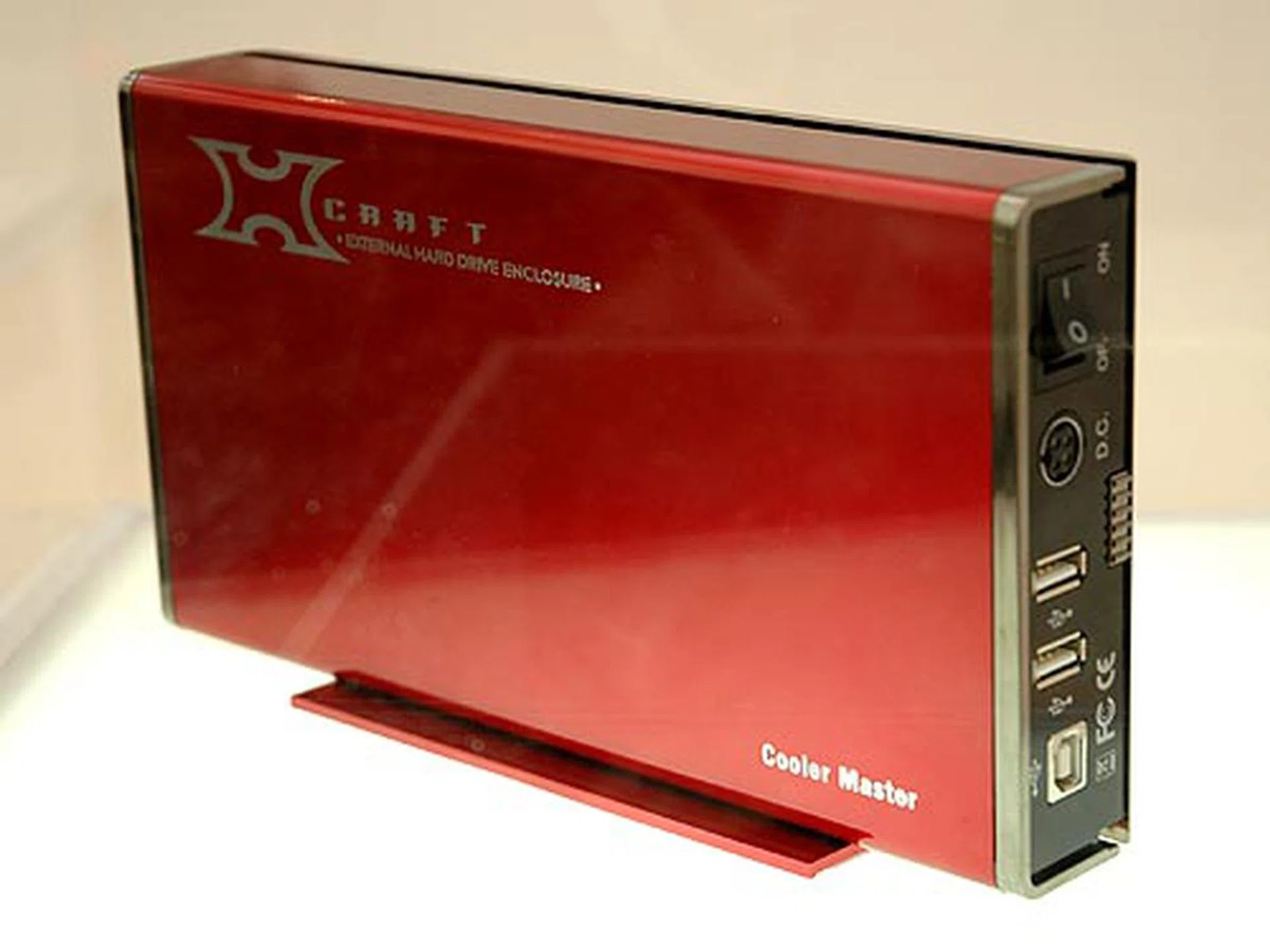
The more common enclosures would be this particular model which connects an IDE hard disk drive to a USB 2.0 port. A combo enclosure with both IEEE 1394a and USB 2.0 interfaces is also available.
New Coolers from Cooler Master
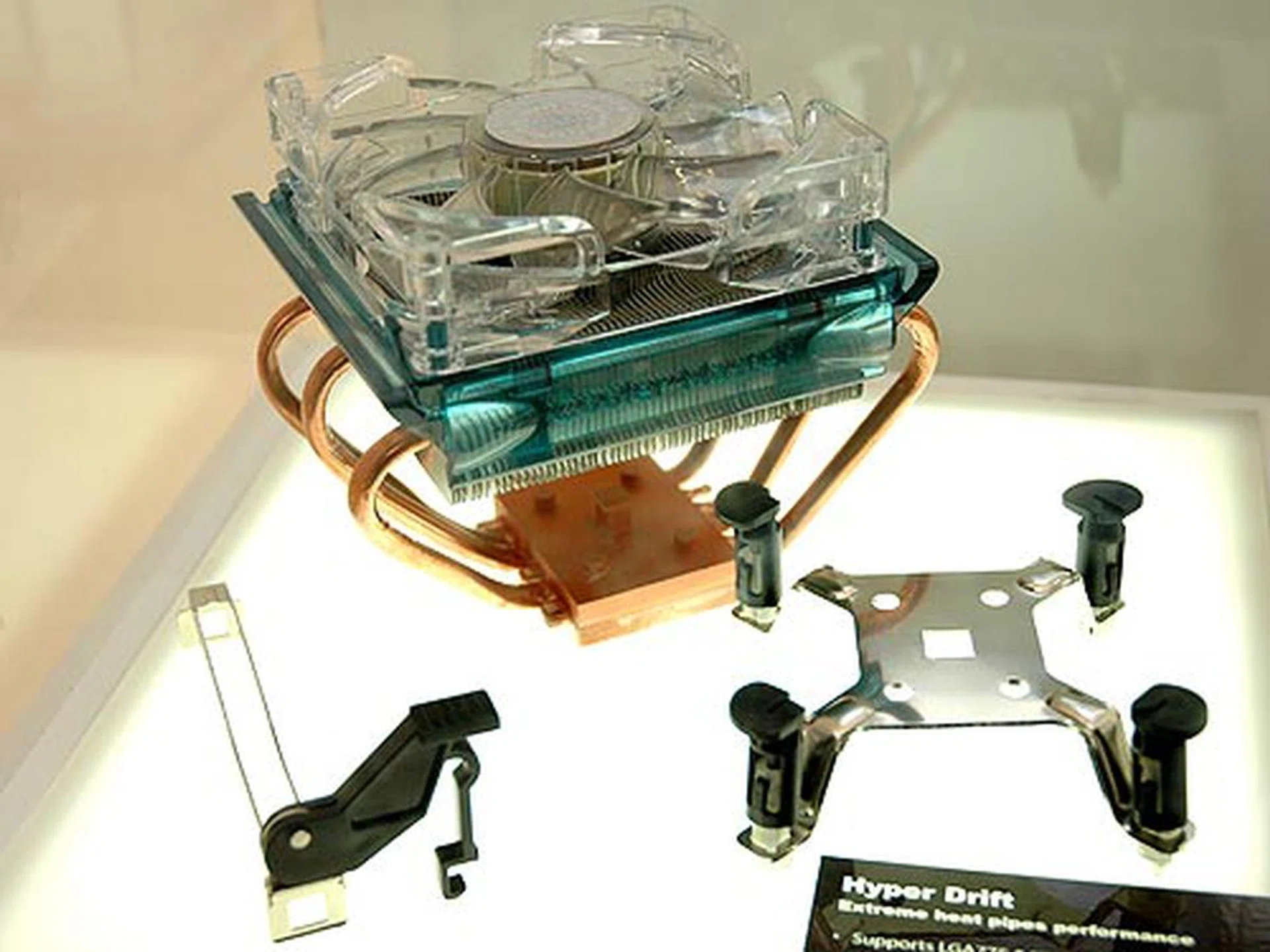
The Hyper Drift cooler features up to six heatpipes (three on each side) and a large 100mm fan. Using a variable fan speed controller, you can adjust the fan speed between 800 to 2800 RPM. The Hyper Drift supports both Socket 939 (or Socket 754) and LGA775 processors.
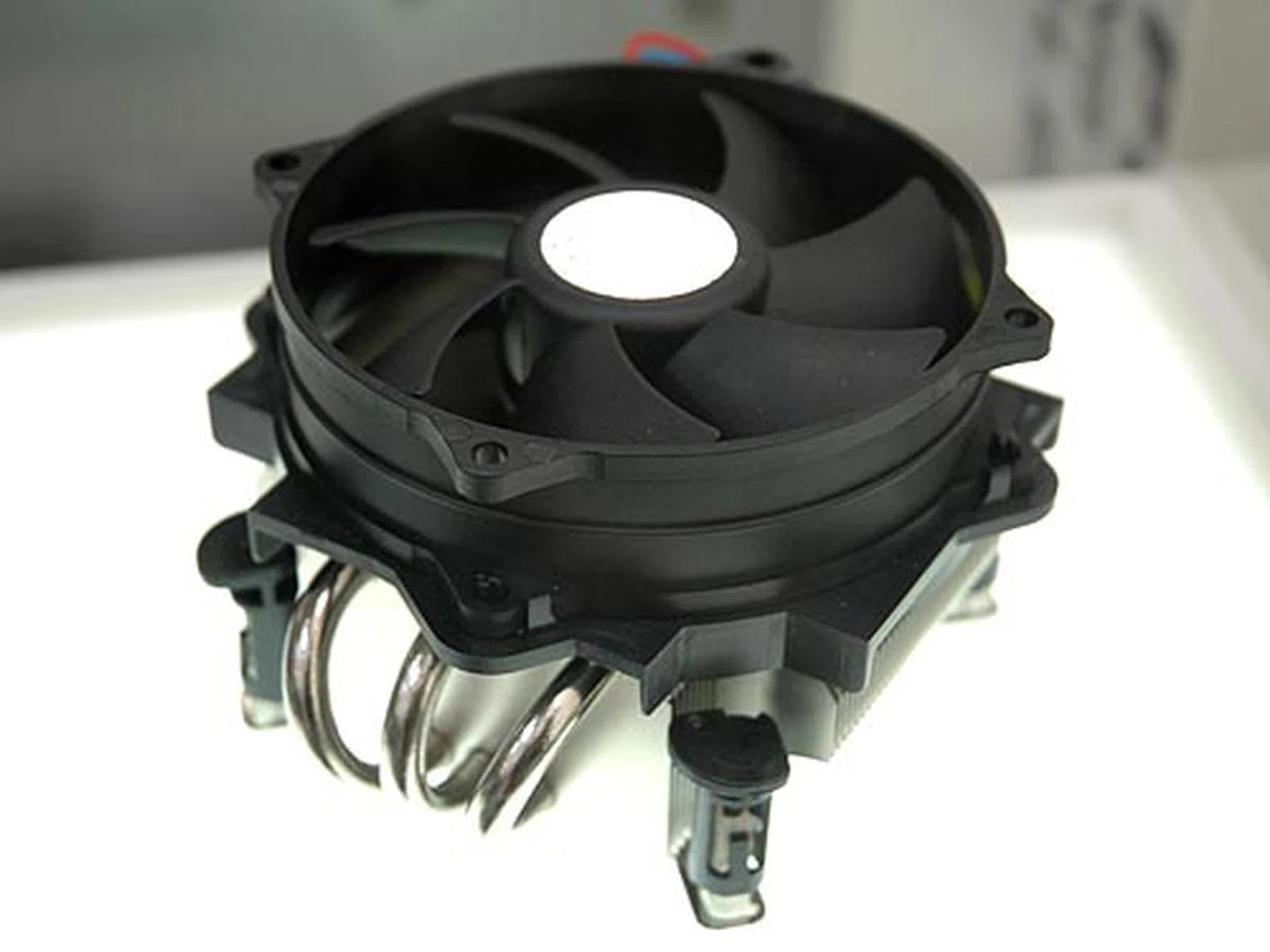
The Hyper L3 is a low profile LGA 775 cooler for applications requiring a smaller heatsink assembly. It features three heatpipes and a large 80mm fan. The Hyper L3 is perfect for use in slim chassis such as media center enclosures.
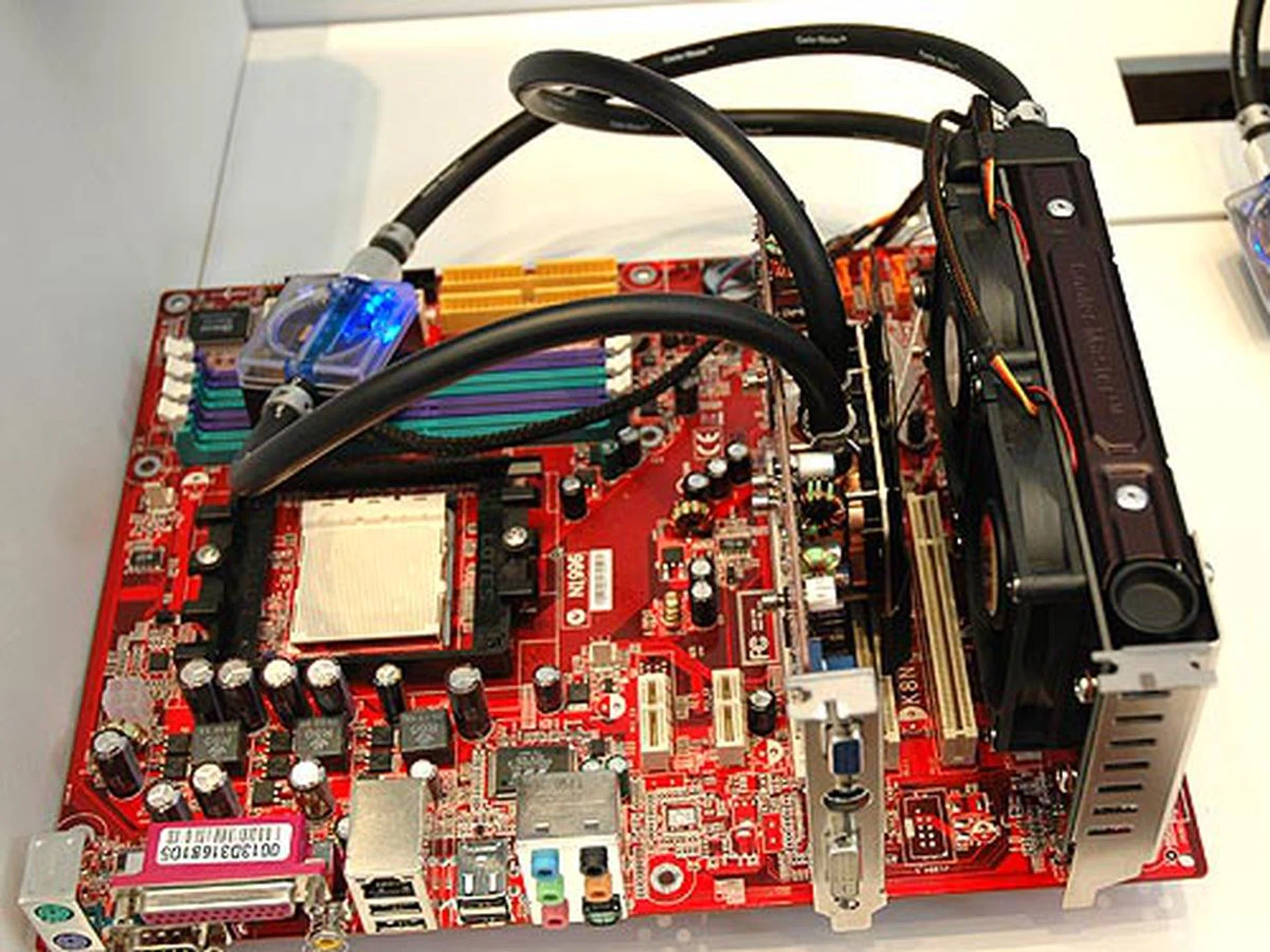
The new AQUAGATE Viva is probably the world's first universal water block that can be used with either on the CPU or the GPU/VPU. It has a universal retention plate that support all ATI and NVIDIA graphics cards as well as Socket 939/754 and LGA775 processors. The water block is connected to a micro pump and radiator that can be attached to any regular PCI slot on your chassis. The radiator is large and provides enough cooling area for two 70mm fans. If you want to cool two graphics cards that are configured in SLI or CrossFire modes, then you might want to consider getting the AQUAGE DuoViva, which comes with two universal water blocks.
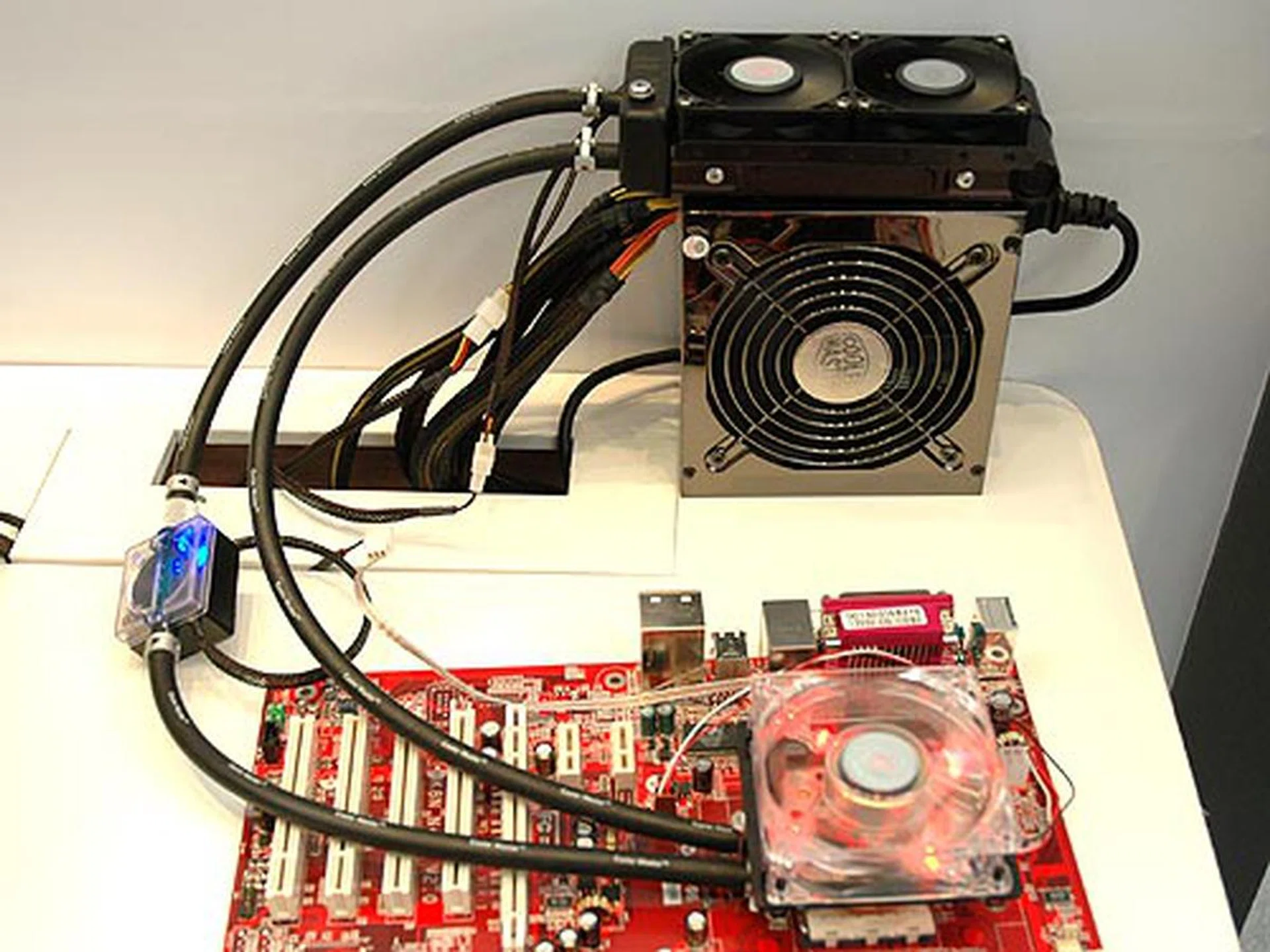
Here, Cooler Master demonstrated how the water block is best used to cool the CPU. With a CPU water block accessory, you can attach a fan on top of the water block to dissipate heat from the surrounding areas near the CPU. These essential areas are often neglected in water-cooling setups but are now taken care of with this added accessory.
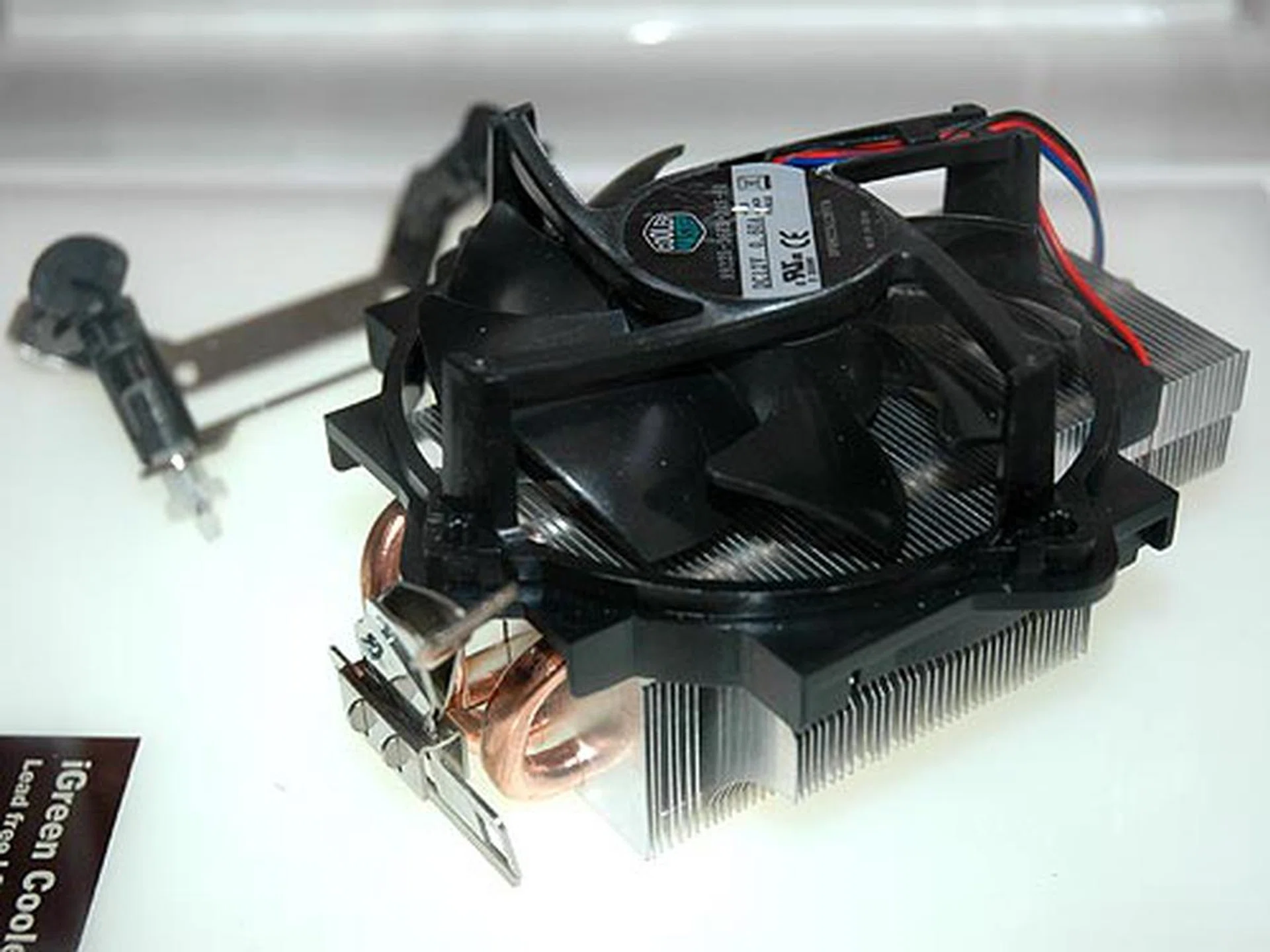
The iGreen Cooler is a lead-free cooler that features a large 90mm fan and three heatpipes.

The X Dream K640 is a cross-shaped aluminum extruded heatsink with a copper base. It's a low profile cooler created specially for low profile Athlon 64 systems such as media center PCs.
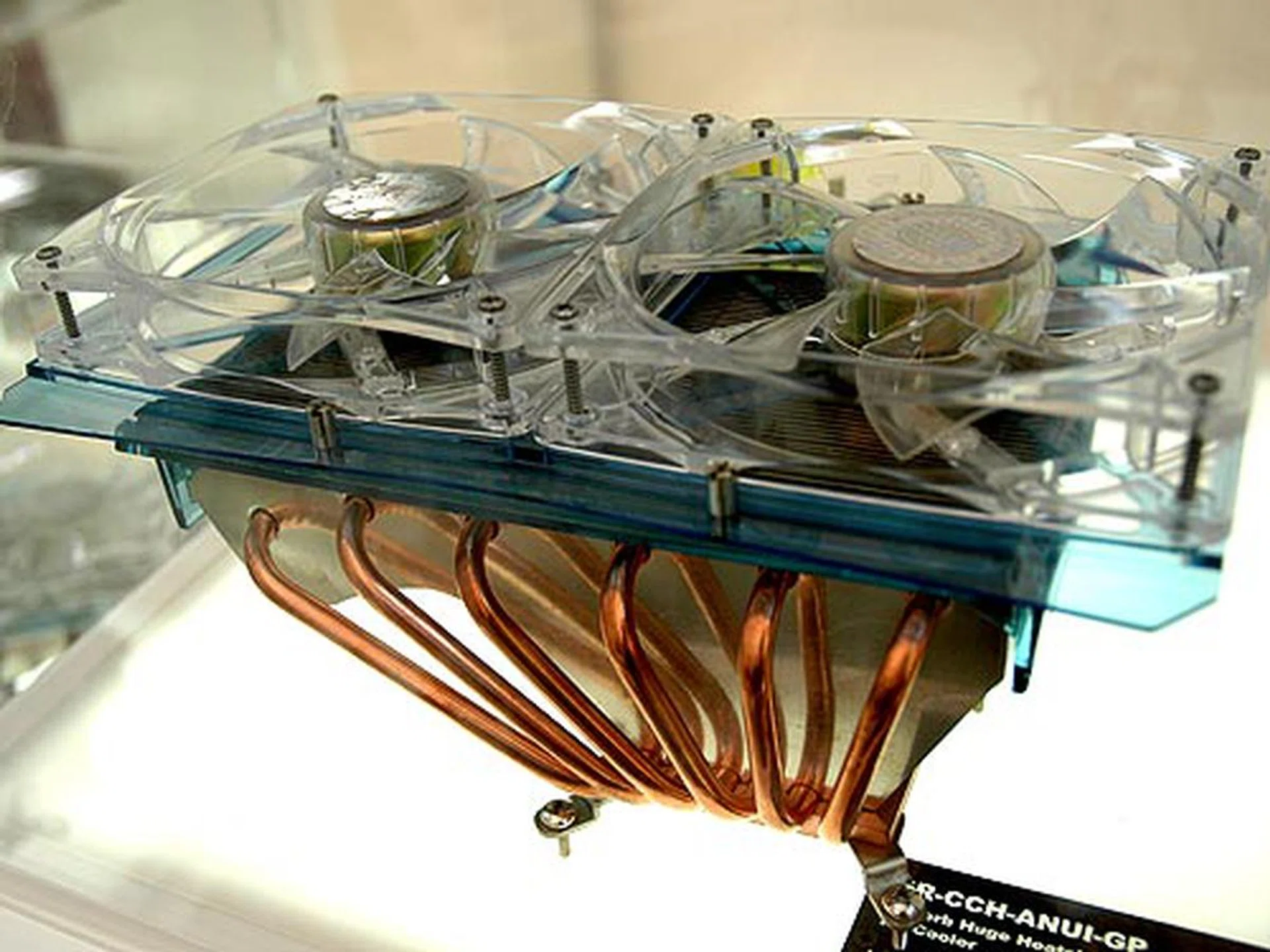
This gigantic cooler known only as the RR-CCH-ANNUI-GP has six heatpipes fanned out to two large 120mm fans for maximum cooling efficiency.
Biostar's Booth

The new TForce 550 is based on the NVIDIA nForce 550 chipset with four SATA RAID 3G ports, one PCIe x16 graphics slot, two PCIe x1 slots and four regular PCI slots. It's built for the next generation of AMD Socket M2 processors and features 8-channel HD audio and onboard Gigabit Ethernet LAN as well.
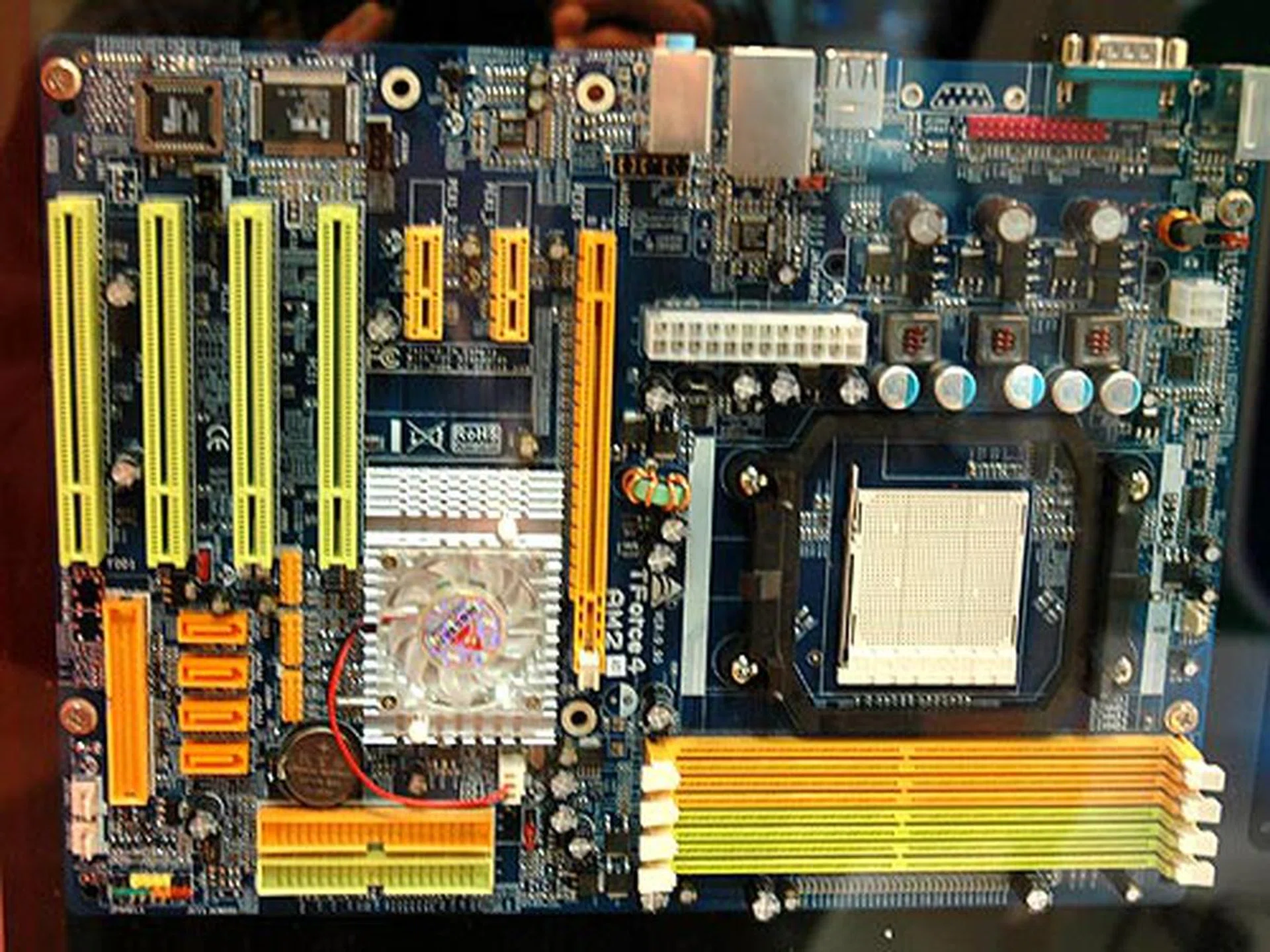
The TForce4 AM2 is a cheaper alternative for new Socket M2 processors as it is based on the older nForce4 chipset. It only comes with Fast Ethernet LAN and a six-channel audio chip built onto the mainboard.

The TForce 6100 AM2 is a micro-ATX board for new Socket M2 processors with integrated GeForce 6100 graphics. The board comes with a PCIe x16 graphics slot (for future graphics upgrades), one PCIe x1 slots, two PCI slots, eight-channel audio, two SATA 3G RAID ports and a Gigabit Ethernet LAN port.
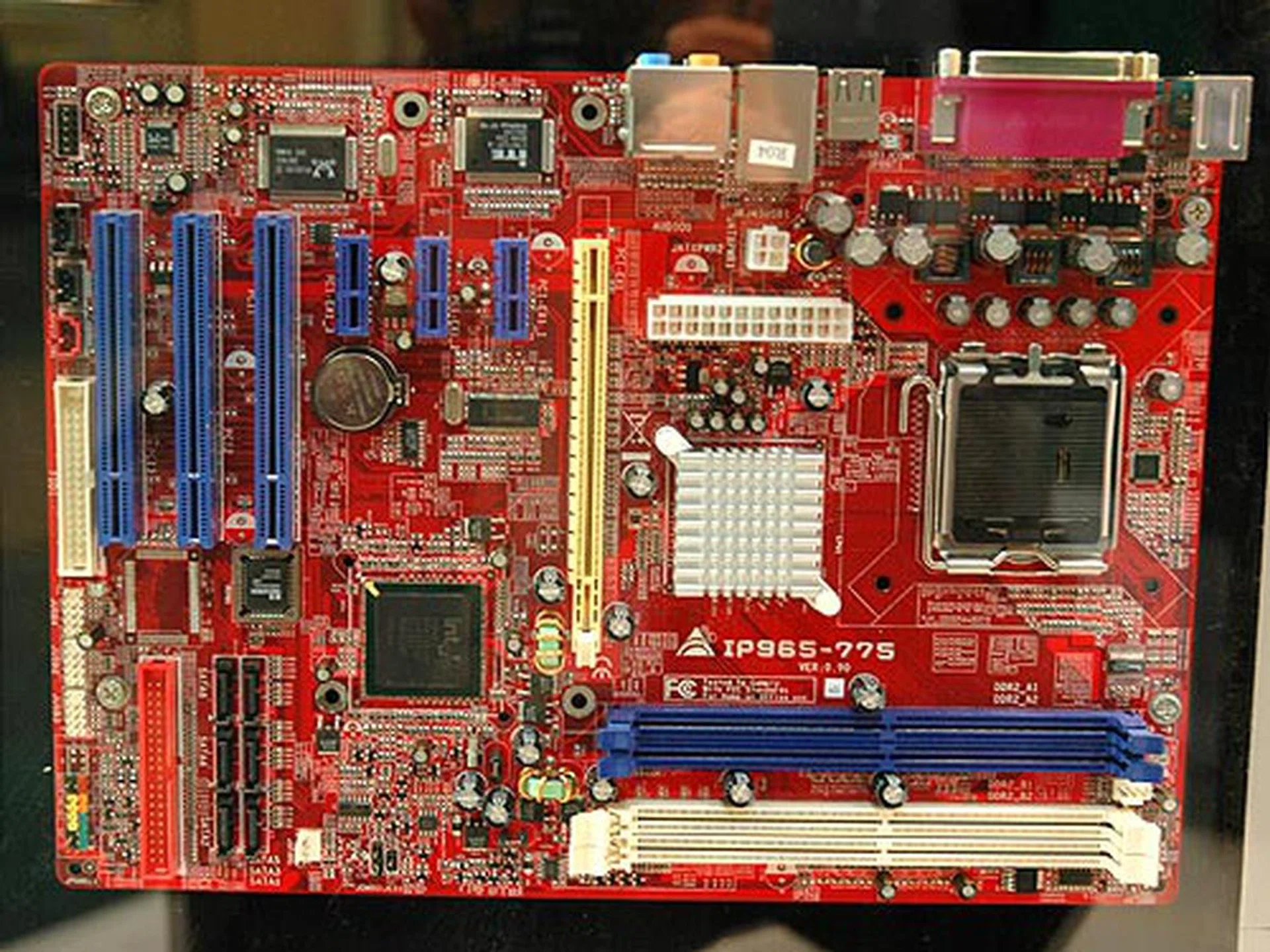
The TForce P965 is based on the upcoming Intel P965 paired with the ICH8. This is a very basic board with very basic features sporting one PCIe x16 graphics slot, three PCIe x1 slots, three PCI slots, eight-channel audio, four SATA 3G ports and a Gigabit Ethernet LAN port.
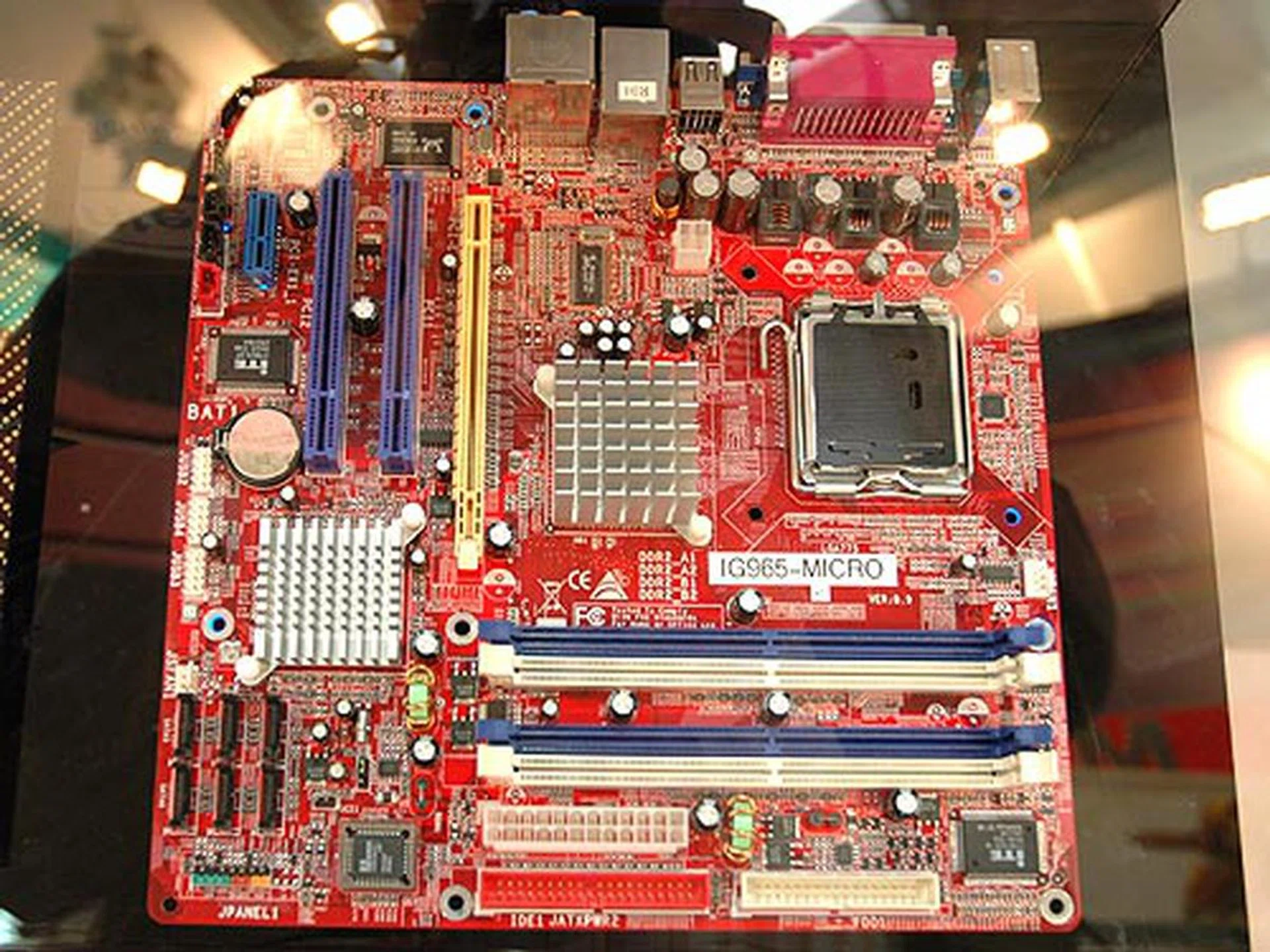
For those who prefer something simpler with integrated graphics, Biostar has a micro-ATX solution based on the G965 chipset too.
ECS' Booth (Part I)

The ECS P965-A is based on the latest Intel P965 paired with the ICH8R. It comes with two PCIe x16 slots, two PCIe x1 slots, three PCI slots, six SATA 3G RAID ports, two IEEE 1394a ports and a Gigabit Ethernet LAN port.

The RC410-M2 is based on the ATI RC410L north bridge paired with an ULi M1573 south bridge. The board comes with integrated graphics although one could actually upgrade its graphics support later by adding a single PCI Express based graphics card. Onboard features include four SATA 3G RAID ports, Gigabit LAN and two optional IEEE 1394a ports.
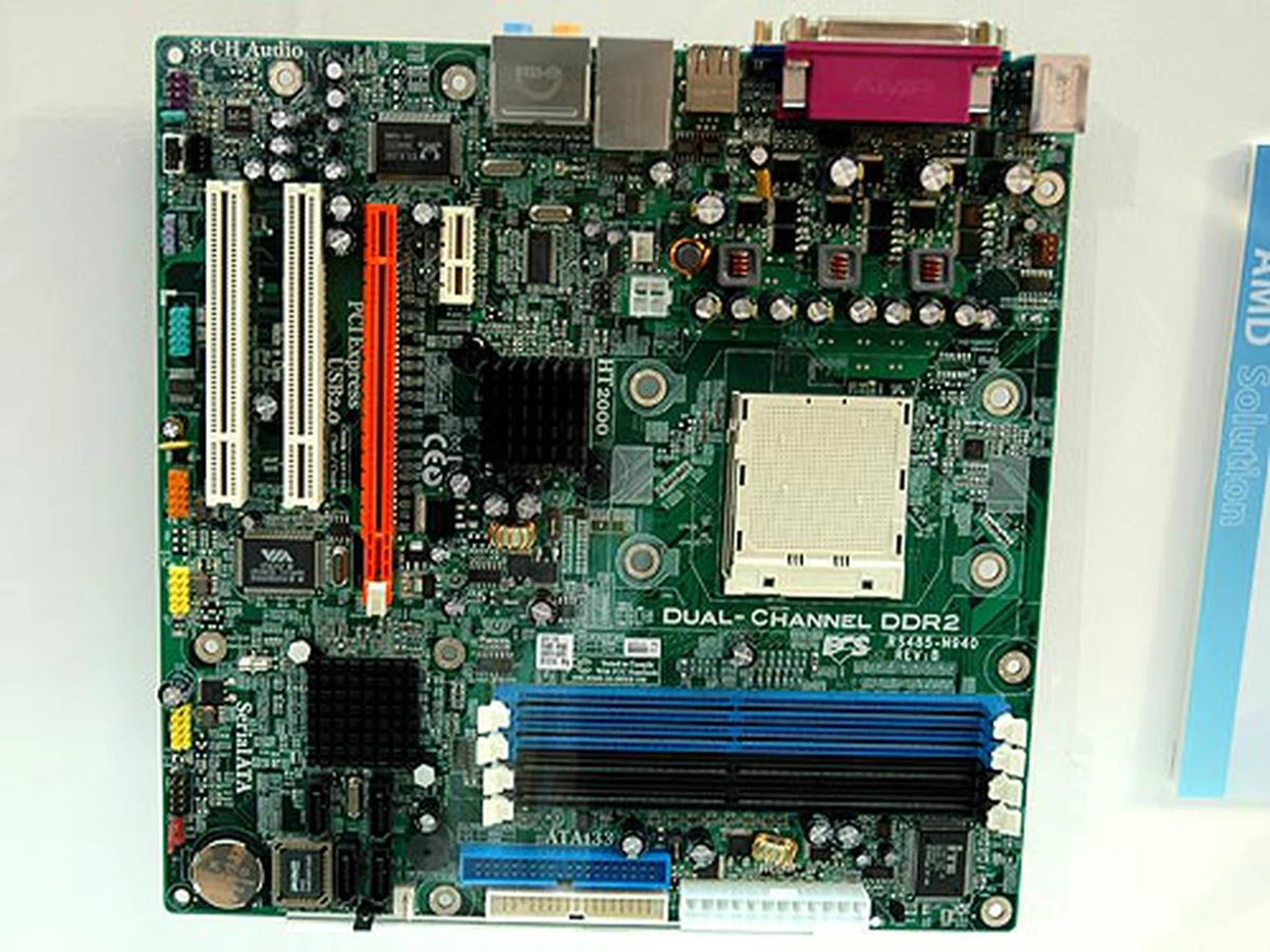
The new RS485-M940 is based on the ATI RS485 north bridge paired with the ATI SB600 south bridge. It supports the next generation Socket M2 processors and comes with one PCIe x16 graphics slot, one PCIe x1 slot, two PCI slots, four SATA 3G RAID ports and one Ethernet LAN port.
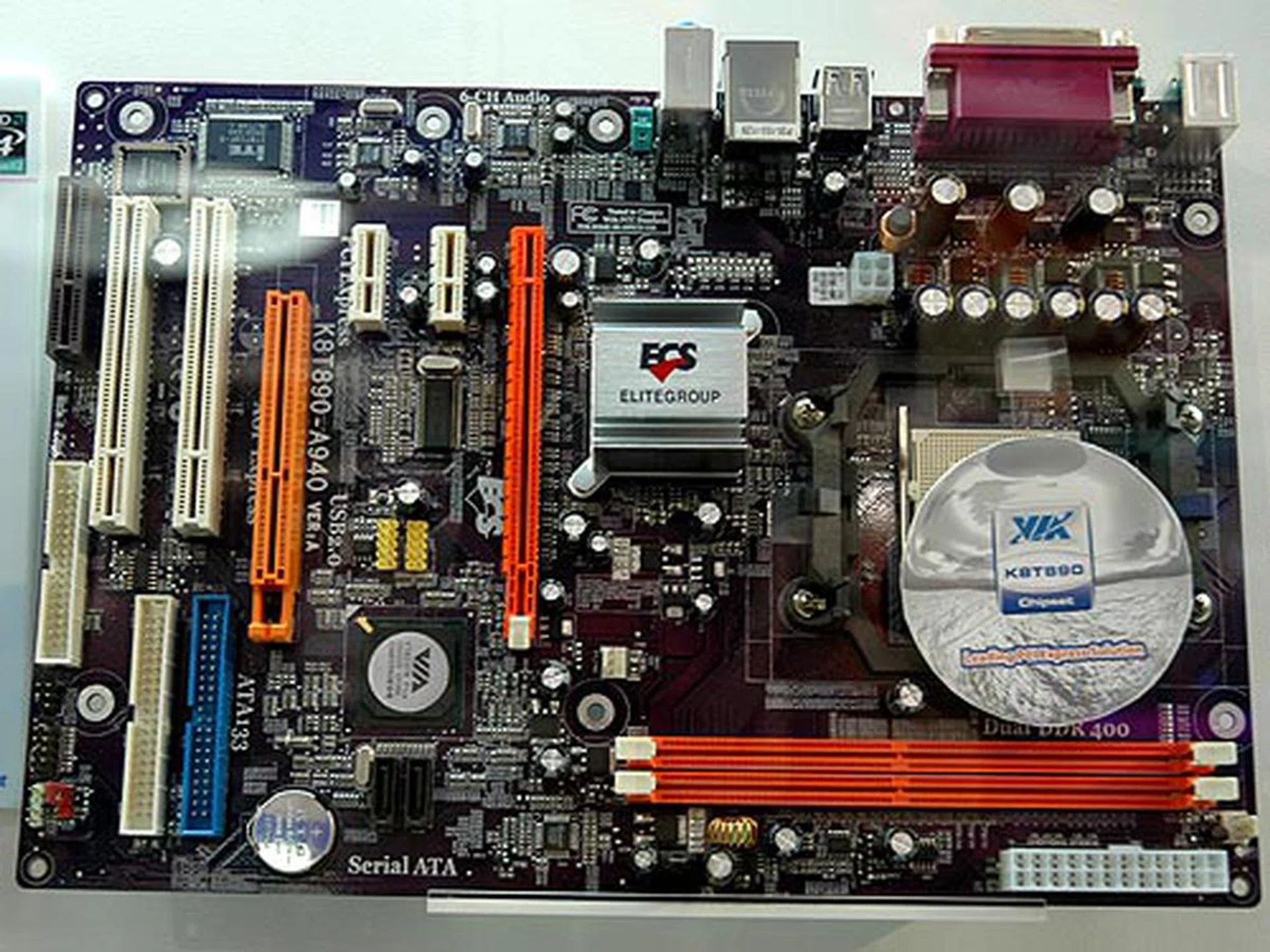
The K8T890-A940 is based on the VIA K8T890 chipset that has been updated from the previous K8T890-A to support the new Socket M2 processor. It comes with one PCIe x16 graphics slot, one AGP Express slot (for legacy AGP graphics cards), two PCIe x1 slots, two PCI slots, two SATA RAID ports and one Fast Ethernet port.
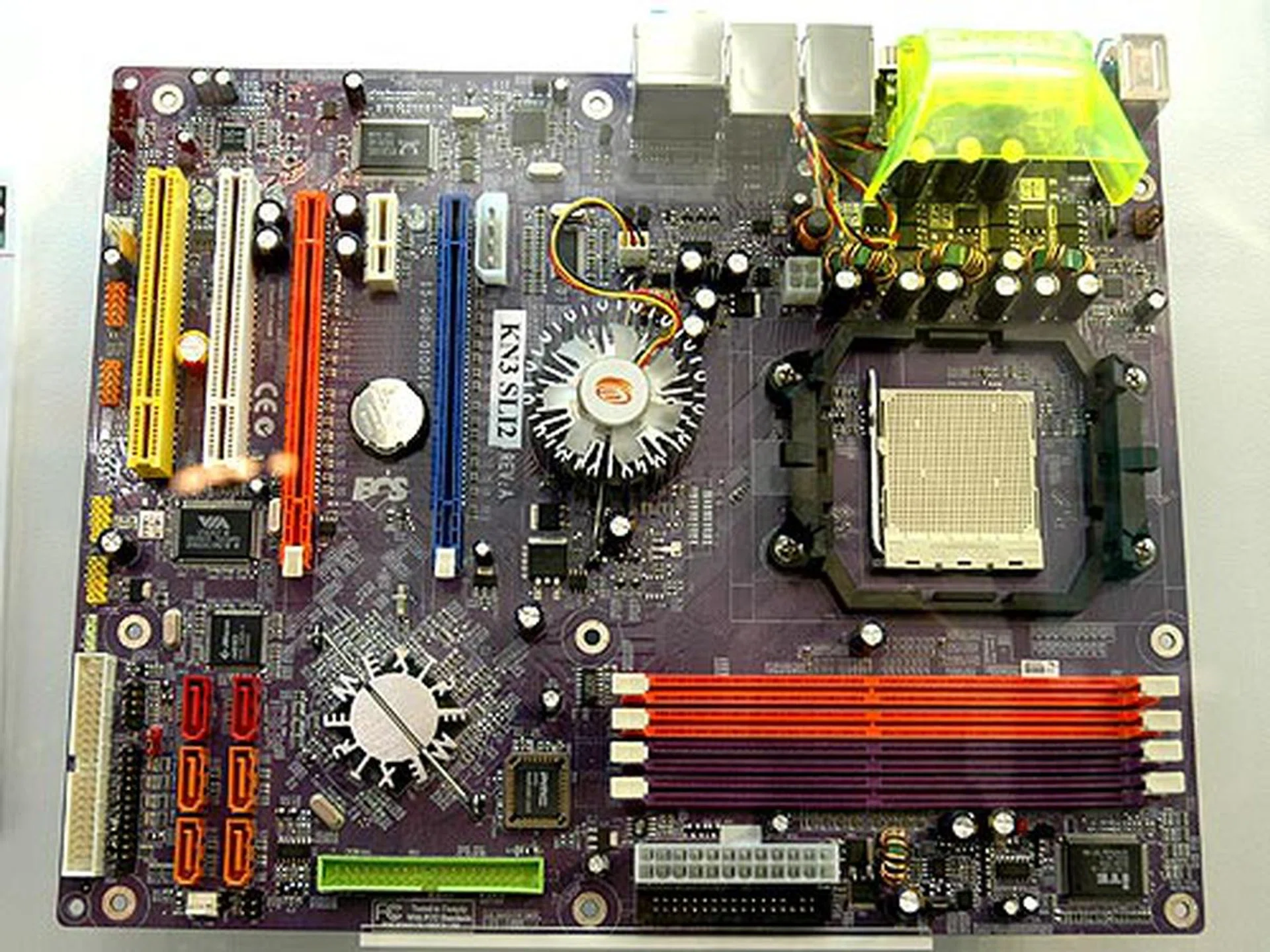
The new KN3 SLI2 is based on the NVIDIA C51XE chipset that supports dual PCIe x16 slots for SLI setup. Made for the new Socket M2 processors from AMD, the board comes with two PCIe x16 slots, one PCIe x1 slot, two PCI slots, eight SATA 3G RAID ports, one Gigabit LAN port, one Fast Ethernet LAN port and an eight-channel high definition audio codec.
ECS' Booth (Part II)
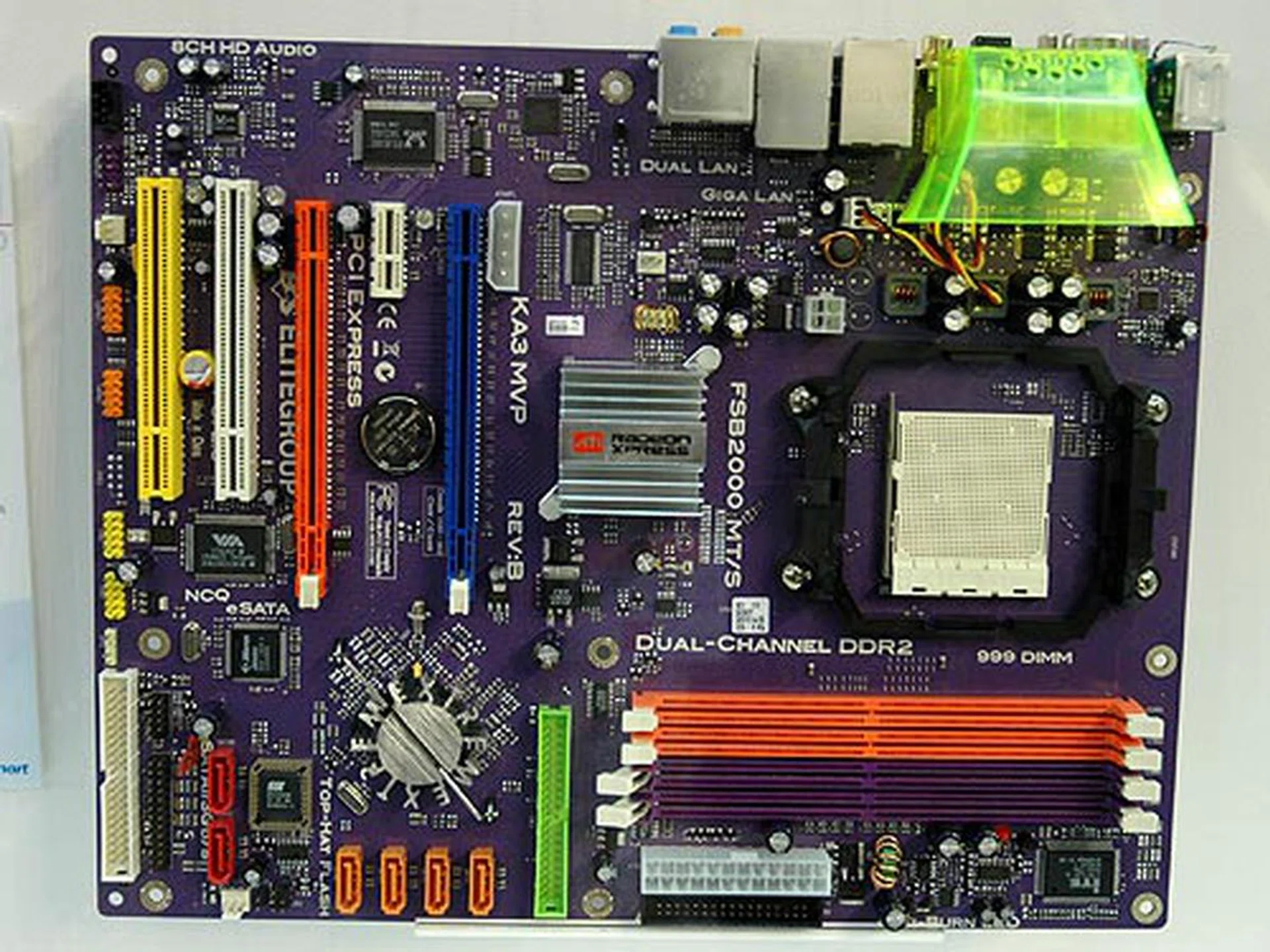
If you prefer CrossFire instead of SLI, then the KA3 MVP may be the board for you. Based on the new ATI RD580 north bridge paired with the SB600 south bridge, this Socket M2 board comes with six SATA RAID ports, one Gigabit Ethernet LAN port, one Fast Ethernet LAN port, two PCIe x16 graphics slots, one PCIe x1 slot, two PCI slots and an eight-channel high definition audio codec.
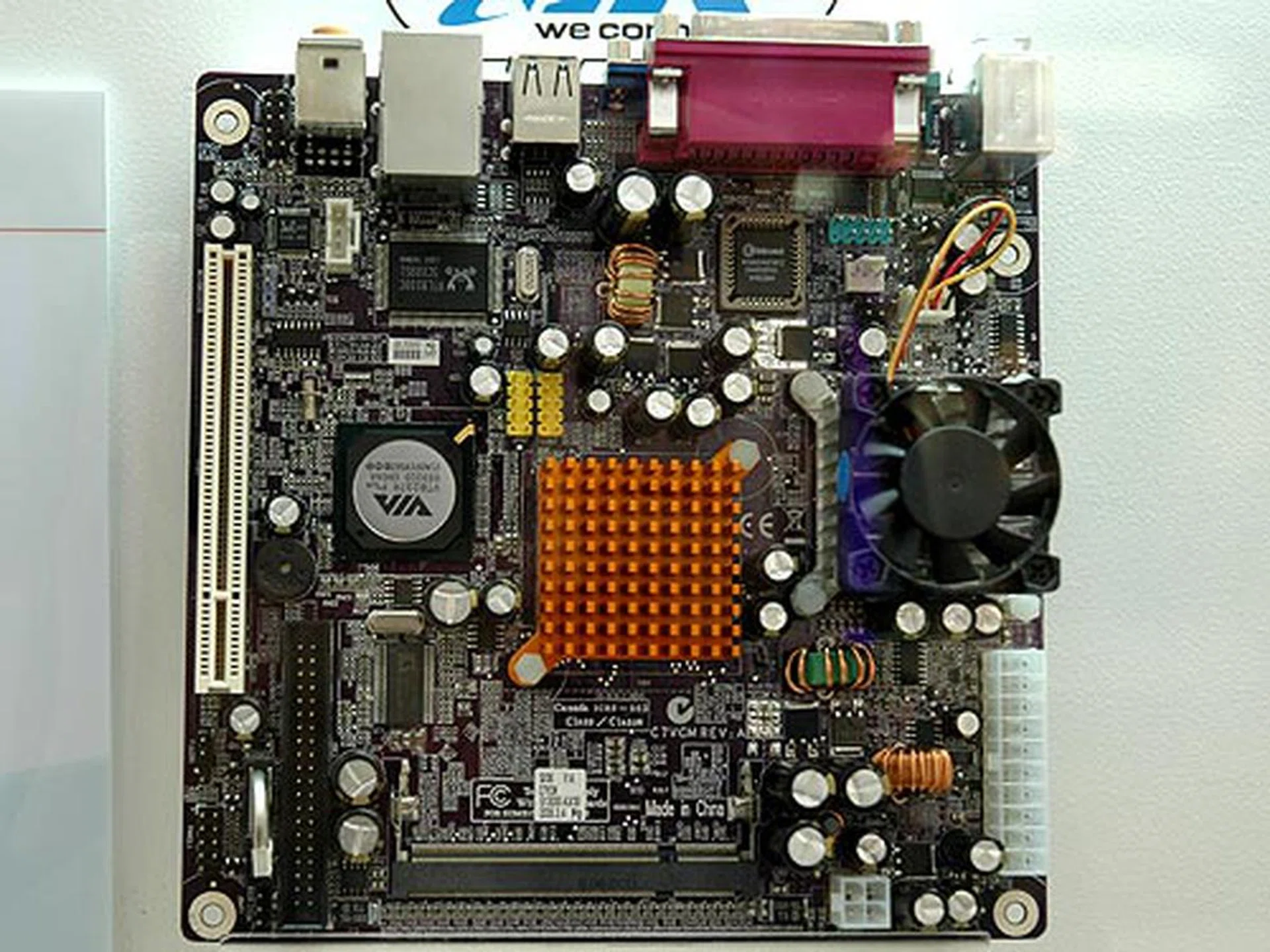
Mini-ITX fans will like the C7VCM as it is based on the ultra-cool VIA C7 processor. Perfect for ultra small PCs in the car or at home, the C7VCM comes with an onboard Fast Ethernet LAN port, integrated VIA Chrome graphics, one PCI slot, two PATA ports and a single SO-DIMM slot for up to 1GB of DDR400 memory.

Users who want more computing power may want to look at the PMI8M motherboard featuring an Intel 855GME chipset. Made for Socket-479 Intel Pentium M processors, this mini-ITX board will deliver the performance you need. The board comes with two Fast Ethernet LAN ports, one PCI slot, integrated Intel graphics, two PATA ports (for four PATA devices) and an ALC655 audio codec for six channels of audio.
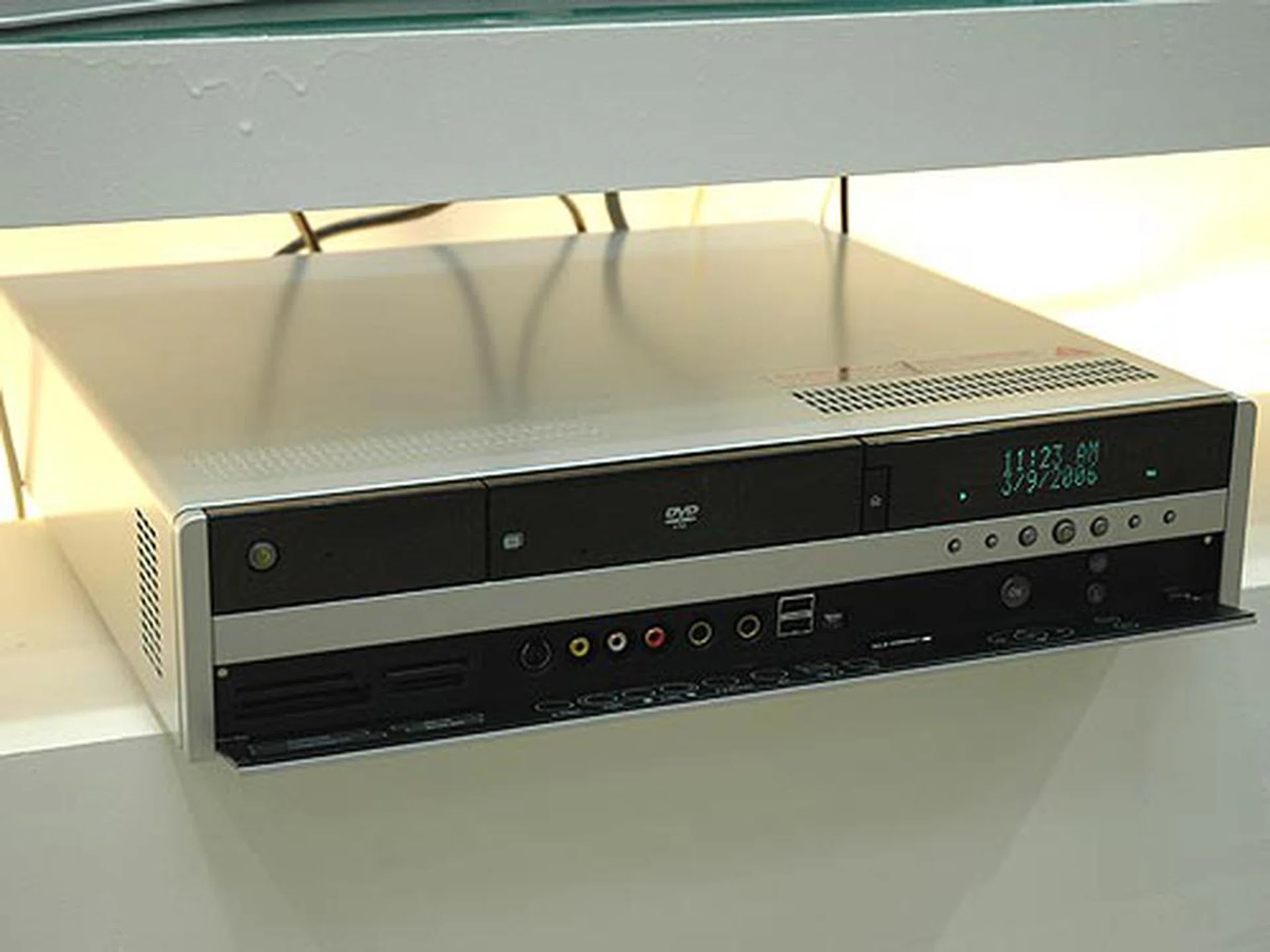
The ORPC is a home entertainment server that incorporates everything from a DVD player, a DVD recorder to a Hi-Fi stereo and an FM radio. Built with an Intel Pentium 4 with HT technology, the ORPC is based on the Intel 915 chipset with an integrated Fast Ethernet port and high definition audio support.
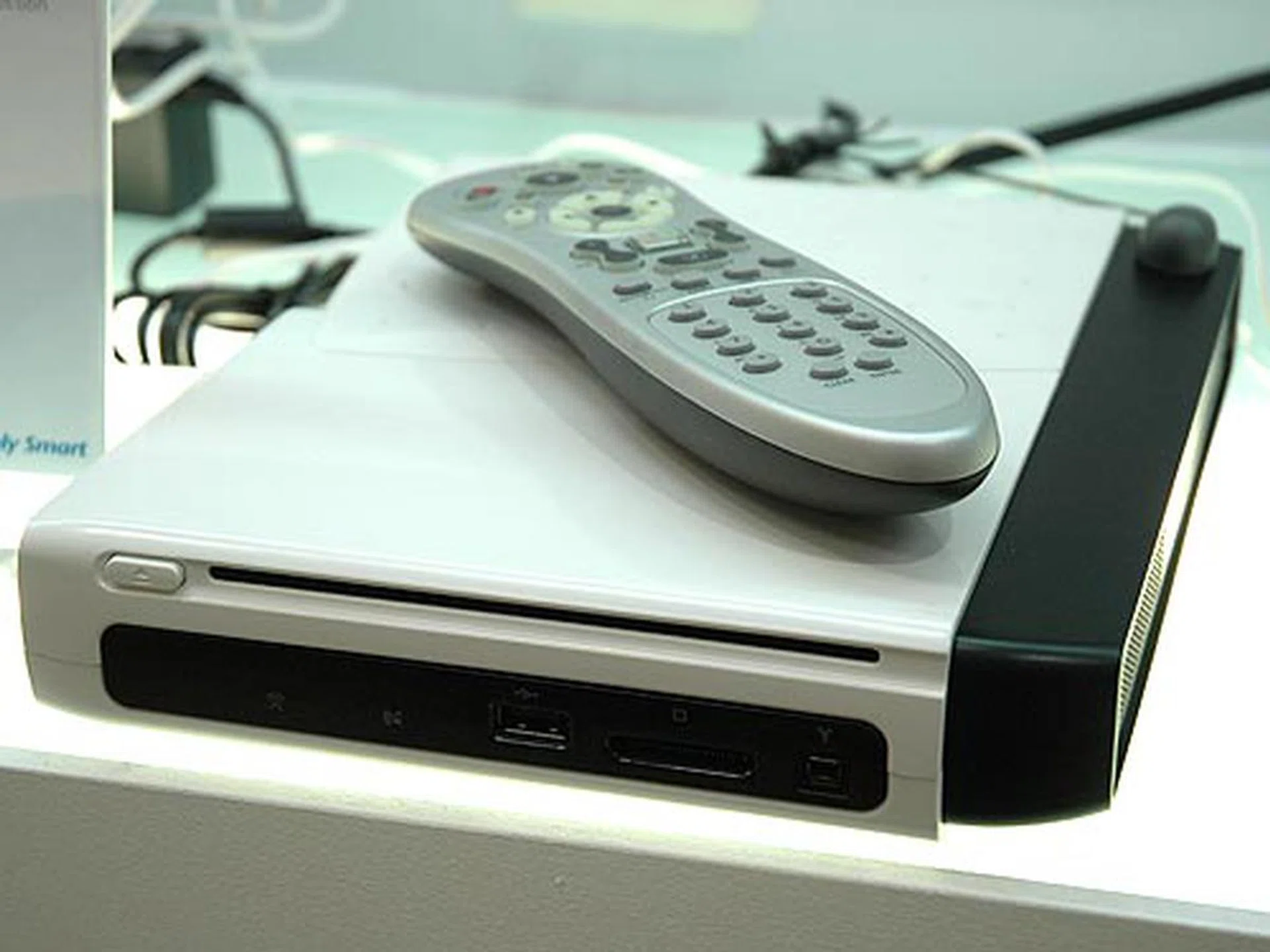
The P60 is an Intel Viiv enabled product that fits into the living room as a media center. It comes with an Intel Core Duo processor and it's based on the Intel 945GT paired with the ICH7-M (DH). Specifications include an Intel-based Gigabit Ethernet port and built-in high definition audio for up to 7.1-channels of audio. It's also integrated with high-speed wireless LAN and a mini PCI TV Tuner that supports both analog and digital TV broadcasts.
ECS' Booth (Part III)
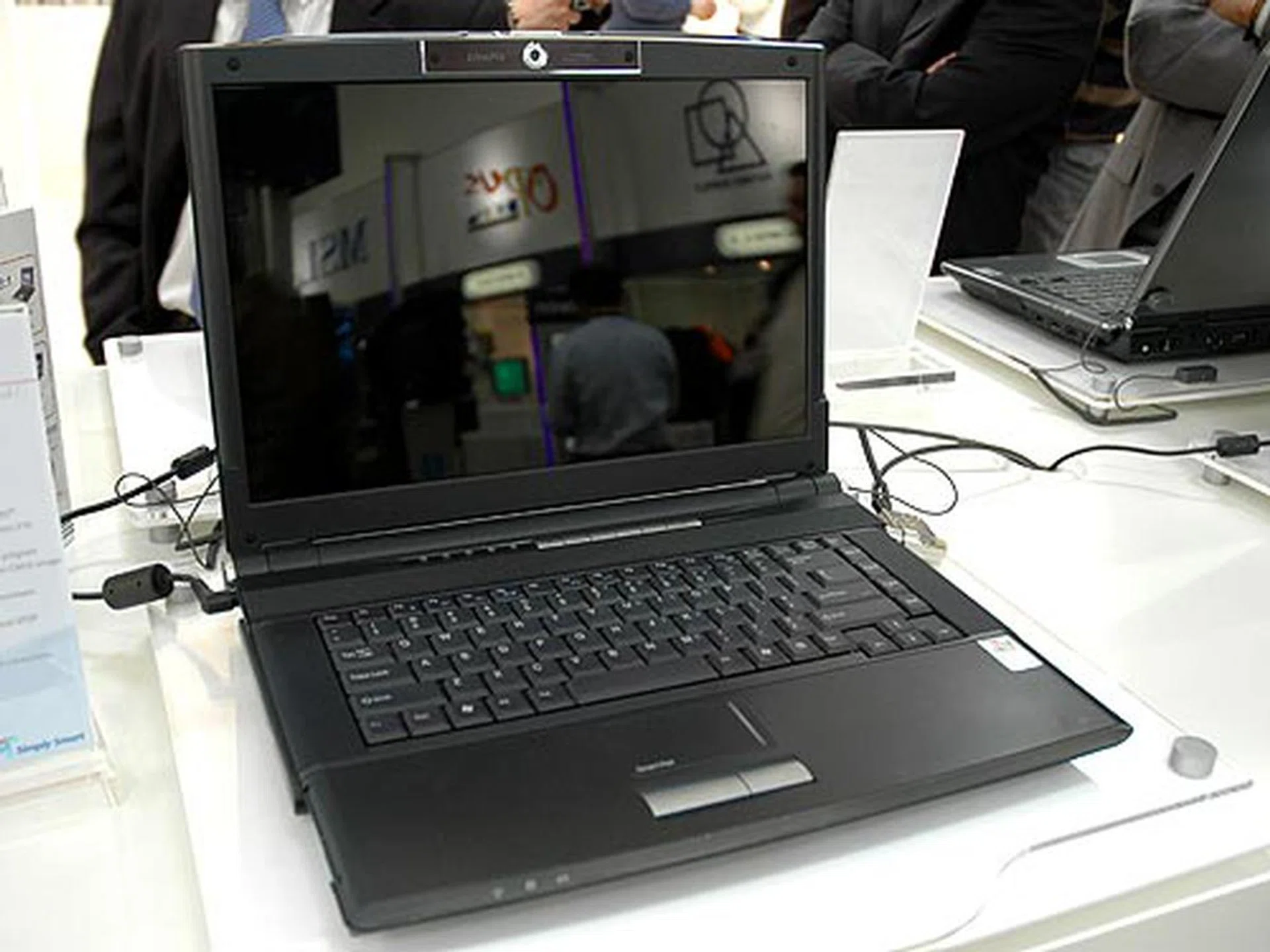
The G610 is a media center notebook based on the new Intel Napa platform. Featuring either an Intel Core Duo or Core Solo processor, the notebook is compatible with Windows XP Media Center. It comes with 802.11a/b/g wireless connectivity, discrete graphics based on either ATI Mobility Radeon X1600/X1400 or NVIDIA GeForce Go 7600/7400/7300, TV Tuner with remote control and a 4-in-1 card reader.
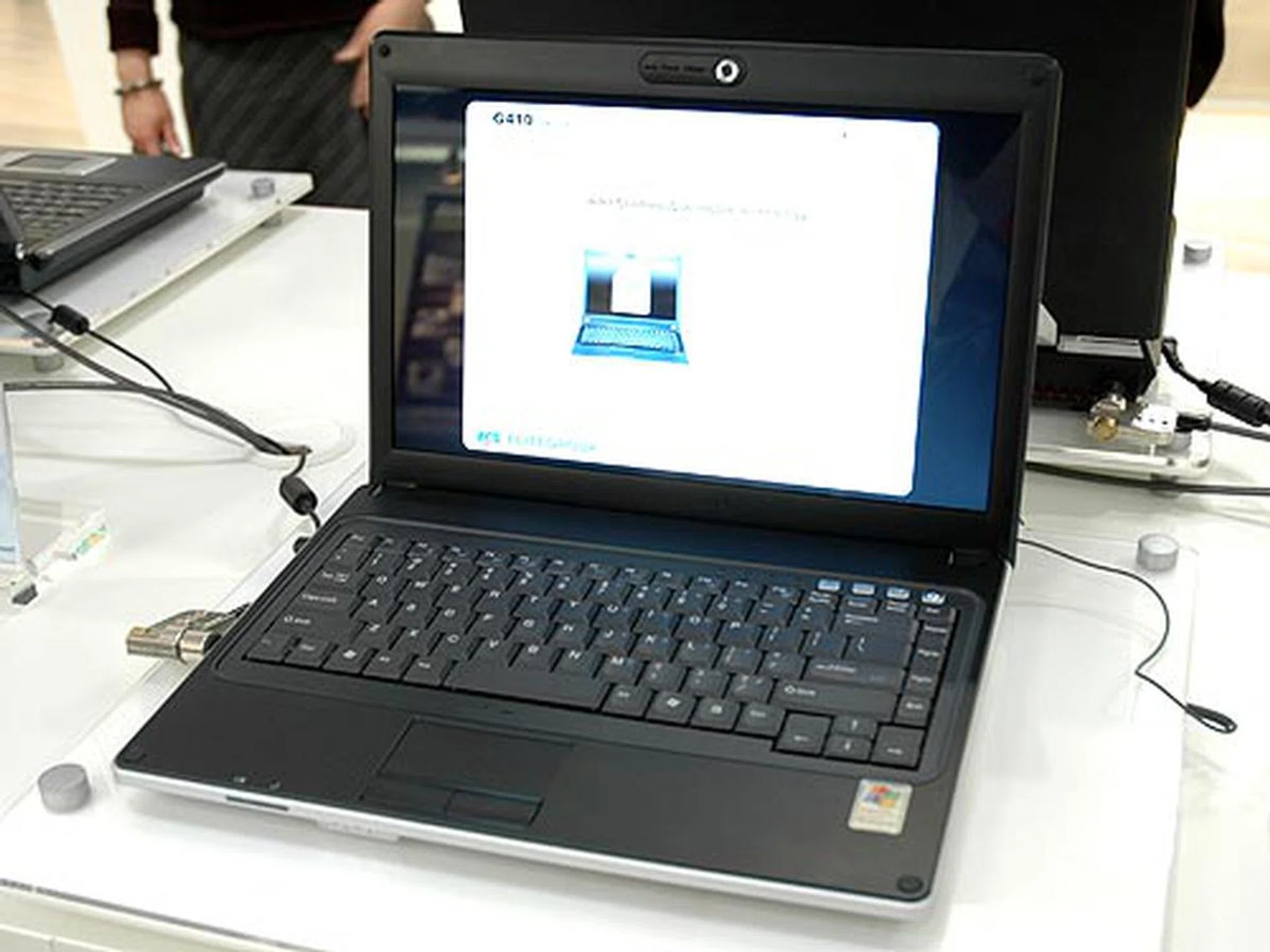
The G410 is an entertainment notebook based on Intel's latest Napa platform. It comes with a 14.1-inch WXGA screen, integrated graphics embedded within the Intel 945GM chipset, Gigabit Ethernet LAN, Intel PRO/Wireless 3945ABG, 4-in-1 card reader and a TV Tuner.
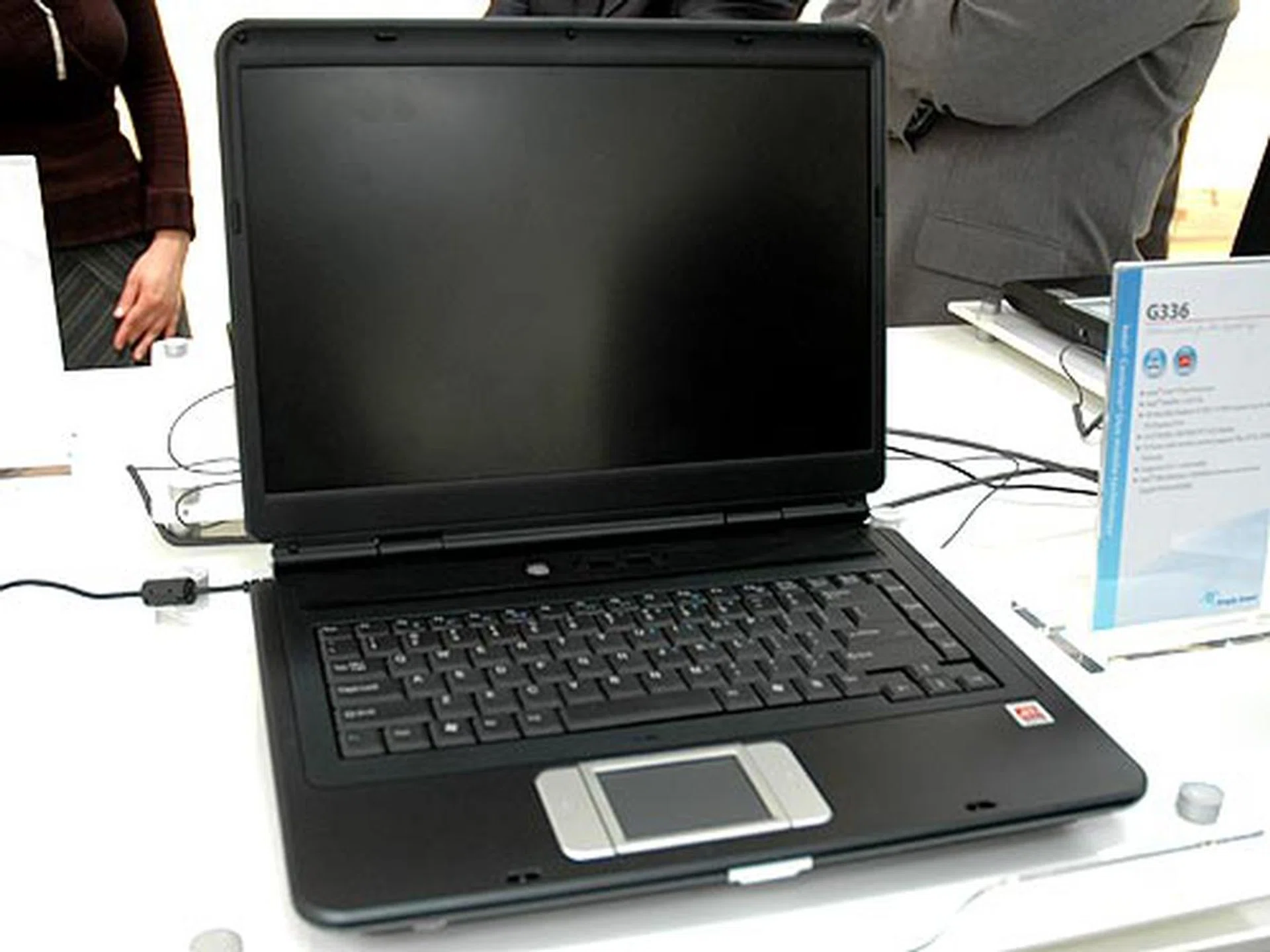
The G336 is yet another new notebook based on the Intel Napa platform. It's an all-rounder notebook that can be fitted with either an Intel Core Duo or Core Solo processor. Based on the Intel 945PM chipset, the notebook comes with an ATI Mobility Radeon X1400 or X1300 discrete graphics engine that serves to offer users decent 3D graphics acceleration for most mainstream games. Besides that, it also comes with a TV Tuner with remote control.
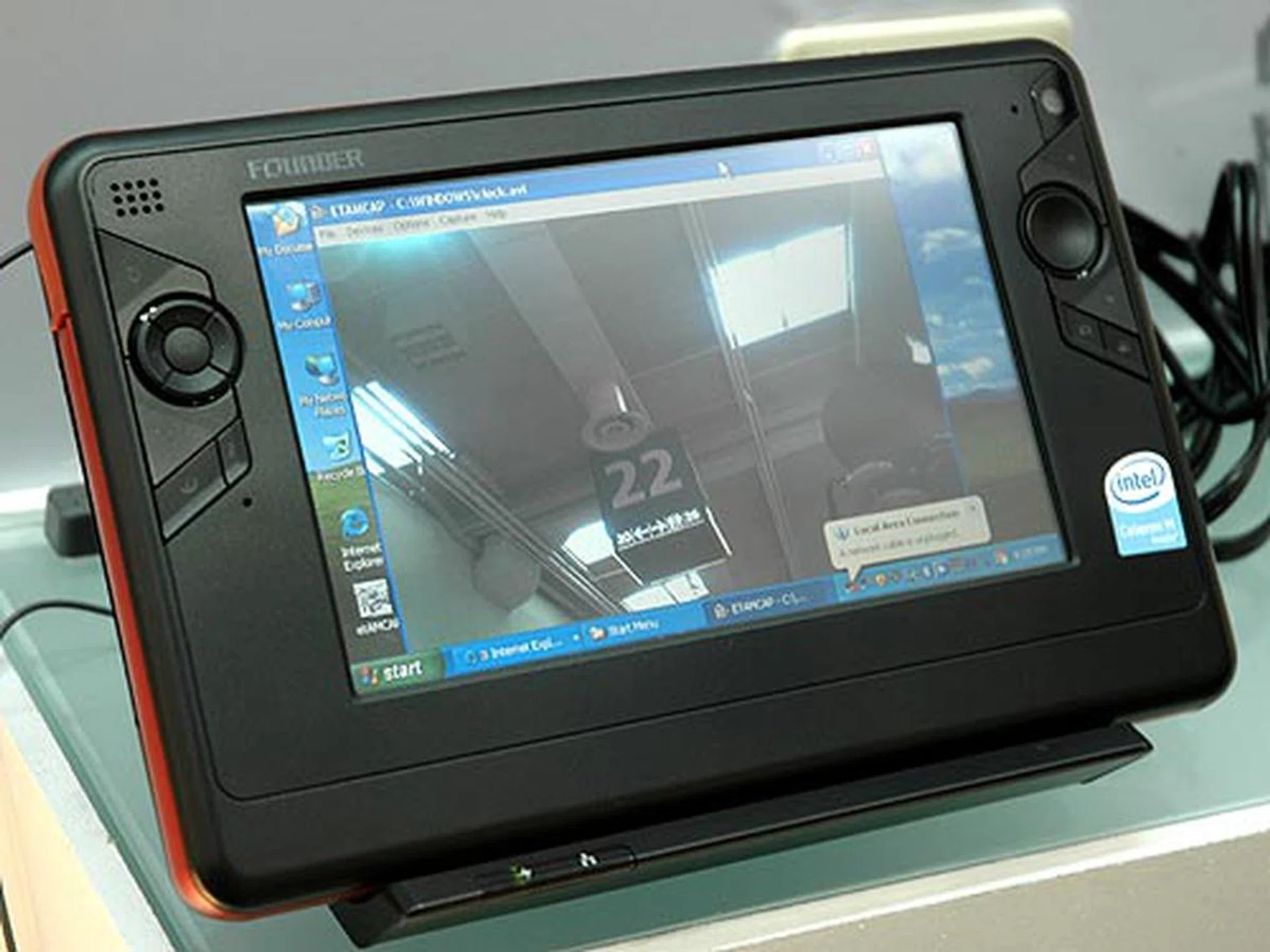
This tiny Ultra Mobile PC (UMPC) is as slim as it is because it is using the Intel Pentium M ULV processor. It comes with a small 7-inch WVGA (800x480) TFT LCD screen and a 1.8-inch hard drive with capacities up to 60GB to store all your music and movies. It also features an integrated 1.3MPixel CMOS camera, Gigabit Ethernet LAN, wireless 802.11b/g LAN, Bluetooth support and a 4-in-1 card reader.
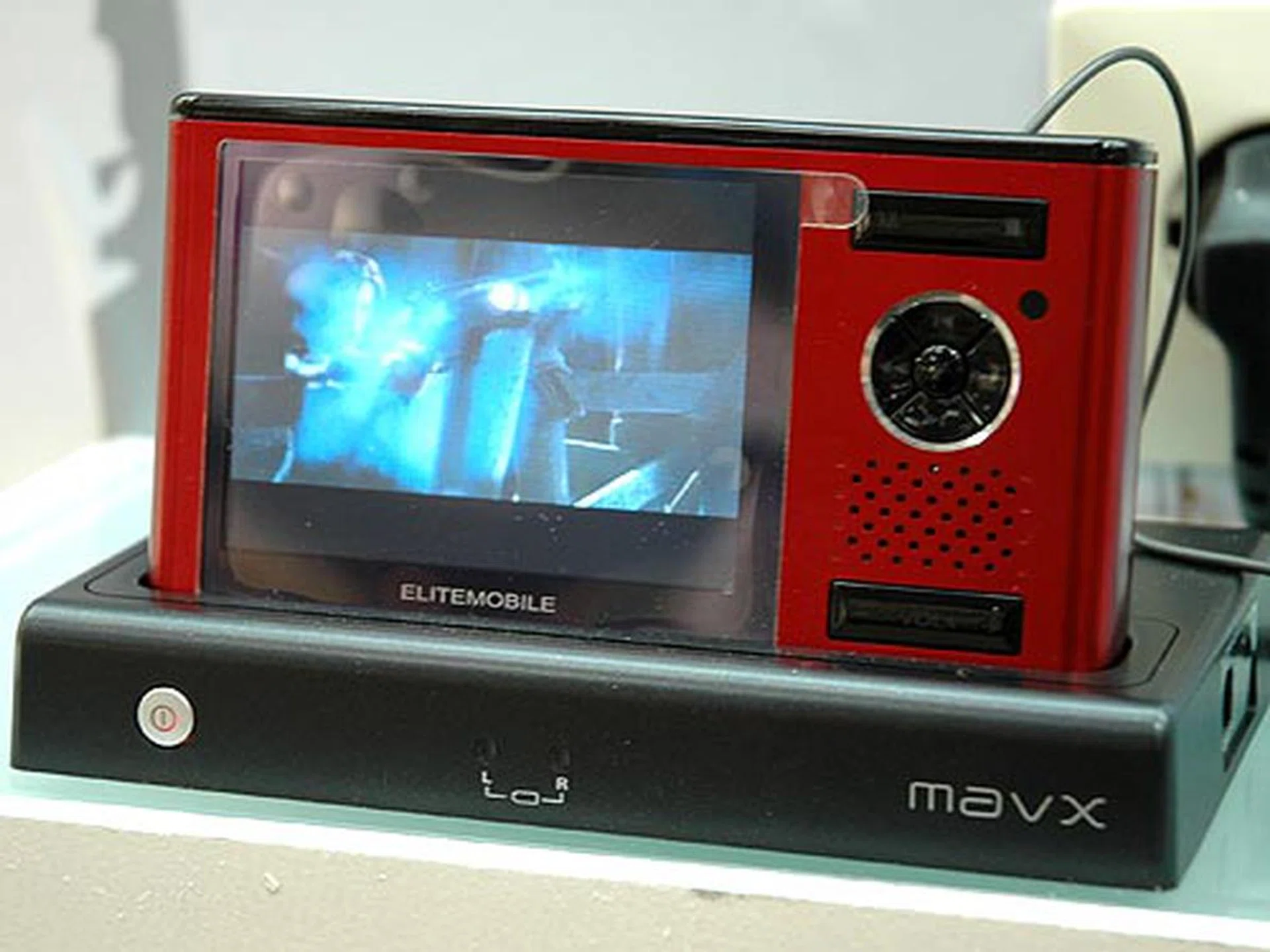
If you want something smaller and more portable, the EM-3520V is an ultra mobile entertainment machine that comes with a large 3.5-inch TFT LCD screen and an integrated 1.8-inch hard disk drive with capacities up to 30GB. It comes with a USB 2.0 port for data transfer of media files between the PC and the device. ECS claims that its video output is capable of delivering full DVD resolution on regular TV screens.
EPoX's Booth (Part I)
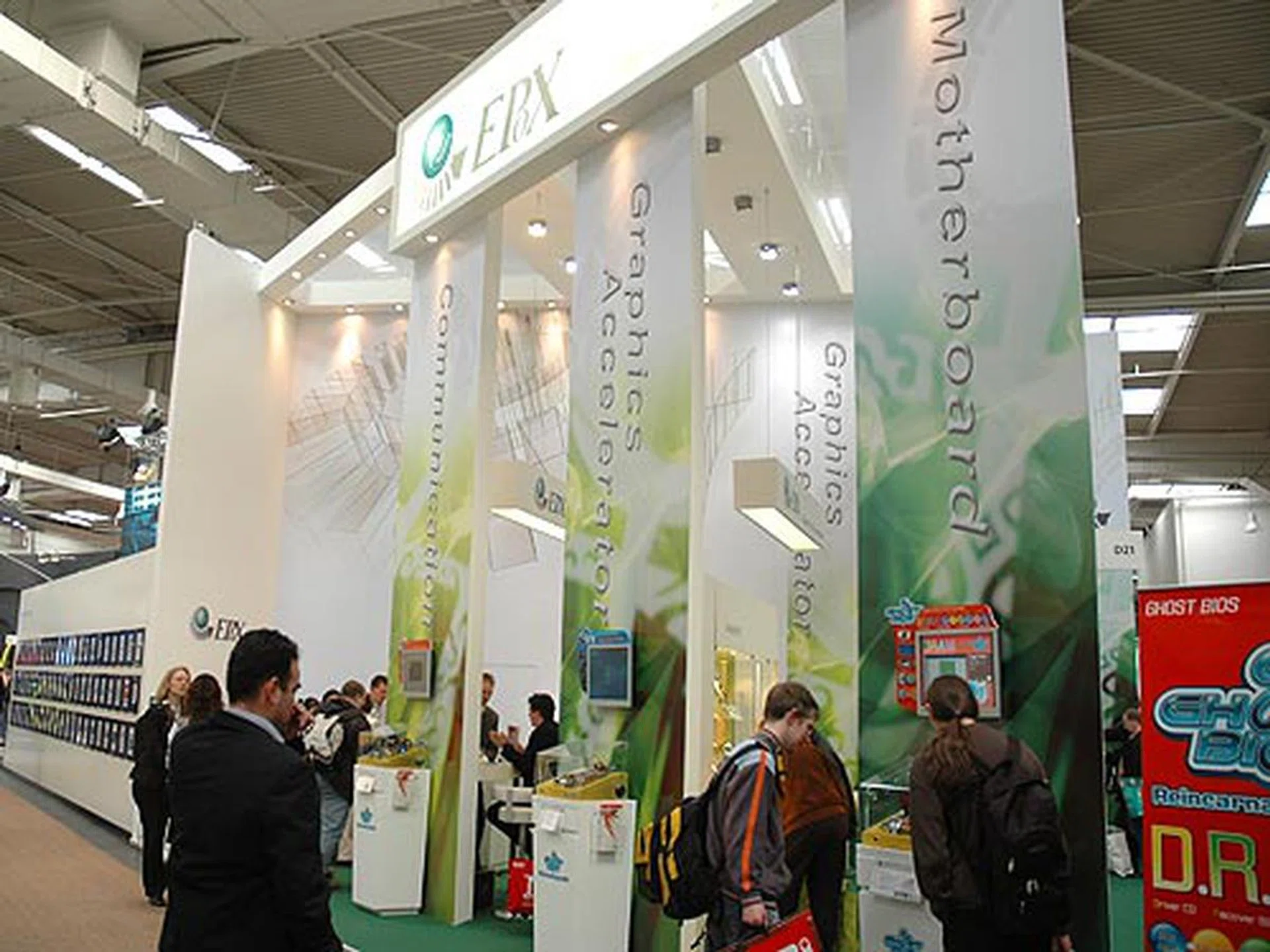
EPoX's booth.
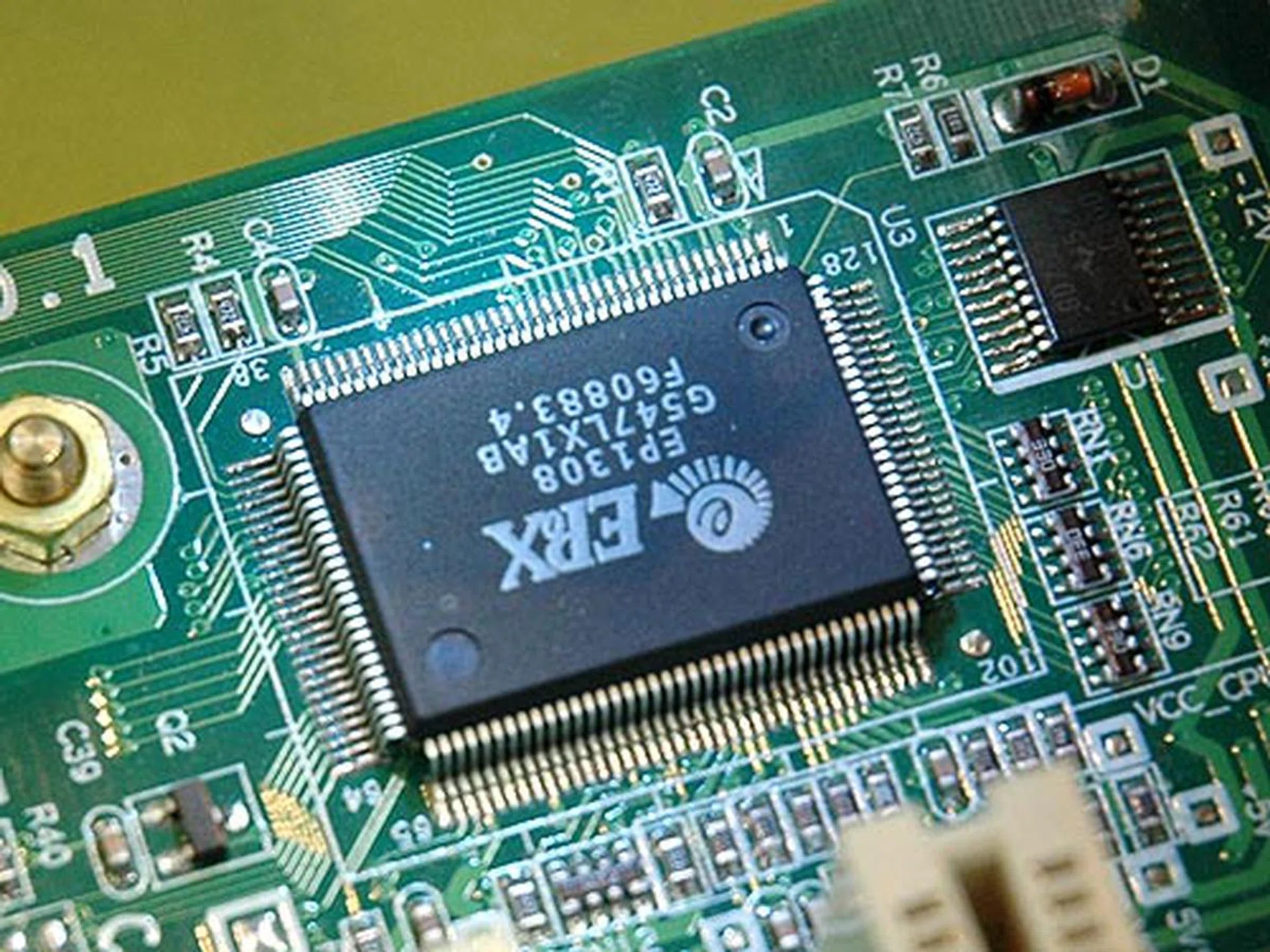
The Ghost BIOS is EPOx's answer to corrupted BIOS caused by either bad firmware flashing or viruses. Using an EPoX developed super I/O chip (as shown above), the board has BIOS recovering capabilities right out of the box. It does not need a second Flash BIOS chip like most other solutions, thus, as EPoX claims, the procedure for recovery is simpler and easier to understand.
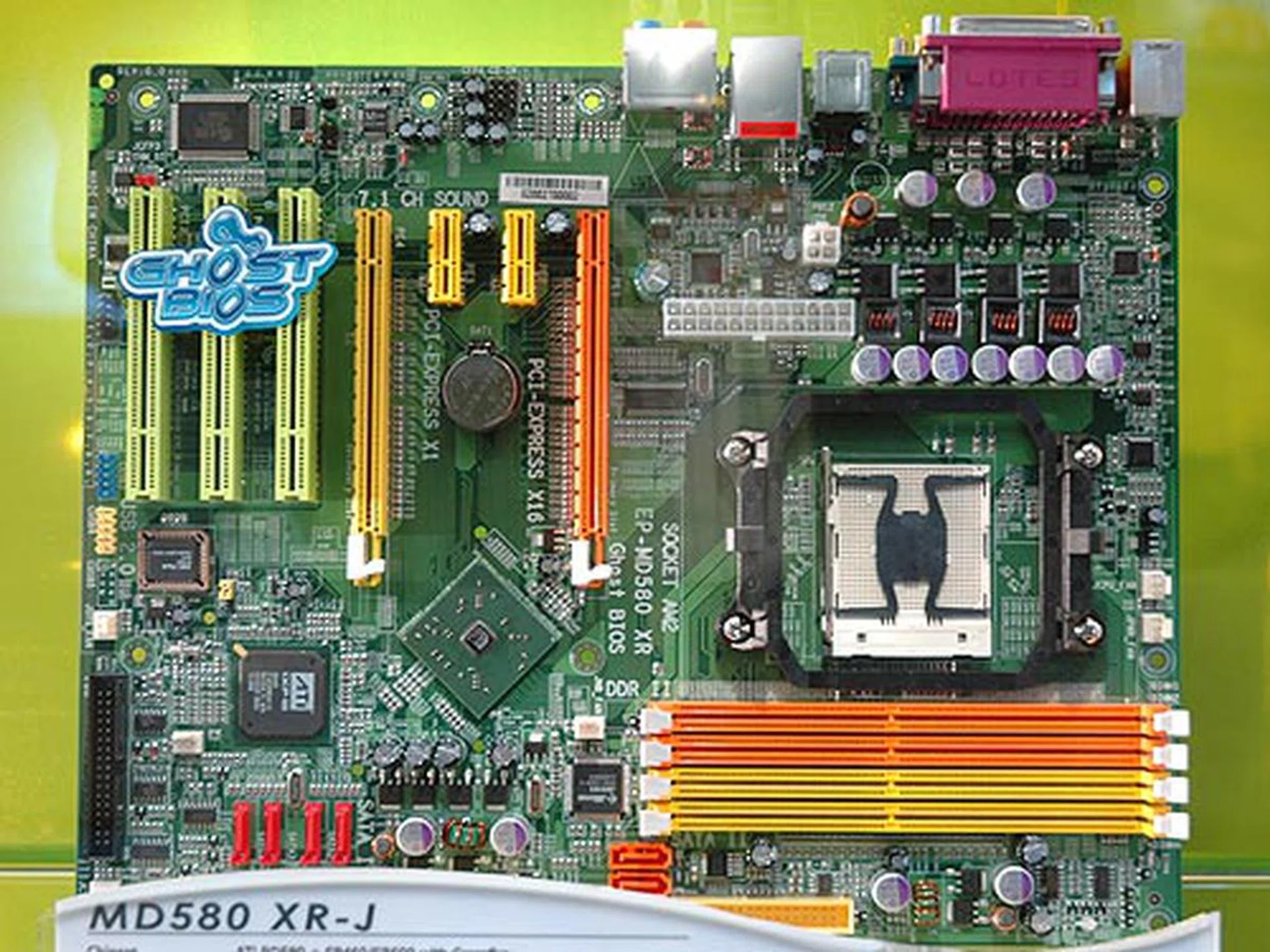
The new MD580 XR-J is based on the ATI RD580 chipset and it supports the new AMD Socket M2 processors. Built for CrossFire, the board comes with two PCIe x16 graphics slots, two PCIe x1 slots, three PCI slots, eight-channel high definition audio using Realtek's ALC833 codec, six SATA RAID ports and one Gigabit Ethernet port. It will come with EPoX's Ghost BIOS feature too.
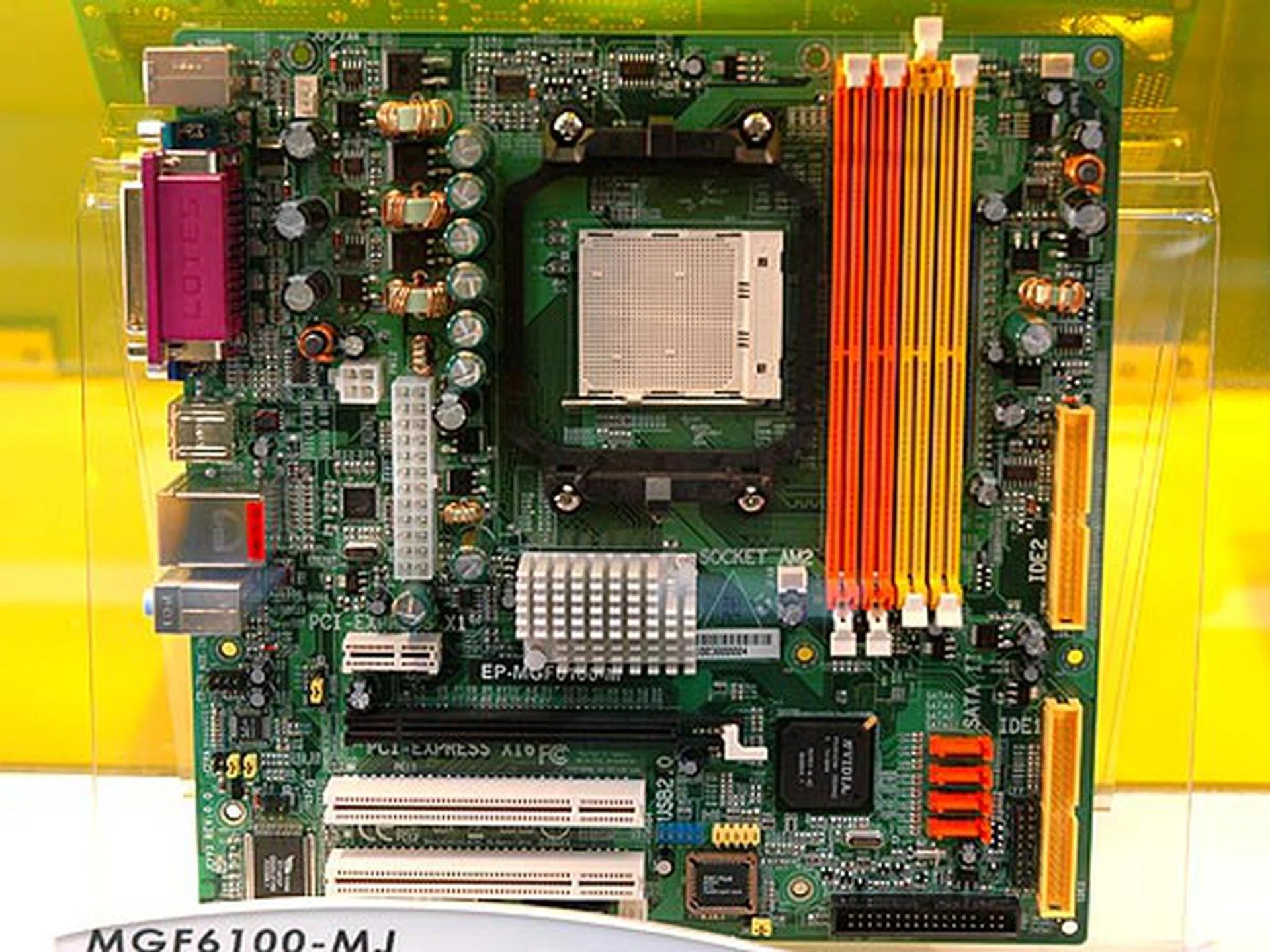
The MGF6100-MJ is a micro-ATX board based on the NVIDIA GeForce 6100 chipset for the new AMD Socket M2 processors. It comes with one PCIe x16 graphics slot, one PCIe x1 slot, two PCI slots, four SATA 3G RAID ports and a Gigabit Ethernet LAN port.
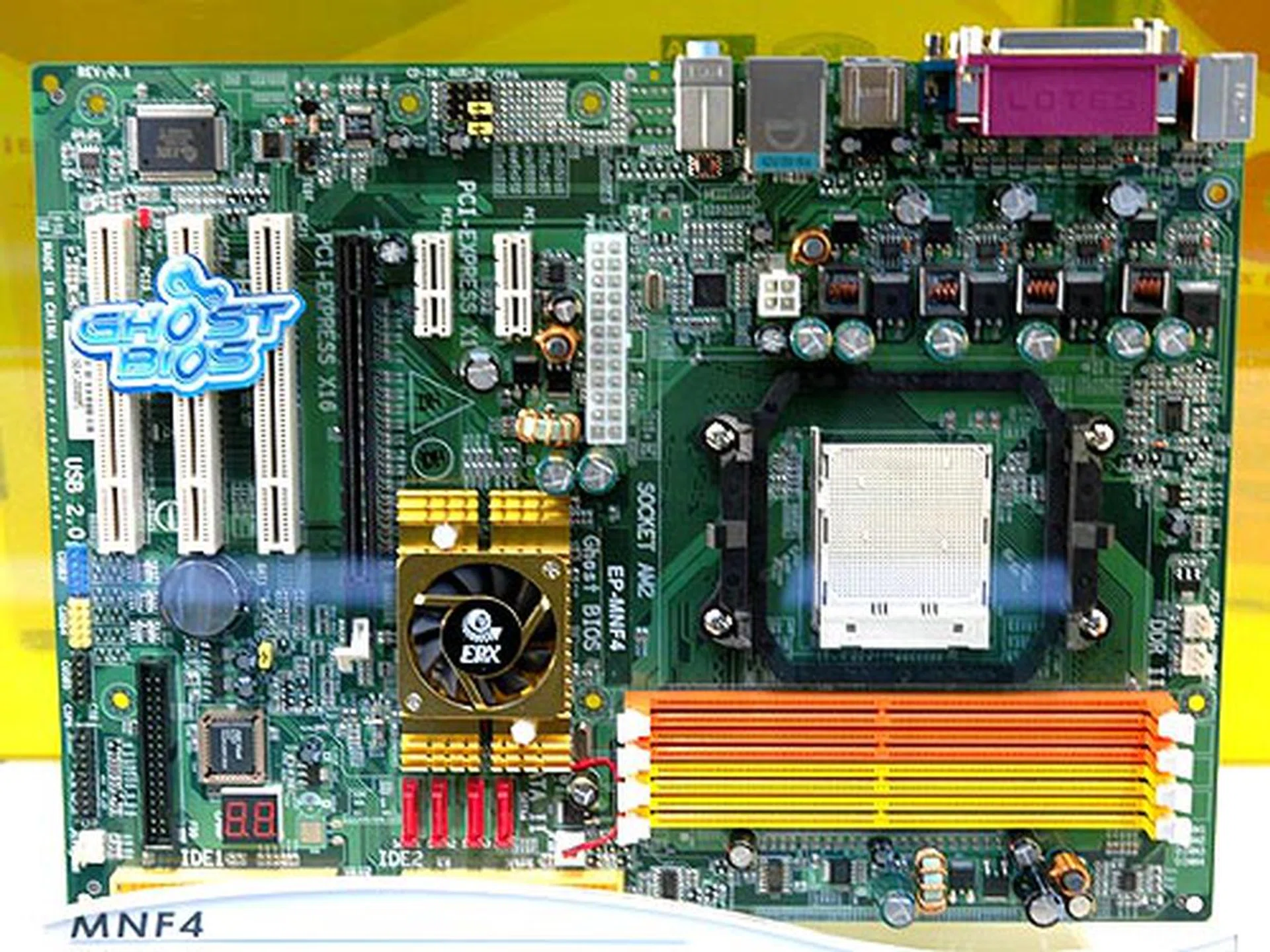
Based on the NVIDIA nForce4 chipset, the MNF4 is a mainstream board for the Socket M2 processor. It has one PCIe x16 graphics slot, two PCIe x1 slots, three PCI slots, four SATA 3G RAID ports and one Fast Ethernet LAN port.
EPoX's Booth (Part II)
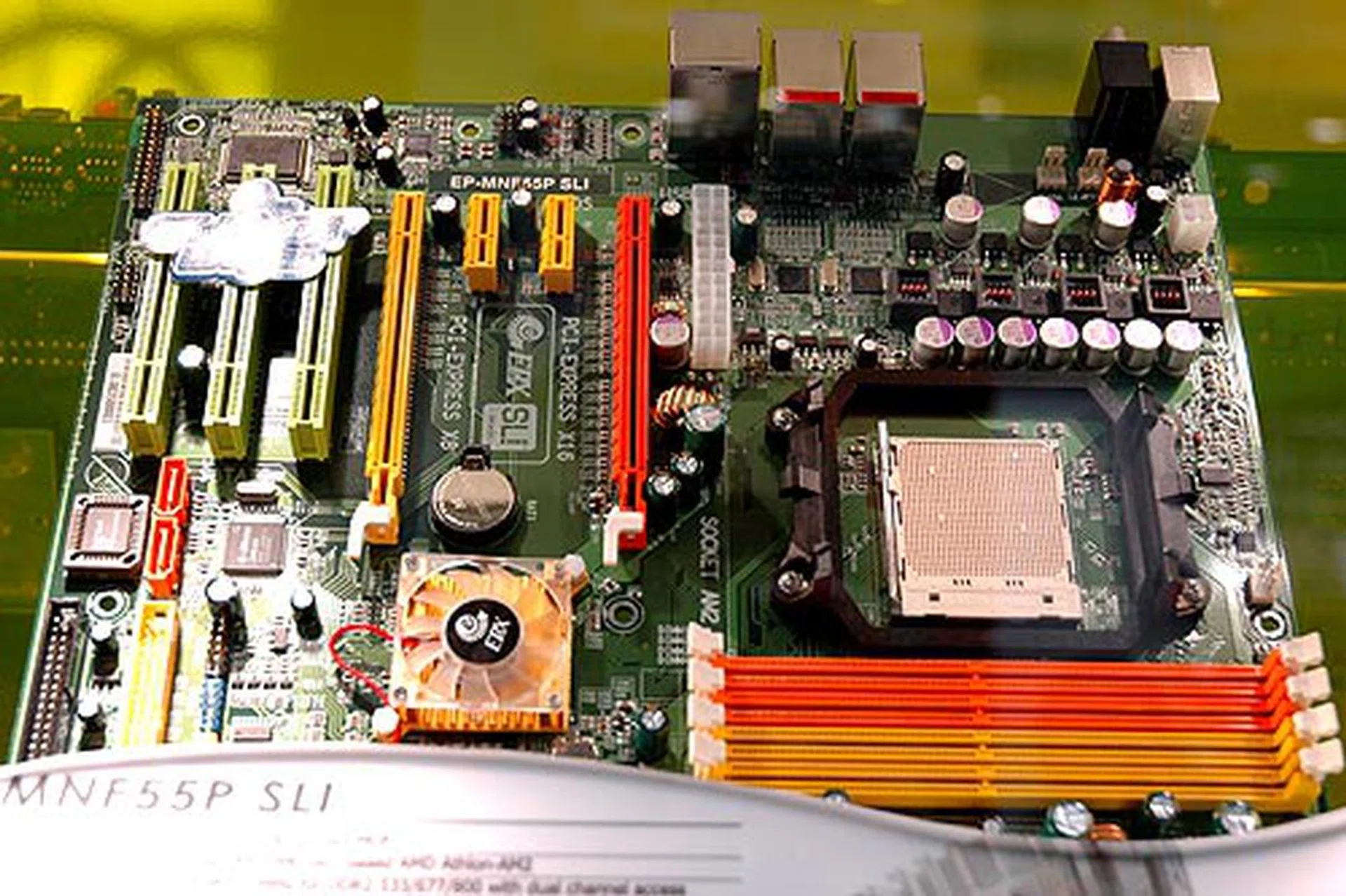
The MNF55P SLI is based on the NVIDIA nForce 570 SLI MCP. Supporting the new Socket M2 processor, this SLI board comes with two PCIe x16 slots (x8 in SLI mode), two PCIe x1 slots, three PCI slots, eight SATA 3G RAID ports and two Gigabit Ethernet LAN ports.
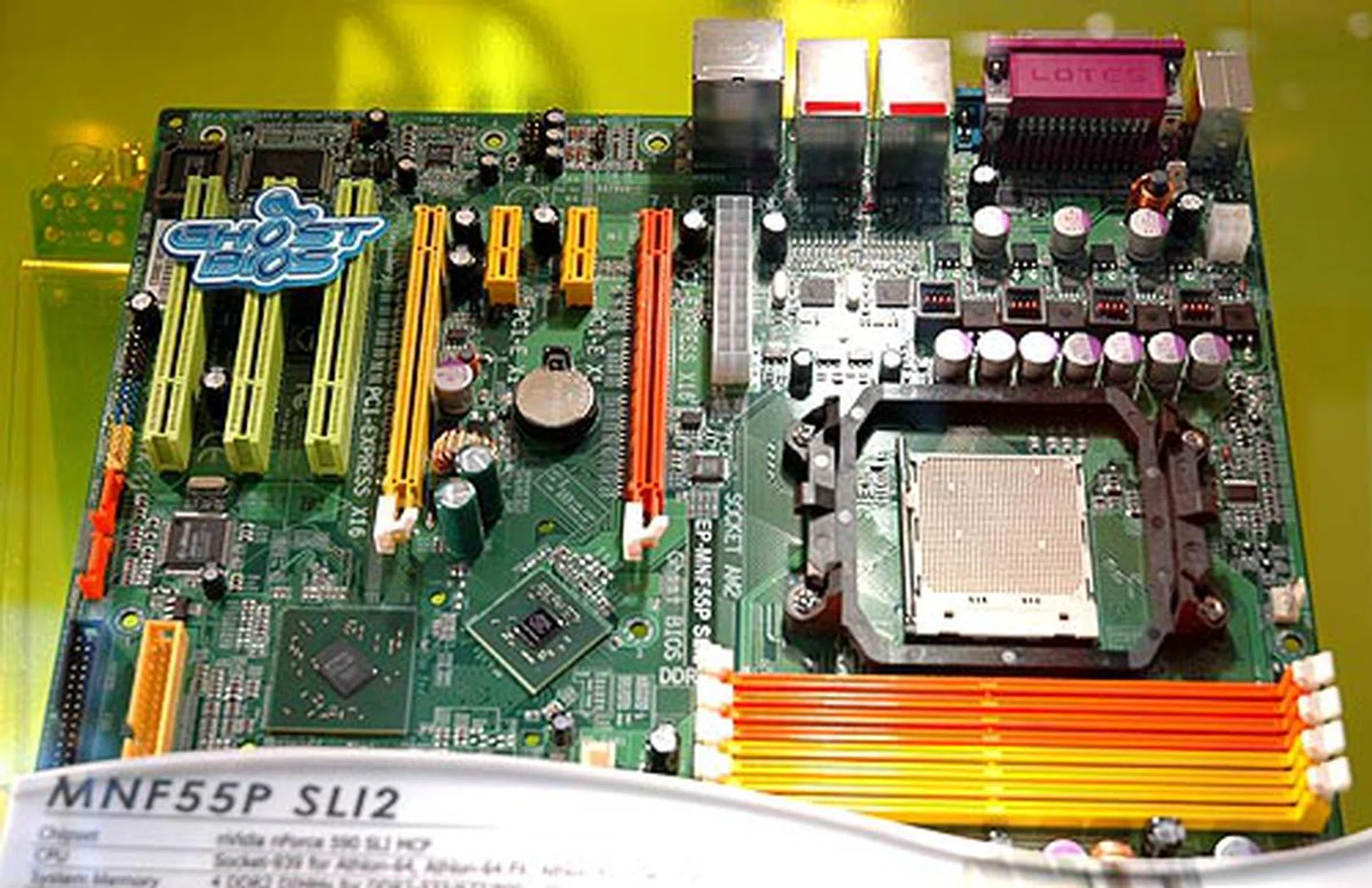
For the ultimate SLI setup, the MNF55P SLI2 that is based on the nForce 590 SLI MCP gives you two full bandwidth PCIe x16 slots. Other features are very similar to the MNF55P SLI.
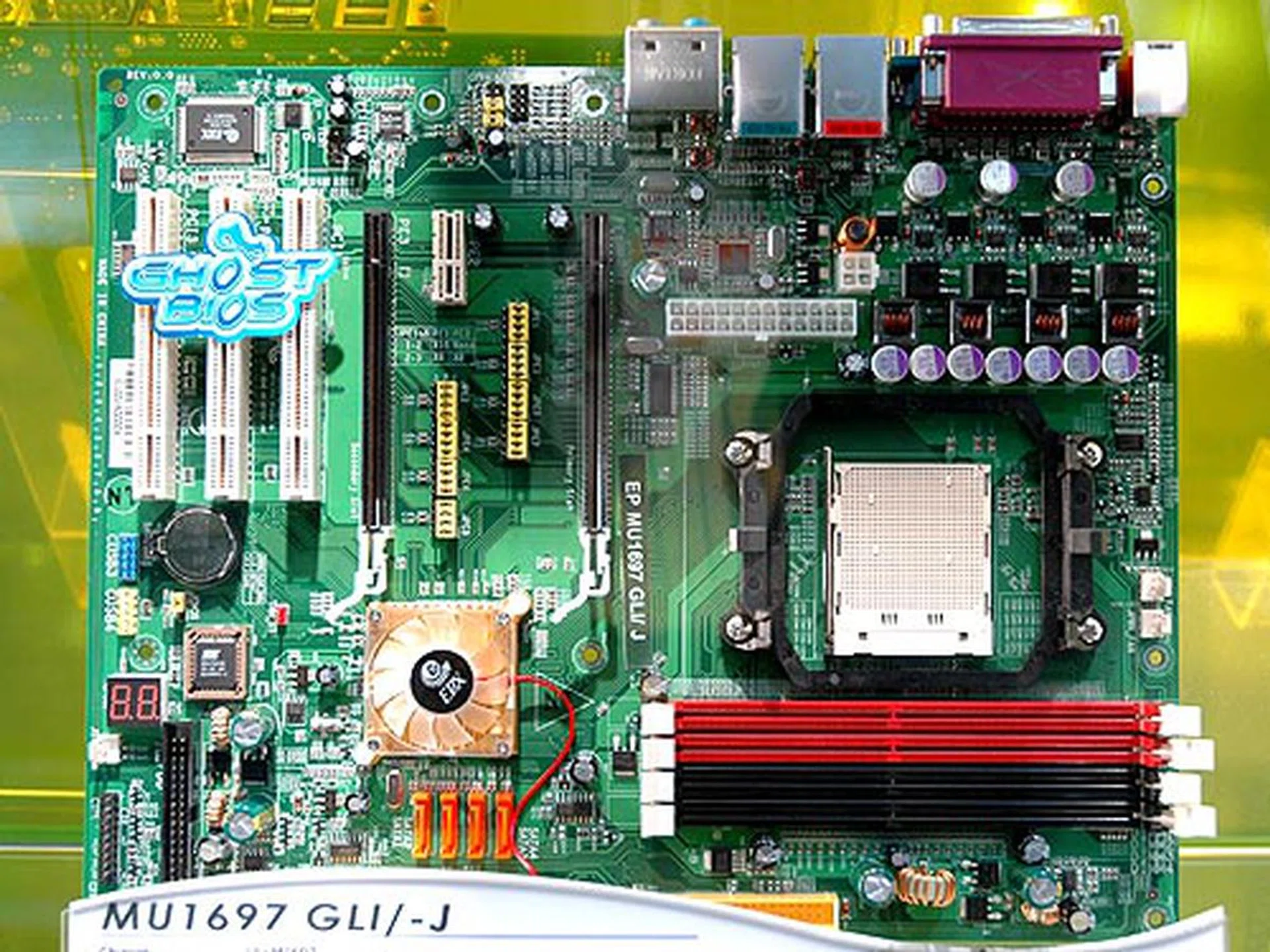
The MU1696 GLI is based on the ULi M1697 chipset and it also comes with two PCIe x16 slots. Other things you should know about this new Socket M2 board is that it comes with one PCIe x1 slot, three PCI slots, four SATA 3G RAID ports and Fast Ethernet LAN port.
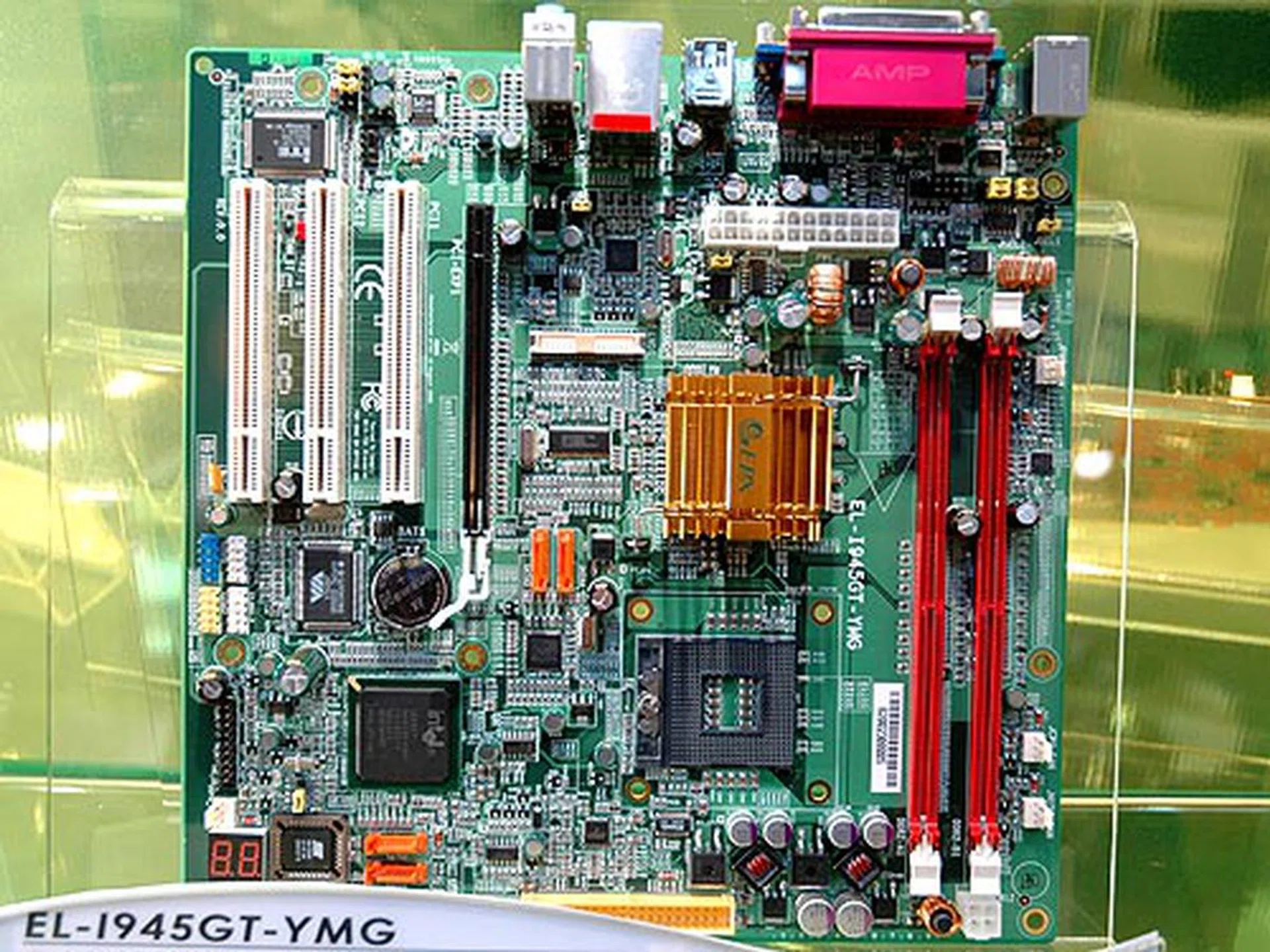
The EL-I945GT-YMG is based on the new Intel 945GT chipset built for Intel's latest mobile processors. It comes with three PCI slots, one PCIe x16 slot (if you choose to use discrete graphics instead of the Intel GMA950 integrated graphics), one Gigabit Ethernet port, two SATA ports and two DDR2-667 DIMM slots for up to 2GB of memory.
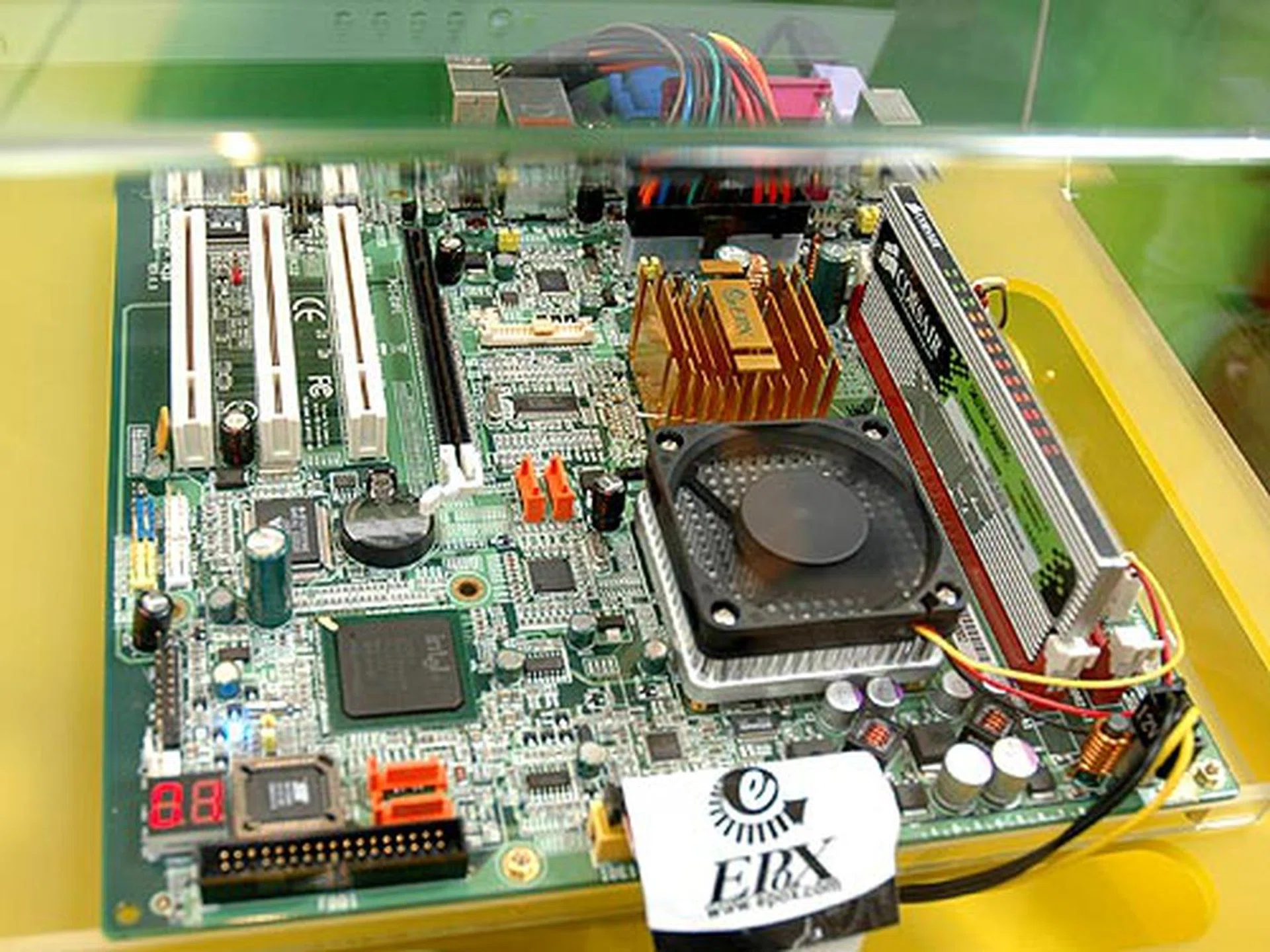
A live demonstration of the EL-I94GT-YMG in action.
Other Toys at MSI's Booth
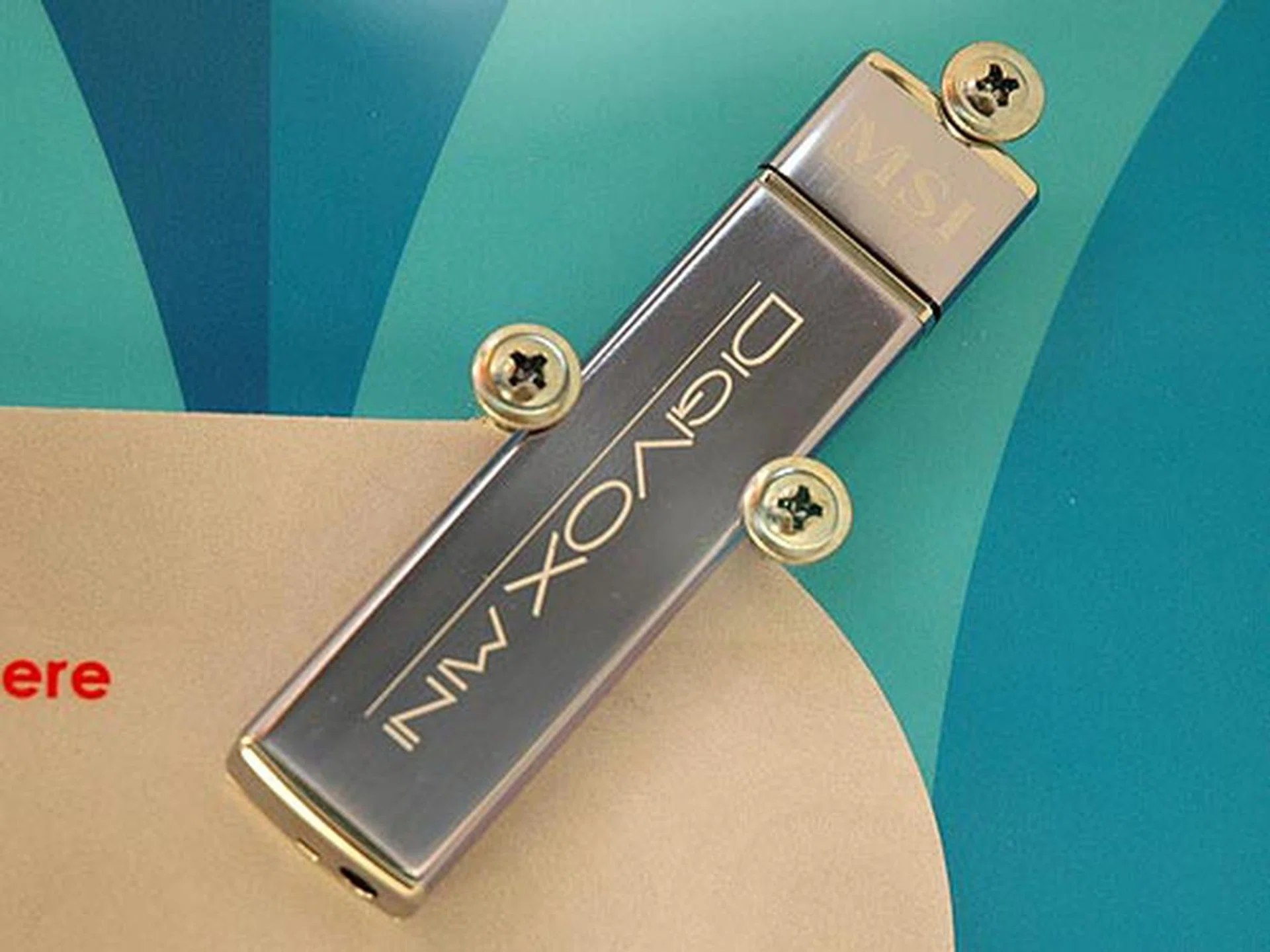
The MSI DigiVOX mini is a pen-sized USB device that lets you receive DVB-T signals. It allows you to receive HDTV signals up to 1080i and you can do scheduled recording and time shifting too. What's cool is that this device is compatible with Microsoft's Media Center Edition operating system.

If you want to receive analog TV signals, then the MSI DigiVOX mini A/D is the toy for you. Besides supporting DVB-T signals, it also receives standard analog TV and is compatible with worldwide TV standards.
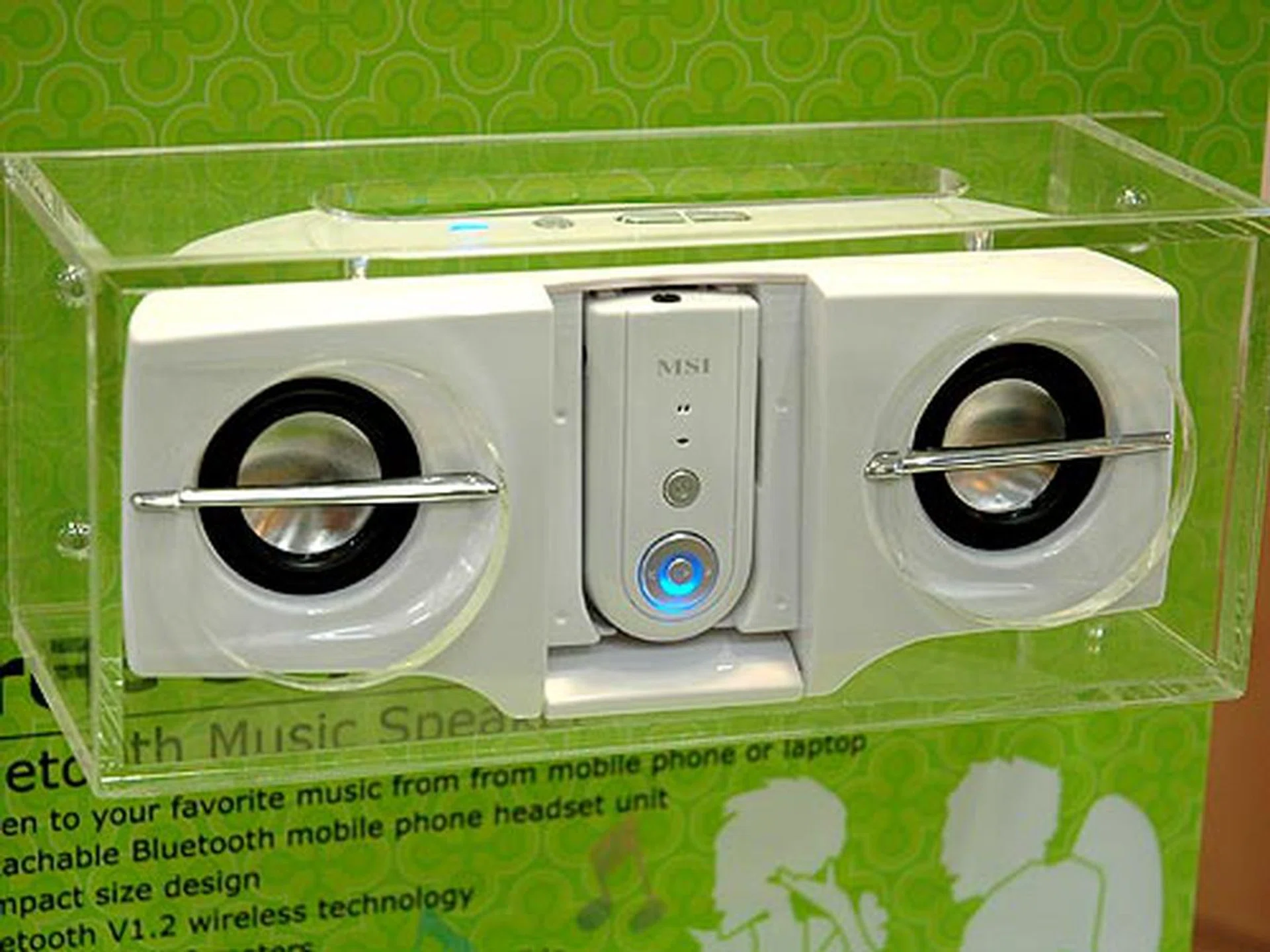
The Free Style FS530 is a Bluetooth capable speaker system that lets you listen to music wirelessly streamed from either from your mobile phone or notebook. Using Bluetooth v1.2 technology, it has a range of up to 10 meters. Of course, if you prefer to listen direct from an MP3 player, a regular line-in jack allows you to hook it up to all kinds of MP3 players too.
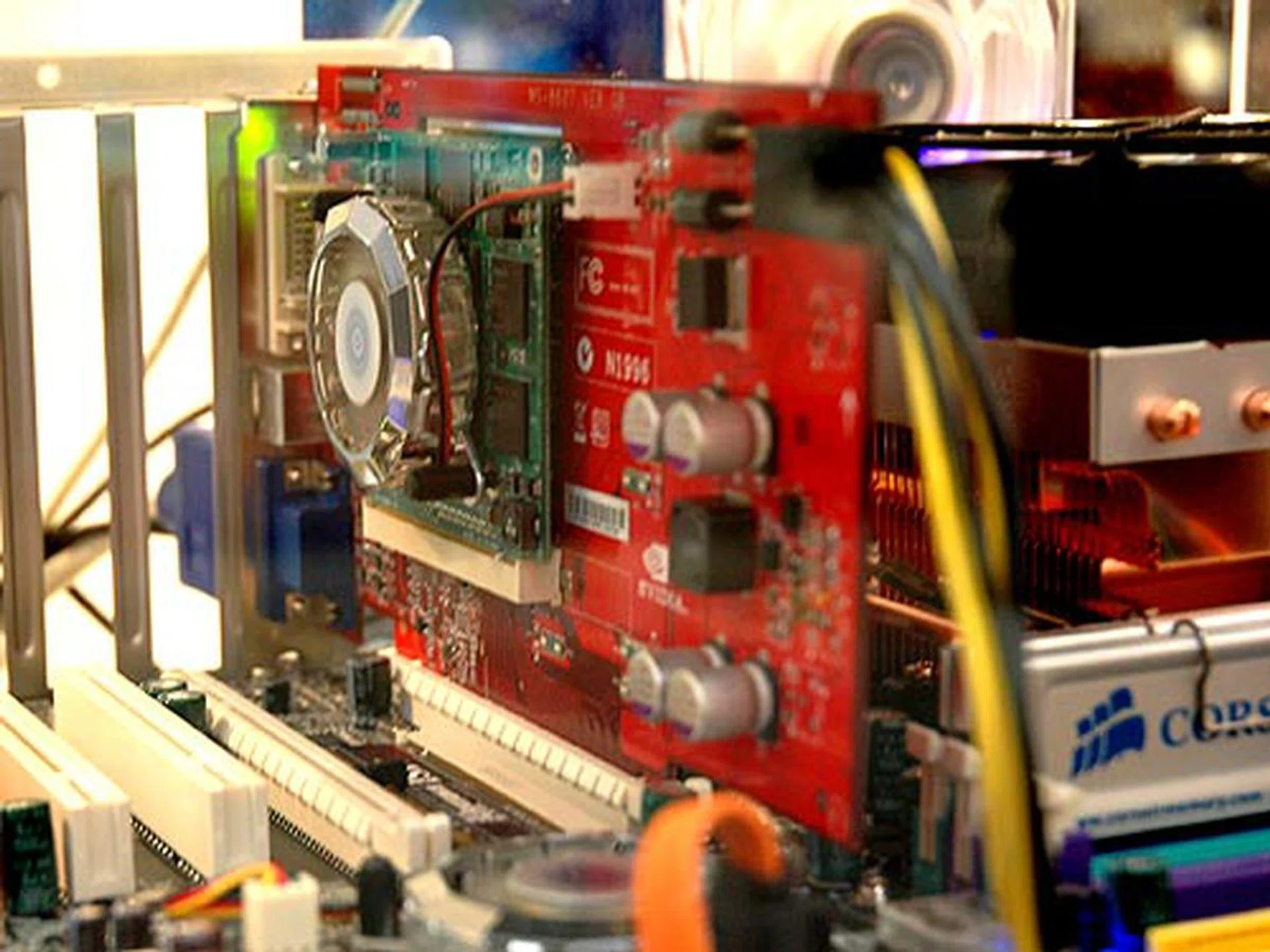
The new MSI Geminium-GO of a different design. Here, you'll see only one MXM card on the front side ...
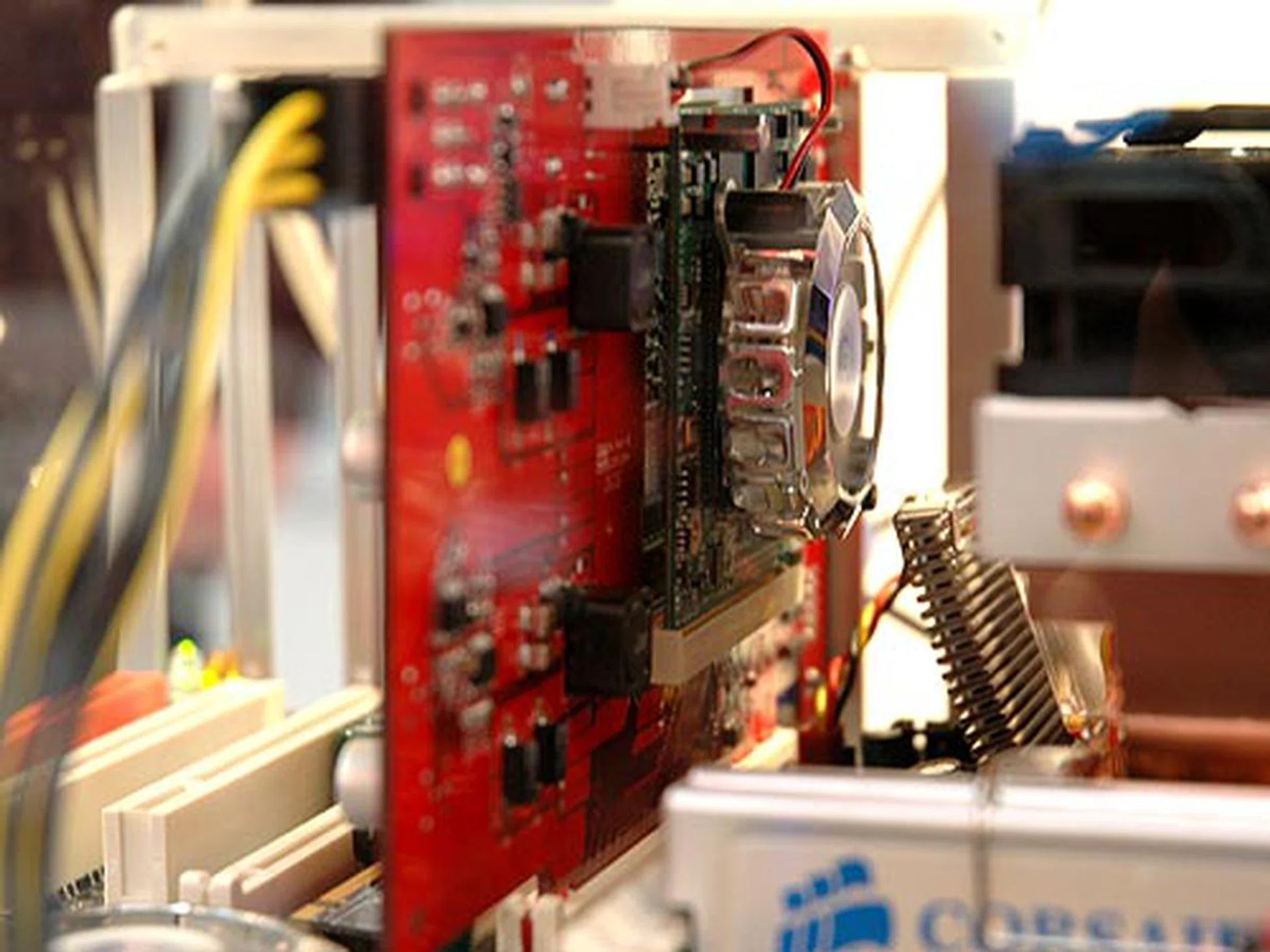
... and on the other is the SLI-ed MXM card. This thoughtful design yields an overall smaller card than the original version we've reviewed early this year.
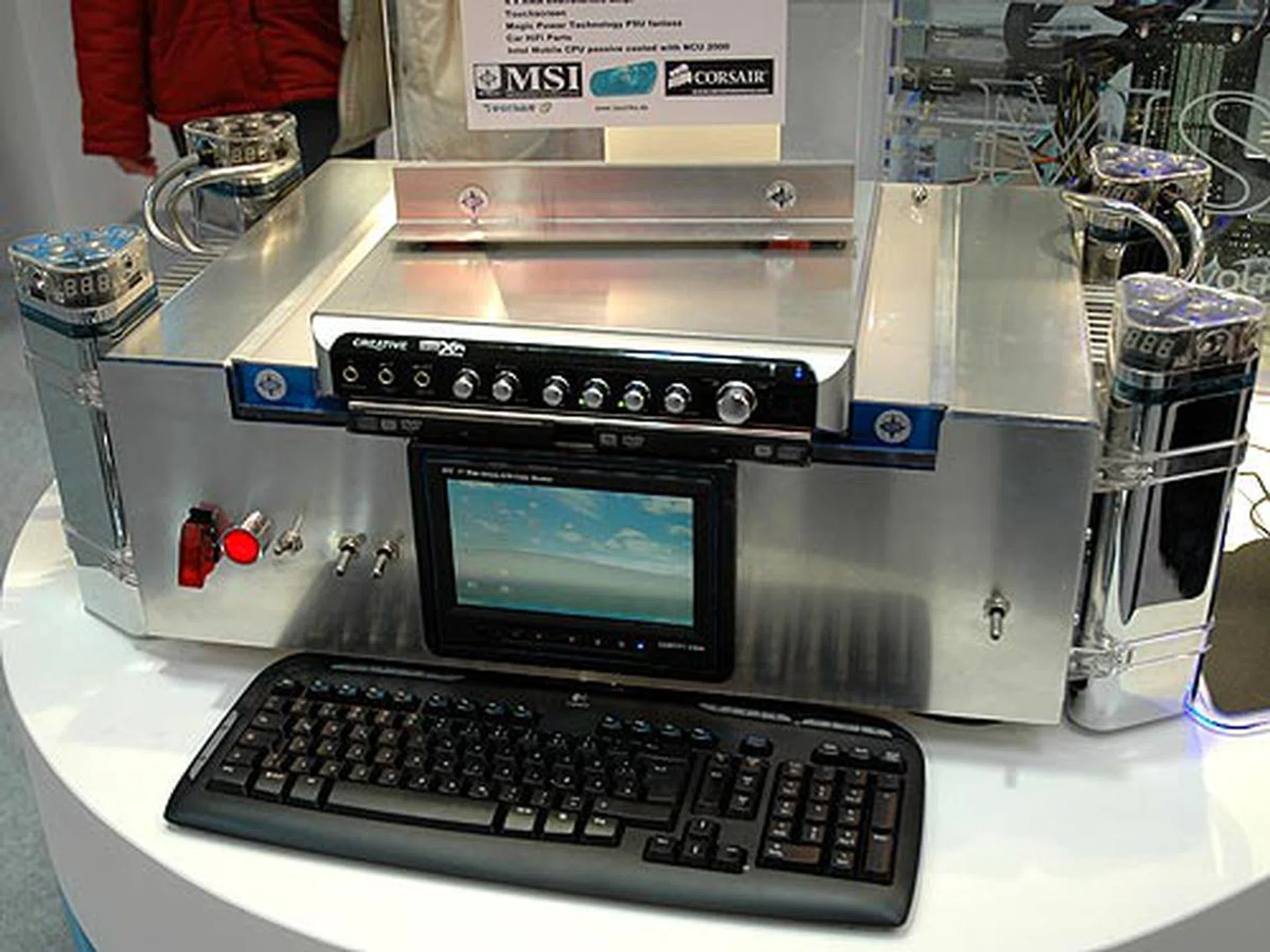
MSI showcased a mean modded machine known as the TAURUS that stands for The Awesome Ultimative Reference Unbelievable Soundmachine. This machine uses an MSI motherboard with car audio parts, a touchscreen as its front panel and a Creative X-Fi Elite Pro sound card.
Our articles may contain affiliate links. If you buy through these links, we may earn a small commission.