
The real hoverboards you can (sort of) get in 2015
It’s 2015, and according to ‘Back To The Future II’, we should all be surfing around on hoverboards today. Obviously that didn’t happen, but we are actually getting close ... closer. Take a look at the real hoverboards you can (sort of) get today.

Image source: Amblin Entertainment
In ‘Back to the Future II,’ Marty McFly grabbed a hoverboard from a couple of kids, and levitated his way away from Griff and his gang. If we take the ‘Back To The Future’ films for truth, we should be seeing hoverboards in widespread use by now. Sadly, that didn't really happen, although there have been a few that came close. Here, we look at hoverboards (proper hovering ones, mind you) that are almost within our reach.

The Lexus Hoverboard
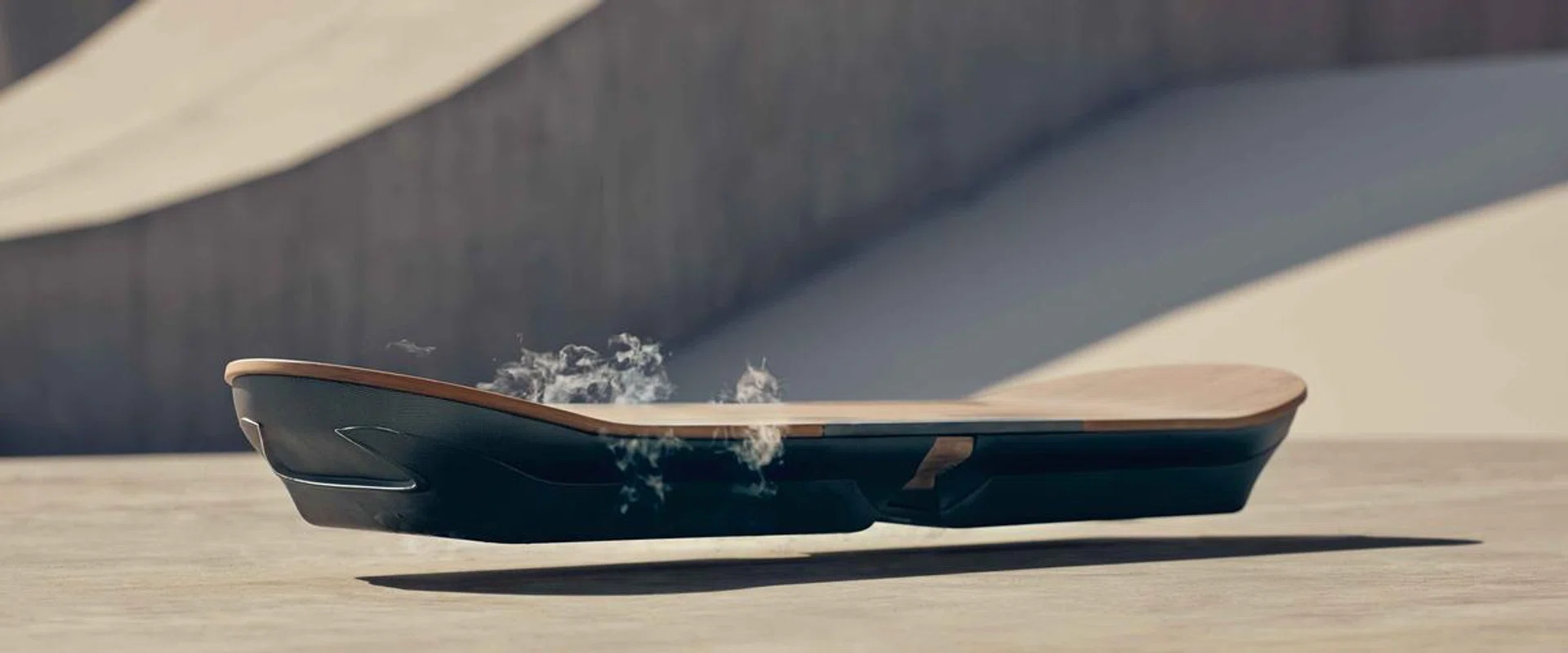
The Lexus Hoverboard is sexy, and it smokes. The vapors are a result of the board's liquid nitrogen, which helps the magnetic fields stay put.
Out of all the hoverboards we've heard about, the Lexus Hoverboard comes the closest to the BTTF version. In fact, it does much more - Marty McFly's 'borrowed' board can't travel across water, but the Lexus Hoverboard can.
It's mostly powered by magnets - the rest of the science comes from the two “cryostats” built-in to the hoverboard, which are reservoirs of liquid nitrogen that grant a stable reaction between the magnets on-board and the magnets laid into the ground. The Lexus Hoverboard only works on specially-made magnetic tracks, and when the liquid nitrogen remains cold. That sounds like a pain to maintain, even for people who have truckloads of liquid nitrogen for no reason.

Lexus built a hoverboard test park in Barcelona, Spain. 200 meters of the magnetic track was brought over from the original German-based testing facility, and subsequently laid into the ground. The Lexus engineers made extra care to the Lexus Hoverboard's aesthetics by using a svelte bamboo finish, but we think that the choice of a wooden board has to do with its natural sturdiness, its traditional skateboard aesthetic, and the fact that using metal would interfere with the magnetic hoverboard.
Unfortunately; the Lexus Hoverboard is not for sale. You can still follow its development and progress on Lexus's SLIDE campaign site to see if it ever gets any closer to commercial release.
Hendo 2.0
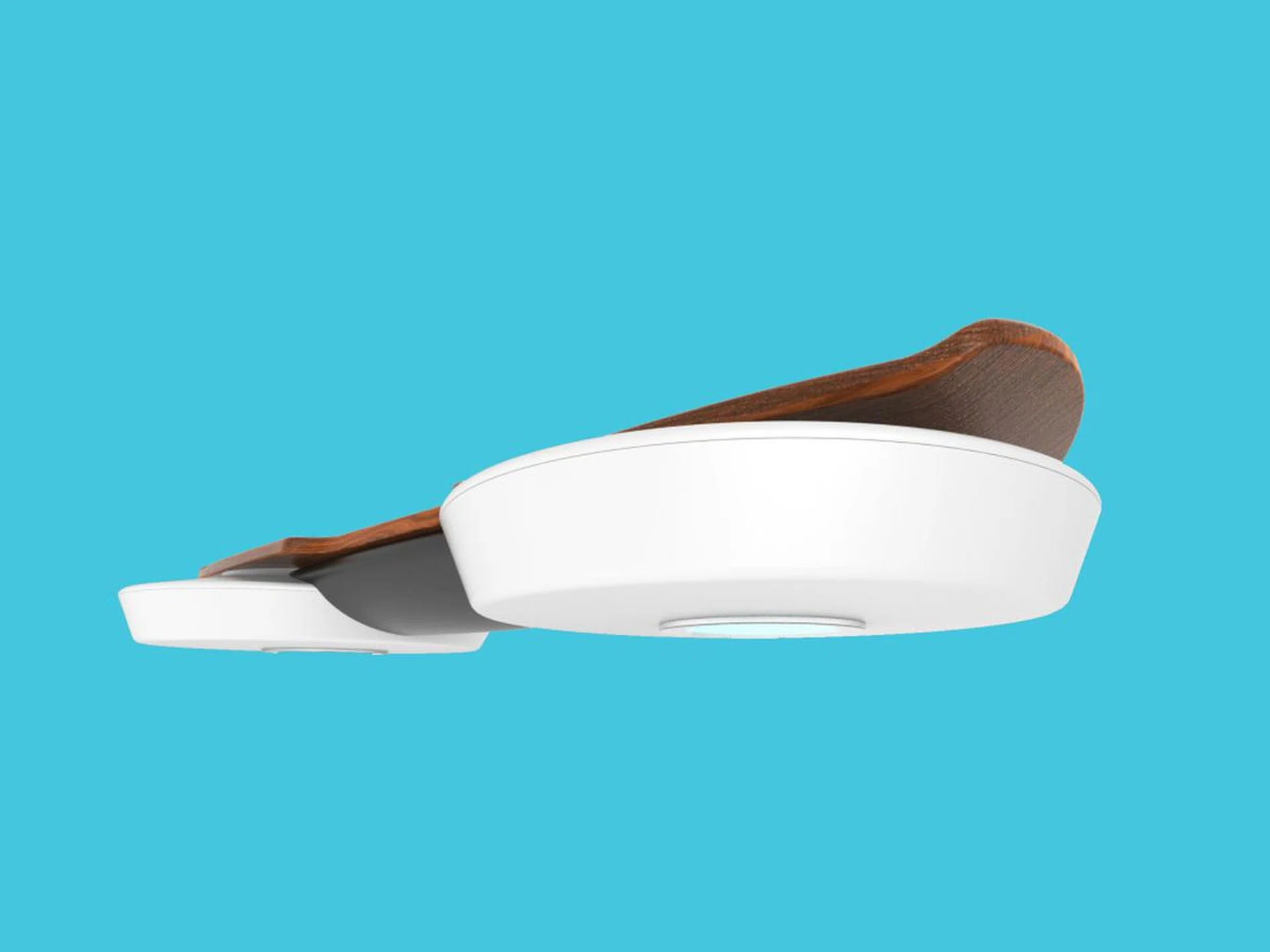
The concept art of the Hendo 2.0, regarded as the "new and improved" version of the Kickstarter prototype. Image credit: Wired
The Hendo 2.0 is the hoverboard made to honor the backers who coughed up U$10,000 each to contribute to the Hendo Hoverboard crowd-funded project. You read that correctly - this hoverboard is quite close to being commercially available despite its hefty price tag.

The first Hendo hoverboard prototype was criticized by Tony Hawk (the face of Tony Hawk Pro Skater games from the 90s) for being too bulky and slow when he tested the first device. Changes include a narrower, thinner deck (the platform where skaters stand on), and as well as fitting sets of skateboard trucks (the axles that traditionally held the wheel) to improve the hover engine's traction.
Arx Pax, the designers of the first Hendo, also revealed what their hoverboard uses to levitate. No prizes for guessing that it has to do with magnetic polarity, but the Hendo 2.0 hoverboard itself contains no magnets. The board has its own “Magnetic Field Architecture”, where it generates electromagnetic fields that can interact with non-magnetic, conductive materials (such as copper and aluminum) via electric currents. This induces an electromagnetic field upon the conducting surface, and the board stays off the ground. Obviously, such a design means that the Hendo 2.0 can only hover across sheets of copper.
The good news is Arx Pax obviously isn't stopping at this level of research, since they intend to build hoverboards that are closer to the BTTF versions, while honoring their collaboration with NASA in using same Magnetic Field Architecture technology to allow CubeSats (10 x 10cm nano-satellites by NASA) to function with a little help from some Magneto-like hijinks.
Mr Hoverboard
The Mr Hoverboard is the poor man's version of the others listed here, but it still technically hovers off the ground, and it's accessible to the masses, too.
In fact, it's so accessible, that you have to build the original prototype by yourself. The Mr Hoverboard is excessively simple when compared to its rivals in the market; you only need a sufficient number of leaf blowers and you're on your way using the power of forced air. It sounds a little underwhelming, but we care more about the fact that it actually works, and travels on non-magnetic surfaces unlike the pricey ones above. It also helps that we don't have a spare US$10,000 lying around for us to drop on a Hendo 2.0.
The makers of the Mr Hoverboard have not been idle either - if you want something that does not look like a primary school science experiment, you can put up a modest US$420 (~S$580) on their crowd-funding campaign for a box of seven parts from the makers themselves. The Mr Hoverboard only supports people who weigh 160lbs (~72kg) and below, and they require you to get four leaf blowers that are sold separately (preferably this brand and model).

The only gripe we have with this hoverboard is that the makers did a campy (and borderline cringey) promotional video on it. We watched it to get our facts right, and you shall now suffer with us too.
So when will there be an affordable hoverboard that handles uneven terrain, which is within the budget for kids and teenagers? Perhaps ‘Back to the Future’ overestimated the hoverboard bit, even though we do have video calls and flatscreen televisions for the masses. It should eventually come; after all, if you put your mind to it, you can accomplish anything.
Our articles may contain affiliate links. If you buy through these links, we may earn a small commission.