
HP Smart Office 2007 - Takin' Care of Business
At HP's recent Smart Office 2007 regional press event held in Ho Chi Minh City, Vietnam, Hardware Zone was treated to a vast array of new SMB products, services and even technologies to meet the needs of this fast growing segment. Join as we walk you though the event highlights.
HP Takes Care of Business
Yes indeed, HP has been making the PC personal again and following several consumer oriented product launches over the last few months, HP next focused to spruce up it's SMB (Small and Medium Businesses) offerings and is literally taking care of business. A few day back on 18th October 2007 at Ho Chi Minh City, Vietnam, HP announced several enhancements and new products specifically catered for the Asia Pacific region to bolster the fast growing SMB segment in this region. After all, as the world's number one PC vendor, they know all too well that complacency is out of the question if they wish to stay at the top.
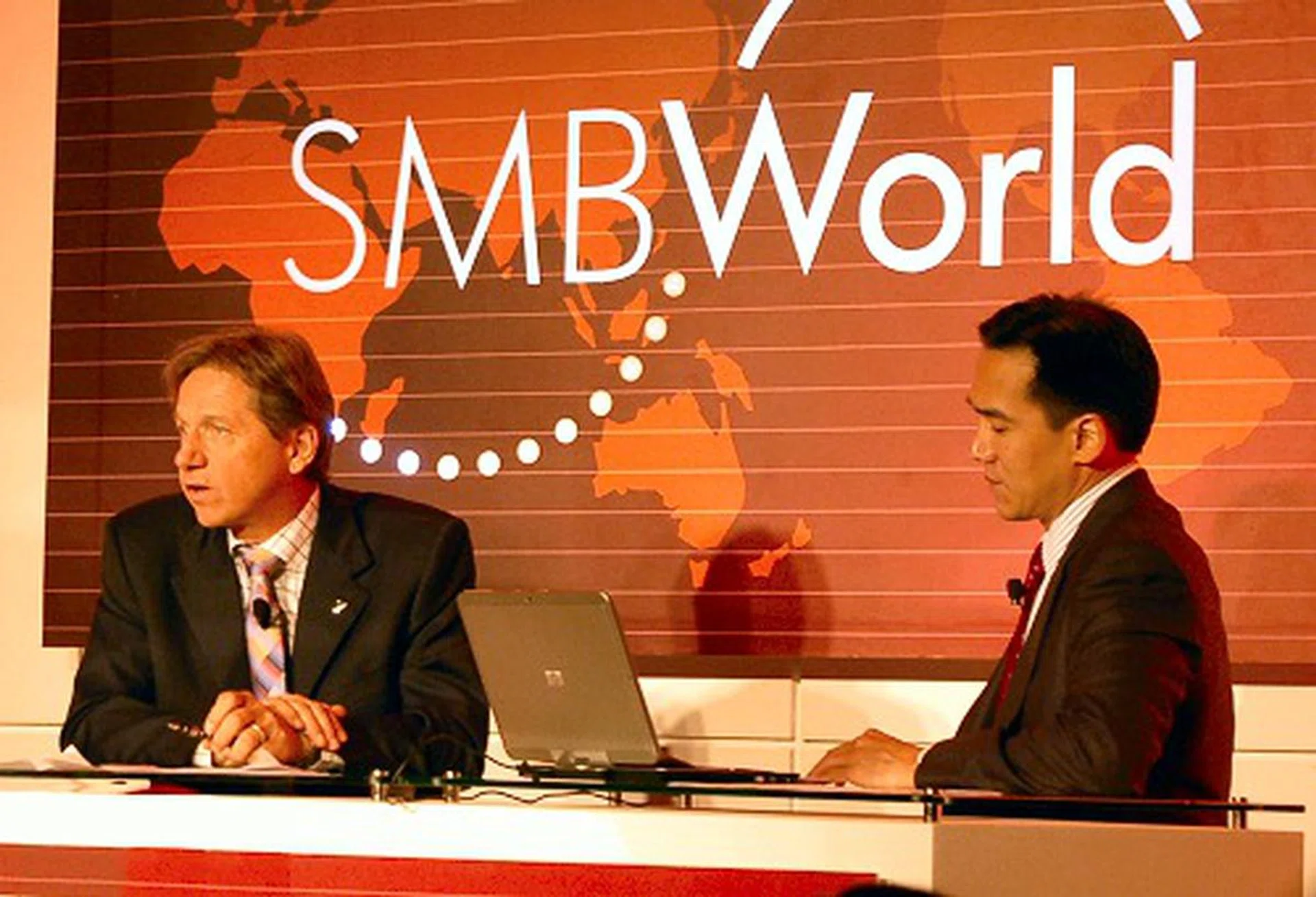
In this interesting news room themed presentation, Adrian Koch (seated on the left), Senior Vice President, Personal Systems Group (HP APAC and Japan), reinforced why HP is leading the way with the right market solutions with the latest Q2-2007 IDC findings that HP is number one (up from second place a year ago) in worldwide market share for all PC Clients (desktops and portables), Servers, as well as all of the Inkjet and Laser printing space.
At the launch event in Vietnam, HP unveiled new business desktop PCs, entry-level workstations, SMB-focused print and imaging devices, renewed business class notebooks, new business-class handheld computing devices and last but not least, to support the enhanced hardware solutions, better software services for the next level of business collaboration. In the following pages, we share with you the key highlights of the event.
HP's New Line of Affordable Business Notebooks
When the Intel Santa Rosa platform made its official debut, HP had a whole slew of notebooks tuned for general consumers and the business professionals. With that, they also ended the old HP "nx" series of business class notebooks and introduced four new suffixes to denote the different notebook segmentation of the business class notebooks:- standard (s), business (b), workstation (w) and professional (p). However to-date, HP only launched the b/w/p class of notebooks which were mostly professional business class notebooks or tuned for high-end workstation replacement class types. What was missing was a no nonsense business-centric notebook that was affordable and reliable that would appeal to small business owners. That task now befalls on the just launched s-class series.
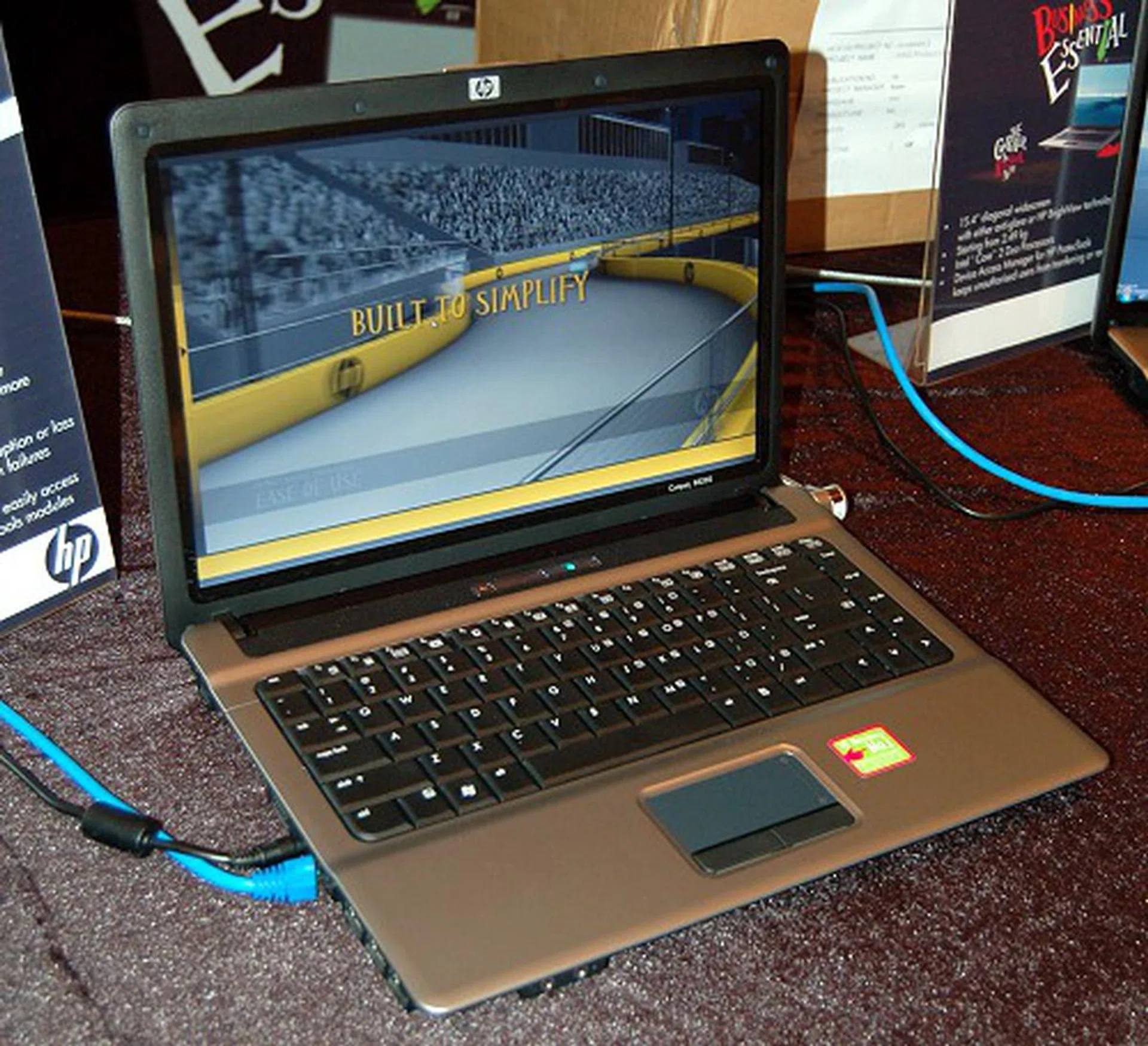
One of the fist s-class notebooks, the HP Compaq 6520s is 14-inch widescreen small-business series notebook. Boasting consumer-class design touches, the s-series proves business can mesh with style. The 6720s model is very similar to this notebook except that it features a 15.4-inch screen. Overall, this new series seems to have a very functional design and we're not complaining at its price band.
The HP Compaq 6520s and the 6720s are among the first notebooks to enter this space and unlike the traditional serious black outlook of business class notebooks, the s-series have a friendlier but still professional silver-grey finish. Besides the outer cover, even the notebook's chassis has been refined for a thinner and lighter build than any of its other series. Speaking with Dan Forlenza, Vice President and General Manger, Worldwide Business Notebooks, HP, he pointed that the goal of the s-series was to increase the industrial design for effective cost points, targeted at the small businesses. Did we mention that they are also simple and straightforward to use? With only power and wireless on/off buttons, modern notebooks don't come any simpler than these US$649 workhorses with decent tech specs.
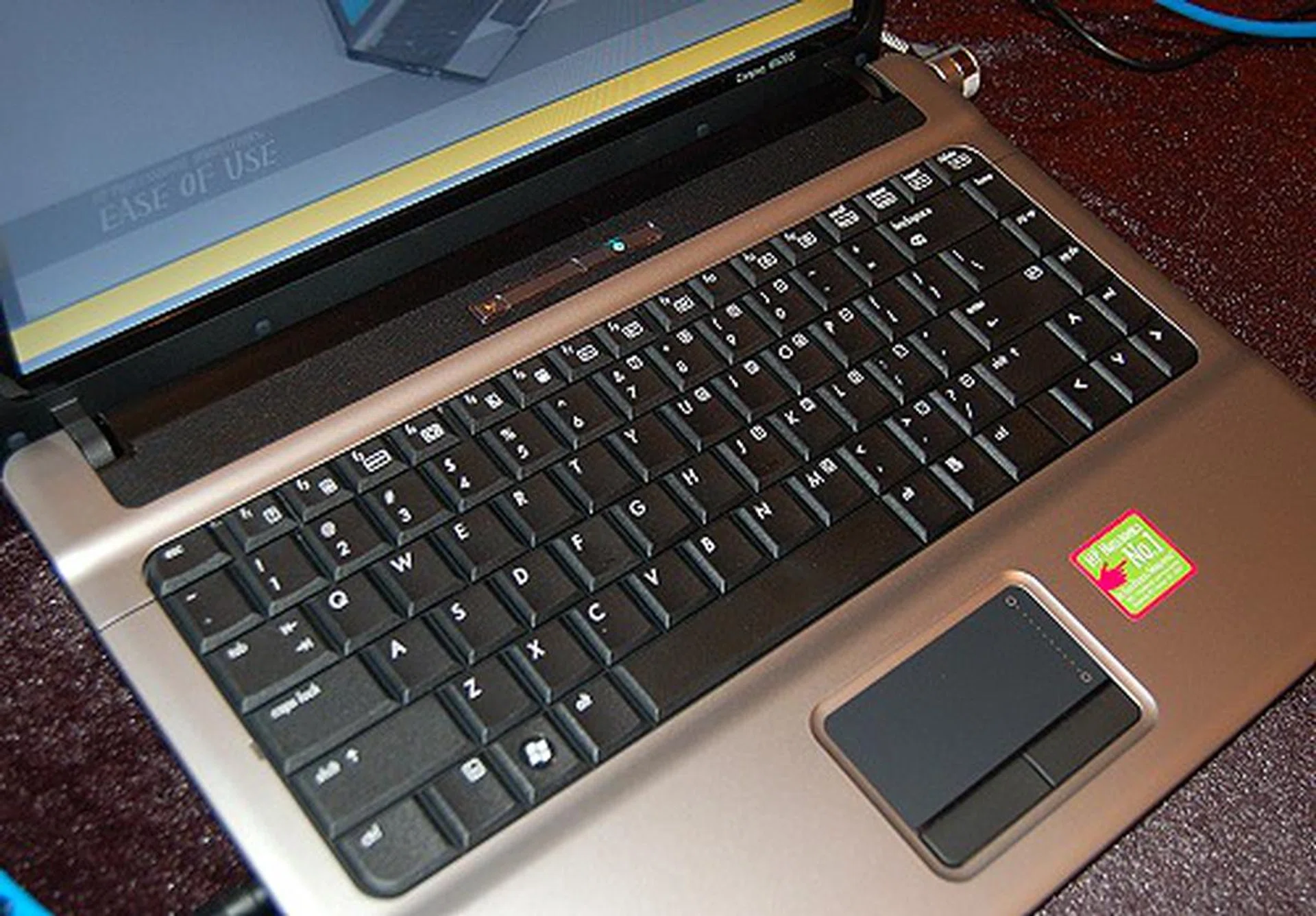
A closer look of the notebook interior confirms the simplicity of the layout. Other prominent design elements are the hinged-lid construction for the display and the recessed keyboard that's supposes to give the user a more seamless and natural user experience when busy typing away.
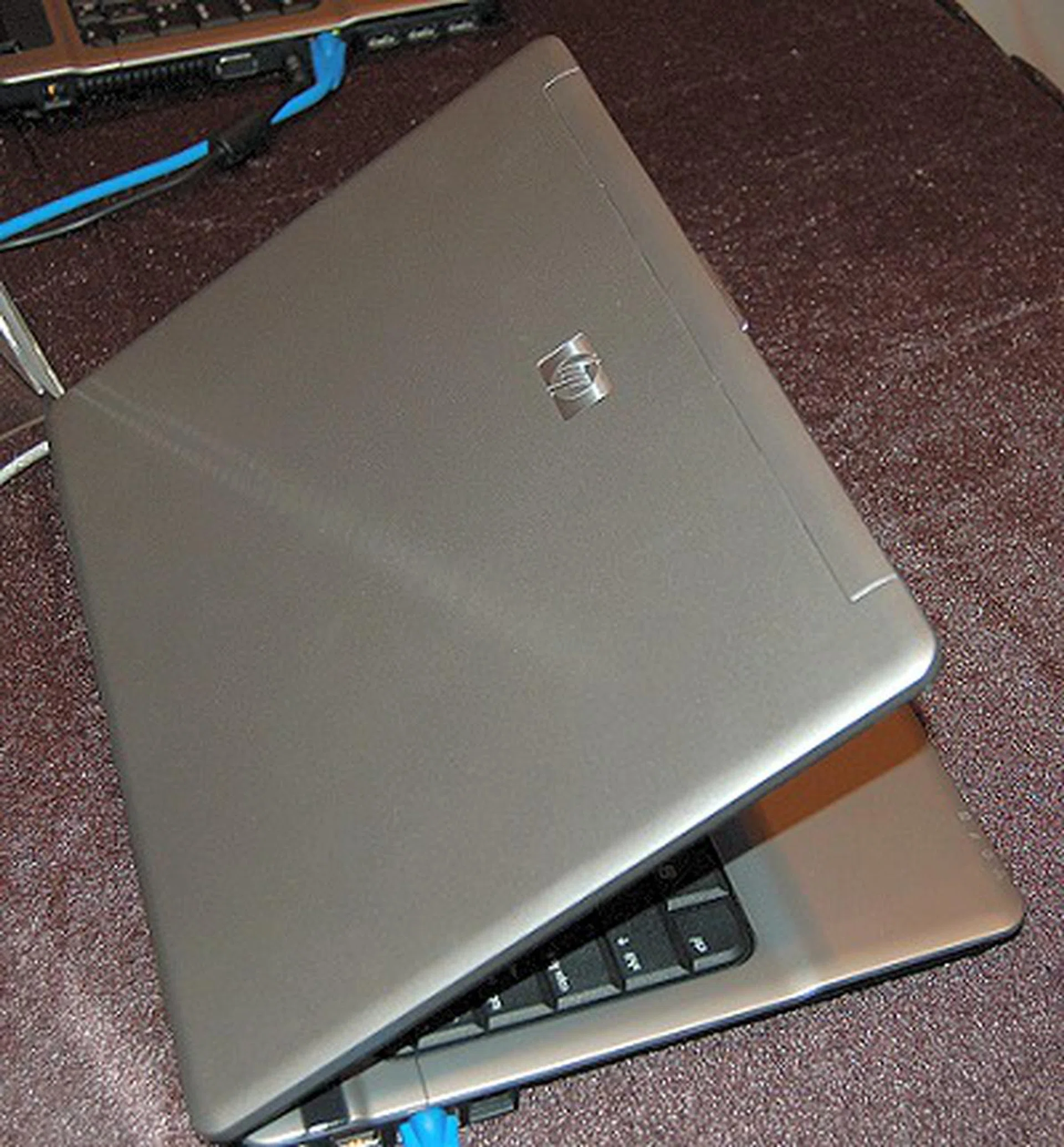
The outer cover of the notebook revealing a less serious but still professional feel from its silver-grey finish.
The typical SMB owner could be a 1-man team or even a 30-man team, but these small business groups often have a more relaxed setup that may not require full fledged business computing machine, but neither does one want a consumer-level notebook which may not come equipped with the correct suite of applications and services required in business environments. Worse still, consumer class notebooks are often pummeled with excessive utilities and software the average Joe. Conflicts, resource utilization, less responsive systems are some of the usual traits from such a configuration leading to counter productivity at some level. With the HP Compaq 6520s and 6720s, HP hopes to capture the growing SMB space with the right hardware options and we think they do have a valid proposition.
More New Notebooks and Comparison Charts
Moving up the ladder, the b-series sees a new entrant with the HP Compaq 2210b. A designed-in-Asia-for-Asia notebook, this 12.1-inch ultra portable notebook at less than 1.7kg aims to empower the busy Asian mobile worker with an affordable starting price of US$699 only.
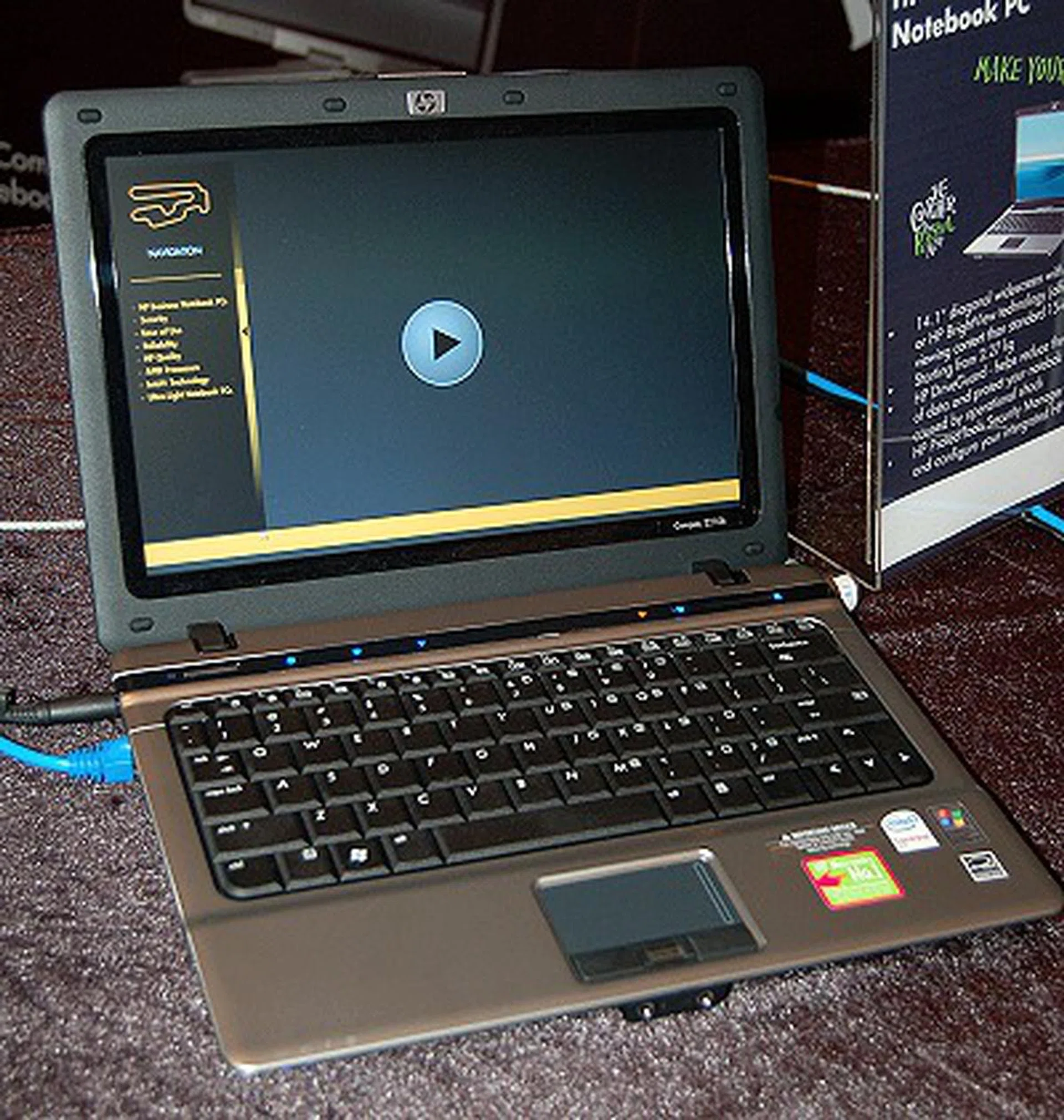
The HP Compaq 2210b may seem like an even smaller version of the 6520s seen above, but it packs quite a bit more security and productivity features that make it the ideal versatile mobile workhorse. And starting from US$699, it's reasonably priced too.
HP Compaq 6520s | HP Compaq 6720s | HP Compaq 2210b | |
Processor |
|
|
|
Display |
|
|
|
Graphics |
|
|
|
Audio |
|
|
|
System Memory |
|
|
|
Hard Drive |
|
|
|
Wireless Support |
|
|
|
Communications |
|
|
|
Optical Storage |
|
|
|
Operating System |
|
|
|
Security |
|
|
|
Dimenions |
|
|
|
Weight |
|
|
|
Warranty |
|
|
|
* Warranty Terms and conditions are country-dependant, but further add-on options are available.
Other than physical form factor of the HP Compaq 2210b, this b-series notebook differs quite a bit from the 6520s and 6720s notebooks. Among the differences, security and productivity features are the biggest improvements on the 2210b notebook. For example, the 2210b offers a near complete suite of HP ProtectTools whereas the s-series notebooks offer only the Device Access Manager module. Here's how the different notebook segments differ in various security feature offerings:-
Security Tools / Notebook Segments | HP Compaq s-series | HP Compaq b-series | HP Compaq p/w-series | Feature Comments |
HP ProtectTools: Disk Access Manager | Manages control to what devices are allowed system access and is an important tool to prevent unauthorized data copying. | |||
HP ProtectTools: Full drive encryption | Encodes all data on the hard drive such that it remains secure from all unauthorized users. | |||
HP ProtectTools: Password Management | Easy password management for various secure logins | |||
HP ProtectTools: HP Disk Sanitizer | Wipe's the drive's data in a manner that data is not recoverable prior to recycling of the HDD for various use/deployments. | |||
HP ProtectTools: Enhanced Data Protection | Optional | Embedded trusted platform module (TPM) security chip that generates extremely strong passwords to provide enhanced encryption and protection of your sensitive or vital information. | ||
HP ProtectTools Security Manager | Manages all HP ProtectTools modules from one interface. | |||
HP Fingerprint sensor | Biometric Fingerprint Sensor that uses fingerprints to login to various services as managed in the Credential Manager of the HP ProtectTools suite. | |||
HP Privacy Filter | Optional | Optional | An add-on filter option at point-of-purchase to reduce viewing angle of the screen, thus offering even further privacy for the serious business user. |
And those are just security features alone. Here's the productivity feature differences:-
Productivity Features / Notebook Segments | HP Compaq s-series | HP Compaq b-series | HP Compaq p/w-series | Feature Comments |
HP Backup and Recovery Manager | Self explanatory. | |||
HP Quick Launch buttons | To swiftly access and launch applications or activate settings such as the HP Presentation button that quickly defaults to display settings suitable for use with a projector. | |||
HP QuickLook | To rapidly access Outlook's calendar, contacts, email and tasks even when the system is in hibernation or turned off. | |||
HP DriveGuard | Features a rigid drive mounting scheme that effectively reduces shock transmission to the HDD as well as incorporating policies and advanced power management settings to ensure the drive's well being during operation. | |||
HP 3D DriveGuard | In addition to the basic DriveGuard feature, this incorporates a 3-axis digital accelerometer that senses sudden movements like falls or bumps and parks the drive head to prevent data loss and premature drive failure. | |||
Touch-sensitive audio controls | For quick manipulation of increasing/decreasing audio volume and mute functionality. |
Moving up to the p-series, HP incorporates a TPM security chip for added encryption and protection of sensitive data. Also, HP has added a 64GB solid state drive option for some of the professional notebook models such as the HP Compaq 2510p, 2710p, 6910p and the all of the 8000 series. No doubt an expensive option, it's good to see HP embrace this early to offer users more reliability with very sensitive data (since there are no moving parts like traditional HDDs), as well as speedy system booting and application loading to improve the overall user experience.
Personalized Mobile Computing Solutions
Just over a month ago, HP announced their largest range of HP iPAQs in the in the company's history with 5 new models to step up their portfolio of mobile devices � some strictly for business, while others offer more than just managing business on the go. While they are not yet available, expect to see them by the end of the year. For now, here are some of their key features and expected price points:-
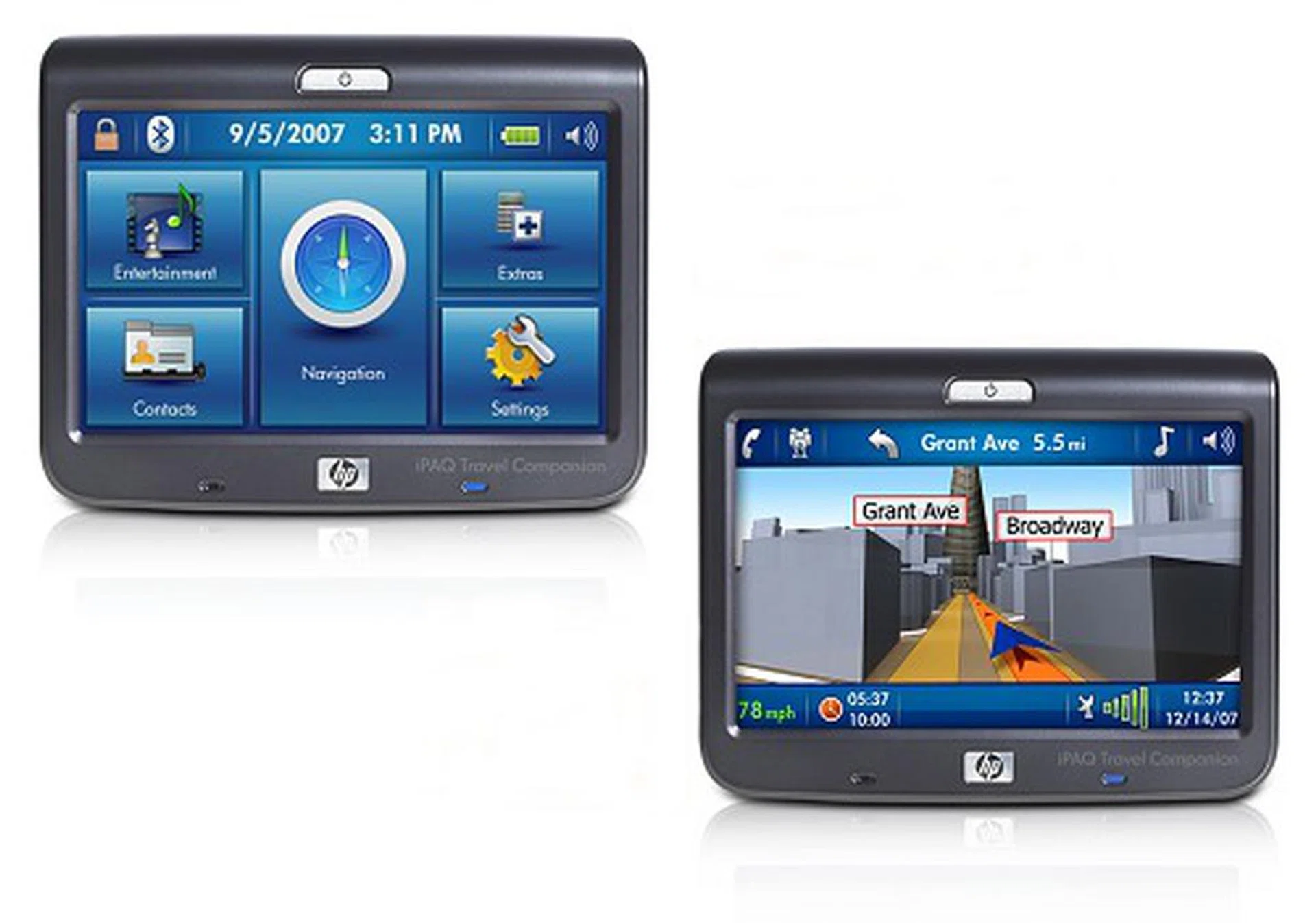
The HP iPAQ 312 Travel Companion is their latest handheld GPS device for business and personal travel, featuring graphics acceleration and high-definition 3D maps in a compact package. The iPAQ 312 is powered by Windows CE 5.0, a 600MHz Centrality Titan processor, and boasts a 4.3-inch display with a resolution of 800x480 pixels. 128MB of SDRAM comes as standard memory, while you get up to 2GB of flash ROM as well. Starting from US$399, devices sold in the APAC region are actually preloaded with the relevant Asian country maps.

The HP iPAQ 612 Business Navigator is touted as a two-in-one 3G phone and navigation device for mobile professionals. Sporting quad band GSM/GPRS/EDGE, Tri-band and HSDPA connectivity along with Wi-Fi, Bluetooth 2.0, 3MP camera and integrated GPS, this baby will certainly keep you in touch when on the go. Prices start from US$599.
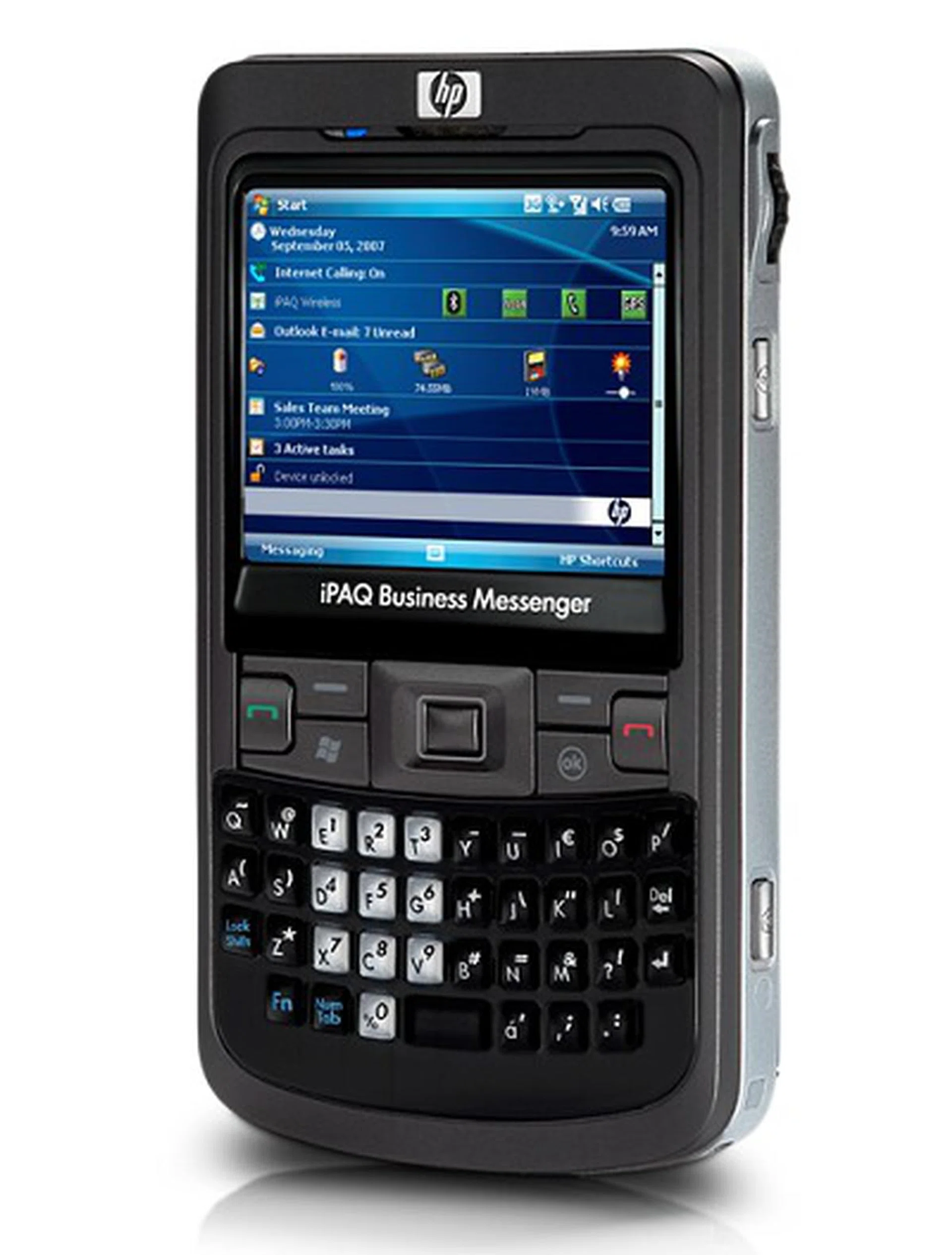
Aimed at mobile professionals is the HP iPAQ 912 Business Messenger, which comes complete with 3G connectivity and a QWERTY keyboard. Running on Windows Mobile 6, this gadget is powered by a 520MHz Marvell PXA270 processor, and comes with 128MB of SDRAM and 256MB of flash ROM. A 3MP integrated camera, Bluetooth 2.0, WiFi, HSDPA, EDGE and integrated GPS round out the more obvious specifications. Like the iPAQ 612, this is also priced from US$599.
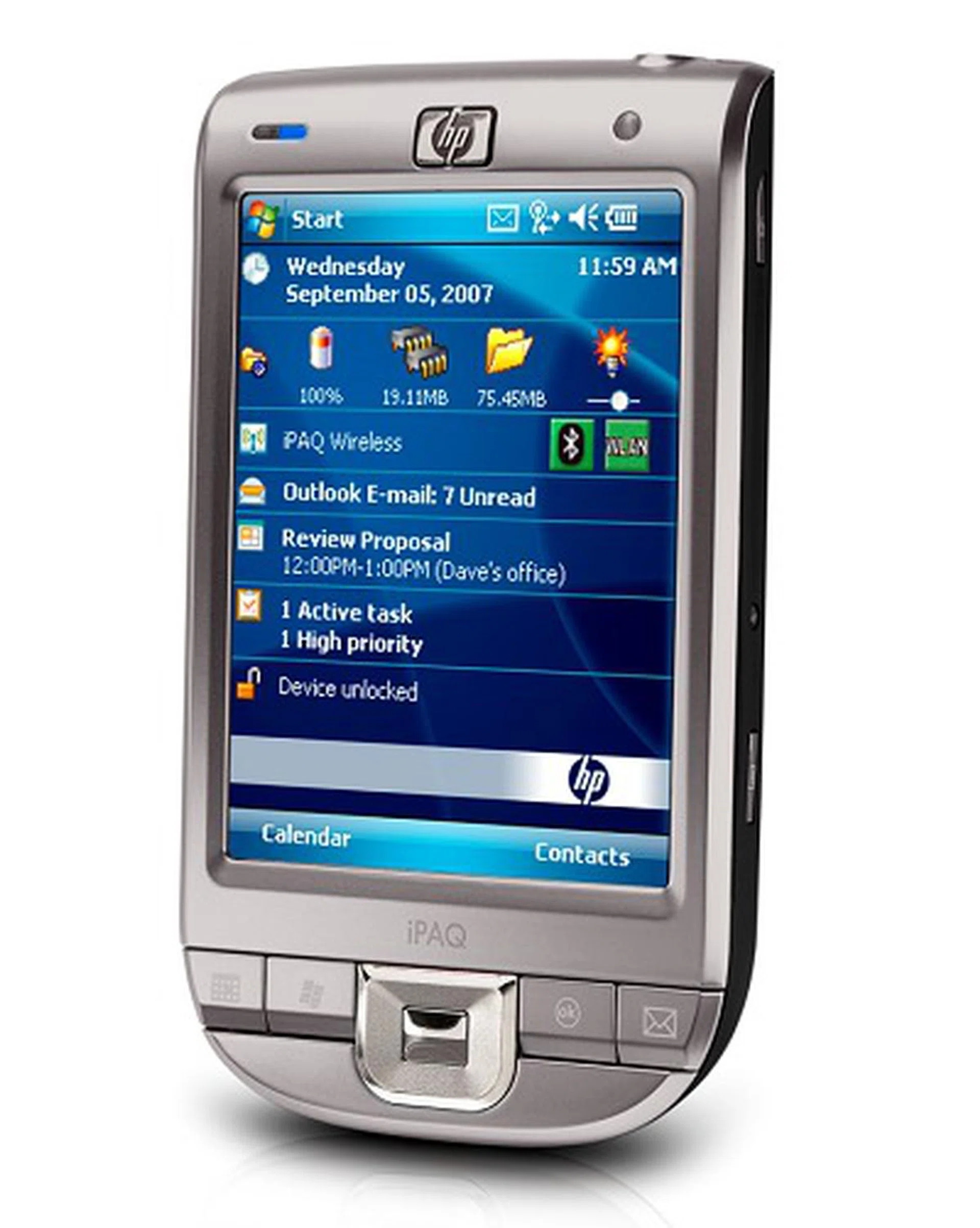
In a blast to the past, HP bring back something familiar with the iPAQ 112 Classic handheld, featuring a big 3.5-inch screen, simple synchronization with personal content on Windows Mobile 6 and Wi-Fi connectivity, making this sleek, affordable PDA at US$299 an ideal companion for personal productivity. This model does not have any phone capabilities.
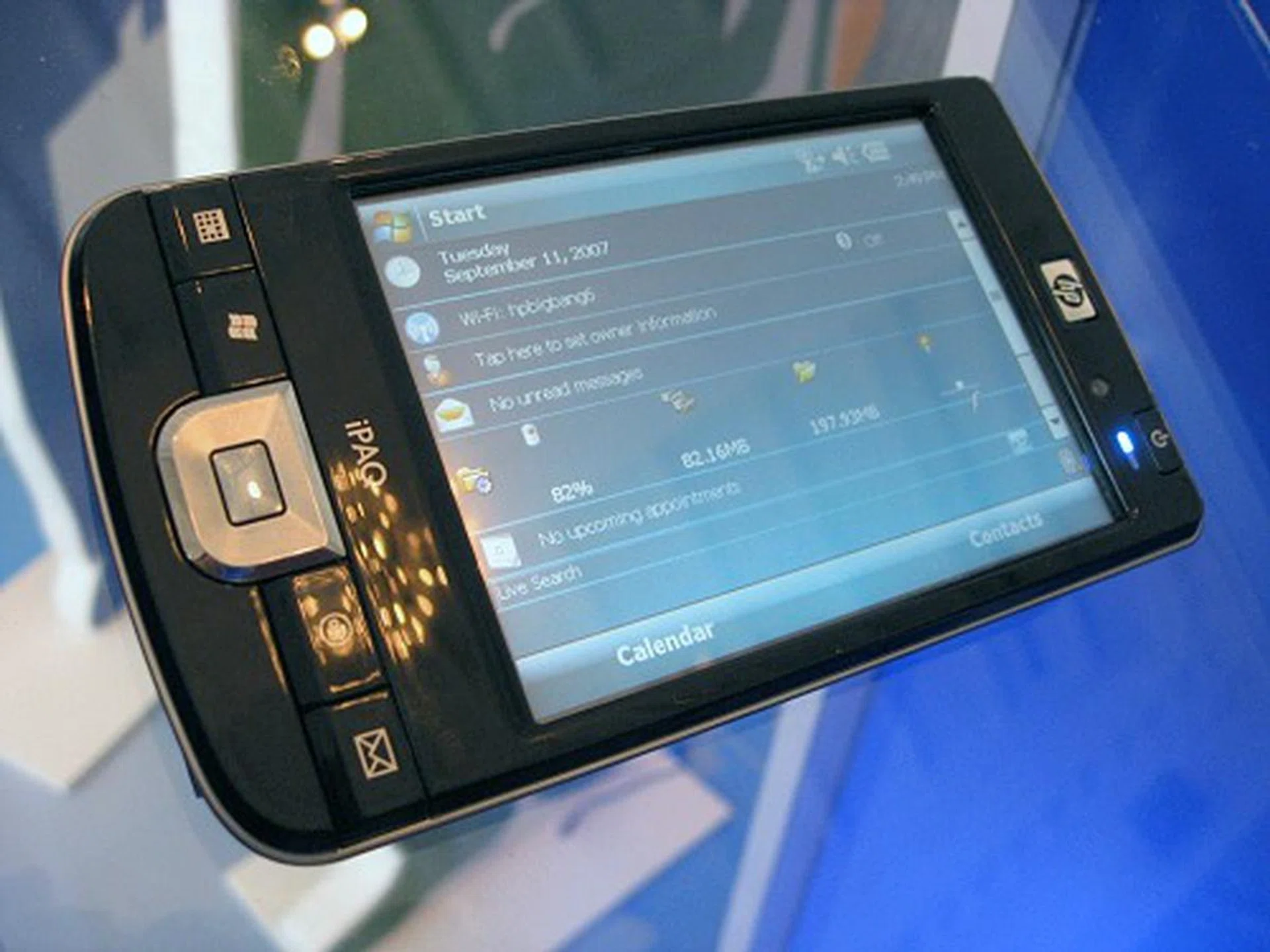
Size does matter, as shown by the US$399, HP iPAQ 212 Enterprise Handheld. This powerful, large screen PDA with Wi-Fi is well-suited to run a broad range of business applications for business productivity; factor in its 2200mAH battery, this handheld can last quite a while. For added flexibility, the iPAQ 212 also comes equipped with both SDIO and CompactFlash slots. Wireless connectivity options on this gadget include 802.11b/g and Bluetooth 2.0. Like the iPAQ 112 counterpart, the iPAQ 212 also doesn't have any cellular functionality.
Dave Rothschild, Vice President for Handheld Business Group, Personal Systems Group, HP, actually commented "the enterprise PDA market is still in demand", which is quite the opposite of the retail consumer front of the business where smartphones are picking up the pace. PDAs in the enterprise segment are growing in demand because some of the companies have sunk a lot of money to develop applications based on them and they want to continue running them even after long time frames like two years or more and further deploy them in more areas and roles. Furthermore, there are companies that deal with sensitive information and will not allow employees to have cellular phone functionality or imaging capabilities, so that's where enterprise class PDAs fill the void of managing personal and business commitments. This trend is especially apparent in Europe and some parts of USA and Asia as highlighted by Dave.
The growth prospects for HP's mobility devices as well as other vendors in this same field looks huge as Dave summarized his findings from around the globe that many users are interested in personal computing devices smaller than the laptop for management and connectivity needs but most aren't adopting them yet due to the price barriers of both the device as well as the data rate plans. Once these come down, handheld devices are going to be ubiquitous as basic mobile phones are today. HP's own stats put that out of a 650-million strong mobile computing market, only 30-million of them are handheld owners. So there's huge growth potential in time to come and this is yet another reason why HP is expanding its iPAQ offerings and to be there when the market needs them most.
The Enterprise Mobility Suite
For enterprises and SMBs to administer, manage and roll out services to mobile handheld devices of their ever demanding user group, HP is introducing their Enterprise Mobility Suite (EMS). Comprising of the Enterprise Mobility Manager software running on a server and the Enterprise Mobility Agent software running on the mobile device, this suite also provides for self-care to individual end-users who seek solutions without waiting for their IT department.
The best part about the suite is that is supports non HP devices as well. As long as the handheld supports OMA-DM protocol or Windows Mobile or Symbian operating systems, the device is compatible with this service. Another highlight of the EMS is ease of use as the end-user self service is accessible via a browser based self-care portal. Some of the services available to self-care folks are device setup, settings restoration function, resolving device issues for mobile services, software/firmware updates to handhelds and last but not least, a locking and data wipe service if you've misplaced your device.
New Business PCs
Of course not forgetting the traditional workhorse machines of the office environment, HP also has several new affordable desktop and workstation systems boasting more efficient and faster hardware that have been updated with the latest system designs for the APAC region.
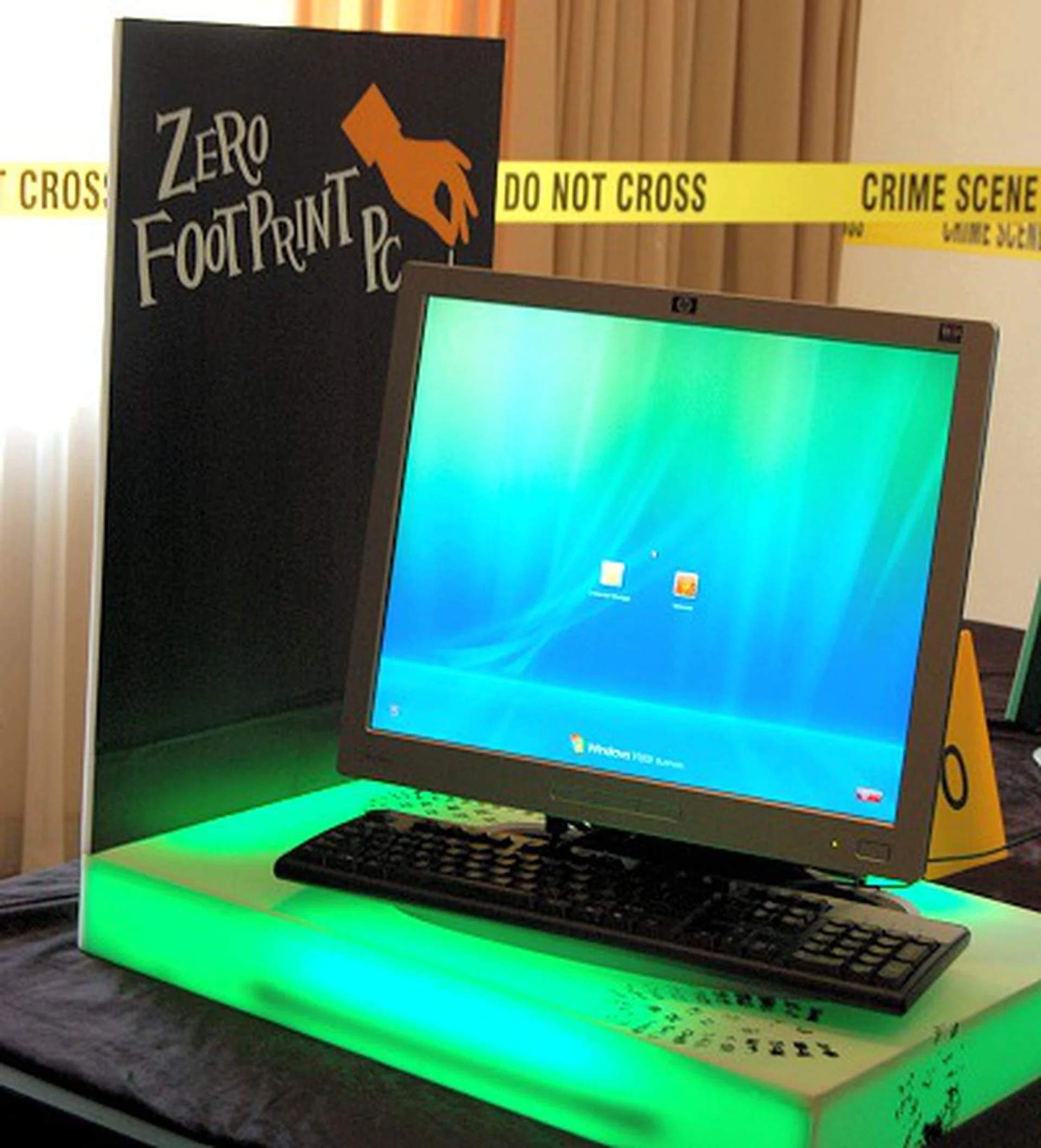
The HP Compaq dc7800 Ultra-slim desktop (USDT) PC is nicknamed zero-footprint PC for a very good reason...
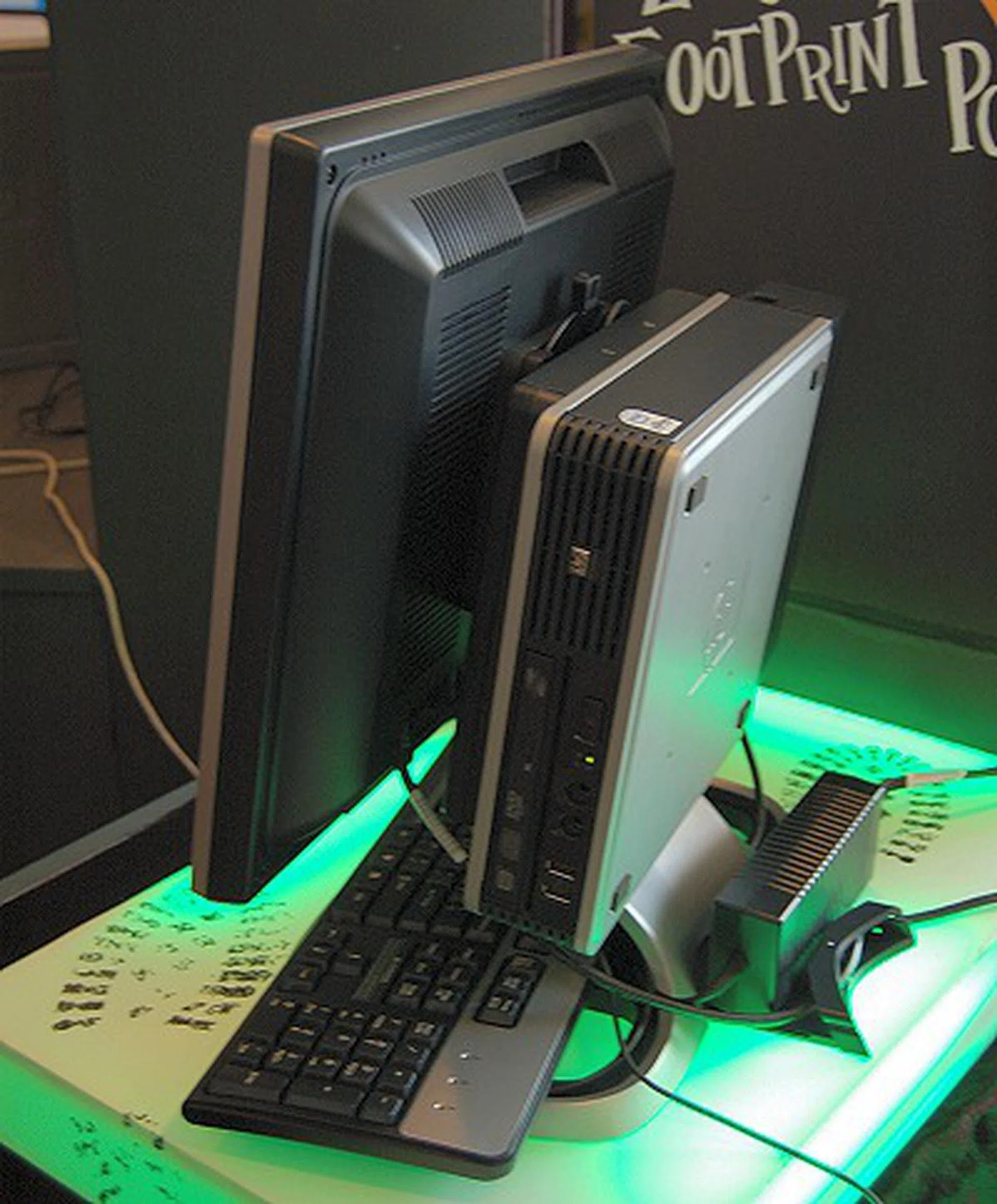
... and this picture shows exactly why. Unlike its predecessor that we last saw a year back, this new generation USDT system is 46% smaller and virtually takes up no more space than the monitor it attaches via an electromagnetic lock. The miniscule size and the zero-footprint argument gives businesses more reasons to invest in this as opposed to the desktop-sized equivalent of its predecessor.
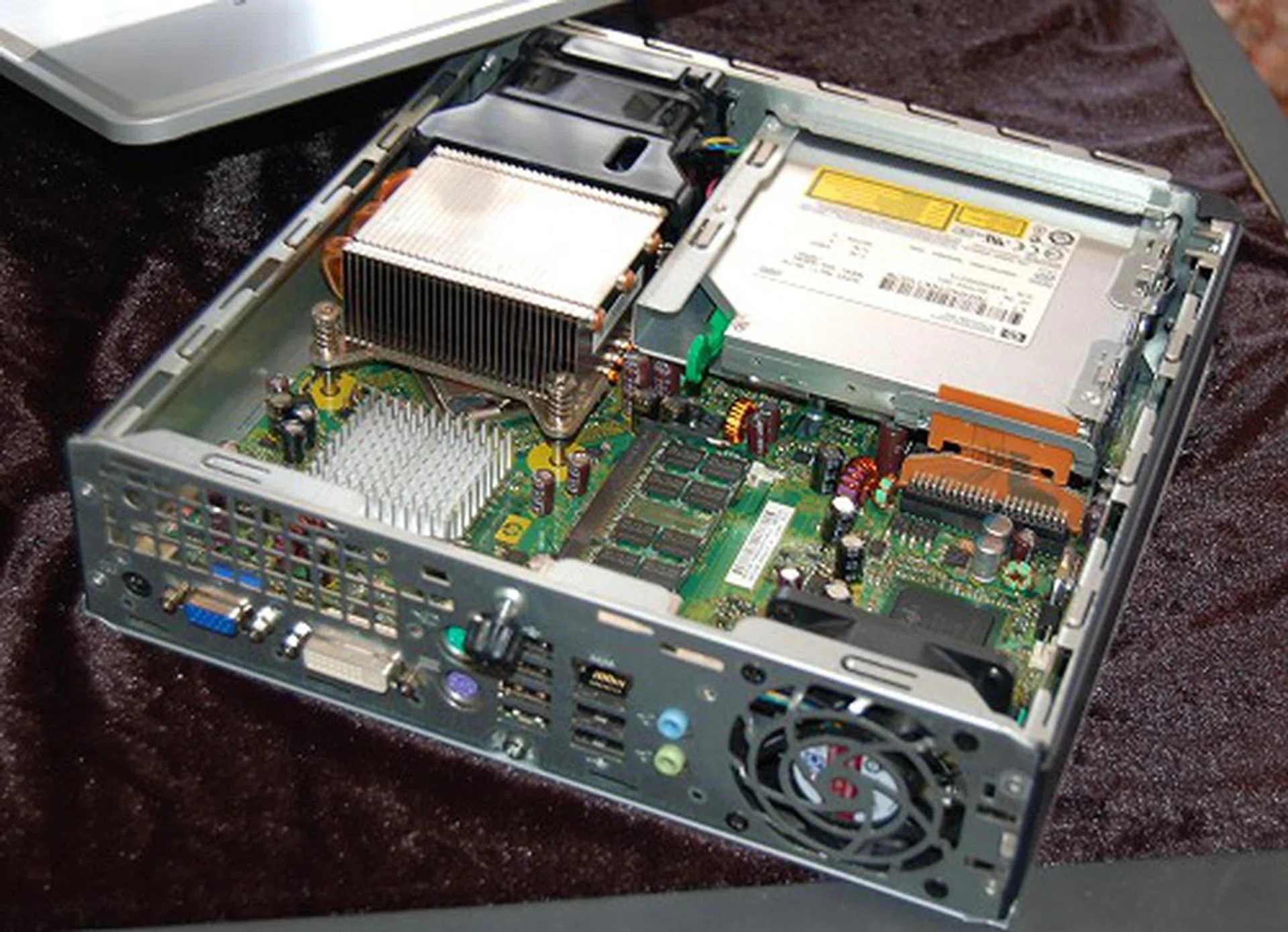
Starting from US$695, the dc7800 USDT system uses a combination of desktop and notebook components to achieve its tiny form factor. Equipped with a powerful Core 2 Duo E6750 processor on an Intel Q35 motherboard, it uses notebook SO-DIMM 1GB DDR2-667 memory, a slim form-factor optical drive and a 2.5-inch 80GB SATA HDD. This Energy Star 4.0 certified PC has exceptionally low power consumption thanks to its efficient 80 PLUS certified PSU as well as its other choice of components that go into the system.
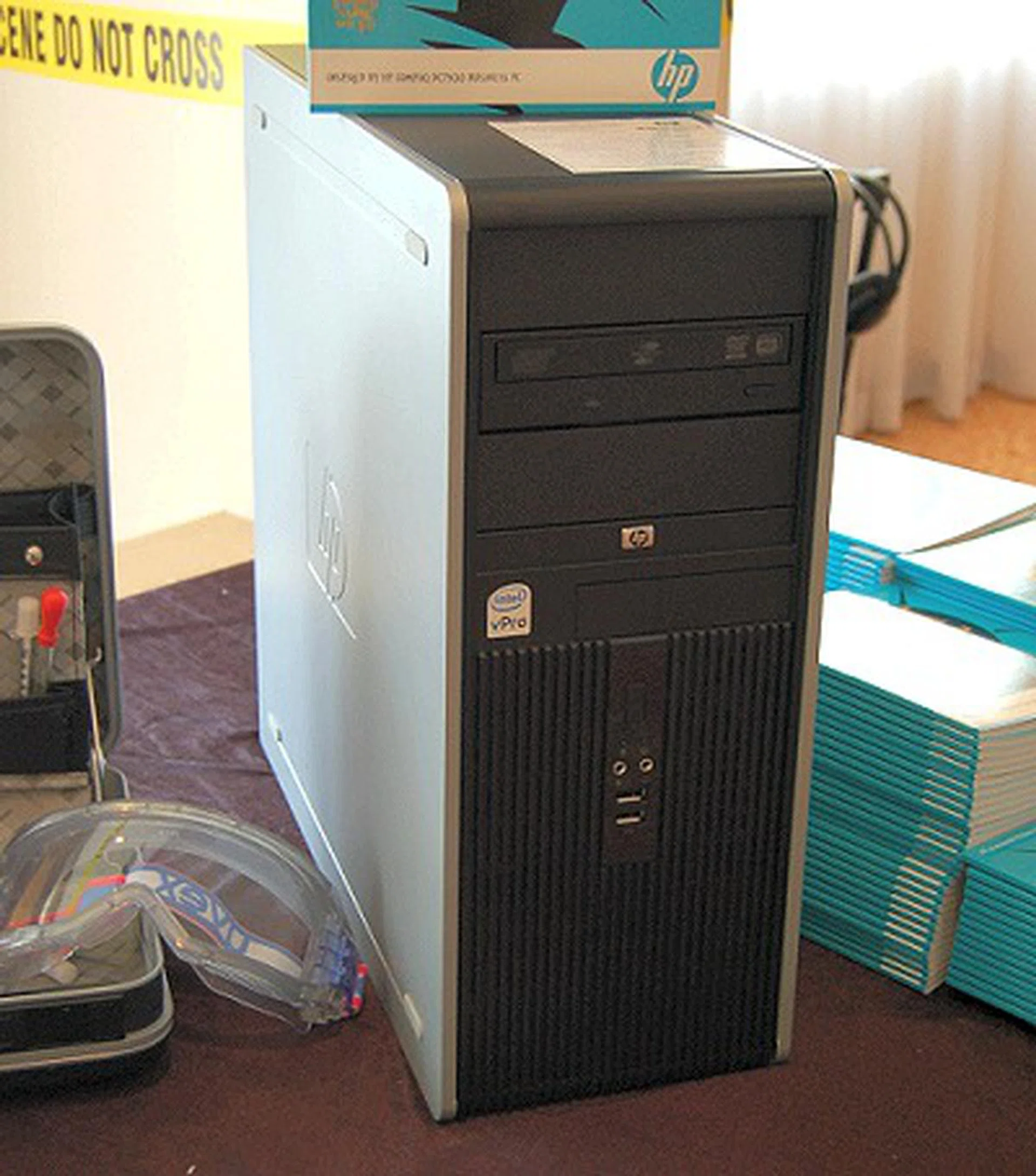
The HP Compaq dc7800 also comes in a traditional business mini-tower system configuration for full expansion possibilities. Computing specs are similar to the USDT variant though.
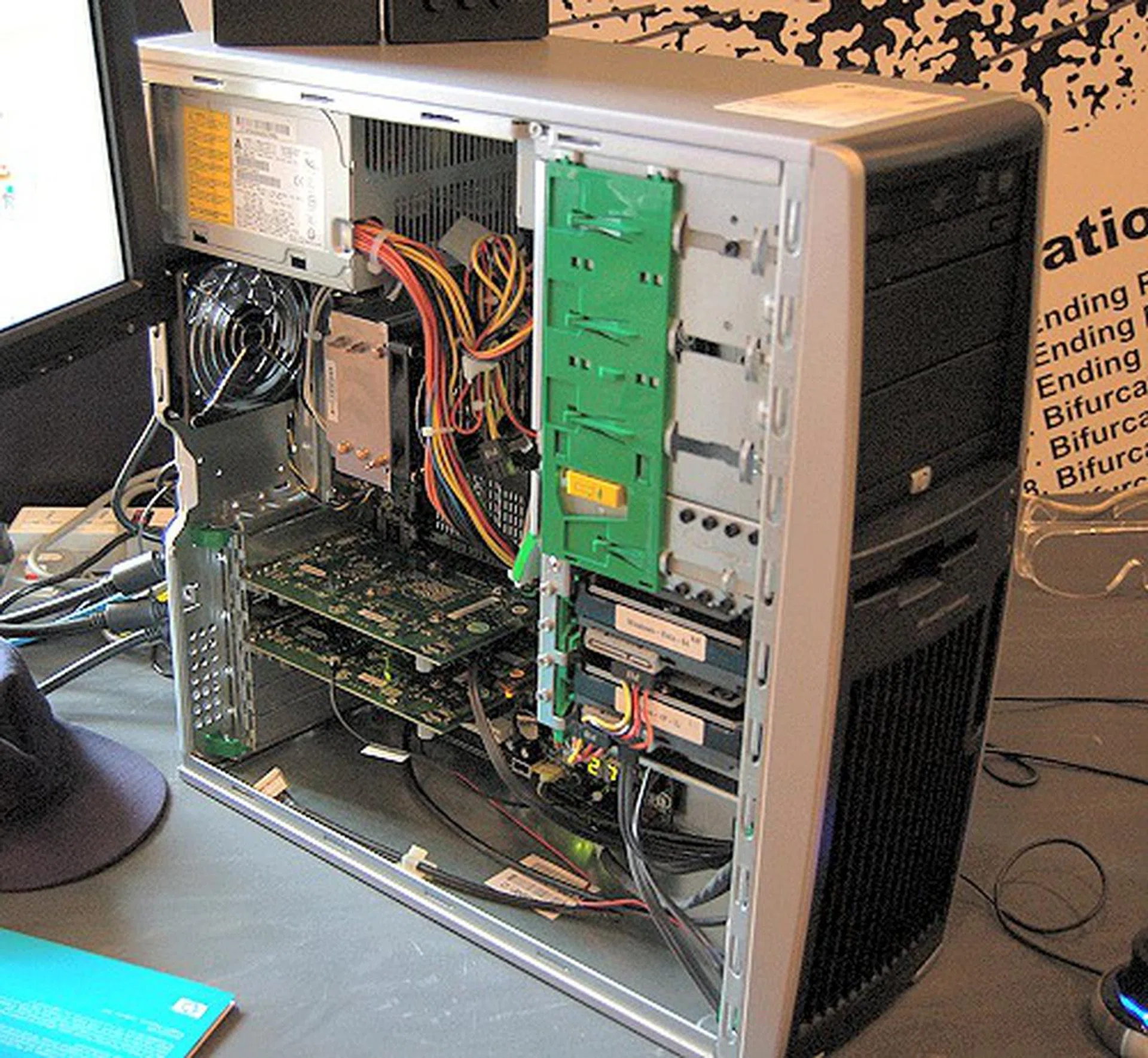
For more crunching power, HP offers entry level workstations like this xw4600 machine from as low as US$900. Based on the Intel X38 Express platform, this system is equipped with a Core 2 Duo E6700 processor, 4GB DDR2-800 ECC memory and dual workstation graphics cards to drive multiple high-end 30-inch LCD monsters. They are however not setup for dual-graphics performance. For an AMD equivalent system, you can opt for an xw4500 machine.
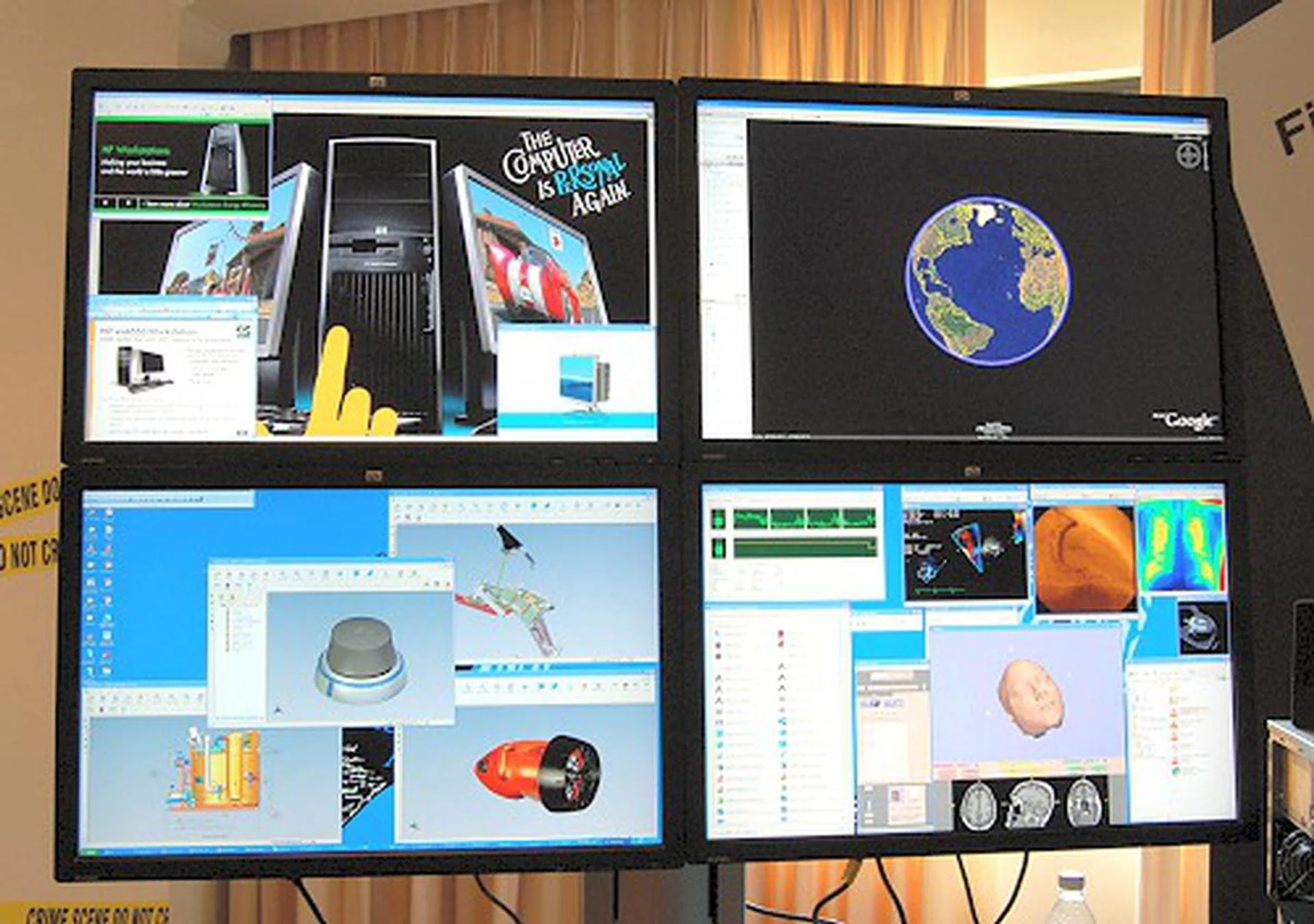
To accompany the various new workstation systems, HP also had a slew of new LCD monitors to fit every office environment need. Shown here is HP's new 30-inch LCD monitor (well, four of them actually), targeted at professional computing needs like CAD and 3D modeling. As expected, its native resolution is 2560x1600 which will require a graphics card with dual-link DVI support to run this monster screen. Other notable specs are the panel's 8ms GTG response time, 300 nits brightness and 1000:1 contrast ratio.
New Print and Imaging Devices for the SMB Arena
Three new laser printers and a high-end scanner were launched at this event specifically for the SMB market space. However, unlike the usual feature identification and repackaging for the appropriate market space, the LaserJets are the first monochrome laser printers in HP's lineup to feature chemically-grown spherical toner to notch up print quality to a whole new level. This technology for the spherical Chemically Prepared mono Toner (CPT) is derived from the ColorSphere technology that's found in HP's high-end color laser printers. Basically, unlike traditional grounded toner particles, these chemically grown toner particles with a wax core are consistent in their size and are spherically shaped. This results in the consistently crisp text and images due to better control of toner particle placement precision. Also due to the properties of the new toner element, printers based on this toner are able to use 15% less power to fuse the toner to the paper as it doesn't require as high a temperature as compared to using regular toners.
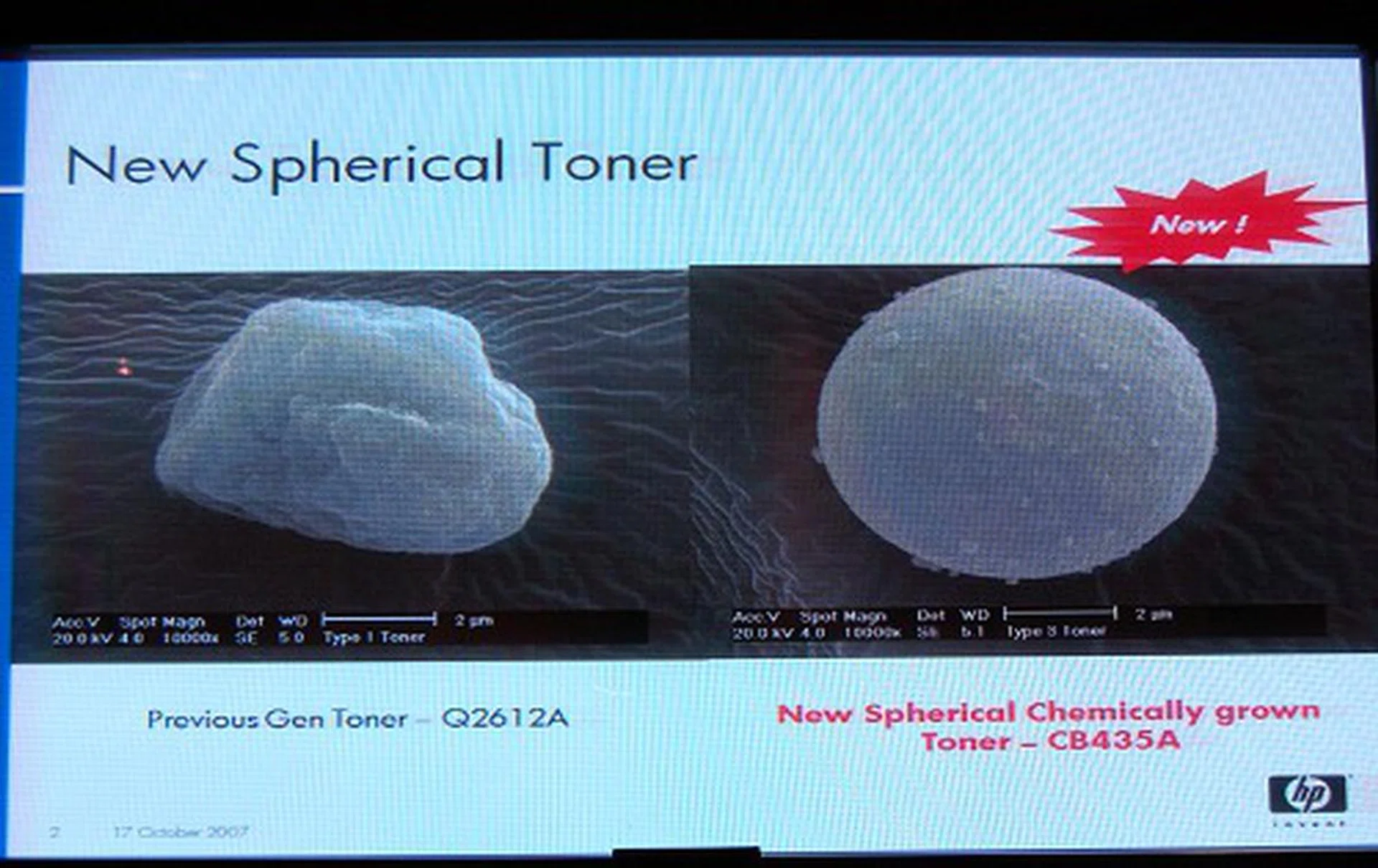
Better print quality, lower power consumption and enabling smaller form factor laser printers are some of the key benefits arising from the new toner technology from HP.
An additional benefit of the new toner properties is that HP was able to design smaller toner cartridges which resulted in overall smaller printer design as seen below in the new series of printers using the latest in toner technology. These new toners are also endowed with HP's 'smart' chip intelligence that alerts users when to purchase the next toner cartridge, as well as automatically enables Electrophotographic adjustments to ensure to consistent print quality all through the lifespan of the cartridge. The latter aspect negates the need for the common 'toner shaking' procedure that's needed periodically in traditional toner cartridges to spread the toner evenly within.
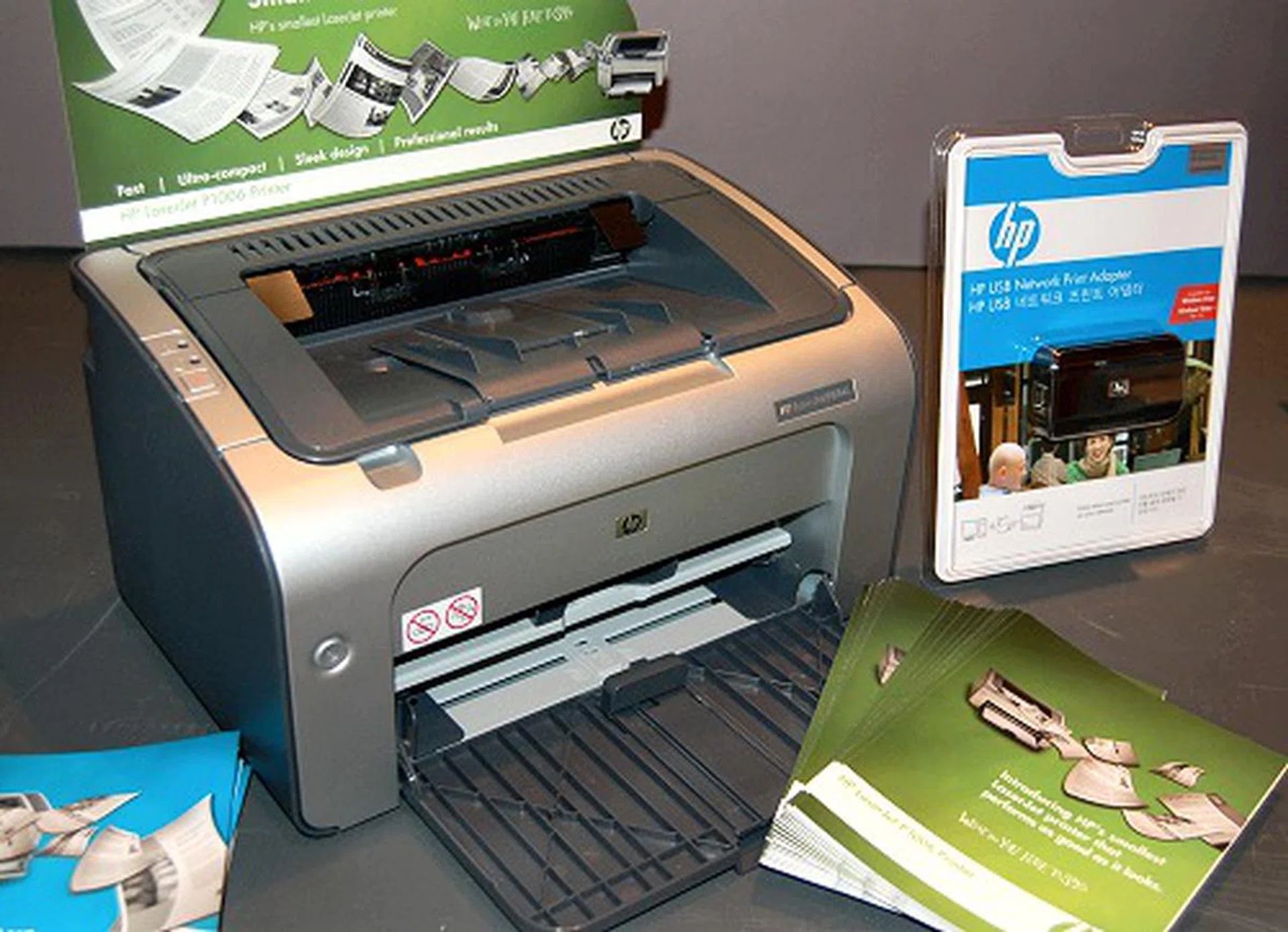
This LaserJet P1006 is chic petite looking personal business laser printer that's not only friendly on the wallet, but also user-friendly and fast. Using the new CPT mono toner technology, it can also deliver quality prints at 16 pages per minute with the first page out in less than 8.5 seconds. There's also the P1005 variant for the more budget conscious user which ditches the nice color motif for the dull PC beige color and foregoes any user controls on the printer face. The blue package next to the printer is HP's relatively new USB network printer adapter.
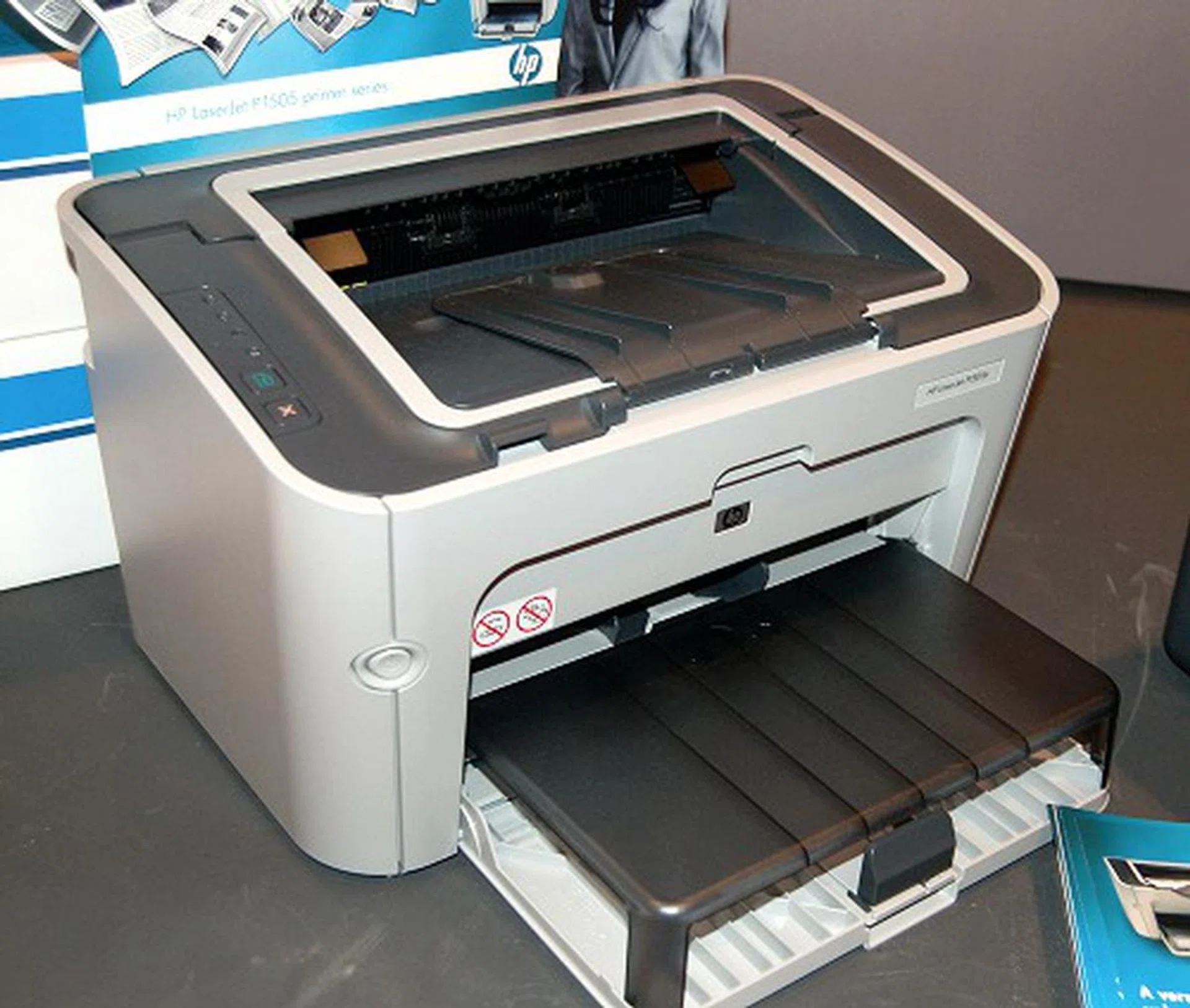
If you re require more print volume, thus better paper handling requirements, speedier printing and with integrated networking, the GP LaserJet P1505 is the one you seek. Boasting 24 pages per minute print speed, we saw it operate first-hand and it can delver the first page in just under 6.5 seconds as soon you hit the print button in your software! Impressive indeed and it's only marginally more expensive than the smaller P1006 model. Part of the reason for its speedy operation is its Instant-On technology which means the printer doesn't enter the sleep mode, but with enhancement all-around to the printer technology, it still consumes less power than other options in its class.
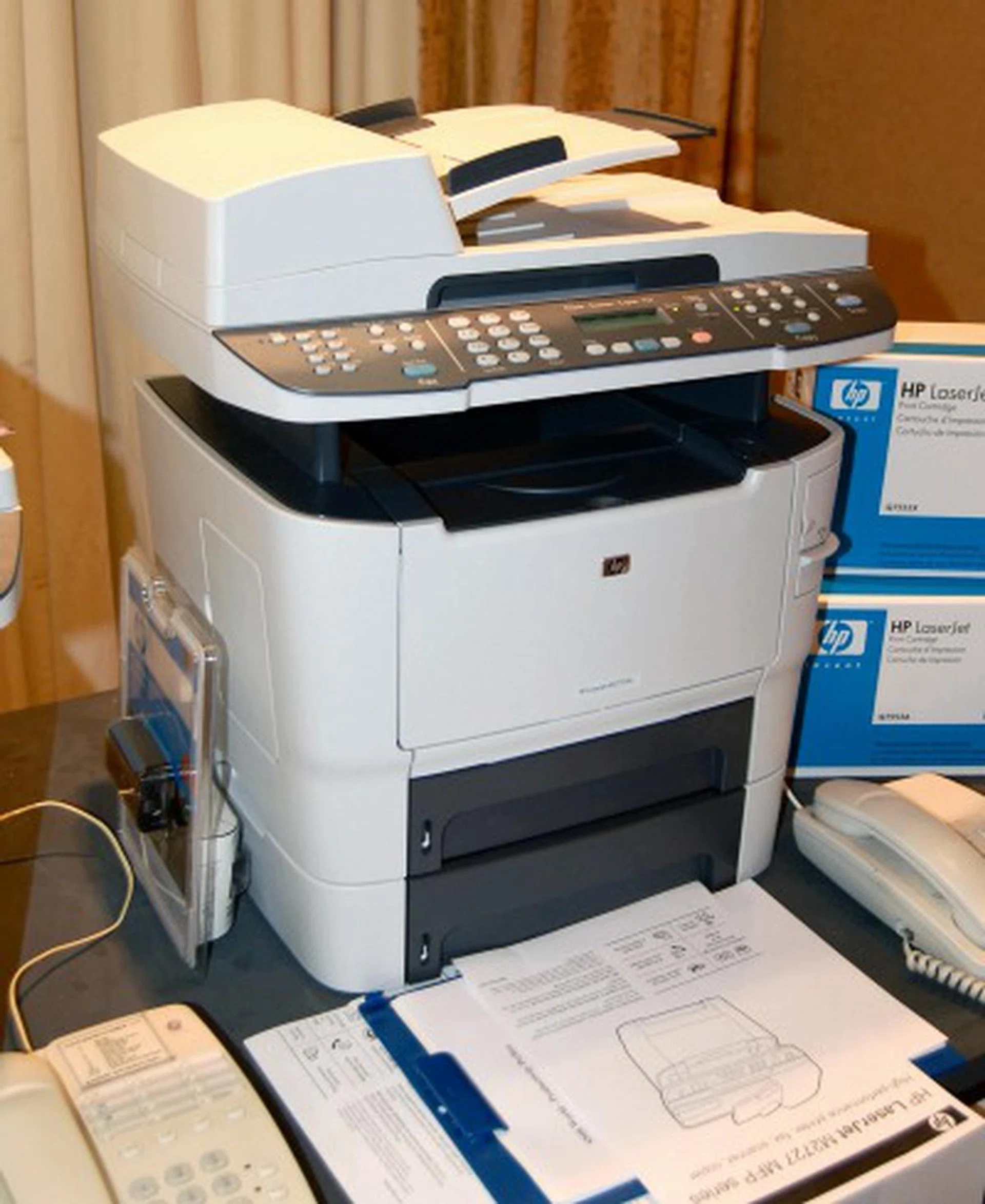
For a very high volume Multifunction printer, this LaserJet M2727 should be checked out. Instant-On technology, fast 8.5-seconds first page out, 27ppm overall print speed, 50-page automatic document feeder, 550-age paper tray and Instant-On Copy thanks to LED lighting instead of the traditional fluorescent tube which require warming up and higher power consumption.
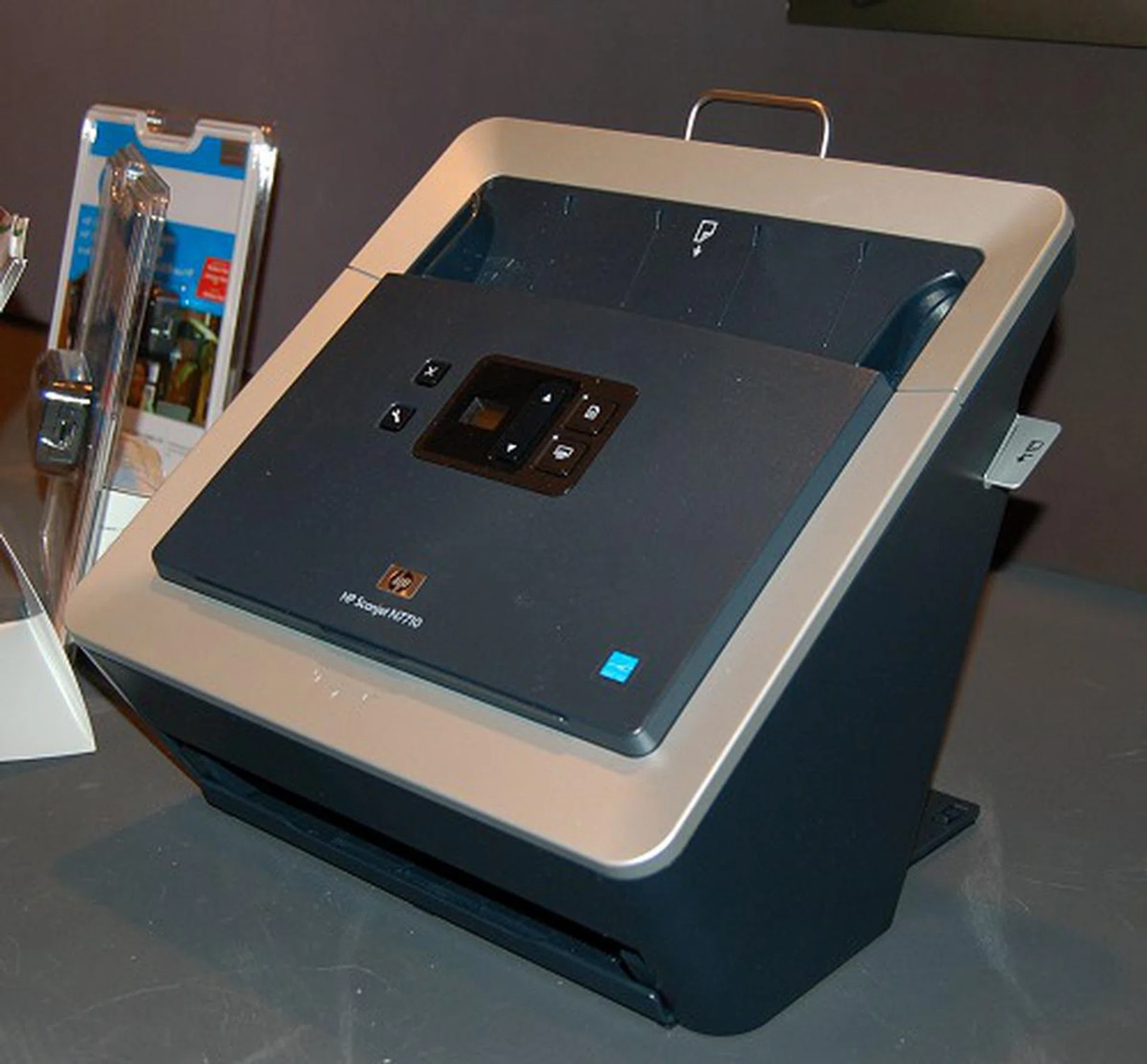
The HP Scanjet 7710 Document Management Scanner is a powerful new scanner for the new-age business. With a 35ppm scan speed, it can perform unattended duplex scans at 70 images per minute. Handling a variety of paper types including rigid and embossed cards, it is also endowed with an ultrasonic double feed detection to ensure capturing every page without issues. Digitally scans all materials to one of these storage formats: PDFA, PDF, TIFF, MS Word and JPEG.
Closing Comments
For over a year now, we've seen HP tackling several of their product segments consecutively, innovating and improving their offerings to specifically cater to their respective categories. Matched with an effective and catchy campaign with simple and purposeful taglines, it looks like HP has conjured up a winning formula. Of course proper execution is equally important and they've managed it all well so far.
At the launch event in Vietnam, HP unveiled new business desktop PCs, entry-level workstations, SMB-focused print and imaging devices, renewed business class notebooks boasting consumer-class touches proving business can mesh with style, new business-class handheld computing devices and last but not least, to support the enhanced hardware, better software services for the next level of business collaboration. In today's context, vendor services and strategic alliances with other vendors to roll out a bigger service network play a bigger role than ever before in winning over new customers and winning the office contract tenders. From what HP has in store for us today, HP seems well positioned to offer customers the right hardware as well as the right suite of services to meet SMB needs.

We met up with Adrian Koch, Senior Vice President, Personal Systems Group (HP APAC and Japan) to find out more about their current operations and future focus areas.
While it seems that HP has it all covered, we wanted to look through the crystal ball and find out what other areas HP would set its eyes upon next in the coming year or two to further improve their offerings and so we talked to Adrian Koch, Senior Vice President, Personal Systems Group (HP APAC and Japan), to sum up what's next for HP. "Looking at it from the PC angle, we definitely believe in virtualization; in the enterprise space, we're the only globally operating vendor who has a PC blade or a virtual PC offering; so that's one area we're right there, technology-wise as well as solution-wise. In terms of SMB, I think it's really about going beyond the product by adding the best possible customer experience beyond the product to make sure our customers are really getting that experience and are liking it and that we guide them through the entire cycle. I would say these are two major objectives and directions we're going towards (in the near future)."
Our articles may contain affiliate links. If you buy through these links, we may earn a small commission.