
This is how Netflix is making the jobs of production crews easier
The Prodicle suite of apps aim to modernize traditional production workflows on set.
Is Netflix a media or tech company? CEO Reed Hastings thinks that it's the former, since the company spends the bulk of its money on content. However, Netflix is also keen to bring Silicon Valley engineering smarts to production sets, and it's built an ecosystem of apps called Prodicle.
Short for Production Chronicle, Prodicle's aim is to streamline productions and make things a lot more hassle-free. To hear Amie Tornincasa, Director of Studio Technology at Netflix, tell it, a lot of the production workflow is still a painfully menial process. For instance, if a production coordinator had to distribute a script to one of their talents, he would need to take the hard copy of the script and fax it over. He then takes the sent receipt, scans it, and puts the file on a USB drive. Finally, he uploads the file to Google Drive.
To an engineer like Tornincasa, technology is an obvious solution to help simplify the process. However, the problem is that many production crews aren't actually looking for a solution. The traditional methods have worked for a long time, and there's no pressing reason for them to change right now.
As a result, Netflix is fully aware that it needs a solution that can seamlessly integrate into existing workflows without disrupting the content creation process. Prodicle is its answer to that, and it's constantly testing and iterating with a small number of productions to gather feedback and improve.
At the moment, Prodicle consists of seven apps, including Prodicle Move, Calendar, Distribution, Scripts, Contacts, and Scheduling. Scripts and Scheduling are the latest additions to the Prodicle Suite, and the company had a demo of both ready at its Labs Day 2019 this past week.
Scripts is particularly cool, and it's supposed to make juggling all the disparate elements that go into a set easier. The scrip is an operational roadmap, and it contains details about everything from the location to the makeup, hair, props, and special effects.
Consider the following excerpt:
Ruth Wilder, wearing a gorgeous power suit stands at the head of a large conference table. Behind her, giant glass windows that look out onto a view of Hollywood.
This looks like a simple scene at first glance, but there's actually a lot for production crews to take into consideration here. There's a mention of a power suit, a large conference table, giant glass windows, and the Hollywood view, all of which need to be accounted for when looking for the right location, props, and costumes. Furthermore, all those details come out in just a couple of lines, so things are infinitesimally more unwieldy when you're dealing with an entire script.
Another layer of complexity is added by the fact that it's usually different teams handling all these requirements, so everyone needs to go through the script by themselves and then manually identify the parts that are relevant to them. This process is called the script breakdown, and anybody who has to work on a production has to do this so they know what they need to do to do their job.
As you might imagine, this sounds pretty tedious and leaves a lot of margin for human error. That's where Prodicle Scripts come in. Chris Goss, who works with Tornincasa on creating and managing Netflix's portfolio of software, explains that Scripts turns any script into an "interactive tangible breakdown tool". Users can then go through it and identify and organize all the elements that are applicable to them. In addition, Scripts can automatically find your scenes and characters to reduce some of the legwork.
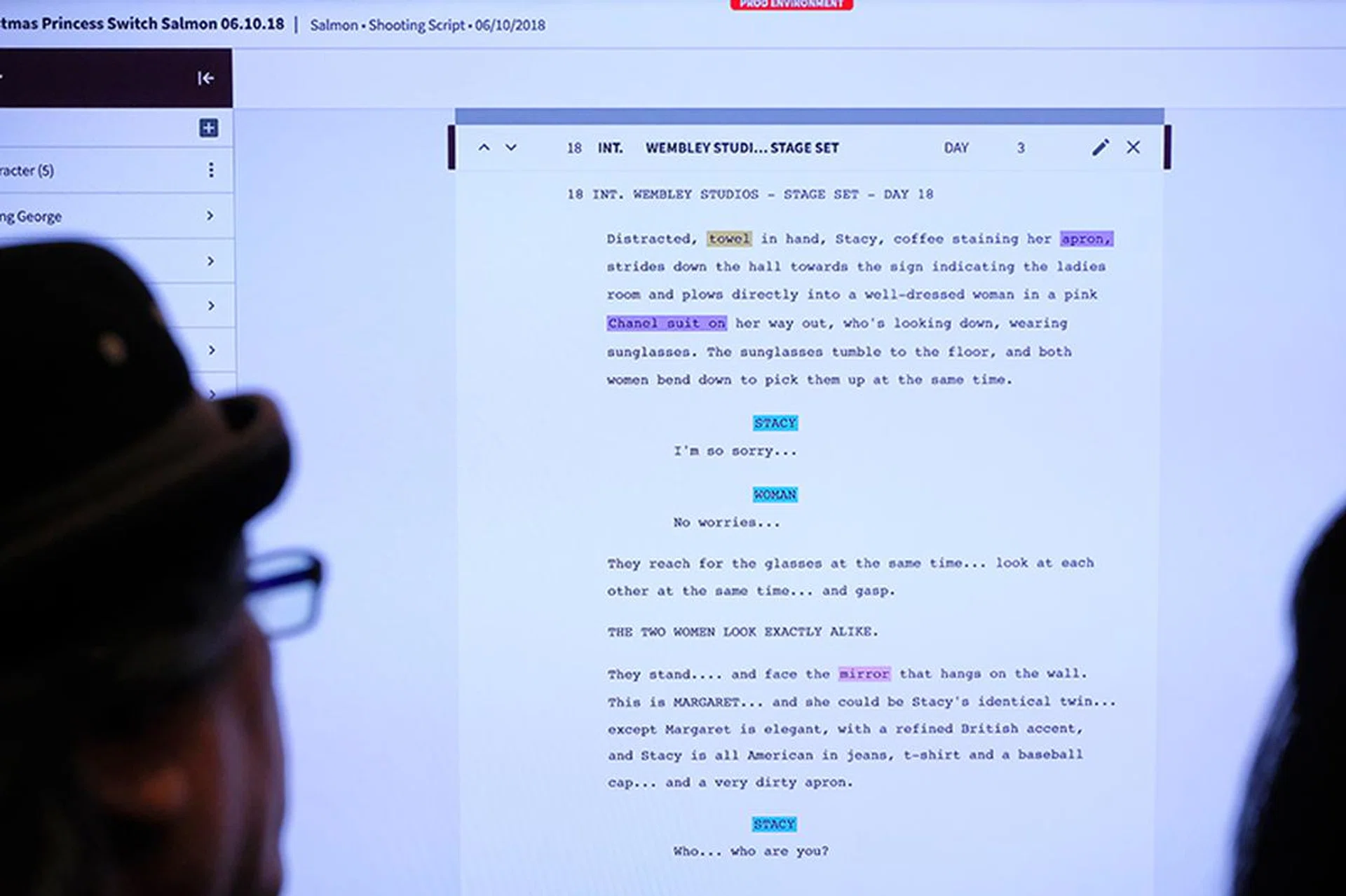
Scripts can help users highlight the key elements that are relevant to them.
Moving forward, Goss says they hope to be able to intelligently identify context and differentiate between things like a "dog" and a "hot dog". After all, this would mean the difference between sourcing for an animal wrangler and having to cast a dog and simply looking for a caterer.
Then there's Scheduling, which is sort of the logical next step after you've gotten what you need from Scripts. The task at hand is then to figure out when and how you're going to get everything you need. Scheduling handles all that, including variables such as cast and crew and location availability. Goss says the traditional process involves taking all the variables in a scene and converting them into something called a strip. The strip is then placed onto a corkboard alongside other strips, and then they're organized and rearranged based on the availability of all the variables and the most efficient utilization of resources.
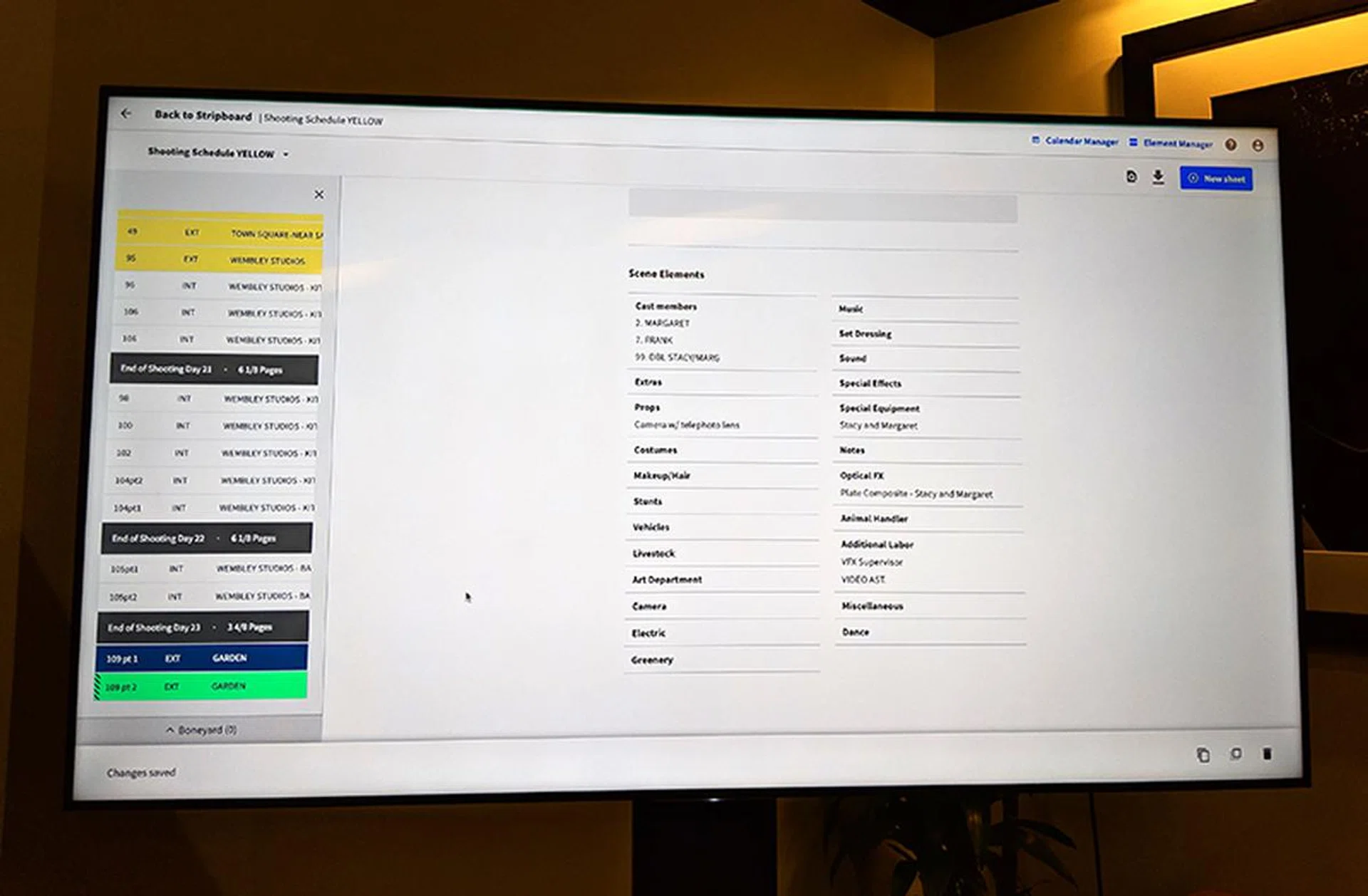
Scheduling makes it easier to take stock of all the variables that matter.
For example, you might shoot all the scenes that take place in a particular location, which might mean that scenes wouldn't be shot in chronological order. Scheduling basically digitizes the aforementioned corkboard, so it should still feel somewhat familiar.
To cap things off, Goss announced that Prodicle Move, the very first member in the Prodicle suite, is now available as a native web experience on both iOS and Android. Location sets can be chaotic, hectic affairs, and Move was built as a way to update users on developments on set in real-time. Move can even send out alerts to tell everyone when the weather takes a turn for the worse, which sounds pretty nifty. Last year, Move was used in 40 different productions, part of Netflix's effort to get crews on board with its new ecosystem.
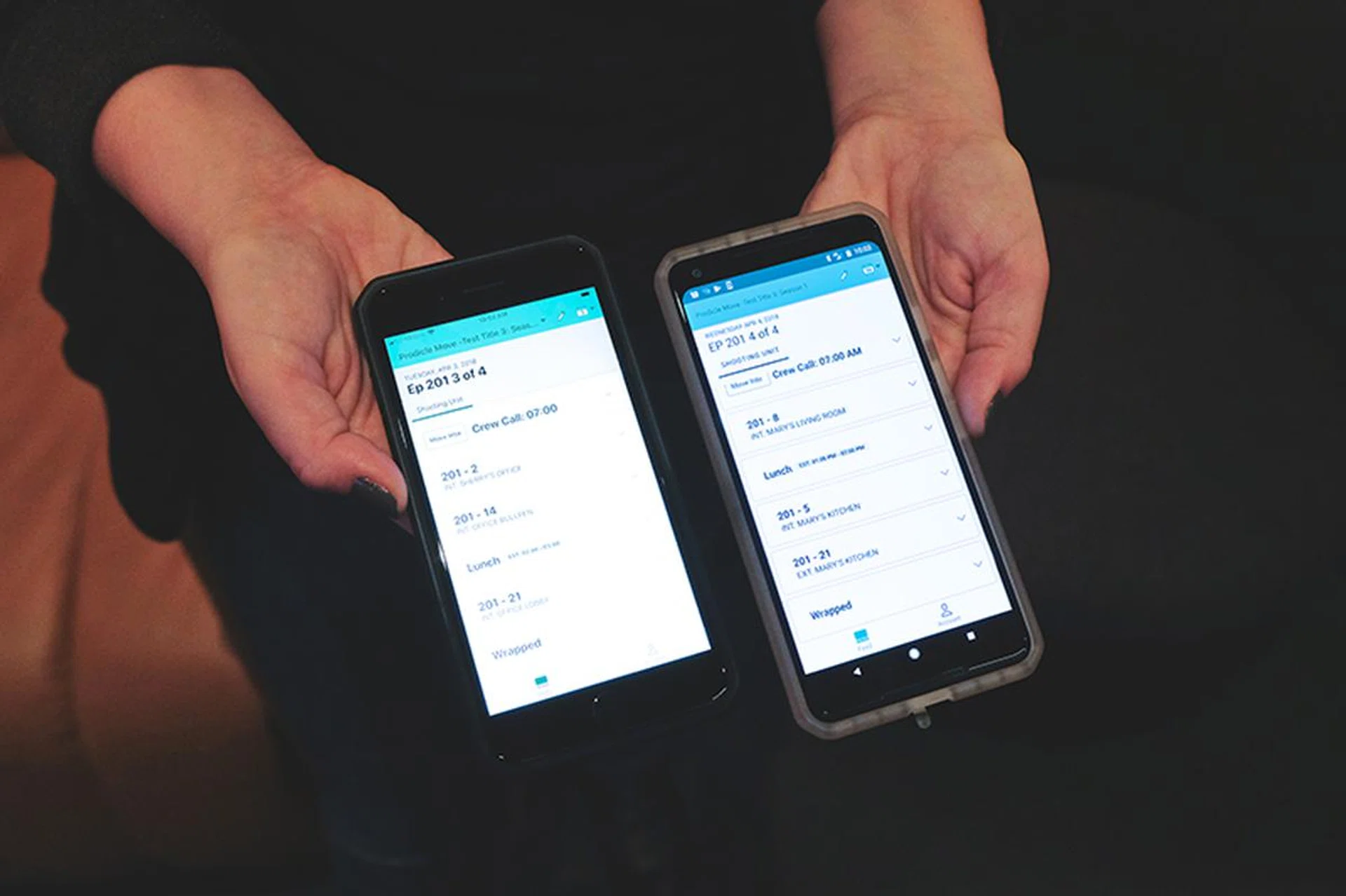
Move helps users keep track of what's happening on set at any particular moment.
Ultimately, while Hastings may consider Netflix a media company, it's things like that that show how it effectively straddles the line between tech and media.
Our articles may contain affiliate links. If you buy through these links, we may earn a small commission.