
Ghost of Yotei review: One of the most striking games on PlayStation 5
Sucker Punch’s sequel builds on Ghost of Tsushima with duels, sweeping vistas, and a mood that makes Ezo feel both harsh and beautiful.
Note: This review was first published on 26 September 2025.
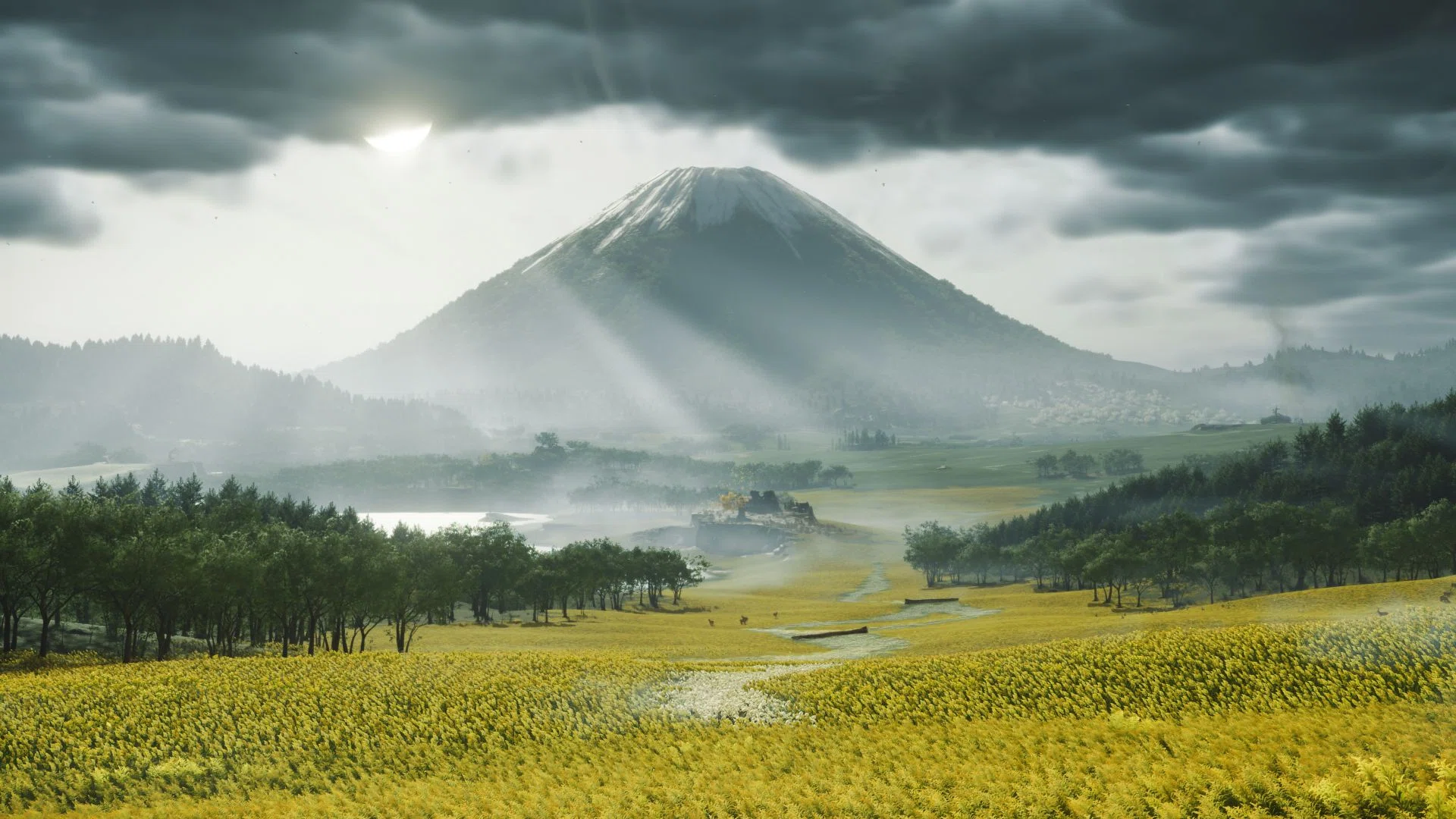
The first time Ghost of Yotei truly clicked for me wasn’t during an exploration or a sidequest – it was in a duel. A simple one-on-one, under grey skies, against a masked swordsman who felt like he’d been waiting for me all along. The fight lasted about two minutes, but my palms were sweating by the end. I’d mistimed a parry, nearly lost my balance, and just scraped through with a final desperate slash. The camera lingered on the fallen body, then pulled back to Mount Yotei’s reflection on a nearby stream. It wasn’t just a victory – it was a reminder that every duel, no matter how small, carried a weight that the open-world skirmishes didn’t.
Duels in Yotei are stripped down, more personal. They take away the chaos of bombs and pistols, forcing you to rely on timing and rhythm. When the blade meets steel in these moments, you feel the clash in your hands through the DualSense’s feedback. It’s less about mashing through waves of grunts and more about knowing when to commit, when to hold back, when to risk a heavy slash that could end it or leave you wide open. These duels became my anchor through the game; every time the open-world sprawl risked tiring me out, another duel pulled me back in.

That’s the tone of Sucker Punch’s sequel: familiar in structure, yet heavier in mood. Where Ghost of Tsushima was about Jin Sakai navigating the honour of the samurai code, Ghost of Yotei centres on Atsu, who’s a warrior without such traditions to weigh her down. She has one purpose and only one: to hunt down the Yotei Six, the masked killers who murdered her family. Six names, one by one, across the wide emptiness of Ezo (the old name for Hokkaido). It’s a simple premise, but simplicity doesn’t make it lighter. Each step across the lonely landscape feels soaked in inevitability.
Ezo itself sets the stage differently from Tsushima too. It’s quieter and lonelier. Villages are sparse, and large stretches of the map are nothing but wind over grass or the sound of rivers in the distance. Travelling here means paying attention to cues in the land itself: gusts of wind bending trees, a golden bird fluttering away, or the faint cry of a fox. The game still has a map, redesigned into a tidy card-like layout, but most of the time you don’t need it. Ghost of Yotei trusts you to trust the world.
The early sections thrive on this sense of stumbling into things. I once intercepted a bandit ambush on a back road, sparing a panicked survivor. Instead of rewarding me with loot or coin, he coughed up information about Kitsune, one of the Six. That moment felt organic, like the world could bend in unexpected ways if you were paying attention. Sadly, by the second act, that looseness gives way to something more routine. Soon enough I was back to bouncing between quests and errands in a way that felt all too familiar. Still, those early hours, which were unpredictable and raw, were where Ghost of Yotei convinced me it was worth the journey.
Violence, beauty, and tension
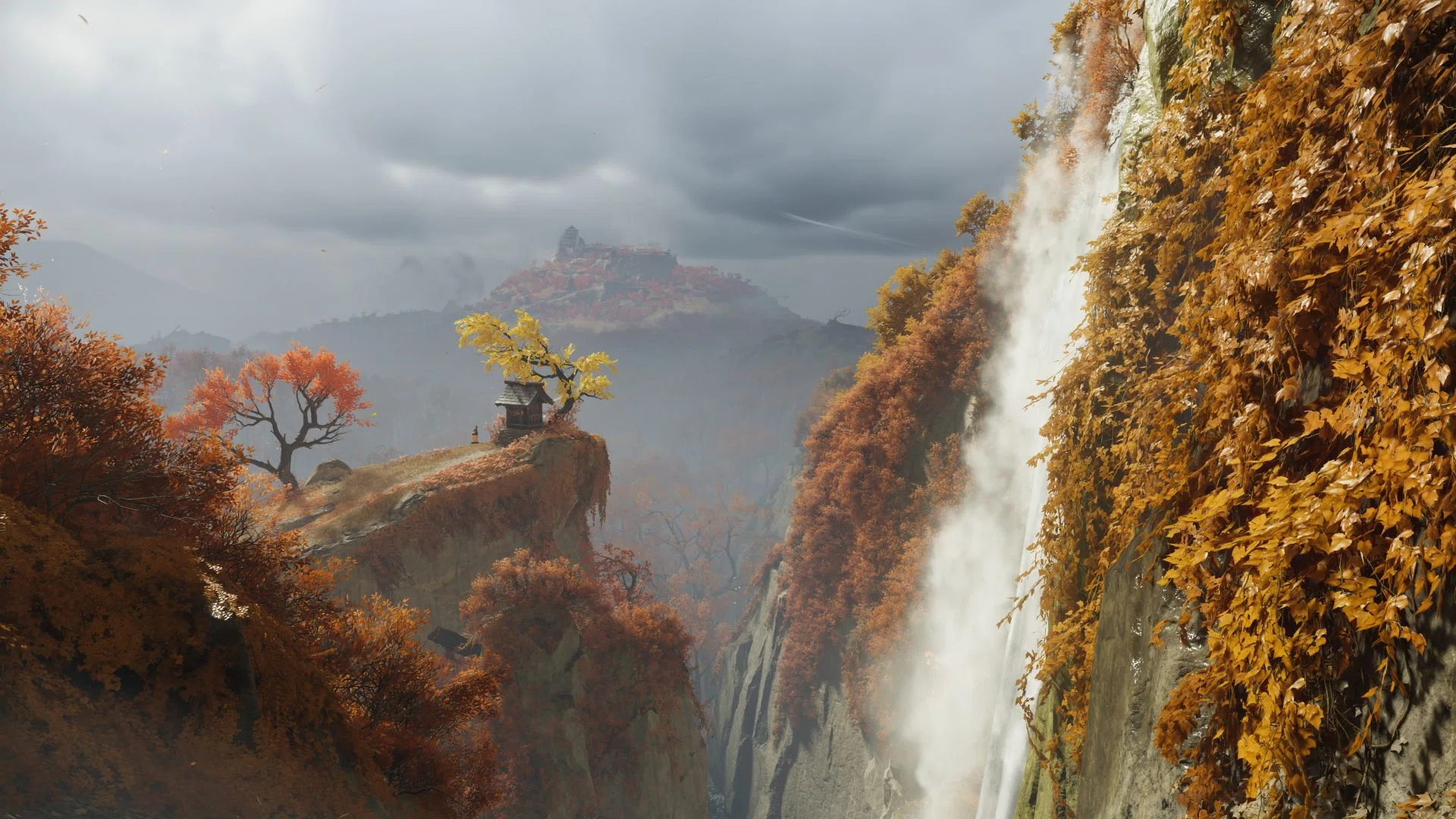
But here’s the contradiction: Ghost of Yotei ranks as one of the prettiest games I’ve played this year, but sometimes it’s just too pretty. Fields washed in scarlet flowers, ridges that look like oil paintings at dusk – it’s almost theatrical. Some days, I want to have Atsu on her horse, pan the camera, and call it a digital ukiyo-e. Other day, I rolled my eyes a little because the visuals feel like a curated postcard.
And yet, I’d be lying if I said I didn’t give in to the game’s beauty more often than not. Riding along the foothills of Mount Yotei at dawn, I stopped to watch mist rolling across the plains, only to be interrupted by wolves circling in the distance. Sometimes the game captures that tension perfectly: Ezo is beautiful, but it’s not safe, and Atsu’s journey is always one step away from violence.
The optional filters underline that tension. Kurosawa mode returns, with its black-and-white grain, but there’s also a new Shinichiro Watanabe mode that swaps in lo-fi beats – and seems at odds with Ghost of Yotei’s tone. Yet it works and even grows on me after a while. Then there are also times when I’d mute the score entirely, just to hear the natural soundscape of Ezo: wind, wolves, distant waterfalls. Ghost of Yotei is at its strongest when it drops the gimmicks and trusts the silence.
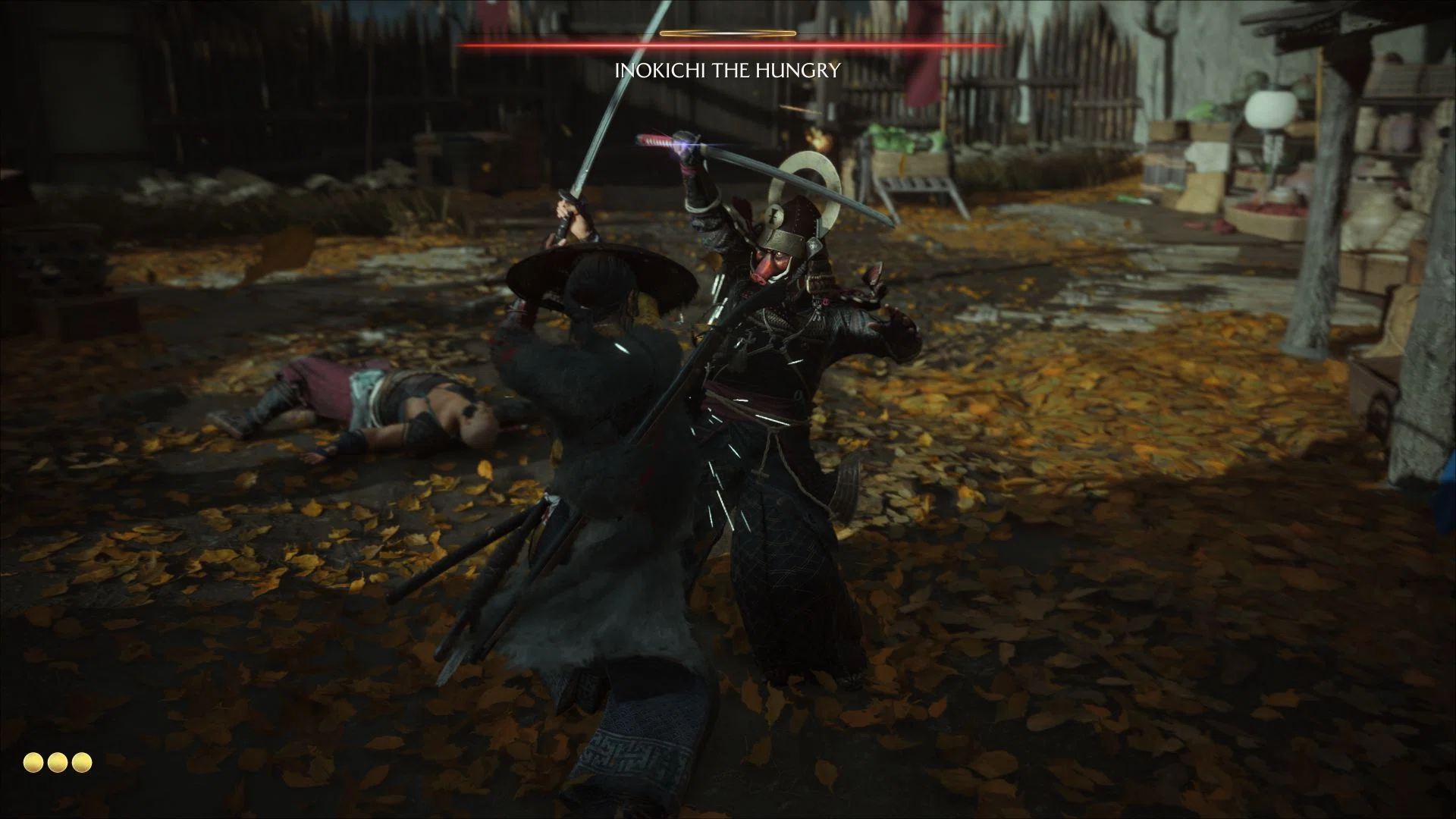
Combat, though, is where the game earns its steel. Instead of Jin’s stance system, Atsu juggles weapons. The kusarigama slices through shields, the odachi smashes heavy armour, the katana is the do-it-all. Then you layer in kunai, bombs, pistols – half the time I felt like a walking armoury. The downside though, is that the DualSense buttons feel cramped when you’re trying to juggle it all, and more than once the camera spun at the wrong time, making me whiff a crucial strike. I can’t help thinking a PC port with re-bindable keys would fix a lot of that.
Still, duels are where the combat system shines. They’re slower, more tense, and when you finally break someone’s guard, the payoff hits harder than any flashy combo. My fight with Kitsune stands out. He circled, feinted, forced me into bad blocks. By the end, when I finally got him, I had that shaky-hand relief you only get from games that don’t let you brute force your way through.
Outside the main story, sidequests are a mixed bag. Some feed into Atsu’s arc nicely, showing how villagers perceive her – sometimes as a saviour, and sometimes as a dangerous omen. Others, though, feel disconnected, like generic errands slotted in for padding. At one point I was fetching supplies for a settlement while supposedly racing against time to hunt a member of the Six, and the tonal clash was hard to ignore. It’s a problem plenty of open-world games face, but here it hits harder because Atsu’s journey feels so single-minded from the get-go.
Story-wise, Atsu’s path is strongest when it refuses to sand down her edges. Early on she’s blunt: revenge is her endgame, nothing more. Like a bee that dies after stinging. That’s interesting. But the game doesn’t quite hold the line. Too many side errands make her slip into the typical “helpful wandering hero”. The main missions with the Yotei Six pull her back into focus, but the tonal wobble is there.
After the blade, what remains
Finishing Ghost of Yotei didn’t leave me with the usual sense of closure that games often chase. The final member of the Yotei Six fell, the cutscenes played, and Atsu’s path of vengeance reached its inevitable end. But instead of a rush of triumph, I felt…unsettled. I caught myself sitting on the results screen, controller in hand, staring out at Ezo’s landscape one last time. It wasn’t the ending that stayed with me – it was the spaces in between.
I remember the way the plains looked at dusk as I rode towards that last battle, the grass flattened by a sharp wind. I remember wolves howling somewhere in the hills, and how the sound seemed both threatening and mournful. I even remember pausing at a stream, watching the water blur the reflection of Mount Yotei before forcing myself onwards. It’s odd, but those little pauses spoke louder than the game’s closing speech ever did.
That’s the paradox of Ghost of Yotei. On paper, it follows the usual loop: ride here, duel there, tick a few boxes, repeat. I’d be lying if I said I didn’t feel the drag of sidequests that had me fetching supplies or clearing bandits in places that barely mattered. But somehow, despite the grind, I found myself booting the game up again the next day. Not because I had unfinished missions – I’d wrapped most of those up – but because I wanted another ride across Ezo. I wanted to see if the weather had changed, if I could stumble onto one more duel in the rain, one more fox leading me off the beaten track.
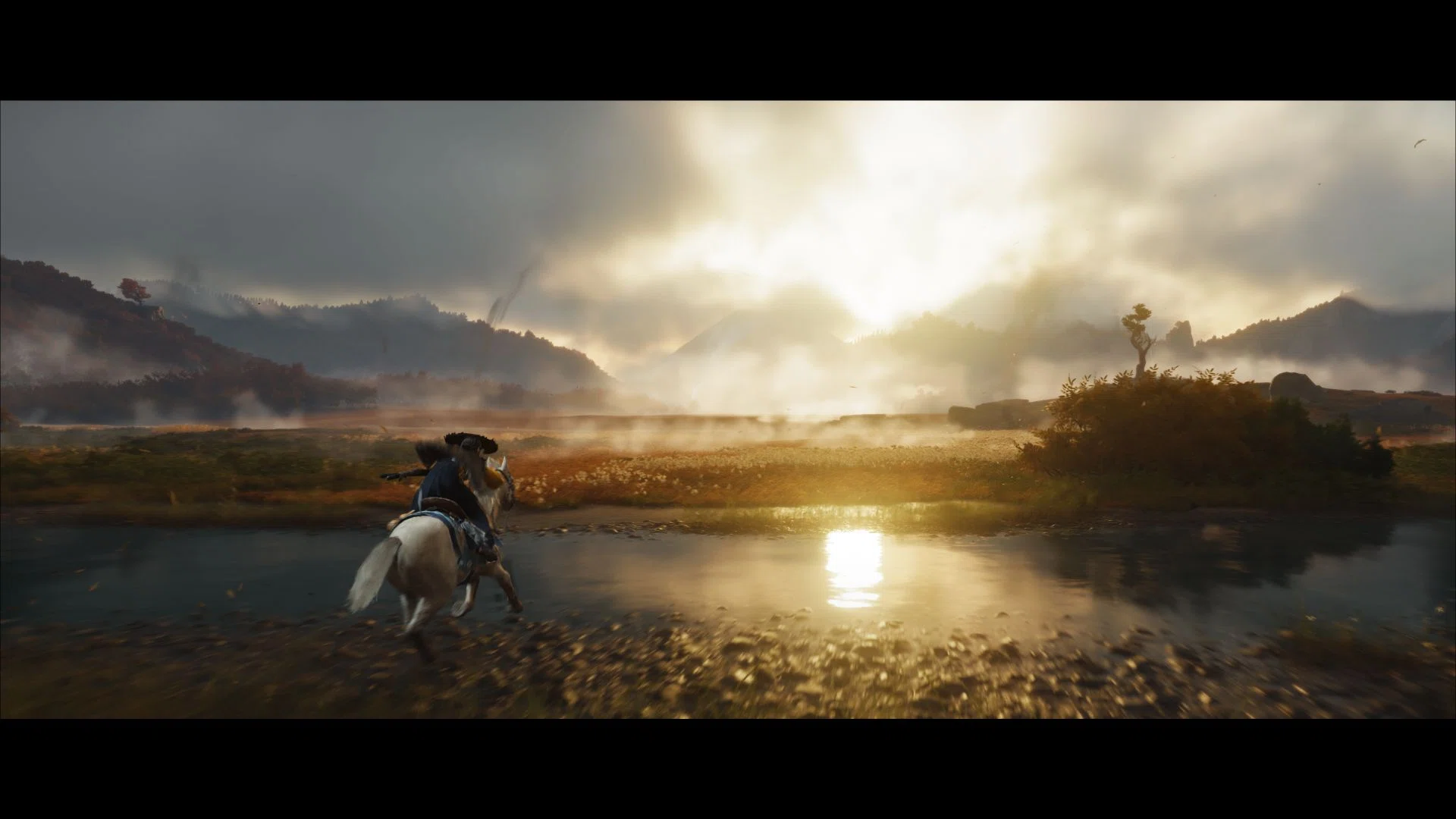
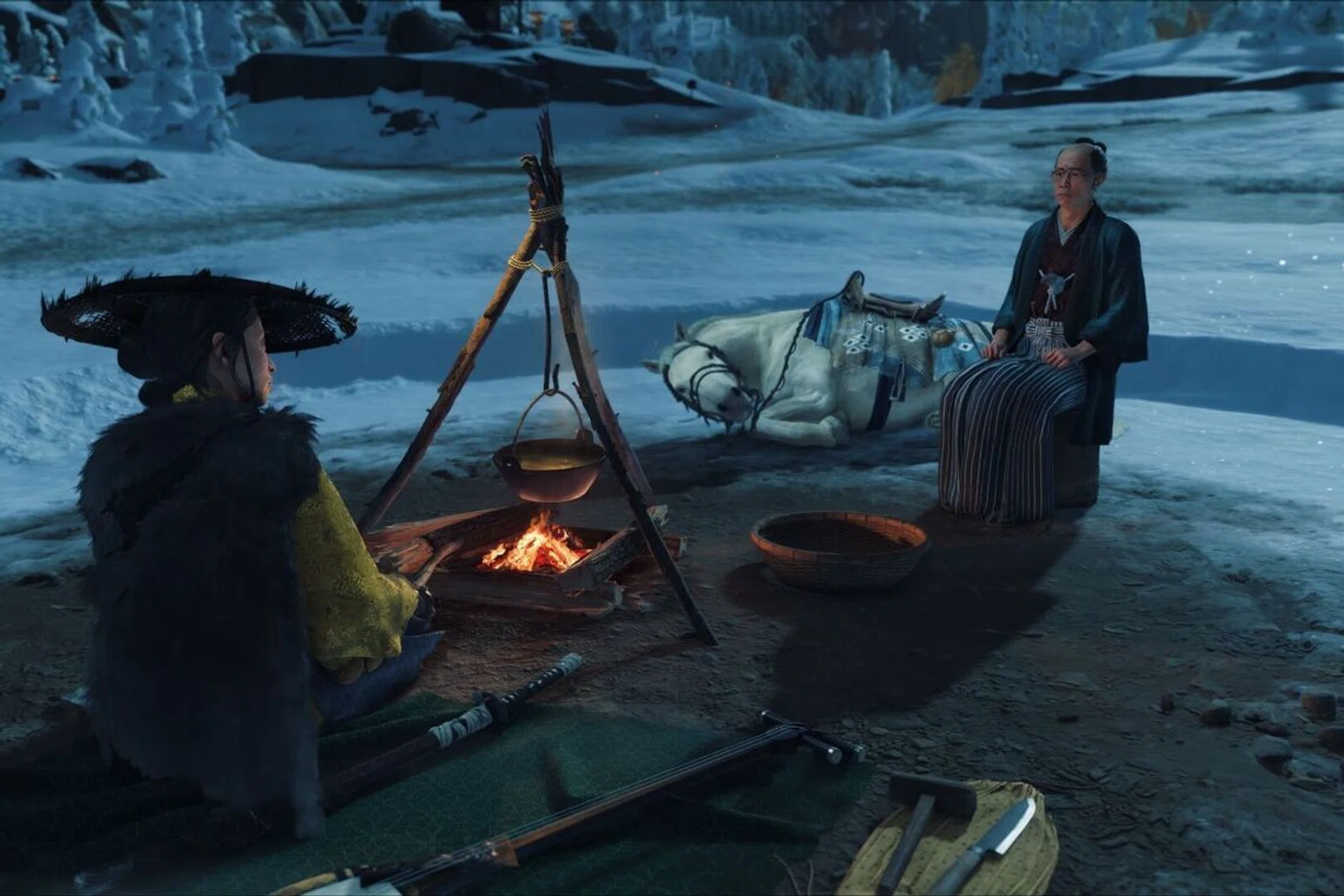
Atsu herself is part of why it lingers too. She isn’t polished into a larger-than-life hero, and the game doesn’t soften her much. She’s blunt, brutal, sometimes distant. At the end, I wasn’t sure if she had found peace, but I also wasn’t sure if she ever could. And maybe that’s the point: Ghost of Yotei doesn’t answer what happens after vengeance. It leaves the question hanging, the same way the campfire smoke drifted into the night earlier in her journey.
What I know is this: when the credits were done, I didn’t put the controller down for long. I went back into the world with no objective, just to wander. I fought no one. I didn’t chase any foxes. I just let Atsu stand by a riverbank as the clouds shifted overhead. And in that moment, I realised the game had done something rare – it made me want to linger in its silences, even after the blade had been sheathed.
Ghost of Yotei will be available on 2 October for PlayStation 5.