
XCOM: Chimera Squad for PC is an experimental take on the franchise's formula
The new XCOM game feels more like an expansion than a full game, but it's still pretty great.

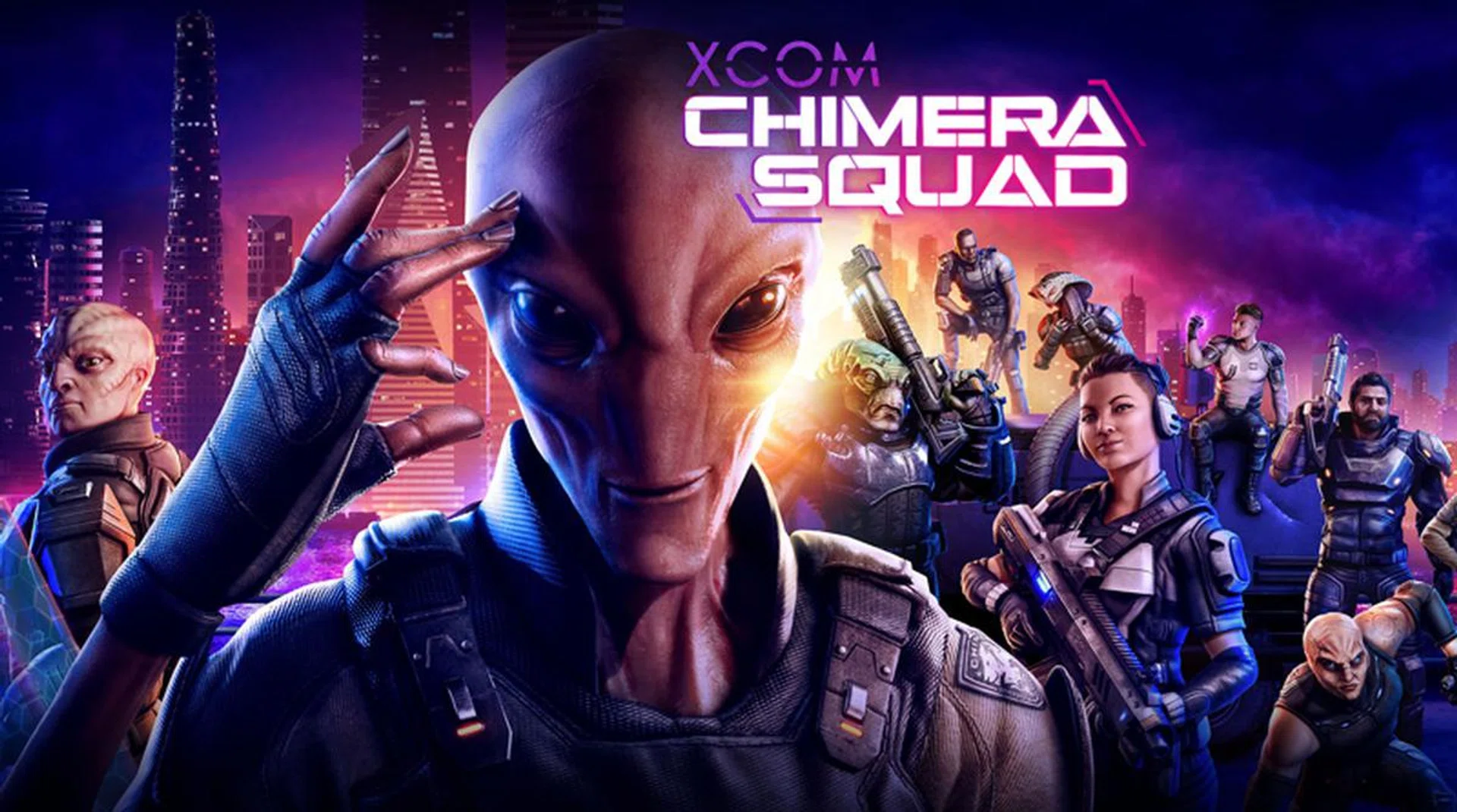
Image: Firaxis Games
XCOM: Chimera Squad had a strange reveal, announced a little under two weeks before its release date and going on sale at an immediately discounted price. It's also very different from previous XCOM games, shaking up the franchise's formula in a couple interesting ways. I was a little worried for the game before getting my hands on it - but now that I’ve played it, I can see why all these choices were made.
Chimera Squad is a standalone XCOM game. Much like 2019’s Wolfenstein Youngblood, it acts as a direct sequel in the franchise while also experimenting with an all-new tone and different mechanics. Youngblood wound up the silly dial to a 10, and introduced RPG mechanics to the Wolfenstein series for the first time, though both of these things worked against it in the long run.
On the other hand, Chimera Squad bravely tries to do a bunch of new things, and most of these experiments actually work out. It is every bit the tactical game fans are probably hoping for, but it’s much lighter in tone and puts more of an emphasis on its core ensemble of playable characters.
Let’s talk about story first
Chimera Squad’s story is pretty easy to follow, despite it being the fourth game in XCOM’s series of reboots. The story takes place five years after XCOM 2’s expansion War of the Chosen, in a place called City 31. City 31 is designed to be a model city for the planet, with humans and aliens living together peacefully - or as peacefully as they can these days.
Some of the planet’s inhabitants are still opposed to human-alien relations, and others simply want to spark some anarchy. As a result, the Chimera Squad is put together, a group of elite peacekeepers who serve the city and fight back against its unknown assailants. Chimera Squad itself is made up of humans and aliens alike, which makes gameplay a pretty big departure from previous XCOM games.

The game's story unfolds in dull cutscenes and stilted dialogue.
You’d think that all the interspecies friction in City 31 would extend to Chimera Squad, but the group is actually pretty tightly-knit from the get-go. The game as a whole takes on a much lighter tone than I expected. It makes sense however, considering that you’re now playing as peacekeepers and not trying to revolt against a planet-wide invasion anymore. The stakes feel much lower here.
Still, I can’t say that I actually enjoyed Chimera Squad much, story-wise. Cutscenes are no longer fully animated, like in previous games. The story now either unfolds in generic text bubbles and glorified slideshows in place of animated cutscenes. The story was pretty disappointing as well, due to a lack of good pacing. The soldiers in Chimera Squad regularly banter with each other, and while I appreciate the effort to make their relationships feel lived-in - it just comes off as hokey when it’s not cheesy.
The gameplay is pitch-perfect
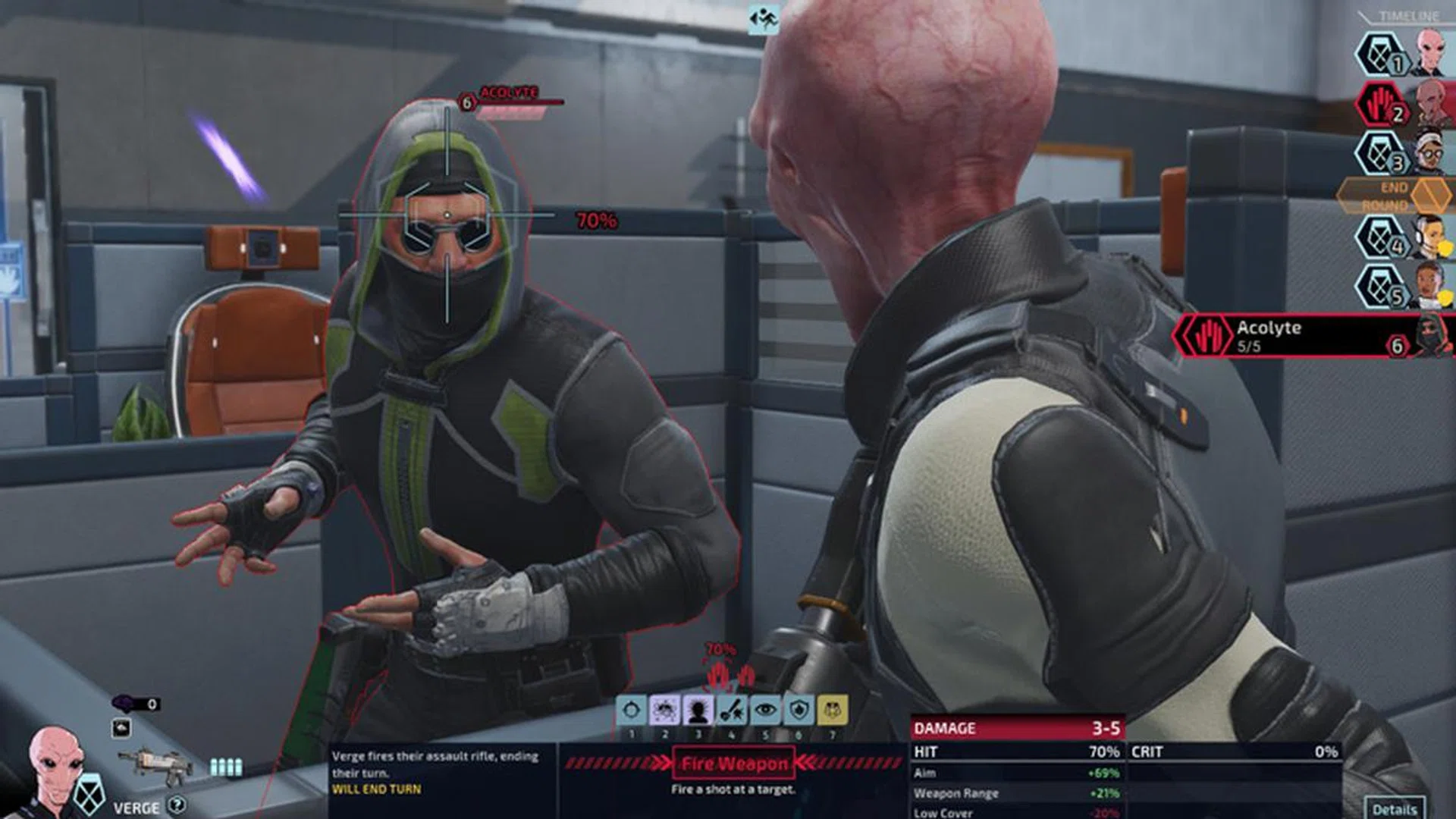
There's always the occasional moment where you miss an attack despite the enemy being right in front of you, but it's more amusing than it is annoying.
Even if you’re not a fan of the XCOM franchise or turn-based tactical RPGs in general, you’d be surprised how fun this game is. It’s really easy to get invested in Chimera Squad’s gameplay loop, and that’s partially because there’s so much to sink your teeth into at any point in the game. Whether you’re in the heat of battle or just promoting squad members, there’s a lot to keep track of.
First thing’s first: let’s talk about combat. When going on missions, you head into battle with the squad members of your choice. Unlike past XCOM games, your squadmembers cannot be customised in any meaningful way. Chimera Squad hosts a colourful cast of characters, each with their own distinct personalities - and none of them are expendable. When heading into battle, you’ll encounter the first of Chimera Squad’s brand-new combat mechanics - breach mode.
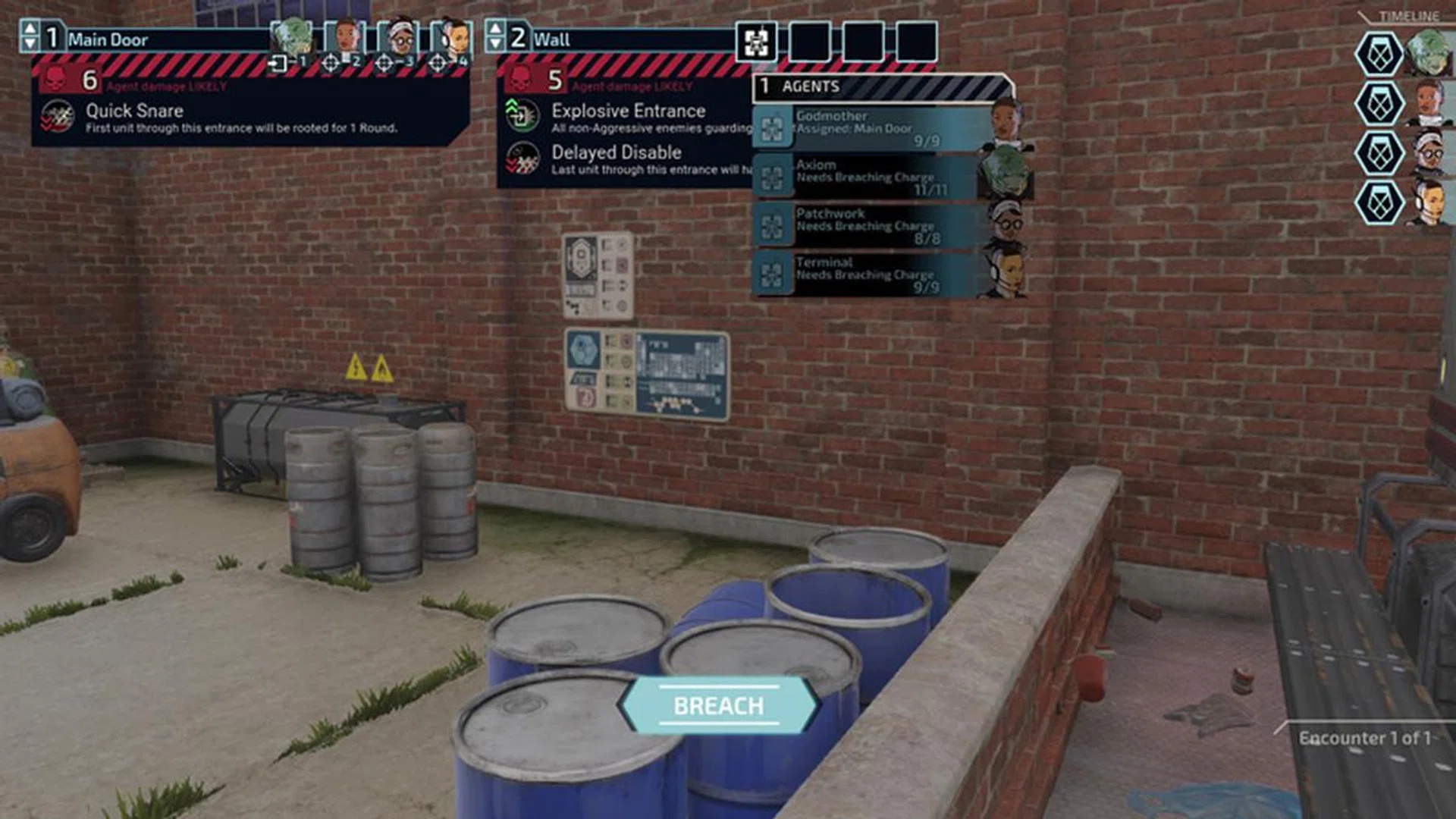
Breach mode gets stale pretty fast, honestly.
Breach mode takes place right before combat encounters, allowing you to choose how Chimera Squad should enter a hostile environment. Different points of entry are made available, with each one having their own set of advantages and disadvantages. Do you take the main door, risking damage to Chimera Squad - or bomb another entry point, surprising them from behind? You could even take both, splitting your team between the two options.
Personally, breach mode didn’t do much for me. I appreciate the extra element of strategy before combat encounters begin, but the slow-motion third-person cutscene that follows the mode every time is a tad annoying. It slows down the action way too much, and becomes a nuisance after just a few encounters.
Roll initiative
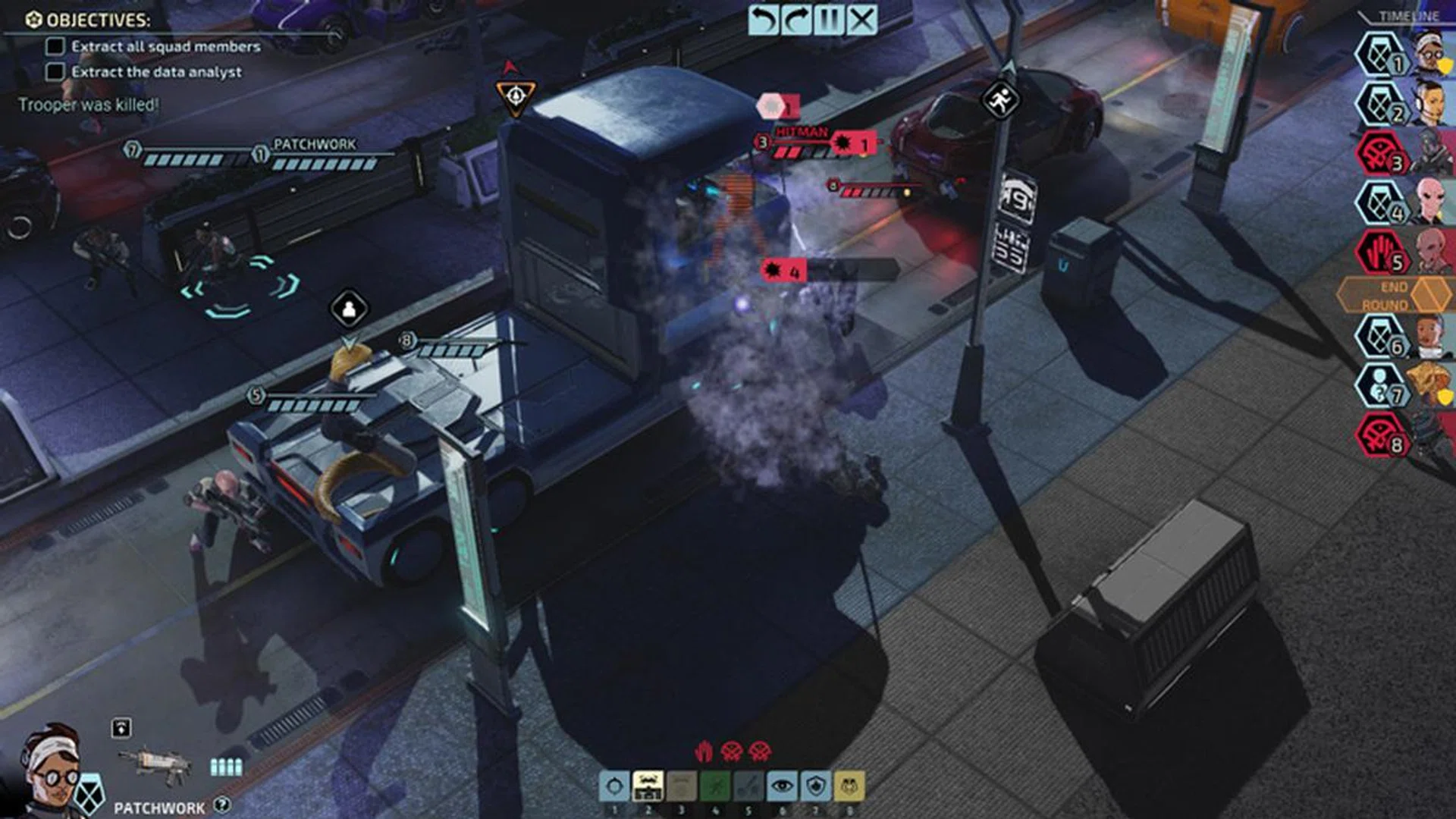
The turn order can be seen on the right of the screen, letting you know which character is up next. This introduces a chess-like element of strategy into gameplay, where you're constantly trying to stay one step ahead of the enemy.
After breach mode is done with, every enemy and squad member in the environment are sorted into what the developers refer to as an ‘interleaved turn order’. Picture rolling initiative in Dungeons & Dragons to figure out everyone’s order of attack - that’s pretty much how combat works here. I really loved this method of tackling combat order in a turn-based game - it was really refreshing, and immediately makes proper tactics important in every encounter.
Instead of just going after every enemy immediately, you have to use your characters' two actions wisely - taking into account which enemy’s turn is up next. Different members of Chimera Squad also come equipped with different abilities. For example, Verge can inflict Battle Madness on faraway enemies, causing them to turn on each other during battle. This gives you a quick way to get rid of enemies that might not be in your line of sight.
It’s really fun tackling the scenarios this game throws at you, and using both creativity and tactical finesse to pull off great victories despite the odds. Personally, I hope the changes made here carry onto future XCOM installments - besides breach mode.
Back to base-ics
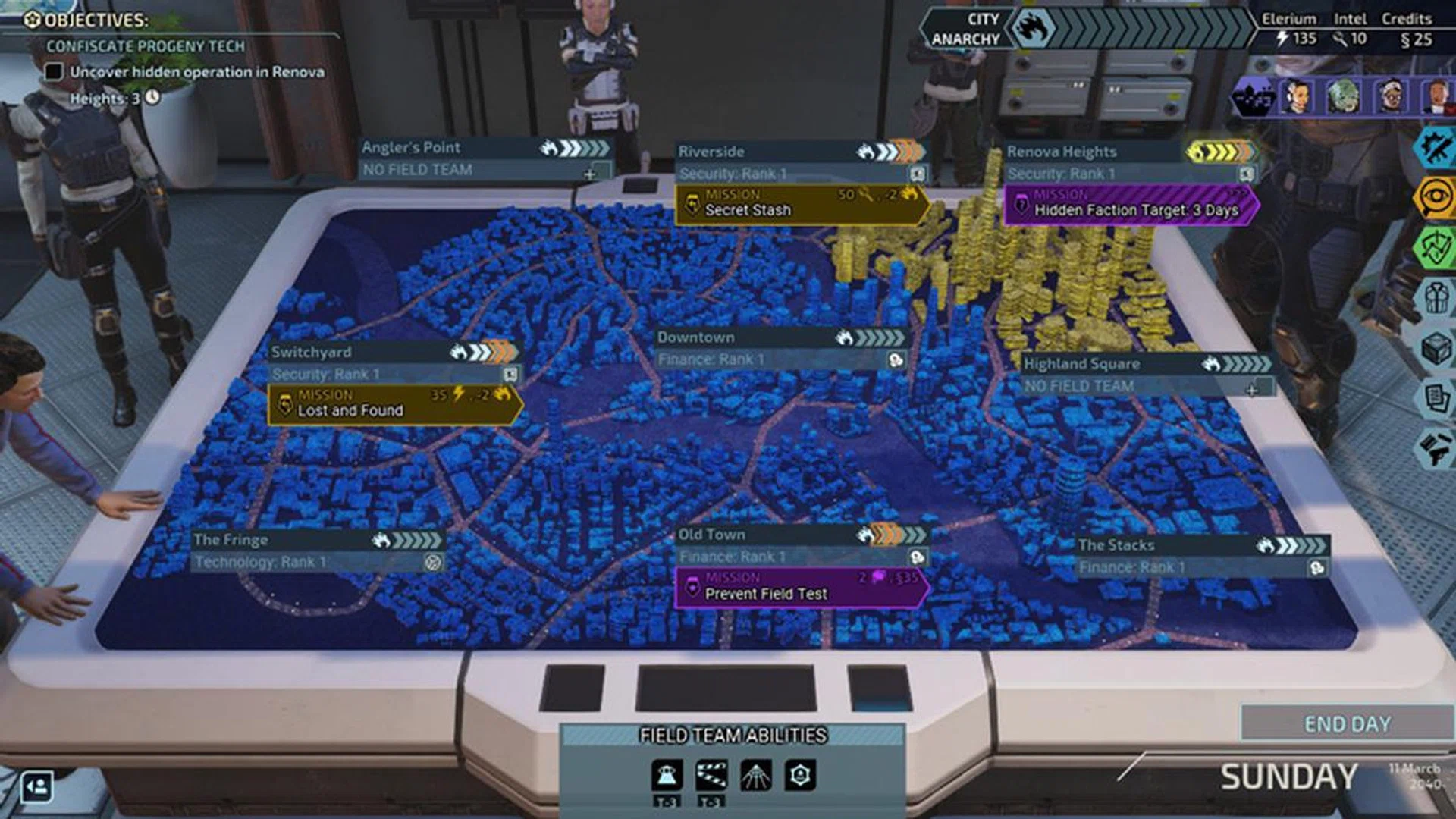
If you don't balance City 31's level of unrest, things can spiral out of control very quickly.
Chimera Squad isn’t just about shooting up bad guys, however. In between combat encounters, the game leaves you in Chimera Squad’s Field Office - a base of operations with plenty of stuff to tinker with. For example, you can open up the city map and monitor the city’s rising threat level. City 31 is made up of multiple districts, and each district has a level of unrest that will continue to rise unless you take missions within them. If any district hits a maximum level of unrest, the entire city’s level of unrest starts going up. When that maxes out, you fail the entire campaign.
Fortunately, that’s easy to avoid as long as you keep a careful eye on your city. As you progress through the campaign, you’ll also start filling up Chimera Squad’s ranks - though you can only take four with you into a mission. Fortunately, there’s plenty for the leftover members to do as well - whether it’s being assigned to research useful armour upgrades or getting sent to training to get two extra health points.
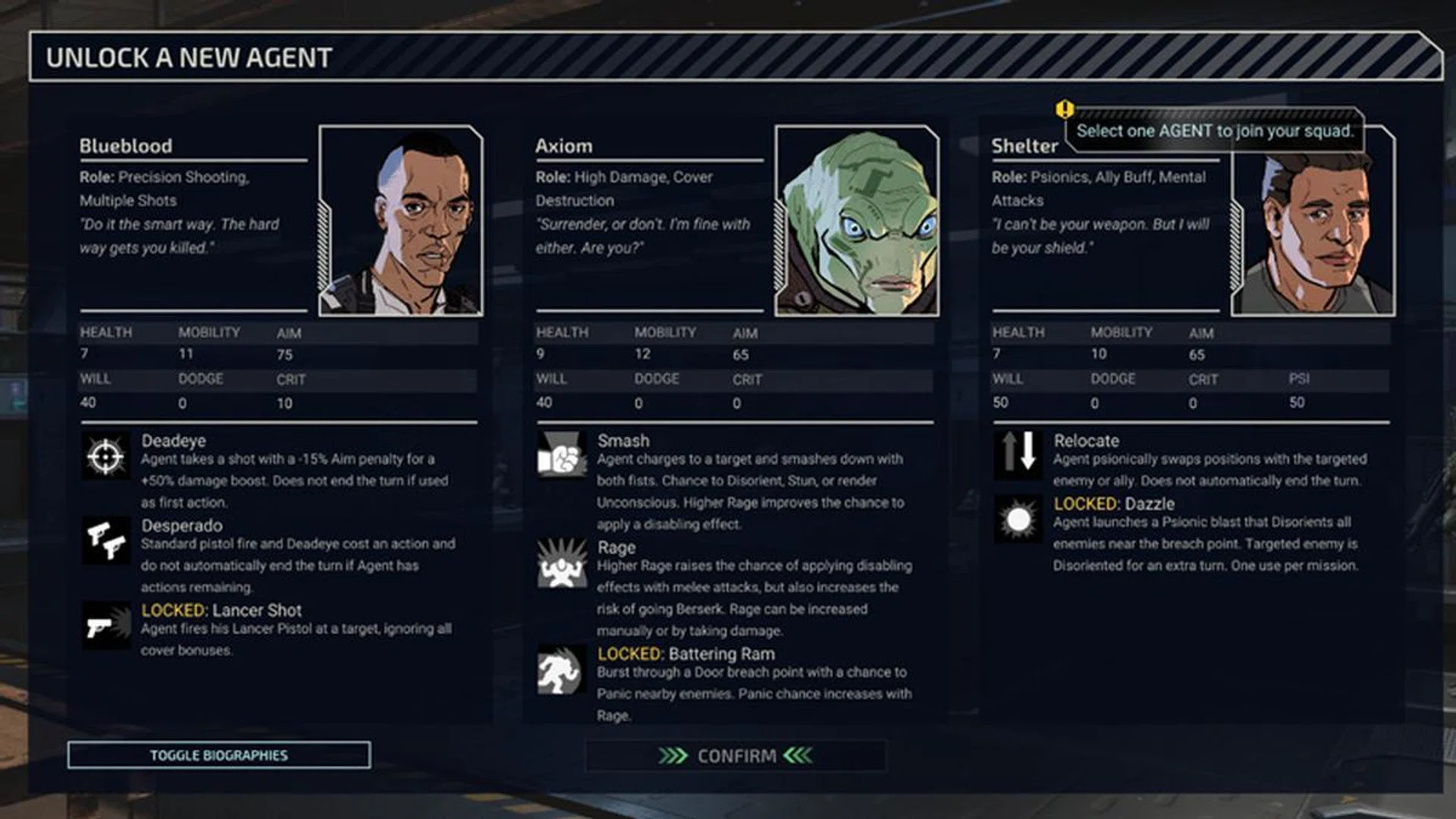
You'll eventually unlock every member of Chimera Squad, but only one at a time.
There are three types of currency to keep track of, each with their own uses. Credits are used to buy items like explosives for breach mode, Elerium is used to research and unlock new items and Intel is used to buy and upgrade Field Teams - which steadily earn you extra currency in the background. Field Teams also come with abilities that allow you to freeze district unrest levels, or reduce them by a couple bars - so they can be really useful.
There’s a lot to do in the Field Office, and it’s also where you’ll experience most of the story and Chimera Squad's banter with one another. It reminds me a lot of Metal Gear Solid 5's Mother Base, allowing you to gain upgrades and manage side-missions from afar in between missions. You get a really meaningful sense of progression here.
Verdict
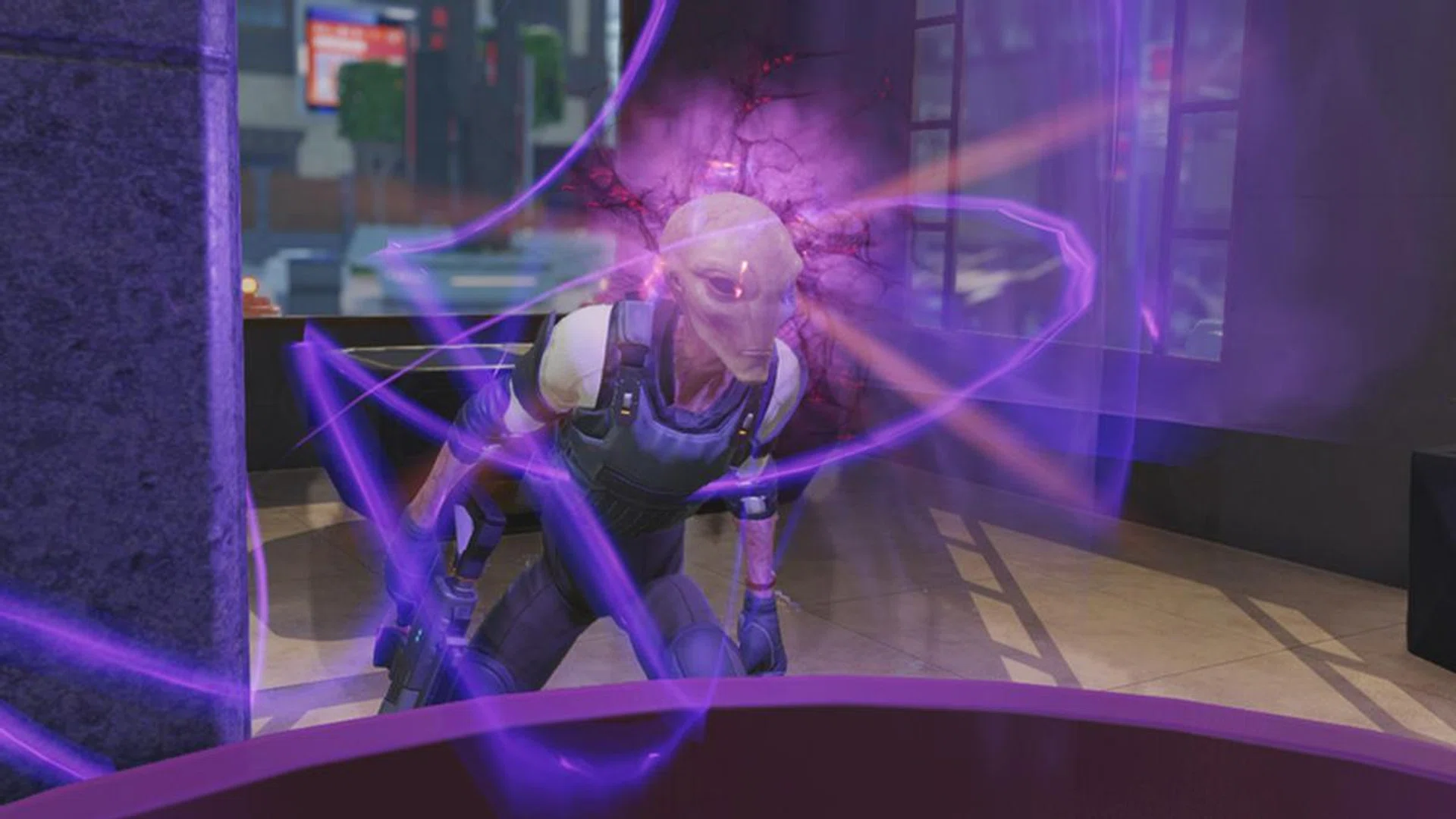
This game is a pretty great deal, for its price.
XCOM: Chimera Squad has a ton of value packed into an extremely low price point (currently S$13.95 after discount), which makes it absolutely worth the purchase. Even if you don’t have any interest in XCOM, this is a fantastic entry point into the franchise. It's a lot of fun, though it very much feels like an in-between game, and a way for Firaxis to get new players in before the next big XCOM game.
If that’s what they’re trying to do, it worked. This is a solid game - but it’s not a full-blown XCOM game. Manage your expectations, and you’ll have a great time.
Our articles may contain affiliate links. If you buy through these links, we may earn a small commission.