
Legends of Runeterra Review: It's Poro-sized fun for everyone
No prior League of Legends experience required!

Image: Riot Games
Picture this: it's a bright and sunny Saturday morning, and you've just finished another League of Legends match with a satisfying 9/0/3 KDA ratio on Jinx. You're well on your way to hitting Challenger this season, but your pals have all gone offline and you don't want to risk breaking your win streak over a "possible lack of communication".
But you still want to play Jinx.
Well, you could always boot up a custom AI match and toss your chompers at the bots, but then again, you could ALSO build a Jinx deck in Legends of Runeterra and go full ham there too. And that's why we're here - to explain why the latter is an excellent idea.
What the Poro is Legends of Runeterra?
LoR, as we'll be calling it, is one of Riot Games' new and upcoming titles, alongside the team-based shooter Valorant that's set for a Summer 2020 release. It's their take on a tactical card battler, blending diverse battlefield strategies, interactive gameplay, and most importantly easy card acquisition. The end result is a title that's simple to learn, deceptively addictive and all clothed in the familiarity of characters from Runeterran lore.
In terms of the overall aesthetic, the game takes several pages out of LoL's book (naturally), featuring the usual formula of magical runes, powerful beings, evil specters and even a few steampunk-inspired bits here and there. It's pretty much the same since our last playtest, although the animations seem much sleeker and more detailed than before. Naturally, there are more cards and abilities as well, but we'll cross that bridge in greater detail when we get there.
Let's address the elephant in the room first: what makes LoR stand out from the competition? After all, card battlers aren't exactly the newest genre on the block - titles like Hearthstone and Shadowverse have been around since Zilean-knows-when (heh), and LoR is going to need to pack some serious punch if Riot wants to make their voice heard.
Nostalgia FTW
First off, their biggest boxing glove is lined with familiarity, which is a given considering the game is largely based on characters and lore from League of Legends. From a bystander's point of view, it's quite a "cheap" trick to pull, but they've done it in a really unique way that gives veterans the nostalgia points they want but doesn't alienate newer players.
Well, if you've dabbled in LoL before, you'll probably know that Braum isn't exactly the pinnacle of offensive power. He's ridiculously good at defense though, and Riot has kept his LoR adaptation that way. Essentially, the developers are riding on the Champion-exclusive mechanic called Level Up, and it's achieved by having each of them perform specific actions based on what they're known for being good at.
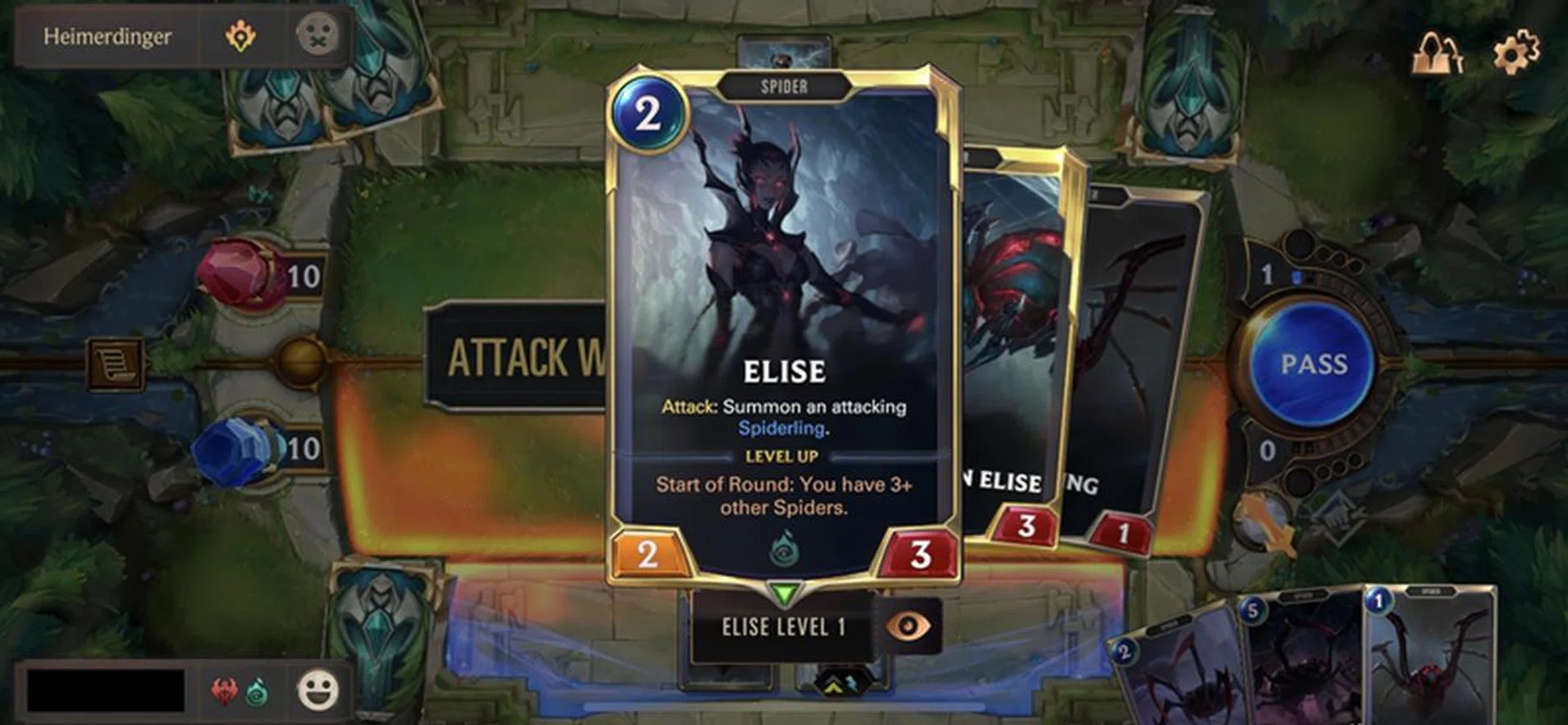
So, a tanky guy like Braum would probably Level Up by tanking X number of hits, while a sleek, lithe assassin like Katarina would probably do so by performing some hit-and-run interaction. It's a very nice way of keeping the various champions in "character" for the veterans to appreciate, so to speak.
But what if you were a new player who's never seen Braum's glorious moustache in your life? Well, just use common sense then. Bringing back the Braum versus Katarina comparison from before, who do you think is more likely to level up by tanking hits, eh? Please tell me it's not the paper-thin assassin with that peanut of a health pool.
Fresh and Crispy
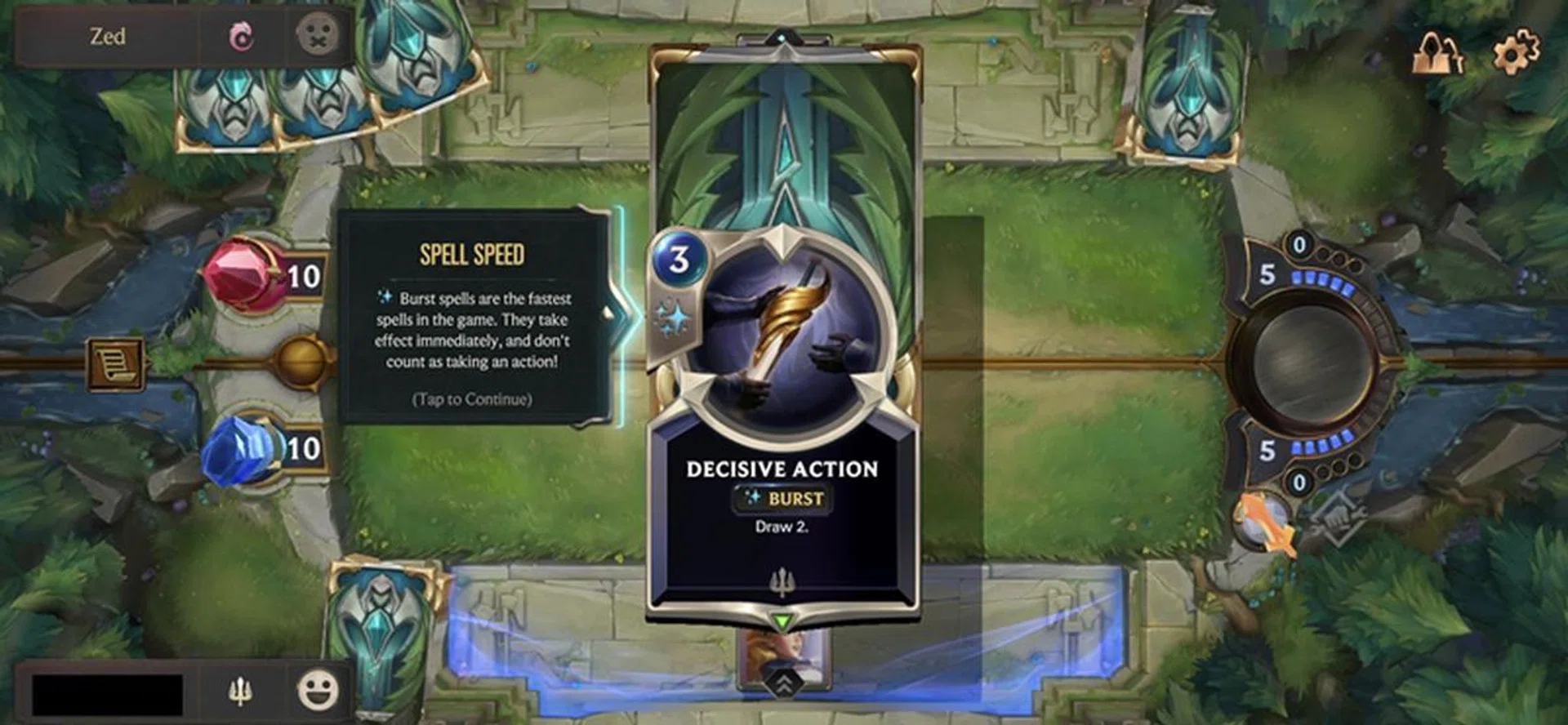
The gameplay itself is also marvelously interactive, and that's mainly because of the game's unique "attacker versus defender" system, which is conceptually simple yet probes the question of why no one has thought of this before. Of course, it's not a solo gig - Riot has also adopted and tweaked quirkier mechanics from other card games and tied them together to concoct their own unique flavour.
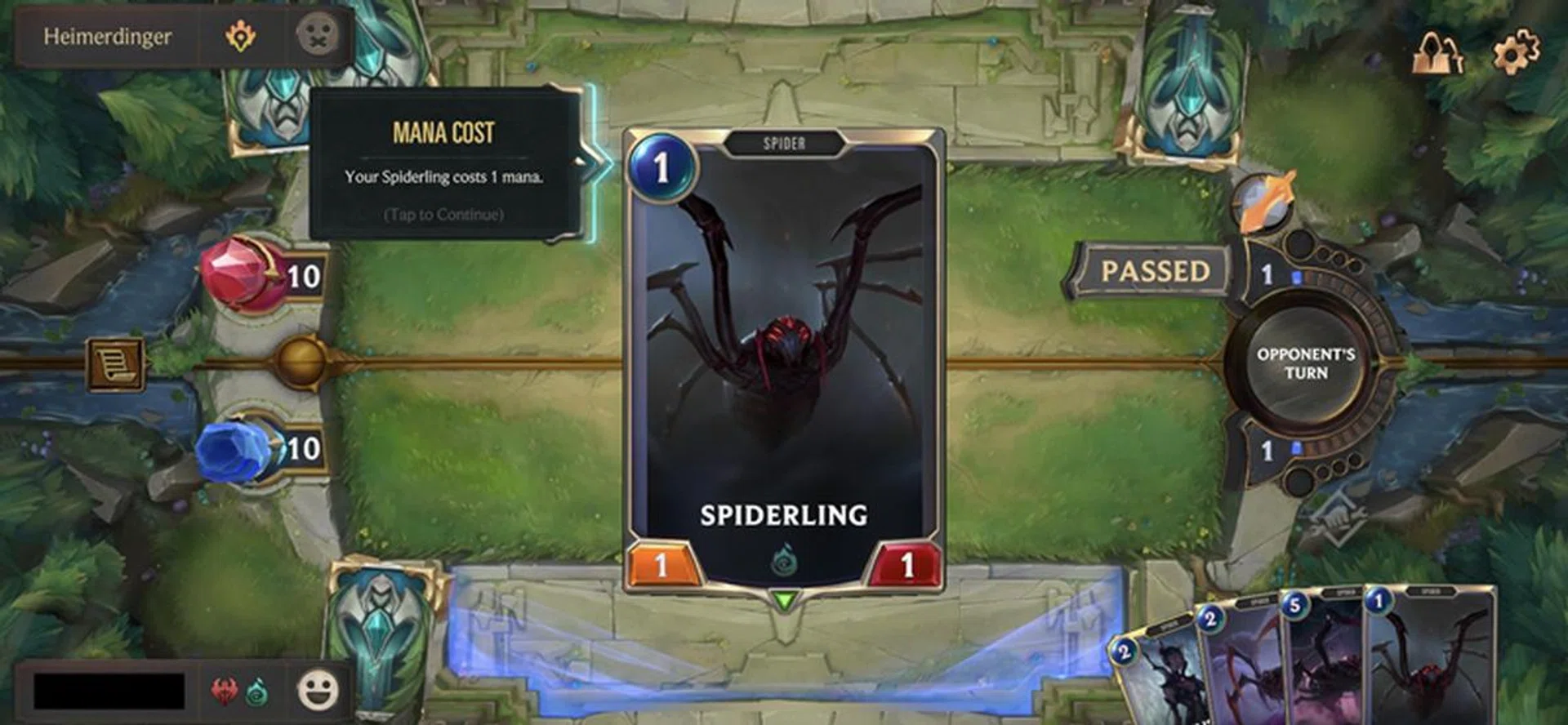
The best example is probably the Spell Speeds system, which is a page taken out of Yu-Gi-Oh!'s book. This assigns different "priority" levels to your spell cards, meaning some of them can be played to counter other spells if they have a higher "speed". Now, it might seem really tricky here, but rest assured it's a cinch once you run through the tutorial.
With all that in place (plus loads of other mechanics) and coming together like a well-oiled machine, LoR's overall gameplay experience is rather lightweight and crisp, while still retaining the tactical edge that's a quintessential part of any card battler.
When they say free-to-play, they mean it
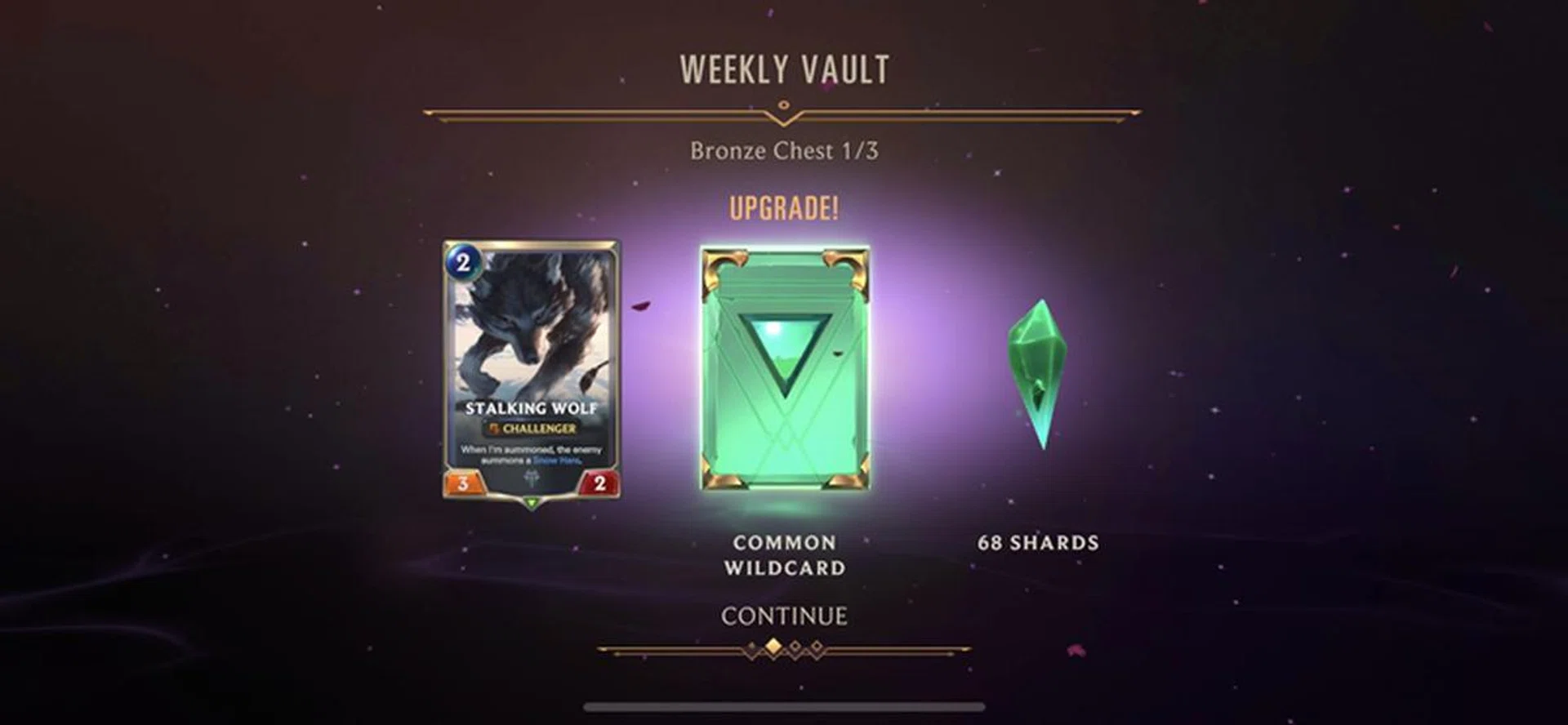
Now I probably like this third feature the most, as will anyone who's worried LoR will be yet another burden on their monthly budget: it's extremely easy to get cards! Without real money!
Yes, it's exactly what it means. Unlike most other card games, it's actually reasonably easy to get the cards that you need (or want) just by playing LoR. From weekly (and daily) Vaults that award tons of freebies to the various Wildcards (I LOVE this) that let you craft ANY card of the corresponding rarity for free, LoR's card acquisition system works in a way that allows players to get most of the cards just by enjoying the game and exploring all of its nooks and crannies.
In fact, I'd wager that just finishing all the tutorials already gives you more deck options than you can count on both hands, and that's absolutely glorious.
There's no FarmVille here
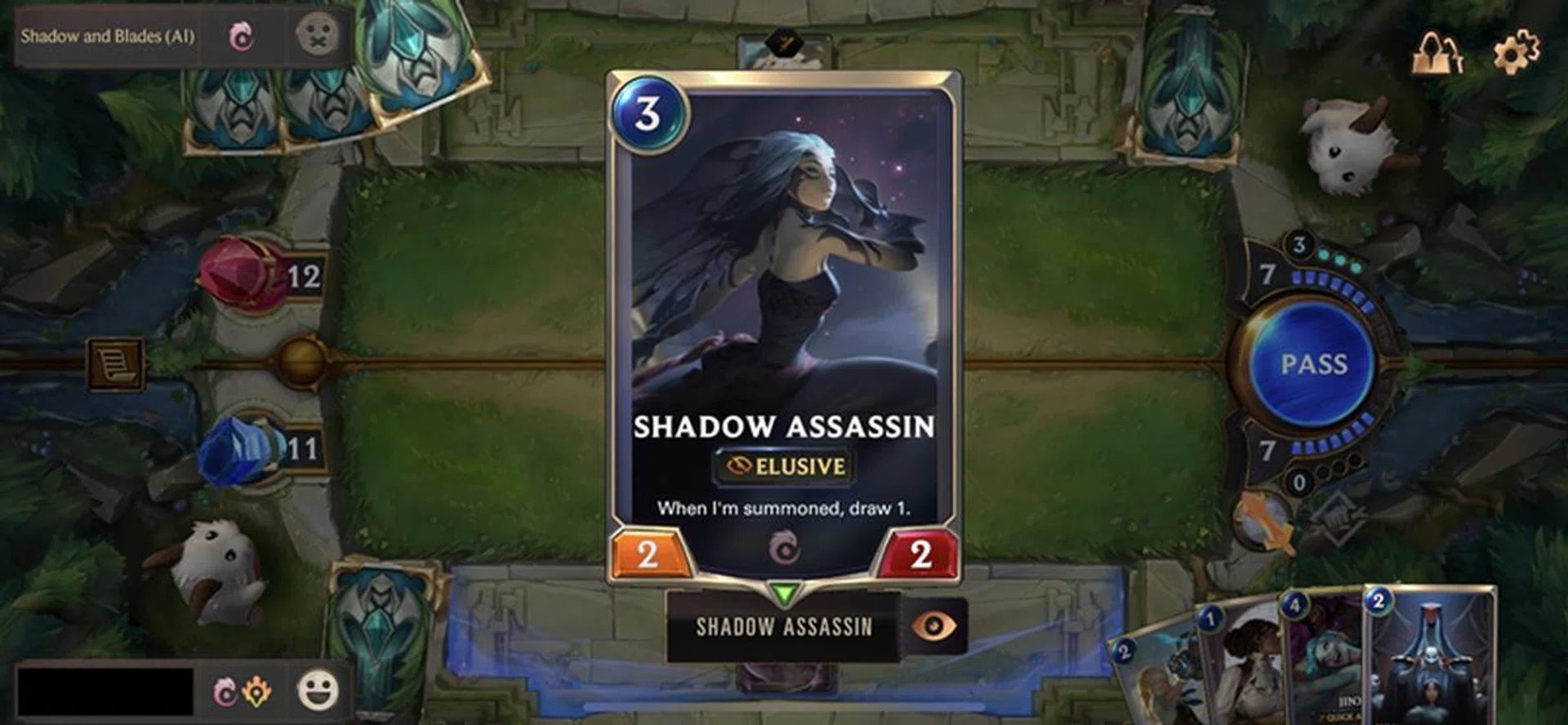
Well, we can't talk about a card battler without discussing the cards and actual matches now, can we?
Let's talk about matches first. Unlike Hearthstone and Shadowverse, where you have the option of just "farming" cards and waiting for the decisive moment to unleash a barrage of minions or spells, LoR features an inherent "card for card" rule of sorts.
Essentially, this means that for each opportunity you get to play a card, your opponent gets to play one as well, so you can't just toss seven damaging spells at your opponent without them getting a chance to do anything.
This system ensures that each game never really feels completely passive, and that's a great call on Riot's part considering you wouldn't want to spend your entire thirty-minute train commute just to get wiped off the board by a single barrage of damaging cards. That's a pretty lame way to go, if I do say so myself. But if you're always forced to stay on your toes since your opponent has a chance to respond to whatever you do, the game will start to feel less like a match and more like a "conversation", and I think there's some measure of fairness in knowing your opponent is forced to play by the same rules.
Words have power
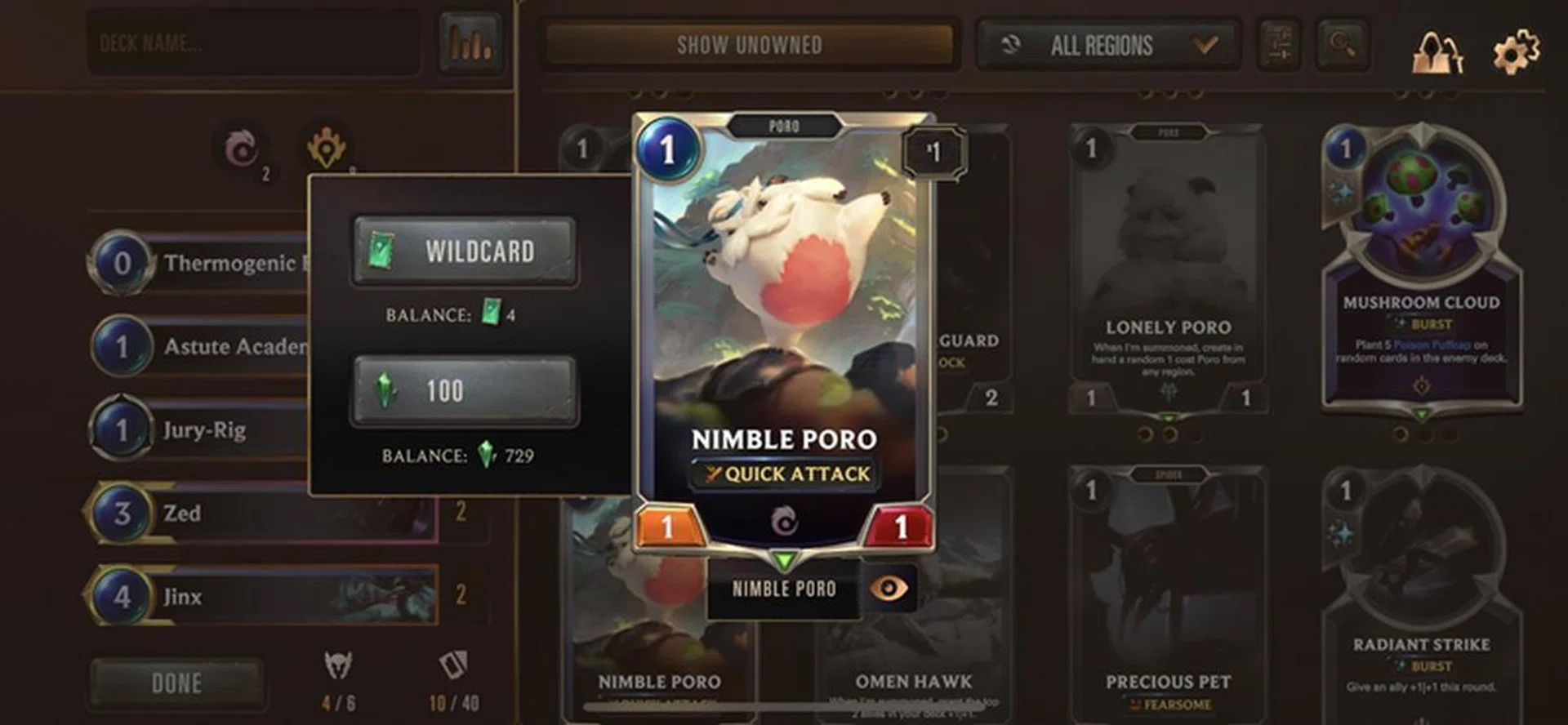
Compared to the competition, LoR's cards don't seem too fancy or overly special on paper, since they just pack the usual attack-health conventions we're used to, but once again, there's more to account for.
This is where LoR's keywords come into the picture. Conceptually, they might be similar to their counterparts in other games, but having the attacker-defender system actually gives twofold benefits. Not only does this "additional phase" of sorts open up more options for them to play with, but it means that even the ones we are familiar with have different levels of usability from other games.
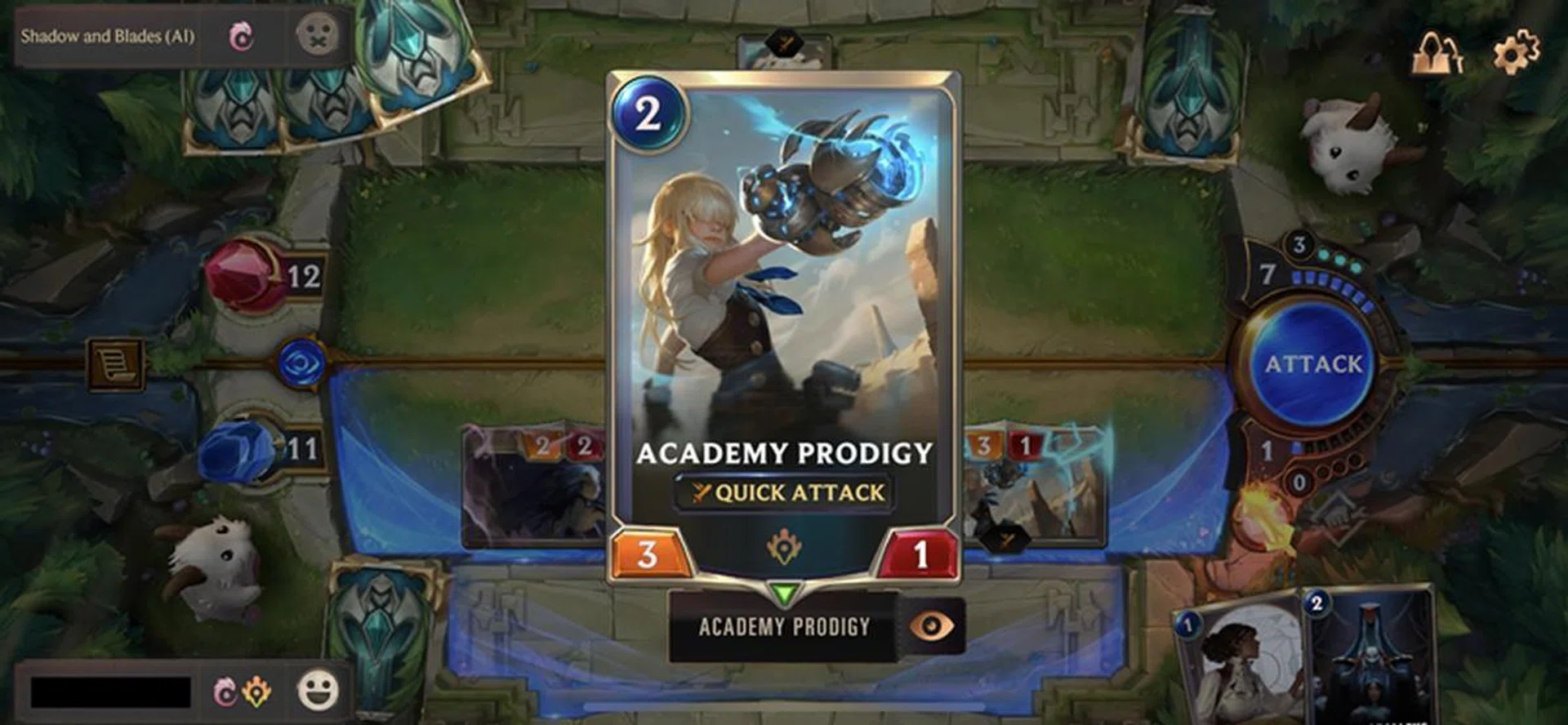
For example, the "Quick Attack" keyword in LoR is functionally similar to Magic: The Gathering's "First Strike". But in LoR, the keyword only works when YOU are the attacker and not the defender, instead of both ways like in MTG. So, there's already a clear difference in how useful the unit will be as an attacker or a blocker.
This is one of the best examples of how the attacker and defender system really adds value and increased tactical edge to Riot's card battler. Conceptually, they might look the same, but having that extra "space" to work with really makes all the difference.
It's not 100% perfect
Still, for all its good points, even Legends of Runeterra's system has its flaws too. After all, there are certain types of cards and keywords that are nothing short of tiresome to deal with, and that can be really demoralising, especially for beginners. For example, let's say you were to fight an opponent who's brought nothing but Elusive units. Units with this keyword can only be blocked with other Elusive units, so if they were to dump one on the field each turn, you'd eventually run out of your own Elusive units and it would literally be a one-sided game from there. That's no fun, and it would most certainly put people off the game entirely.
Sadly, there's not really a definite solution for these situations, and we can only count on Riot to nerf or adjust these "cheese" strategies appropriately to maintain a healthy metagame, regardless of a player's skill level. Counterplays might certainly exist, but if players are demoralised from the start, chances are they probably wouldn't have any motivation to think about them anyway.
Look on the bright side
Of course, that's just us playing the pessimist. Legends of Runeterra might still suffer from one or two of the common setbacks for card battlers, but it's not like they didn't try to mitigate said issues. Between their easier card acquisition and generally refreshing gameplay outside of these aforementioned situations, I think I can afford to close an eye. After all, there's still quite a lot that Riot seems to have gotten right on the first try, and I'd say they've done a pretty good job for a studio that's just jumped over from working on a MOBA.
All things considered, Legends of Runeterra is a great game for anyone looking to fill in that extra spot of time during your brunch, daily commute or bathroom break, especially so if you're a League of Legends fan. Speaking of which, the mobile version of the game has already released on the App Store and Google Play Store, so why not head over and give it a go?
Our articles may contain affiliate links. If you buy through these links, we may earn a small commission.