
Razer showcases a hologram AI assistant, Snapdragon-powered wearable and more at CES
Other announcements include an AI development workstation and software toolkit, while more typical reveals include new gaming chairs and Wolverine controller.
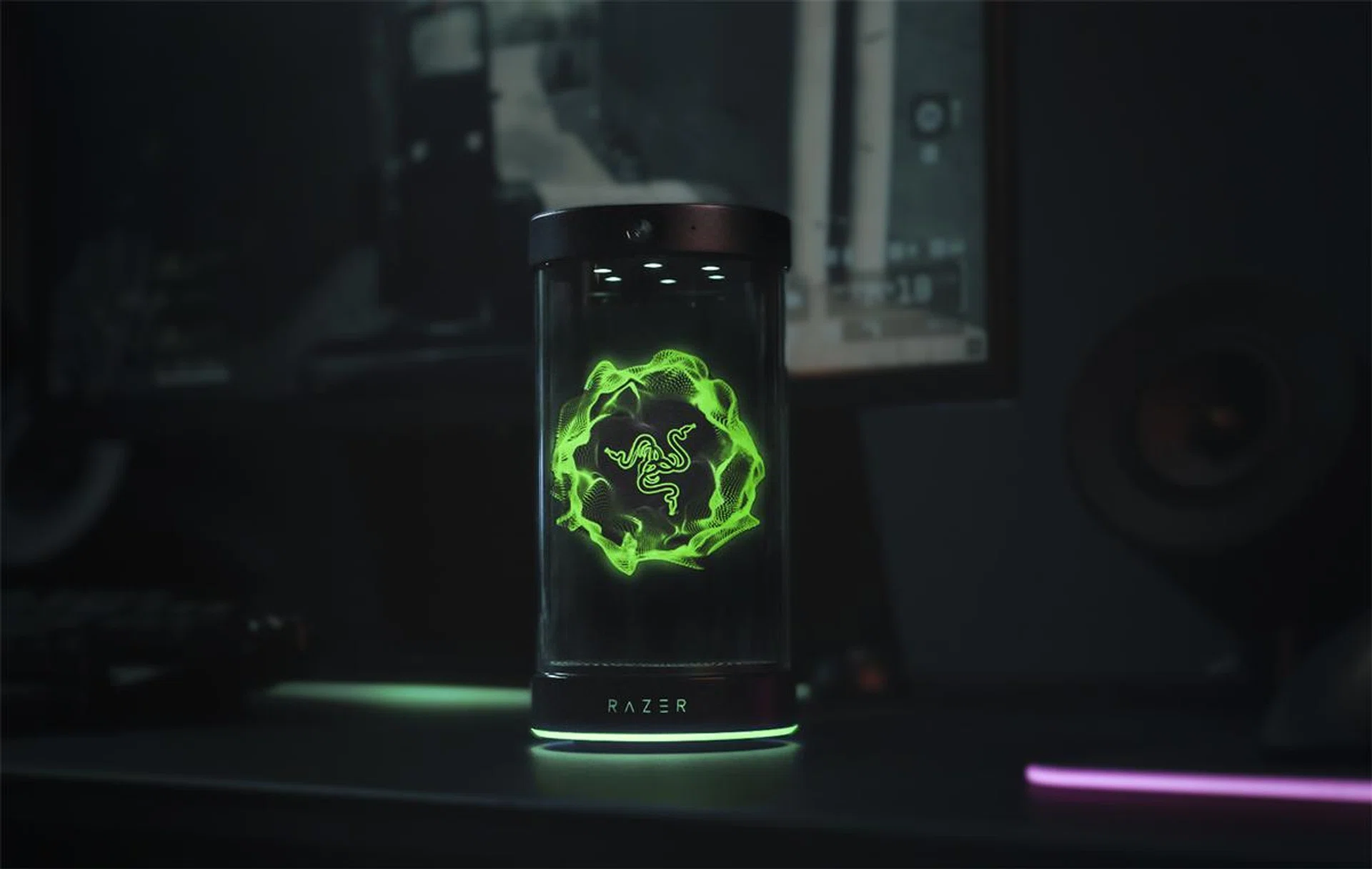
Razer is making an appearance at CES, and while it’s fair to assume that the gaming tech company would centre its showcase around, well, gaming, you might not expect that the star of its showcase in Las Vegas this year seems to be AI.
The name of Razer’s showcase this year is “The Future of Gaming” and the company makes no secret that it thinks AI will be a major part of that future, and one of the key reveals was Project Ava, an AI “companion” that sits on your desk, much like an Amazon Echo. Only this time, the defining feature that sets it apart is an animated 3D hologram inside it, complete with five different personalities to choose from.
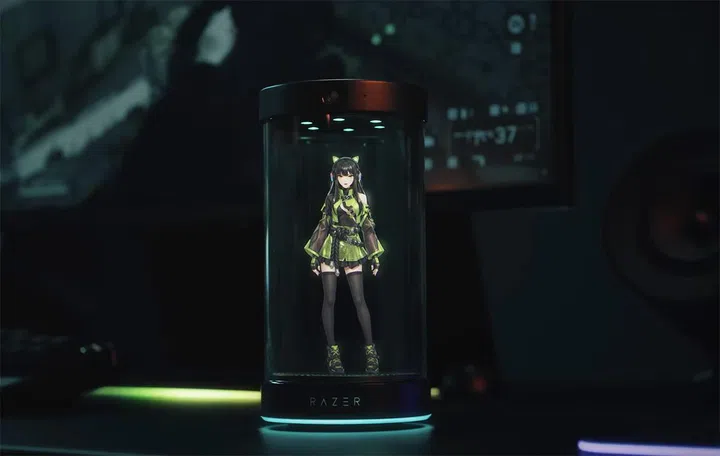
The hologram avatars are still in development, but the Ava will include five different personalities.
The Ava was first announced back in CES 2025 and billed as an AI esports coach; Razer, it seems, has broadened its focus into being a full-fledged AI assistant, with life-organising features, the ability to brainstorm and bounce ideas off you, and its original intended purpose of real-time gaming advice.
The Ava is currently based on xAI’s Grok model, though Razer has built it with what it calls “an open, future-ready architecture”, such that, in the future, users can switch between different AI platforms of their choosing. The Ava is equipped with a HD camera and dual far-field array microphones; while some questions could certainly be raised about your hologram waifu being able to constantly hear and see you, with AI assistants, it’s no novel concern.
It also uses a USB-C connection and utilises what Razer calls “PC Vision Mode” to see what’s on your screen. As such, Project Ava is compatible with Windows only. Currently, Razer only intends to ship out the Ava to US buyers. Pricing isn’t known, though customers can put down a US$20 deposit.
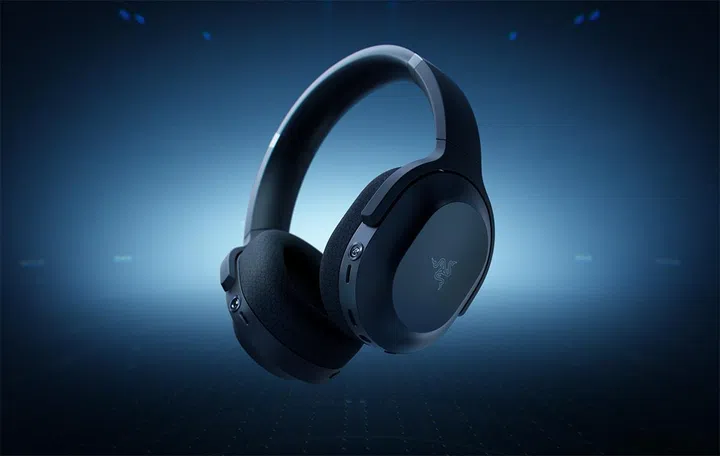
Razer eschews the traditional glasses form factor for its new wearable, Project Motoko.
Other reveals include Project Motoko, an AI wearable that takes the form of a headset, rather than the traditional smart glasses form factor. You do lose out on a display, but inside the headset is a Snapdragon-powered AI assistant that is able to see what you’re seeing via an eye-level camera on each earcup.
Unlike the Ava, users will be able to switch between models such as Grok, Gemini and OpenAI’s platforms on launch. When that launch will be, though, isn’t known yet.
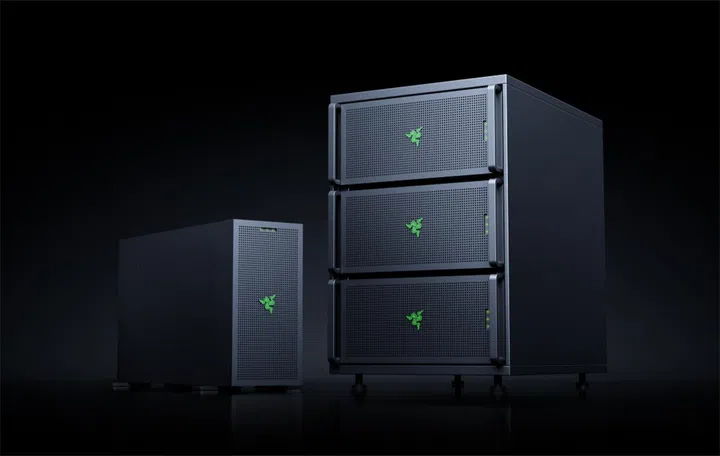
The Forge AI Workstation and its AIKit are Razer’s tools for the AI developer crowd.
The last few announcements regarding Razer’s AI efforts were targeted towards developers. This includes the Razer Forge AI Dev Workstation, a tower PC that can transition into a rack when you need to scale up, and which can hold up to four “pro-level” GPUs from AMD and Nvidia, and comes with either Ryzen Threadripper PRO or Intel Xeon W.
The second of these announcements is the Razer AIKit, an open-source toolkit for AI developers that allows for, among other things, the ability to detect your GPU and form optimised clusters, and integration with Razer AI-enabled hardware.
Finally, outside of AI, Razer also took the time to introduce Project Madison, a gaming chair centred around immersion, equipped with Chroma RGB, Razer Sensa HD Haptics and THX Spatial Audio. More typical offerings announced were the Iskur V2 NewGen line, and the Wolverine V3 Bluetooth controller. The former is up for pre-order on Razer’s website and is slated to ship on 16 January, starting at S$949, while the latter has not had its pricing or release date known yet.