
I’ve spent time with the Nintendo Switch 2 and it’s better in many ways – but I’m waiting for the games
Plenty of smart hardware improvements, but you might want to wait for its library to catch up
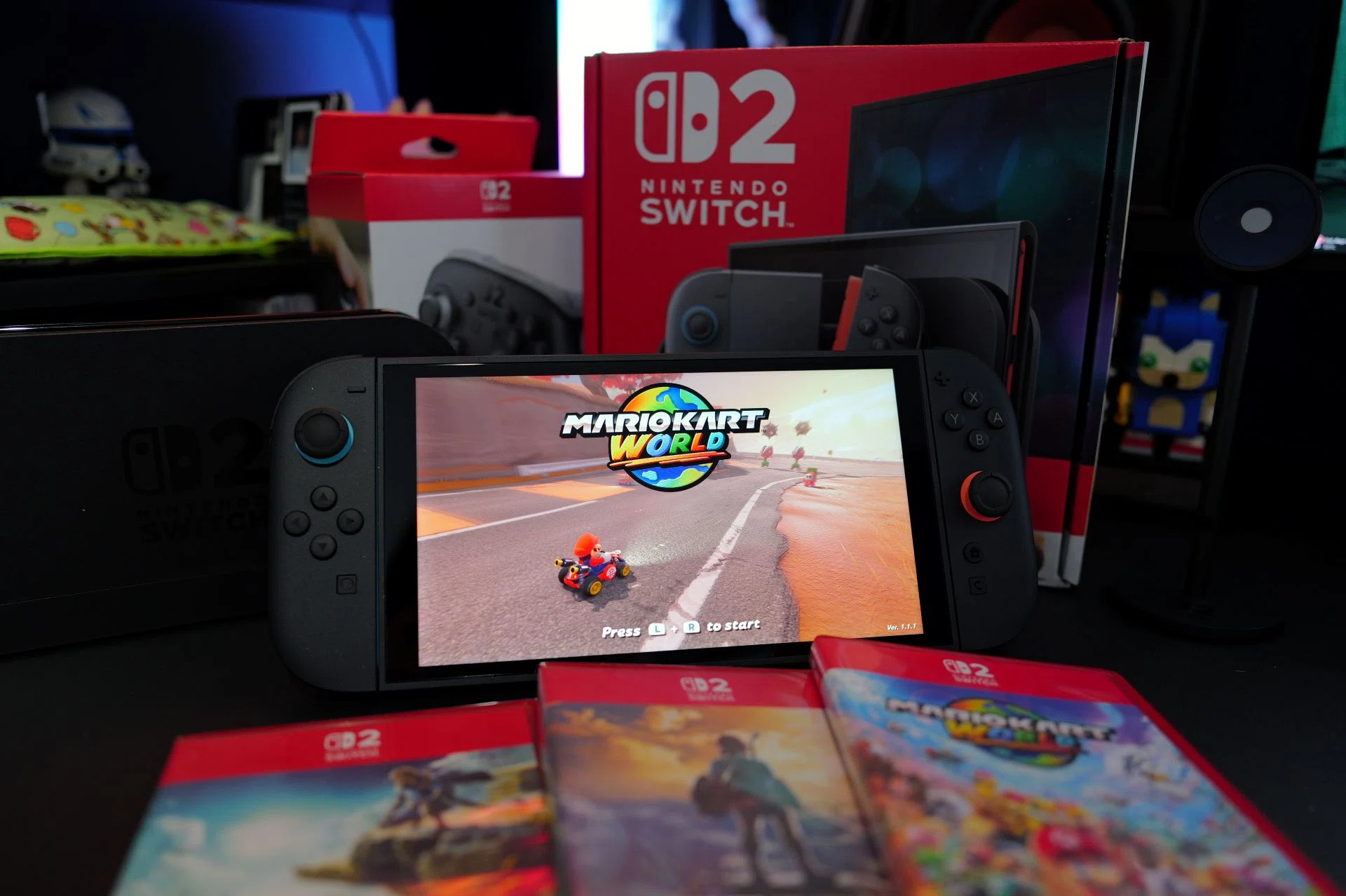
Note: This review was first published on 26 June 2025.
It’s hard to overstate just how much the original Nintendo Switch changed things when it launched in 2017. Back then, the idea of a console you could dock at home and take on the go wasn’t just clever – it felt like Nintendo had finally cracked a formula it had been chasing since the Game Boy Advance era. It was portable, it was weird, and it somehow worked.
Fast-forward eight years, and the Switch 2 has arrived – finally, in Singapore. And if the name didn’t already give it away, this isn’t a dramatic reinvention. Calling it the “Switch 2” says it all: it’s still very much the same hybrid console idea that worked so well the first time, just with more power, updated internals, and some long-overdue quality-of-life improvements. You’re still snapping Joy-Cons onto a screen – though now magnetically, not via rails – and docking it to play on your TV. It’s a careful evolution rather than a bold leap, one that quietly fixes the rough edges and smooths over many of the “yeah, but” moments from the last generation.
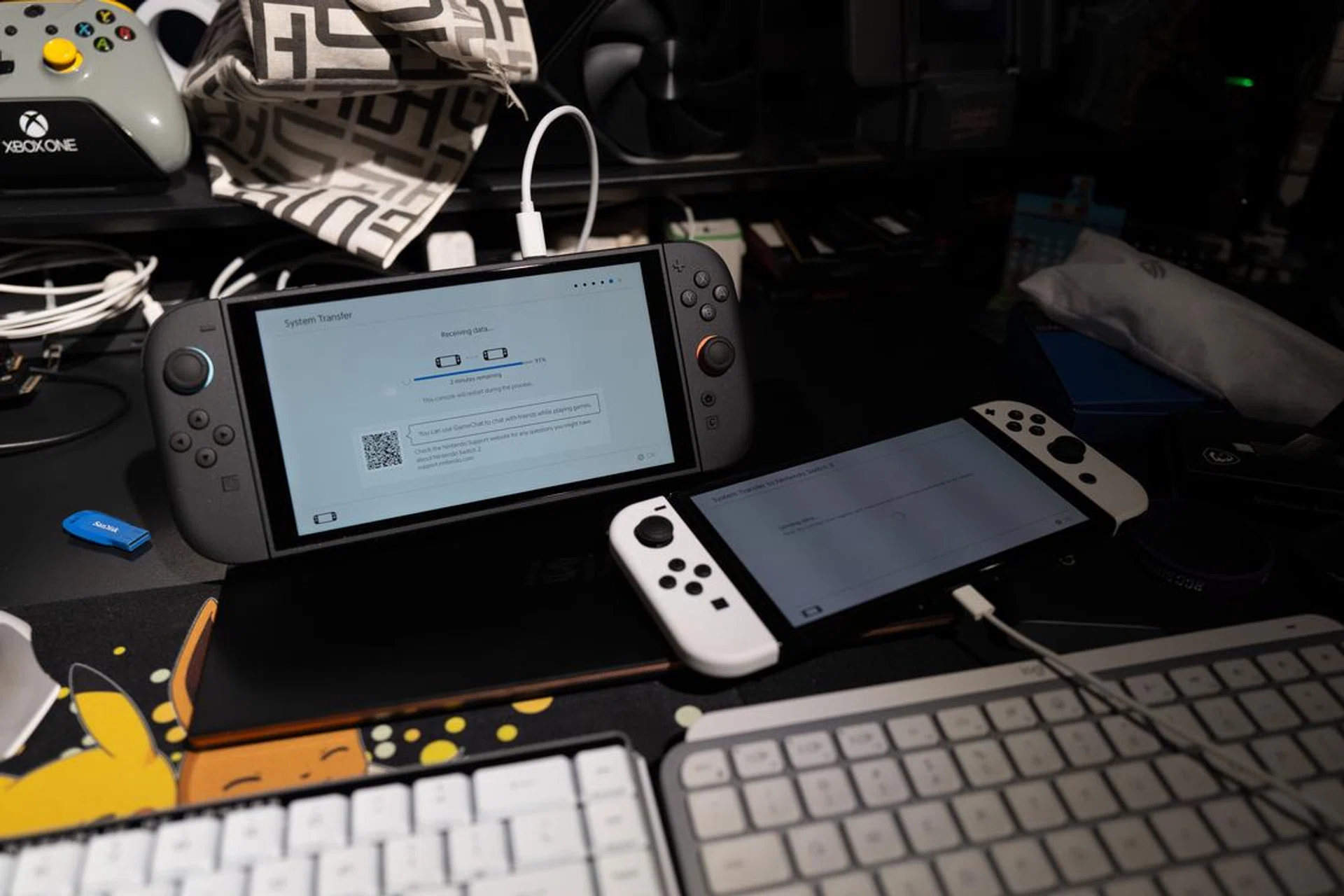
Transferring data from my Switch OLED to the Switch 2 was seamless and surprisingly fast.
But here’s the thing. It’s also more expensive, slightly heavier, and in some cases, more complicated. So the real question isn’t whether the Switch 2 is better (spoiler: it is, in most ways) but whether it’s better enough to get it now. Or wait till the next Mario or Legend of Zelda big hitter arrives.
Well, I’ve spent the last couple of weeks hanging out with the Switch 2, and here’s my take.
A screen that finally feels modern
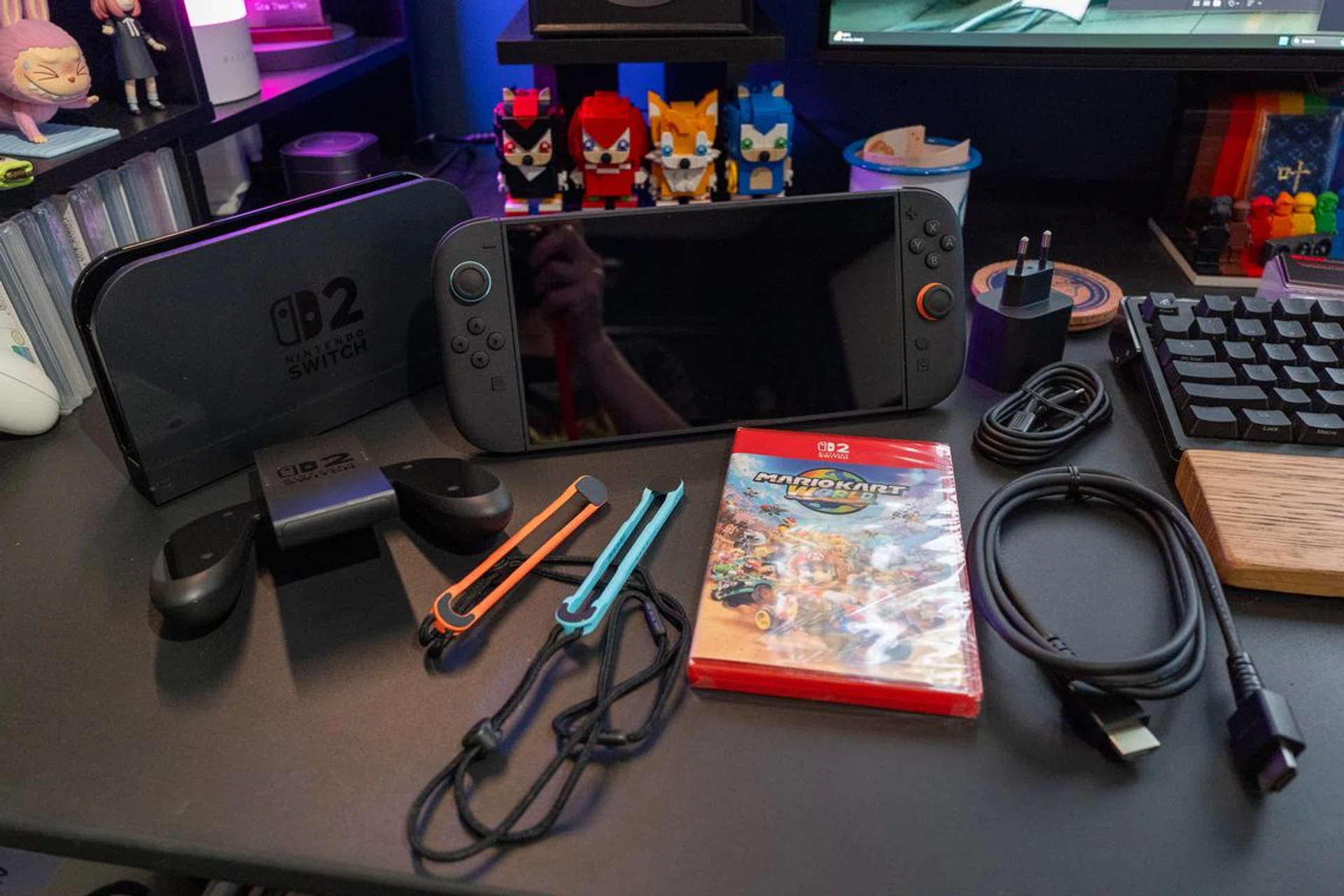
Here’s everything inside the Nintendo Switch 2 + Mario Kart World bundle
Let’s start with the display, because that’s really the bit you’ll notice first. Here, the Switch 2 bumps things up to a 7.9-inch LCD with 1080p resolution, HDR, and support for refresh rates up to 120Hz. It’s a proper step up from the original’s 6.2-inch 720p panel that quite frankly didn’t age well over the years – and yes, even the OLED version feels a little dated now in terms of sharpness and smoothness. That’s how good the new LCD really is.
That said, it’s not OLED, so don’t expect that deep and inky black look. But it’s bright, punchy, and surprisingly clean, especially in handheld mode. Games that I’ve played on were Mario Kart World and the Switch 2 editions of Legend of Zelda: Breath of the Wild and Tears of the Kingdom and all look lively, and even the menu feels more responsive. There’s HDR support too but the calibration requires some careful steps when the console is played on televisions that do not support HGiG. YouTube expert HDTVTest has the solution below:

Much faster, but not just the graphics
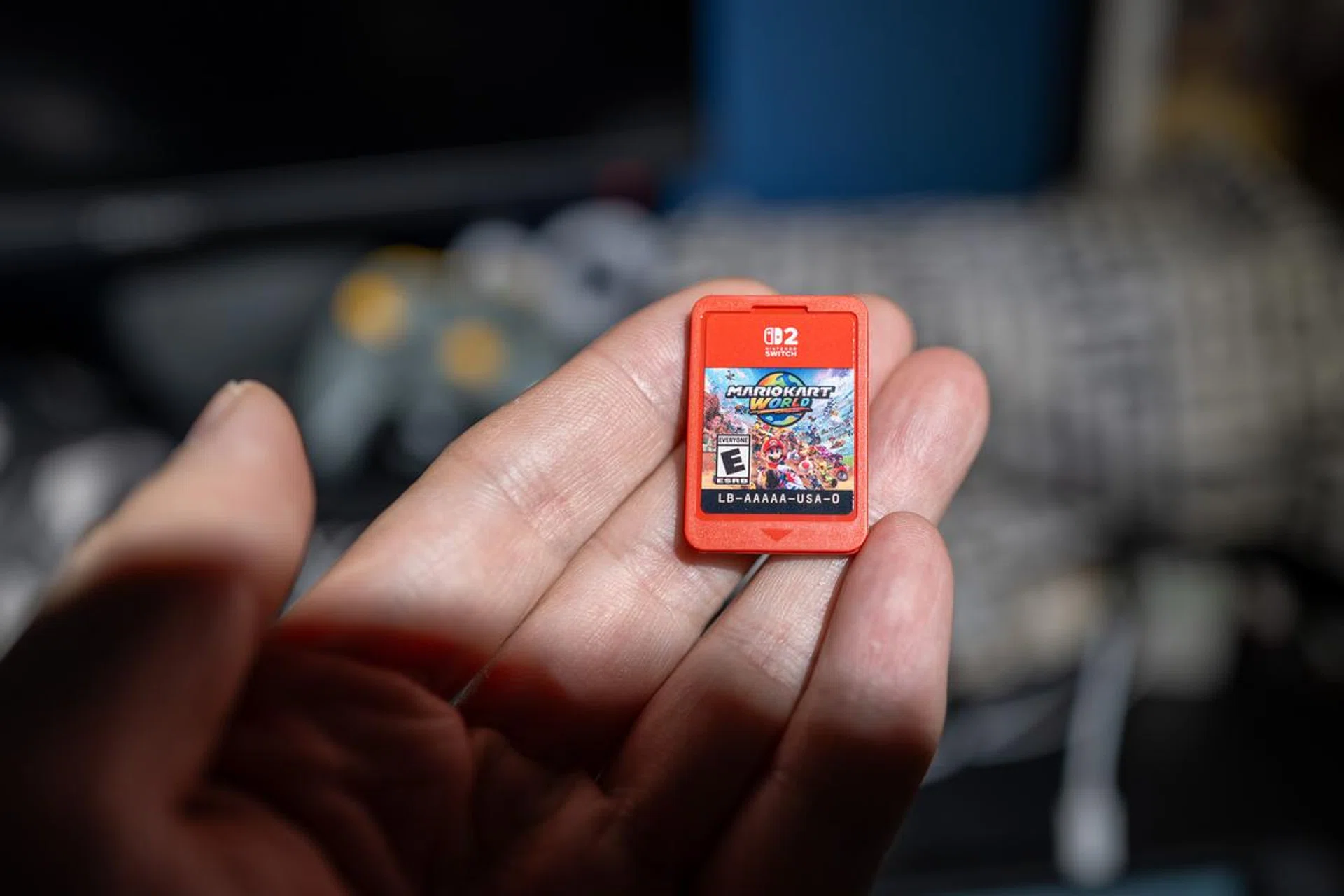
Nintendo Switch 2 game cartridges are identifiable by a new red colour.
If you’ve been using an eight-year-old Switch, this will feel like a proper generational leap. The new chip used in the Switch 2 is a custom NVIDIA Tegra T239 based on the Ampere architecture. This means it has access to features like DLSS and hardware ray tracing. All of these tech combine that lets the Switch 2 run games that would’ve made the original cry. Cyberpunk 2077: Ultimate Edition is a launch title, and while I didn’t have the game to test it at launch, I’ve read that it runs natively – with DLSS upscaling it from a lower internal resolution to run at 1080p.
And it’s not just the graphics. The system finally feels snappy overall. In-game loading times are noticeably faster, and the bump to 12GB of RAM helps keep things stable even with bigger games. Compared to the original Switch’s sluggish UI and loading screens that seem to only get worse over the years, this just feels right.
The Joy-Con dilemma
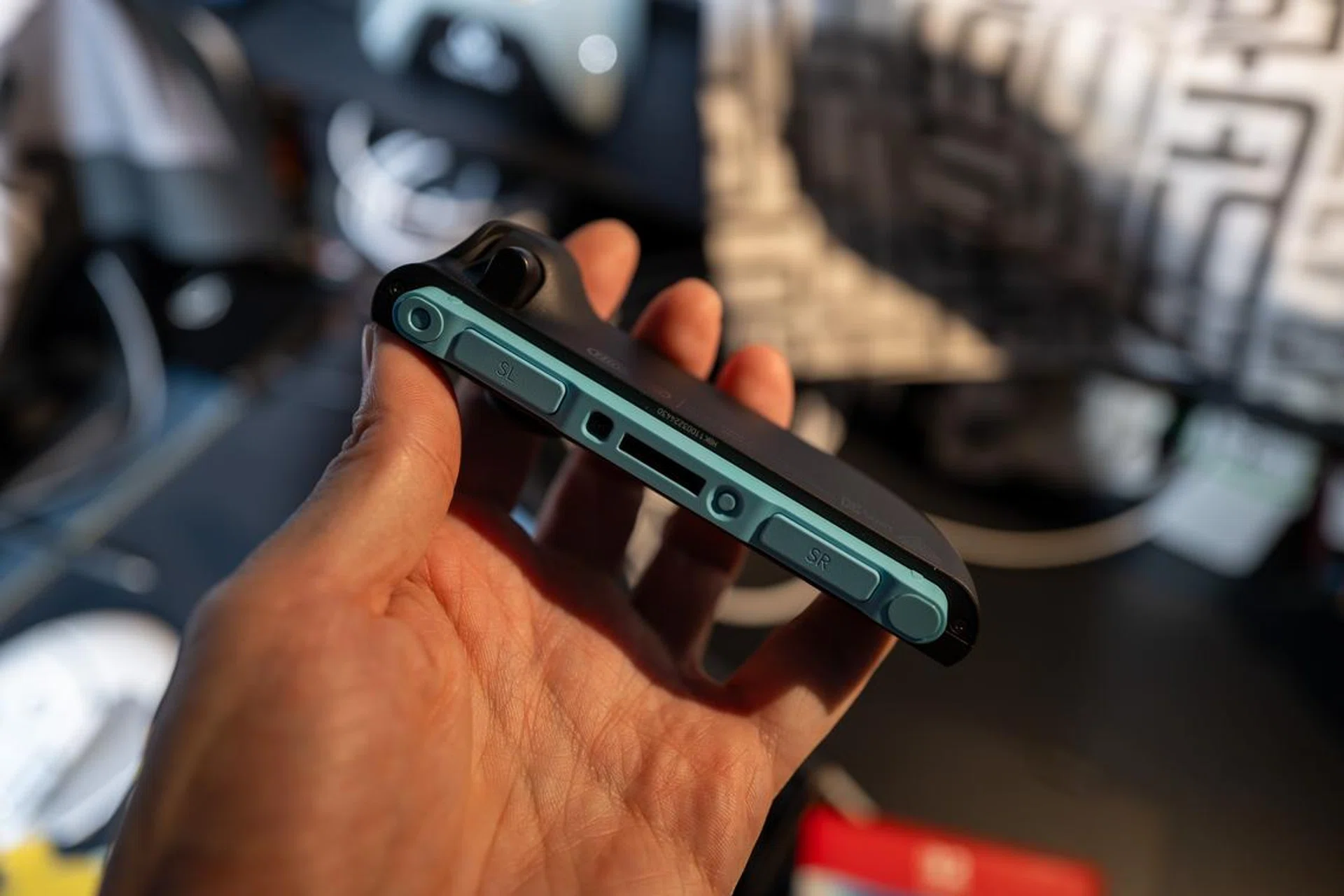
The controllers now connect magnetically instead of sliding in via rails.
The Joy-Cons on the Switch 2 are arguably the most recognisable carryover from the original, so at first glance, they look pretty familiar. But there’s been a subtle redesign. They now connect magnetically instead of sliding in via rails – and that alone makes them feel sturdier and less fiddly. The face buttons are slightly larger, the grip is better shaped, and there’s a new “C” button on the right side that links to the console’s new GameChat feature (more on that in a bit).
What hasn’t changed, and probably should have, are the analogue sticks. They’re still using traditional potentiometers instead of Hall-effect sensors, which means stick drift is still a potential problem (update: it’s already been reported). It was a major flaw on the original Switch, and I honestly expected Nintendo to fix it this time. The fact that they didn’t feel like a real missed opportunity.
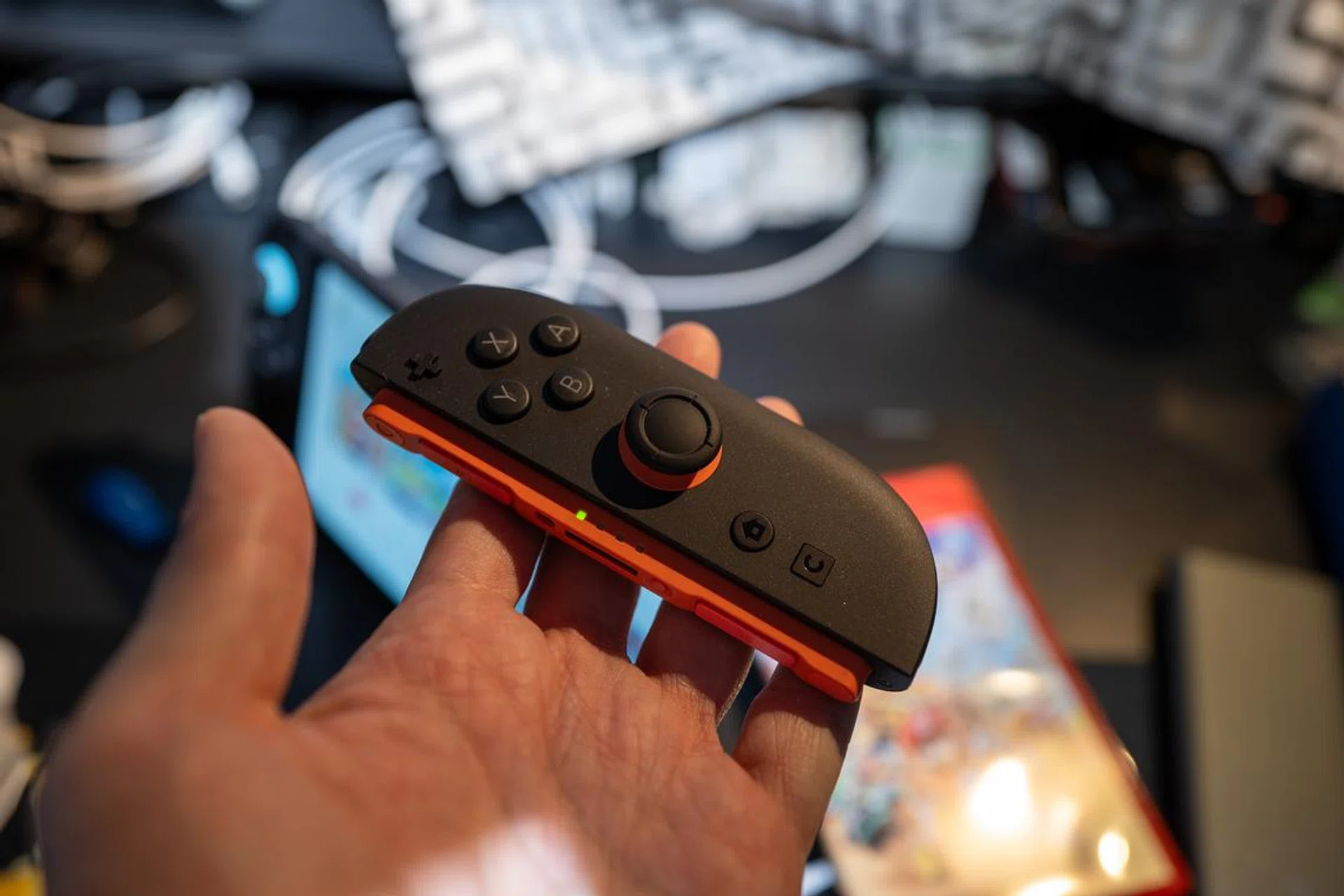
The right Joy-Con also comes with a new “C” button to open up the GameChat function.
That said, they do feel better in hand. The improved haptics are more precise, and motion controls seem to track a bit more accurately. It’s just that little asterisk of knowing the one fix we all wanted isn’t quite here.
Battery life isn’t better but not worse off either
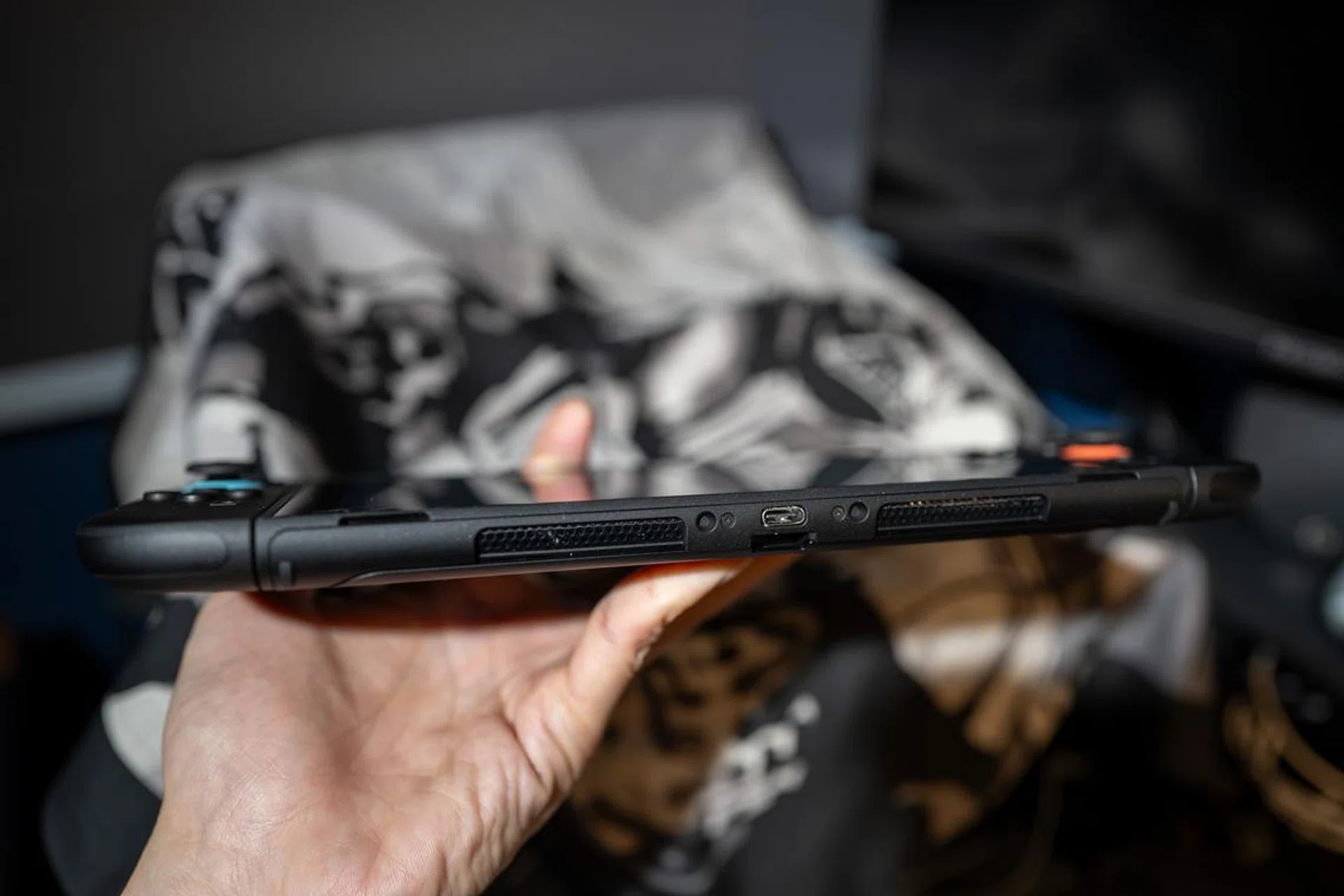
You can charge the Switch 2 on either of the top or bottom USB-C port.
I’m afraid battery life is shaping up to be the Switch 2’s Achilles’ heel. Nintendo says it depends on the games you’re playing, with a ballpark estimate of two to six hours. But in practice, I didn’t come close to that upper range. Across three games – Mario Kart World and both Switch 2 editions of the Legend of Zelda titles – none lasted more than three hours. To be fair, that’s roughly on par with the OLED model, but if you’re planning long road trips or flights without inflight charging, a good power bank is going to be essential.
The good news is that charging is noticeably faster this time around. You also get two USB-C ports – one on top, one below – and both can be used for charging or connecting accessories like the new Switch 2 Camera. That flexibility is nice, especially if you play in tabletop mode. There have been early reports of battery drain while the console is asleep, but Nintendo says it’s working on a firmware update to patch that. Classic launch teething issues, really.
GameChat is surprisingly fun
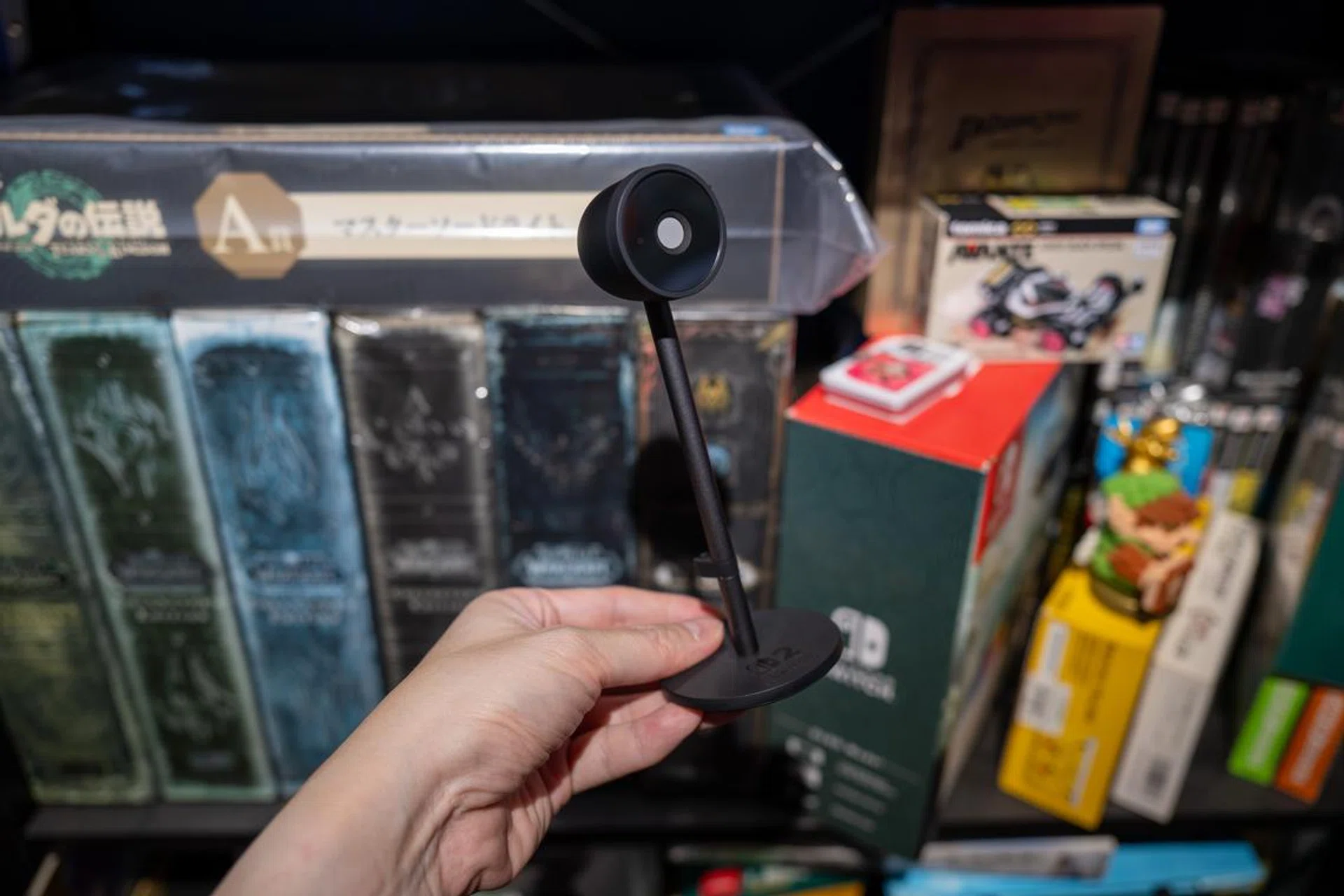
The Switch 2 Camera is great but the console is also compatible with quite a few other PC third-party webcams too.
Nintendo has always been a bit behind when it comes to online features, but GameChat changes that. You now get voice and video chat, screen sharing, and up to 12-person group calls, all baked into the system. And it works!
I tried it while playing Mario Kart World with a group, and it genuinely made the race more chaotic – and more fun. We had the Switch 2 Camera plugged in, and our faces were being tracked and broadcast live into the game, floating just above the karts. At one point, I was desperately trying to hold my place in a Knockout Tour round while someone else was casually pulling faces at me, and another player was making monkey faces. It’s silly and strange, but oddly whimsical too – seeing your opponent’s actual face roll their eyes as you hit them with a shell adds a kind of personality that Nintendo’s always lacked online.
It’s not going to replace Discord, mind you. But it’s finally functional enough that you don’t have to whip out your phone just to talk to a friend during a Splatoon match.
It still works with your Switch games
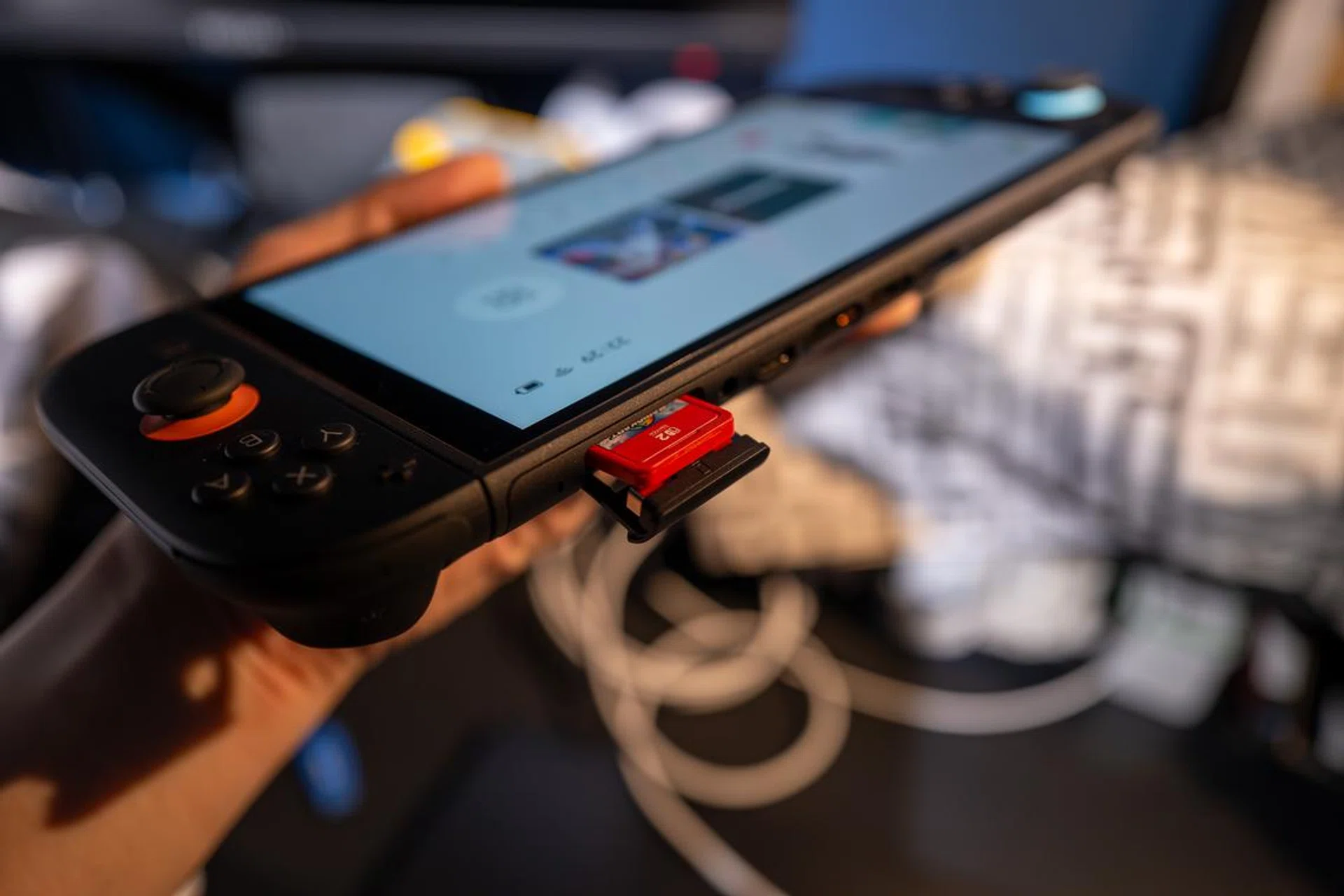
Yes, you can slot in your Switch 1 game cartridge and play them on the Switch 2.
Backward compatibility is here, thankfully. Almost every original Switch game works on the Switch 2, and many get improvements like better load times or smoother performance. Digital purchases carry over too, so you won’t have to give up your entire collection.
There’s a slight catch, however. Some titles are getting “enhanced” re-releases, which may cost extra if you want the upgraded version. For instance, if you already own the original Legend of Zelda: Breath of the Wild, there’s an option to purchase the Switch 2 edition Upgrade Pack for US$9.99. If you’re a Nintendo Online + Expansion Pack subscriber, this becomes available for free. Also, a handful of new exclusives (including remastered GameCube classics) won’t run on the older Switch. But for the most part, the library transition feels painless for me.
Speaking of games, the Switch 2 comes with 256GB of internal storage, which should go a long way if you’re buying digitally. By comparison, the original Switch only had 32GB, and even the OLED model topped out at 64GB. There’s still a microSD slot for expansion, but here’s the catch – it only supports microSD Express cards. That means your existing microSD cards won’t work, which is a bit of a bummer. But to be fair, it also makes sense. MicroSD Express cards are significantly faster when it comes to loading or running games, and Nintendo probably didn’t want its new hardware to be bottlenecked by an older, slower standard.
Final thoughts
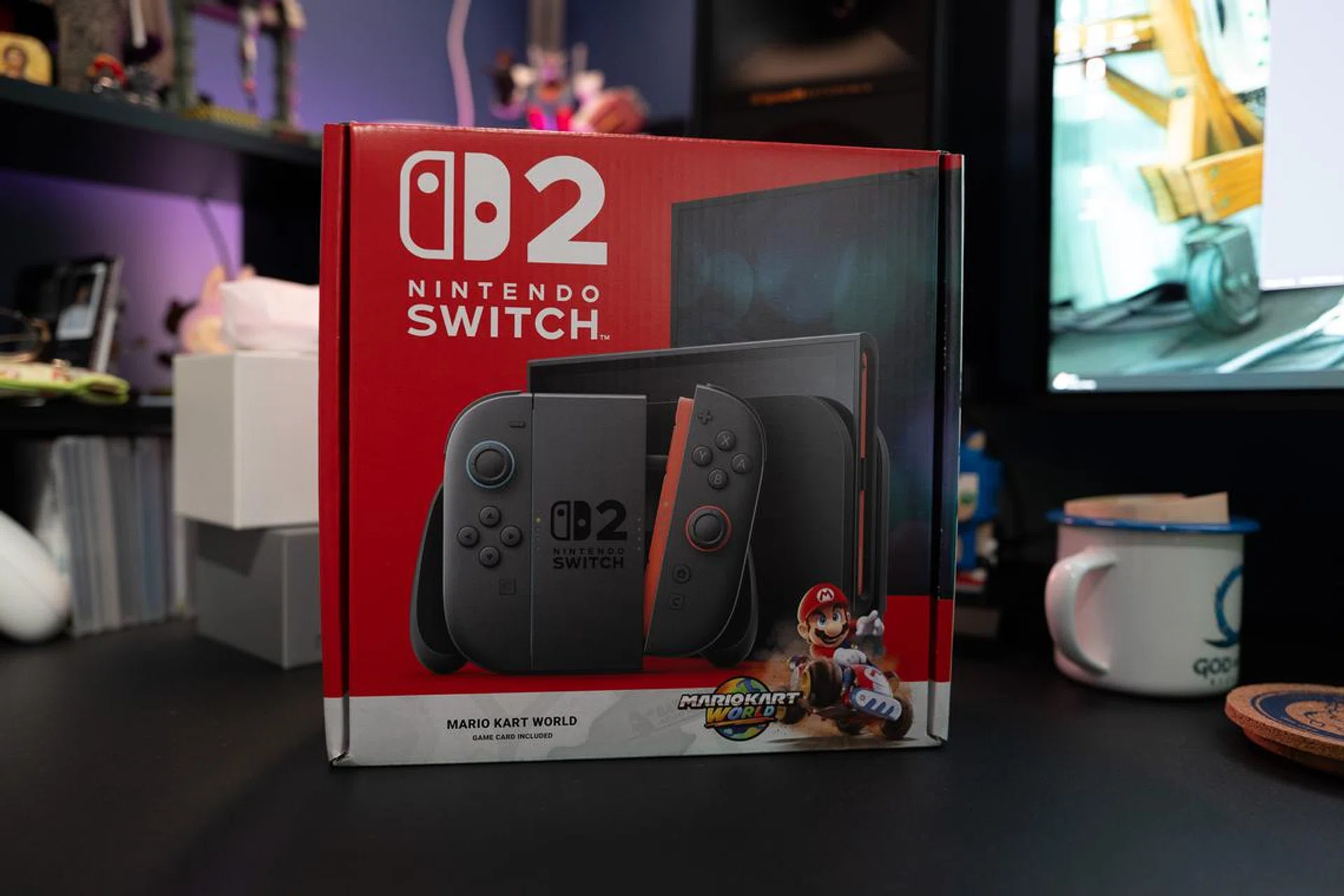
It’s worth pointing out again that the Singapore version of the Nintendo Switch 2 + Mario Kart World bundle comes with the physical game cartridge (and box), not a game code.
If you’ve been holding on to a first-gen Switch, this is an easy recommendation. A no-brainer, even. The Switch 2’s display is bigger and sharper, games run better, and the overall experience is just more enjoyable. It’s what the original Switch always promised – only now, the hardware’s finally caught up to the idea.
But if you’ve already got the OLED model, that’s trickier. The screen on the Switch 2 isn’t necessarily more vibrant, just larger and faster. The performance gains are real, but unless you’re eyeing specific games (like Cyberpunk 2077: Ultimate Editon) that benefit from DLSS or need the faster load times, you could probably hold off a bit longer.
Of course, all of that becomes moot if you’re planning to play new titles like Mario Kart World, which aren’t backwards compatible. And the price hike is hard to ignore. At S$719, the Switch 2 isn’t exactly aiming for impulse buys. With first-party games now expected to retail at S$119.90, it’s clear Nintendo knows its core fanbase isn’t the same as it was in 2017. The original Switch was a family-friendly crowd-pleaser. The Switch 2? It feels more like a premium upgrade that is built for long-time fans who’ve grown up, stuck around, and are now willing to spend more to stay in the ecosystem.
The Nintendo Switch 2 is now available for $719 (console only) or $769 (console and Mario Kart World bundle) at the Nintendo Official Store on Lazada and Shopee, as well as major retailers in Singapore.