
Mandragora (PC) impressions: A 2.5D soulslike that’s compelling despite its rough edges
An ambitious game that's equal parts polished and imperfect. #mandragora #soulslike
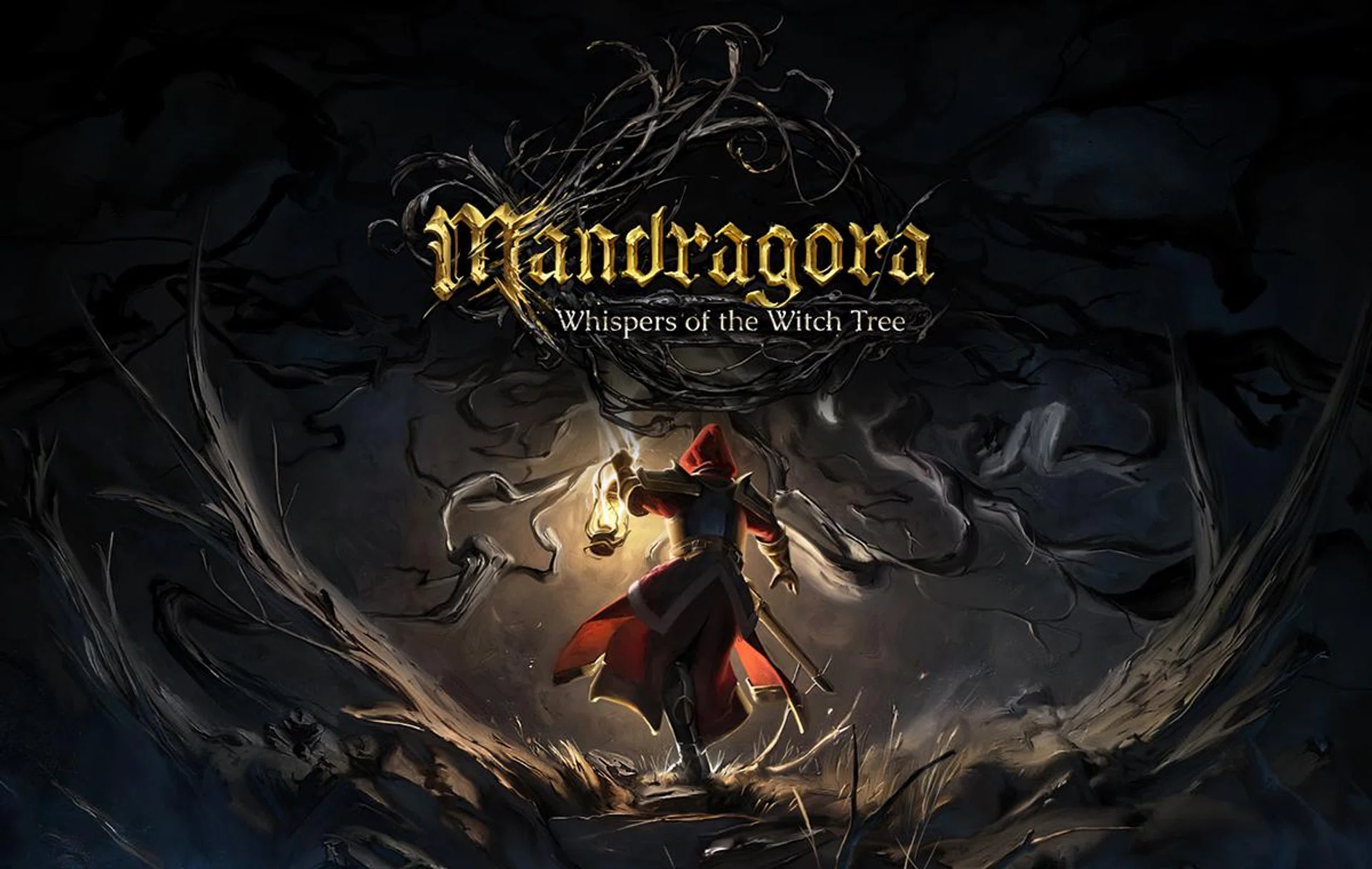
Image: Primal Game Studio.
Having been in development for more than half a decade, Mandragora: Whispers of the Witch Tree comes off as a pretty ambitious indie game. Developed by Primal Game Studio, which counts over 60 employees in its staff, the game is pitched as having over 40 hours of gameplay, and will cost S$38 at its base price.
This ambition also comes through in the game’s premise. Mandragora is positioned as a 2.5D soulslike with metroidvania elements, though the developers are quick to point out that the game is an RPG at its core. Its release date is currently not that far out, being set at 18 April right now, but the studio was kind enough to link a demo for the game (the second one that's been released for Mandragora), which covers the first few hours of gameplay (and which will be publicly available soon). I spent some time over the week to try it out.

An example of the hand-painted art style used for NPC dialogue, which is pretty neat.
Set in a medieval fantasy world, you play as an Inquisitor, tasked by the King Priest to hunt a witch, all the while a mysterious force known as Entropy casts its shadow on the game’s world of Faelduum. So, a dark fantasy setting, not too far from what to expect from a title that calls itself soulslike.
And indeed, there are certain aspects of that genre that the game nails. Mandragora's atmosphere is a gritty one, and much of the game's worldbuilding supports it. The wilderness is almost perpetually filled with enemies, and some of the key points in the demo, such as the infestation of Old Wickham by bandits and monsters, and the destruction of West Wickham told to you in dialogue, builds a world where safety is no guarantee. The use of colour is effective here, too; the towns of Crimson City (where you start out) and Wickham are noticeably warmer and a touch more inviting than the outside world. This even extends to the Witch Tree, an area that becomes a mini-settlement where friendly NPCs you meet set up shop.
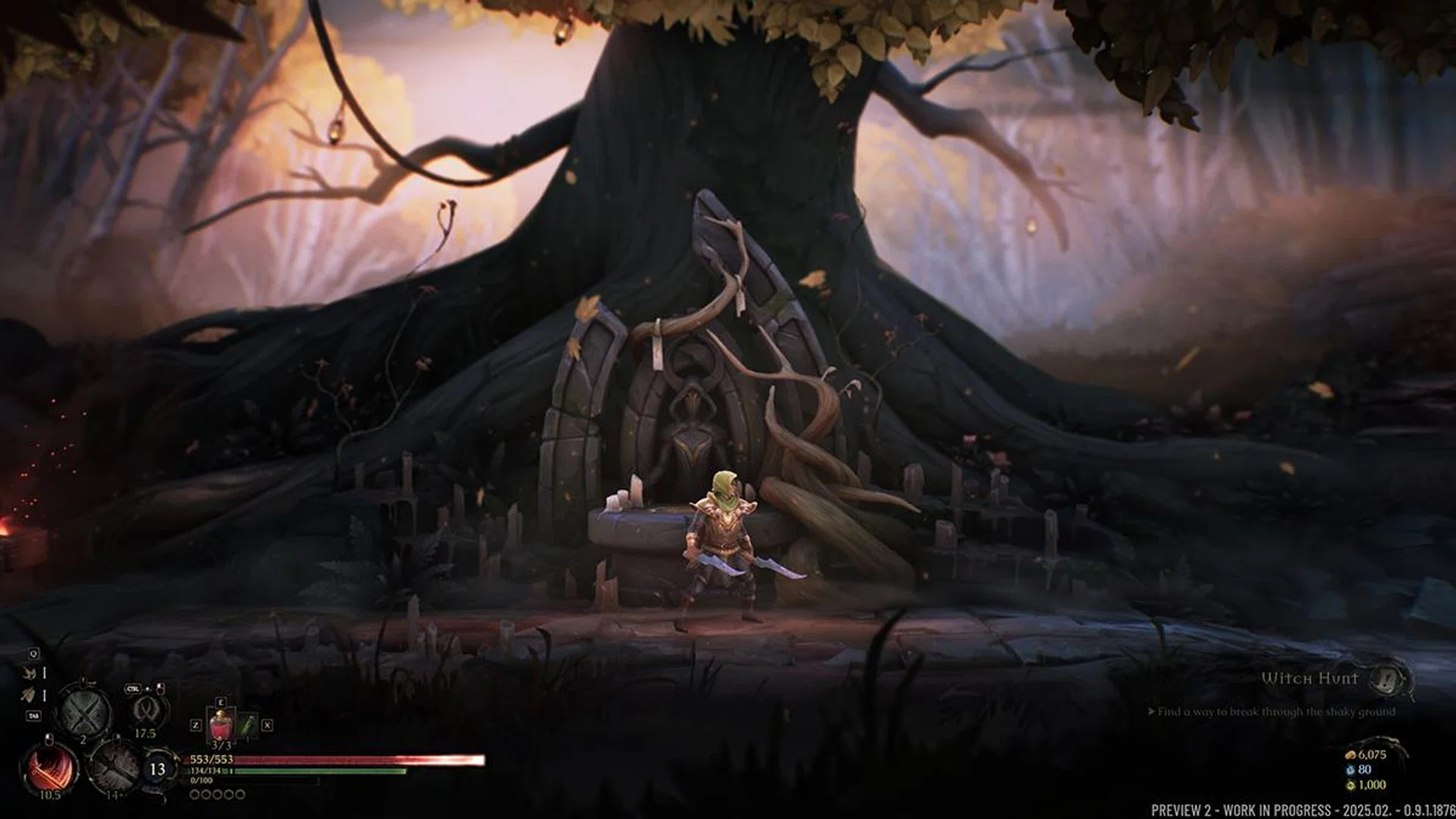
The Witch Tree, one of the more calmer areas of the game.
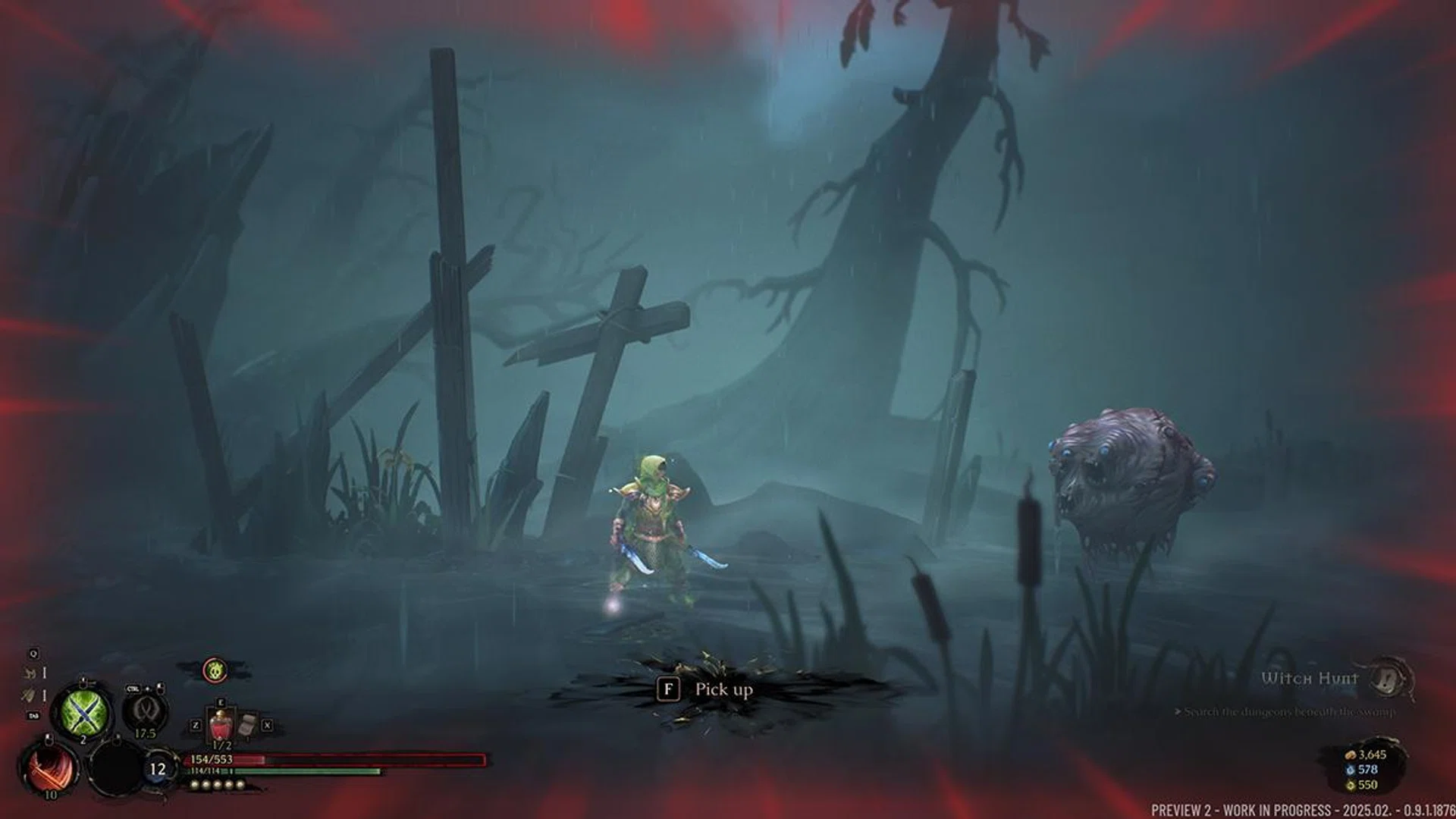
Gravseep Swamp, a desolate and hostile area the game has you explore.
But it can also be a bit hit-or-miss. The game's art direction is certainly polished; the use of hand-painted portraits for the NPCs you talk to is a nice touch, and above-surface areas, like the towns, the Witch Tree and the murky Gravseep Swamp are nicely designed. However, at its weaker moments, the game's setting falls in a drab, grey and muted colour scheme where the different environments sort of blend together.
Some of the underground areas currently in the demo, for example, risk being consigned as to just 'generic subterranean stage' in terms of their visuals; the brick walls and rocks that are consistently used throughout these kinds of areas, combined with the cold colours, don't really help that either. This near-monochromaticism is unavoidable when you’re depicting a dark fantasy world, especially an area without much natural light, but a lot of the little details that make such a setting pop don’t always translate into a sidescroller where, by the very nature of the format, many of those details fall into a background that you’re constantly running past.
It's still too early to tell, though, and perhaps this critique is just a side effect of the early game consisting of rather gloomy settings. The trailers hint at more visually diverse areas, and as the game progresses it's likely that other elements of game design like the enemies used and the obstacles faced will help define a certain area when visuals alone can't. For instance, I felt that the mausoleum at Graveseep Swamp, despite having visuals that look somewhat similar to the Wickham Sewers before it, was more interesting in its use of different enemies, elevators and more complex platforming.
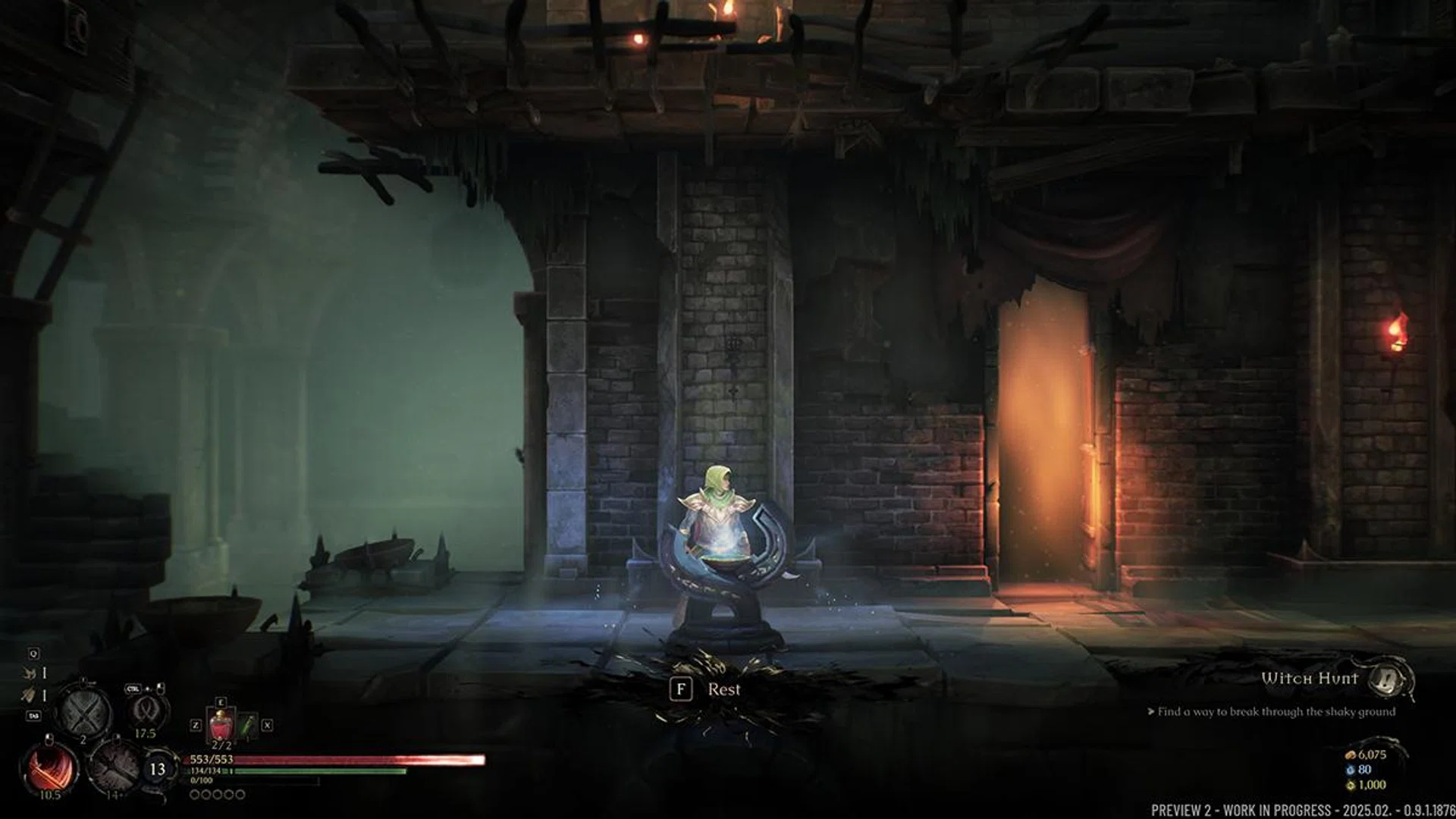
The Wickham Sewers.

And the mausoleum at Gravseep Swamp. Although these two areas end up being interconnected, you might not notice the more intricate details that sets these two areas apart when you're running around.
Apart from being soulslike in its environment, the game is also characterised as such by its mechanics and gameplay. A key feature of Mandragora is its bonfire equivalent: The Witch Stone, a respawn and rest point that replenishes your Health Flask. It also allows you to do a bit of character management, as it’s where you can level up your character, fast travel, and access your skill tree (though you can also do that through the always-accessible character window).
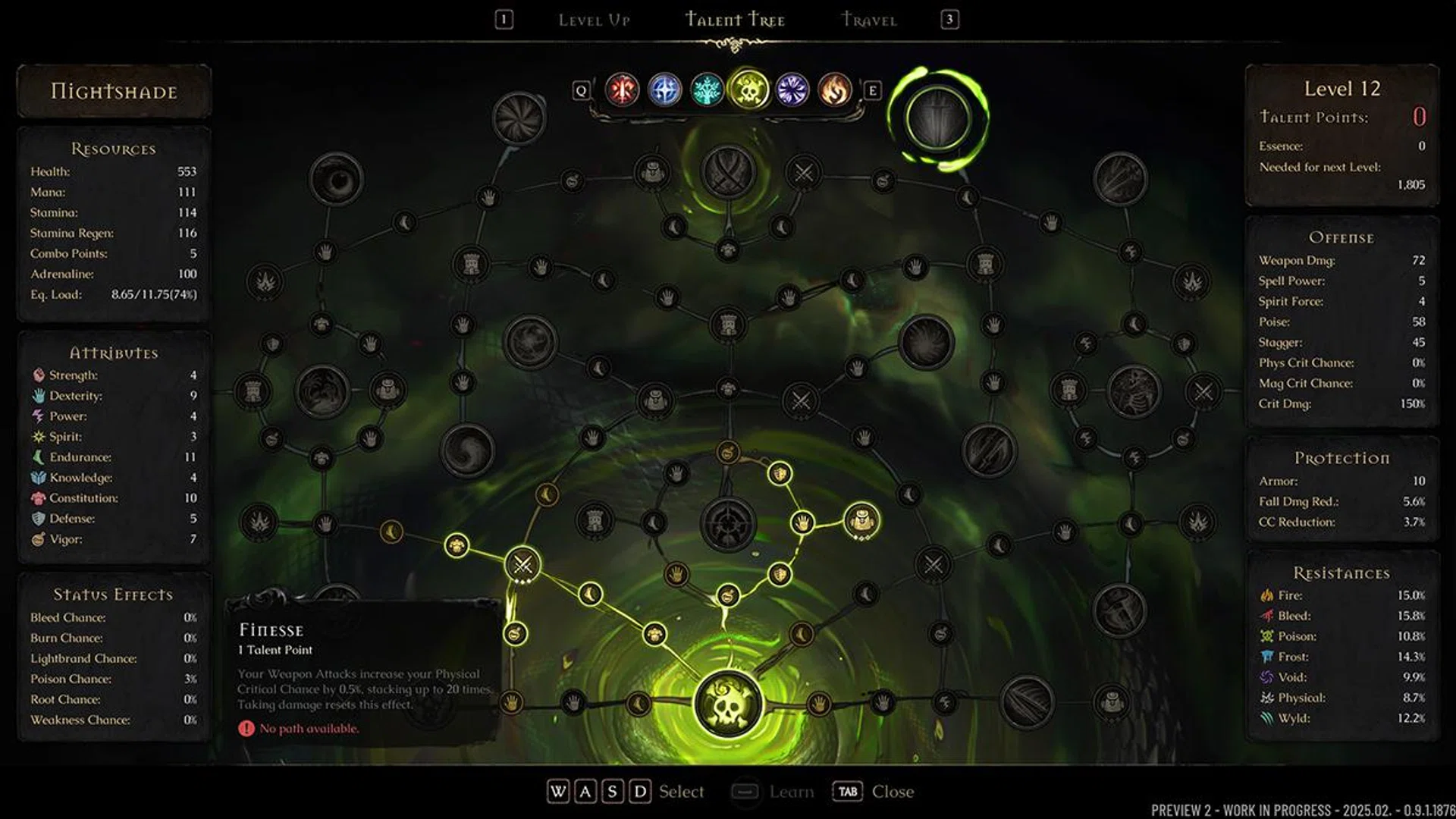
Mandragora's skill tree for the Poison skill, which is native to the Nightshade class.
Speaking of the skill tree, this is another aspect where the game’s ambition comes through, as Mandragora offers over 200 skill upgrades, spread out through the game’s six classes. Although most of the skill upgrades are for your character’s basic stats like Strength, Dexterity and Endurance, there are special talents that you can unlock once you go far enough into the skill tree, and talents that are native to the other classes become available as well, once you reach Level 25.
The class system is another part of the game where the game displays its strength in offering options for play style. The game provides you with six classes: Vanguard, Spellbinder, Nightshade, Flameweaver, Wyldwarden and Vindicator. The demo only allows you to pick the former three, and those three classes somewhat resemble the archetypal knight, mage and thief classes. Personally, though, I think it may have helped make the demo more interesting if at least one of the other classes were also made available, as they seem pretty unique (the Vindicator, for example, has a vague but compelling “command over celestial energies”).
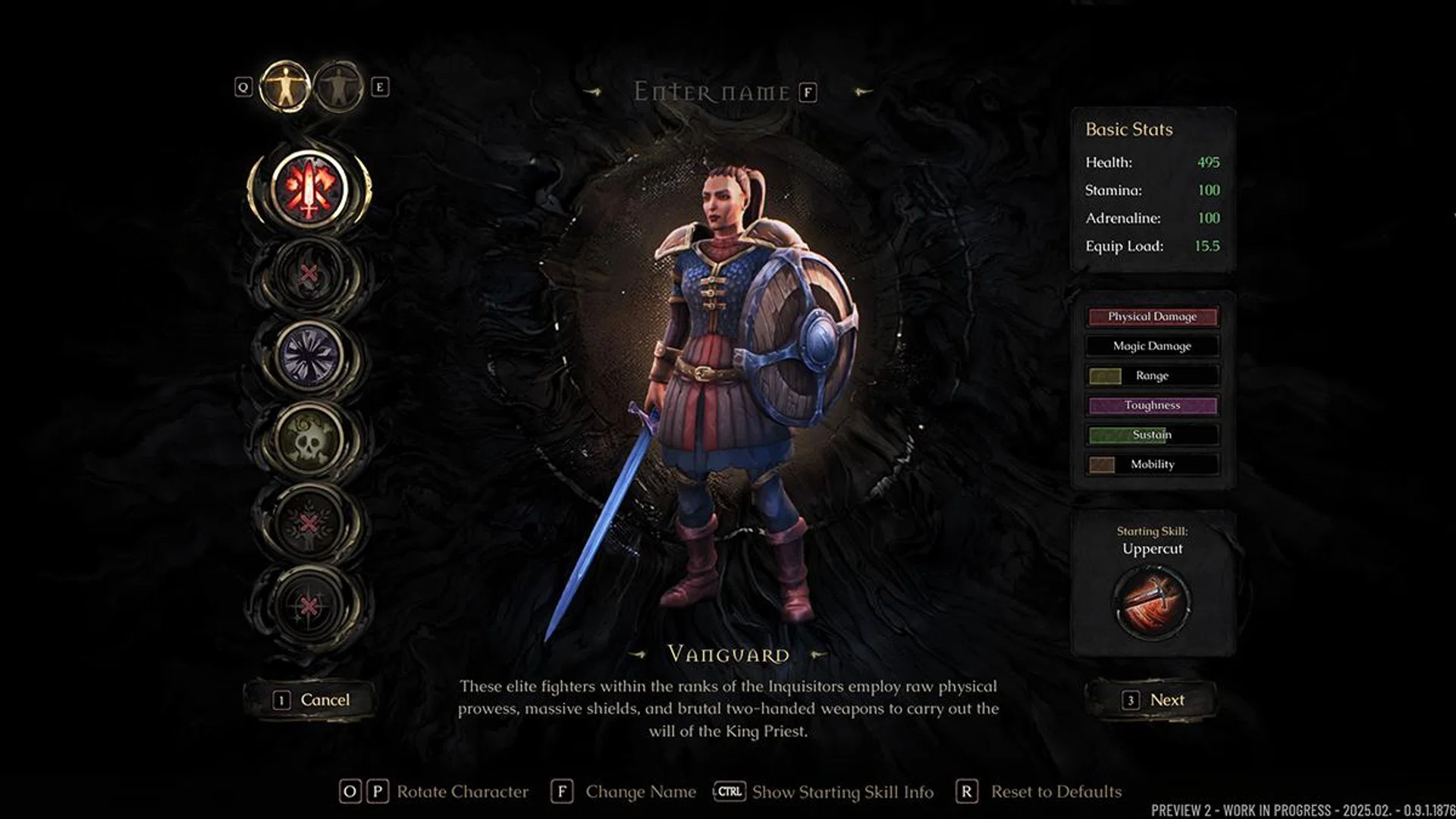
Character creation, with the classes on the left.
The game also encourages you to be more coordinated and rhythmic in combat, and features the stamina bar (a staple of the soulslike genre) that punishes you if you decide to get too close and too gung-ho with a strong enemy. Actions also have weight to them; if you find yourself spamming your light attack on one enemy and needing to dodge when another sneaks up behind you, you won't immediately be able to evade or sprint away while your chain of attacks is ongoing. This might be a double-edged sword for some, as it results in pretty slow and clunky gameplay which, while intentional, might not be suited for those who expect a more fast-paced style of play in their sidescrollers (this is unavoidable for a more nimble class like the Nightshade, too).
Since platforming was mentioned above, this is a good time to talk about the metroidvania aspects of the game. Exploration is a key part of Mandragora, and often times the game will reward you for doing so, with treasure chests hidden in nooks and crannies, destructible walls, and ledges and ladders that you can climb. Every so often, you'll also find locked doors, some of which, once unlocked, act as shortcuts back to areas you've already discovered so you don't have to backtrack out. This aspect of the game is helped out by the fact that the map is quite layered, with multiple levels making up one single area.
As for platforming itself, the game offers certain routes that are only accessible by jumping and grabbing ledges, which at times also allow you to avoid enemies on the ground and obtain rewards hidden in corners outside the screen on ground level. There are certain sections where platforming is mandatory to progress too. The platforming physics are sound; you can get the hang of gauging the distance needed to jump from one ledge to another, but sprint jumps are one of the clunkier parts of platforming.
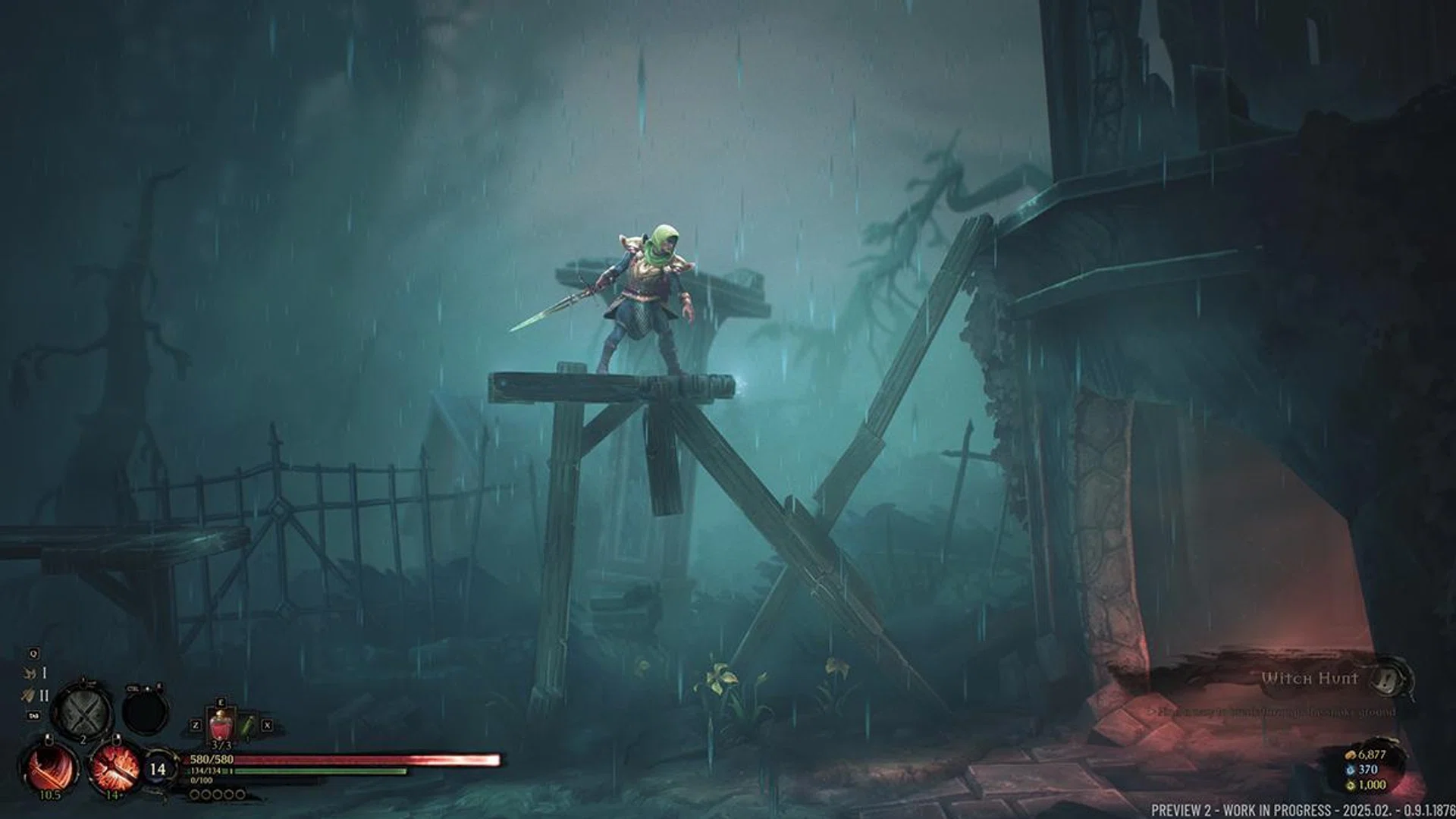
Wooden platforms are one of the cues the game uses to nudge you to explore upwards.
A quick word on the technical aspects of the game, performance is mostly smooth, though frame drops are still present in the game. Don't get me wrong, it's rare enough that it doesn't affect overall gameplay, but one wrong stutter in the middle of combat might incite a bit of rage. It's still a demo, so hopefully Primal sorts it out before the release date, especially as it's pretty close. I do also lament the lack of key rebinding; the sprint key ('F') being next to the WASD cluster (especially 'D') has led to a few fumbles during platforming and trying to evade enemies.
Overall, it's no touch-and-go game; even in this limited demo there's still plenty of areas to explore. It might not be for everyone, but I suspect those looking for a sidescrolling almost-hack-and-slash can rack up a number of hours on this game. Aside from the classes mentioned above, there'll be other things to look forward to once Mandragora fully releases as well, such as the realm of Entropy, accessible through the Witch Lantern (though it doesn't appear to be available in this demo), and a continuation of the story, which the demo only covers a portion of.
If you're one of those people and would like to try the game for yourself, the demo is available on their their Steam page here. Mandragora will release on April 18 for PC via Steam and Epic Games Store, PS5, Xbox Series X|S and Nintendo Switch. For Steam at least, the game will cost S$38 for the standard version, and S$48 for the Digital Deluxe version, with which you'll get the soundtrack and a digital artbook.
Our articles may contain affiliate links. If you buy through these links, we may earn a small commission.