
Is your network intelligent enough to keep you gaming?
With cloud game streaming services set to take gaming options to new heights, in addition to the explosion of virtual esports events, is our current network really up to the task?
Note: This feature was first published on 13 Nov 2020.

Keeping up with new and growing network demands
The popularity of online gaming and eSports has gone up as we've been exposed to more immersive games and better-funded and wider-reaching online tournaments. Companies like Apple, Amazon, Microsoft, NVIDIA and Google are or have already launched Cloud-based gaming platforms so that players can play on any device no matter where they are in the world.
Singapore has set its sights on becoming an eSports hub in the region, with a government-backed eSports training facilities and a new trade body for the industry. The industry shows no sign of slowing down, even amidst the current pandemic with Asia alone generating US$519 million in eSports revenue in 2019, accounting for nearly half of all global eSports revenue last year.
But with all of this, is your network really able to keep you connected and game non-stop? Will this new way of online gaming become as common as video streaming? Will the rise of 5G be a boon or bane? Can you really have an intelligent network at home? To find out, we spoke to Anup Changaroth, Chief Technology Officer for APJ and Senior Director for Strategic Business Development, at Ciena to find out more. For those not familiar, Ciena is an American telecommunications and networking equipment and software services supplier and is well known as an optical networking infrastructure supplier.

Anup Changaroth, Chief Technology Officer for APJ at Ciena. Image courtesy of Ciena.
When we talk about gamers, we have two diverse camps - casual gamers and professionals. What are the connectivity demands for each of them? We’ve leapt to fibre, isn’t that enough for the casual gamer?
Anup: While fibre-based consumer broadband generally provides sufficient performance for home gamers, it is still based on a shared networking infrastructure, where packet latency and jitter performance can be quite significant. Nevertheless, multi-player gaming software has traditionally been designed to work with relatively poor network performance by compensating for the differences in connectivity performance for different players.
However, the gaming experience has evolved to become significantly more scaled, interactive, complex, and social. When coupled with the popularity of 4K streams and the recent explosion of augmented and virtual gaming (AR/VR), networks will likely get pushed past their limits – meaning the pressure is still on for service providers to address the key issue of allocating the necessary resources during peak periods of use, regardless of whether the gamer is professional or not.
Additionally, Professionals are continuously seeking the ultimate in performance from the network, the same as they do with their gaming PCs, and this typically means not just high-speed connectivity, but also ultra-low latency and jitter-free performance which can generally only be achieved through “last mile” networking infrastructure that’s less shared and networking proximity to the gaming servers.
In the past when the Internet was slow, the common response was to buy more bandwidth even if the problem was slow equipment or infrastructure. How do we solve it now?
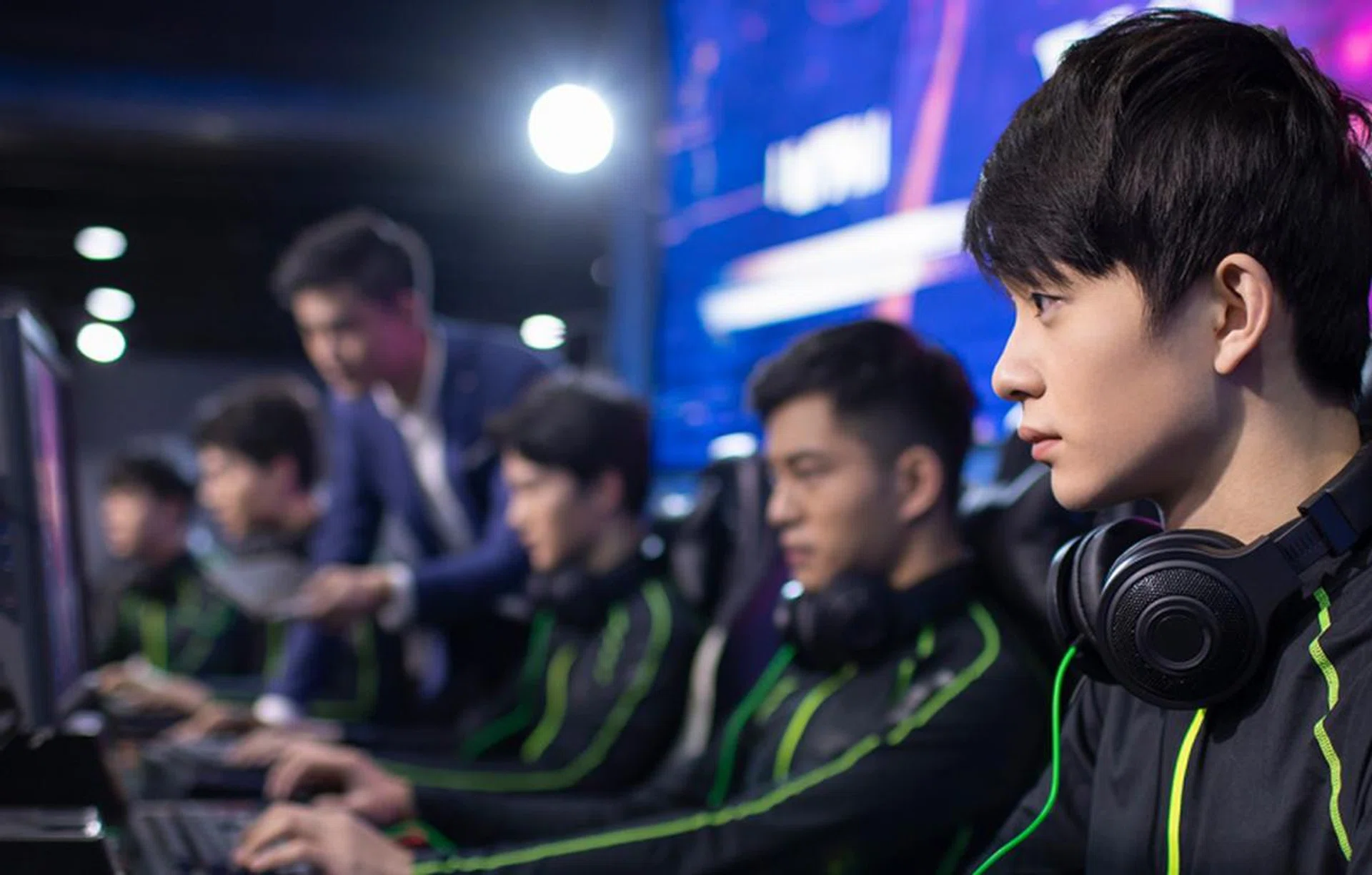
Anup: The general term used was “throw bandwidth at the problem”, but that really only address the issue of network congestion – an issue generally brought on due to the relatively low capacity of shared backbone infrastructure where there’s constant contention for the available bandwidth.
In the last decade though, while consumer broadband last-mile capacity has scaled-up 10-times from 10s of Megabits-over-xDSL to Gigabit-over-PON, commercial optical backbone networking technology has scaled 100s of times from 10 Gigabit based Synchronous Digital Hierarchy (SDH) to 100s of Gigabits with Dense Wave Division Multiplexing (DWDM) which is more recently approaching Terabits scale, through advancements in what’s known as Coherent Optics.
We have had solutions covering network visibility for a long time with tools like Gigamon, SolarWinds, etc. Why is it still an issue?
Anup: Those types of network visibility solutions are generally designed for Enterprise applications and are relatively costly, in both capital expense and operational costs, and are not suited for large scale broadband network deployments. Existing solutions for troubleshooting and resolving network issues were developed to mostly support static networks and services and revolve around reactive processes based on scrutinising events and alarms. Such methods are simply not effective nor scalable in the long-term, as networks become increasingly complex and dynamic.
How should service providers go about designing a network with visibility to accommodate the network demands of eSports and gamers?
Anup: In order for service providers to streamline their trouble-to-resolve workflows and achieve business growth, they need to take on a proactive approach rather than a reactive one, to predict potential network outages — before they happen — and pre-emptively resolve them before they impact end-users. As such, significantly “lighter” and dynamic Service Assurance tools are required that will allow service providers to scale and have deep visibility into their network to automate and optimise their business processes, improve agility, and reduce costs.
Thus, there is a need for smarter networks that can give service providers the visibility of network demands, while also intelligently allocating resources when and wherever needed. By leveraging AI and data analytics to predict and enable automatic resolution of network failures, service providers will be able to continuously improve operational efficiency and effectiveness and elevate the end-user (gaming) experience.
What is wrong with our current network designs that we need to think about redesigning them? What does a network that can handle future gaming needs look like?
Anup: The gaming industry is rapidly growing with over 2.5 billion gamers globally and from the multi-million dollar tournaments, it’s clear that video games have evolved way beyond just casual entertainment. Gamers are demanding more flexibility and mobility for their gaming experiences. Augmented and virtual reality, along with the wide-scale adoption of mobile gaming and the shift towards cloud gaming, not to mention the millions of gamers and spectators simultaneously live-streaming every day—all mean that networks need to adapt in order to meet new bandwidth demands.
Furthermore, consumer appetite for enhanced mobile gaming experiences has also evolved, given the ubiquity of smartphones and mobile apps. The recent upsurge of ‘battle royale’ games such as Fortnite Mobile and PlayerUnknown’s Battlegrounds (PUBG) Mobile, highlights the demand for premium games offering enhanced graphics and gameplay, which in the past would only be found on consoles or PCs. Game makers are also increasingly looking to integrate AR features to deliver uniquely immersive gaming experiences not available on traditional gaming platforms.
These new data-hungry games feature multiplayer elements and require constant and reliable connectivity to support the gameplay, which means networks must evolve and adapt to this new pressure or risk confining mobile gaming to Wi-Fi. To operate efficiently and cost-effectively, networks need to have the agility to scale on-demand, rather than focusing solely on the capacity of the network, to make the most of every available resource, and continuously self-optimise, all in real-time.
Highly intelligent and automated networks play a pivotal role in the growth of the gaming industry, supporting not only the gaming itself and key innovations, but also the associated video content, social interaction and of course, large-scale gaming tournaments. eSports tournaments are integral to the gaming industry and their live streams place pressure on the network with thousands of viewers tuning in from all over the globe.
Not to mention, tournament organisers are also looking into AR/VR/4K live streams for viewers, which could rival that of the Olympics and other traditional sports live streams in the coming years. With millions of dollars at stake, there is no room for instability or buffering. Networks thus need to be able to respond to spontaneous surges of traffic across the network at all times, with the agility to scale on-demand, to deliver an ultra-low latency experience.
Ushering in AI
What is an adaptive network and what makes it special? Is it key to supporting a bustling eSports scene?
Anup: It is an approach to transform today’s static Service Provider networks into a dynamic, programmable infrastructure built on analytics and automation so that the network can scale-at-demand and adapt to the needs of the user experience. This ideal network will essentially leverage analytics and intent-based policies to rapidly scale, self-configure, and self-optimise by constantly assessing network pressures and demands, and predictively reallocate network resources when and where they are needed, helping to ease the load on network providers.
By taking a more holistic view of network performance, flexibility, and operational simplicity, network providers can avoid the pitfalls of just ‘throwing more bandwidth at the problem’ and instead create a more sustainable and efficient network.
The relevance to eSports is that Adaptive Networks have the ability to deliver games with an optimum experience by autonomously marshalling networking resources based on policies determined by the service required.
Where will machine learning and AI fit into network design? What is wrong with the current load balancing that we need to use AI to solve latency issues?

In the telecom and networking space, the application of AI usually takes on the role of an enabler or optimiser. This means that the implementation of AI-based policies will enable network functions to run in an auto-pilot manner and improve network efficiency by anticipating and recommending corrective actions before a fault occurs.
In today’s increasingly complicated network operations, operational teams are constantly confronted by the operational burden of troubleshooting and resolving network issues. Operational teams may struggle to detect, isolate and correct issues when a surge in raw data obscures true insight into the state of the network. This makes it difficult to identify potential network outages which results in a slow and tedious troubleshooting process. These challenges can result in network troubles that last for weeks or even months, potentially causing businesses billions of dollars in lost revenue and productivity a year.
AI-powered analytics can enable simultaneous monitoring and analysis of hundreds of thousands of network ports and millions or even billions of events to address this challenge. Using advanced Machine Learning (ML) algorithms, combined with policy and orchestration, providers will be able to gain deep insight into the network and draw on that to manage the network efficiently and accurately and do so in a highly scalable manner. This is something that is gaining traction in the industry as well - according to Omdia’s 2019 report Artificial Intelligence: Impact and Opportunities, over 40% of CSPs are prioritising the implementation of AI in network fault prediction, detection and correction by 2020.
AI also helps in efficient real-time traffic management, making it easier for service providers to dynamically adapt to changing service demands and traffic patterns despite the fixed hardware capacity at any given time. This allows service providers to allocate available resources to where they are most needed and deliver consistent, quality customer service and end-user experience across the entire network while optimising the use of resources and associated costs.
Factoring in 5G into the equation
How will 5G change things for gaming and operators? Will it be an enabler for esports or is it just 5G marketing at work?

Anup: The development and integration of 5G infrastructure not only boosts connectivity speeds, especially in the last-mile, end-users will also experience significantly lower latency - a key expectation of gamers and operators alike.
In other words, 5G could support the delivery of richer, more interactive gaming experiences through real-time social interactions or associated video content. Imagine a live, multimillion-dollar eSports match, where a lag or buffering delay in the network even in milliseconds could make a huge impact on the winning shot of the game. Stakeholders - the players, advertisers and sponsors - simply cannot afford any glitch in connectivity.
Some countries that have had a 5G rollout haven’t seen the adoption numbers expected. Why is this? What will be the killer 5G consumer driver?
Anup: While there is much anticipation towards the impact of 5G on businesses and across the industry verticals including gaming, large-scale adoption of 5G is still in its infancy with only the most basic consumer-targeted enhanced Mobile Broadband (eMBB) services offered, which current consumer applications are not able to fully utilise. While some countries are still as the service trials stage as in Singapore.
Additionally, the path to 5G is expected to be paved with many challenges, according to a study by Accenture. In fact, there is not enough understanding of the potential and benefits of 5G. Besides faster speeds and lower lag time, consumers have yet to discover the integral role of 5G could play in our day-to-day lives.
However, 5G does not only make a difference in improving the quality of gaming experiences. The real impact is on businesses and industrial applications, as 5G supports the performance required for digital technologies such as IoT and AI to function. With constant seamless connectivity, businesses would be able to derive more actionable insights from data in real-time, thereby enabling more effective decision-making.
Will the arrival of cloud gaming platforms on mobile (aka Project xCloud, Google Stadia, etc.) be the real driver or enabler for 5G adoption – instead of eSports?
Anup: The arrival of cloud gaming platforms has two primary drivers:
- Reduce the cost burden on consumers for high-performance gaming services by eliminating the need for dedicated consoles.
- Enable ubiquitous access to gaming services similar to how other cloud services.
However, in order to achieve these goals without sacrificing game performance, network connectivity and performance becomes even more crucial, which is where 5G comes into the picture. With 23% of total mobile connections expected to run on 5G networks by 2025, cloud gaming platforms on mobile will likely play a key role in driving the adoption of 5G.
Cloud gaming platforms like Google Stadia and Microsoft’s xCloud enable traditional ‘box’ games to live entirely in data centres, where users access games on demand. However, games are an interactive pursuit, as such, network bandwidth, latency, and jitter will have direct impacts on game results. The key characteristics of progressive 5G infrastructure - faster speeds and exceptionally low and guaranteed end-to-end latency - would thus help to optimise the gaming experience.
Our articles may contain affiliate links. If you buy through these links, we may earn a small commission.