
Civilization VII (PC) hands-on: Shaping up to be a standout entry in the series
The game launches on 11 February 2025.
#pcgaming #civlizationvii #strategy
(Image: 2K Games)
Sid Meier's Civilization VII is a title that carries with it the weight of a series that has continually evolved since its inception, each new iteration trying to balance innovation with familiarity. With six previous games under its belt, Firaxis faces the challenge of delivering a game that feels fresh yet recognisable to long-time fans while attracting new players. From what I’ve seen so far, Civilization VII, slated for release on 11 February, seems to strike this balance remarkably well – offering both radical changes and improvements to the series' core systems.
After spending a solid 15 hours with the game over the past couple of days (yes, I’ve fallen to the “one more turn” spell), I’ve had the opportunity to explore two ages – Antiquity and Exploration – and the changes are already clear. It’s easy to draw comparisons with previous entries in the series, particularly Civilization VI, which in many ways defined the contemporary Civ experience. However, it’s evident that Civilization VII is setting out to be the most ambitious overhaul the series has seen yet, offering improvements and refinements without losing sight of what makes the game so compelling in the first place.
For starters, the game’s approach to accessibility is immediately noticeable. Unlike some of the more convoluted systems in earlier titles, Civilization VII’s tutorials are much clearer, guiding new players through the early stages of the game with detailed and well-organised instruction. While you can’t skip the basics, even if you’re returning to the series after a long absence, the learning curve feels manageable. That being said, the game doesn’t entirely abandon seasoned players who are returning after a long absence. The mechanics and systems have been thoughtfully evolved, rather than rewritten entirely, making for a smooth experience whether you’re an old fan or a newcomer.
(Image: 2K Games)
In terms of the game’s broader systems, Civilization VII feels far more complete than its predecessors. Both Civilization V and VI had systems that, while compelling, were sometimes lacking at launch and were fleshed out with expansions. In contrast, Civilization VII arrives at launch with a fuller package. The features introduced in Civilization VI, such as the hex-based city district system, have been refined and expanded upon here. Some mechanics that didn’t work in VI, like the global warming system, have been left behind, and rightly so. On the whole, it feels like the game has been designed from the ground up with a keen sense of what worked in the past and what needed to be improved.
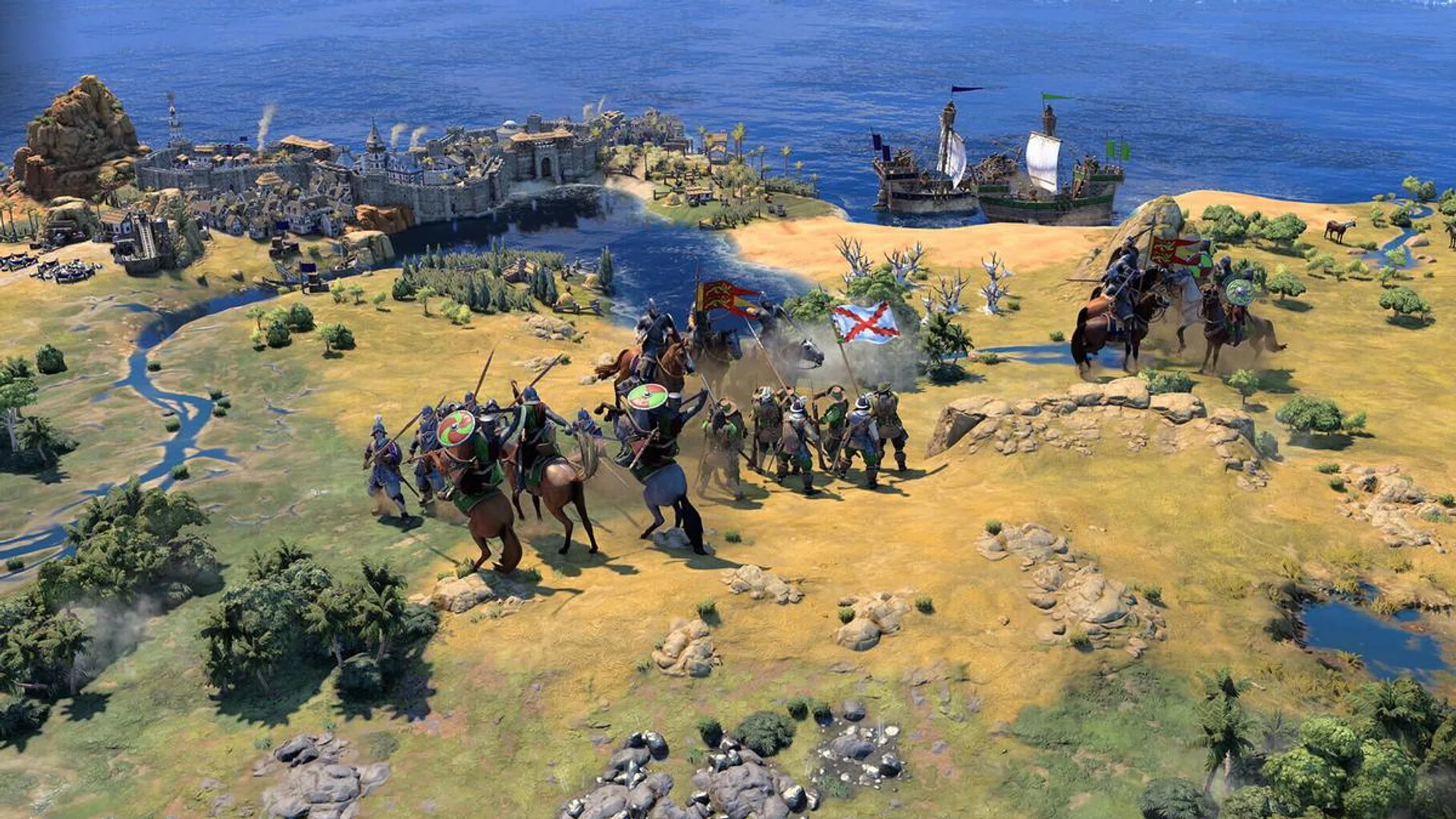
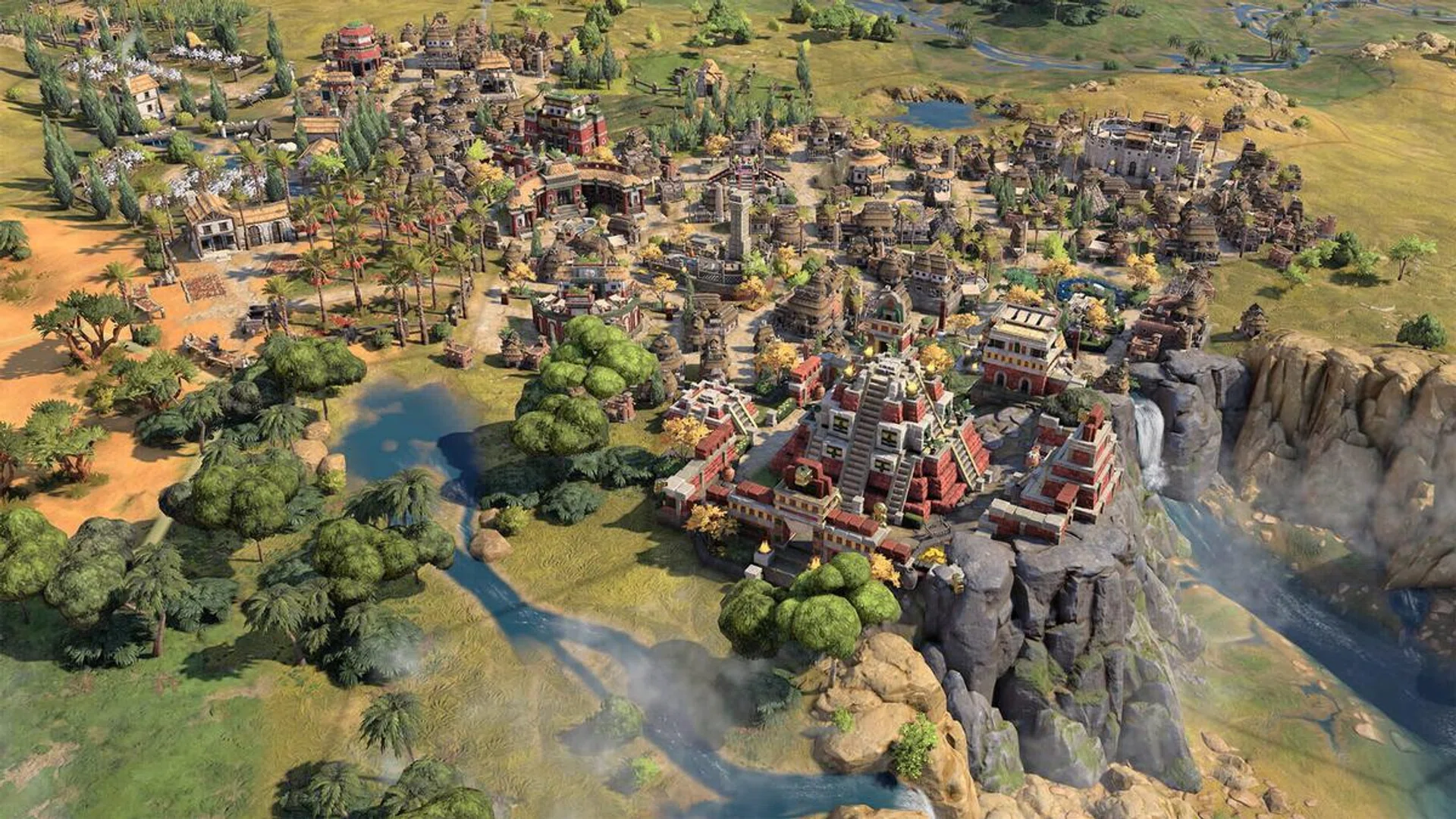
One of the most noticeable changes in Civilization VII is its visual design. The graphics are a significant leap forward from VI, striking a balance between the more stylised look of the previous entry and the somewhat dated visuals of Civilization V. Cities are much more detailed and visually distinct, with sprawling cityscapes that evolve organically as you progress through the ages. The shift from one age to the next is particularly impressive, as the architecture changes to reflect the cultural and technological advancements of the time
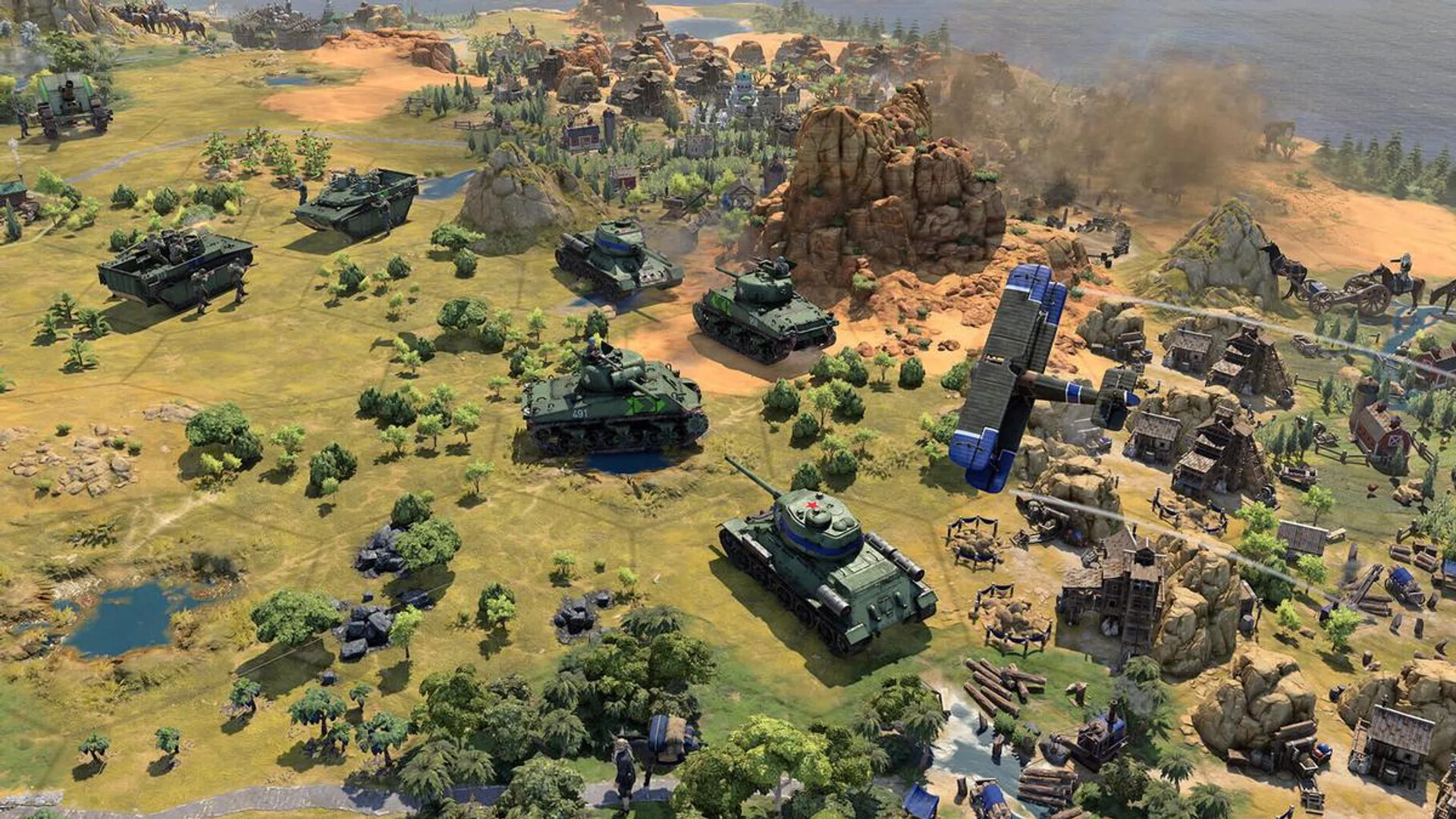
The most radical shift in Civilization VII, however, is the reworking of the game’s age system. In previous entries, the game’s progression through eras like the Ancient, Medieval, and Modern Ages was more of a formality – a way to measure your advancement through the tech tree. While there were occasional benefits tied to the transition between eras, the system never had a huge impact on gameplay beyond the tech tree itself. In Civilization VII, however, this concept has been completely reimagined. Now, instead of the usual eras, you play through three distinct ages: Antiquity, Exploration, and Modern. Each age has its own tech tree, its own victory conditions, and its own gameplay systems. The conclusion of one age feels like the end of a mini-game in itself, with a recap screen that evaluates how each civilization performed in relation to its goals. These evaluations then influence the starting conditions for the next age, which feels like starting a fresh game but with the historical context of your prior progress. It’s a fresh take that adds more meaning to each phase of the game and makes the transitions between them far more rewarding.
(Image: 2K Games)
This new approach to ages introduces a deeper level of strategy, as you can tailor your playstyle to the specific goals of each age, adjusting your tactics based on the opportunities or limitations presented by each new era. Victory conditions in Civilization VII are not as rigid as before, and the game seems to allow for greater freedom in how you approach your goals. While Science victories remain a key objective, for example, they are now more diverse with different criteria for each age. This system encourages players to explore different strategies depending on the historical period they are in, rather than just following a single path all the way to the Modern Age.
Another area where Civilization VII has made significant improvements over its predecessors is in diplomacy and war mechanics. In previous games, players often found themselves caught in endless wars, pushed into conflict by the AI or by diplomatic failures. Civilization VI, in particular, frustrated me to no ends with its war mechanic, which penalised players for waging war even if it was necessary. Civilization VII completely overhauls this system by introducing a diplomacy resource similar to science or culture points, which can be used to influence other leaders or pacify your citizens. This mechanic makes the game’s diplomacy far more strategic and makes peaceful approaches more viable.
Despite these improvements, there are still some areas that remain unclear. I haven’t had the chance to dive into the late- to end-game stages but will cover it in my final review. Multiplayer too; it’ll be interesting to see how the new age system plays out in a multiplayer setting and whether it can provide a more dynamic and enjoyable experience than past games.
At this stage, there’s still much to be explored in Civilization VII, but based on what I’ve seen so far, the game is shaping up to be a standout entry in the series. The changes introduced here are significant and bold, and the game’s balance of new features and refined mechanics should appeal to both veterans and newcomers alike. As a long-time Civilization fan, I’m optimistic that this will be the best entry in the series since Civilization V, and possibly even surpass it.
Sid Meier's Civilization VII is scheduled to be released on February 11, 2025, for PC, macOS, Nintendo Switch, PlayStation 4 & 5, and Xbox Series X|S.
Our articles may contain affiliate links. If you buy through these links, we may earn a small commission.