
Call of Duty: Black Ops 7 (PS5) review: Is this the series at its lowest point?
The game just exposes how stretched and exhausted the Call of Duty formula has become.

Reviewing a new Call of Duty game used to follow a familiar rhythm year in and year out. You’d clear the campaign in a couple of evenings, jump into multiplayer for a few long nights, poke at Zombies, and come away with a sense of how that year’s entry fit into the wider series. With the latest COD entry, Black Ops 7, that rhythm is gone. This is not a COD that wants to be experienced in parts. It wants to be absorbed as a single, unified game – campaign, multiplayer, Warzone-adjacent modes, and Zombies all feeding into one another.
That ambition, unfortunately, comes at a cost.
I knew something was off with Black Ops 7 long before the campaign reached anything resembling a climax. It wasn’t a single bug or an especially bad mission. It was the creeping realisation, somewhere between swapping armour plates and unloading yet another magazine into a stubborn enemy, that this didn’t feel like a CODcampaign at all. It felt like I’d wandered into a training mode that forgot to end.
Black Ops 7 doesn’t really introduce itself. It drops you in and assumes familiarity – with Warzone systems, with multiplayer pacing, and with the idea that all of this should already make sense. Armour plates are here. Weapon rarities are here. Enemies soak up damage in ways that feel tuned for spreadsheets rather than drama. Instead of carefully staged firefights, most encounters turn into prolonged damage races where success comes less from positioning and reflex and more from sheer persistence. At some point, I stopped thinking about tactics and started thinking about how much ammunition I had left, which is usually a sign something’s gone wrong.
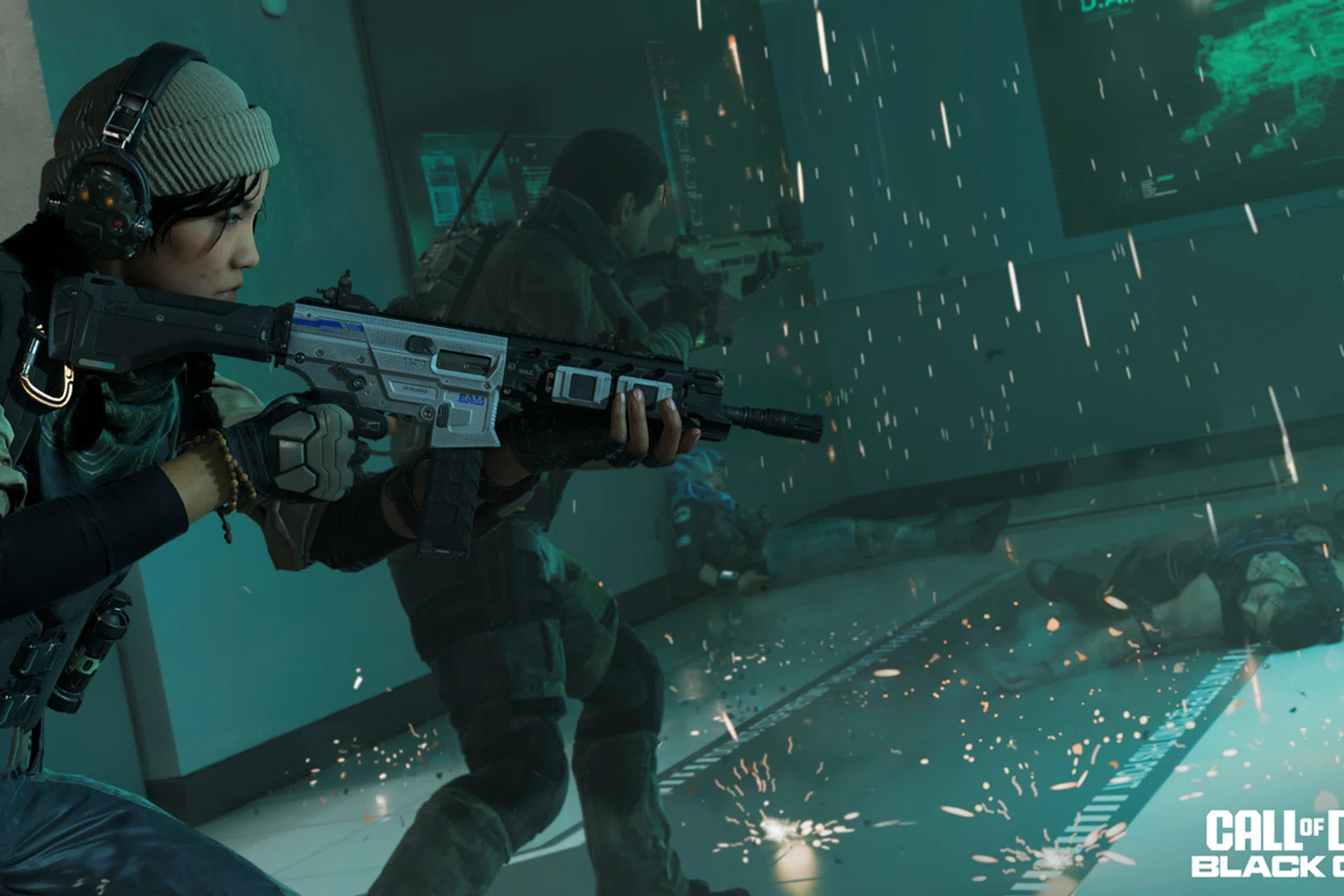
The campaign’s story doesn’t offer much of a lifeline either. Built around shared hallucinations and memory-hopping that follows the aftermath of Black Op 6, it leans heavily on the legacy of Woods and Mason without doing much to justify the revisit. Familiar locations and characters return, but not in ways that feel meaningful or even coherent. It’s nostalgia stripped of context, replayed louder and stranger, as if spectacle alone might carry the weight of earlier entries. I kept telling myself the next mission might pull things back together. Well, to nobody’s surprise, it rarely did.
What becomes increasingly clear is that Black Ops 7’s campaign isn’t unfocused by accident. It feels like co-developers Treyarch and Raven Software purposefully structured it that way for efficiency. Missions double as Warzone spaces. Mechanics are shared across modes. Encounters feel interchangeable. The result is a campaign that’s technically cohesive but emotionally flat, where nothing quite earns its place because everything feels repurposed.
That sense of drag is most obvious in the campaign’s oversized set-piece encounters. These boss fights follow a rigid loop and they quickly become monotonous. There’s no tension, no improvisation, just the slow grind of doing the same thing until the health bar finally gives up. By the time the final phase rolled around, I wasn’t tense or excited. I was just annoyed that it was still going.
Visually, the near-future aesthetic has always been divisive for Call of Duty, but here it feels especially unfocused. Everything glows, pulses, or explodes, yet very little feels memorable. I wouldn’t have noticed the generative AI elements if they weren’t so persistent. Once you spot them, though, it’s hard to unsee that slightly unfinished sheen on calling cards, victory screens, and even environmental textures. For a series once defined by excess and polish, this feels oddly cheap.
After the campaign, Black Ops 7 opens into its wider suite of modes, starting with Endgame – a co-operative PvE experience set on what is very clearly the latest Warzone map. Dropping into Avalon, there’s a brief moment where the open space suggests something different. That optimism doesn’t last. Gear progression feels overly restrictive, and anything short of top-tier drops quickly becomes a liability. Encounters drag on, zones blur together, and objectives rarely surprise. I finished more than a few objectives out of habit, not curiosity.
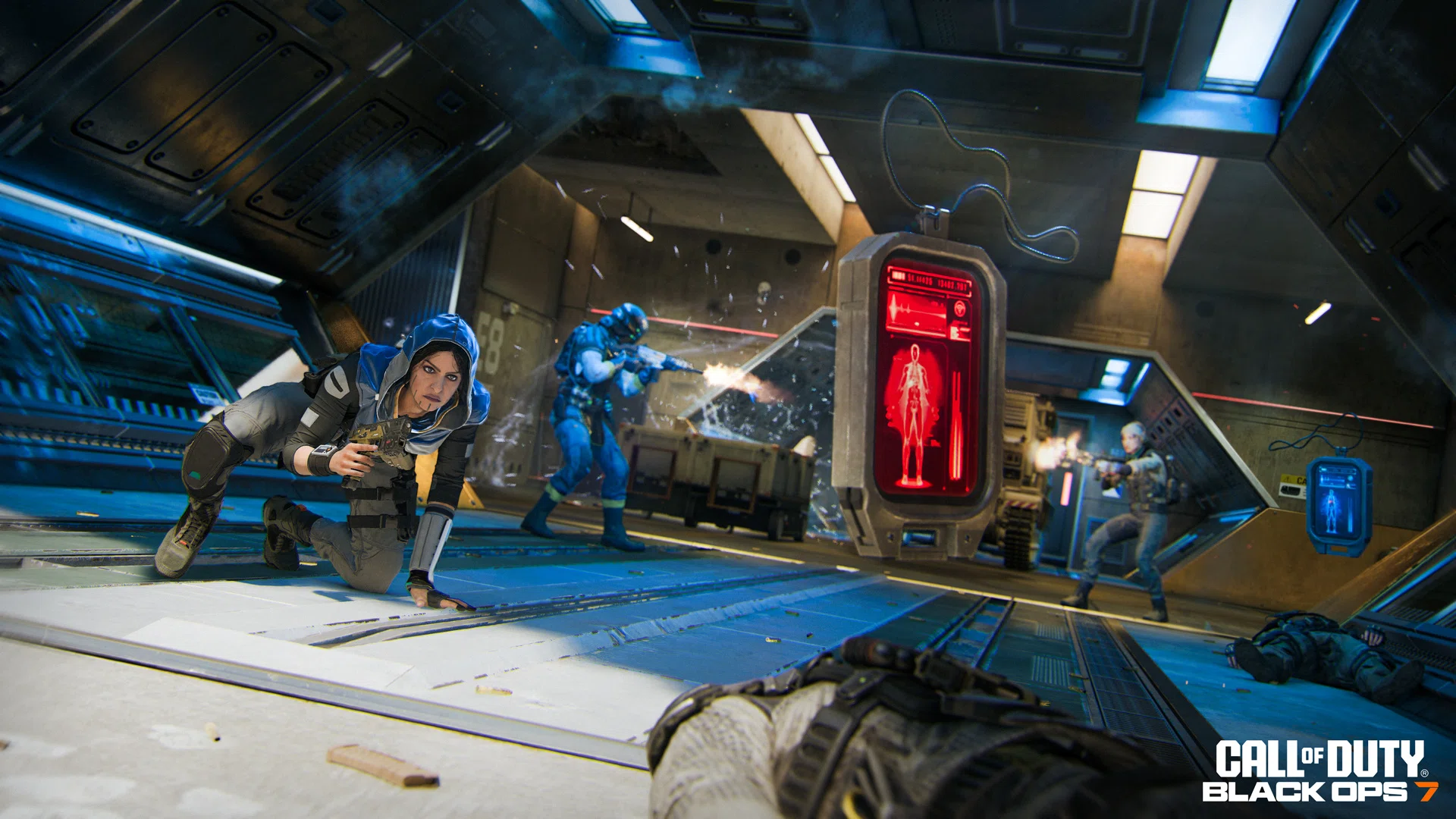
Skirmish, the casual large-scale multiplayer mode, struggles in similar ways. On paper, 20v20 matches should inject chaos back into the formula. In reality, the continued reliance on armour plates dulls that edge. These matches demand patience and precision in ways that feel at odds with COD’s DNA. Even when things heat up, it never quite tips into recklessness. It just feels busy.
Standard multiplayer introduces new movement options like wall jumps, but they rarely feel essential. Maps don’t seem designed around vertical mobility, turning what should be a meaningful addition into a situational trick. After dozens of levels in the mosh pit playlist, the few moments where wall jumps genuinely opened up new routes were memorable precisely because they were so rare.
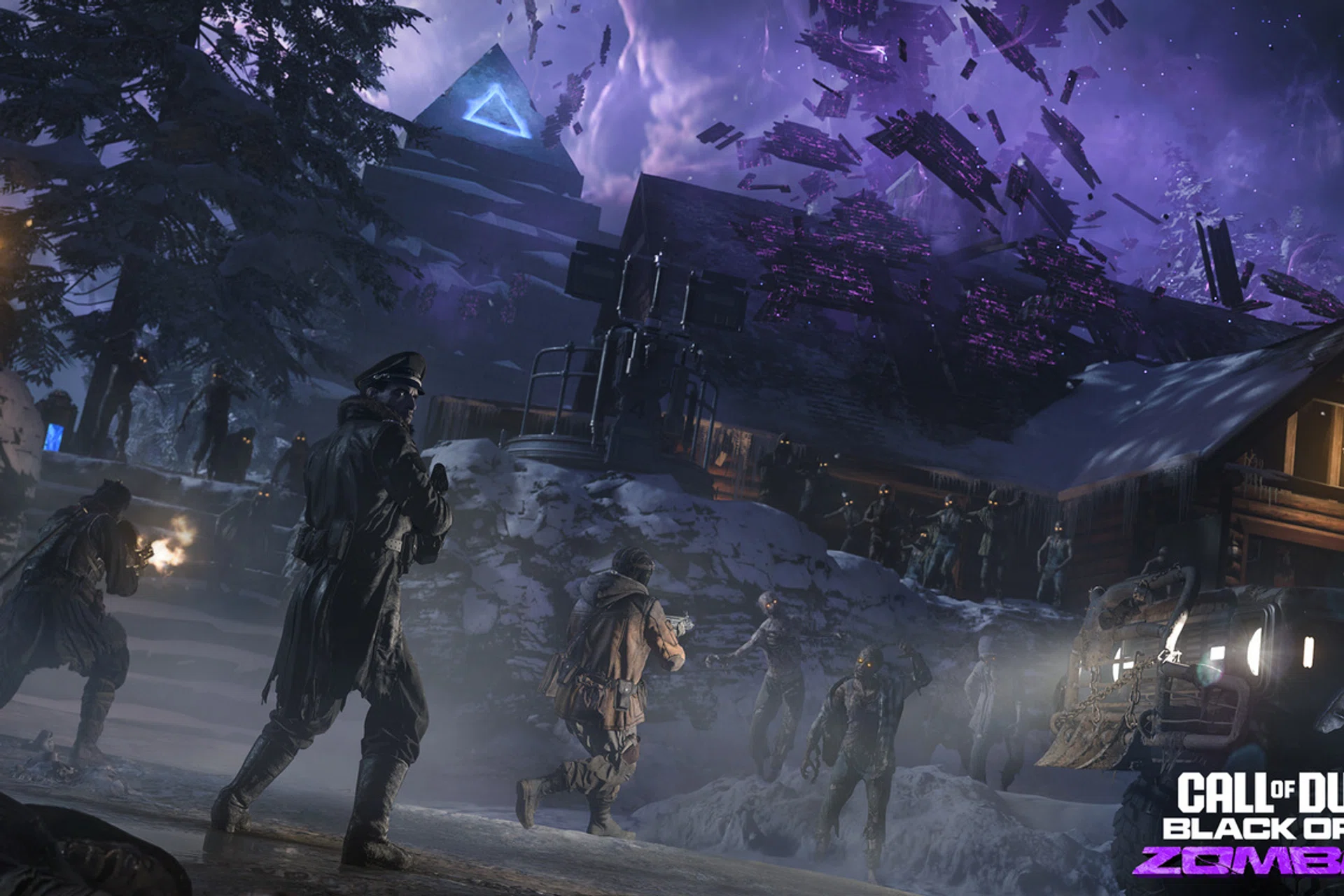
Zombies remains recognisable, almost stubbornly so. The addition of vehicles adds mobility, but it doesn’t meaningfully change the flow. You’re still kiting durable enemies through long encounters, moving from one prolonged firefight to the next. It’s comfort food for long-time fans, but it also reinforces how little Black Ops 7 is willing to rethink its fundamentals.
All of this is wrapped in an aesthetic jumble that becomes harder to ignore the longer you play. With Zombies cosmetics bleeding into standard multiplayer, matches often feel visually incoherent. Robots, time travellers, and near-future soldiers all share the same space, and the result is less playful than distracting. It’s another reminder that Black Ops 7 is more concerned with maintaining its ecosystem than establishing any sense of identity.
More than once, I realised I was still playing out of sheer inertia – the kind where it’s already past midnight, you’re tired, and stopping feels harder than pushing through one more match.
After enough time with Black Ops 7, the frustration stops being tied to any single mode. It becomes cumulative. The campaign wears you down. Multiplayer never quite justifies its changes. Side modes amplify existing problems instead of masking them. Even Zombies, long the reliable fallback, feels weighed down by the same philosophy: longer fights, tougher enemies, fewer moments of release.
Black Ops 7 isn’t broken, and it isn’t completely devoid of fun. In short bursts, especially with friends, it can still deliver moments of chaos and laughter – often accidental, sometimes in spite of itself. But taken as a whole, it feels like a game built to sustain a content machine rather than create memorable experiences. The emphasis on reuse, shared systems, and endless progression has flattened what once made each part of COD feel distinct.
It’s worth mentioning that Call of Duty didn’t always feel like this. Remembering that only makes Black Ops 7 harder to shrug off.
Call of Duty: Black Ops 7 is now available on PlayStation 5, Xbox Series X|S and PC.