
What happens to your smart devices when the power grid goes down?
As the Internet of Things ramps up, we're seeing more and more devices get connected and app-enabled. Smart Hubs control and monitor everything in your house, from when your lights turn on and off, to when your morning coffee starts brewing. It sounds great, but are we becoming too reliant on connected tech?

I recently had the chance to stay in an apartment filled with smart Samsung appliances. Everything had a touchscreen interface, the washing machine was Wi-Fi enabled and had its own smartphone app, and a little robot vacuum cleaner took care of any dirt or spills. To be fair, this wasn't even what I would consider a 'smart home'. Yes, the devices were smart, but they weren't connected, and the house lacked any smart monitoring or control over basic functions like lighting and temperature.
Still, my stay there got me thinking about smart homes. As the Internet of Things ramps up, we're seeing more and more devices get connected and app-enabled. Smart Hubs like Samsung's SmartThings Hub can control and monitor everything in your house, from when your lights turn on and off, to when your morning coffee starts brewing itself.
It sounds great, but I just wonder if we're becoming too reliant on connected tech. What happens when the power grid goes down? Are you stuck with a bunch of devices that you no longer know how to operate manually, the old fashioned way?
As it turns out, there are companies already trying to solve that problem. Away from Silicon Valley, a few companies are developing a very different kind of smart home. Instead of developing tech that makes us more and more reliant on a stable Wi-Fi connection and an endless power supply, they're creating smart homes that generate their own power.
Japanese automobile manufacturer, Honda, is one of the leaders championing this alternative approach. Its HSHS (Honda Smart Home System) is built to provide total self-reliance, and features a line-up of innovative energy production, management and conservation solutions, which the company hopes will free homeowners from the reliance of on-grid power supply.
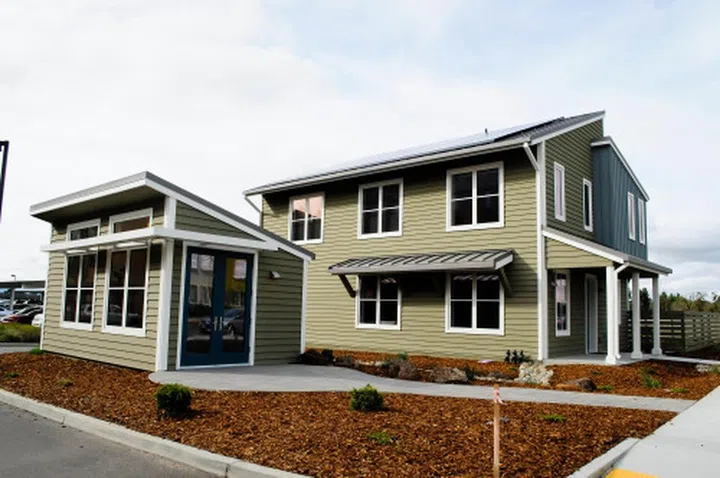
Honda's Smart Home System in California.
Two model homes, one in California, USA, and another in Saitama, Japan have been built to test the concept. Included in each house is a 9.5 kW solar cell system mounted on the roof, a co-generation system driven by a specially-designed high-expansion-ratio engine, which provides combined power generation and heat recovery efficiencies of up to 92 percent, a high capacity battery that stores all energy produced and a central control hub called the Smart e Mix Manager that ties everything together.
A geothermal heat pump provides the house with hot water, as well as its temperature control. Water is heated in a tank and delivered to the shower. As the shower drains, the water is re-used to help preheat the reserve water tank, helping to reduce the energy required to provide hot water to the home. Once it has fulfilled its hot water duties, the water drains into four underground thermal tanks. Here, heat from the earth warms the liquid further, turning it into what the team calls Ground Source Fluid. This fluid is then returned to the house and driven through pipes located in the floor, roof and ceiling to provide heating. Alternatively, cold water can be pumped through the system to cool the house in the summer months.
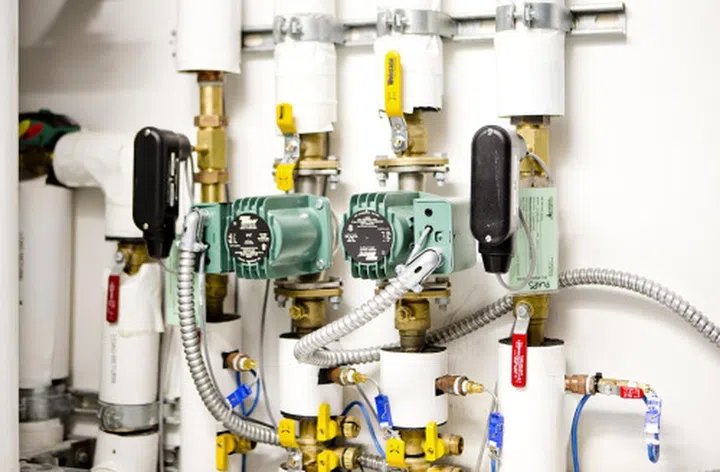
The innovative water pump system reuses water multiple times.
On top of optimizing home energy use, the HSHS will alert the homeowner of lights and utilities that could be turned off before leaving, allow voice-recognition remote control of appliances from on the road (with Honda's Internavi in-car telematics system) and provide real-time feedback on all components.
All of these factors result in a home that Honda says is three times more water-efficient and uses half the energy of similar-sized homes in the US and Japan. A typical home of this size will use around 13.3 MWh of electricity per year, but the Honda smart home actually generates a surplus of 2.6 MWh. Honda says this equates to an offset in carbon emissions of nearly 5,942 kg per year. This excess energy can actually be sold back to the power grid, earning the homeowner some extra money.
According to Honda, every day the home’s systems generate 278 channels of data that are stored locally on a data logger at one minute resolution. This information is uploaded every 12 hours to the cloud via a third-party data service that also performs error-checking functions in case any sensor becomes damaged. Data channels include all energy flows within the home and the HEMS system, water flows, temperatures within the walls and floors, weather and various system information flags. The data is stored in CSV format, then aggregated and analyzed by Honda engineers and our industry and academic partners.
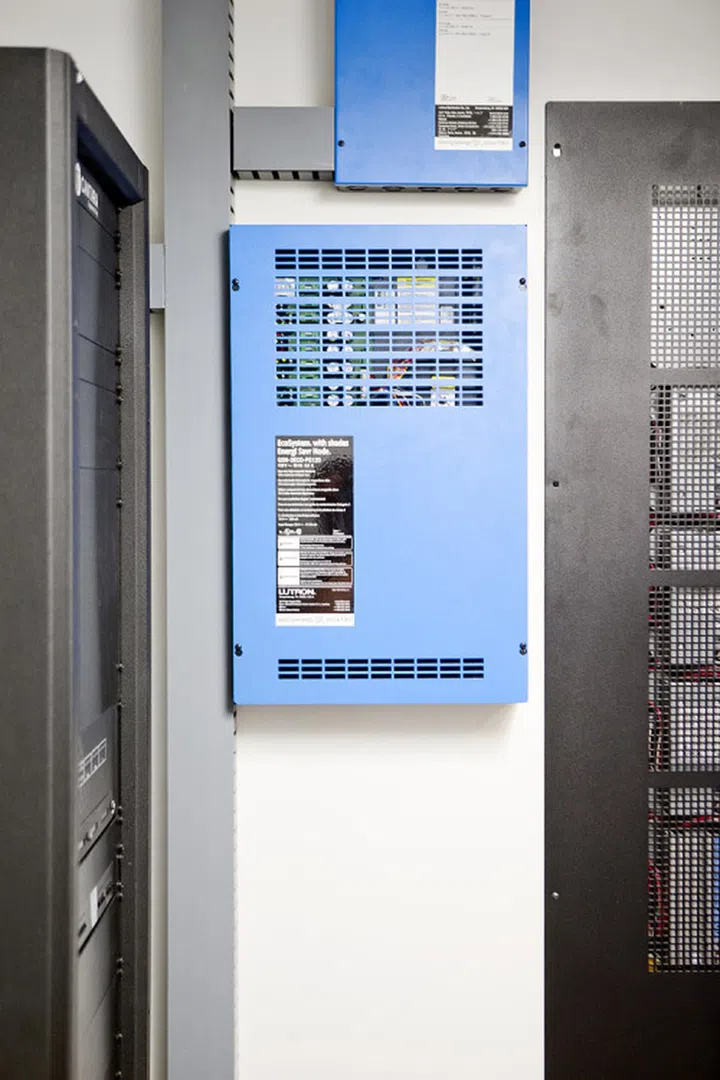
The Honda smart home generates 278 channels of data stored on this data logger every minute.
Future plans might add a water filtration system too, which would collect rain and dew to allow for a self-reliant water source. There’s also the possibility of additional wind turbines to complement the solar panels.
Honda has plans for construction of additional homes and will continue testing and refining the system until at least 2018, when it estimates that consumers may be able to purchase and live in one.
Of course, there's no reason why a sustainable smart home can't also be a connected smart home. In fact, this is probably the ideal solution and where we're heading some day: a smart home full of connected devices, that also generates its own electricity.
Our articles may contain affiliate links. If you buy through these links, we may earn a small commission.