
Fujifilm Announces XE-1 & Two New Lenses
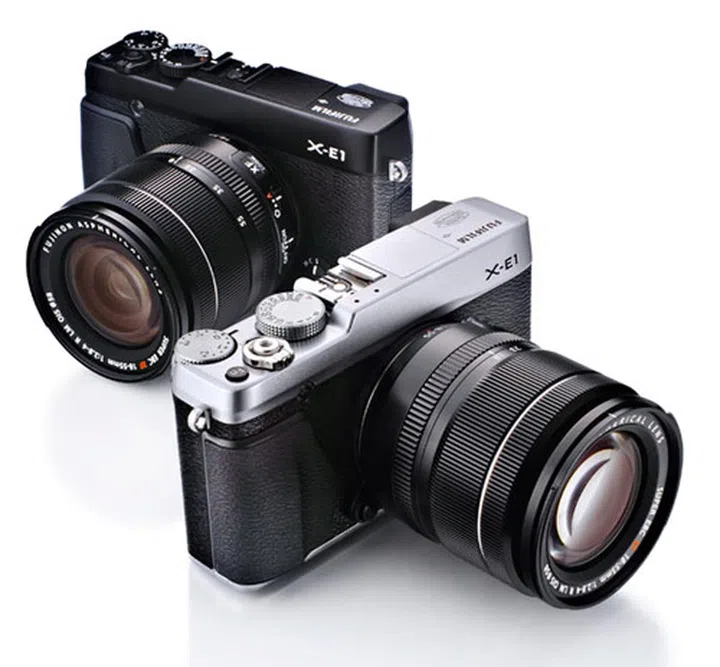
Fujifilm has announced the second body in their retro-tastic mirrorless system. The X-E1 is smaller than the X-Pro1 and will be more affordable than the X-Pro1, but the specs still pack a surprising punch when compared against its older sibling.

In January this year, Fujifilm entered the mirrorless system camera market with the X-Pro1. It was a new kind of digital rangefinder-esque camera with a hybrid optical/electronic viewfinder, which also came with an innovative sensor that removed the low-pass optical filter found in most digital cameras.
We both loved and hated the camera, the auto-focus was too sluggish for our liking and the price was high (S$2400 for the body alone), but the image quality and glass were superb. There was no doubt that Fujifilm was on to something promising.
Introducing the Fujifilm X-E1
Today, Fujifilm has announced the second body in their mirrorless system line-up. The X-E1 is smaller than the X-Pro1, it loses the optical viewfinder but retains an electronic viewfinder. It also manages to squeeze in a built-in flash, something the X-Pro1 lacked. While the X-E1 will be more affordable than the X-Pro1, it doesn't mean that Fujifilm skimped on this camera - the specs still pack a surprising punch when compared against its older sibling.
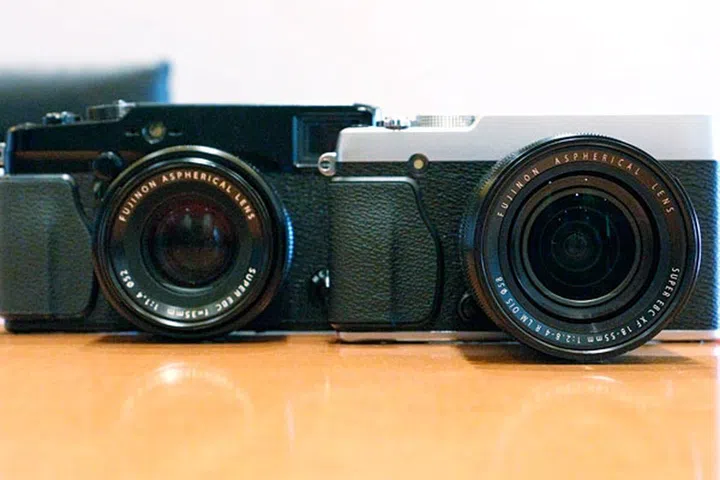
The X-E1 (right) is smaller than the X-Pro1 (left).
The OLED electronic viewfinder (EVF) has a high 2.36 million dots resolution, higher than the 1.44 million dots EVF found on the X-Pro1, and the Olympus E-M5, it is comparable to the 2.36 million dots EVF found on the Sony NEX-7. The OLED EVF also comes with a high contrast ratio of 1:5000, and is made up of 2 glass elements and one double surface aspheric lens element. Fujifilm says that the construction will provide a distortion-free view to all corners of the image and maintain the entire field of view even if the photographer's eye shifts. A high eye-point of 23mm is supposed to allow users who wear glasses to look through the viewfinder easily, without having to take their glasses off. And unlike the X-Pro1, the X-E1's EVF will come with diopter adjustment control.
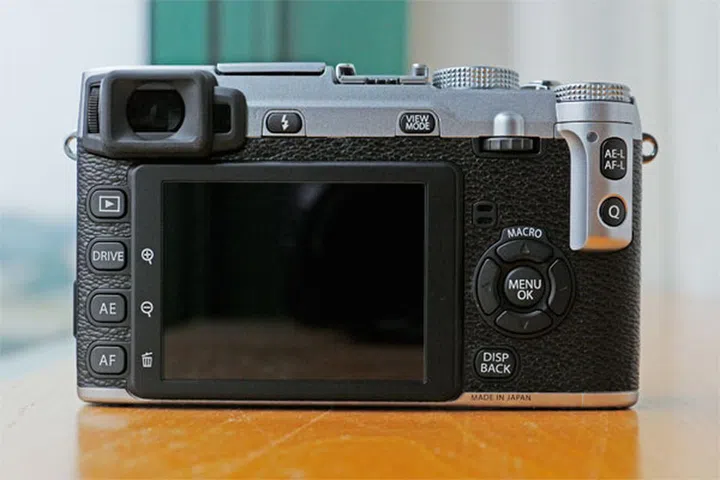
The X-E1 will come in all black or with a silver top. The top and front covers are made of die-cast magnesium alloy (the X-Pro1's entire body is made of magnesium). Similar to the X-Pro1, the X-E1 comes with physical controls for aperture, shutter speed and exposure compensation, letting you determine at a glance what your settings are without having to power on the camera.
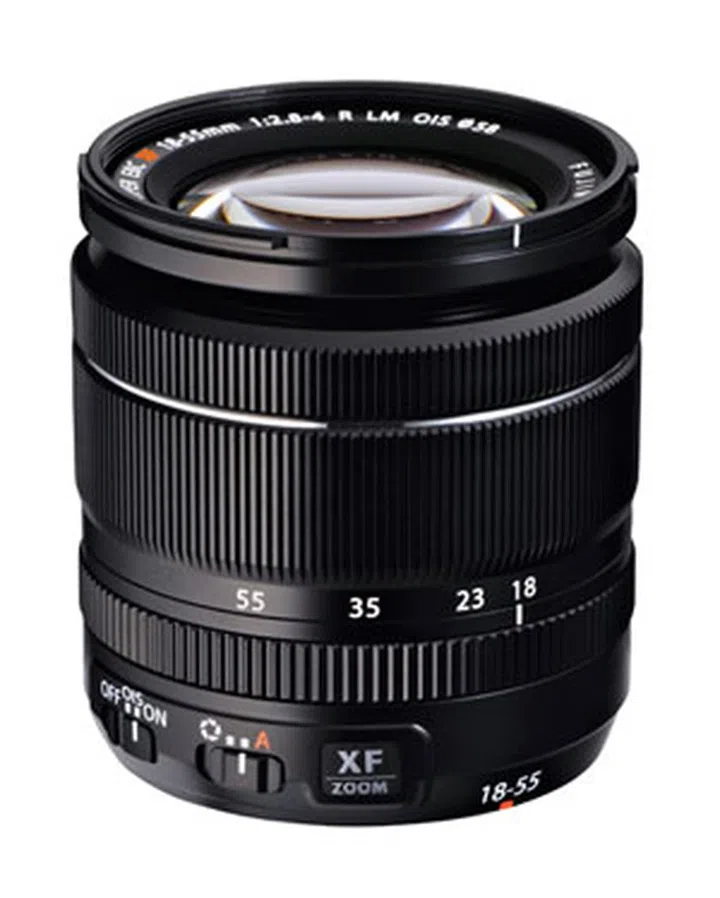
The X-E1 will come with a brand new f/2.8-f/4 18-55mm zoom lens, which is faster than the standard f/3.5-f/5.6 18-55mm zoom lenses that come with most entry-level DSLR cameras. Together with the improved AF engine, Fujifilm claims the X-E1 and the 18-55mm lens can achieve quick 0.1 second AF speeds faster and more accurate than the X-Pro1.
Best of all, the X-E1 comes with the same 16MP APS-C X-Trans CMOS sensor and image processing engine found in the X-Pro1, which means that the X-E1 should be able to produce the same high level of image quality as the bigger and more expensive camera. In fact, the X-E1 shares a lot in common with the X-Pro1, including the same 6 frames per second burst-rate and 1080/24p movie mode.
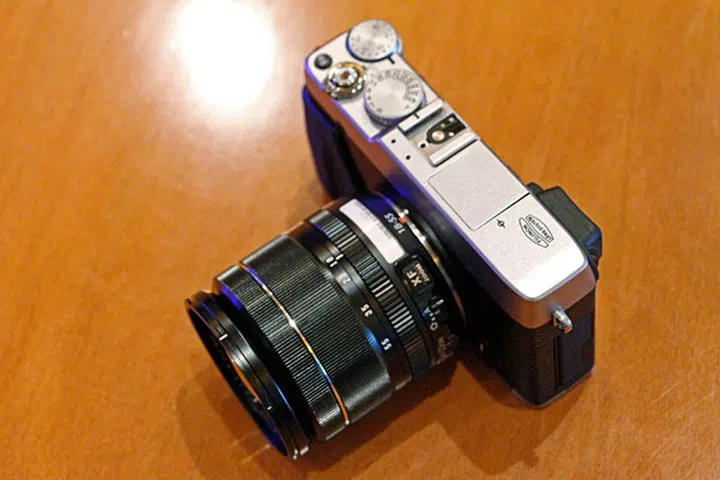
The Fujifilm X-E1 with the new f/2.8-f/4 18-55mm kit lens.
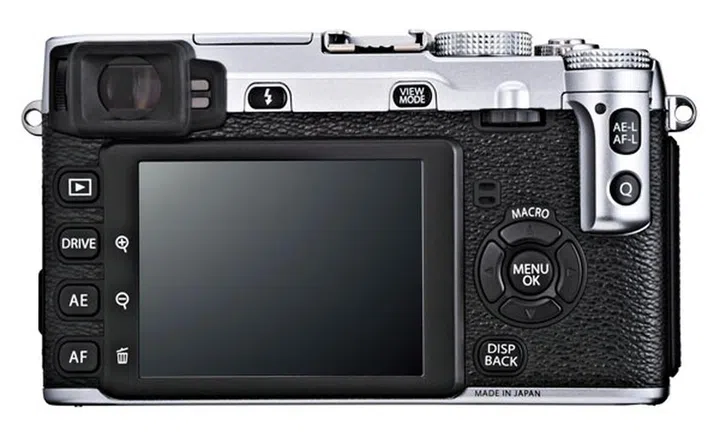
The X-E1 may lack the X-Pro1's X sync terminal, shutter speed lock and has a smaller 2.8" 460k dot LCD screen compared to the X-Pro1's 3" 1230k LCD. But it not only adds GN7 (ISO 200) built-in flash, it also adds an external microphone jack, an electrical remote release and increased battery life; 350 frames (LCD/EVF) compared to the X-Pro1's 300 frames (LCD).
The local price hasn't been confirmed, but Fujifilm told us that the X-E1 should sell for less than S$2000 with the 18-55mm kit lens. The X-E1 camera and new lens' appealing specs makes it clear that Fujifilm understands photographers, but we have to see for ourselves if the X-E1's AF has really been improved over the X-Pro1. With so much on par with the S$2400 (body only) X-Pro1, the X-E1 looks like solid value for money to us, but we have to wonder if existing X-Pro1 users would feel some regret at having paid a premium for the camera not so long ago.
X-Pro1 | X-E1 | |
Processor | RCS1 & Co-processor | RCS1 & Co-processor |
Image Sensor | 16.3MP APS-C X-Trans CMOS | 16.3MP APS-C X-Trans CMOS |
Finder | Optical Viewfinder & 1.44M LCD EVF | 2.36M OLED EVF |
LCD | 3.0" 1230k | 2.8" 460k |
Internal Flash | N.A. | GN7 (ISO 200) |
Continuous Shooting | 6 frames per second | 6 frames per second |
Movie | 1080/24p | 1080/24p |
Battery Life | 300 frames (LCD), 1000 frames (OVF) | 350 frames (LCD/EVF) |
X Sync Terminal | Available | N.A. |
Shutter Speed Dial Lock | Available | N.A. |
External Microphone Jack | N.A. | Available |
Electrical Remote Release | N.A. | Available |
A New Fujinon XF 14mm f/2.8 Lens
Besides the new X-E1 and18-55mm lens, Fujifilm is also introducing a new XF 14mm f/2.8 prime lens. With the X-E1's APS-C crop factor, the 35mm equivalent focal length comes to 21mm. The new lens comes with 10 elements in 7 groups, including 2 aspherical and 3 abnormal dispersion elements. Max. aperture is f/2.8, min. aperture is f/22. Focus range is approximately a close 18cm to infinity.
Fujifilm says that the new 14mm f/2.8 lens is distortion free, minimizing the loss of resolution otherwise necessary from software correction. The lens has a focusing ring which lets you quickly switch between auto and manual focus by sliding it. Like the lenses of old, the new 14mm lens comes with handy depth of field and focus distance scales.
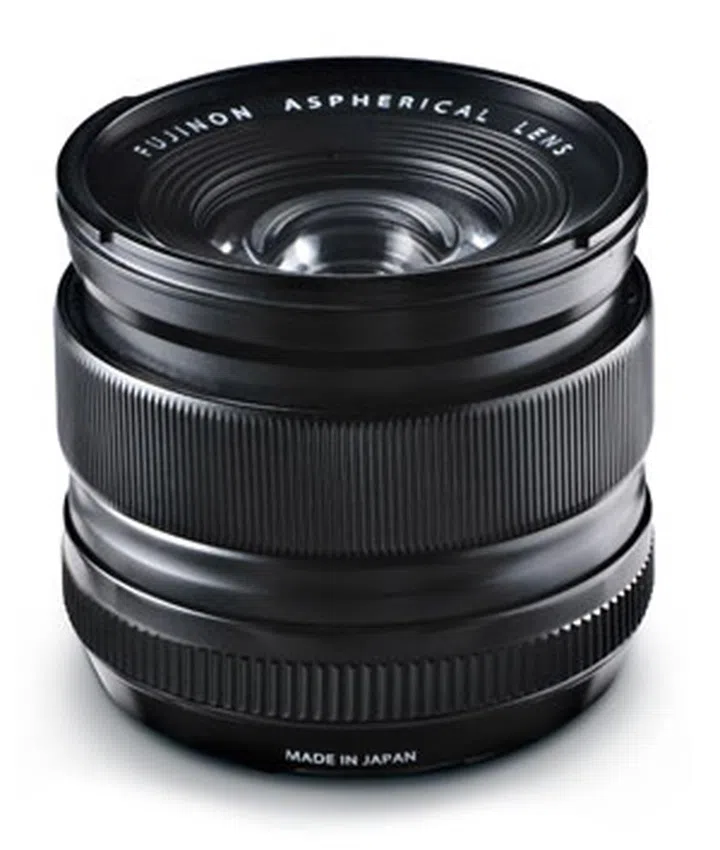
The press releases for the two products follow.
FUJIFILM launches the second X Series interchangeable-lens camera, with image quality comparable to 35mm full frame D-SLR sensors
FUJIFILM Corporation (President: Shigehiro Nakajima) is proud to announce the launch of the X-E1, the second interchangeable camera from the brand this year. Following hot on the heels of the highly acclaimed X-Pro1, the X-E1 boasts the same 16 megapixel APS-C X-Trans CMOS Sensor with top-class OLED electronic viewfinder, a smaller body with built-in flash and the same X mount for the Fujinon XF lens range. In addition, FUJIFILM will expand the lens line-up from 3 to 5 in the autumn, and up to 10 in early 2013.
With its convenient portable size and fast autofocus speed, the X-E1 promises to be an exciting addition to the X series range. Due to hit the market in autumn this year, and available in two variations Silver and Black, the attractive classical design of the X-E1 interchangeable lens camera will have wide appeal.
Classical design for intuitive operation
Made in Japan, the X-E1 exudes class and high quality, as can be seen from each of its components. The top and front covers are made from die-cast magnesium for a rigid, yet delicate design. At roughly the same size as the FUJIFILM X100, the X-E1 is refreshingly compact and lightweight (just 350g(1)), in spite of its advanced feature set. Featuring a rubber grip for additional hold, it is a well balanced camera with the X lens mount positioned centrally on the camera so that the weight of the body and the lens is distributed evenly.
Its ease of use was paramount in the minds of FUJIFILM’s engineers when designing the X-E1. As on other X series models, the sides of the dials on the top panel feature a textured pattern for smooth adjustment. Users can turn the aperture ring on the lens with their left hand, and operate the dials for shutter speed and exposure compensation on the top panel with their right hand for quick setting changes without having to take their eye off the viewfinder. Functions frequently used during shooting can be assigned to the Fn (Function) button for a smooth photo shoot.
The X-E1 will be available as a silver version, perfect for those who want a cool, retro look to emphasize their own style, and as a black version for photographers who would prefer to blend in to their surroundings without drawing the attention of their subjects.
Despite a host of convenient features and lightweight design, the X-E1 can take approx. 350 shots per charge(2), allowing users to concentrate on their photography without having to worry about the remaining battery power. Additionally, the camera features a high-precision built-in flash equivalent to guide number of 7(3). The use of the proprietary TTL metering system enables indoor shooting of close-up shots with an appropriate amount of light.
High-definition and high-luminance 2.36 million dot "OLED electronic viewfinder"
Unlike the X-Pro1 with its hybrid multi viewfinder, the X-E1 camera boasts an OLED electronic viewfinder with a resolution of 2.36 million dots, making it one of the highest resolutions available on digital cameras with EVFs(4). The viewfinder on the X-E1 has a unique lens structure consisting of two glass elements and one double aspherical element, which in conjunction with the OLED offers an incredibly high quality display.
The OLED panel offers a high resolution of 2.36 million dots, with a high contrast ratio of 1:5000(5) resulting in rich gradation and faithful reproduction of focus, exposure, white balance and film simulation effects in the viewfinder.
The two glass elements and one double aspheric element used in the viewfinder construction offers an experience similar to an optical viewfinder, with a clear, distortion and aberration free view to all corners of the image.
A wide 25 degree horizontal field of view allows the user to scan the entire scene quickly and easily. The inclusion of a soft resin on the eyepiece allows eyeglass wearers to comfortably use the viewfinder, whilst the diopter dial allows you to adjust the distance between your eye and the EVF, to a position suited to your viewing preference.
Featuring FUJIFILM’s proprietary APS-C X-Trans CMOS Sensor offering exceptional color rendition and image resolution
The FUJIFILM X-E1 features the same 16.3 megapixel APS-C X-Trans CMOS Sensor as the FUJIFILM X-Pro1. Its unique color filter array can effectively minimise moiré and false colors without the need for an optical low pass filter. This makes it possible for the camera to maximise its advanced resolution capture, and to record each photograph brightly and clearly across the whole image.
Conventional color filters use a repeated arrangement of 2x2 pixel sets, which is prone to the manifestation of moiré and false colors. These are controlled with an optical low pass filter, inserted between the filter and the lens. However, the low pass filter itself causes degradation in image resolution. In contrast, the X-Trans CMOS sensor, inspired by the random arrangement of fine silver halide grains seen in photographic film, adopts a more complex, random arrangement of 6x6 pixel sets to reduce moiré and false colors. This innovative array of pixels eliminates the need for an optical low pass filter, and lets the X-Trans CMOS sensor capture unfiltered light from the lens avoiding any of the resolution reduction this causes, ensuring you get extra high resolution images that can withstand enlargement to a 2,700mm x 1,800mm size.
This unique color filter arrangement is also incredibly effective in noise separation in high sensitivity photography producing low-noise images even at high ISOs. In addition, one advantage of the use of the large APS-C sensor is the ability to create a large beautiful bokeh background effect – the out of focus effect when shooting with a shallow depth of field.
The X-E1 features the fast, high-precision “EXR Processor Pro” for quick responses whatever you’re shooting. The EXR Processor Pro receives image signals from the complex X-Trans CMOS Sensor and processes the information swiftly ensuring you can move on to your next shot without delay.
Pair the X-E1 with the new FUJINON XF18-55mmF2.8-4 R LM OIS lens for maximum performance with high-speed autofocus of 0.1 sec
The highly agile linear motor in the newly announced XF18-55mm lens combines with the high-speed signal readout of the CMOS sensor and the newly developed EXR Processor Pro, to achieve a huge leap in AF speed and precision performance. Contrast Detection in the X-E1 brings your subject into sharp focus in as little as 0.1seconds.
A masterpiece in optical technology, the high quality all-glass lens structure consists of 14 elements in 10 groups, including 3 aspherical lenses and 1 extra low dispersion element, and a seven-blade rounded diaphragm. This zoom lens covers a broad range of frequently-used focal lengths from 18mm in wide angle to 55mm mid telephoto(6) to cater for a variety of scenes including landscape and snap shots.
At F2.8-4.0 wide open, this fast lens is perfect for low-light photography or scenes with a beautiful bokeh effect. The compact design of this lens, made possible by optimising its component layout, enhances its portability. Advanced optical and mechanical designs are optimised to keep the lens compact, measuring 65.0mm×70.4mm (wide), despite offering maximum aperture of F2.8. The lens features an aperture ring so that users can adjust the aperture in a natural movement while holding the camera up to the eye, just as on other XF lenses. The lens includes an OIS (Optical Image Stabilizer) to provide image stabilization equivalent to 4 stops, controlling the effect of camera shake and allowing users to seize perfect photo opportunities.
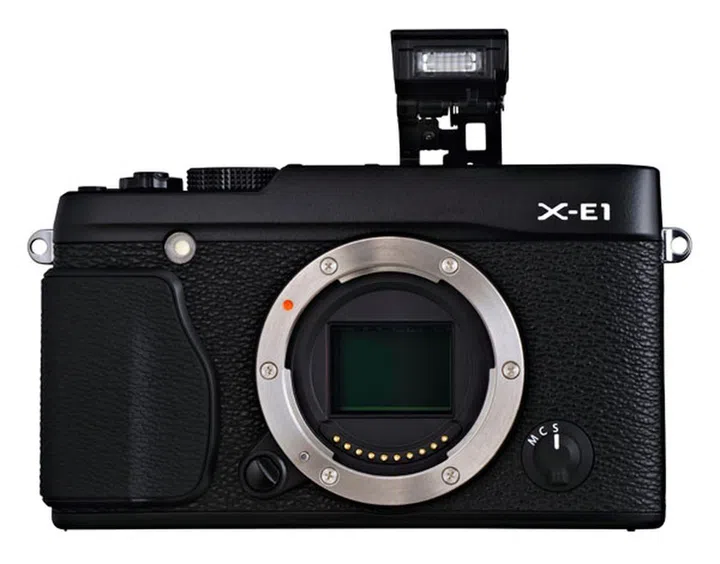
Original X Mount designed for maximum performance
FUJIFILM’s X mount system has a short flange back distance of just 17.7mm to maximize the advantage of the camera's mirrorless design, which eliminates the mirror box mechanism.
The wide opening allows the lens to be mounted approx. 7.5mm into the body from the mount surface. The back focus distance has been reduced as much as possible to achieve the compact and lightweight lens design for easy portability. The short back focus distance also prevents vignetting to maintain high resolution to all edges of an image.
The mount features ten contact pins to facilitate high-speed communication between the body and lenses. Autofocus, aperture and other lens movements are conveyed to the body at high speed.
When fitted with a FUJIFILM M Mount Adapter, the X-E1 can use a wide variety of M lenses to broaden the scope of your photography.
Diverse shooting modes that faithfully reproduce conventional photographic film's distinctive textures
The X-E1 offers FUJIFILM’s creative “Film Simulation Modes” to simulate the distinctive textures of conventional photo film. Use the high saturation "Velvia" for landscape shots with stunning primary colors, "ASTIA" for faithful smooth skin tone reproduction and the more versatile "PROVIA" for its natural look, as well as two additional settings based on professional color negative films. Soft tonal PRO Neg.Std and the sharper PRO Neg.Hi are both suitable for indoor portrait photography. Three types of filter simulation are also available for monochrome and sepia looks. The Film Simulation Bracketing function uses a single exposure to produce three images with Film Simulation effects applied.
Advanced digital processing enables "multiple exposure", in which two exposures are superimposed to create a single image. After selecting the Multiple Exposure mode, take the first shot, and display the image on either the EVF or LCD monitor as reference when taking the second shot. This system facilitates more accurate positioning and focusing. The ability to take two shots while visually checking the finished image allows users to produce unique photographic expressions.
Full HD Movie recording
Shoot Full HD movies (1920 x 1080) at 24fps. In addition you can now use Monochrome or Film Simulation modes when video recording, and even take advantage of the X-E1’s large sensor and bright XF lenses to capture movies with beautiful defocused bokeh effect.
Connect a microphone (commercially available), with Φ2.5mm jack to the Microphone/remote release connector and record audio with enhanced clarity and presence. The X-E1 allows you to take videos without having to worry about the camera body's operation noise or lenses' motor sound being captured.
(1) Including the battery and memory card, excluding the lens
(2) With the XF35mmF1.4 R attached
(3) ISO200・m
(4) FUJIFILM Research ; August 2012
(5) Depending on the shooting conditions
(6) Equivalent 35mm format:27mm to 84mm
FUJIFILM X-E1 key features list:
- 16.3 megapixel APS-C X-Trans CMOS Sensor
- EXR Processor Pro
- FUJIFILM X mount (For Fujinon XF lenses)
- Extra high resolution 2.36 million dot OLED electronic viewfinder
- 2.8-inch (460K dot) LCD (High contrast, High Brightness and Wide viewing angle)
- Built-in pop-up Flash (hotshoe attachment also available for external flash)
- ISO 200 – 6400,, extended ISO 100, 12800,25600 (range of ISO400-6400 when using ISO Auto)
- 0.05 sec Shutter time lag
- Q (quick) button to shooting menu settings
- In-camera RAW converter
- Film simulation modes (Velvia, Astia, Provia, Monochrome, Sepia, PRO Neg Std & PRO Neg Hi)
- Artistic features inc. Multiple exposure & Panoramic shooting
- Auto Bracketing functions (AE/ISO/DR &FS)
- Full HD Movie
- Microphone/shutter release input (Φ2.5mm)
- Approx. 350 shots per battery charge
Accessories available for the FUJIFILM X-E1
- Leather case BLC-XE1
- Fujinon XF Lenses
- M Mount Adapter
- Hand Grip HG-XE1
- Three dedicated flash models to choose from depending on requirements
- (EF-X20, EF-20, EF-42)
- Protector filters (PRF-39, PRF-52 and PRF-58)
- Remote release RR-80
Expanding the FUJINON XF Lens line up for FUJIFILM’s X series interchangeable cameras
FUJIFILM Corporation (President: Shigehiro Nakajima) is proud to announce the launch of two new models to the FUJINON XF Lens range bringing the total number of lenses available to five, offering much broader photographic appeal.
Fujinon XF lenses are the pinnacle of Fujifilm's optical design technology, with top quality all-glass construction including aspheric lens elements. Developed with particular attention to corner resolutions and vignetting, the Fujinon XF lens line up eliminates chromatic aberration. Their fast f-stop broadens users’ scope of photographic expression, such as low-light photography and scenes with beautiful bokeh effects. The lenses have FUJINON’s "Super EBC Coating" to reduce reflection at a wider range of wavelengths, thereby controlling ghosting. The use of the 1/3EV step aperture ring enables delicate, tactile control of exposure and depth of field.
The compact FUJINON "XF18-55mmF2.8-4 R LM OIS" lens, the first short zoom lens in the Fujinon XF lens range
This short zoom lens covers a range of frequently-used focal lengths from 18mm in wide angle to 55mm telephoto*. The lens structure consists of 14 elements in 10 groups, including 3 aspheric and 1 extra low dispersion elements, and a seven-blade rounded diaphragm.
The linear motor-driven system delivers high-speed autofocus performance of 0.1 seconds to capture those perfect photo opportunities. Silent operation also makes the lens suitable for video recording.
Advanced optical and mechanical designs have been used to keep the lens compact, despite offering fast aperture of F2.8 - 4.0 wide open. It is a fast and highly mobile lens that delivers premium picture quality in a variety of scenes, being suitable for low-light photography or scenes with beautiful bokeh in the background.
It features OIS (Optical Image Stabilizer) equivalent to 4 stops, controlling the effect of camera shake and preventing blurry shots.
The lens is equipped with an aperture ring so that users can easily adjust the aperture while holding the camera up to their eye.
*Equivalent to 35mm format :27-84mm
Fujinon "XF14mmF2.8 R", a stunning ultra wide angle lens with high resolution into all corners
Advanced optical design has been used to overcome the distortion-prone tendency of ultra wide angle lenses to control distortion without digital correction. This contributes to achieving high resolution to all corners of this ultra wide angle lens.
The lens structure consists of 10 elements in 7 groups, including 2 aspheric and 3 extra low dispersion elements, and a seven-blade rounded diaphragm. The lens features distance and depth of field scales on the barrel, making it suitable for a range of shooting techniques such as pre-focusing.
With the F2.8 wide open, the lens is suitable for low-light photography. The short minimum shooting distance of 18cm means it can effectively blur the background while also giving a sense of perspective characteristic to ultra wide angle lenses.
The FUJIFILM X Mount has a short back focus distance, preventing vignetting, to achieve clarity and brightness to all corners. Image distortion and chromatic aberration are well controlled to deliver high resolution to all corners of an image, making the lens perfect for landscape photography.
**Equivalent to 35mm format :21mm
[For FUJIFILM X-Pro1 Users]
Please update the firmware of your X-Pro1 when using these lenses for the first time.
The firmware can be downloaded from “Support” on the Fujifilm Global website. Please go to the following URLfor details. Each firmware will be available soon:
Fujifilm Global website: http://www.fujifilm.com/support/digital_cameras/
Our articles may contain affiliate links. If you buy through these links, we may earn a small commission.