
Zen Overclocking and the ASUS Commando Motherboard (Intel P965)
ASUS launches their most overclockable motherboard yet with exceedingly high top-end frequency claims. In this article, we take the Commando to its limits and come back to tell the tale. If you're planning an overclocking rig, this may be the one board you do not want to pass up on. Details inside.

The Art of Overclocking
Overclocking as always been an art form for the enthusiast to push one's hardware to beyond its official capabilities and limits. There are those who overclock to gain better performance from older hardware, and then there are those who go to the extremes just to see what their hardware can do, but the premise of overclocking is the same.
Hardware manufacturers have originally shunned overclocking, publicly distancing themselves from this community, but this has steadily changed in recent years. Overclocking is such a niche high performance market that the top selling point is no longer about who's the best stock performer, but who has more hidden potential. Products that can overclock better are seen as being of higher quality and are better valued by enthusiasts.
From less restrictive CPU multiplier locks, higher granularity motherboard controls and built-in overclocking software in product drivers/tools to factory-overclocked GPUs and memory, PC components have become more overclocking friendly. Some companies like memory manufacturer OCZ even extend their warranties to cover out-of-spec frequencies and voltages associated with overclocking their products. Of course, any overclocker will tell you, the most important piece to the overclocking puzzle is a stable platform and that is the PC motherboard. Chipset, build quality, voltage regulation, component compatibility, tolerance, BIOS options; all these features are crucial to a good overclocking motherboard. Now, last year gave us some great options and cult favorites like the Gigabyte GA-965P-DS3, but ASUS has a new board that is supposed to claim the overclocking crown pushing an absurd 570+MHz FSB: the ASUS Commando.
Command-o Me
We first saw a glimpse of the new ASUS Commando motherboard last month (December 2006) at the OCZ Summit in Taipei. OCZ was using an engineering sample of this board for their memory overclocking demonstrations. Naturally questions arose as to why they are using a pre-production board instead of stable retail boards that have been established as good overclocking platforms. The answer - ASUS has engineered the Commando to be The overclocking platform for the Intel LGA775 socket. This no doubt piqued our interest and as soon as ASUS readied the final version of the Commando, we secured ourselves a board for some first hand testing and to see if it can live up to ASUS' hype.
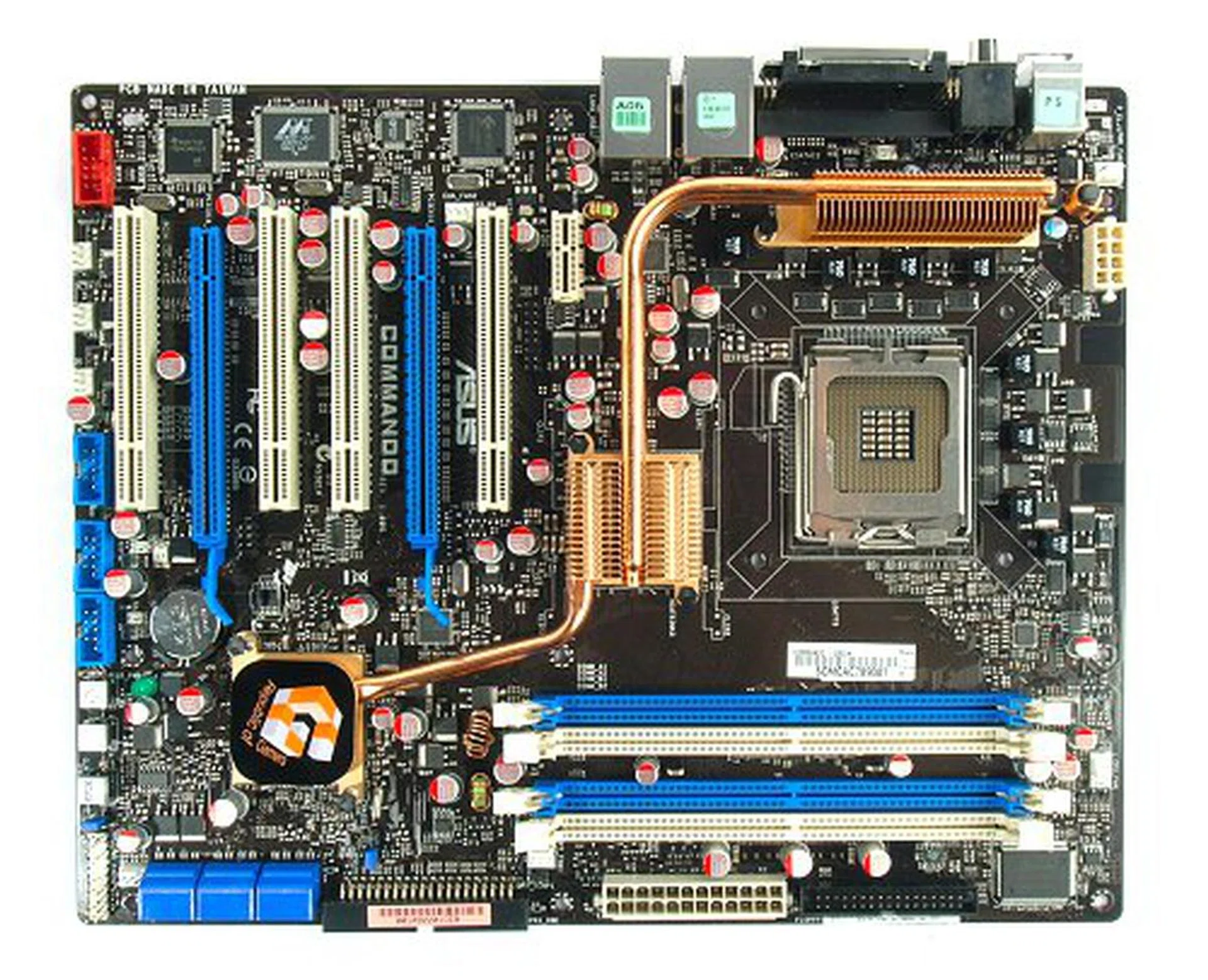
The ASUS Commando motherboard.
The third motherboard in their Republic Of Gamers (R.O.G.) series, the Commando is based on the Intel P965/ICH8R chipset combo, designed with several unique features and labeled as the tweaker's choice. Unlike other premium ASUS motherboards that are usually decked out with everything and the kitchen sink, the Commando is slightly leaner on features (but by no means bare). It has additional SATA 3.0Gbps ports courtesy of JMicron JMB363 (but no eSATA out-of-the-box), FireWire-400 support and dual Gigabit LAN. Being a R.O.G. motherboard, the Commando's onboard audio is powered by the ASUS Supreme FX add-on card (using an ADI 1988B sound CODEC). The board also sports all the R.O.G. features like the 8-phase 'cap-less' PWM, full solid capacitors, onboard LED, EL I/O and LCD Poster just like the recently reviewed Striker Extreme. Designed for the hardcore, the board has a tweaker friendly BIOS and a total of eight fan headers for you to go crazy with. ASUS also believes that the board should be more geared for today's hardware, which is why the Commando only features PCI slots to compliment the PCIe x16 graphics slots.
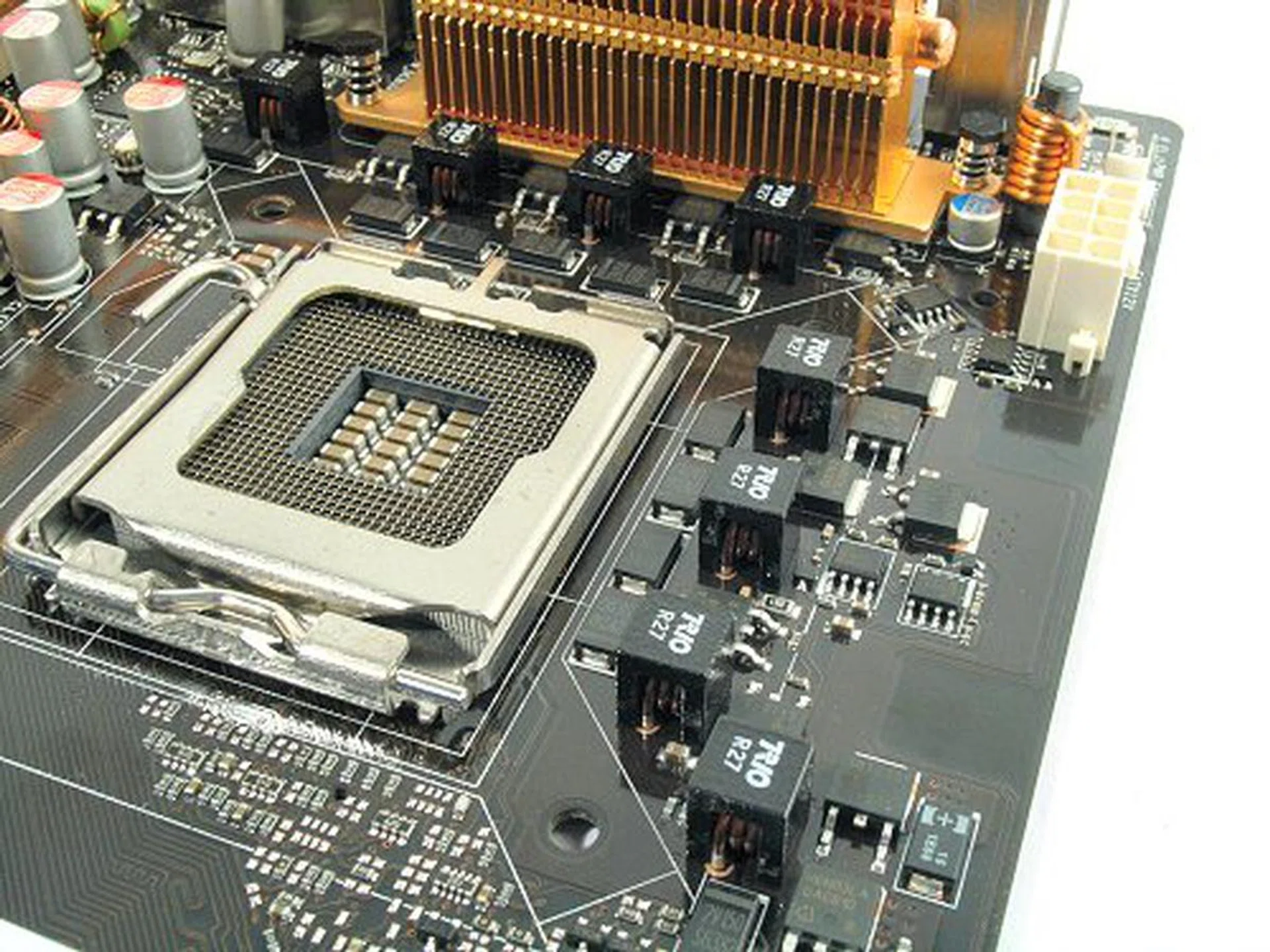
ASUS 8-phase cap-less PWM.
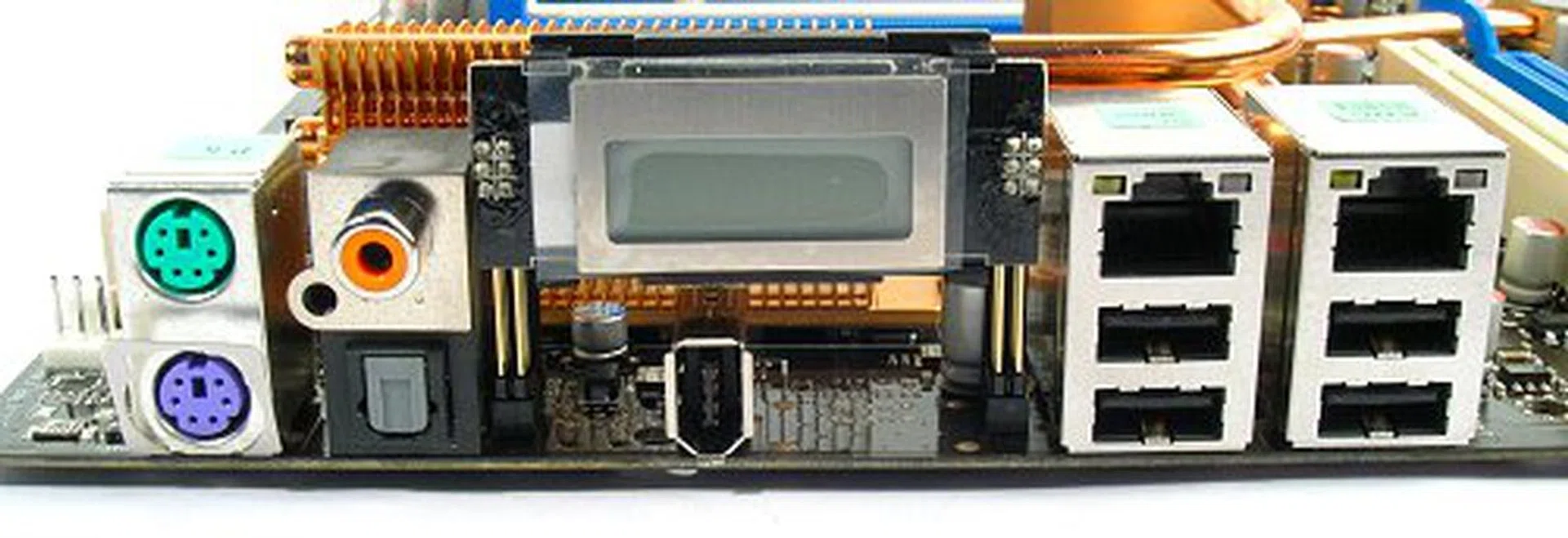
Rear panel isn't as packed as other R.O.G. boards. There aren't any eSATA connectors and the LED light switch is also not available.
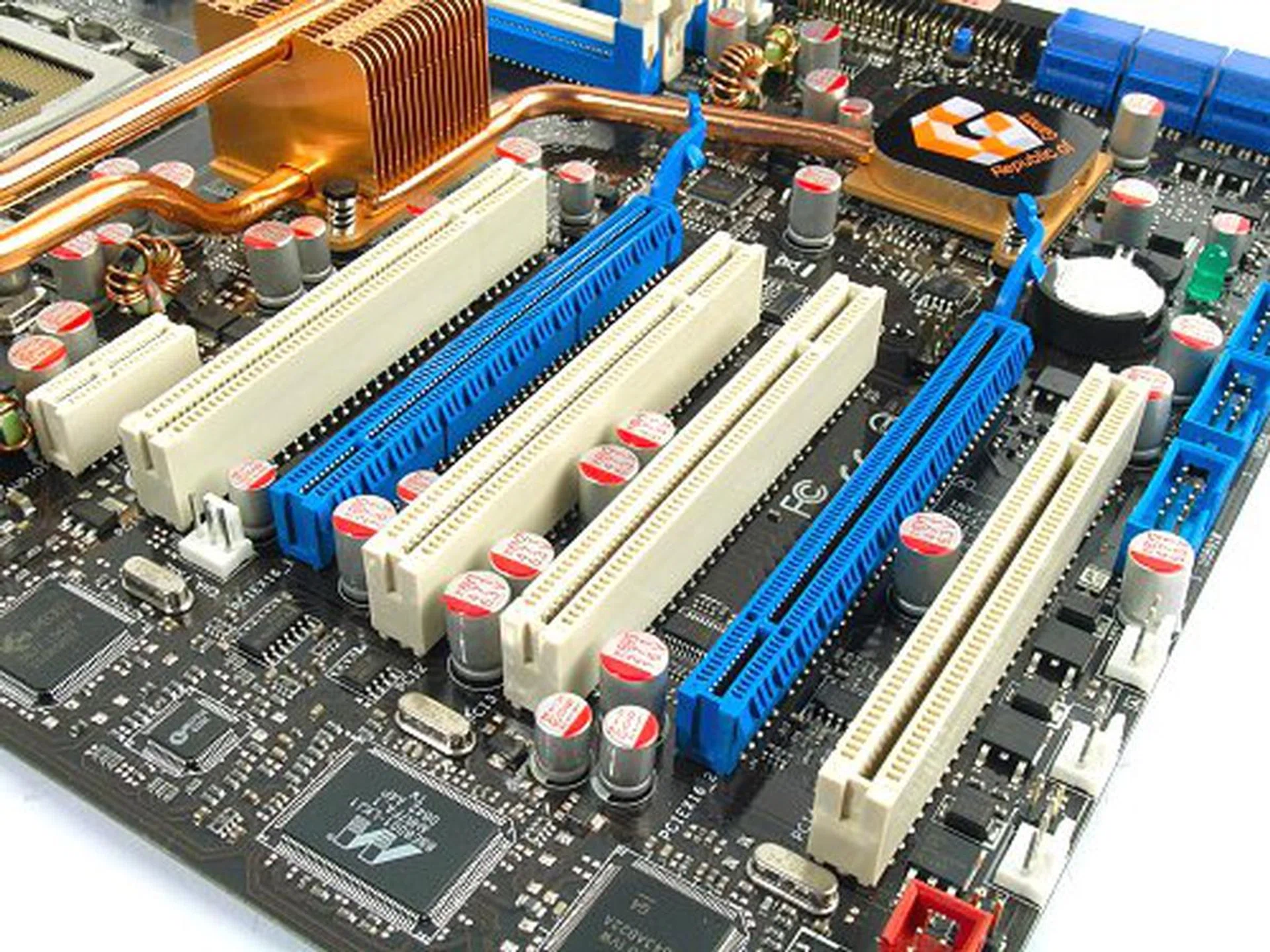
Full complement of PCI slots. Large graphics card will still be a problem, but the staggered design lets you have a few slots to use. Notice the solid capacitors and abundance of fan headers in this corner alone.
The BIOS
The Commando's BIOS is quite similar to the Striker Extreme, both having the Extreme Tweaker tab with a bevy of options to go crazy over. One of the new features in Extreme Tweaker that we haven't seen from other Intel P965 based BIOSes are the independent memory controller channel REF Voltage options. This can be tweaked up to plus or minus 30mV. Most of the other settings are quite standard, but we'll like to explain the memory frequency settings in a little more detail.
Under DRAM Frequency, you can choose DDR2-533, DDR2-667, DDR2-800, DDR2-889 and DDR2-1067 speeds. They correspond to a 1:1, 4:5, 2:3, 3:5 and 1:2 ratio with the standard 1066MHz FSB strap. Once you start overclocking though, they may work differently and for the FSB that we're shooting for, DRAM Frequency is kept to the lowest 1:1 ratio.
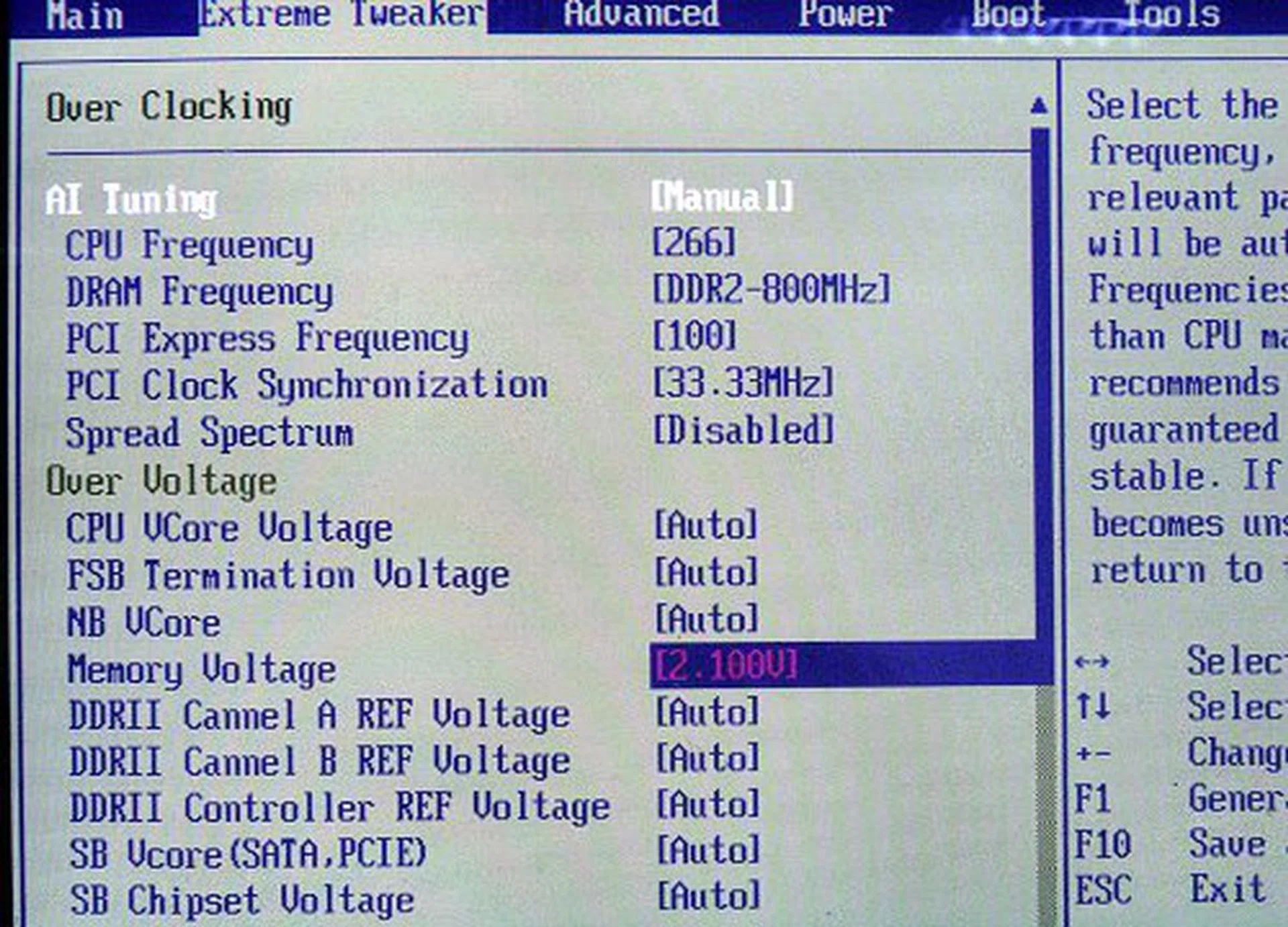
Top portion of the Extreme Tweaker BIOS in the ASUS Commando. CPU Frequency goes to 650MHz here.
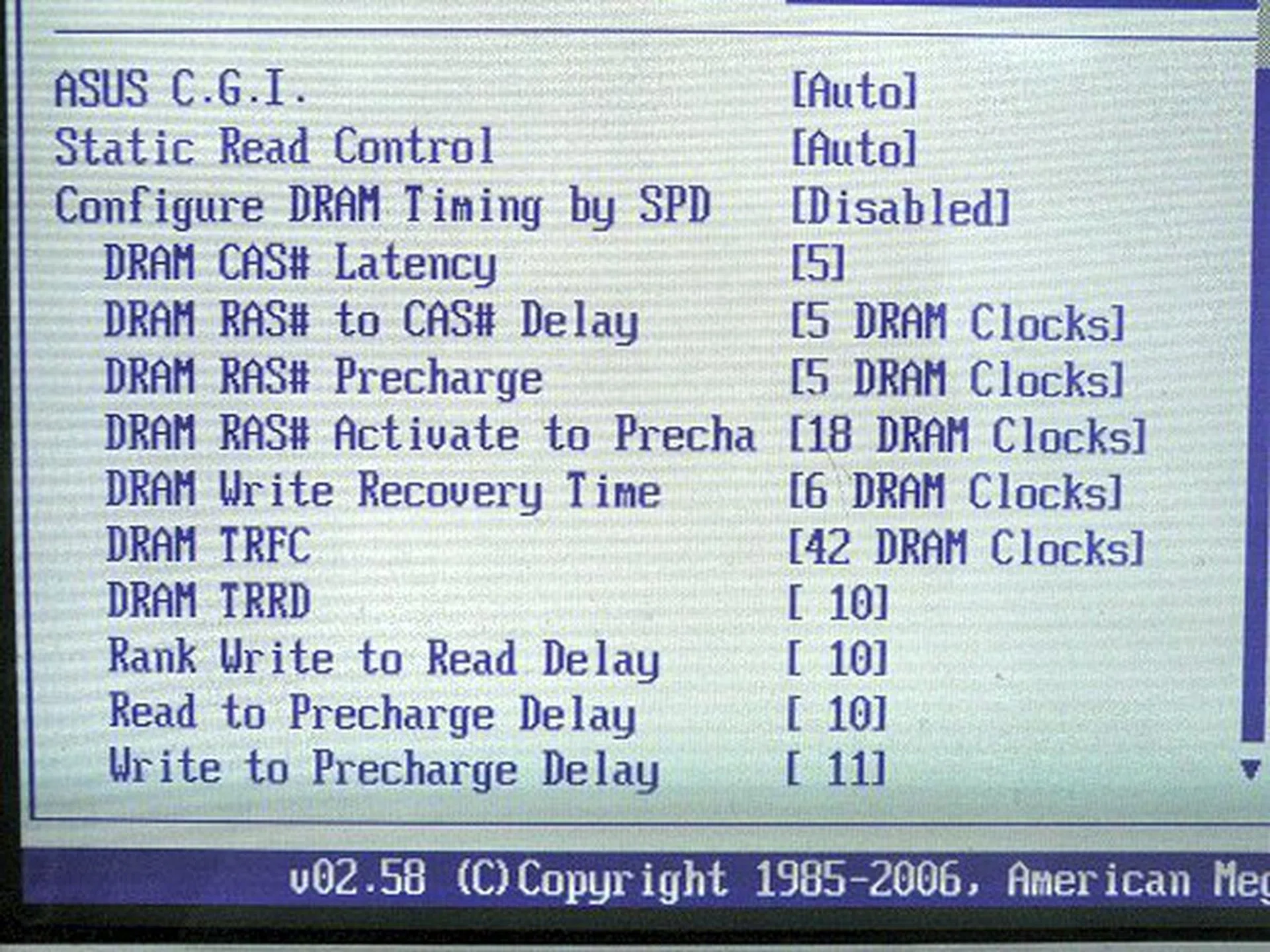
Bottom half has the memory timing options. Notice Write to Precharge here defaults at 11 instead of 10 like previous boards. This is supposed to help boost memory overclocking potential.
The ASUS C.G.I. (Cross Graphics Impeller) is an option that is supposed to optimize NB/SB and PCIe bandwidth to improve dual-GPU performance such as ATI CrossFire. This option should not impact overclocking capabilities of this board. We've heard from certain parties that mention disabling Static Read Control at higher overclocks, but this option also doesn't seem to have impact on our final overclock, so we've left it at Auto.
The Overclock
The following hardware configuration was used for our overclocking tests:-
- Intel Core 2 Extreme X6800 processor (2.93GHz)
- 2 x 512MB Corsair XMS DDR2-1066
- Seagate Barracuda 7200.7 80GB SATA hard disk drive (one single NTFS partition)
- MSI GeForce 7900 GT 256MB - with NVIDIA ForceWare 91.47
- Intel INF 8.1.1.1001 and AHCI 6.1.0.1022 driver set
- Microsoft Windows XP Professional with Service Pack 2 (and DirectX 9.0c)
- ASUS Commando BIOS 0601
Like our regular motherboard reviews, we've decided to overclock the ASUS Commando as it is; with its own stock cooling to find out just what its potential is out of the box. The Intel Core 2 Extreme X6800 CPU and Corsair DDR2-1066 memory were used to (hopefully) ensure we did not run into bottlenecks. In our attempts to overclock the Commando, we were able to get into Windows at 520MHz FSB (2080MHz PSB) and even run regular tasks like web surfing and Word. However, it wasn't stable enough to run any CPU intensive benchmarks. At 515MHz FSB however (2060MHz PSB), we were able to run through loops of PCMark05 CPU workload benchmarks, AquaMark3 and 3DMark05 stable.
They say pictures speak a thousand words, so we'll let the following set of images tell the rest of the story.
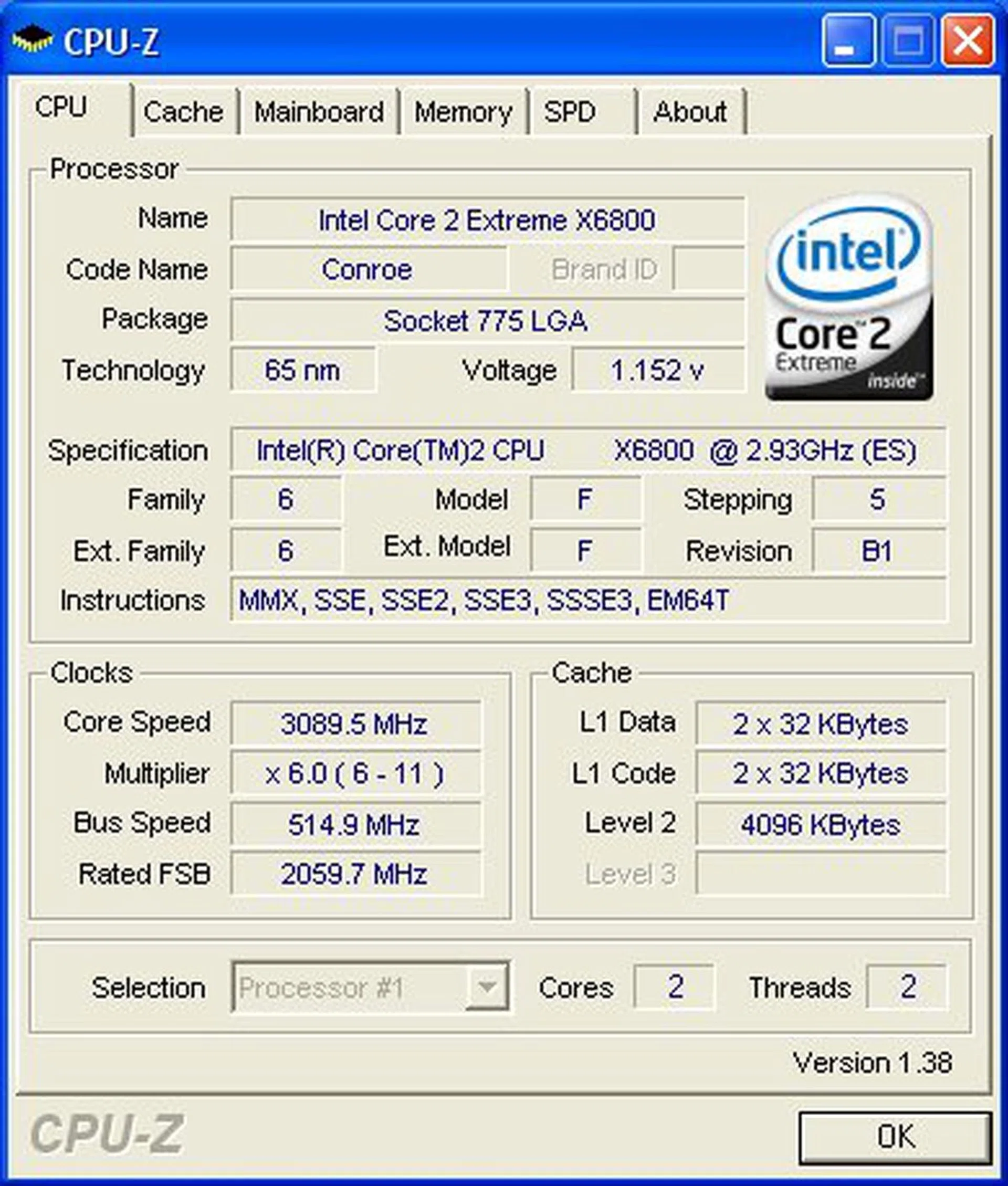
Final overclock CPU-Z screenshot. We have a X6800 CPU with a B1 stepping.
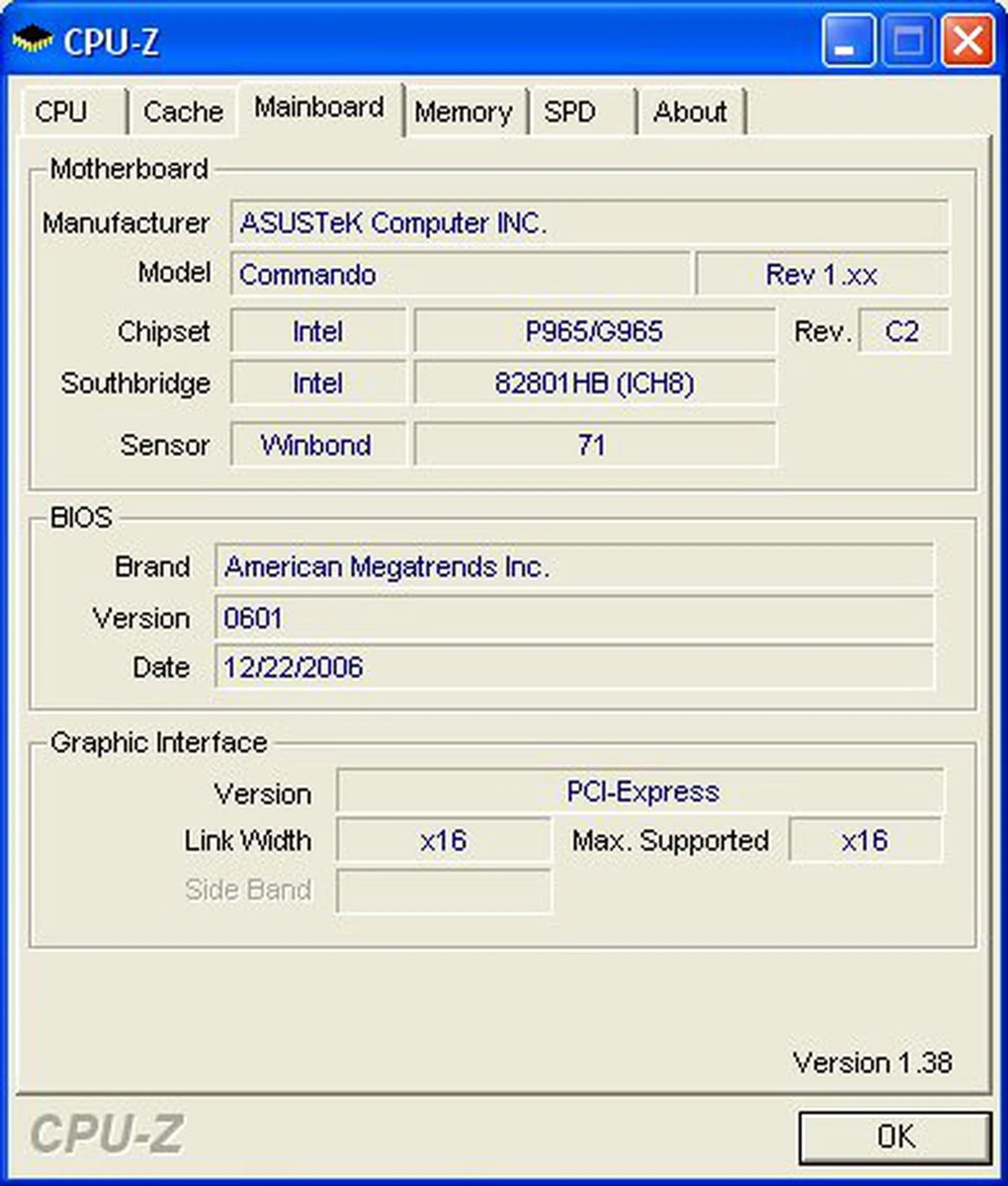
CPU-Z screenshot of the Commando chipset and BIOS. Note that the Intel P965 Northbridge stepping on this board is C2.
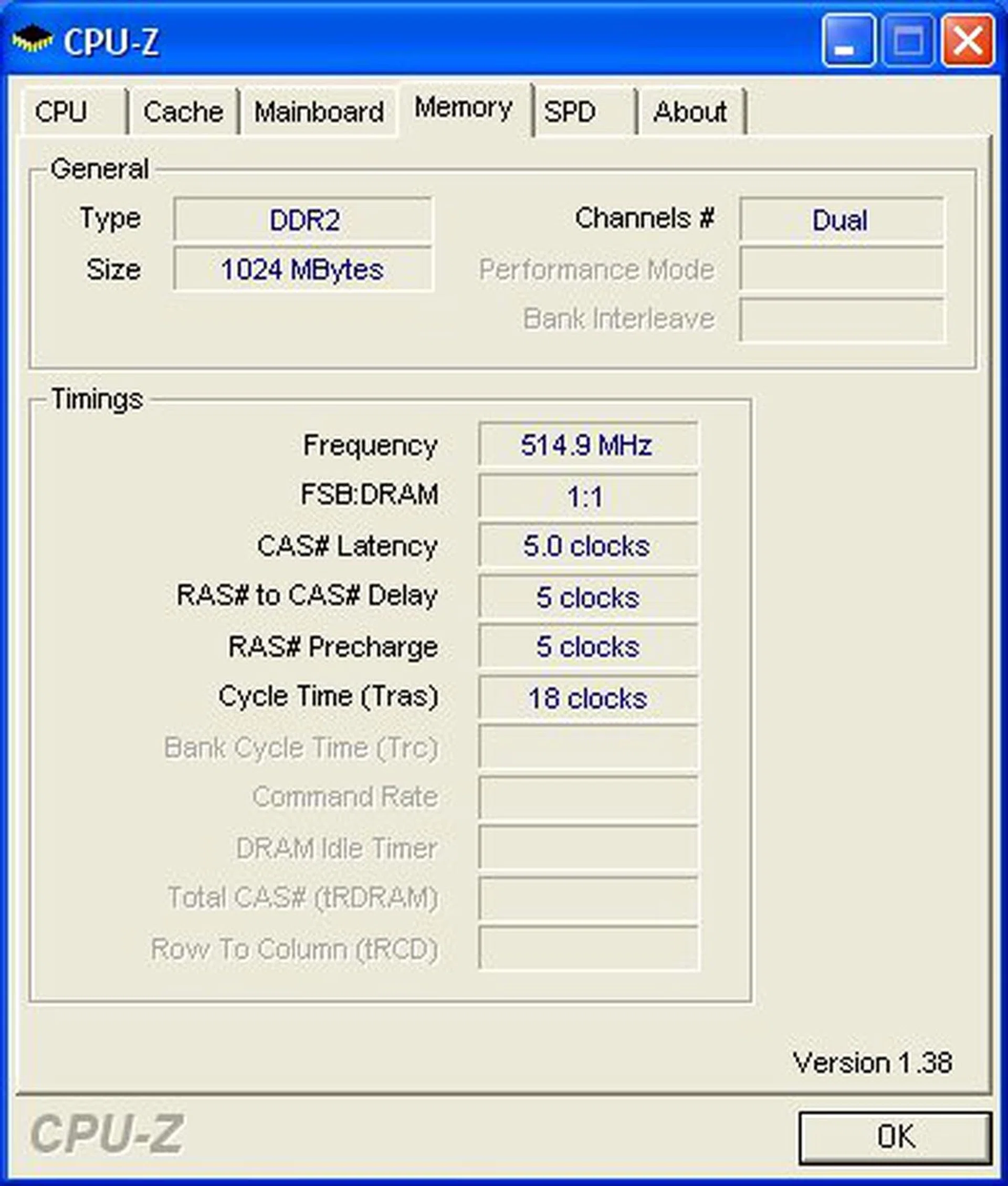
DDR2 memory in dual-channel mode for our overclock. Since we haven't hit the Corsair's target frequency yet, we've stuck to its timings.
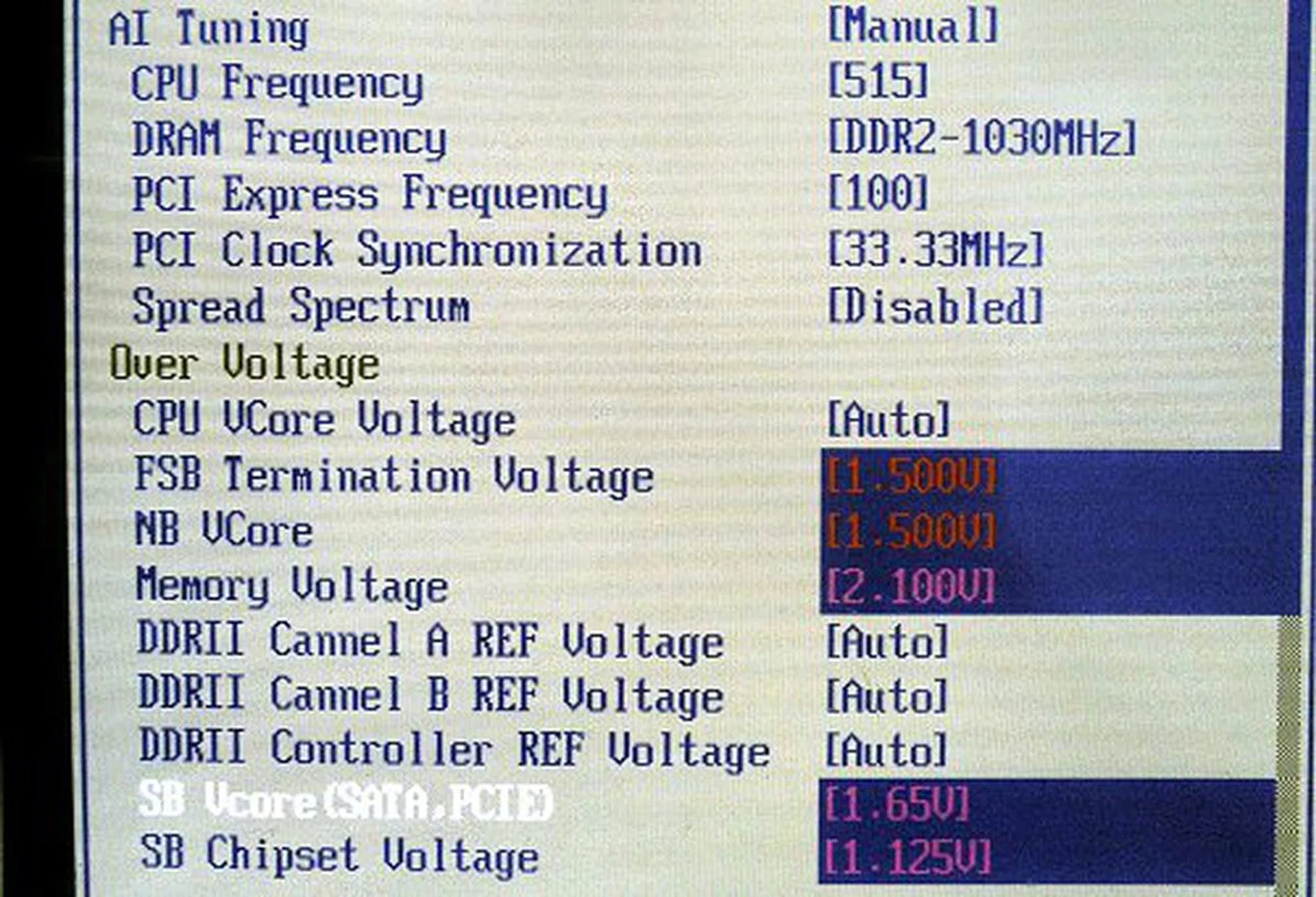
Our final overclock settings.
The Conclusion
Ever since the launch of the Intel P965 chipset, we've never been able to breach the 500MHz FSB barrier. The first board to do so in our labs has been the ASUS Striker Extreme, a NVIDIA nForce 680i SLI chipset motherboard and our final overclock with it was 504MHz FSB (2016MHz PSB). The ASUS Commando becomes the first Intel P965 motherboard to achieve this and not only did it break the Striker Extreme's record by a whole 11MHz (in Intel quad pumped speak, that's 44MHz), we're seeing potential beyond 520MHz. This is certainly a stretch still from ASUS' own claims of 570MHz and above, but for a passively cooled motherboard and air cooled CPU, 515MHz FSB is amazing! Although we've not done a full review of the ASUS Commando, the board certainly lives up to its claim and we think it deserves our Most Overclockable Product award.
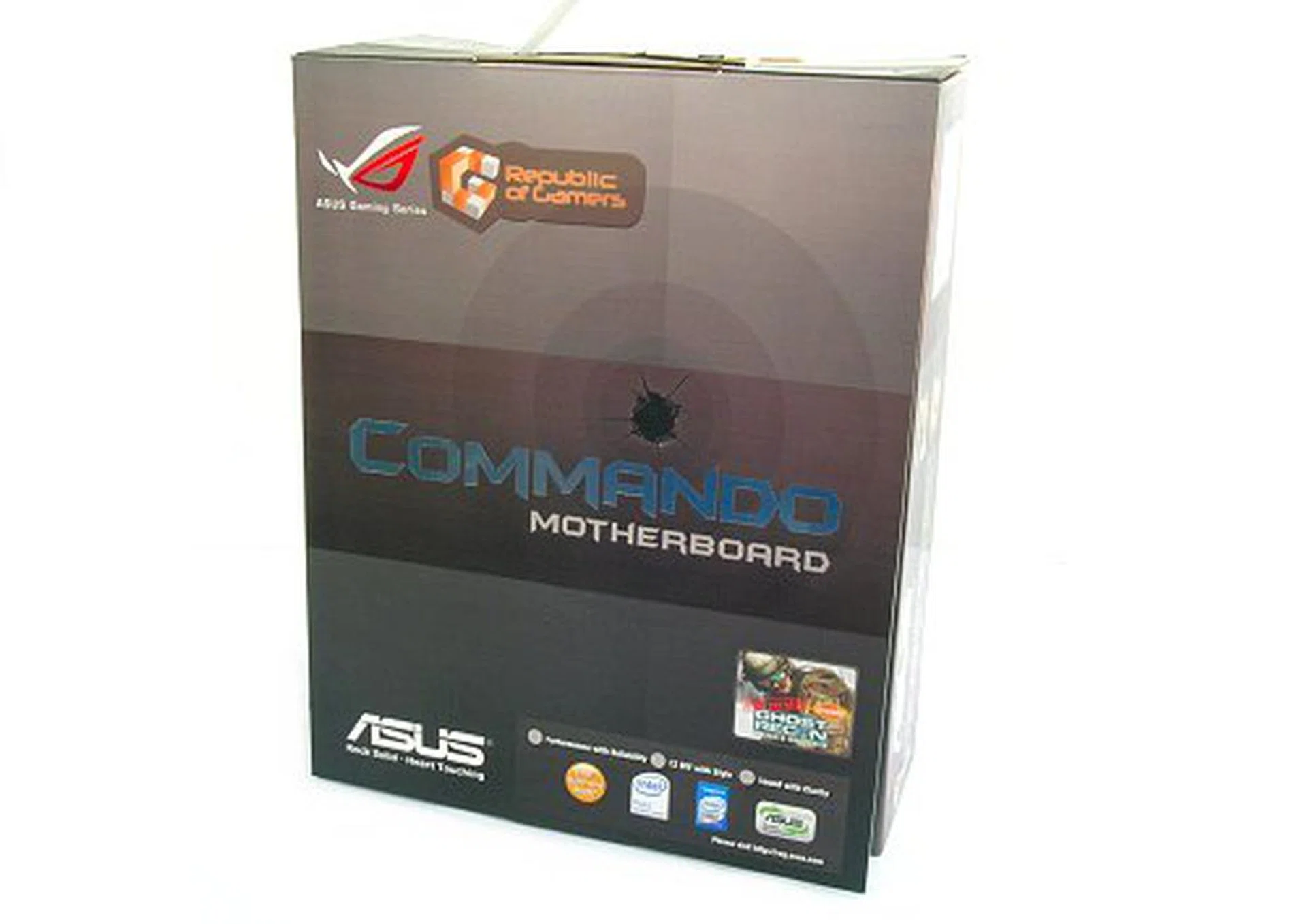
Enthusiasts and hardcore overclockers - Remember this box. This is what you need.
While the industry is slated to move to the next official speed bump at 1333MHz (333MHz FSB), current LGA775 chipsets are routinely hitting above 400MHz FSB and in the case of overclocking boards such as the ASUS Commando, we're nearly doubling the stock 266MHz FSB and moving into 500MHz territory with regular air cooling and moderate voltage adjustments.
A year ago, hitting 300MHz FSB (1200MHz PSB) on the Pentium 4 architecture was a milestone some manufacturers proudly state as a feature. We would scoff at impossibly high FSB numbers that manufacturers love to put in the BIOS. In a short span of half a year however, we're looking at frequencies a whole 200MHz higher and suddenly that 600 - 700MHz ceiling doesn't seem all that ludicrous or impossible to achieve now.
Our articles may contain affiliate links. If you buy through these links, we may earn a small commission.