
Sony A7R: The Outrageous 36MP Full-Frame Compact Mirrorless Camera
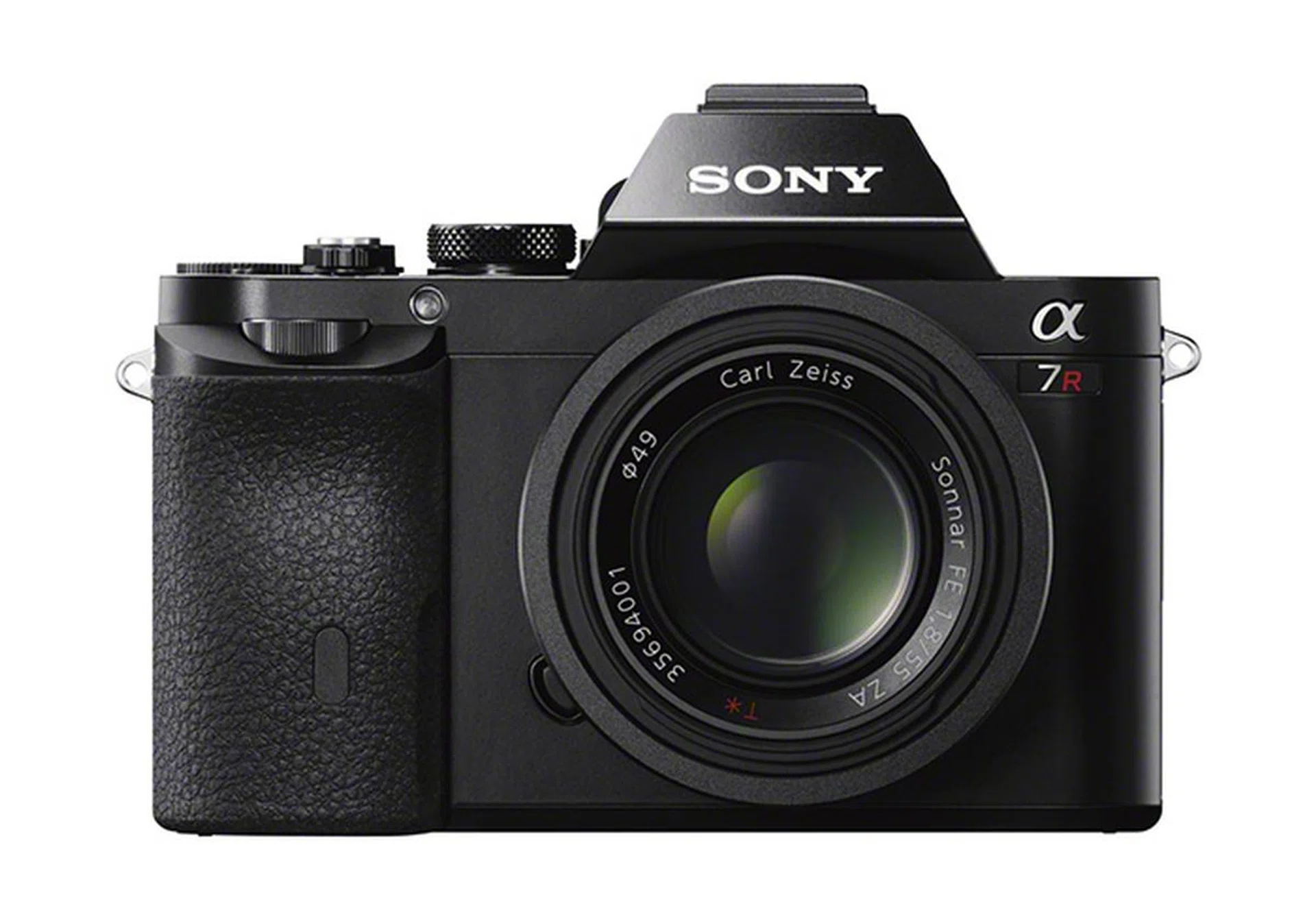
The Sony A7s are the culmination of a dream: full-frame mirrorless cameras in a compact frame. The Sony A7R takes that dream up a notch by including a 36MP sensor inside without an optical low-pass filter. I thought it wouldn't work, and here's how the A7R changed my mind.

Introduction
The Sony A7 series is a manifestation of a dream once thought impossible – the ability to make a compact mirrorless system camera with a massive full-frame sensor inside. While the A7 is already a technological achievement, the A7R takes it to the next level by having a 36MP count; the only other camera with an equivalent pixel count and lack of optical low-pass filter is the Nikon D800E.
With the A7s, things are different now. No longer does full-frame belong squarely in the realm of large DSLR cameras (let’s agree not to include Leica in this mix, just because its astronomical prices keep it out of any fair comparisons), and no longer does mirrorless mean small cameras with small sensors.
But there are reasons why nobody else has done this before Sony (except Leica, again); there are a host of problems to overcome, including the risk of soft corners and vignetting with the short flange-back distance, lackluster electronic viewfinders and short battery life. So does the A7R actually work?
Design & Handling
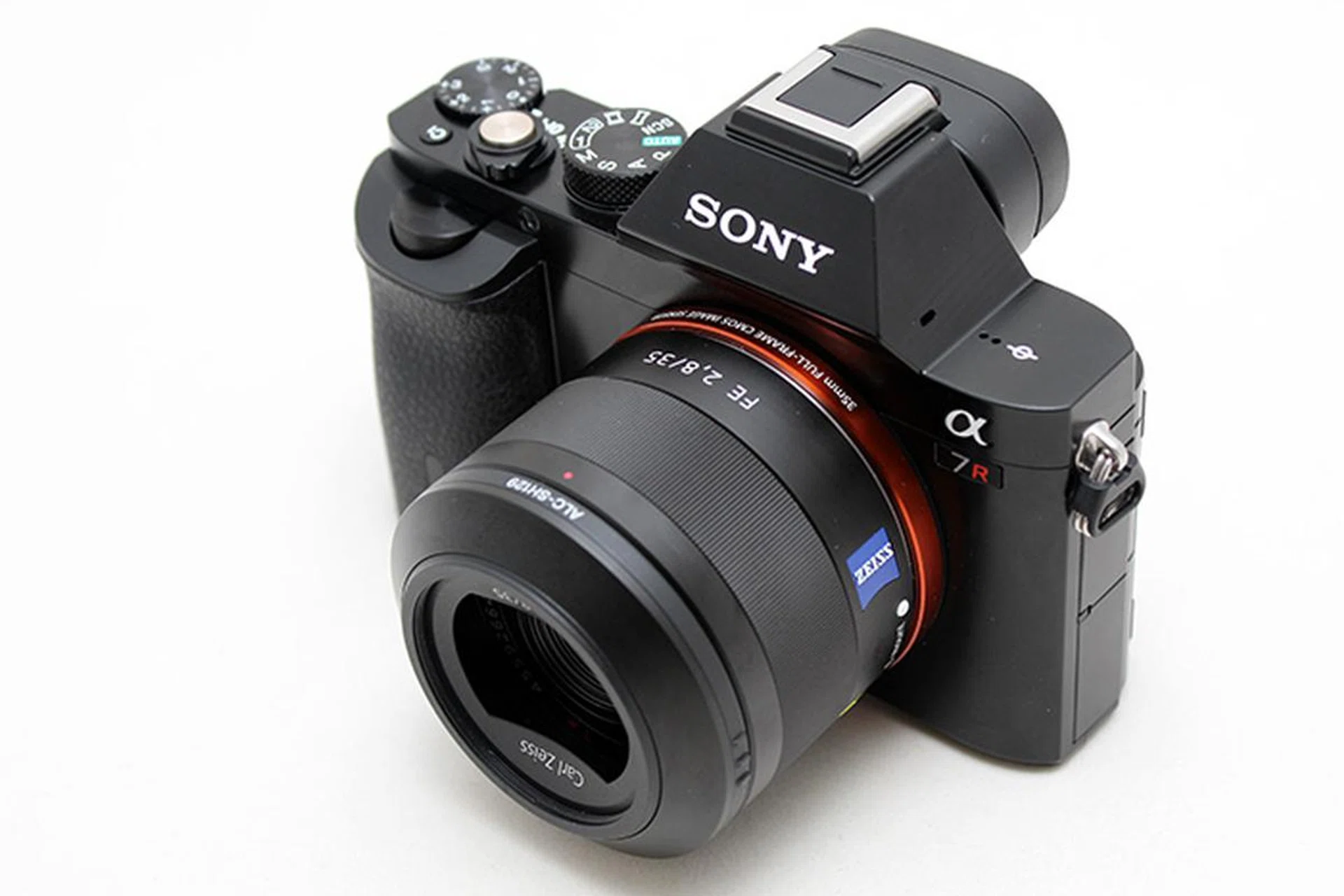
The A7R isn't ugly, but it's not pretty either. It's just plain.
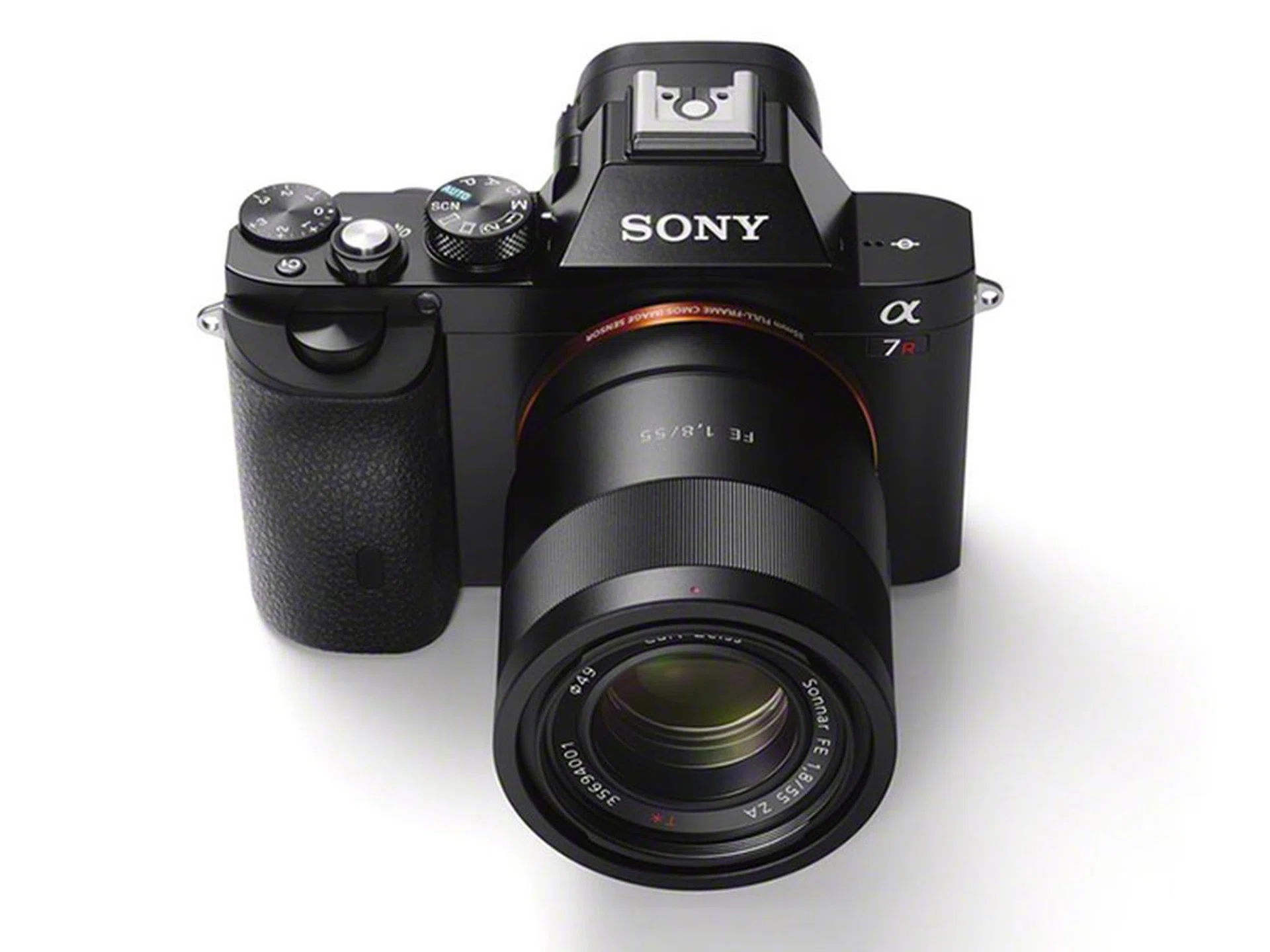
The Sony A7R isn’t ugly, but it’s not pretty either; it just is. Form certainly follows function here, and Sony has crossed the minimalistic line to plain plainness. Its smallness astounds though, every time I pick it up I have to remind myself that I’m holding a camera with a 36MP full-frame sensor inside - the only other camera to have an equivalent sensor is Nikon’s D800 DSLR, which is way bigger and two times heavier.
It sits well in the hands, and everything falls within easy reach. The front control dial however, is dangerously close to the Power switch. Chalk it down to user error, but I’ve accidentally switched off the camera more than once while reaching for the control dial.
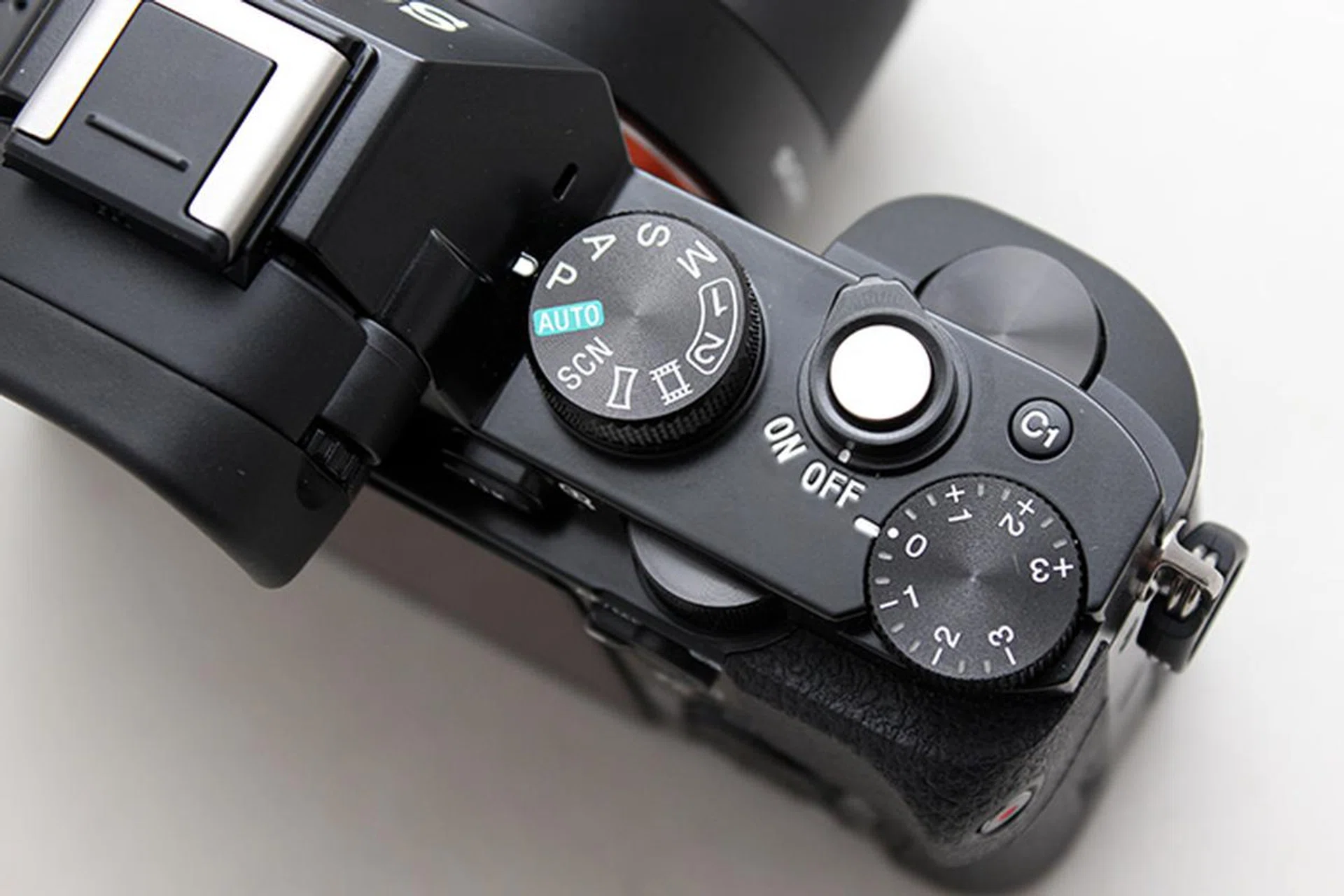
I've accidentally switched off the camera a couple of times when meaning to use the front dial. Probably just me.
Auto-focus (AF) is competent, but the A7R is not an action camera, nor is it a conspicuous one. The A7R’s shutter is loud; when you hit the release, you and the people around you will definitely know it. It takes about two seconds to power on, focus and fire its first shot. If you enable Continuous AF, the A7R can manage to fire off a shot every one to two seconds depending on how fast your subject moves. While the AF can track most of the time, there will be frames where the subject is out of focus. That said, we doubt anyone choosing a 36MP camera plans to use it for sports.
The A7R handles like a prosumer camera with an odd blend of physical and digital controls. The two main control dials can be customized, but there is a dedicated exposure compensation dial. There are a host of options for customization with ten custom dials in all, including the ability to customize the scroll wheel and d-pad controls, so you can set the camera up just the way you like. I especially like how the AF/MF button can be configured to either temporarily switch between the two by holding the button down, or changed to be a direct AF/MF switch.
You can’t easily change AF points with the default settings, but I changed the left d-pad direction to go directly into focus settings. So when I’m in Zone or Flexible Spot AF modes I can easily change the AF points just by pressing left. Needless to say, there’s a lot to like in how much Sony lets you customize your A7R just so.
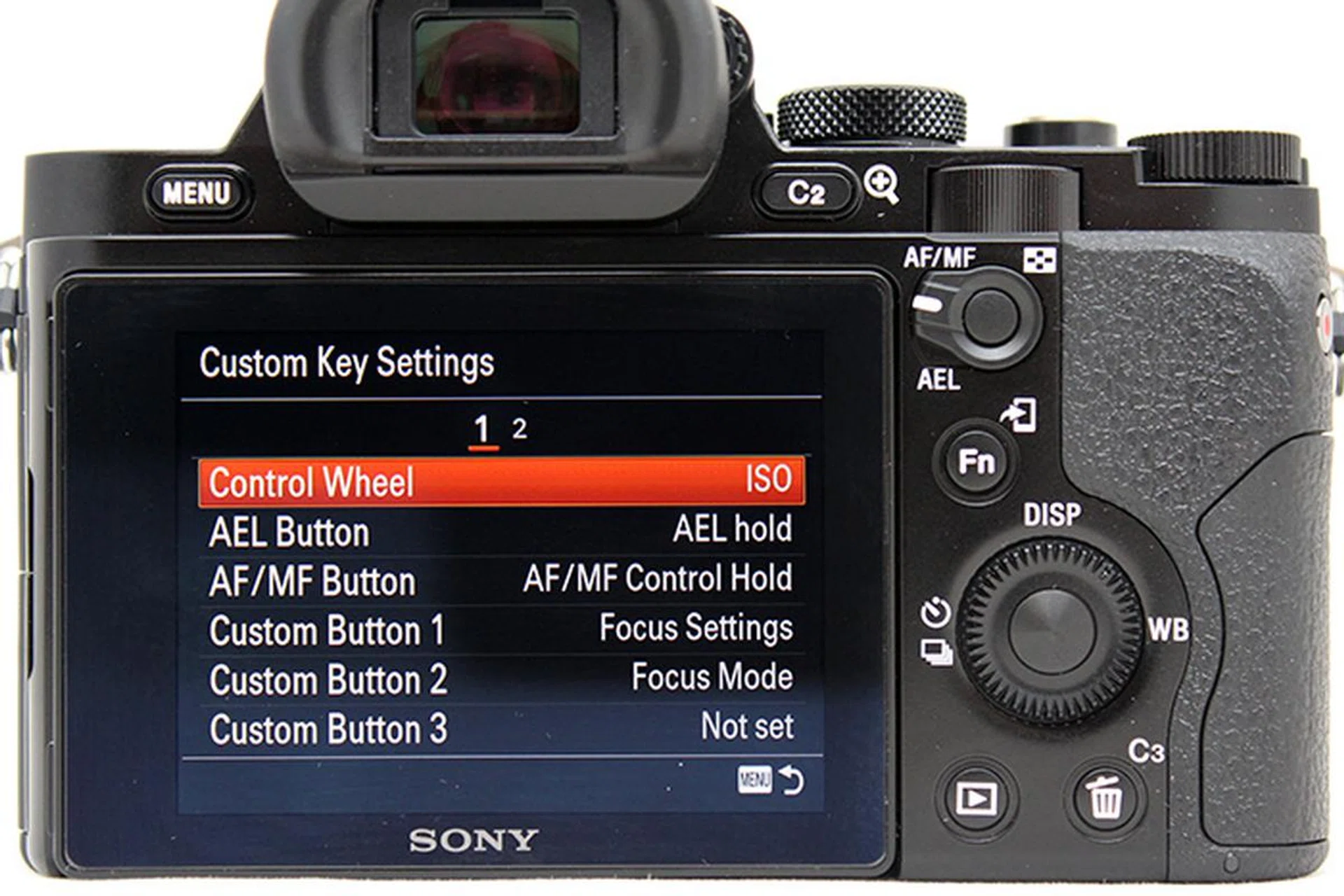
There are lots of options for button customization.
Being digital has its advantages. Sony brings focus peaking to the A7R, which makes it easier to confirm manual focus. It also has a zebra function, which you can turn on to see if your highlights are being clipped. Since the viewfinder is electronic, you can use both features on both the back monitor and the EVF. Electronic viewfinders will never be as good as optical viewfinders, but the question isn’t if the EVF is equal but if it’s good enough. I found the A7R’s responsive and clear, even in low-light, and didn’t miss an OVF.

The A7R comes with both zebra (for blowout warnings) and focus peaking (to aid manual focus).
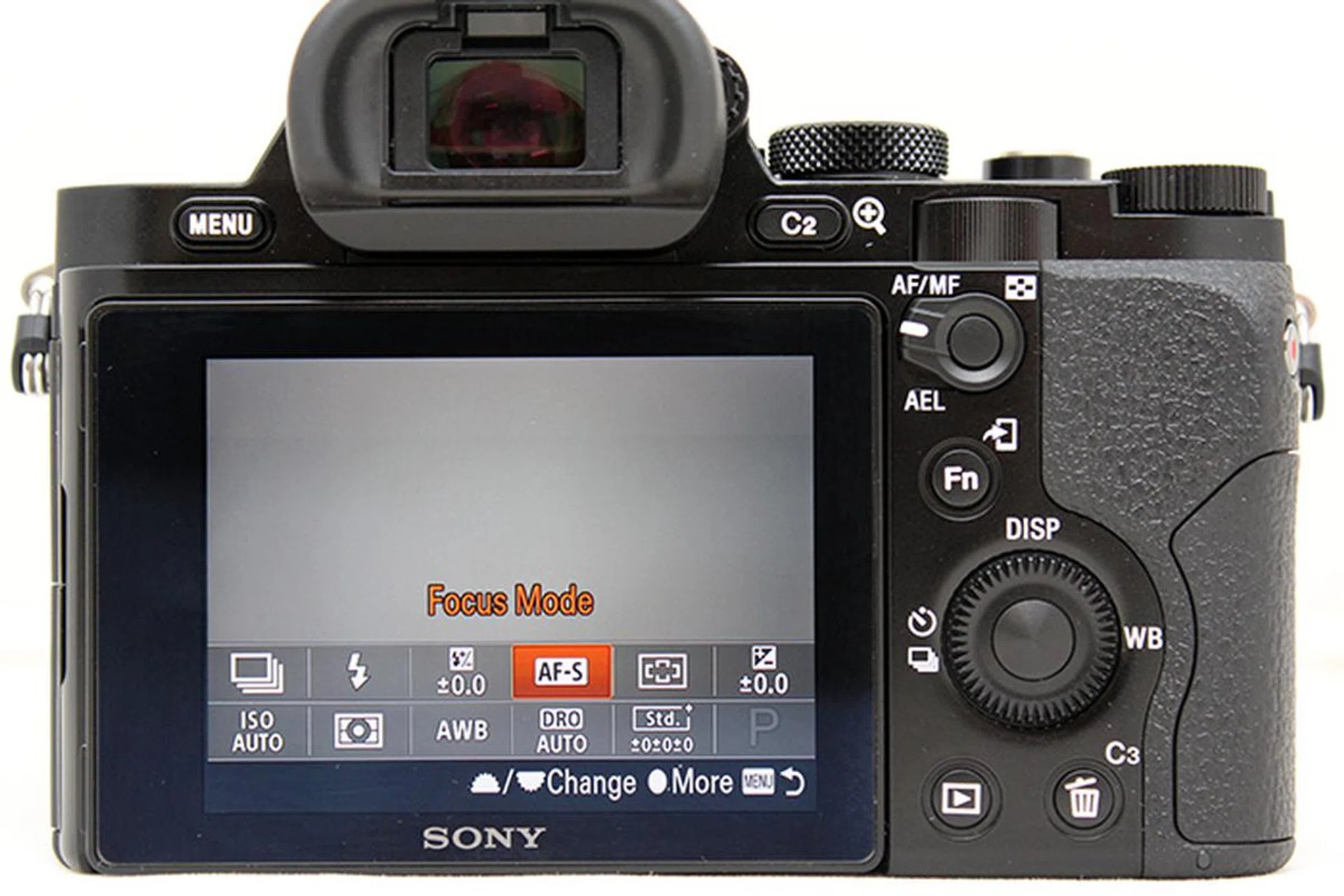
An Fn (Function) button brings up a menu of common settings, which can be customized.
Shifting around 36MP files takes a lot of power, but the A7R handles this with aplomb: I could squeeze off about 35 JPEG frames in succession before the camera started slowing down, when shooting in RAW I could manage about 20-odd frames (I was using an SDHC I Class 10 card with a touted maximum read/write speed of 94MB/s). The camera will occasionally lock down menus and playback if it’s writing to the card, but you can usually still take pictures.
Battery life is slightly better than its spiritual predecessor, the RX1, which was rated 220 to 270 images per charge. The A7R is rated 340 images per charge, and we shot about 280 images to get to about 20% power. It’s not great, not poor, just average. But we love how Sony shows how much power you have left in percentage, so you’re not left guessing what the battery bars mean or have a sudden drop in-between two battery bars.
Unfortunately, an external charger doesn’t come with the box, you can only charge via USB in-camera if you don’t want to pay extra and get one. USB charging is slower, and you won’t be able to use your camera as you’re doing it.

f/5.6 at 35mm, 1/60 sec, ISO 400.
Image Performance
The sample photographs were shot with the Sony A7R. The photos have not been post-processed, are saved in AdobeRGB, and are copyright to SPH Magazines. They are provided for your reference only and we ask that you do not reproduce them elsewhere. Because of each image's large-size we're unable to offer full-resolution downloads. Instead, we have 100% crops which have been compressed once-more through the cropping process.
I didn’t think that Sony could squeeze a 36MP full-frame sensor into such a small body and make it work, but after looking through the images I’ve become a believer. There are some trade-offs, but the sensor should prove more than enough for its target audience of enthusiast shooters.
The biggest reason I’m convinced is how noise-free the images stay even at sky-high ISO levels. I have pictures at ISO 10,000-16,000 which remain impressively free of noise - that’s a level of performance I’ve only experienced on the highest-end DSLR cameras like the Nikon D4. The second-biggest reason is how rich the 36MP files are with detail. The A7R benefits not just from a large sensor with a high megapixel count, but also the lack of an optical low-pass filter, which allows more fine detail to be captured at the risk of image artifacts like moiré appearing.

f/4 at 35mm, 1/60 sec, ISO 16,000.

Compressed 100% crop.
DP Review has detailed how the difference in cameras with and without an optical low-pass filter can really only be seen with the help of good quality lenses, and I’ve seen myself that the difference is only noticeable with large prints. A high megapixel count also means that mistakes like slight camera shake or off-focusing are more readily apparent. But when you nail that shot, the texture you can capture is incredible and filled with more micro-detail than from cameras with optical low-pass filters, and that’s what I’m seeing with shots from the A7R.
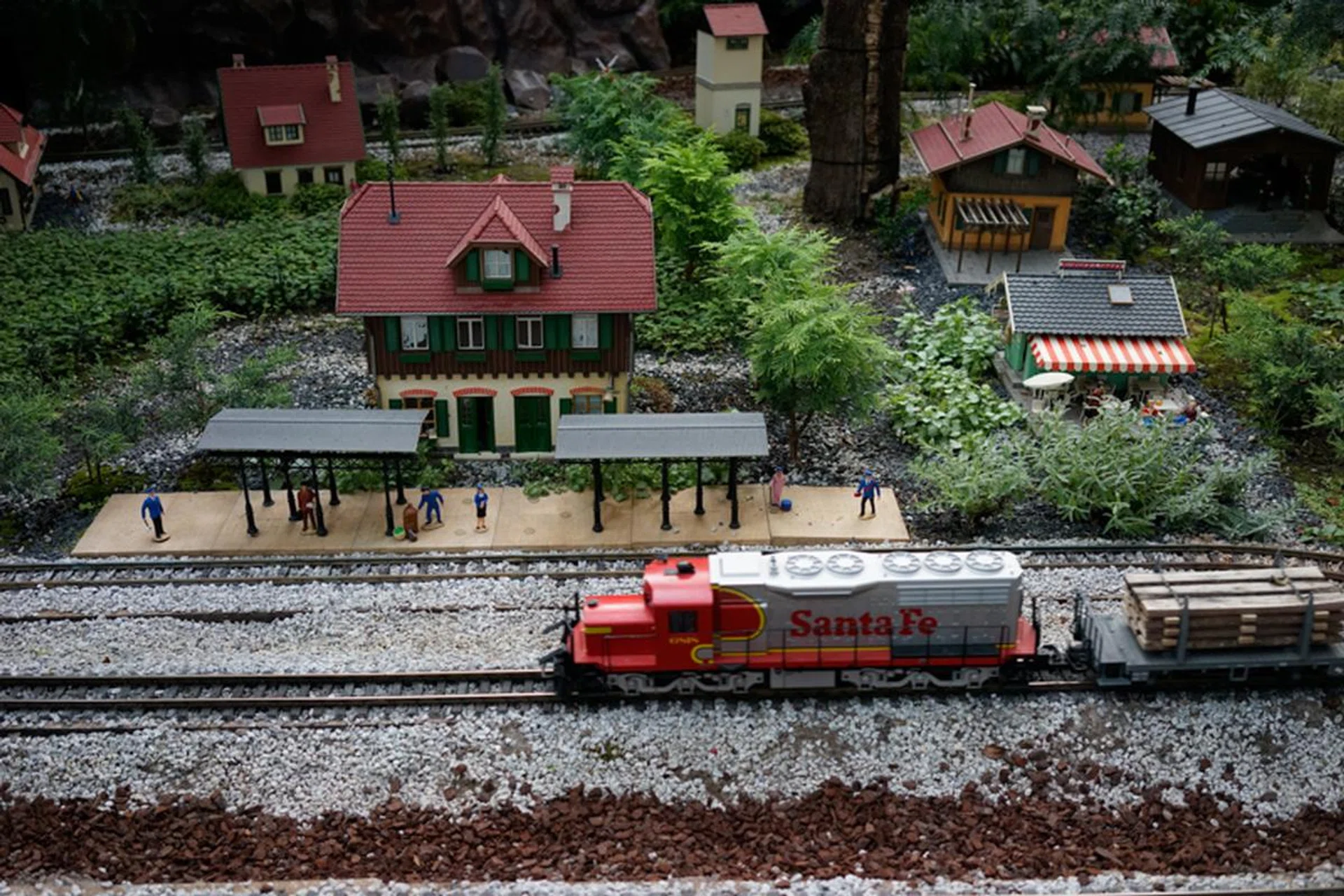
f/4 at 35mm, 1/250 sec, ISO 640.

Compressed 100% crop.
The Carl Zeiss FE 35mm f/2.8 ZA lens is a pleasure to shoot with, the lens is sharp from corner to corner with imperceptible corner softness and no vignetting (although we wonder if that last part is handled in-camera, as some shots seem to have a hint of vignetting while others do not). There is slight barrel distortion where the image curves into the center though, so you’ll need to apply a profile correction in post.
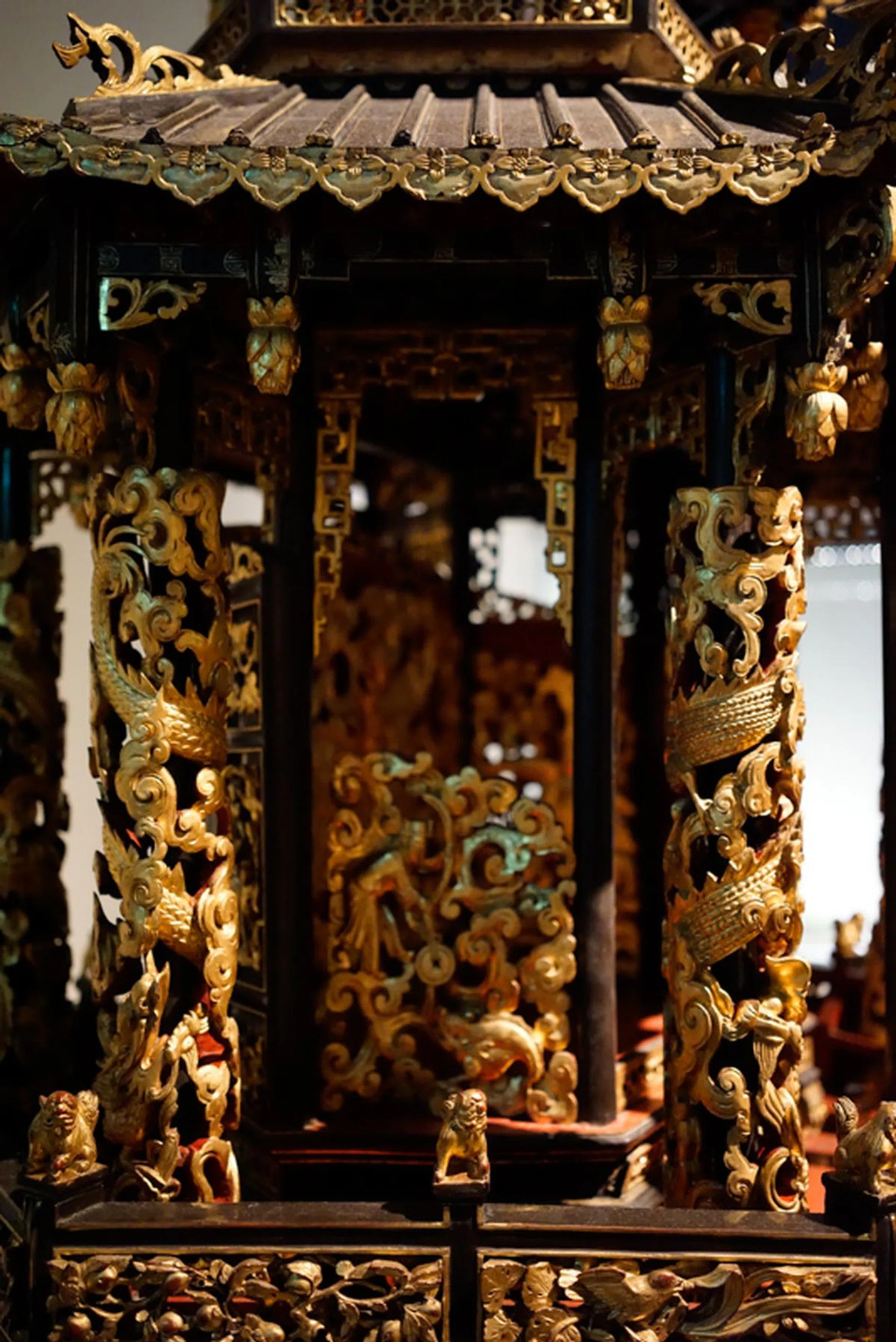
f/2.8 at 35mm, 1/60 sec, ISO 10,000.

Compressed 100% crop.
As I mentioned in the design and handling portion of this review, the A7R is not a camera designed to run and gun, with its slower frame-rate and AF, not to mention the large file sizes. A 36MP JPEG from the camera varies from 15 to 30MB and RAW files will be even larger. Color, when it comes to JPEGs, is rich without being overly saturated.

f/2.8 at 35mm, 1/640 sec, ISO 100.

Compressed 100% crop.
In short, if it's image quality and detail you’re after, the A7R delivers in spades. But with great power comes great consequence; every mistake you make will be magnified and you’ll have to tighten up your shooting technique to get the most out of this 36MP full-frame beast.

f/11 at 35mm, 1/60 sec, ISO 640.

Compressed 100% crop.
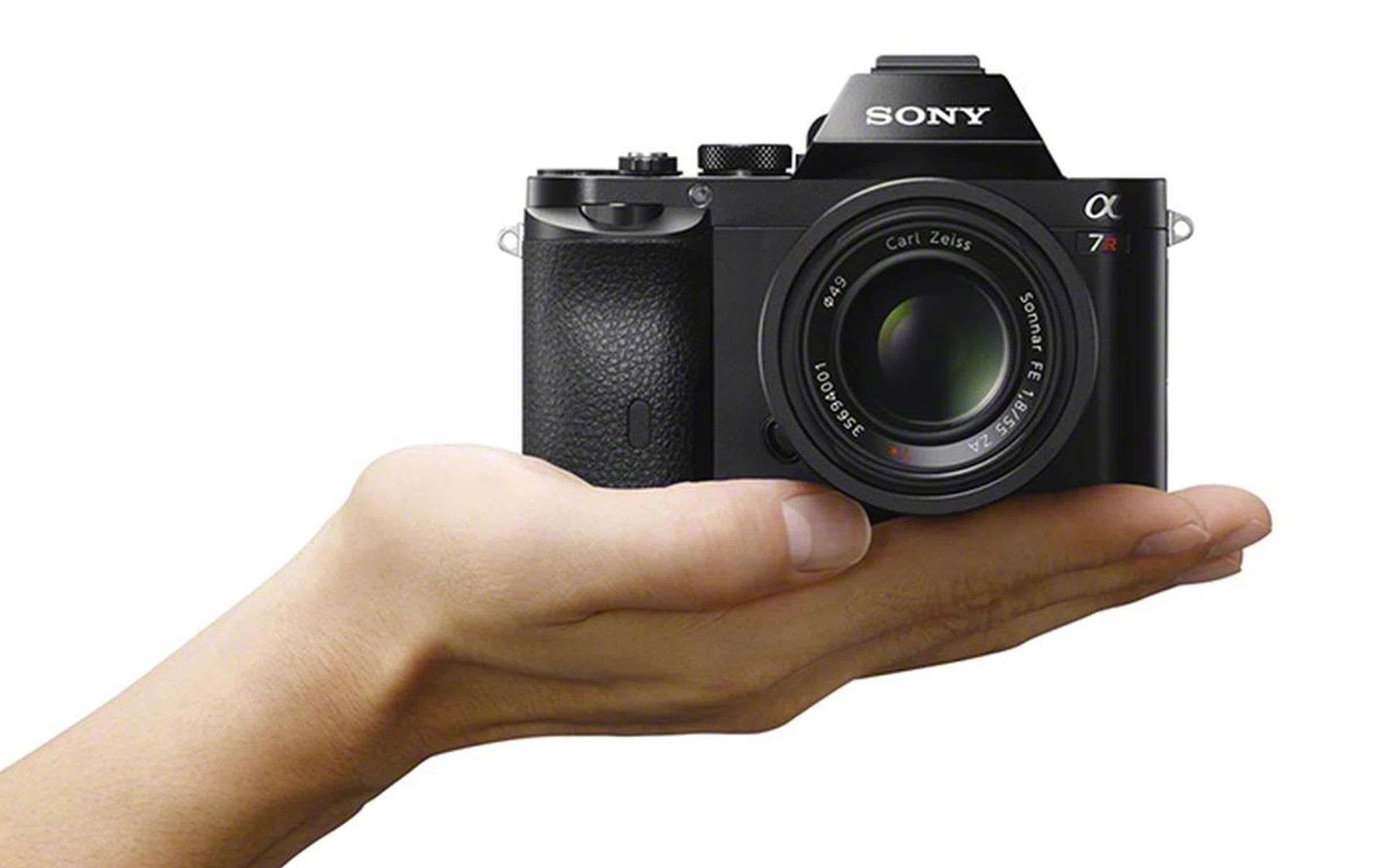
The Short Conclusion:
The Sony A7R is such a game-changer that I’ve written a way too long conclusion to try and explain its place in the world. In a single long sentence; image quality is mind-blowingly good, handling is way better than expected, battery life is okay, camera is expensive and 36MP is overkill for most. So buy it only if you have deep pockets and are okay with just a single native lens for now; if not, it remains an aspirational product with the A7 being a more practical choice.
Now for the long version.
The Long Conclusion:
I was skeptical that it could be done, but the A7R outperformed all my expectations. The image quality is superb, with ISO performance astonishingly good. In fact, it’s so good that DxoMark’s review is asking if it’s “the highest ever full-frame image quality?”, and saying that it’s on par with that found in the Nikon D800 models. When compared against the D4, the A7R’s ISO performance is close to the Nikon D4’s, and better than the Canon 5D Mark III’s. And remember, it's a mirrorless camera.
That’s bloody insane.
I was also wary that the larger sensor would cause noticeable vignetting and softness in the corners, but the Carl Zeiss FE 35mm f/2.8 ZA I used for this review performed very well. Even though a 36MP JPEG averaged 15 to 30MB each, the A7R transferred files smoothly and it never interrupted the shooting process. The EVF is smooth, big and pleasant to use. Sony’s UI has never been excellent, but the A7R’s UI is easy to access and offers lots of customization, both for the digital menus and the hard custom buttons.
The Problems Aren't With the Camera
If there are any problems, they’re not with the camera. For one, a higher resolution image demands better shooting technique from the photographer. Any small mistake, like slight camera shake or off-focusing might be masked in a lower resolution picture, but will be magnified with the A7R’s 36MP. Like with the Nikon D800, the A7R’s resolution gives, but also demands. It doesn’t help that the A7R doesn’t come with in-body image stabilization; it’ll have to rely on the lens to do that.
The second current problem with the A7R is the lack of lenses for Sony’s new full-frame mirrorless series. Right now at launch there are only two native lenses for the A7 and A7R, the aforementioned FE 35mm f/2.8, and an FE 28-70mm f/3.5-5.6. Unfortunately, the 28-70mm is only available as a kit lens for the A7, if you want it for your A7R you’ll have to try and get it second-hand.
Five FE lenses have been announced: a 24-70mm f/4 Carl Zeiss, a 70-200mm f/4 Sony G, a 35mm f/2.8 Carl Zeiss and a 55mm f/1.8 Carl Zeiss. Sony says they’ll have up to 10 FE lenses by 2014, and 15 by 2015. Still, those new lenses are a while away, and if you get the A7R you don’t have much to use it with. None of them except for the 55mm f/1.8 are particularly fast either, even the 35mm available now only opens up to f/2.8.
You can mount existing E-mount lenses on the A7s; the camera will automatically crop the capture area to avoid vignetting but you can opt to turn that off. You can also mount Sony’s A-mount lenses, but you’ll have to use an A to E-mount adapter. The A7s can also mount lenses from other systems via third-party adapters, including manual focus lenses.
Is the Sony A7R Too Expensive? Depends on How You Look at It
Let’s talk money. The A7 is more affordable at S$1,999 (body only), while the A7 kit with 28-70mm lens costs S$2,399. That’s way less than Canon’s entry-level full-frame EOS 6D DSLR (S$2,699 for the body alone) or Nikon’s D610 (S$2,879 for the body alone). The A7R’s retail price is S$2,799 for the body alone. The FE 35mm f/2.8 - the only lens available, remember - is listed at S$1,069, so if you’re looking at the full package that’s S$3,868 in total. That sounds pricey, but if you consider that you’re getting Nikon D800E (S$4,448) quality, you can also think of it as a steal.
However, you’ll be looking at drastically shorter battery life: the Nikon D800 and D610 are rated good for 900 shots on a single charge, the Canon 6D at 980-1090, while the Sony A7R can eke out 340.
The Final Two Questions
In the end, if you’re looking at getting the Sony A7R the only two questions I can offer you are: “Do you need 36MP?” and “Do you have deep pockets?” For most non-professionals, 36MP is sweet overkill, and the camera is clearly an aspirational rather than practical choice for this group. If you can’t resist the lure though, be warned that you’re buying into a system that for right now, only has two native lenses in its stable.
Our articles may contain affiliate links. If you buy through these links, we may earn a small commission.