
Samsung Galaxy Alpha: A beautiful metal experiment with the wrong price
The Galaxy Alpha smartphone is Samsung's experiment on using metal for its body construct and is positioned to compete against the iPhone 6. Does Samsung's experimentation with the 4.7-inch Alpha pay off? We investigate.

Overview
September 2014 not only saw the debut of Apple’s iPhone 6 and 6 Plus, but also its biggest rivals, the Samsung Galaxy Note 4 and the Note Edge. While Samsung’s Note series of products are more appropriate to go up against the larger iPhone 6 Plus, Samsung had one other lesser known smartphone that was designed with two intents in mind – a showcase that Samsung can make premium designed phones and an iPhone 6 alternative (or at least it tried to fit those shoes).
This is the Samsung Galaxy Alpha.
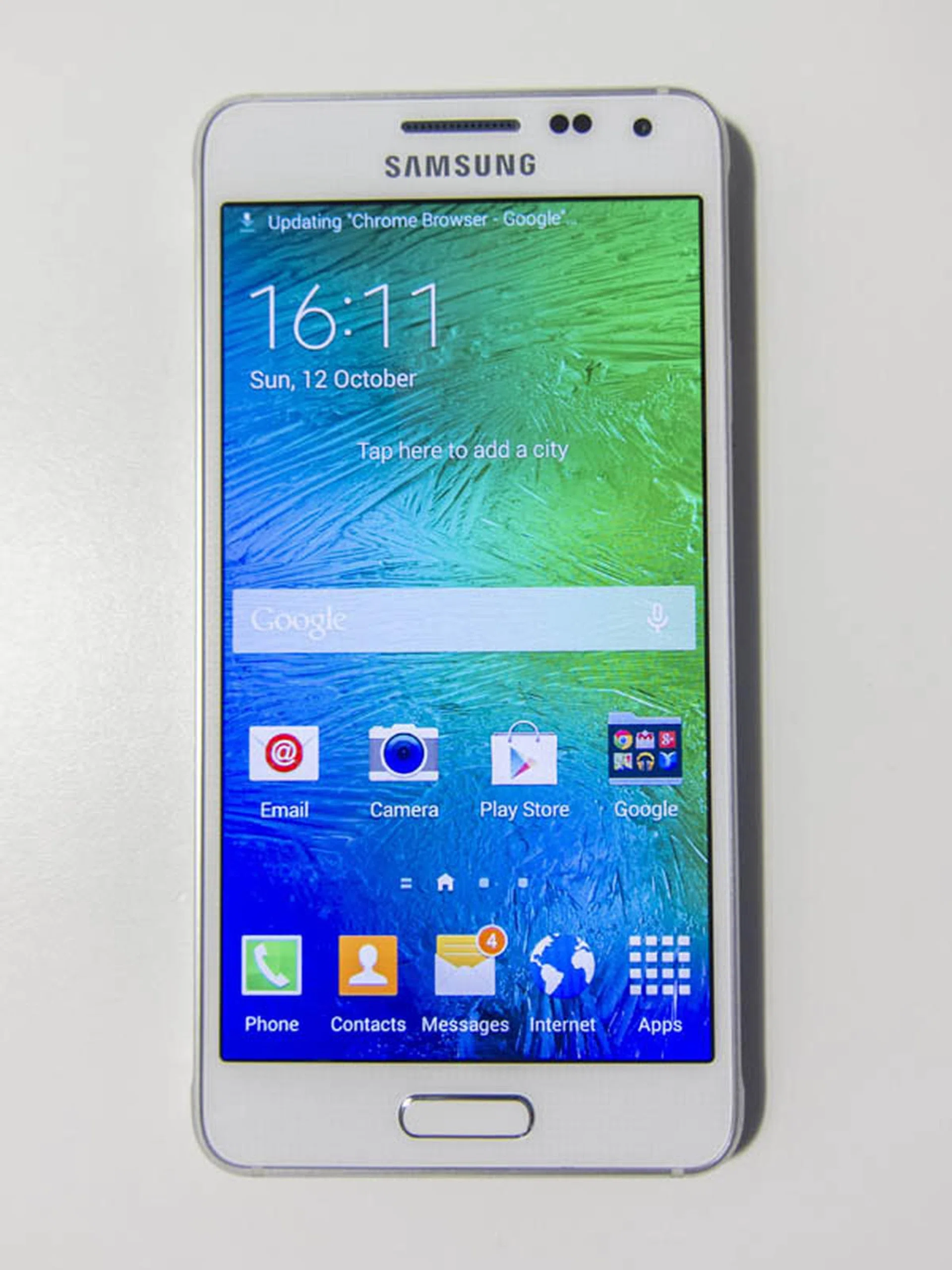
This 4.7-inch smartphone (the iPhone 6 also ‘conveniently’ sports this same screen size) had long been rumored to be a premium Samsung Galaxy S5 with a metal body construction. While that expectation didn’t materialize, in time to combat to the iPhone 6 launch, Samsung had readied the metal bodied Galaxy Alpha in the retail channel. Unfortunately, it lacked the flagship features that the Galaxy S5 possessed. Despite this setback, can the S$948 Galaxy Alpha match up against the iPhone 6? That’s what we intend to find out in this review.
For those who follow the smartphone scene closely, you would recall that Samsung actually just released a new Galaxy A series of devices, but company says these are mid-range devices and doesn’t actually compete with the Alpha. Furthermore, the top of the range A7 variant won’t be available till later this quarter for us to compare against the Alpha. So with that said, let’s take a look a closer look at the Alpha’s proposition.
Design
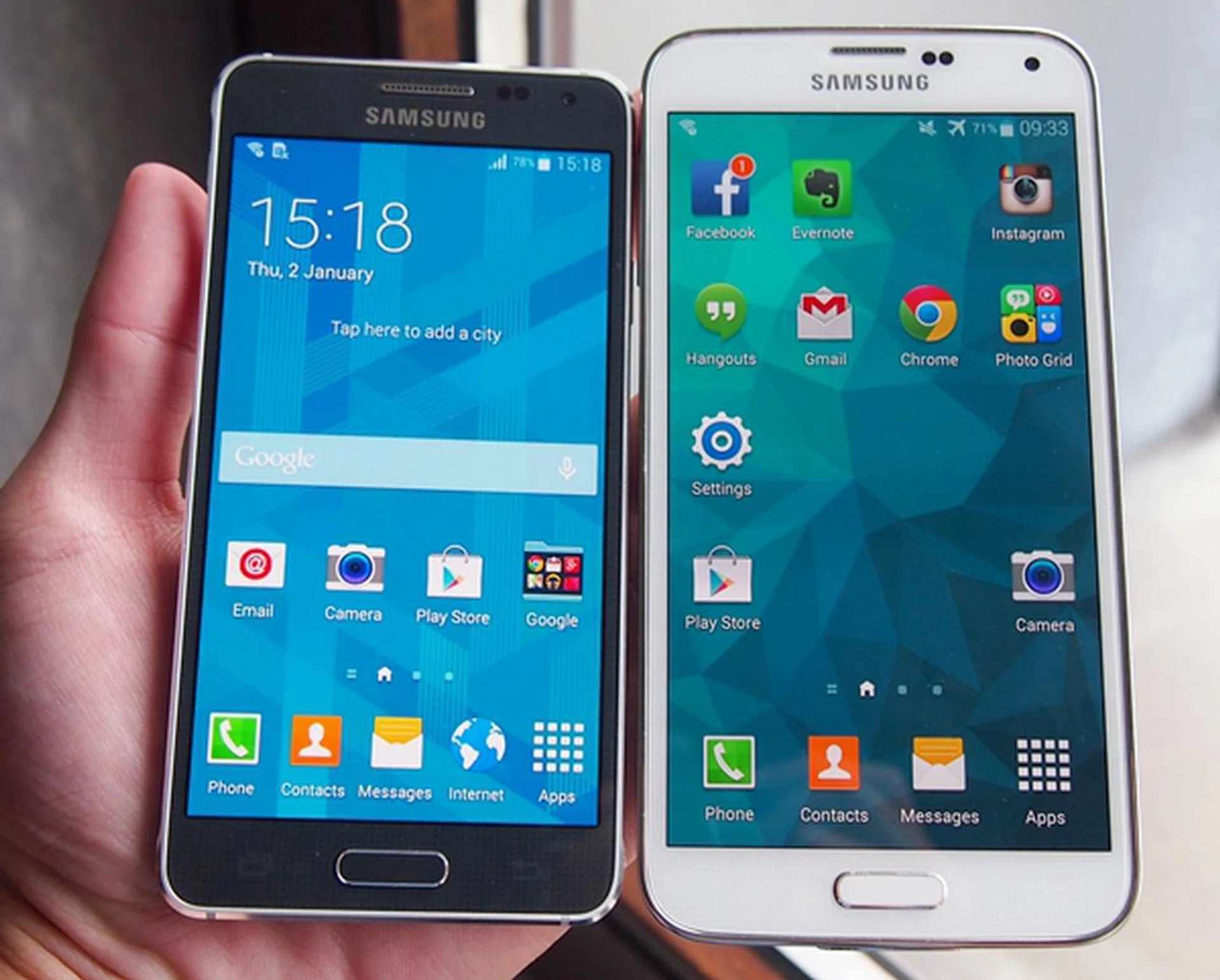
The Samsung Galaxy Alpha (left) sports a smaller, 4.7-inch 720p display compared to the 5.1-inch, 1080p display of the Galaxy S5 (right).
When we first had a close-up hands-on of the device last quarter, the aesthetics of the Galaxy Alpha was definitely a refreshing change from the usual polycarbonate body that is usually observed in most Samsung mobile devices. After all, the probable number one complaint for most people against Samsung phones has got to be its appearance of using 'cheap' plastic for its outer body.
The Galaxy Alpha however features an aluminum frame that surrounds the phone with chamfered edges, thus giving the phone a touch of class that’s quite unlike any other Samsung mobile device (apart from the Note 4). Its finish and appearance of the frame resembles the iPhone 5/5S, but its 6.7mm thickness matches that of an iPhone 6 (6.9mm).
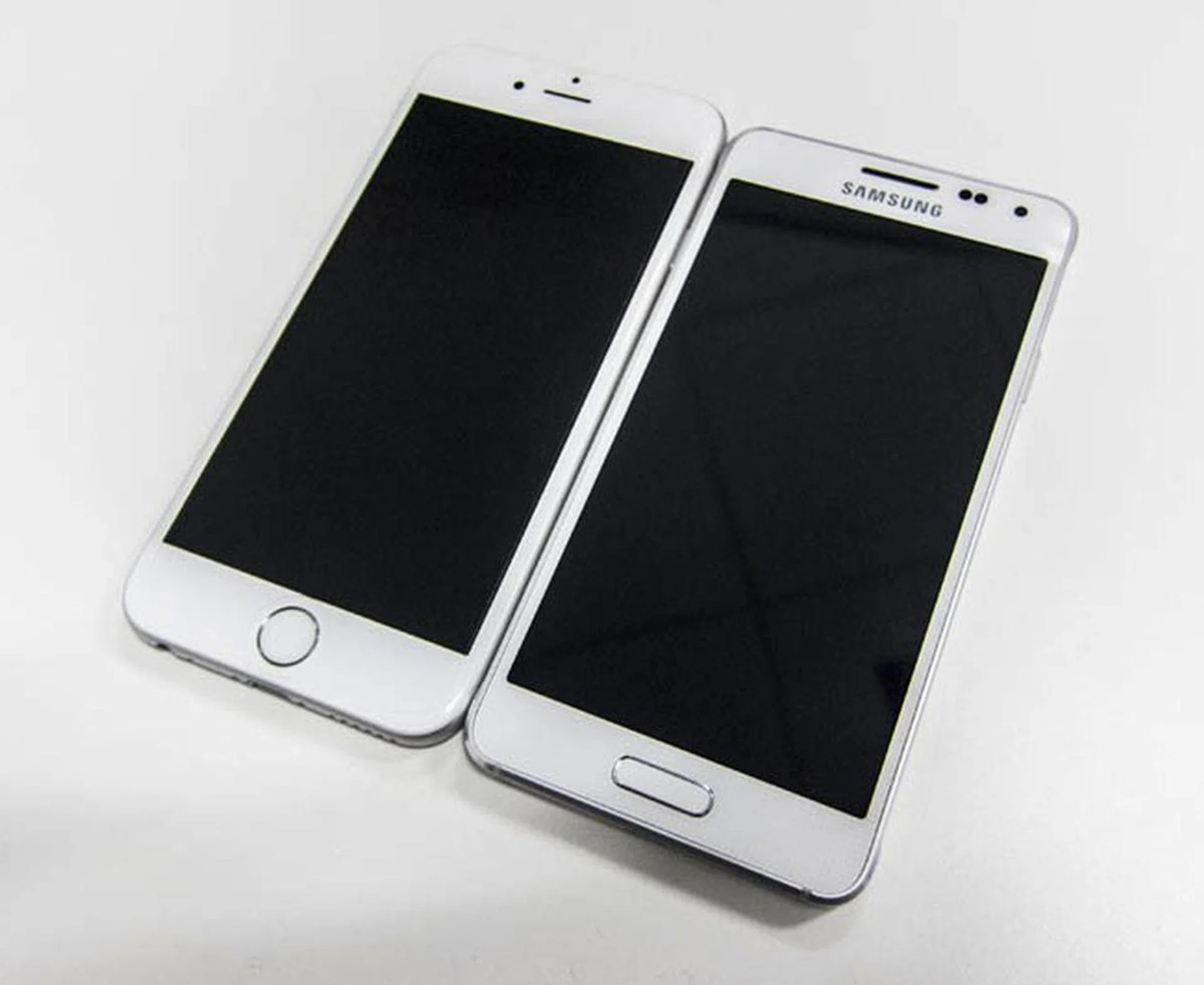
The Galaxy Alpha looks almost similar to the iPhone 6. Almost.
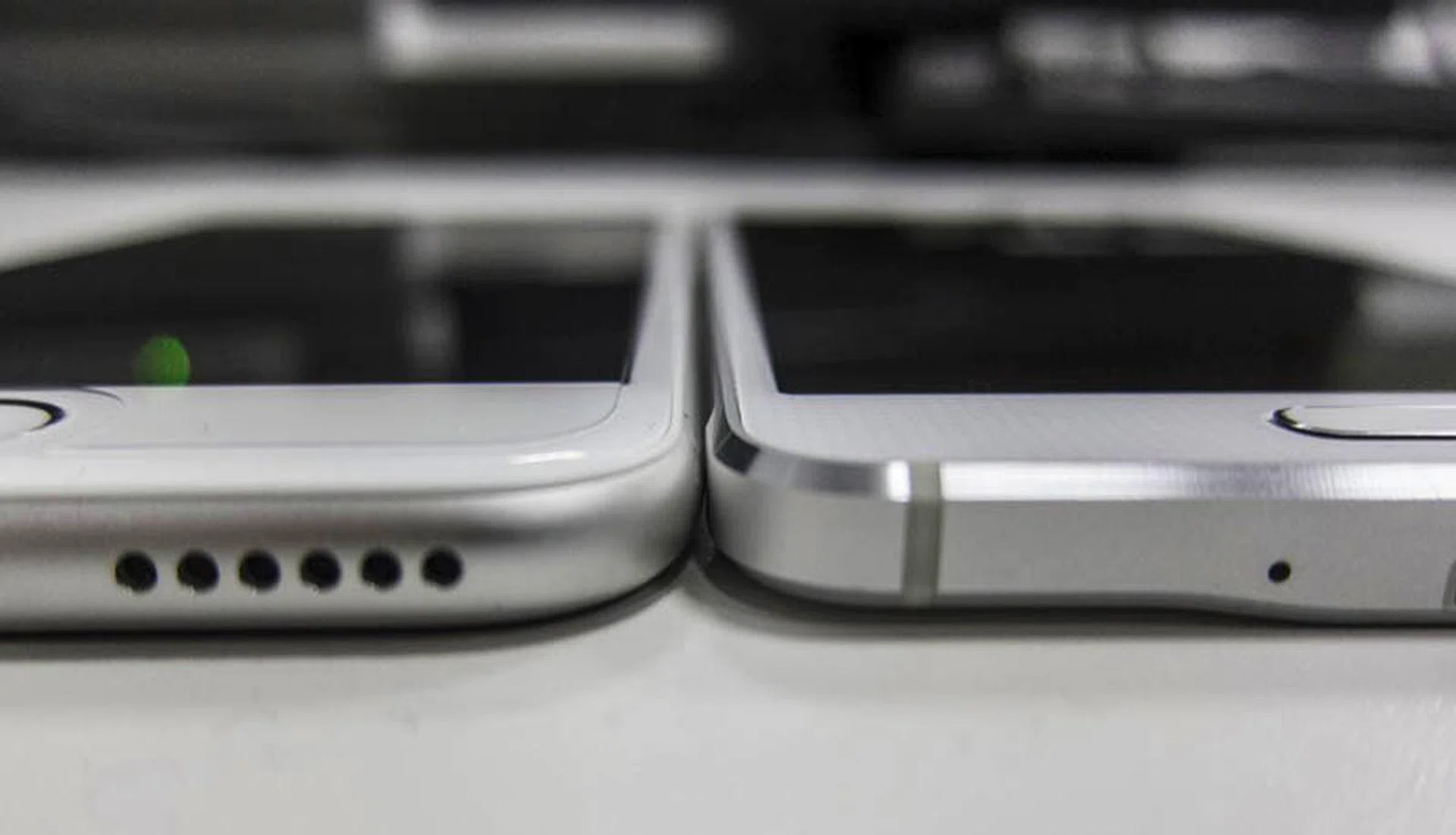
The thinness is coincidentally similar.
Unforunately, the aluminum experimentation stops at the frame while the back of the phone is still has a polycarbonate cover. Compare this with Samsung’s previous experiment on metals - the Galaxy Tab 7.7, where the whole body is made of brushed aluminum. Samsung fans no doubt are let down by this design choice of what could have been their first all-metal smartphone. This could be due to Samsung’s consideration of balancing between weight and design considerations of the device.
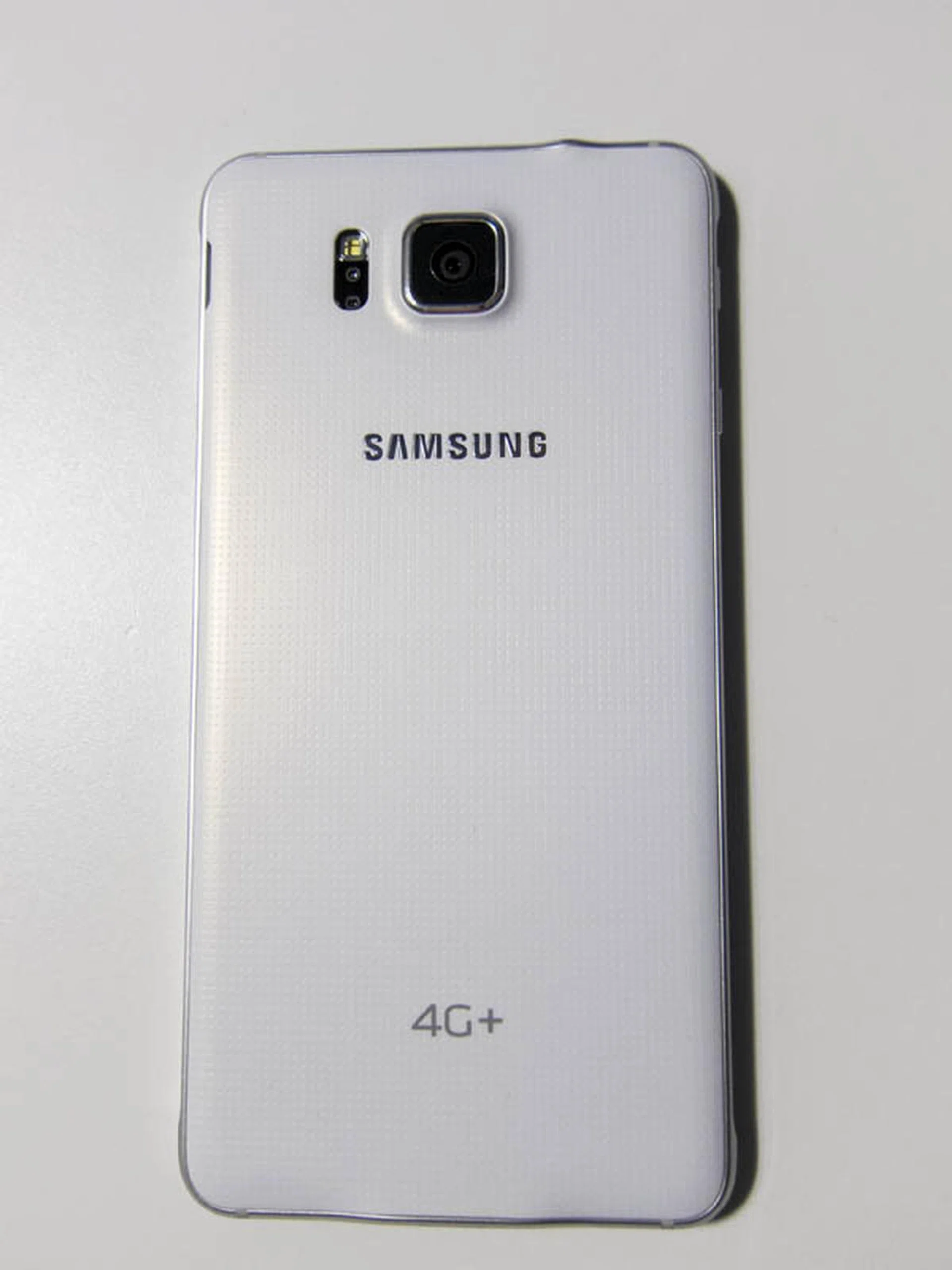
Still the same old polycarbonate back cover.
Indeed, on hand, the phone feels very light. Even though the phone admittedly does feel very much like the iPhone 5S due to its choice of aluminum frame design, the Galaxy Alpha feels a tad lighter than the iPhone 5S, even if they are approximately of the same weight; this observation is likely due to the larger volume of Galaxy Alpha device (a 4.7-inch device vs. a 4-inch iPhone). Compared against the iPhone 6, the Galaxy Alpha is notably lighter, weighing at 115g against 129g.
Yet, despite its light weight, this author feels it’s actually easier to handle than the iPhone 6. This is because the iPhone 6 has curved edges all through its frame as opposed to Galaxy Alpha’s flat edge with chamfered bevels which provides a much firmer grip, especially if you’ve sweaty hands/palms. In a sense, it has the size of an iPhone 6, with the weight and feel of an iPhone 5S, but it falls short in class compared with either iPhones.
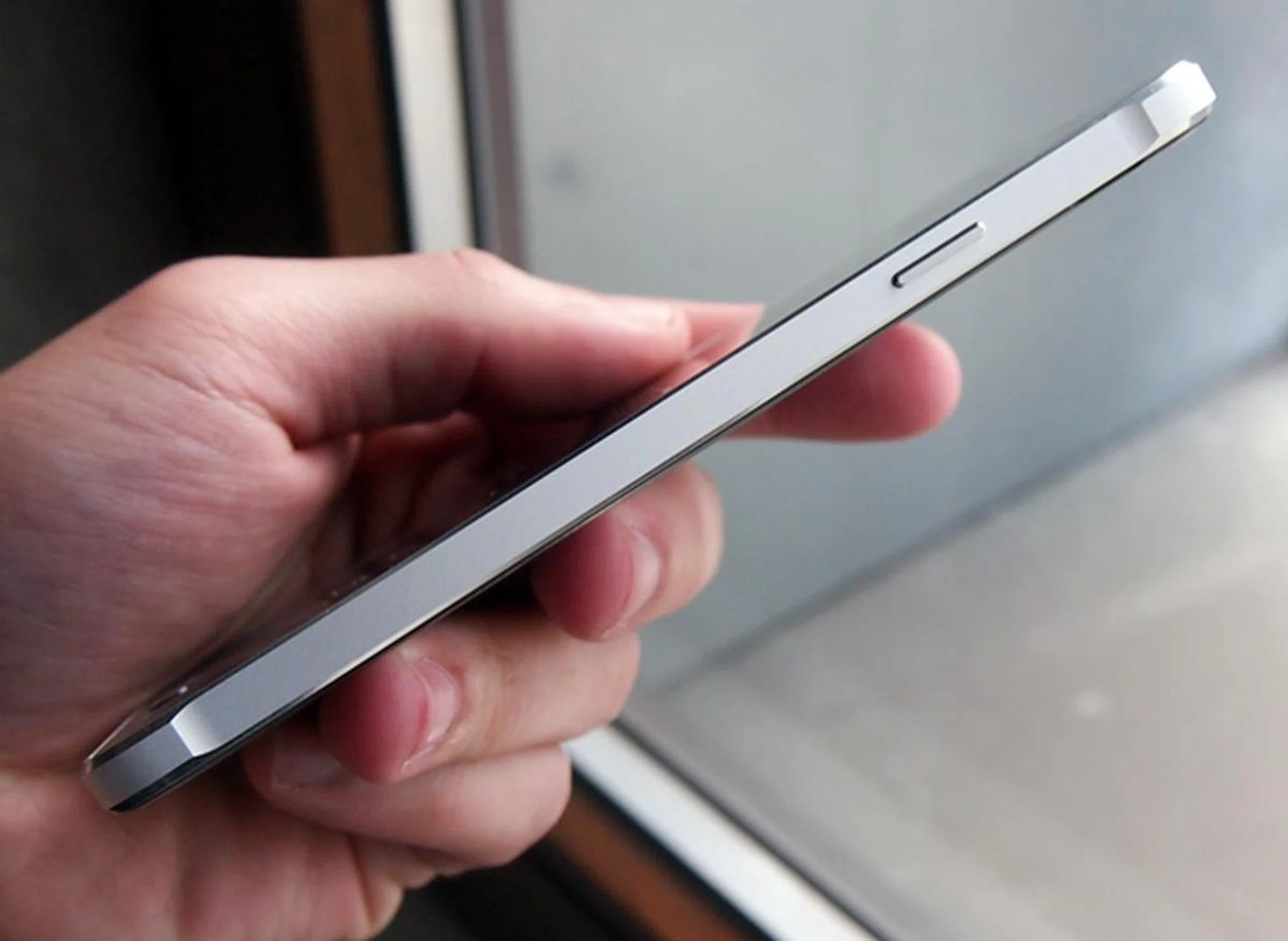
The metal sides of the Samsung Galaxy Alpha have slightly flared corners at the top and bottom to improve handling.
With a removable polycarbonate cover, Samsung continues to offer a removable battery, which can be seen as a positive point to easily remedy any battery related issues during the lifespan of the product. This has always been an advantage against Apple smartphones, but oddly, the Alpha doesn’t follow through with an expandable memory card option which has been another common expectation of Samsung devices. As such, one will have to make do with the phone’s internal 32GB storage, which, after taking into account system data, one will be left with about 25GB user storage space.
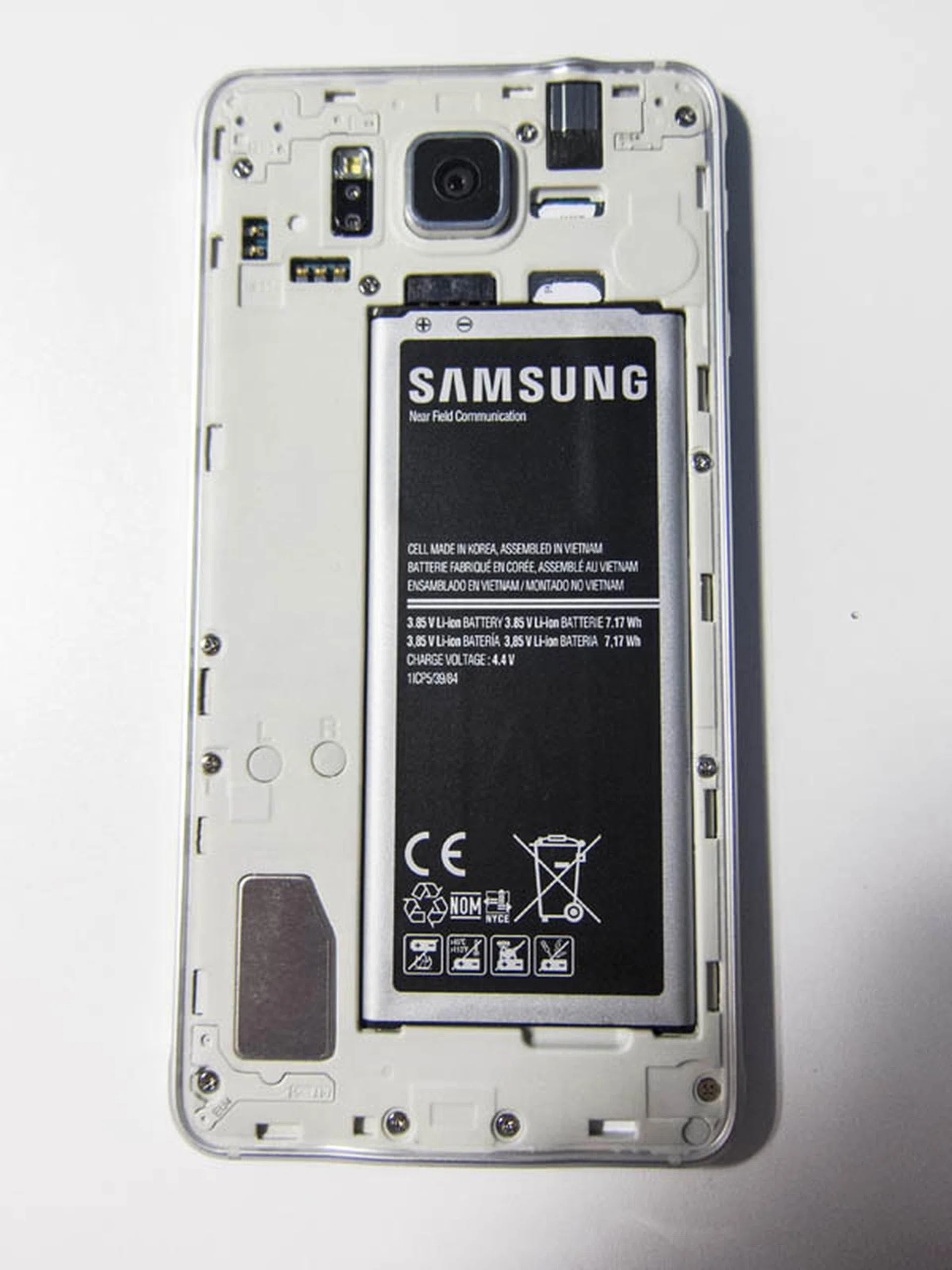
Removable battery, nano-SIM card slot... wait, where is the microSD card slot? There is none.
Display & Audio
As outlined earlier, the Galaxy Alpha sports a 4.7-inch Super AMOLED screen, with a 1,280 x 720 pixels (720p) resolution. This yields a pixel density of 312 ppi, which is just below the threshold of what Apple defines a “retina-class” display for a smartphone; in this case, the resolution falls slightly short of what the new iPhone 6 boasts - a resolution of 1,334 x 750 pixels (326 ppi). In reality, there is little difference to discern the crispness of either display. Just as with previous experiences, the Super AMOLED display of the Galaxy Alpha does render more vibrant colors compared to the iPhone 6, though it can be argued that the iPhone 6 IPS display still renders colors more naturally compared to the Galaxy Alpha. Both have their merits and disadvantages that are subject to individual user’s preference and taste. At hand during this review, we had another phone with an IPS display for comparison from ASUS:-
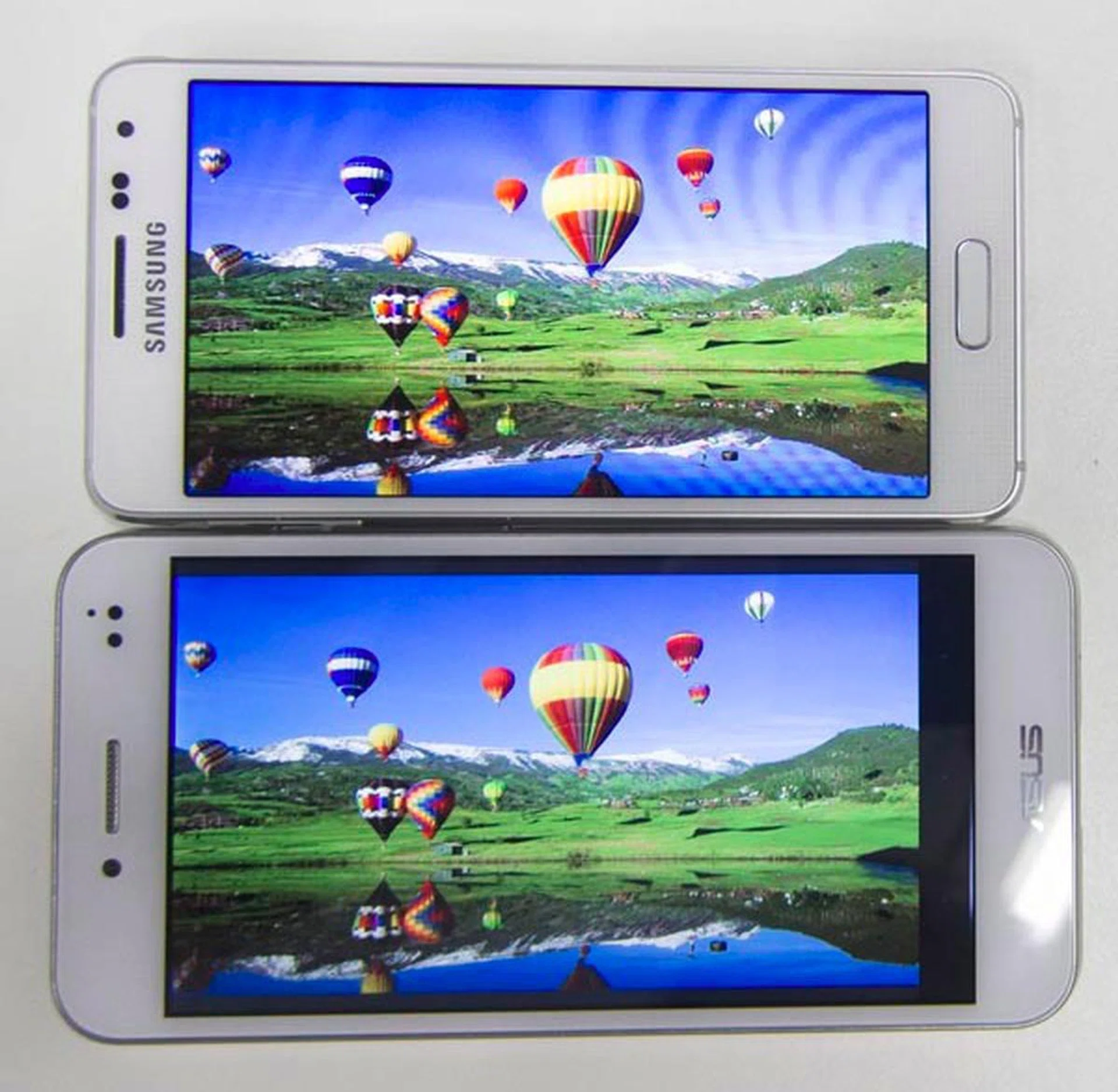
Though Super AMOLED displays render colors more vibrantly, we noted that the blue hue had much higher saturation than expected. Compared against the Samsung Galaxy Alpha here is an ASUS PadFone S which sports a 5-inch IPS display.
The glass used on the Samsung Galaxy Alpha is one of the first few devices to boast using Corning’s Gorilla Glass 4 and as such, it should prove to be one of the hardier devices where screen protection is concerned.
Audio is delivered through a single speaker located at the bottom edge of the phone, to the right of the USB port. Coincidentally enough, the speaker on the iPhone 6 is also located in the same fashion. As such, while you don’t get stereo sound output, audio quality is just above average, but it can’t match top phones from Sony and HTC. Watching movies on the Galaxy Alpha is a good experience, but only if you use a pair of headphones instead of relying on the phone’s speaker.
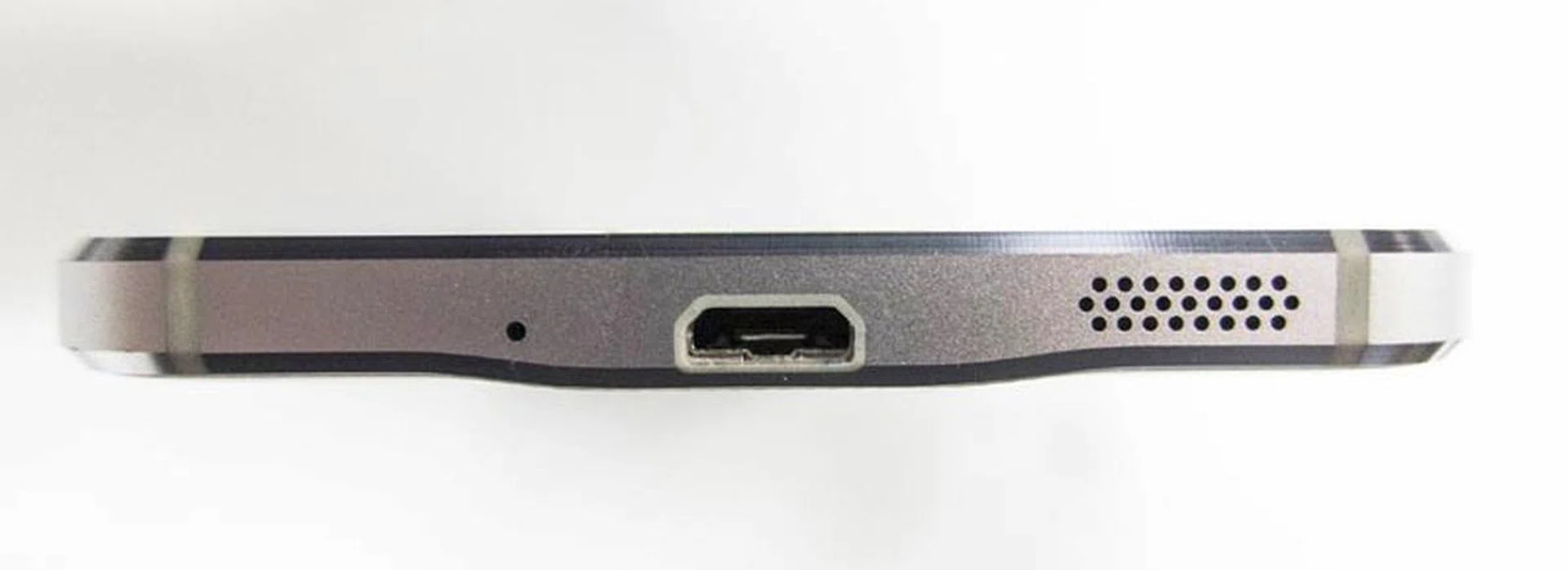
The mono speaker at the bottom edge of the phone.
Software & Features
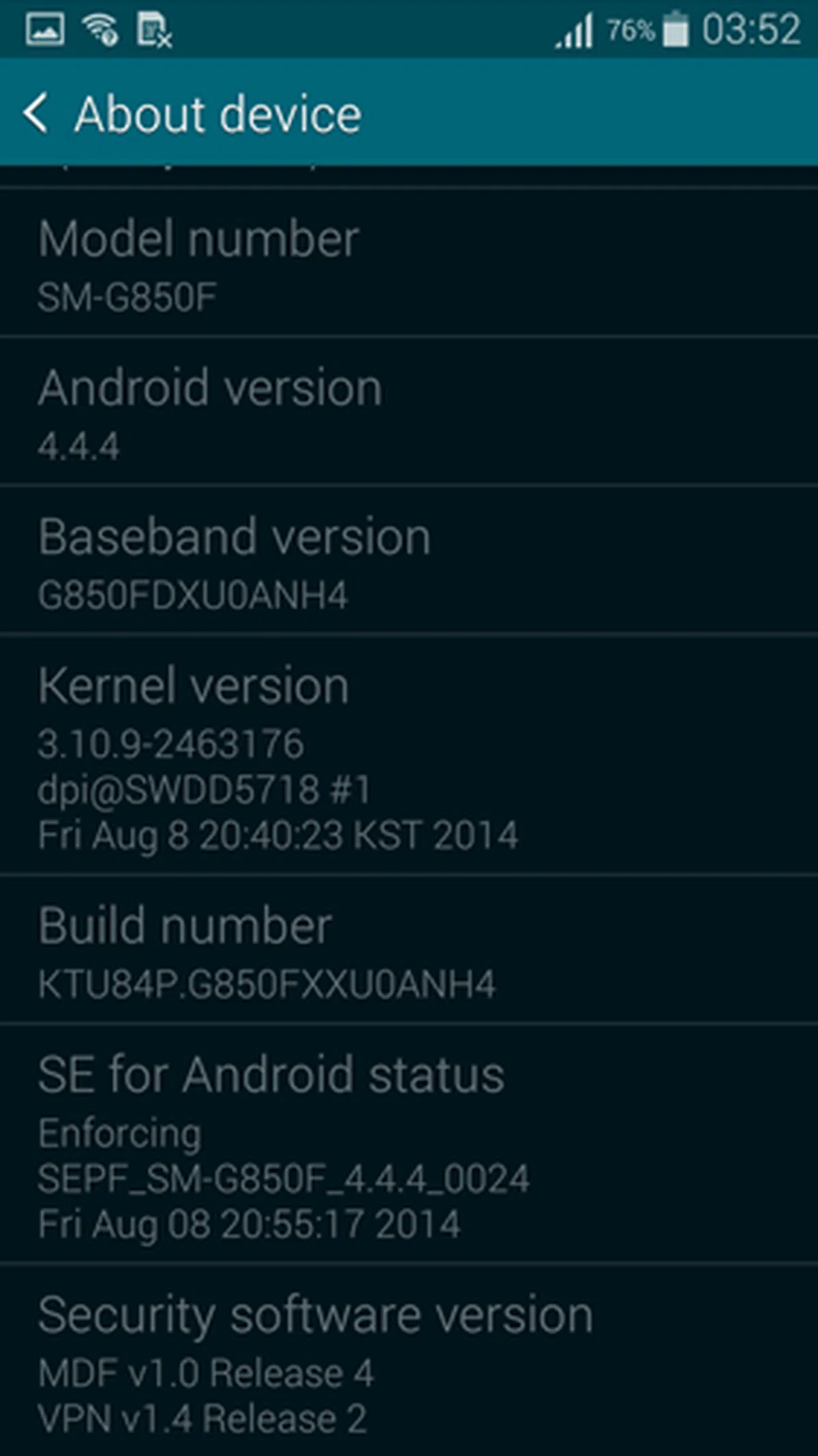 | 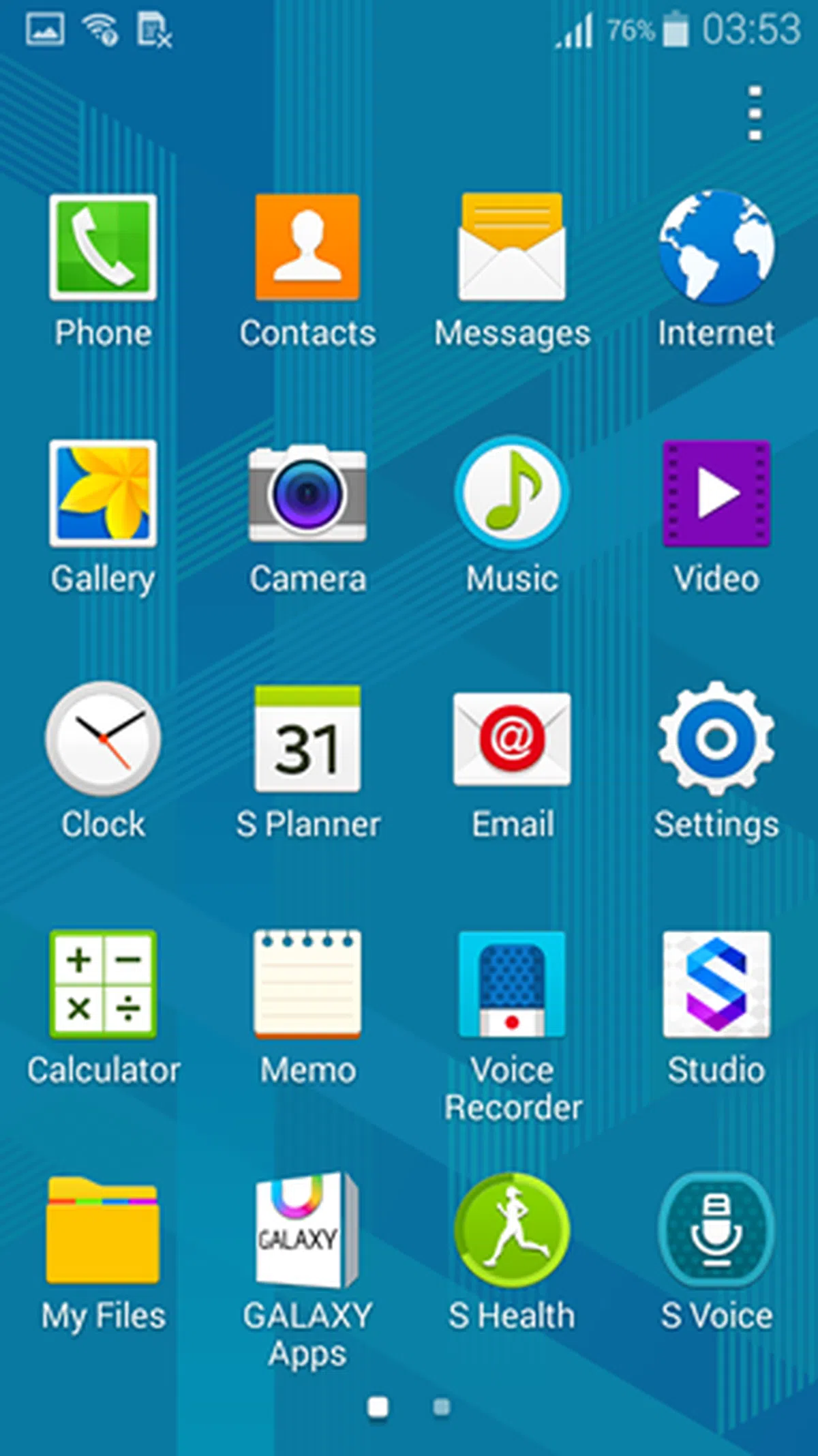 |
The Galaxy Alpha runs on Android KitKat 4.4.4, with the latest iteration of TouchWiz running as the OS overlay. The TouchWiz on Galaxy Alpha is similar to the one used in Galaxy Note 4, so head over to its review for an overview of TouchWiz. Of course, all Note-specific features are only applicable to the Note 4, but all other aspects are present in the Galaxy Alpha’s UI.
Fingerprint Scanner
Once seen as a novelty, the fingerprint scanner function can now be found in class-leading Samsung devices, starting with the Galaxy S5, then on the Galaxy Note 4 and Galaxy Note Edge. To that extent, it’s interesting that the Galaxy Alpha sports this feature, but it only further builds to its advantage to compete with the iPhone 6. As we’ve covered previously, unlike the iPhone’s fingerprint mechanism, the one on the Samsung devices is activated by swiping across the home button. The fingerprint unlock works fast, though at times it may take a few swipes before it detects the fingerprint accurately, particularly when your finger is moist or oily. In fact, compared to the Galaxy Note 4, the fingerprint detection actually seems a tad faster on the Galaxy Alpha. However, "fast" is a relative term here and the fastest and the most convenient fingerprint unlock method is still the implementation employed on Apple devices – it doesn’t get any easier than to just place your finger on the home button and it works regardless of your orientation of the device or your finger.
Benchmark Performance
Worldwide, there are two variants of the Galaxy Alpha: the Exynos and the Qualcomm powered versions. For Singapore, the Galaxy Alpha is powered by the Exynos 5 Octa 5430, consisting of a quad-core 1.8GHz Cortex A15 and a quad-core 1.3GHz Cortex A7 units. It must be noted that the “Octa” naming in this processor design does not truly mean using 8 cores simultaneously; the speedier set of 4 cores are used for heavyweight tasks, while the latter set of 4 slower cores are used to tackle lighter workloads. Samsung claims that such a configuration delivers performance when required, while still catering for battery efficiency. Coupled with a rather lean 1,860mAh battery, can it deliver the balance required to hold up against other challengers, especially the iPhone 6? Let’s find out in our assessment right after the specs table of all the devices we’ll be comparing against.
Quadrant
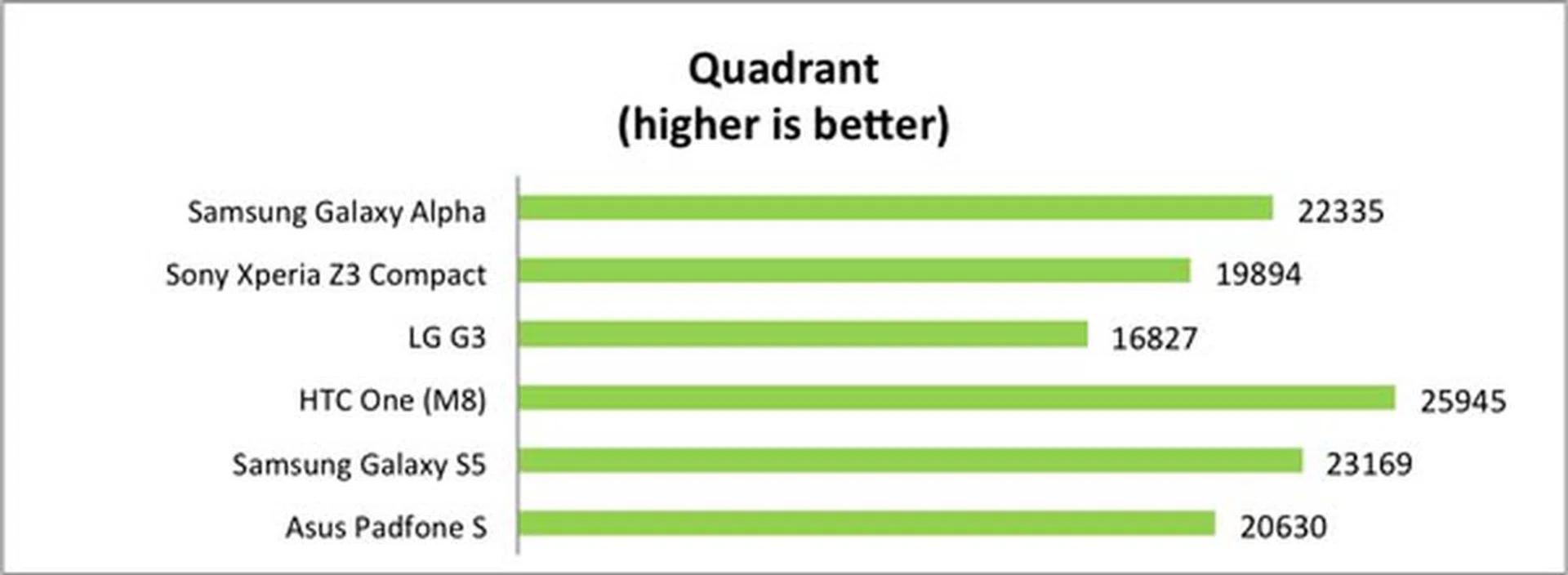
Quadrant evaluates a device's CPU, memory, I/O and 3D graphics performance. The Galaxy Alpha fared better than the Sony Xperia Z3 Compact, and trails very closely to other major flagship devices.
3DMark 2013
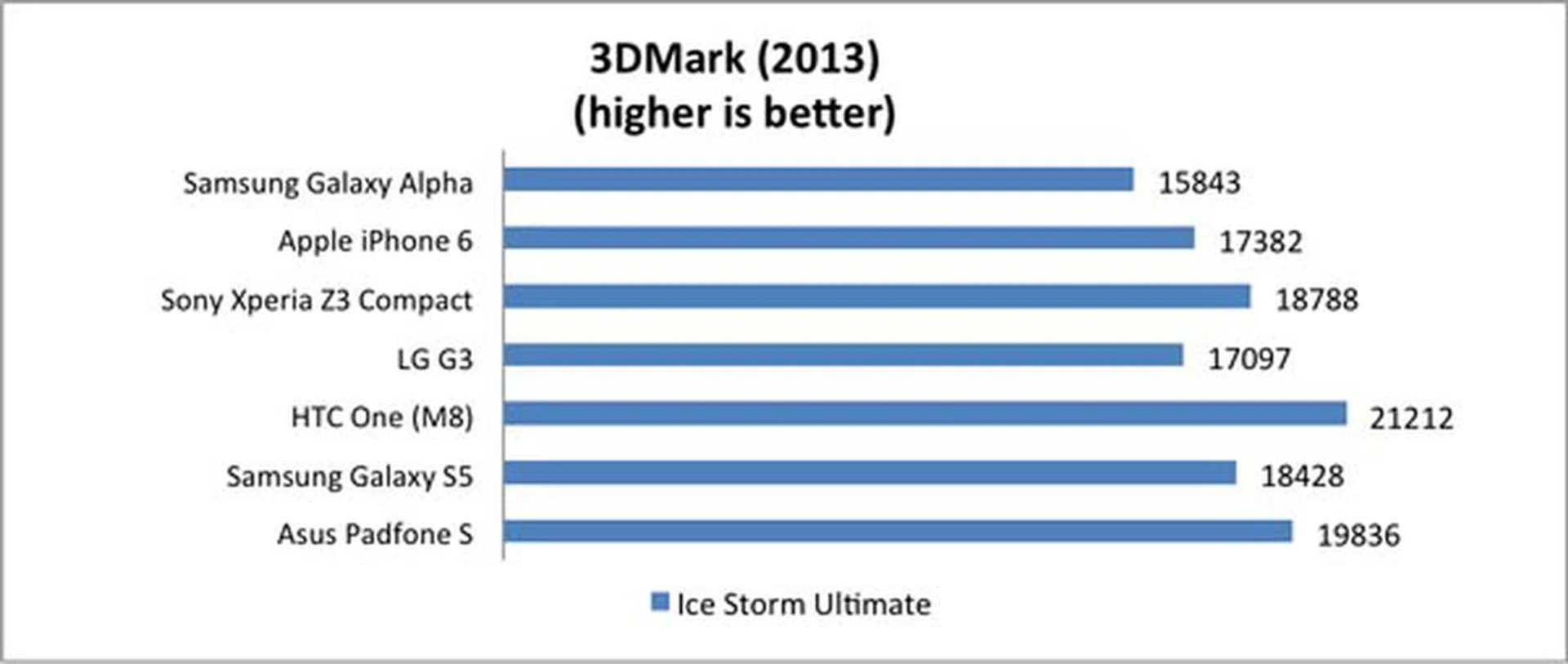
Originally developed as a PC gaming benchmarking tool, 3DMark now supports multiple platforms including Android. The Ice Storm benchmark is designed for smartphones, mobile devices and ARM architecture computers.
For an in-depth understanding of 3DMark for Android, do head over to our article, "3DMark - Android Device GPU Performance Review." In a nutshell, it is an OpenGL ES 2.0 benchmark test that uses fixed off-screen rendering to run two graphics tests designed to stress the GPU performance of your device and a physics test to stress its CPU performance. The benchmark consists of three test portfolios:- Standard (720p resolution rendering), Extreme (1080p resolution rendering with higher quality textures and post-processing effects) and Unlimited (disabled v-sync, display scaling and other OS factors that make it ideal for chipset comparison).
Since all the recent flagship smartphones max out the scores for the Standard and Extreme tests, we will only be looking at the scores for Ice Storm Unlimited. Despite the octa-core offering of the Galaxy Alpha, it cannot beat the scores of other flagship devices such as the Sony Xperia Z3 Compact and HTC One (M8).
Sunspider
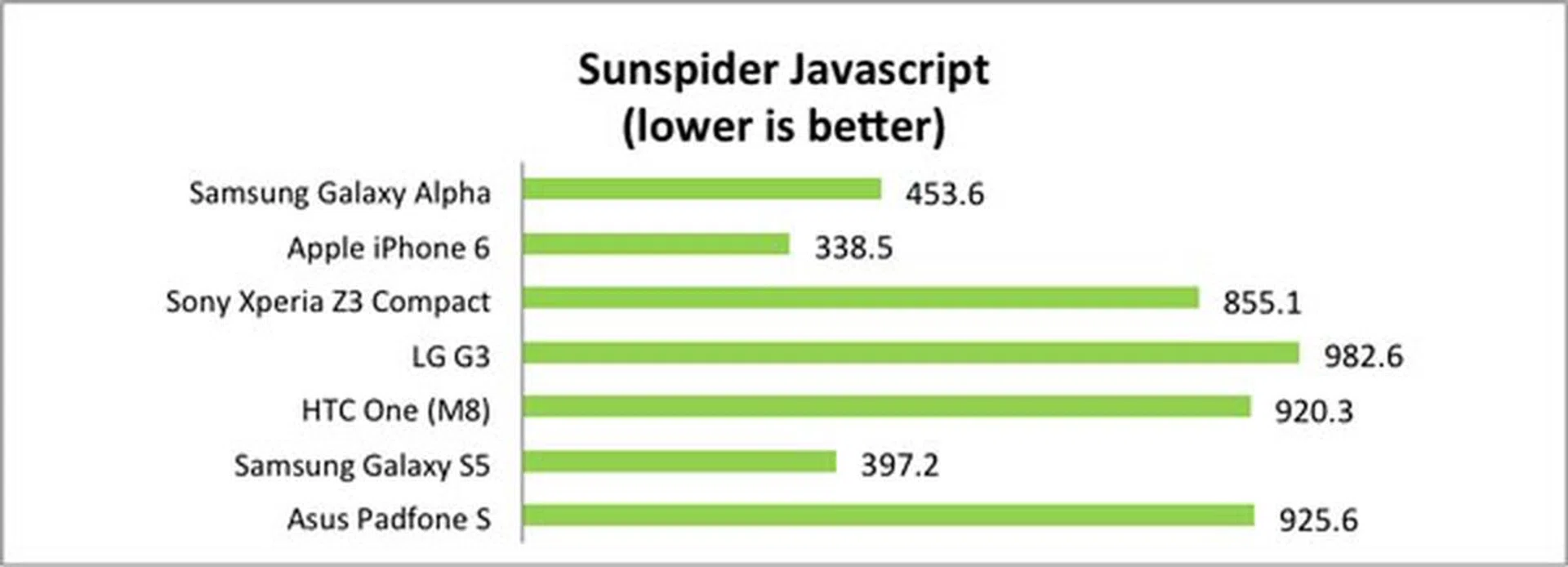
SunSpider Javascript helps measure the browsing performance of a device when processing Javascript. It not only takes into consideration the underlying hardware performance, but also assesses how optimized a particular platform is at delivering a high-speed web browsing experience. Quite surprisingly, the Galaxy Alpha scores better than most other flagship devices, other than the iPhone and the Galaxy S5. Yet, the actual browsing experience across the devices are comparable. One possible reason is that on some phones, there is no native web browser; instead Chrome for Android was used for benchmarking, which was suspected to be the cause of poor Sunspider scores.
Real world experience
Despite the benchmarks, performance of the Galaxy Alpha is fairly good. One can run most 3D games in the market without issues. Usage of apps is smooth, with little to no lag while multitasking and it lives up the expectations of most Snapdragon 800-class products.
Battery life
Our standard battery test for mobile phones includes the following parameters:
- Looping a 800 x 480-pixel video with screen brightness and volume at 100%
- Wi-Fi and Bluetooth connectivity turned on
- Constant data streaming through email and Twitter
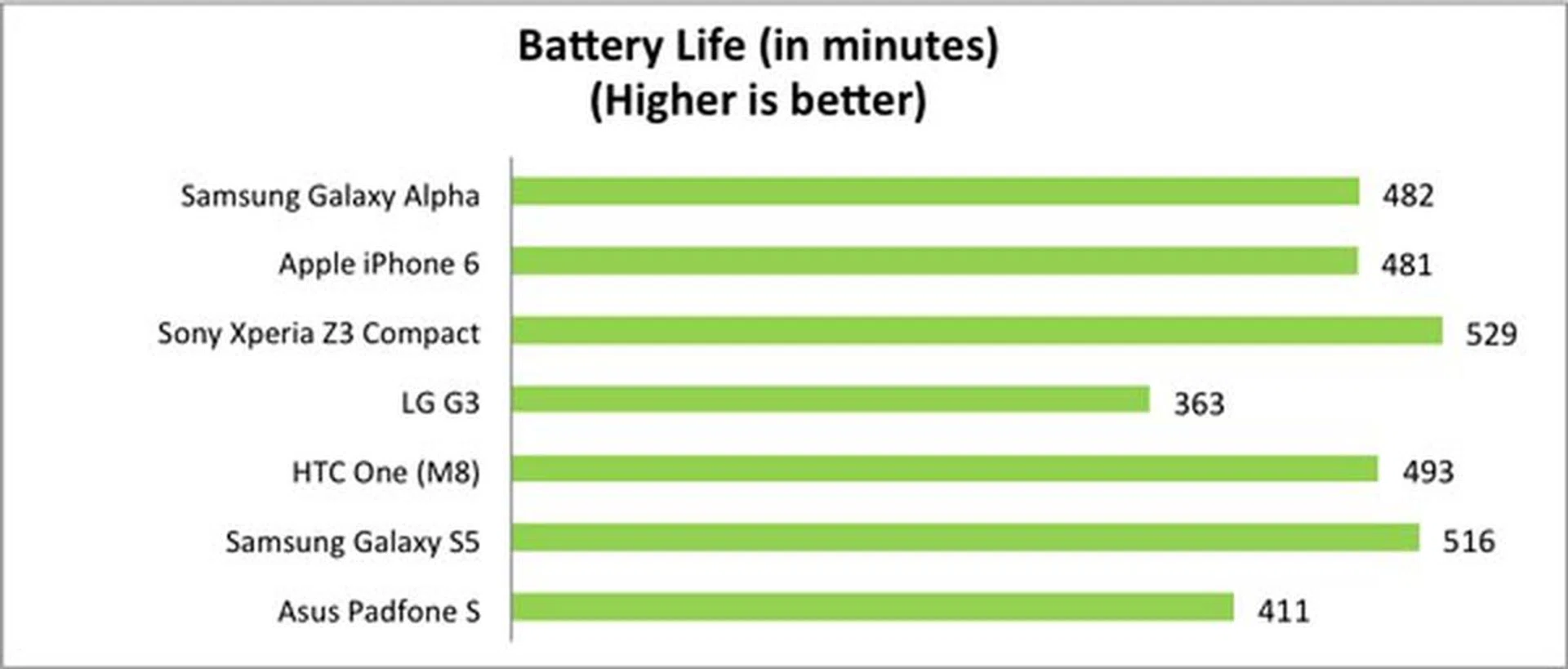
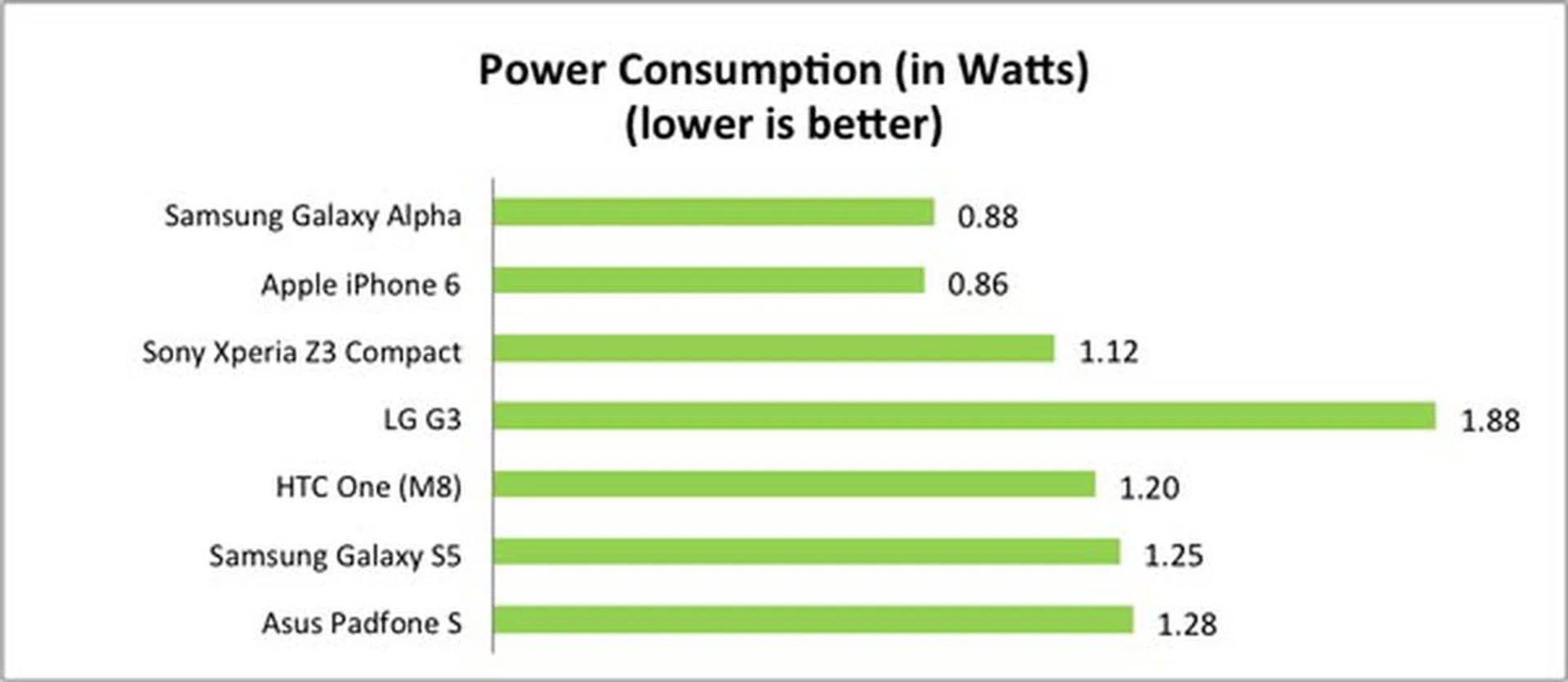
The Galaxy Alpha lasted a good 7 hours and 42 min before running out of juice. This may seem just about average compared to other competing devices, but one must bear in mind that other than the iPhone 6, the Galaxy Alpha has the smallest battery capacity (1,860mAh). Taking this into account, the Galaxy Alpha is in fact very battery efficient. This can be attributed to its highly battery efficient Super AMOLED display, as well as a screen with lower resolution compared to most of the compared products.
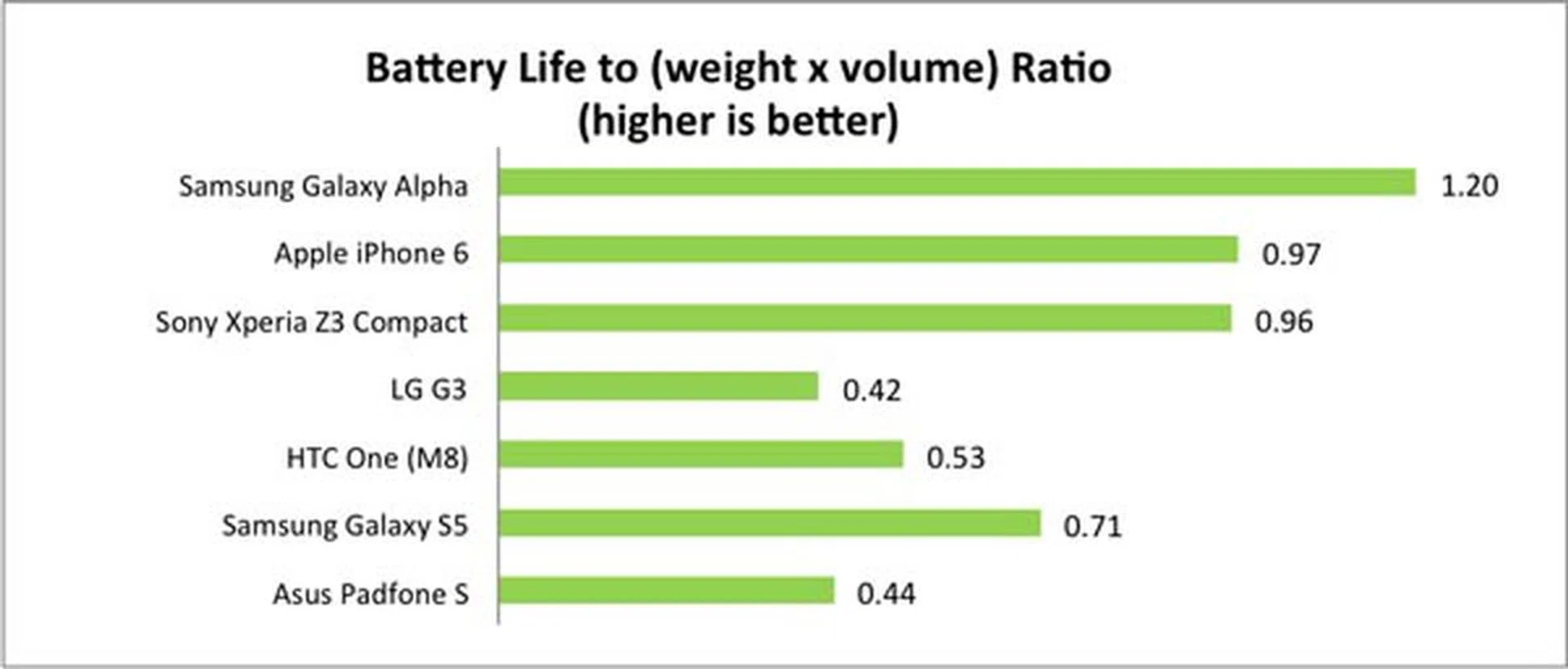
With all these characteristics, combined with a small frame and very light weight, it’s not surprising that the Galaxy Alpha has the best portability index amongst all the compared devices.
Real World Battery Performance
Despite the good battery life results, the real world performance of the battery is modest. The battery typically runs out within a day’s use. This could probably be due to its Cat6 LTE connectivity; usage of LTE typically consumes much more battery life, regardless of the screen size or the battery capacity.
Camera Performance
The Galaxy Alpha comes with a 12-megapixel rear camera. Just like how the iPhone 6’s camera is without OIS (optical image stabilization), the Galaxy Alpha doesn’t feature it as well. Despite that, the photo quality of the Galaxy Alpha’s camera is still pretty good, taking rather crisp photos in daylight, cloudy days, and under indoor lighting conditions as well.

A landscape shot taken under cloudy weather with the Galaxy Alpha.

Petit France, taken with Galaxy Alpha.

HDR function works well on the Galaxy Alpha.
The performance of the camera suffers slightly in night shots. As noted in the photo below, there is slight chromatic aberration in the photo taken by the Galaxy Alpha compared to the Galaxy Note 4. You would also notice that the bright lighting is more accurately represented on the Galaxy Note 4 than the Alpha. Even so, overall, the Galaxy Alpha still held well in night shots.

Night shot taken with Galaxy Alpha.

Night shot taken with a Galaxy Note 4. Notice that the brighter areas/colors of the photo are rendered more naturally compared to the Galaxy Alpha.
The performance of the camera suffers slightly in night shots. As noted in the photo below, there is slight chromatic aberration in the photo taken by the Galaxy Alpha compared to the Galaxy Note 4. You would also notice that the bright lighting is more accurately represented on the Galaxy Note 4 than the Alpha. Even so, overall, the Galaxy Alpha still held well in night shots.
The back camera is also capable of recording videos up to 2160p resolution, which is a notch better than the iPhone 6 as it’s not able to record 4K videos without third party apps.
The front camera has a 2.1-megapixel CMOS sensor. Camera quality is basic; definitely not as selfie-worthy as the Note 4.
The camera software features of the Galaxy Alpha are very basic. While the Galaxy Note 4 has various functions such as rear-camera selfie and wide-angle selfie, and snapping a selfie using the heart rate sensor, it is rather disappointing that the Galaxy Alpha comes with none of these. Indeed, this is one way in which Samsung differentiates the Galaxy Alpha as an “experimental flagship” from the “premium flagship” that is the Galaxy Note 4.
Conclusion
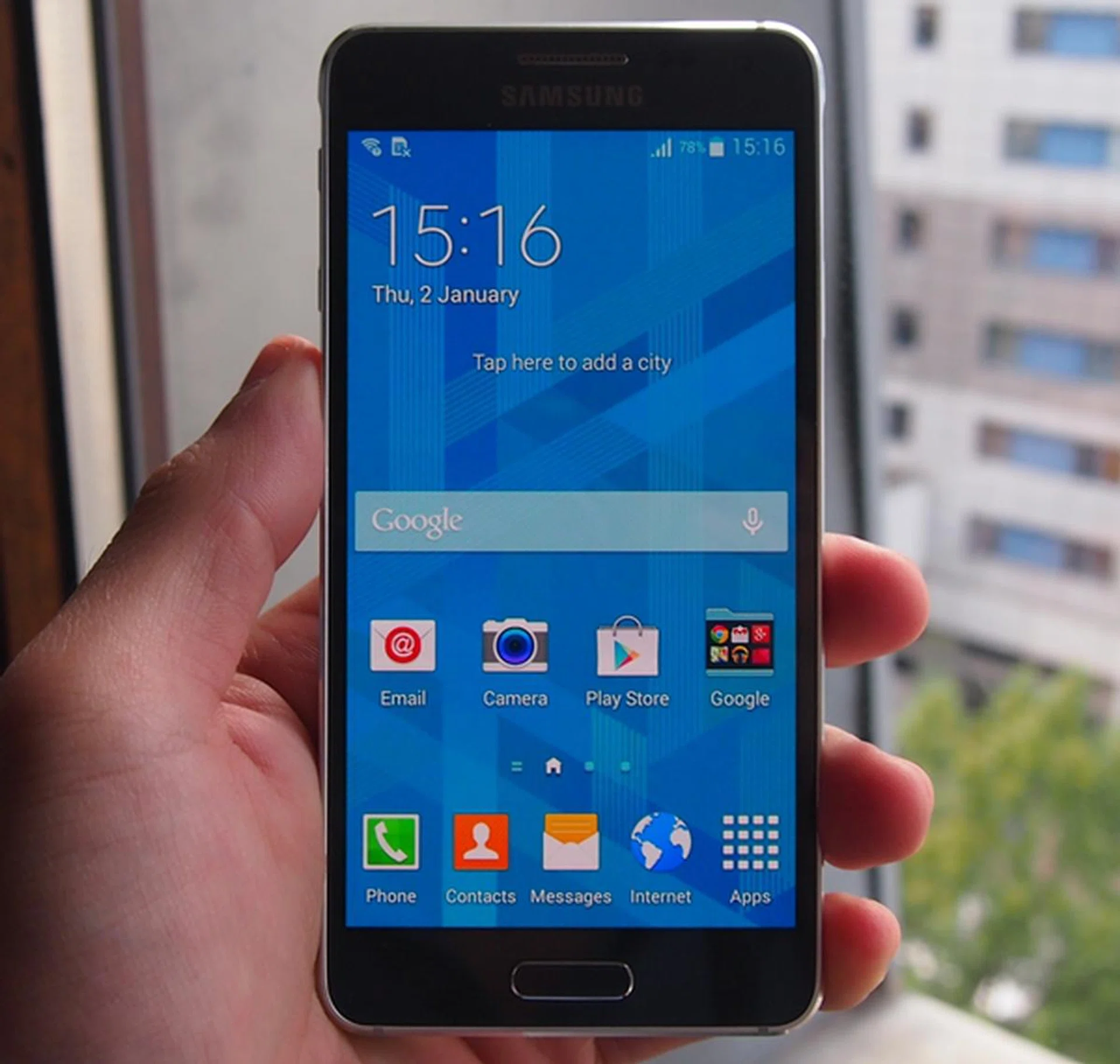
Samsung gave its smartphone portfolio a breath of fresh air with the Galaxy Alpha - the first phone from the company to sport a metallic frame. Alas, its positioning within the company's own series of devices has sidelined this product and offers little reason to consider it.
In this metal body experiment, Samsung has demonstrated with the Galaxy Alpha that it can achieve aesthetic beauty by forgoing the usual all-plastic build in favor a partial metal body construction. Even though it somewhat resembles a slimmer version of the iPhone 5S, what can we say? Imitation is the sincerest form of flattery and there’s nothing really wrong with the iPhone design to begin with. Appearances aside, the Galaxy Alpha delivers good performance and imaging quality in a lightweight body that’s of just the right size. The body frame of the Galaxy Alpha fits very snugly in the hand - neither too big like a phablet, nor too small such as the previous generation of iPhones. Combined the good performance and these favorable handling attributes and it’s why the Samsung Galaxy Alpha has the higher portability ratio to boast among its competitive field.
Yet, one but cannot feel disappointed that the specs of the Galaxy Alpha falls short of the usual Samsung flagship standard. At its price point of S$948, it’s squarely a priced like a flagship, but yet a Galaxy S5 or Note 4 are just about hundred dollars more and give you far more features, either in terms of screen size, screen quality, note taking features, even better camera functionality, health and fitness suite and more. It’s not that the Galaxy Alpha is bad, but it’s price positioning versus its other Galaxy counterparts doesn’t quite add up and consumers are likely to glaze over it for better products. Furthermore, some basic features that we expect in a Samsung phone are missing, such as a microSD card expansion slot. With the Galaxy Alpha, you’re confined to its internal 32GB of storage.
It seemed as though the Galaxy Alpha is just simply Samsung’s declaration to the naysayers that they are capable of making metal-body phones, other than the usual polycarbonate builds. Yet, since the Galaxy Alpha is not full metal unibody device and it can’t match up to the design efforts put in by competitive phones such as the Apple iPhone 6 and HTC One (M8), Samsung is far from making any definitive statements
Indeed, recent reports have indicated that the production line of the Galaxy Alpha might end, in favor of Samsung’s new strategic direction of launching mid-tier phones, beginning with the Galaxy A5 and A3, followed by the A7 later this quarter. Boasting a uni-body aluminum build, the new Galaxy A series may not have some of the upper tier features of the Alpha but instead trades that for better designed metal body phones at a better price point.The Galaxy Alpha is then an experimental prototype that has outlived its usefulness, but Samsung executives we spoke to mentioned the Alpha will still live on as a higher tier product for a while more.
At its current non-telco retail prices of sub S$700, it still has little value as opposed to Samsung’s Galaxy S5 and HTC One (M8) (which also have a similar asking price). Then there’s the value-oriented ASUS PadFone S that offers even better specs than the Galaxy Alpha with a somewhat similar build, but with a cheaper, chunkier design as the major tradeoff. All in, there’s no short of alternative options to consider to the Galaxy Alpha - unless you’re a Samsung fan and will settle for nothing less than a 'premium' metal framed device.
Our articles may contain affiliate links. If you buy through these links, we may earn a small commission.