
ECS KA1 MVP (ATI Radeon Xpress 200 CrossFire)
The ECS KA1 MVP is the latest CrossFire motherboard to face the rigors of our test lab and we seem to think that it signifies a 'grown up' ECS. The KA1 MVP delivers on features, performance and stability, giving premium boards a run for their money. Purple never looked so good.

Introduction
ECS has been quite a strong proponent of ATI chipsets to date with a full range of motherboards for both AMD and Intel based on ATI's Radeon Xpress 200 family. We've reviewed some of ECS' Radeon Xpress 200 offerings in the past and found a great AMD implementation in the RX480-A, which was also a surprising overclocker. ECS didn't fare too well with their Intel version though, as we plodded along with a rather lackluster RS400-A based on the Radeon Xpress 200 (Intel) IGP. Thus, when presented with a choice to review ECS' Radeon Xpress 200 CrossFire Edition (RD480) motherboards, we decided to have a look at the KA1 MVP first.
The KA1 MVP is based on the AMD version of the RD480 and will work with all current AMD Socket 939 processors, including the Athlon 64, Athlon 64 X2 and Athlon FX. Unlike the aforementioned mainstream ATI motherboards though, the KA1 MVP is the first Radeon Xpress 200 series board to be packaged under ECS' Extreme branding, marking it as a performance oriented board instead. If you liked what ECS delivered with the RX480-A, but wished it was more fully featured, the KA1 MVP might just be that board. Not to mention its dual graphics and CrossFire capabilities will appeal to gamers and enthusiasts alike.
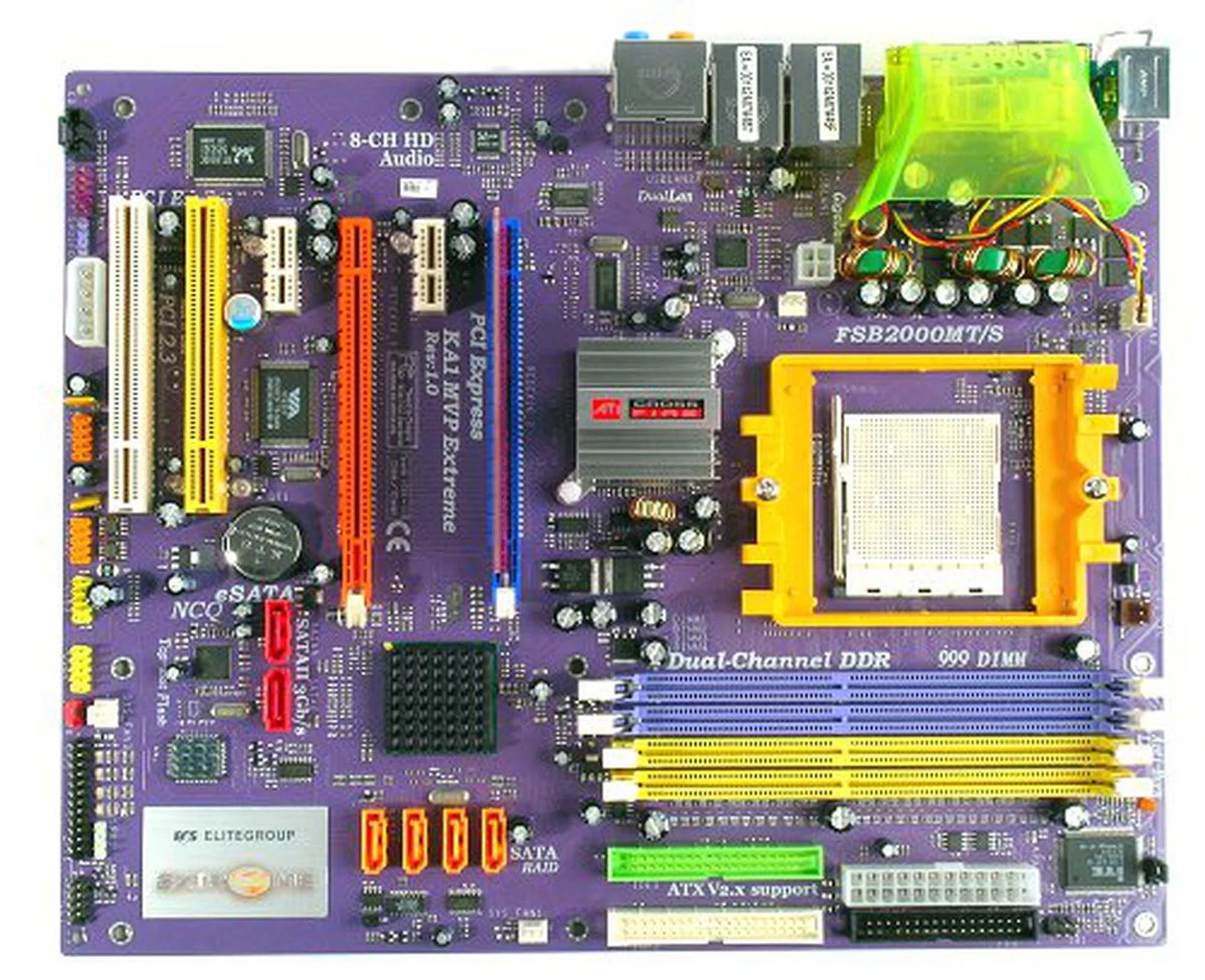
The ECS KA1 MVP Extreme motherboard.
The KA1 MVP comes with a very comprehensive packaging, which has become a standard trait for ECS' Extreme line. To date, ECS is also the only manufacturer we know that provides an RJ45 cable and a front panel bracket converter in their regular package. Just note that there isn't a RAID driver diskette in the box, so you'll have to make your own if you intend to install Windows on a RAID array.
- 4 x SATA data cables
- 1 x SATA power converter cable (dual plugs)
- 1 x 80-conductor Ultra ATA data cable
- 1 x 40-conductor Ultra ATA data cable
- 1 x floppy drive data cable
- 1 x RJ-45 cable
- Top-Hat Flash Module
- IEEE 1394a (2 ports) and USB 2.0 (2 ports) bracket
- External SATA (1 port) bracket
- Parallel port bracket
- USB and IEEE 1394 connector front panel face plate
- I/O shield
- Driver CDs
- Hardware installation guide
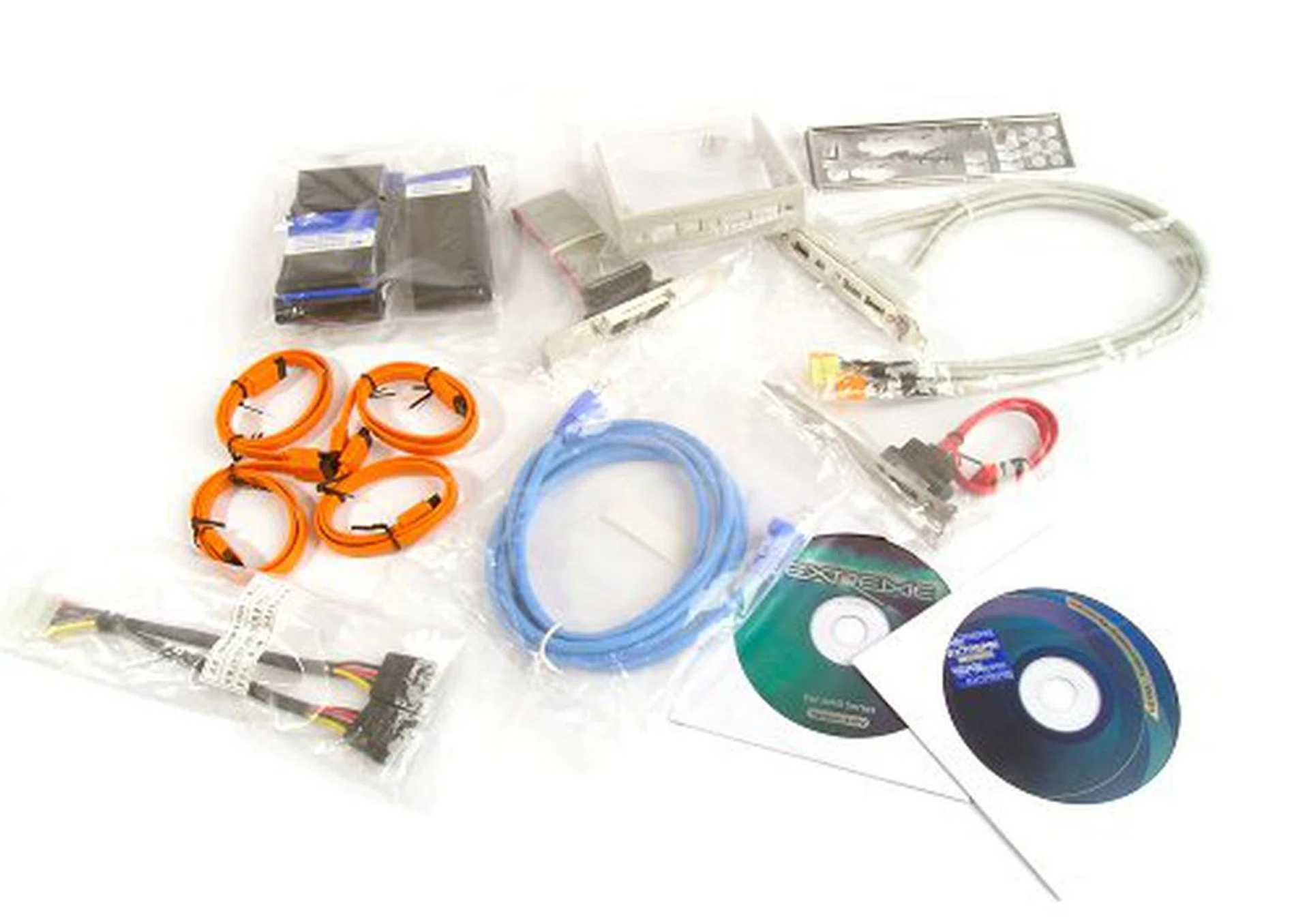
ECS Extreme series bundles are on par with top-tier manufacturers.
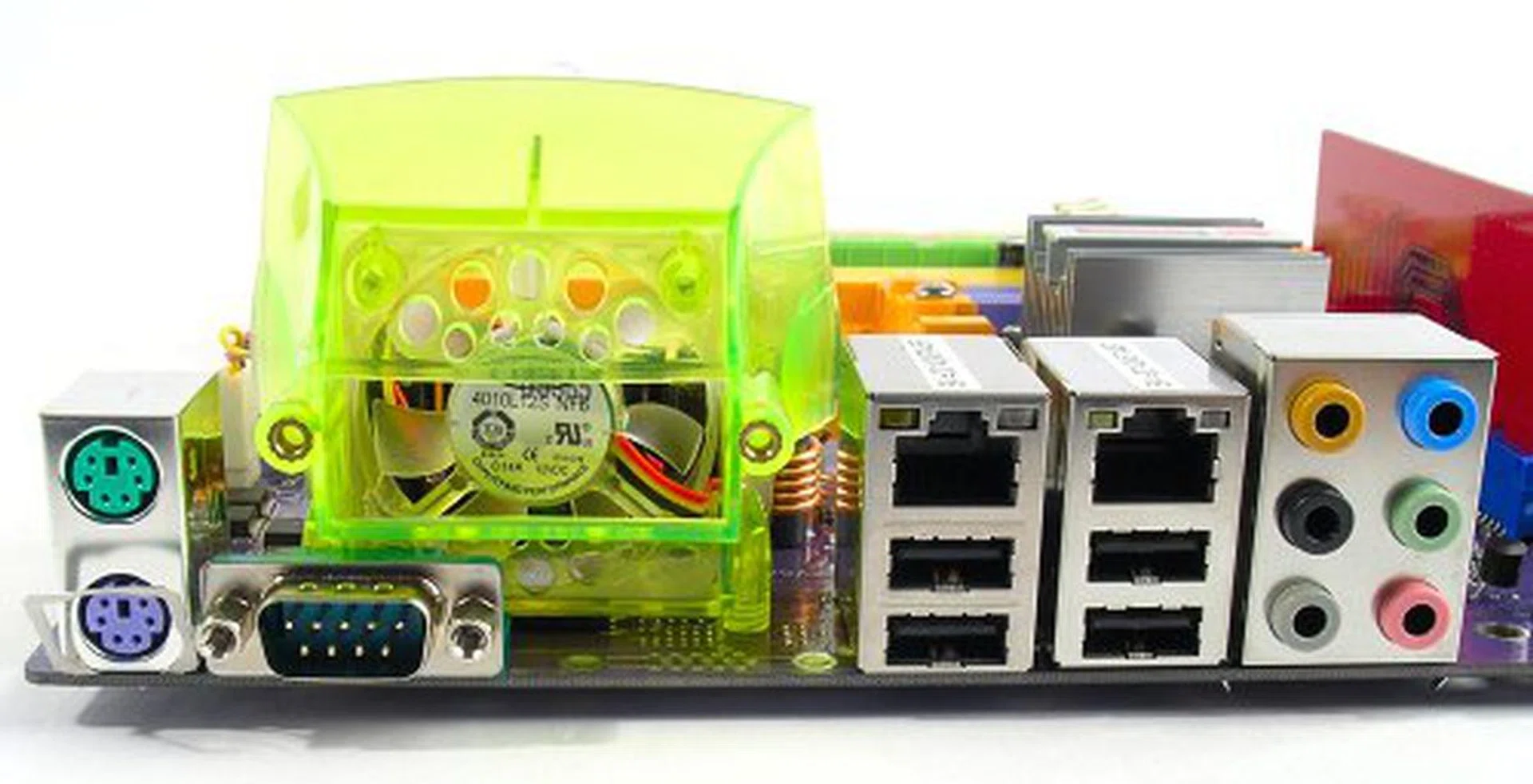
As usual, ECS has to compromise on some I/O ports to accommodate its cooling exhaust, but they do provide brackets for the missing ports like the Parallel and FireWire. Too bad there aren't any S/PDIF though.
Examining the KA1 MVP
Not only does the KA1 MVP use the CrossFire Edition of the Radeon Xpress 200 Northbridge, the board also features ATI's SB450 Southbridge, compared to the SB400 of the older RX480-A motherboard, with an audio upgrade to support Azalia HD Audio. However, some users might not be to enthused about this combination since ATI still hasn't ironed out the flaky USB performance since the SB400 and dated storage. This is one reason why many manufacturers choose ULi Southbridges instead. Luckily, the saving grace of the SB450 is a more-than-decent storage controller despite it supporting the older SATA standard and lacking NCQ.

RD480 chipset equates to CrossFire and multi-GPU capabilities. What a huge terminator card though.
Now we've mentioned that the ECS KA1 MVP is an 'Extreme' motherboard, so expect ECS to flesh out the board with a full compliment of features. The KA1 MVP is beefed up with SATA II support through a Silicon Image SiI3132 PCIe SATA II controller, which does come with NCQ and eSATA support. The board also features FireWire capabilities, powered by the commonly used VIA VT6307 IEEE 1394a controller. This 2-port controller should give you basic FireWire support, though we would have loved to see IEEE 1394b (800Mbps) being implemented more in motherboards today. One of the board's better features is its networking support. ECS uses a Marvell 88E8053 PCIe Gigabit Ethernet controller for its primary port, while the second port makes use of a slower Realtek RTL8100C Fast Ethernet controller, so it doesn't matter that it is running of the PCI bus. This slower port would be more than enough to be used for external broadband connectivity, while the high-speed Gigabit port can be put to use within your home LAN environment. This seems to be a favored configuration for ECS.
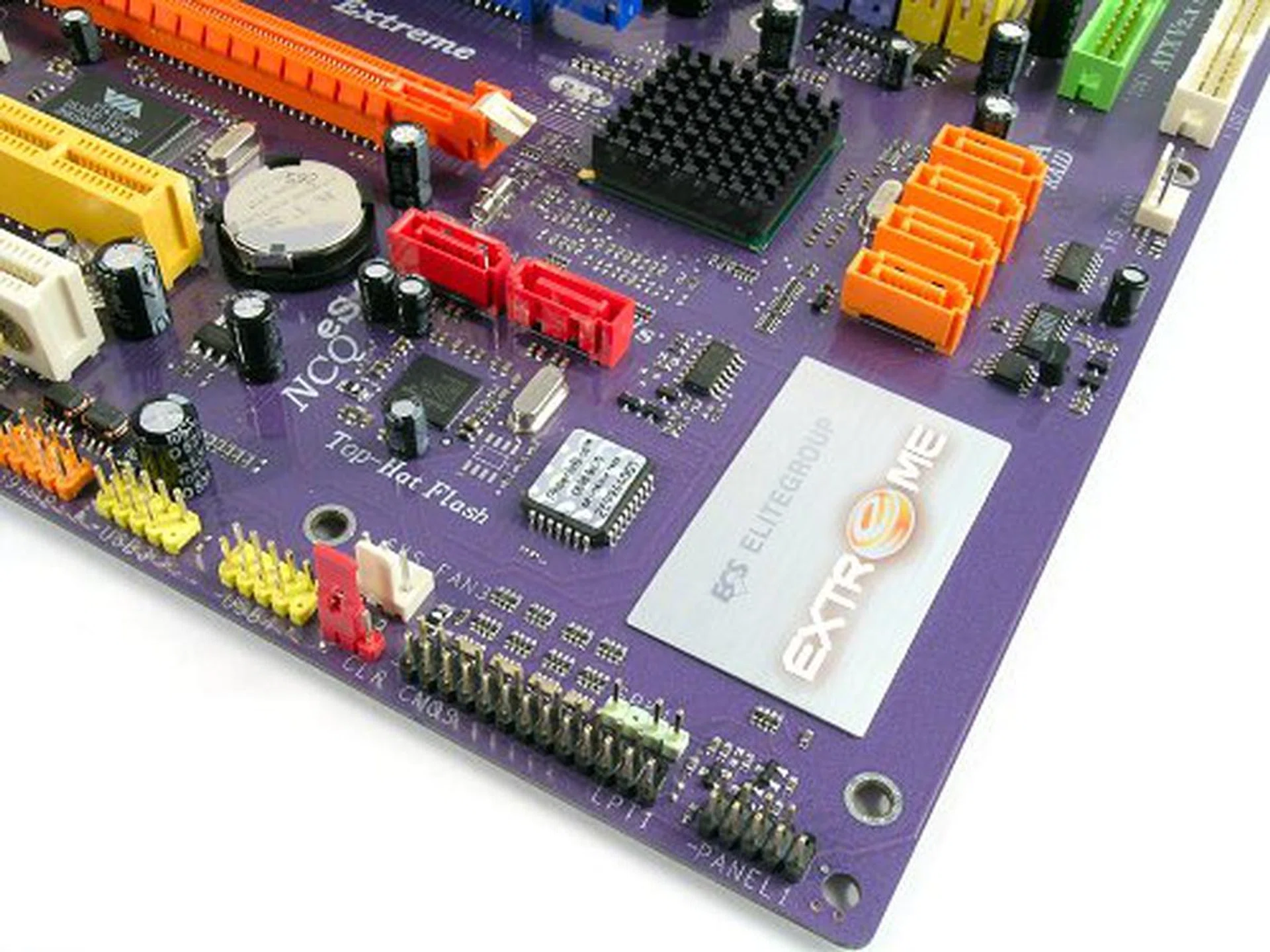
SATA capabilities taken of, whether you need single, RAID or even eSATA connectivity, But if you want speed, remember the two red ports support SATA II and NCQ.
Besides having enthusiast-level graphics support for CrossFire technology, the KA1 MVP will also feature Realtek's ALC880 HD Audio CODEC for improved onboard audio. However, gamers looking for higher compatibility and lower processing overhead will still find a discreet sound card a better choice.
Layout
One of our largest complaints when we reviewed the older RX480-A motherboard was its design, which resulted in a tightly spaced layout despite the board having only basic features. The KA1 MVP is relatively free of such issues. As far as space is concerned, the board has a very clean design that will do justice to any premium product.

A little tight on the top and side with the heatsink and cooler in the way, but ultimately a clean layout.

Users should not have problems with the standard DIMM and IDE storage layout.
But it isn't perfect, yet. Most motherboard manufacturers today realize the constrains of large graphics cards and with a multi-GPU motherboard, it is very important to ensure expansion compatibility. The KA1 MVP alternates between a PCIe x16 slot and a PCIe x1 slot with both PCI slots located at the bottom. When you look at the design, what you'd notice is that if you have two rather large ATI Radeon X1800's in CrossFire mode, you won't be able to use both the PCIe x1 slots, so unless ATI is able to get single slot cards out, the KA1 MVP might as well not have PCIe expansion at all. On the other hand PCIe x1 devices are still a rare breed, hence the issue isn't all too bad for the moment. ECS will also have to look at certain component placements like power connectors so they won't cause cable management problems.
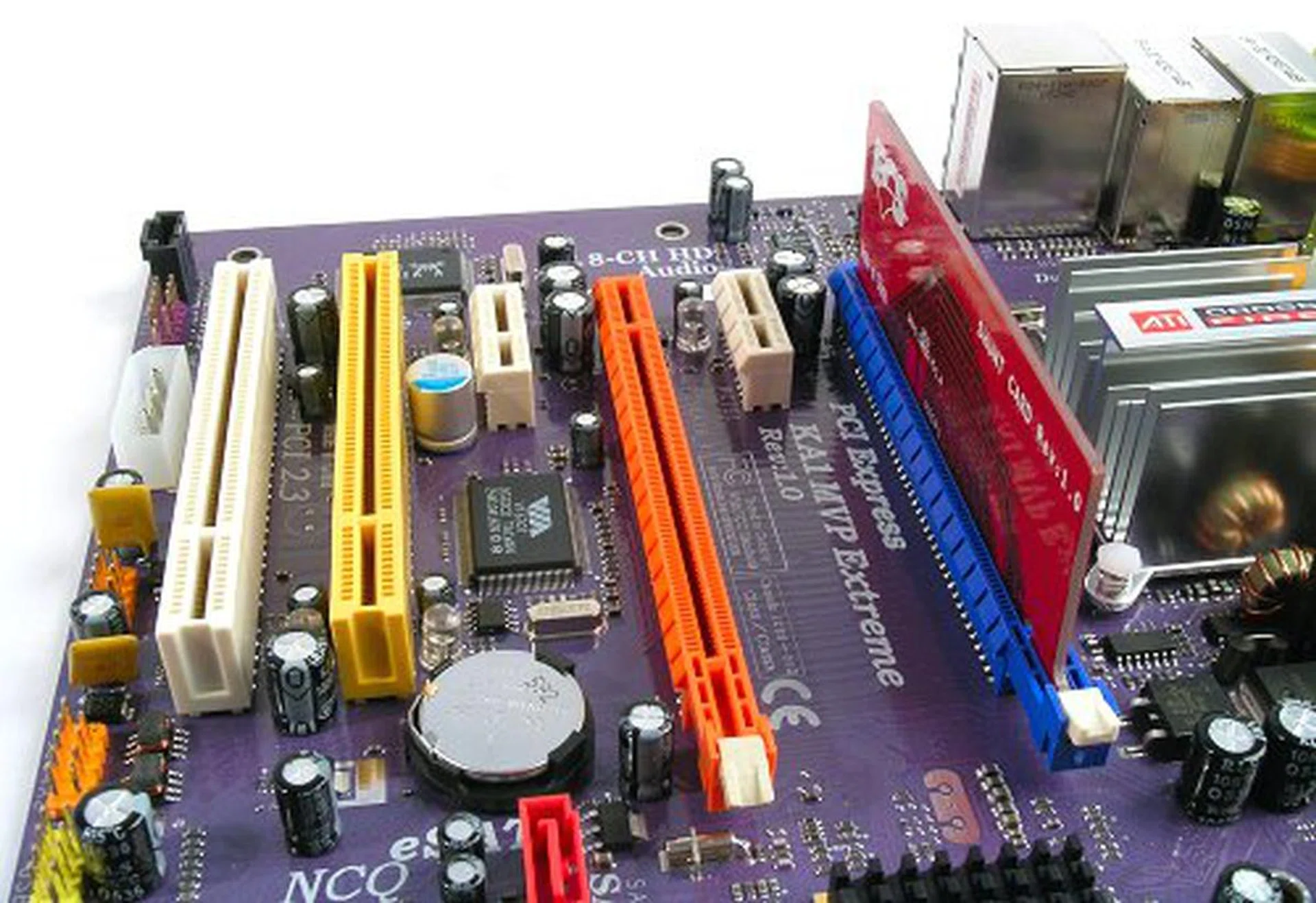
Well stocked expansion slots, but PCIe slot availability are dependent on graphics card used. But since there's little use for PCIe x1 slots now, this design is acceptable.
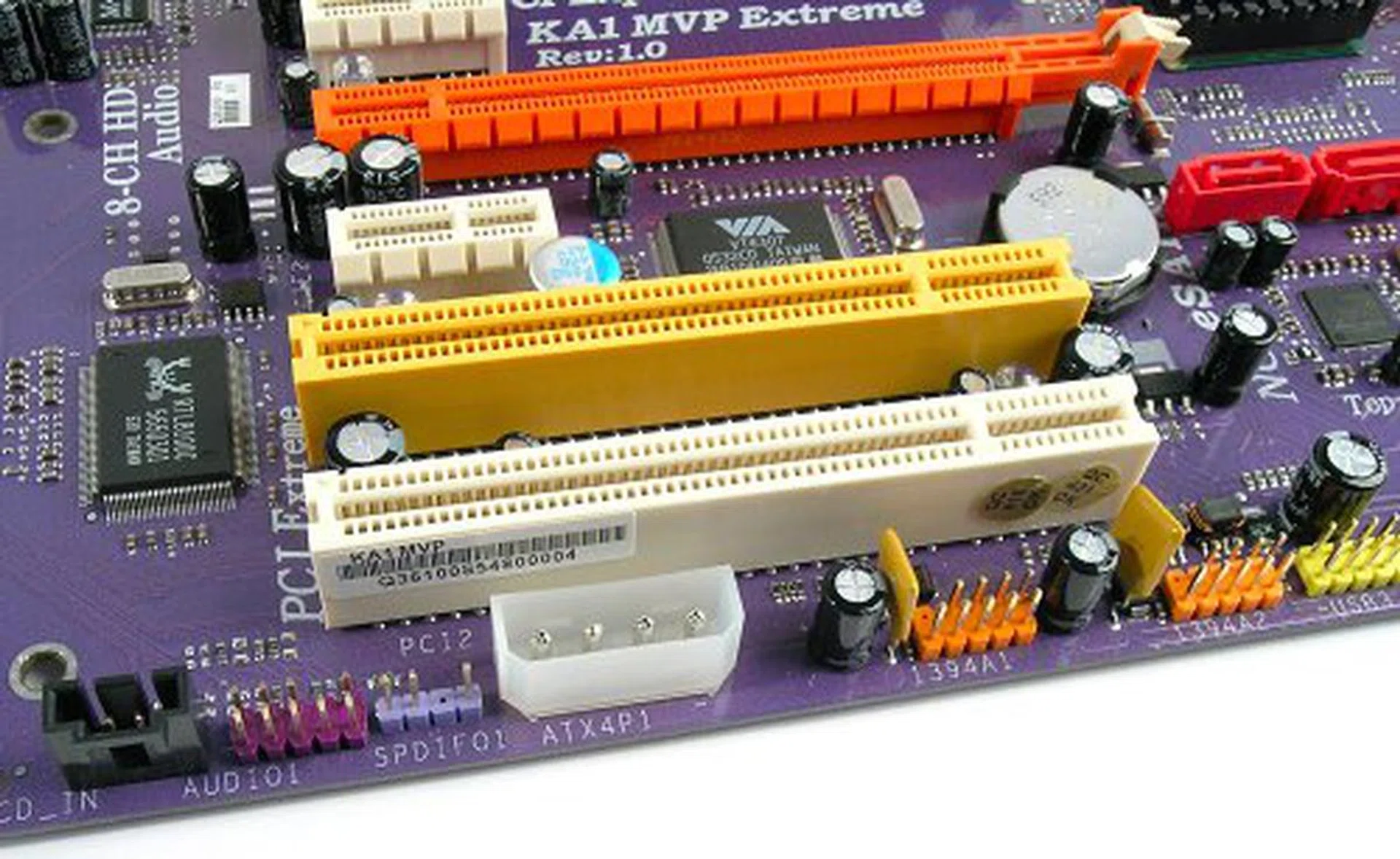
Now why would the auxiliary power molex be placed all the way to the bottom of the board?
Overclocking
- FSB Settings: 200MHz to 500MHz
- RAM Frequency: DDR200, DDR266, DDR333, DDR400
- CPU Voltage Settings: 0.825V to 1.550V (in 0.025V steps), +25mV to + 175mV (in 25mV steps)
- Memory Voltage Settings: 2.60V to 3.00V (in 0.05V steps)
- CPU Dynamic Overclocking: Disabled, +2MHz to +30MHz (in 2MHz steps)
- Multiplier Selection: Yes (unlocked CPUs only)
Finally, ECS has answered our call for a better BIOS implementation with more accessible options and tweaking capabilities. ECS has traditionally locked out many advanced functions and timing capabilities of their motherboards with a minimalist BIOS. The KA1 MVP comes with a regular Award BIOS interface, with full access to memory timings including CAS latency and CMD Rate. The only feature missing is chipset voltage control.
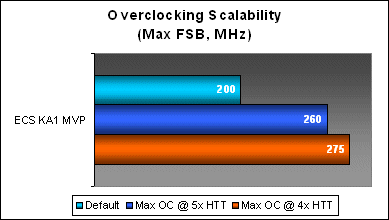
In our overclocking tests, we were able to run this baby up to 275MHz completely stable with an 800MHz HT link (HTT multiplier at 4x). Even with a full 1GHz HT link, the board was stable up to 260MHz. This is a very impressive result and although the RX480-A still holds the crown with a 290MHz overclock, the KA1 MVP really feels like a better polished product with more stability.
Test Setup
We now come to the time where we take the KA1 MVP for a spin in our benchmarking lab. We've recently reviewed MSI's RD480 Neo2 motherboard based on the Radeon Xpress 200 CrossFire chipset and we will be comparing the enthusiast KA1 MVP against the mainstream RD480 Neo2. ATI's reference RD480 motherboard will also be used as a baseline.
The testbed setup for each motherboard are listed below. Besides the driver differences, you might have noticed that both the ECS and MSI boards are running on Corsair memory, while the reference board uses Kingston. This is due to a compatibility issue on the reference motherboard with our pair of Corsair DIMMs, so we swapped in a set of Kingston memory to complete the benchmarking.
- ECS KA1 MVP
- AMD Athlon 64 3500+ (2.2GHz)
- 2 x 512MB Corsair DDR400 @ 6-3-3 CAS 2.5 CMD 1T
- Seagate Barracuda 7200.7 80GB SATA hard disk drive (one single NTFS partition)
- Gigabyte GV-NX66T128D-3 GeForce 6600GT 128MB - with NVIDIA ForceWare 81.98 driver
- ATI Catalyst Southbridge drivers 6.2
- Microsoft Windows XP Professional with Service Pack 1 (with DirectX 9.0c)
- MSI RD480 Neo2
- AMD Athlon 64 3500+ (2.2GHz)
- 2 x 512MB Corsair DDR400 @ 6-3-3 CAS 2.5 CMD 1T
- Seagate Barracuda 7200.7 80GB SATA hard disk drive (one single NTFS partition)
- Gigabyte GV-NX66T128D-3 GeForce 6600GT 128MB - with NVIDIA ForceWare 81.98 driver
- ULi SATA/RAID driver 6.2.07
- Microsoft Windows XP Professional with Service Pack 1 (with DirectX 9.0c)
- ATI Reference Radeon Xpress 200 CrossFire motherboard
- AMD Athlon 64 3500+ (2.2GHz)
- 2 x 512MB Kingston DDR400 @ 6-3-3 CAS 2.5 CMD 1T
- Seagate Barracuda 7200.7 80GB SATA hard disk drive (one single NTFS partition)
- Gigabyte GV-NX66T128D-3 GeForce 6600GT 128MB - with NVIDIA ForceWare 81.98 driver
- ATI Catalyst Southbridge drivers 6.2
- Microsoft Windows XP Professional with Service Pack 1 (with DirectX 9.0c)
Benchmarks
The following benchmarks will be used in this review:-
- BAPco SYSmark 2004
- Futuremark PCMark04
- SPECviewperf 8.01
- Futuremark 3DMark03
- Futuremark 3DMark05
- AquaMark3
Results - BAPco SYSmark 2004
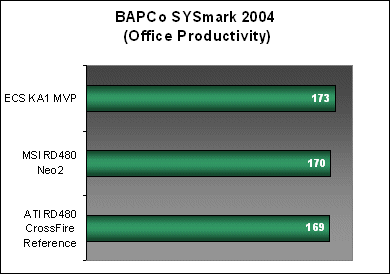
The ECS KA1 MVP managed to edge out the other two boards, showing the biggest improvement in performance in the Office Productivity suite where it exhibited a higher score for its data analysis portion of the benchmark.


Results - Futuremark PCMark04
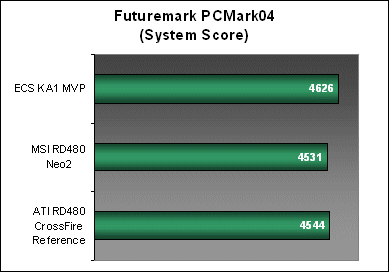
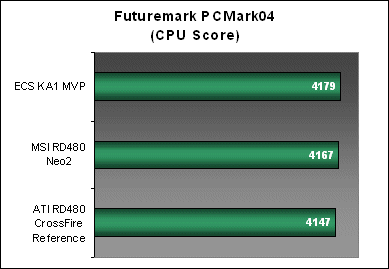
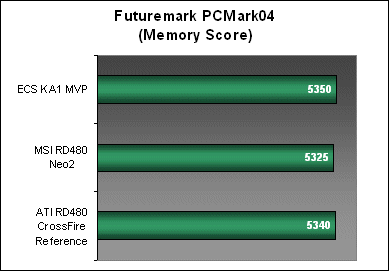
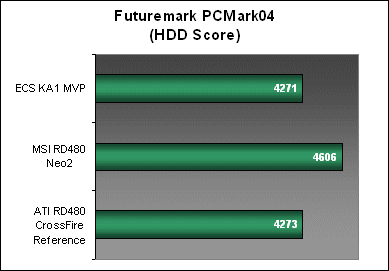
The KA1 MVP performed around 3% better than both the MSI RD480 Neo2 and ATI reference board for PCmark 04's System workload. It also managed a slightly higher score for both the CPU and Memory loads, but you'll notice a big dip in HDD performance in comparison to the MSI RD480 Neo2. This is due to the SB450 Southbridge not having NCQ support, while the MSI board using an ULi Southbridge does.
Results - SPECviewperf 8.01
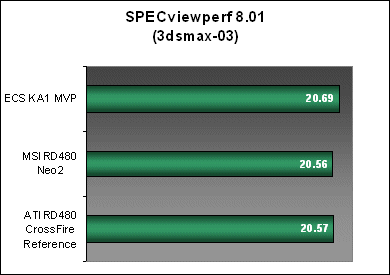
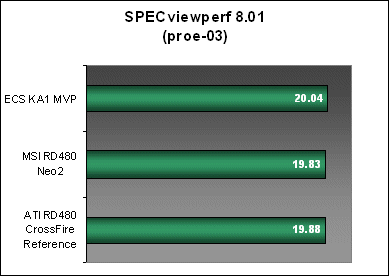
The performance lead enjoyed by the ECS KA1 MVP was also apparent after running SPECviewperf 8.01. The board exhibited a better tweaked graphics subsystem for the OpenGL benchmarks and just managed to break the 20 score mark for the Pro/ENGINEER viewset.
Results - Futuremark 3DMark03
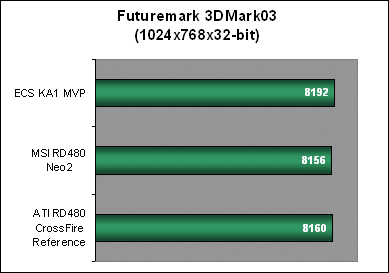
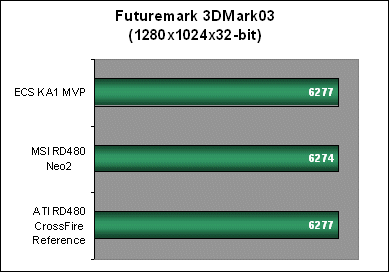
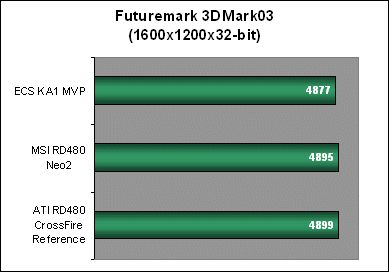
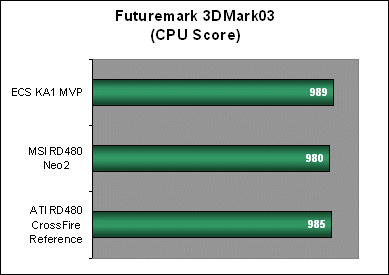
The KA1 MVP maintained its slight lead over the rest of the boards in almost every resolution except at 1600x1200, where its score dipped below the average. The board also displayed a more robust CPU subsystem running the CPU-only rendering tests.
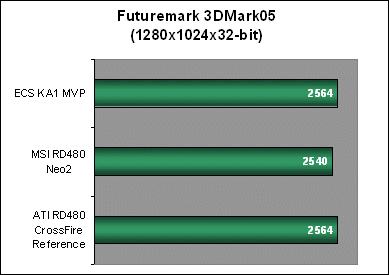
Results - Futuremark 3DMark05
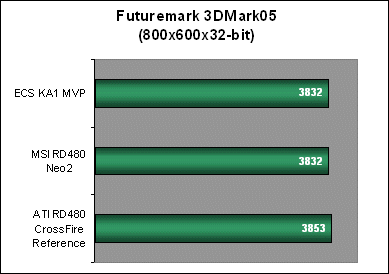
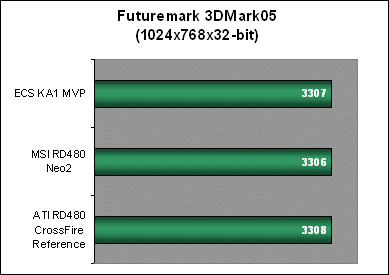
All three motherboards performed similarly in 3DMark05, without an obvious winner. The Radeon Xpress 200 is already quite a matured platform by now and we can see that its performance in high-end applications has more or less leveled out.
Results - AquaMark3
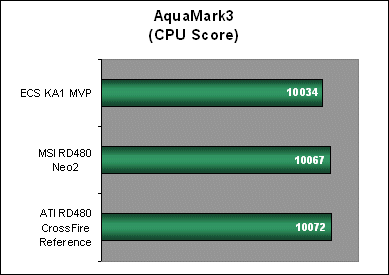
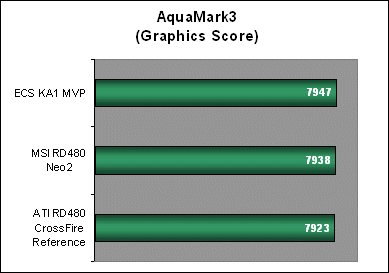
In AquaMark3's graphics result breakdown, the KA1 MVP still managed to hold the lead. However, despite the board's performance in other benchmarks, it posted a lower CPU result than the other two boards.
Conclusion
We might say that since ECS changed their strategy to boost their image as a top-tier motherboard manufacturer, they have been through more or less a trial and error stage delivering products with promise only to lose out in delivery. The KA1 MVP however, is a CrossFire motherboard that is worthy of praise. ECS has really come through this time to produce a board that has the features, the overclocking, stability and for once, does not skimp on performance through a conservative setup. With a less restrictive BIOS implementation, the KA1 MVP can better accommodate enthusiasts and tweakers, a group that the 'Extreme' line of motherboards supposedly target, but has never actually met the challenge till now.
It also became very apparent that the KA1 MVP was a mature product in the course of our testing with no setup issues, solid stability throughout benchmarking and effortless overclocking. Though still missing some voltage controls, the KA1 MVP did not lose too much overclocking efficiency even while running with a full 1GHz HT link. Our benchmark results confirmed the fine job ECS has done with the KA1 MVP, which offered performance on par and in some cases, slightly superior to other RD480 motherboards.
Feature-wise, the KA1 MVP has the standard fare that you'd expect from such a board. Dual LAN, HD Audio, SATA II, eSATA, FireWire, ECS has included them all. While it isn't as rich as some of the high-end ASUS or Gigabyte motherboards, we don't think you'd really find fault with the KA1 MVP. The board still has its rough edges, which will cause some frustration with cable management, but nothing that would cause you to lose any sleep over.
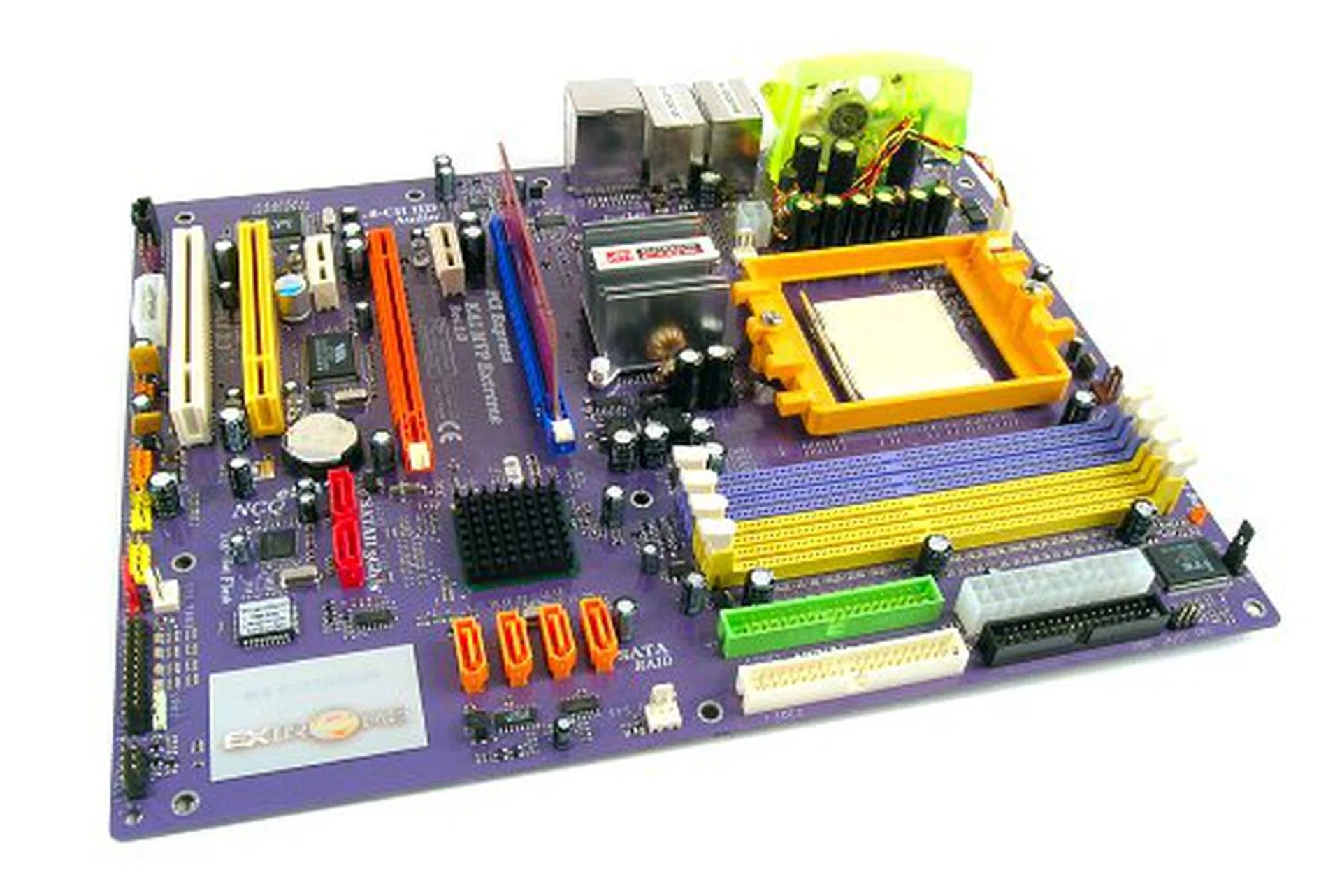
The KA1 MVP may be ECS' finest board yet.
With the KA1 MVP, ECS has an ace tucked under their sleeves. While there have been an influx of CrossFire capable motherboards in the market in the past few months, there have been very few implementations that cater towards the enthusiast community for the AMD Socket 939 platform, with ABIT's AT8 probably being the only exception. Many top-tier manufacturers have preferred to design around the recently announced (and more costly) ATI CrossFire Xpress 3200 chipset instead. However, at US$130, the KA1 MVP isn't exactly going for the usual low price points that ECS boards can usually boast about. It still comes in cheaper than most mid-range enthusiast multi-GPU boards out there (be it SLI or CrossFire), but not by much. With everything said, the KA1 MVP manages to come off as an excellent effort by ECS and is a highly recommendable product.
Our articles may contain affiliate links. If you buy through these links, we may earn a small commission.