
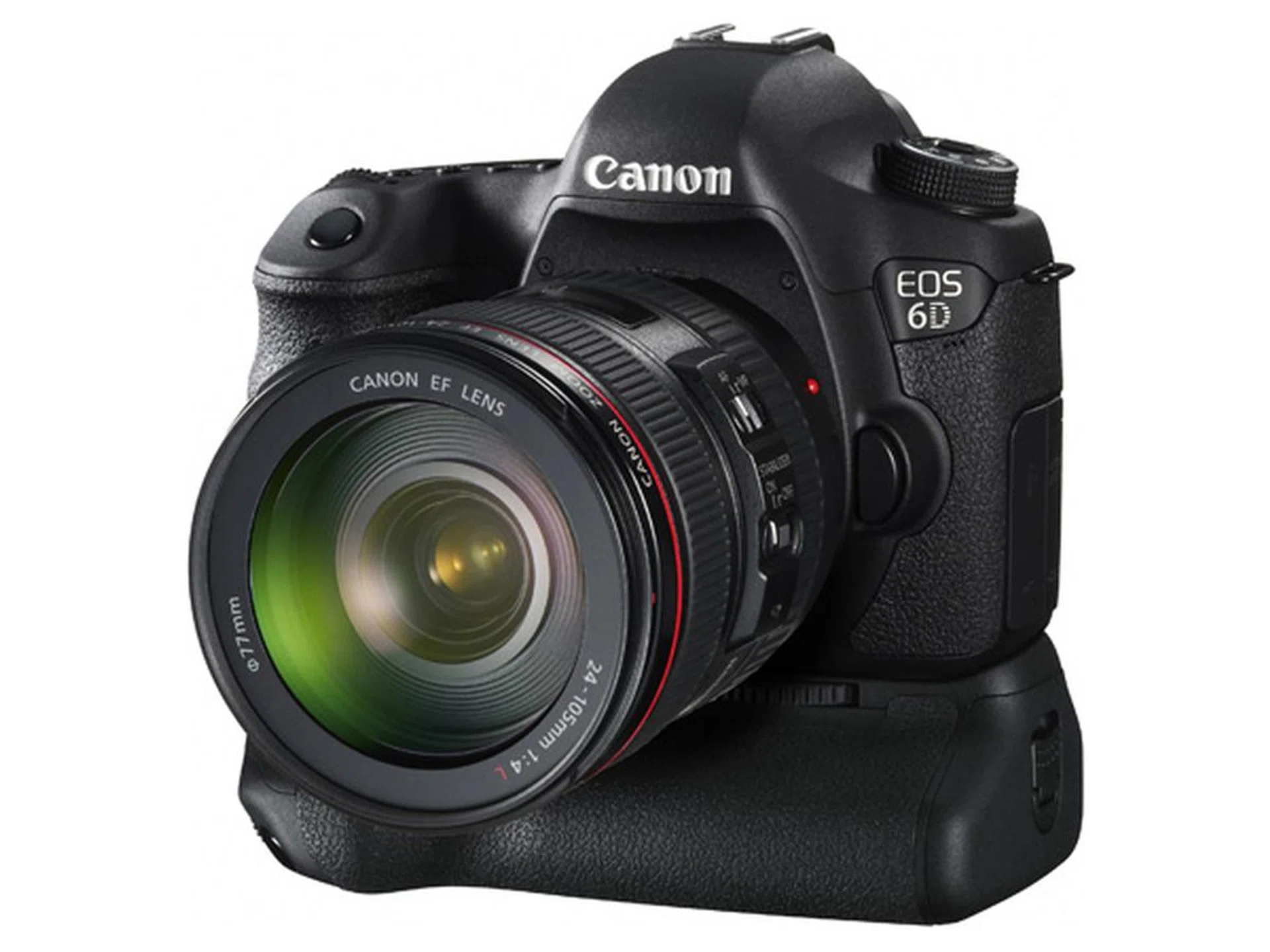
Canon EOS 6D - Beginner Friendly Full-frame DSLR
As Canon's most affordable full-frame camera, the EOS 6D might very well be somebody's first full-frame DSLR. With a 20.2MP sensor and built-in Wi-Fi plus GPS, the 6D looks attractive on paper but comes with a few trade-offs. Find out if those trade-offs are worth it.

Introduction
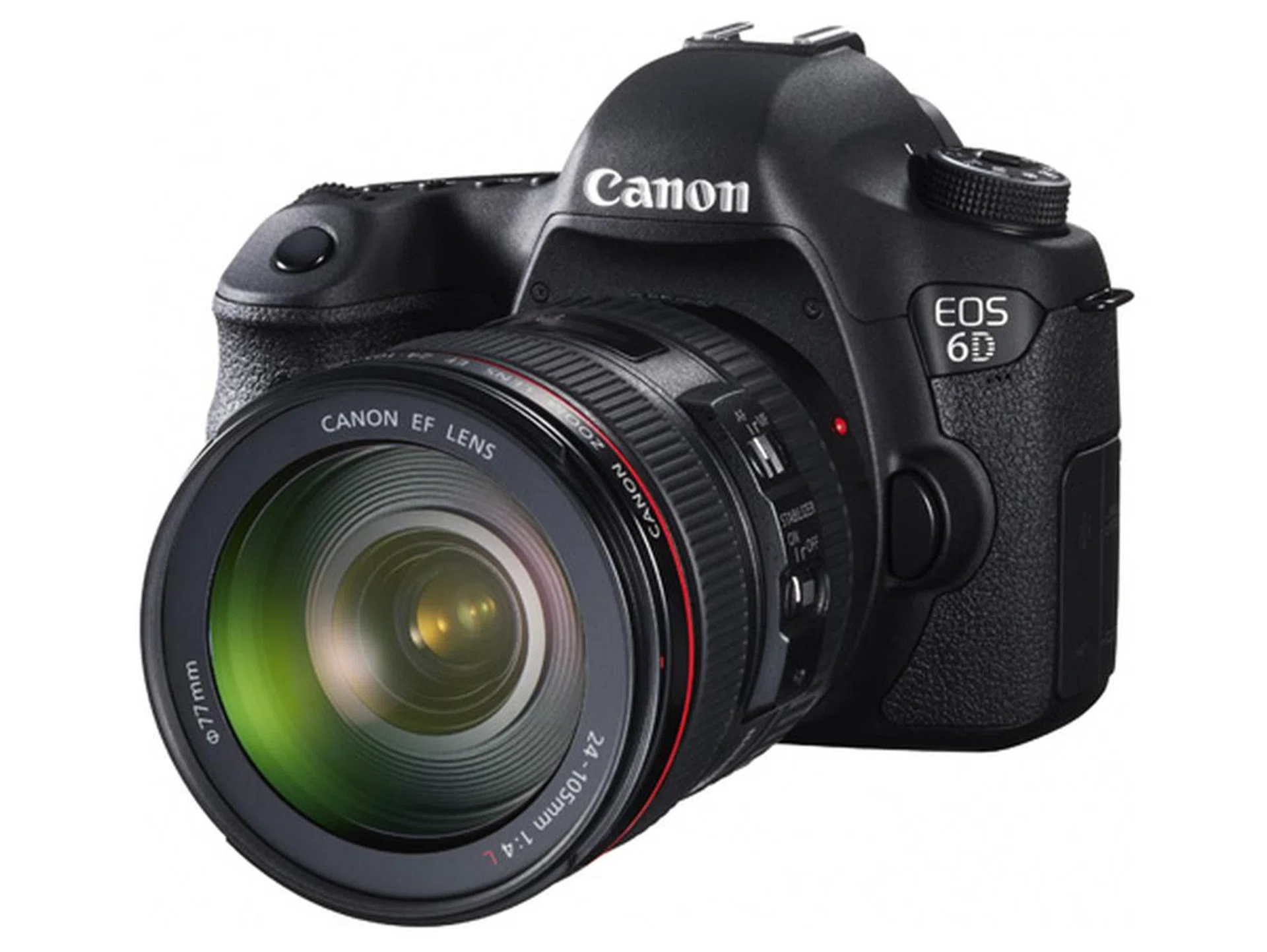
2012 is certainly the year of full-frame cameras, from the Sony RX1 to the Nikon D600 and the Canon EOS 6D. Both Nikon and Canon's cameras are the first in a new category of DSLRs: 'Entry-level' full-frame DSLR cameras that, while aren't exacting cheap, offer the most affordable way yet to get a digital full-frame camera.
Both Nikon and Canon also seem to have come at this category from different perspectives. While the D600 has a more comprehensive AF system and features like dual SD card slots, the Canon 6D comes with built-in Wi-Fi and GPS. Inside is a brand-new 20.2MP full-frame CMOS sensor with a single DIGIC 5+ image processor, the same processor as seen on the Canon EOS 5D Mark III.
The 6D is an important camera, if not for Canon, then for the person who might buy one: It might very well be the first full-frame DSLR this person owns. While a top-tier camera like the 5D Mark III should offer little disappointment (except for the hole in your wallet), the Canon 6D is a camera built with trade-offs in order to sell at a lower price. Let's find out if those trade-offs are worth the savings.
EOS6D | EOS5D Mark III | EOS-1D X | |
Megapixels (Effective) | 20.2MP | 22.3MP | 18.1MP |
Image Processor | DIGIC 5+ | DIGIC 5+ | Dual DIGIC 5+ |
ISO Sensitivity | ISO 100-25,600, expandable to 50-102,400 | ISO 100 - 25,600, expandable to ISO 50-102,400 | ISO 100-51,200, expandable to ISO 50-204,800 |
AF Points | 11 points (1 cross-type) | 61 points (41 cross-type) | 61 points (41 cross-type) |
Focusing Brightness Range | EV -3-18 (at center AF point, sensitive to f/2.8 & f/5.6, room temperature, ISO 100) | EV -2 - 18 (with center f/2.8 AF point, 23°C / 73°F, ISO 100) | EV -2-18 (with center f/2.8 AF point, at 23°C/73°F, ISO 100) |
Metering | 63-zone TTL full-aperture metering | 63-zone TTL full-aperture metering | 100,000-pixel RGB metering sensor and 252-zone TTL metering at max. aperture |
Max. Frame Rate (Full-res) |
|
|
|
File Formats | Raw (14-bit), JPEG | Raw (14-bit), JPEG | Raw (14-bit), JPEG |
Viewfinder | 97% coverage | 100% coverage | 100% coverage |
LCD Monitor | 3-inch, 1.04 million-dots | 3.2-inch, 1.04 million-dots | 3.2-inch, 1.04 million-dots |
Shutter Speeds | 1/4000 to 30 secs, bulb | 1/8000 to 30 secs, bulb | 1/8000 to 30 secs, bulb |
Shutter Release Cycles | 100,000 | 150,000 | 400,000 |
Built-in Flash | No | No | No |
Flash X-sync Speed | 1/180 sec | 1/200 sec | 1/250 sec |
Max. Video Resolutions | 1920 x 1080 (30, 25, 24fps) | 1920 x 1080 (30, 25, 24fps) | 1920 x 1080 (30, 25, 24fps) |
Video Formats | MPEG-4 AVC (H.264) | MPEG-4 AVC (H.264) | MPEG-4 AVC (H.264) |
Memory Card Slots | 1 x SD slot | 1 X CF slot & 1 X SD slot | 2 x CF slots |
Battery Life | 1,090 shots | 950 shots | 1120 shots |
Dimensions | 145 x 111 x 71mm | 152 x 116.4 x 76.4mm | 158 x 163.6 x 82.7mm |
Weight (Body) | 755g | 860g | 1340g |
Price (Body) | S$2899 | S$4699 | S$9299 |
Design & Handling
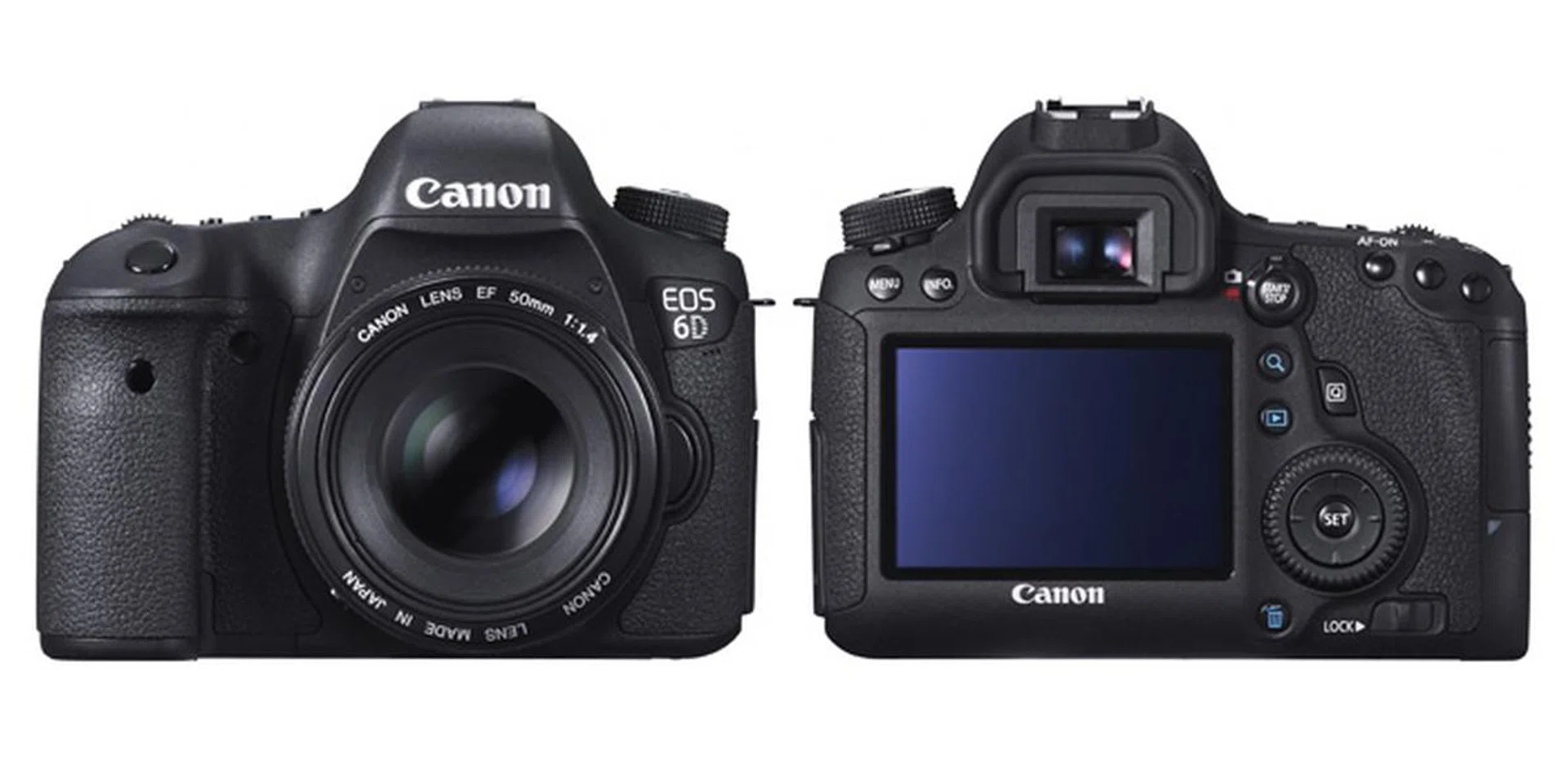
Imagine putting a full-frame sensor into a Canon 60D, and that's essentially what the 6D body looks and feels like. The familiar Canon joystick is absent here, taking its place is the 8-way d-pad from the 60D. It retains two control dials (top dial and the back scroll wheel), as well as the top LCD panel.
The body is 680g, which is about 180g less than the 5D Mark III and smaller, but still hefty. The front grip and back thumb-rest provide a good grip on the camera. Its magnesium alloy body is dust and drip-proof, so you won't have to run for cover at the first sign of a drizzle. The rear 3-inch LCD has a luxurious resolution of 1.04 million dots, making the screen bright and clear.
Using the 6D is more reminiscent of using the 60D than the 5D Mark III. We suppose whether this is a good thing or not depends on where you're coming from. If you're upgrading from the 60D or below, than you might welcome the simplified controls and feel right at home. If you're downgrading from the flagship full-frame cameras, you might be disappointed to find that the 6D lacks many of the advanced handling options available on those cameras.
Auto-focus
For one, the 6D AF system lacks the multiple AF Area Selection modes found on the 5D Mark III (and even the APS-C sensor EOS 7D) like AF point expansion or Zone AF. There's a good reason for that: There are only 11 AF points. So you can only choose between automatic Basic Zone focus, selecting from a single AF point among the 11, and manual focus.
11 AF points don't sound like a lot, and they aren't. The best thing you could say about this number is that at least it's two points more than 2009's 5D Mark II which had nine AF points. Quite unlike the Nikon D600, which has 39 AF points with nine cross-types (the 6D has one cross-type), but like the D600, the 6D's 11 points are also concentrated near the center. It does affect the way you shoot as there were times when we had to adjust our framing so that we could get a precise lock on a particular part of our subject.
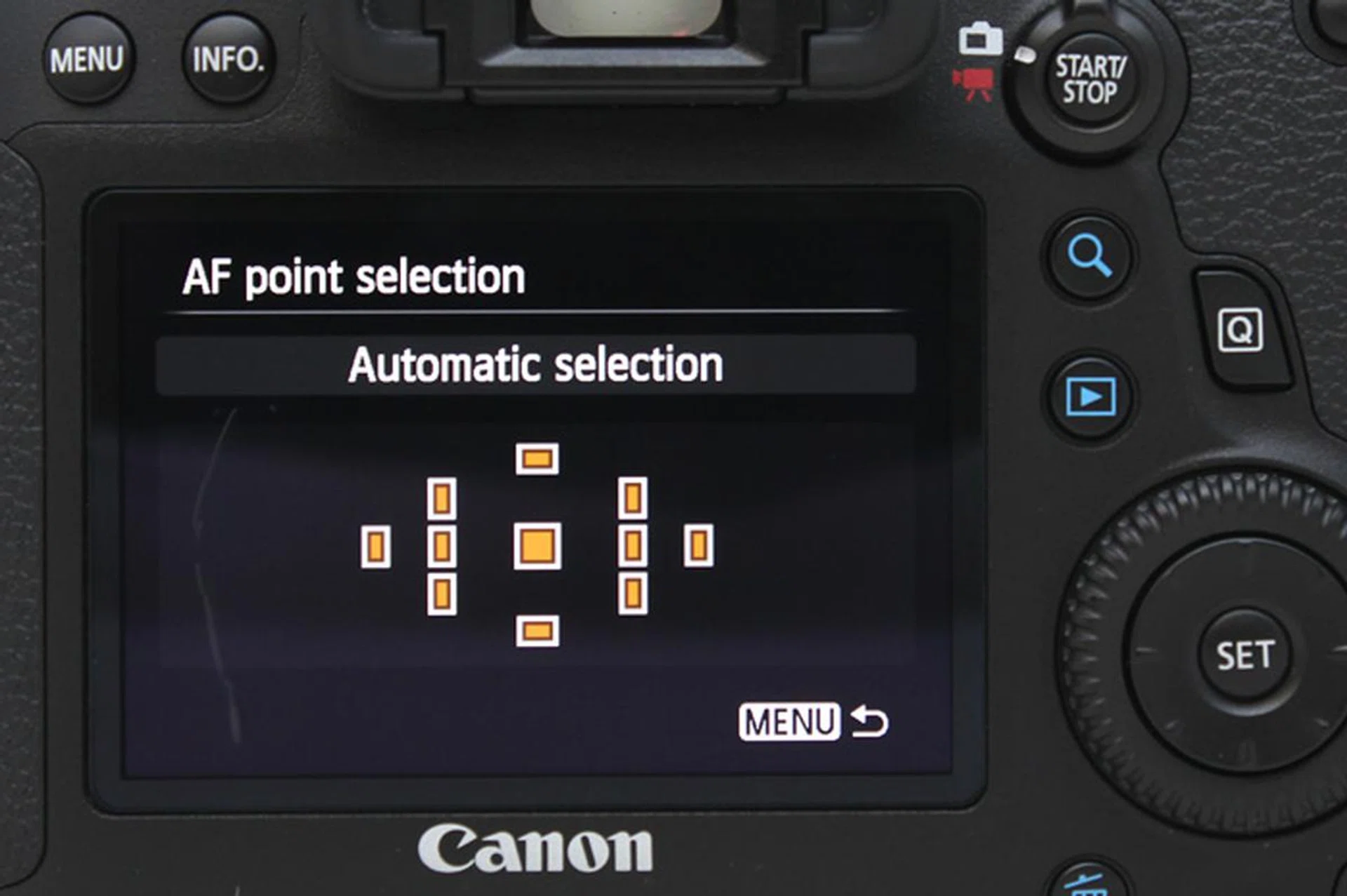
The bad news is that there are only 11 AF points. The good news is that they're very responsive.
Apart from the limited number and spread of AF points however, the 6D's AF system is very, very good. Even in low-light, the 6D recognized and snapped on subjects quickly. Surprisingly, the 6D's AF system is rated for a stop lower than the 5D Mark III; -3 EV compared to -2 EV. So the odd conclusion is, yes the number of AF points as well as the spread is a trade-off, but in return the AF is fast and accurate.
With the exclusion of the joystick, there's no quick way to change AF points on the fly. Instead, it will always be a constant two-button maneuver of hitting the AF Point Selection button and then using the d-pad.
You can also use the top and back dials to move the AF point, but the two dials behave oddly. The top dial only moves the AF point left and right, while the back wheel moves it top to bottom. The left and rightmost AF points are out of bounds to the top dial, if you hit them the camera will revert back to automatic AF point selection. To select them, you must use the d-pad. It's confusing and irritating, and there's no way to change this behavior in the menus.
General Handling
The other negatives that jump out would be the lack of a built-in flash (how negative this is depends, again, on which end of the Canon DSLR spectrum you came in from) and the odd, hard to find placement of the Depth-of-field Preview button; it's located at the bottom of the lens mount, almost hidden away.
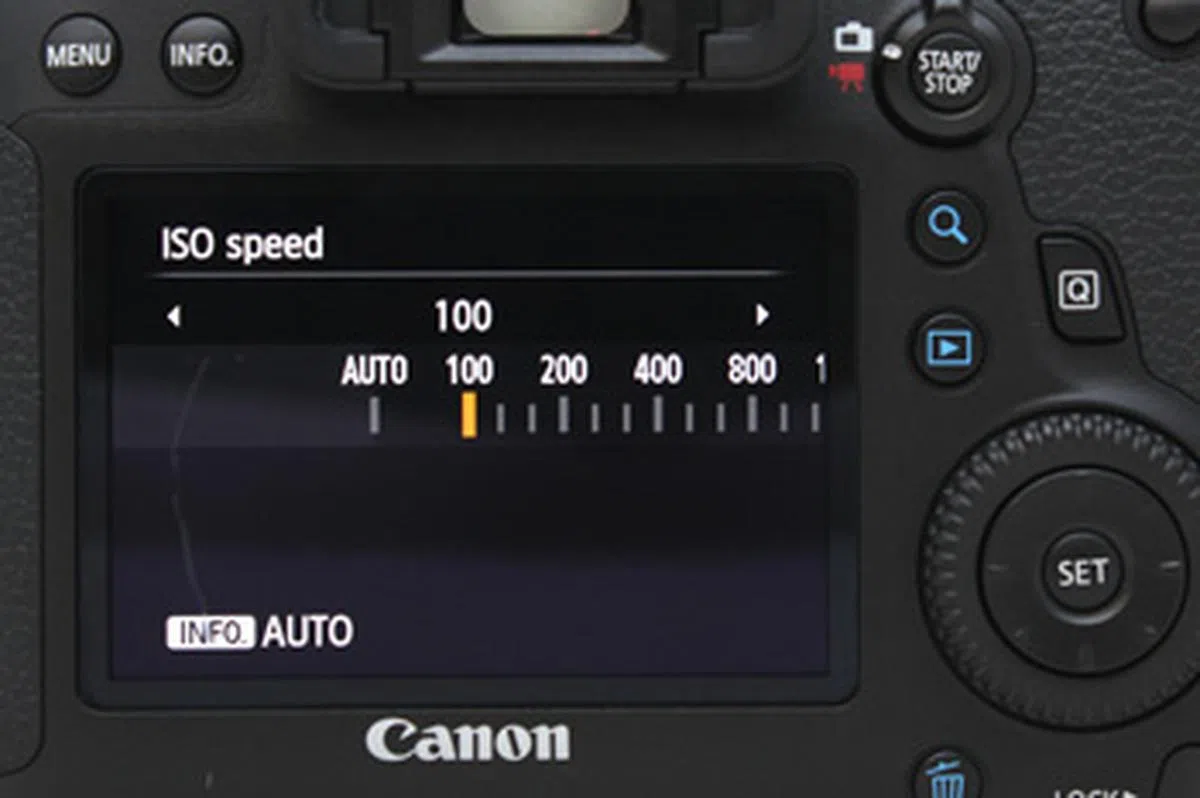
The designs for the ISO and Exposure Compensation interfaces in the Quick menu have taken a turn for the worst. Instead of the old table where you could see all ISO values at a glance, the ISO settings are now arrayed along a line which takes more time to use. The Exposure Compensation interface is smaller, taking up only a small section of the screen, with smaller lines and numbers.
 | 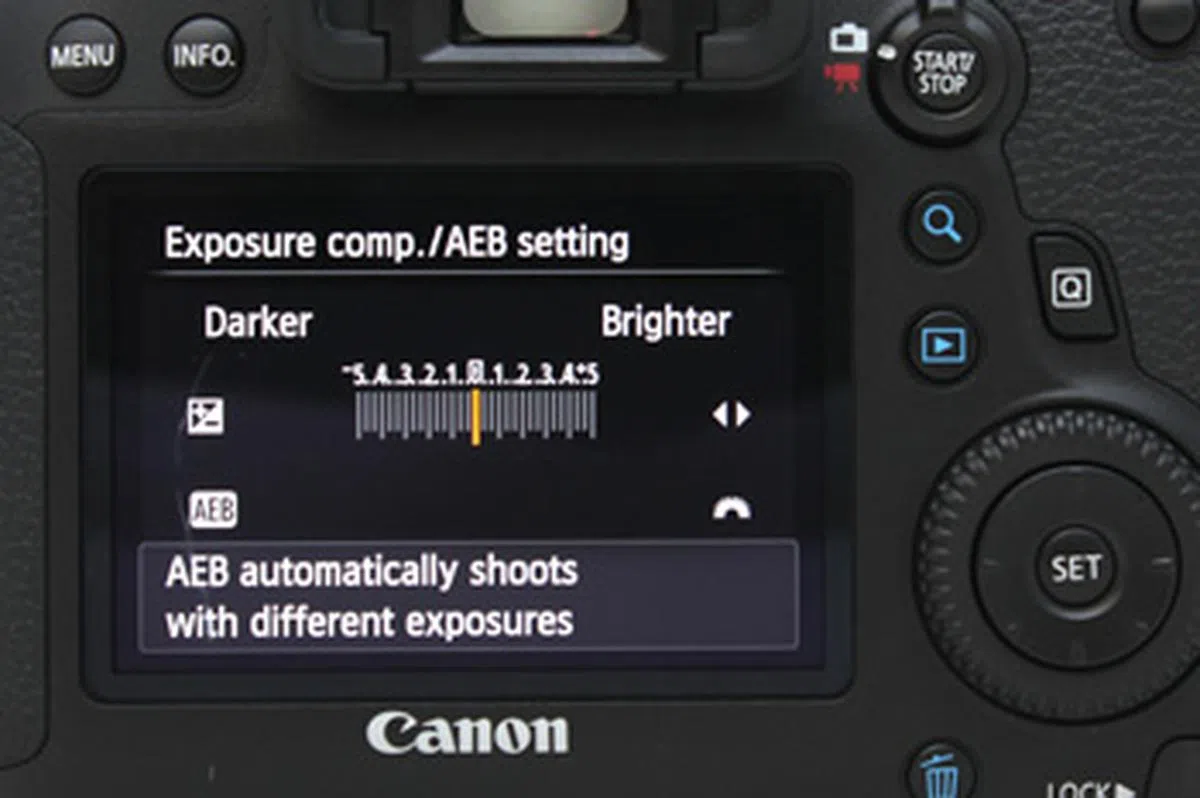 |
Otherwise, the rest of the 6D feels rather comfortable. The four dedicated buttons on the top plate give direct access to AF, Drive, ISO and Metering, with a fifth button lighting up the LCD panel. The Q button at the back brings up the Quick Menu, where you can see what your settings are at a glance and quickly change them. The 6D comes with the silent shooting mode first seen in the 5D Mark III which significantly reduces the sound of the shutter, useful in quiet environments when you don't want to sound like an elephant thumping through the room.
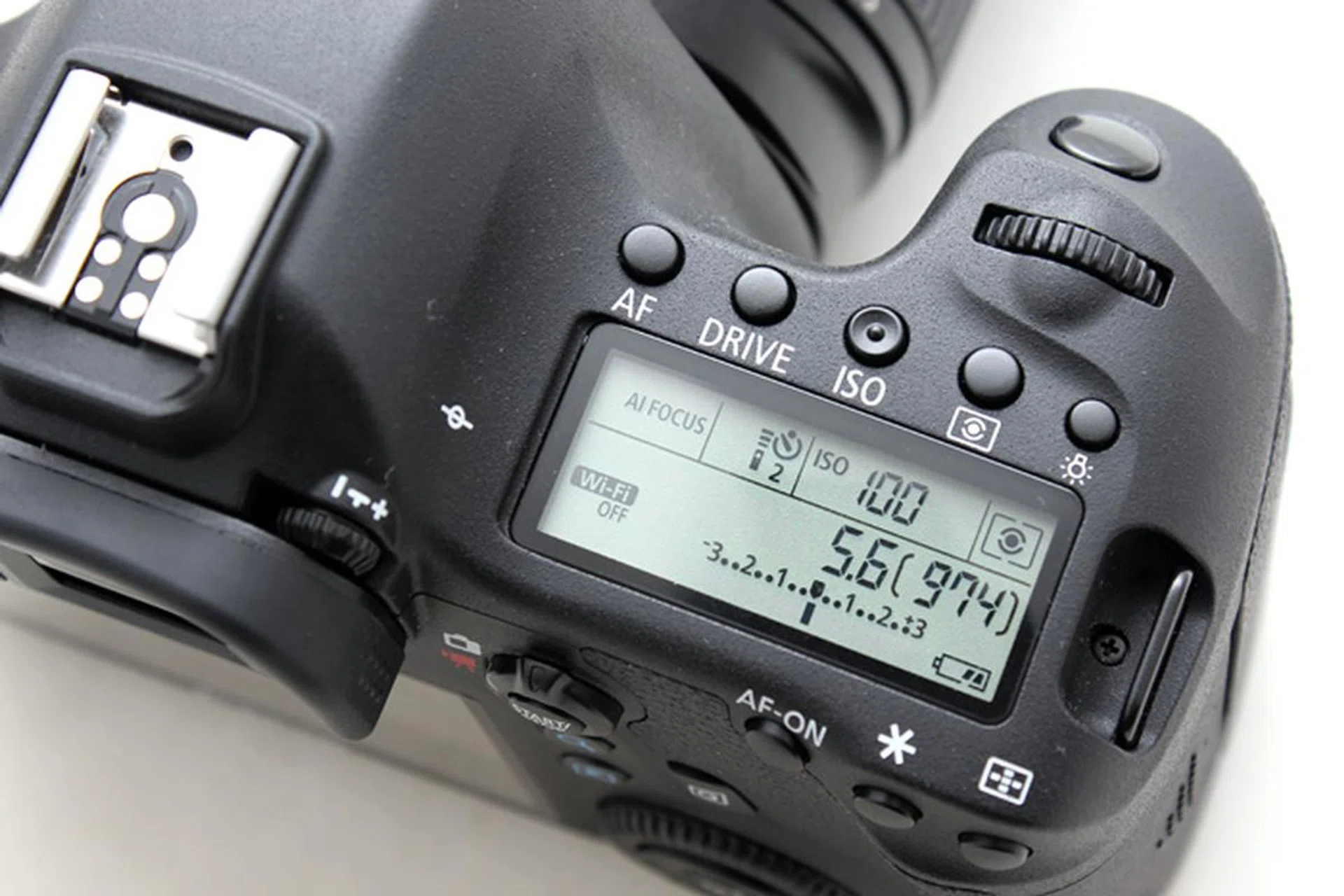
The 6D keeps the top LCD panel, which lets you see and change your camera settings quickly.
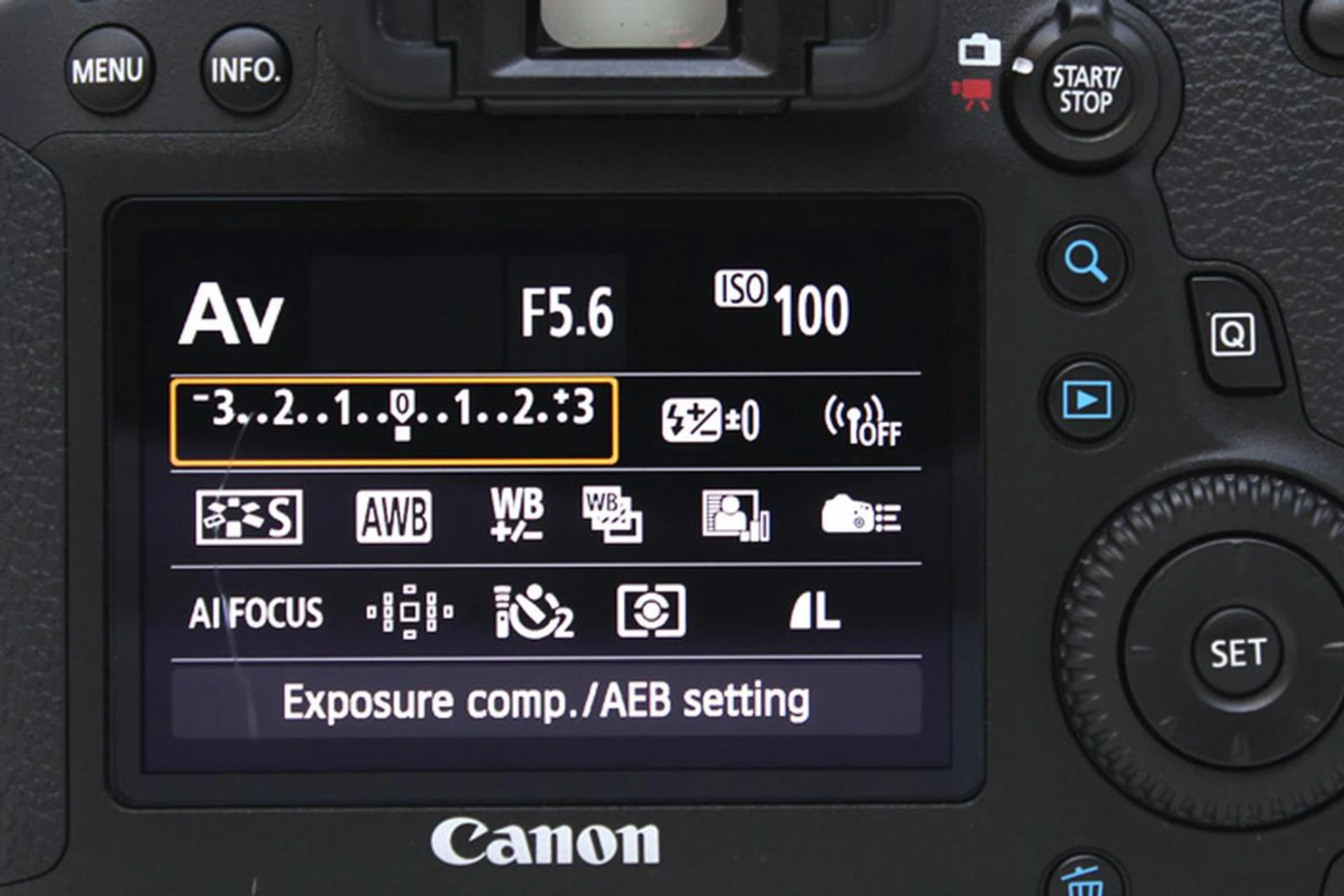
The Quick Menu also gives you a handy way to view and change essential settings. Bring it up with a simple tap of the Q button.
Getting Connected
The interesting thing about the 6D is that it's Canon's first Wi-Fi, GPS DSLR camera. With the built-in Wi-Fi feature, you can connect the 6D to another camera, a smartphone, to a printer, to Canon's Image Gateway web service and to a media player.
To connect it to a smartphone, you need to download the free EOS Remote app. Connecting is rather easy, the 6D will provide you with a password, and you connect to it as a local network from your smartphone. The app lets you take over the camera, with a real-time live view broadcast from the 6D, and you can remotely trigger the shutter with your smartphone.
You can move the focus point, change shutter speed, aperture value and ISO setting right from the app, but only if the camera is in the appropriate shooting mode. Put it to Program mode for example, and these options are locked, you can only trigger the shutter. And you can't change modes in the app.
It's quite an interesting feature but its main drawback is the lag. First, there's a lag between what the camera sees and what you see on your smartphone. Second, there's a lag between when you press the shutter release on the phone and when the camera snaps the picture.
The other thing you can do with the app is preview all the images on the camera. You can then download selected images, but they'll be transmitted over at a lower resolution of 2.5MP (1920 x 1280 pixels). With the 6D, you can snap a photo, transmit it over to your phone, apply your favorite filter using your favorite app, and upload it to your favorite social network - all without the need for a PC.
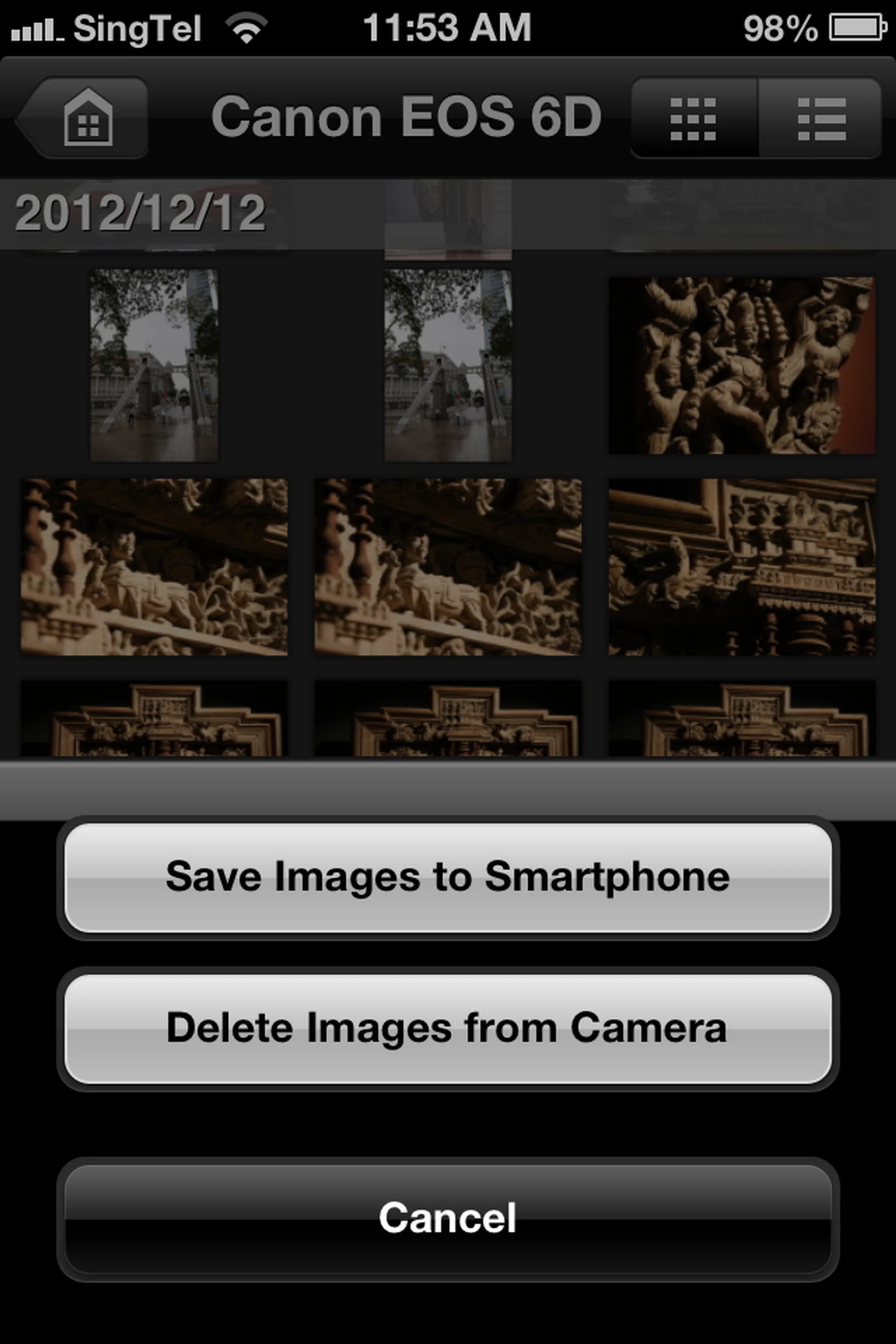
You can transfer 2.5MP versions of your images over to your smartphone using the 6D's built-in Wi-Fi and Canon's EOS app.
The built-in GPS is another interesting feature; its usefulness however will probably depend on what kind of photography you do. If you already need a GPS in your everyday shots, then perhaps the addition of a GPS unit will save you from carrying an additional GPS module. If you're bringing the 6D on holiday, you might be delighted to find your travel images geo-tagged according to where you visited.
GPS sounds like a nifty if niche feature to us. We'd be happy to have it on all the time, but beware as it eats up battery at a faster pace. As long as the GPS is enabled, it'll constantly be on and receiving signals, even when the camera is powered off. Without GPS enabled, the 6D's battery life is quite long, rated approx. 1090 shots at room temperature. With it turned on however, we were down to half power in two days, after shooting only about 110-odd images.
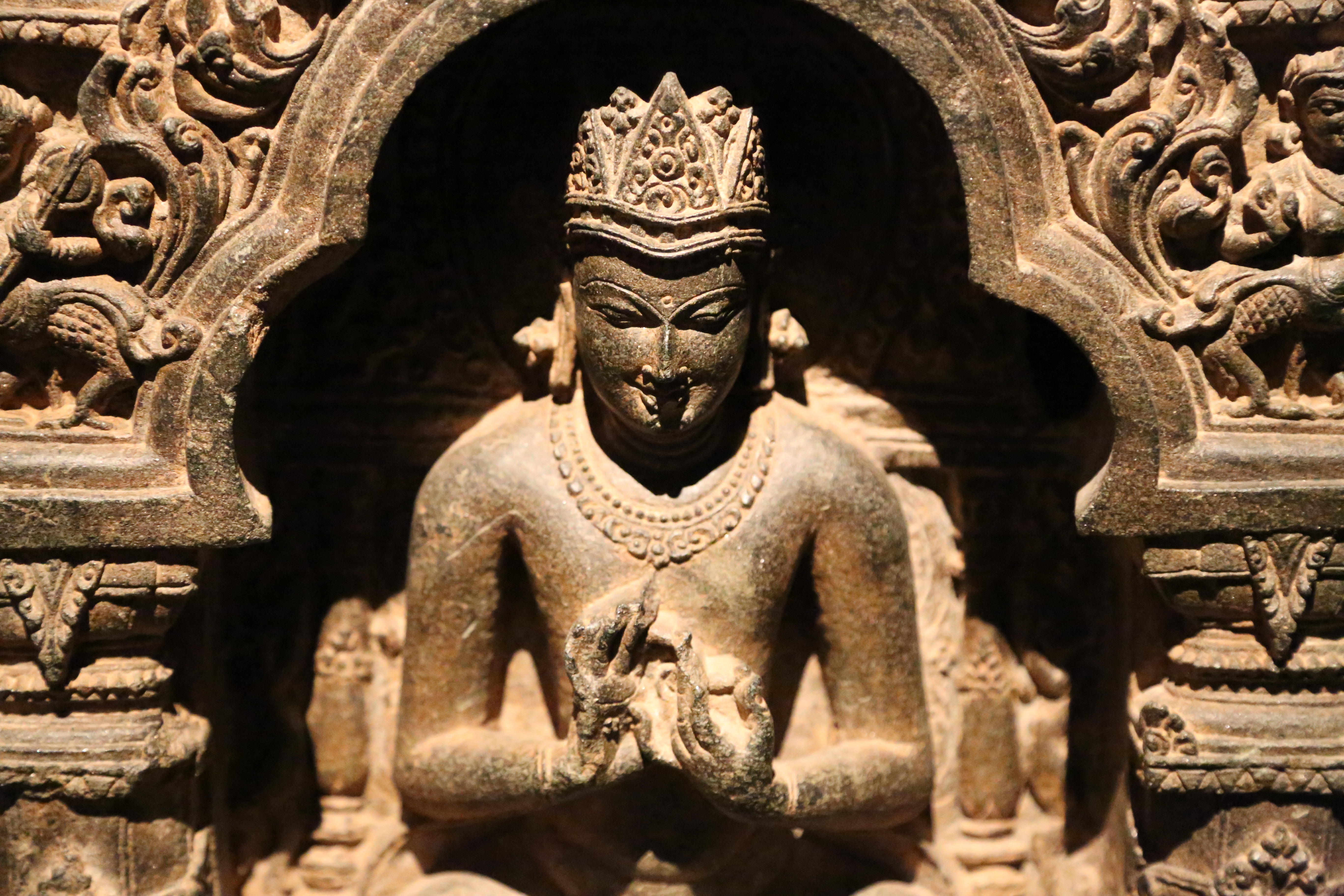
f/4 at 73mm, 1/60 sec, ISO 25,600.
Image Performance
The images are really what you'd buy the Canon 6D for. Long story short: They're outstanding. For anyone who's only shot previously with smaller sensors, full-frame images will be a revelation. Photographs are richer, with more detail, color and depth of field.
The Canon 6D captures a very high 2600 x 2400 LPH (vertical and horizontal) amount of detail on our resolution chart. In general, images are very clean and stay that way into the high ISO ranges. The first sign that noise starts to smudge details start from ISO 1600, and we'd say that images remain usable up to ISO 25,600 (the native limit) if you're willing to clean up or endure some noise (or are showing images online).
At ISO 51,200 there's too much visible noise, but the 6D handles image noise admirably - it's kept to a minimum and most of what appears is luminance noise, with little to no color noise. Except for the fact that the 6D produces a slightly smaller image at 20.2MP, noise performance looks virtually identical to the 5D Mark III's 22.3MP images.
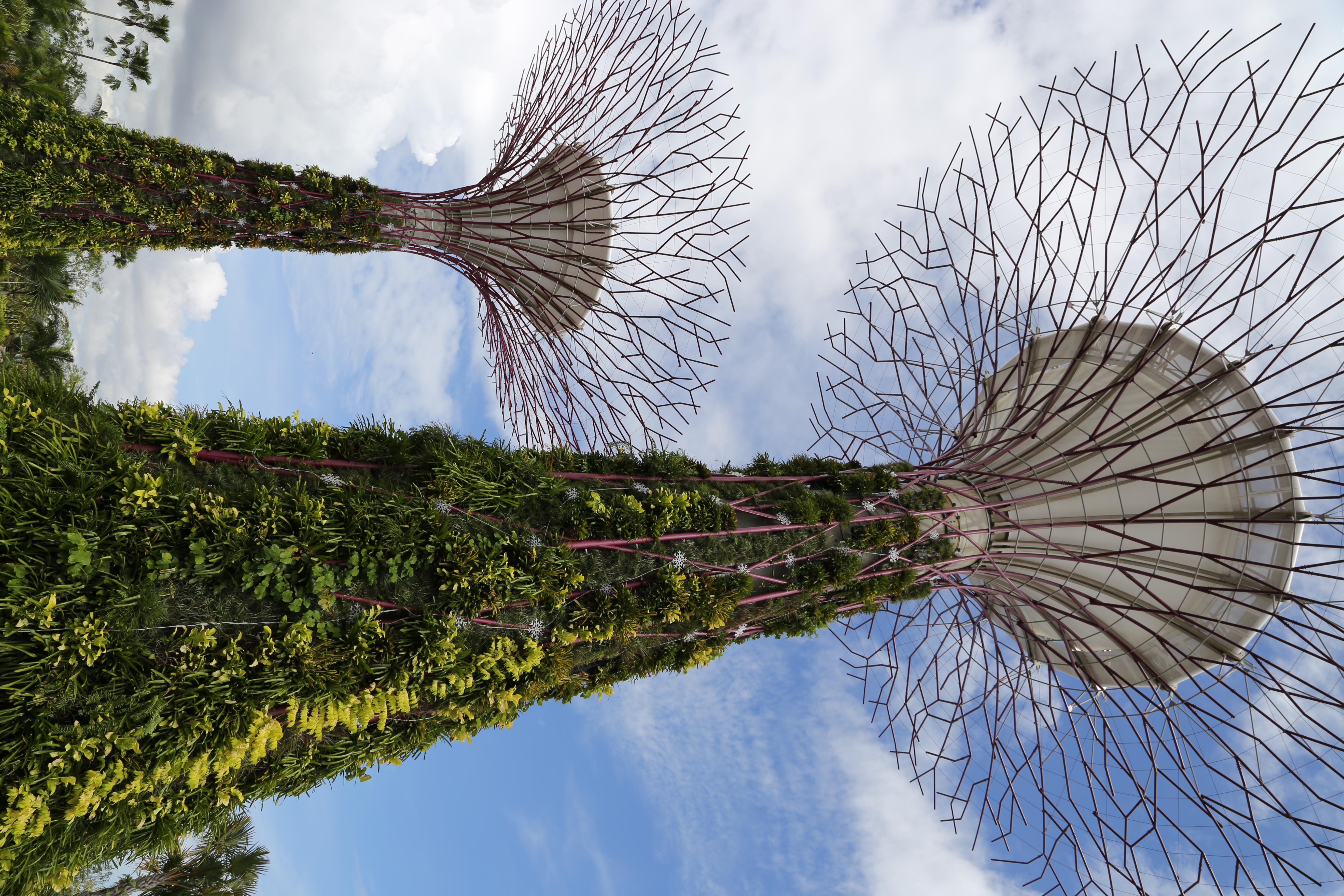
f/11 at 24mm, 1/200 sec, ISO 100.
 |  |
 |  |
 |  |
Of course, with the 5D Mark III, you're paying for more than just ISO performance. While the 5D Mark III can capture up to 6 frames per second, the 6D does a slower 4.5 fps. Respectable? Yes. Slower than the Nikon D600's 5.5 fps? Also yes. We've already covered AF performance in the previous section, but it's worth repeating again that the AF speed and accuracy is very good, even in low-light. However, you will be hindered by the small number of 11 AF points and the limited coverage available.
One minus point that might dint perfectionists is that the viewfinder only offers 97% coverage. What this means is that the viewfinder can only show you 97% of what will end up being your final photograph, so you might see unexpected elements show up in the 3% you couldn't see in the frame. Some might not miss it, but part of the appeal of full-frame cameras have been their large, luxurious viewfinders with 100% coverage, so it's nit-picking but still disappointing.
Sample Photographs
These are sample photographs shot with the Canon 6D. The photos have not been post-processed and are copyright to SPH Magazines. They are provided for your reference only and we ask that you do not reproduce them elsewhere. Click for full-resolution images.
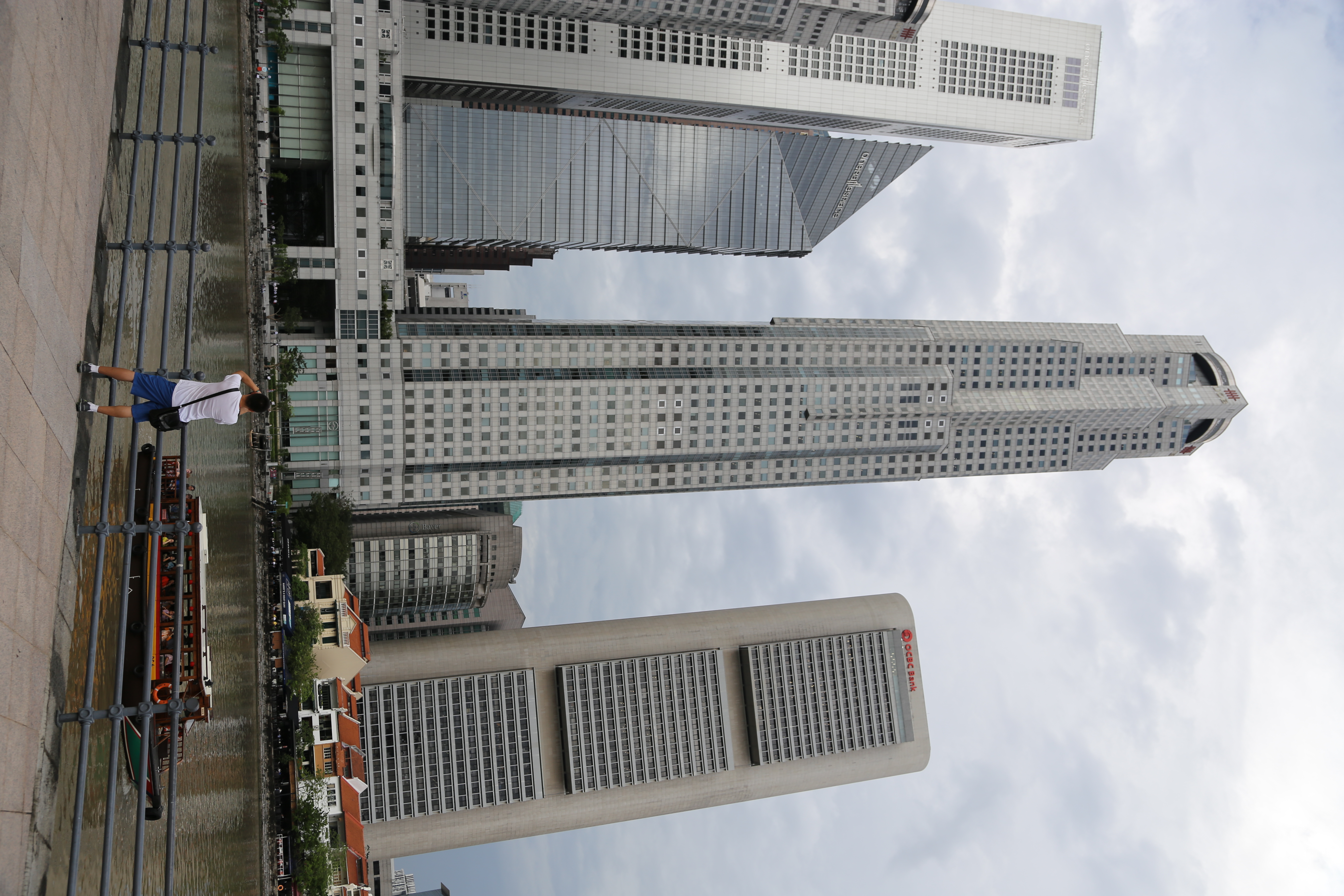
f/5.6 at 28mm, 1/400 sec, ISO 100.

f/4 at 105mm, 1/125 sec, ISO 20,000.
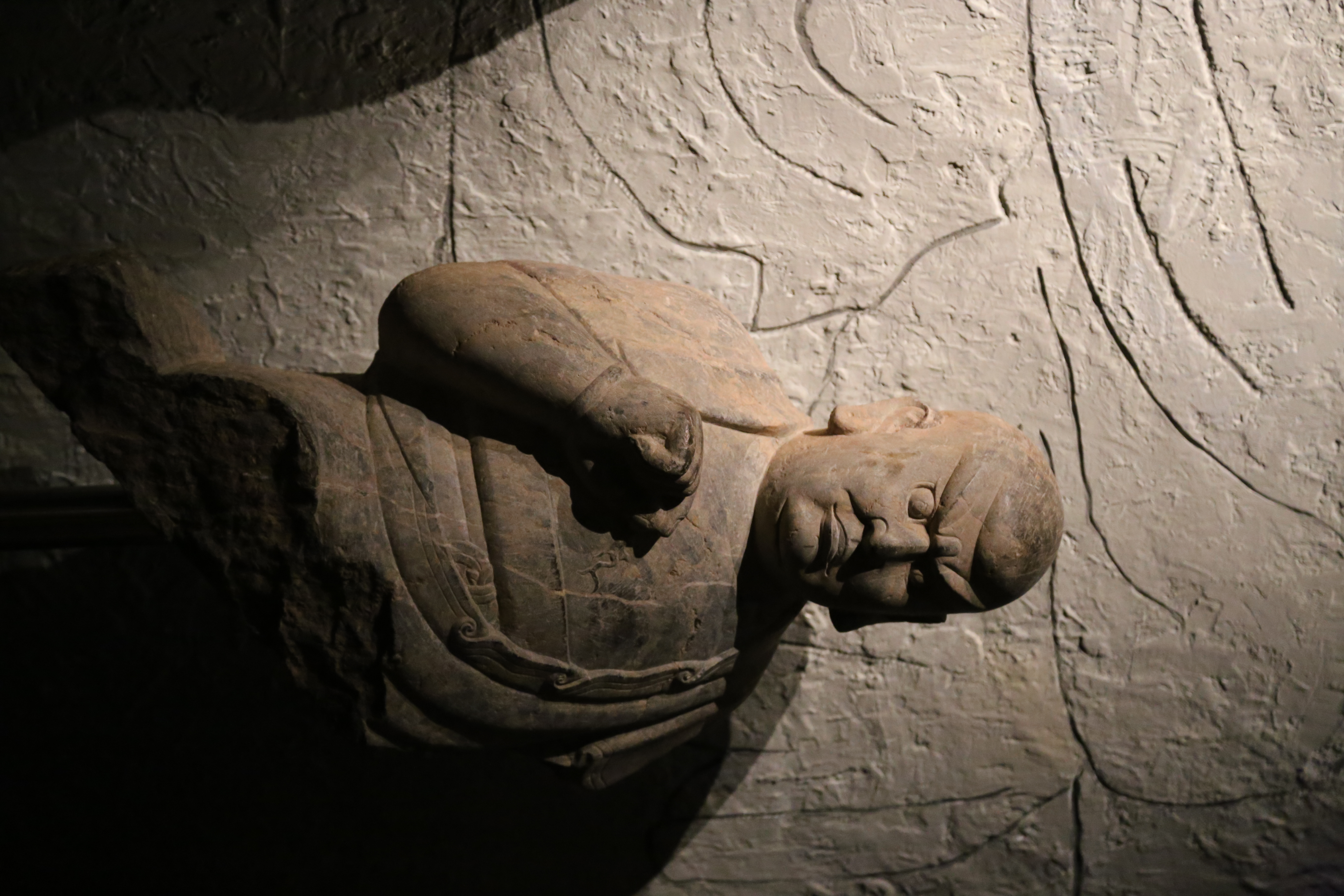
f/4 at 105mm, 1/100 sec, ISO 10,000.
f/4 at 1/40 sec, 1/40 sec, ISO 8000.
f/4 at 105mm, 1/80 sec, ISO 25,600.

f/7.1 at 105mm, 1/320 sec, ISO 100.

f/5 at 105mm, 1/200 sec, ISO 100.

f/4.5 at 45mm, 1/50 sec, ISO 100.
Conclusion
The Canon 6D feels more like a beefed-up 60D than a simplified 5D Mark III. Handling and customization is kept to a minimum, and the joystick is conspicuously absent. There are only 11 AF points with limited coverage, which is disappointing. Even though those 11 AF points are quick and accurate, even in low-light, they'll hinder your framing from time to time.
Inside, the 6D is all 5D Mark III. While not keeping the more expensive camera's high frame-rates, the 6D retains the same image quality. It shoots slightly smaller images, but we can’t imagine that anyone would miss 2 megapixels. Without that joystick however, it becomes harder to change AF points - unlike the higher-end full-frames, you can't assign the d-pad to shift AF points on the fly.
The 6D holds the honor of being the first Canon DSLR to come with built-in Wi-Fi and GPS. If it were up to us, Wi-Fi should be built into every DSLR camera released in 2012, but it looks like we'll have to settle for 2013 for changes to take effect across the board. Being able to control your camera with your smartphone is an interesting feature and opens up possibilities - it's about time that we can send photos through the air to our smartphones and then share them with the world without needing a PC in-between. Keep in mind though, that there is a variant of the 6D which comes without the Wi-Fi and GPS if you don't need these extra functions and just need raw imaging prowess at a lower price.
Canon 6D versus Nikon D600
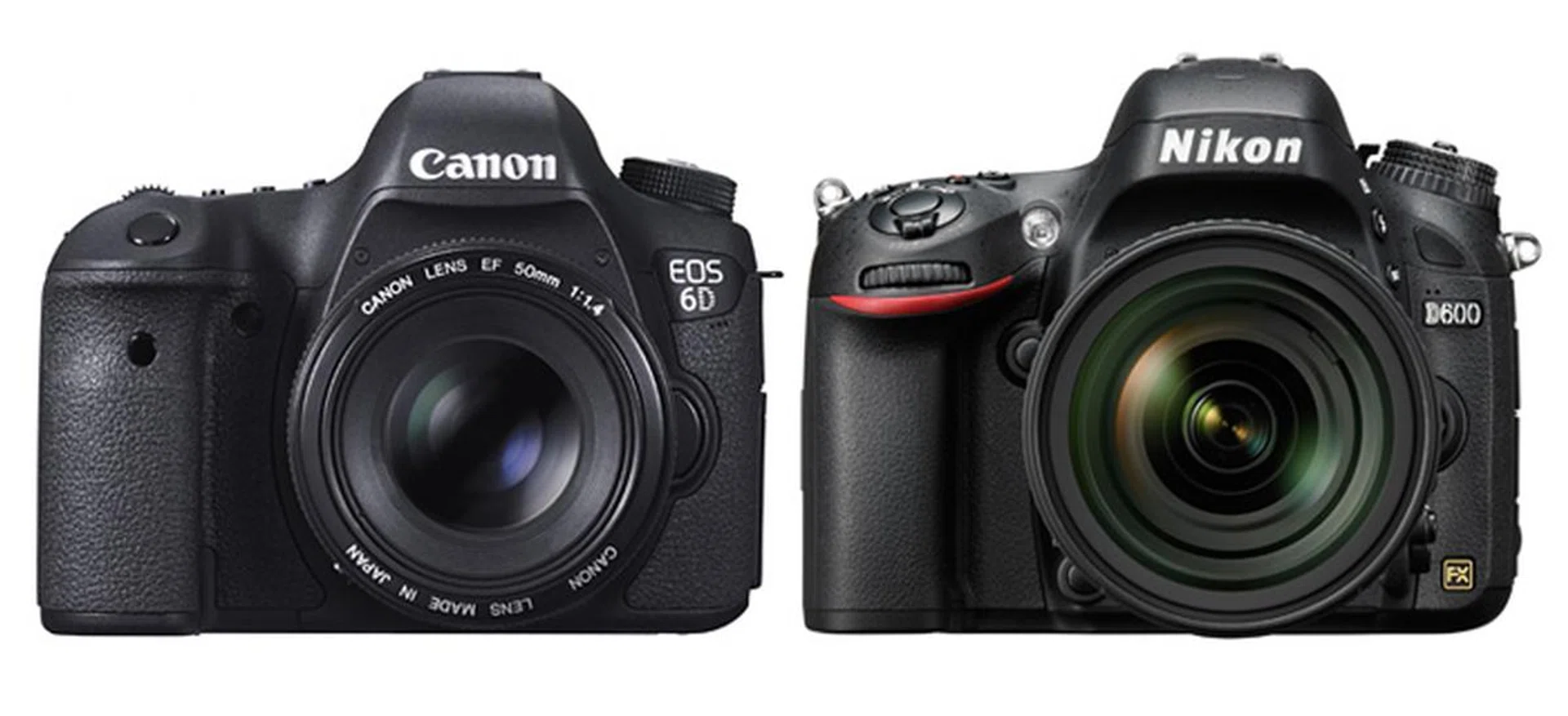
Image not to scale.
With the release of the 6D and D600, it's more likely that these will be somebody's first full-frame DSLR cameras than the Canon 5D Mark III or the Nikon D800. Unlike the Canon 1D X and the Nikon D4, it's more likely that someone will jump into Canon's or Nikon's system for the first time when buying the 6D or D600.
The first thing to accept is that both two cameras are 'compromise cameras'. They don't compromise on the full-frame sensor, but they compromise in terms of features, handling and customization when placed against their higher-end counterparts. So the question is, which trade-offs work better for you if you're thinking of getting either camera?
In terms of image quality the two cameras produce similar images. At higher ISO settings, the Nikon D600 retains more image detail but also more image noise, with more color noise than the Canon 6D. The D600 can nab you bigger images with its 24.3MP sensor compared with the 6D's 20.2MP. For flash users, the D600 has a faster sync speed of 1/250 seconds, compared to the 6D's 1/180 seconds.
In terms of video, both cameras can shoot at 1920 x 1080 pixels at 24/25/30 fps. The Canon 6D can choose from two different compression methods. IPB compression trims away repeating information in frames to reduce file sizes, but also degrades image quality. ALL-I compression captures each frame as a compressed but complete image, file sizes are about three times larger but are of higher quality. The Nikon D600 however can capture uncompressed video to an external device through HDMI.
In terms of handling, the Canon 6D feels simpler and easier to use, while the Nikon D600 feels more like a pro body with more controls. Neither the 6D nor the D600 have great AF coverage; in both cameras the AF points are all clustered near the center. But the D600 has a greater advantage here, with 39 AF points and nine cross-types, while the 6D only has 11 AF points and one cross-type. While the 6D's AF is certainly fast and responsive, the smaller number of AF points will affect your framing to a greater degree.
The Canon 6D comes with Wi-Fi and GPS, which should appeal to photographers who already know what they'd do with them, otherwise they strike us as nice to have but not essential. On the other hand, the Nikon D600 comes with double SD card slots, which sounds like a small feature but is critical for backing up important data or serving as overflow. The D600 also comes with a built-in flash which the 6D lacks, and 100% viewfinder coverage as compared to the 6D's 97%.
In essence, the Canon 6D is a full-frame camera that's easy to use, and anyone who's getting one for the first time should be able to get comfortable with it easily. That's its strength - also that you can get images off it and onto your smartphone through the air. But professionals looking for a second body might be disappointed by how simple it is.
In contrast, the Nikon D600 is a body we think professionals can pick up and use as a second camera (we're not professionals ourselves, so take this with a pinch of salt; we're basing this on our experience with the higher-end full-frame cameras and how they compare with these entry-level models). In effect, the D600 might also be more complicated for the beginner, but offers more space for them to grow into when they expand their technical knowledge.
Nikon D600 | Canon EOS 6D | |
Megapixels (Effective) | 24.3MP | 20.2MP |
ISO Sensitivity | ISO 100-6,400, expandable to 50-25,600 | ISO 100-25,600, expandable to 50-102,400 |
AF Points | 39 points (9 cross-type) | 11 points (1 cross-type) |
Focusing Brightness Range | –1-19 EV (ISO 100, 20 °C/68 °F) | EV -3-18 (at center AF point, sensitive to f/2.8 & f/5.6, room temperature, ISO 100) |
Metering Sensor | 2,016-pixel RGB sensor | 63-zone dual-layer sensor |
Max. Frame Rate (Full-res) | 5.5fps | 4.5fps |
File Formats | 12 or 14-bit lossless compressed or compressed NEF (raw), JPEG | Raw (14-bit Canon original), JPEG |
Viewfinder | Optical, 100% coverage, 0.7x magnification | Optical, 97% coverage, 0.71x magnification |
LCD Monitor | 3.2-inch, 921K-dot | 3-inch, 1,040K-dot |
Shutter Speed | 30-1/4000 sec | 30-1/4000 sec |
Shutter Release Cycles | 150,000 | 100,000 |
Built-in Flash | Yes | No |
Flash X-sync Speed | 1/200 sec | 1/180 sec |
Video Resolutions |
|
|
Video Formats | MPEG-4 AVC (H.264) | MPEG-4 AVC (H.264) |
Memory Card Slots | 2 x SD slots | 1 x SD slot |
Battery Life (CIPA) | 900 shots | 1,090 shots |
Dimensions | 141 x 113 x 82mm | 145 x 111 x 71mm |
Weight (Body) | 760g | 755g |
Price (Body) | S$3,249 | S$2899 |
Our articles may contain affiliate links. If you buy through these links, we may earn a small commission.