
ASUS P5WD2-E Premium (Intel 975X Express)
ASUS' updated flagship motherboard for the Intel platform doesn't just sport some feature additions like dual Gigabit LAN and CrossFire multi-GPU support, but the P5WD2-E Premium is one board that no gamer or overclocker should pass by. When ASUS says 'Premium', they mean it.

Introduction
Nearly a year ago, we reviewed the exceptional ASUS P5WD2 Premium motherboard that was based on Intel's then top-end chipset, the 955X Express. It delivered everything an enthusiast would ask for in a premium motherboard; high performance, solid stability, silent and efficient cooling and features up the wazoo. ASUS completed the line-up with an equally commendable member of the family, which was the mid-range 945P Express based P5LD2 Deluxe, but when Intel launched their new flagship 975X Express chipset, ASUS naturally followed suit with an update to the aforementioned P5WD2 Premium. The P5WD2-E Premium motherboard shares many similarities with its predecessor, but ASUS is taking no prisoners by making sure that it succeeds the older board in more ways than one.
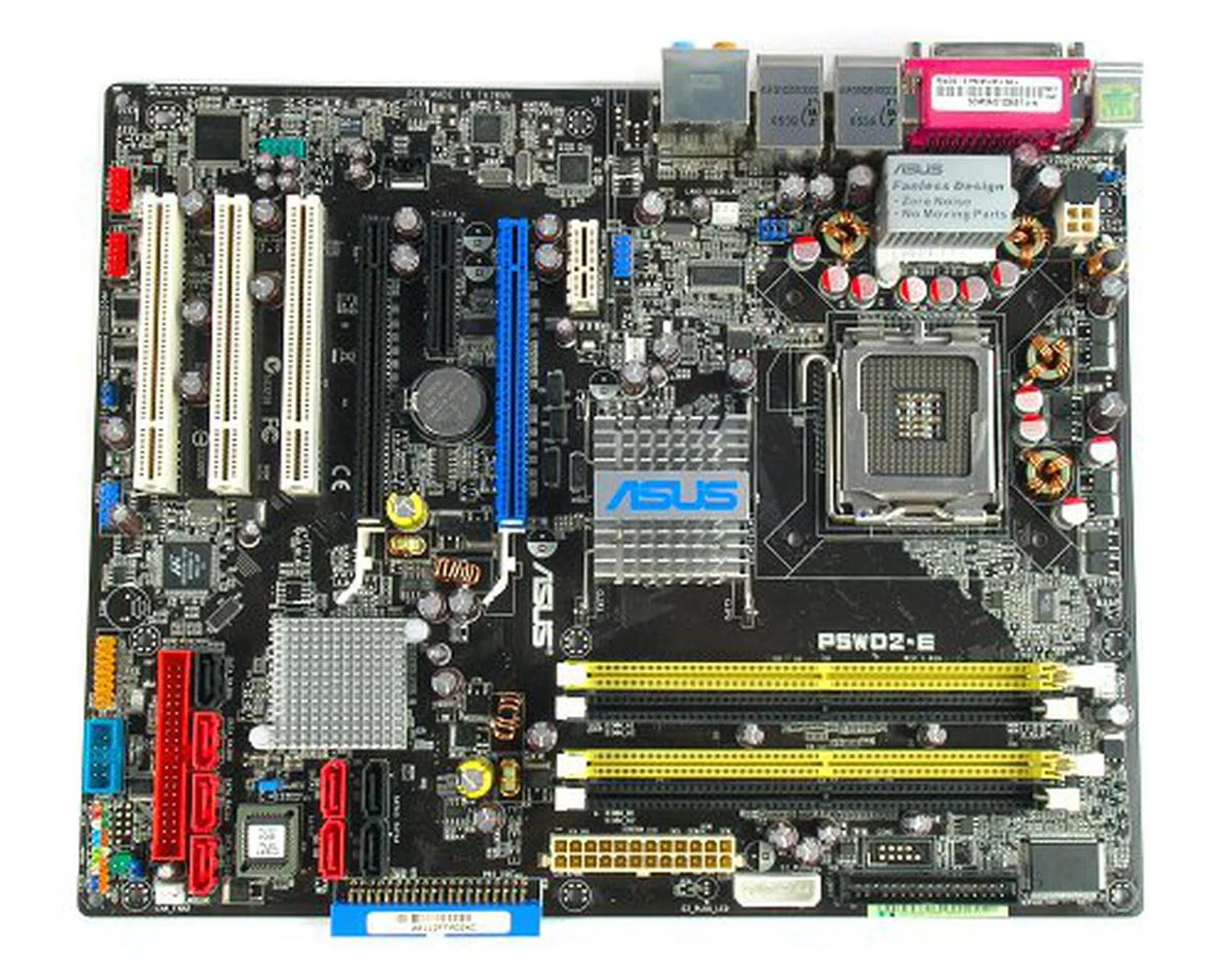
The ASUS P5WD2-E Premium motherboard.
Before we go into more details, let's have a look at the P5WD2-E Premium's bundled accessories and full technical specifications as listed below.
- 6 x SATA data cables
- 3 x SATA power converter cables (dual plugs)
- 2 x 80-conductor Ultra ATA data cables
- 1 x 40-conductor IDE data cable
- 1 x floppy drive data cable
- IEEE 1394a port bracket
- USB 2.0 (2 ports) and Game port bracket
- COM port bracket
- I/O shield
- Driver CD
- InterVideo WinDVD Platinum Suite
- User's manual
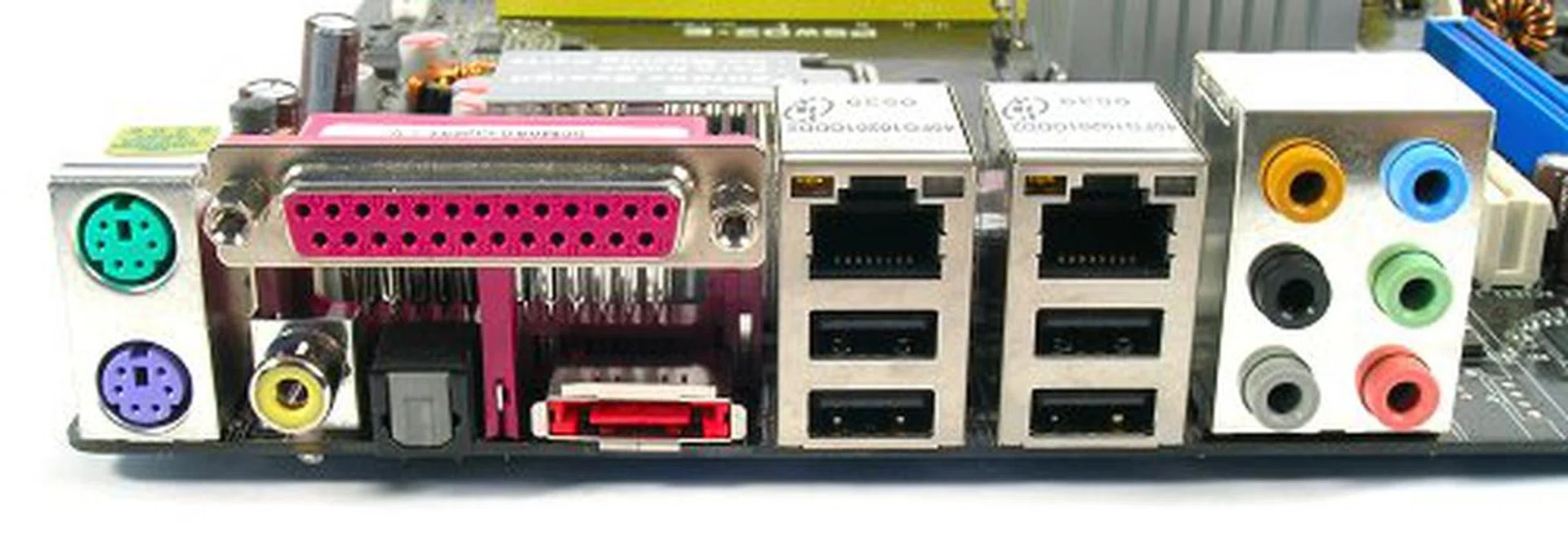
Rear panel shows a full range of connectivity including coaxial and optical S/PDIF and one eSATA port.
Features
Like the other Intel 975X Express motherboards that we've reviewed, the main focus of the ASUS P5WD2-E Premium is actually in its official ATI CrossFire support with two PCIe x16 slots. The older 955X Express based P5WD2 Premium also came with two PCIe x16 slots, but it did not support any multi-GPU technology, merely capable of using two graphics cards for quad output display. The P5WD2-E Premium also features enhanced PCI Express support with better expansion slot capabilities. While still totting three PCI and two PCIe x16 slots, ASUS has included one standard PCIe x1 and one open PCIe slot that supports at maximum PCIe x2 speeds.
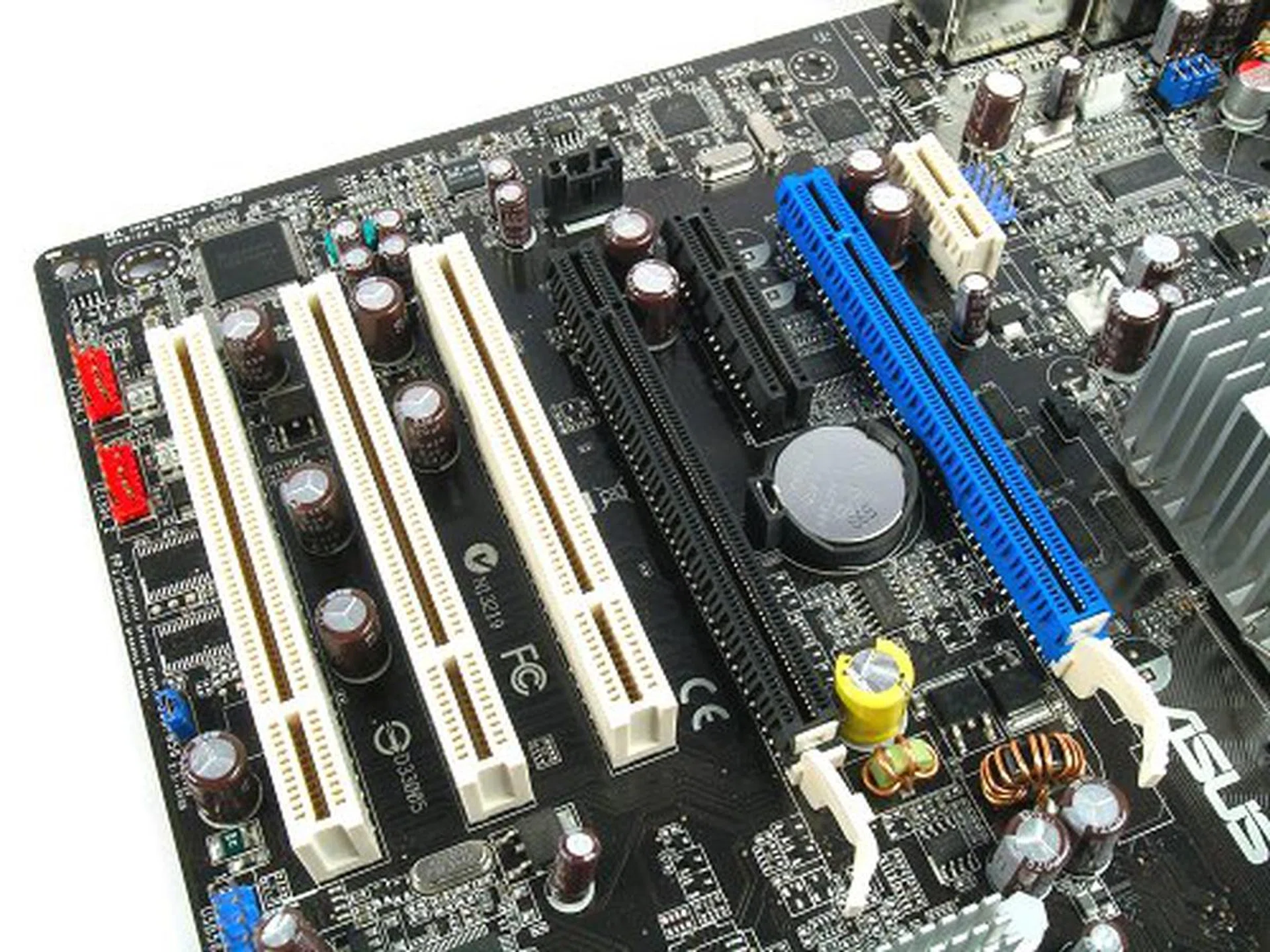
Dual PCIe x16 for CrossFire support. ASUS provides up to three PCI slots, though the PCIe expansion slots could possibly be blocked.
There has also been a subtle upgrade to the motherboard's storage features from the P5WD2 Premium. On the older board, ASUS used separate ITE IT8211F and Silicon Image SiI3132 controllers to provide two extra Ultra ATA and SATA 3.0Gbps ports. The P5WD2-E Premium however, sports a Marvell 88SE6141 integrated controller that provides the board with one extra Ultra ATA-133 port and four additional SATA 3.0Gbps ports with one shared eSATA connector.
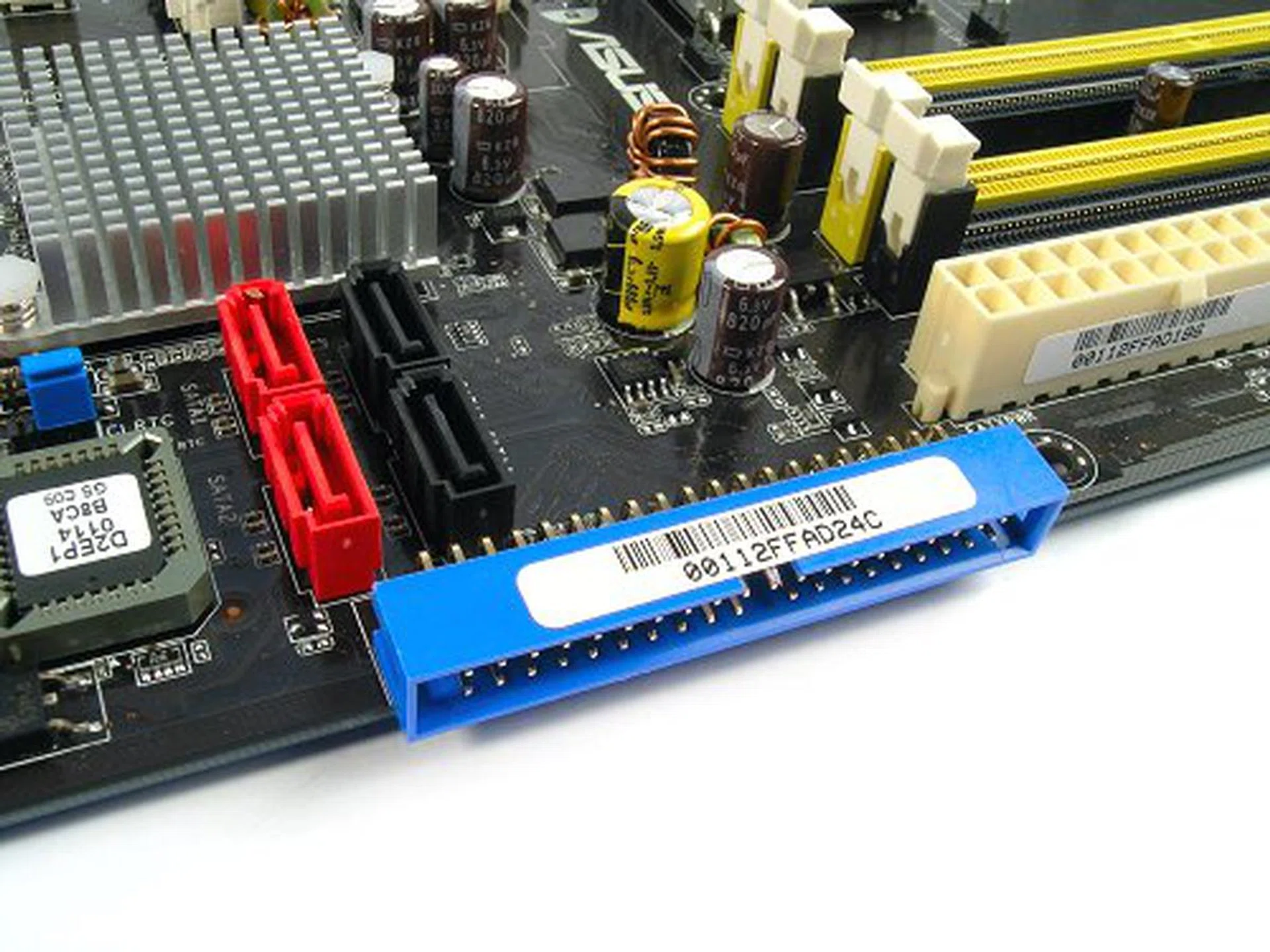
Native storage controller capabilities on the P5WD2-E Premium.
The P5WD2-E Premium packs in dual Gigabit Ethernet ports though double Marvel PCI Express 88E8053 controllers while still retaining its other features including a Realtek ALC882M 8-channel HD Audio controller with Dolby Master Studio certification and Texas Instrument's TSB43AB22A 2-port FireWire-400 support. The only feature that seems lacking on the P5WD2-E Premium over its predecessor is the WiFi-TV bundle. With emphasis on graphics performance and CrossFire, the board seems more skewed towards enthusiast performance more than lifestyle computing, which may have been a reason why the WiFi-TV module isn't offered for this board. However, as an optional PCI expansion card, you could always get it on your own as an optional item.
Like most of ASUS' high-end LGA775 motherboards, the P5WD2-E Premium comes with DDR2-800 memory support internally by default, even if the Intel 975X Express chipset doesn't officially have native DDR2-800 compatibility. With AMD's recent launch of Socket AM2 and the subsequent flurry of DDR2-800 memory modules released, upgrading memory on the P5WD2-E Premium would be a cinch. The BIOS has a specific divider implemented to support DDR2-800 memory, so you won't need to overclock the rest of the system to enjoy that. Though it's not officially supported, the chances of successfully running memory at those speeds are good, as the chipset has demonstrated high tolerance in our overclocking tests.
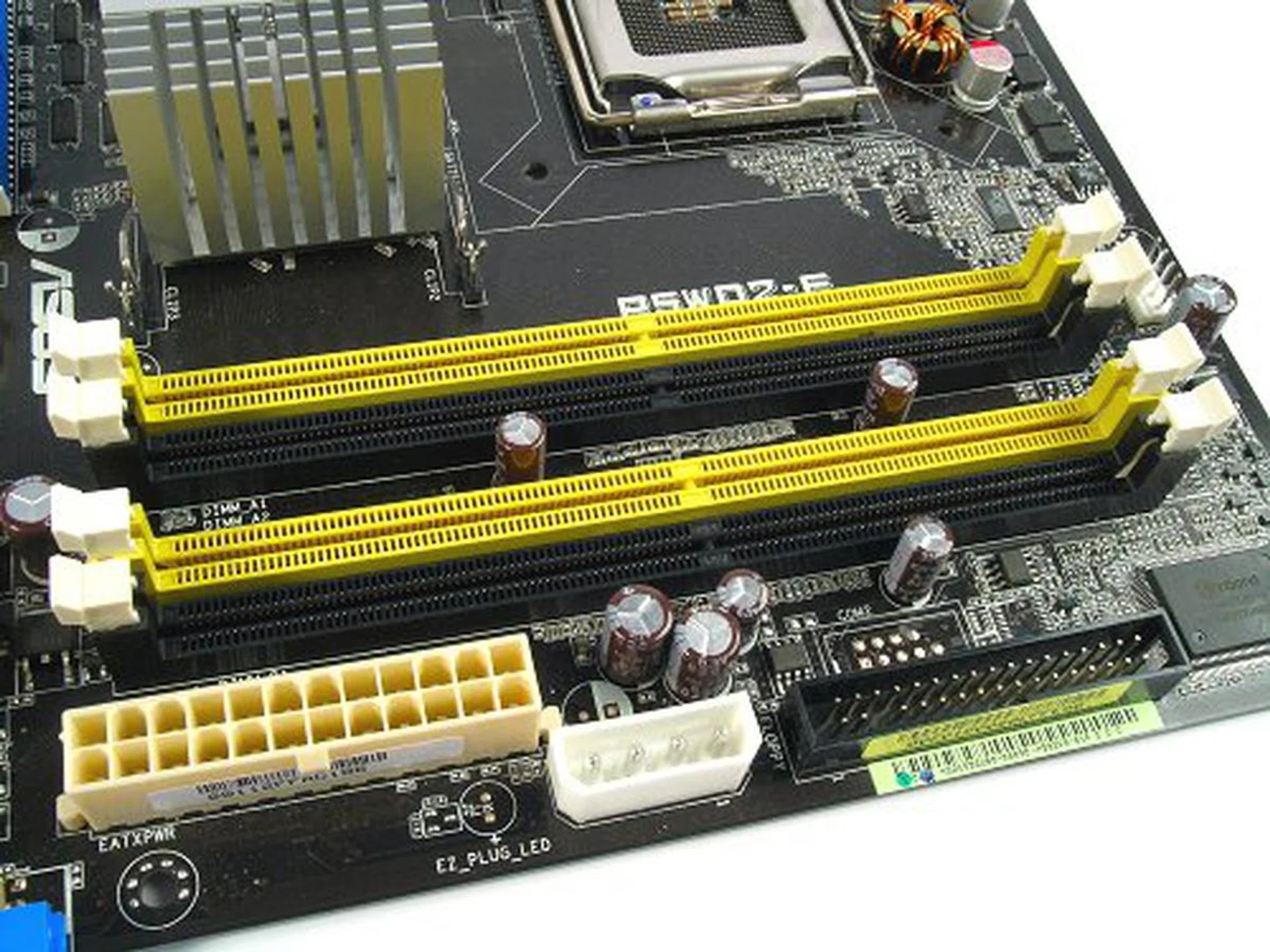
ASUS provides many enhancements to the P5WD2-E Premium, one of which is unofficial support for high bandwidth DDR2-800 memory.
Layout
The similarities of the P5WD2 Premium and P5WD2-E Premium are very apparent when looking at the board design from its general feel down to the use of heatsinks and capacitor placement. ASUS has a comfortable and spacious design on the upper portion of the board where the CPU socket and DIMM slots are located, but because of the increased storage capacity of the P5WD2-E Premium, you'll notice that the board is pretty tight towards the bottom. The storage layout is the same, but instead of third IDE connector, there is now a row of four SATA connectors. However, if you have that many hard drives to work with, you would probably have mastered cable management anyway.

To the left, the older P5WD2 Premium and to the right, we have the P5WD2-E Premium.
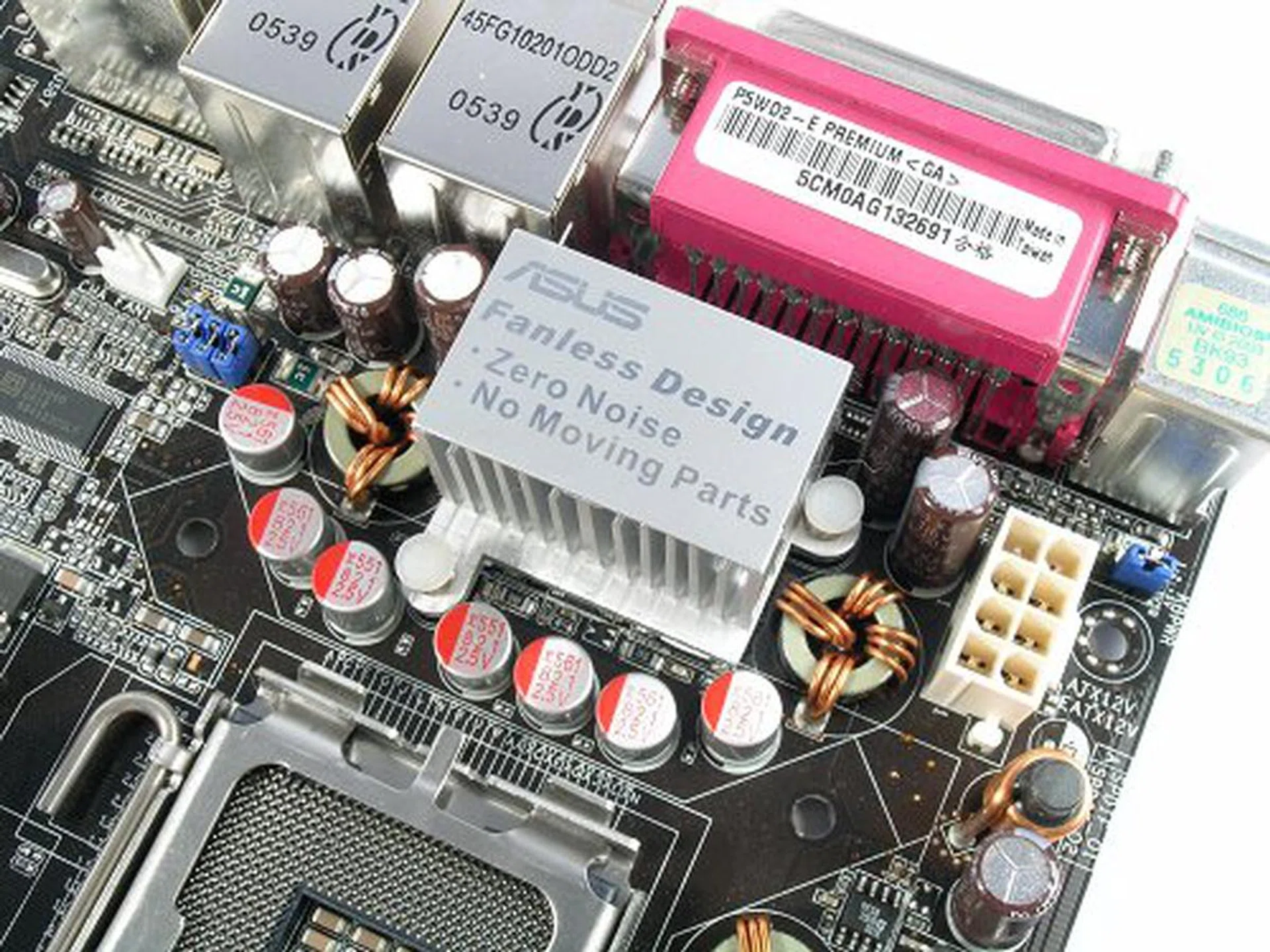
As usual, ASUS is committed to silent cooling for their motherboards and the P5WD2-E Premium is no different.
The extra IDE and four SATA ports you see here are secondary storage support provided by the onboard Marvell controller. Do take note of the single black SATA port. This port shares operation with the rear panel eSATA port and only one can be active at a time.
Overclocking
The following frequency and voltage settings are available to the ASUS P5WD2-E Premium:-
- FSB Settings: 100MHz to 450MHz (400MHz to 1800MHz QDR Mode)
- DDR Settings: DDR2-400, DDR2-533, DDR2-600, DDR2-667, DDR2-800
- PCIe Frequency: 90MHz to 150MHz
- CPU Voltage Settings: 1.200V to 1.700V (in 0.0115V steps)
- Memory Voltage Settings: 1.80V to 2.40V (in 0.05V steps)
- MCH Voltage Settings: 1.50V to 1.65V (in 0.05V steps)
- ICH Voltage Settings: 1.05V, 1.20V
- FSB Termination Voltage: 1.20V to 1.50V (in 0.1V steps)
- Multiplier Selection: Yes (unlocked CPUs only)
The P5WD2-E Premium comes with a decent set of overclocking controls though its range is slightly more constrained. In our overclocking tests for the board, we managed to hit a 320MHz FSB, bringing the board's quad pumped bus to 1280MHz, well over its default clock of 1066MHz for the Pentium Extreme Edition. The board would actually even POST at 330MHz, hinting of greater potential, though it became very unstable in Windows.
This the highest achieved overclock so far among the Intel 975X Express boards we've tested and dethrones the previous overclocking champion, Gigabyte's GA-G1975X.
Test Setup
For this review, we will benchmark the ASUS P5WD2-E Premium with the other two Intel 975X Express motherboards we've previously reviewed - MSI's 975X Platinum and the Gigabyte GA-G1975X. However, since the P5WD2-E Premium is the successor to the Intel 955X Express based P5WD2 Premium, we will also use the board as a reference performance gauge in our tests. The following test bed setup configuration will be used for all the motherboards that will be benchmarked:-
- Intel Pentium 4 Extreme Edition processor 3.46GHz (1066MHz FSB)
- 2 x 512MB Kingston DDR2-667 @ 10-4-4 CAS 4.0
- Seagate Barracuda 7200.7 80GB SATA hard disk drive (one single NTFS partition)
- Gigabyte GeForce 6600 GT 128MB - with NVIDIA ForceWare 71.84
- Intel INF 7.2.2.1006 and ICH7R AHCI 5.0.0.1032 driver set
- Intel INF 7.0.0.1019 and ICH7R AHCI 5.0.0.1032 driver set (ASUS P5WD2 Premium only)
- Microsoft Windows XP Professional with Service Pack 1 (and DirectX 9.0c)
Additional Notes
- The P5WD2 Premium's (i955X) final memory frequencies were calculated through dividers of the motherboard FSB, thus when running a Pentium 4 Extreme Edition with a 266MHz FSB (1066MHz PSB), the correct dividers for DDR2-667 should have been 4:5. However, we checked that the P5WD2 Premium was running at a 3:4 divider, resulting in a 355MHz memory speed (roughly 710MHz in DDR mode). Users will have to note that this gave the P5WD2 Premium an advantage in benchmark results. ASUS Hyper Path 3 was also disabled during benchmarks so as not to inflate the results further.
- As mentioned in our previous review, the Gigabyte GA-G1975X comes pre-overclocked to 274MHz FSB. Since Gigabyte has confirmed that the board will in fact ship with this clock speeds, we will perform our benchmarks based on it. Of course, we also scaled down the FSB to the regular 266MHz in order to gauge the actual performance of the board if it had a standard FSB timing.
Benchmarks
The following benchmark applications are used in this review to test the performance of the 975X Platinum:-
- BAPco SYSmark 2004
- Futuremark PCMark04
- SPECviewperf 8.01
- Futuremark 3DMark03
- AquaMark3
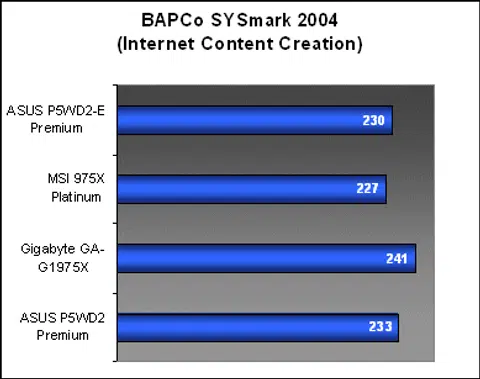
Results - BAPco SYSmark 2004
As seen in these graphs, the P5WD2-E Premium overall performed on par with the MSI 975X Platinum. However, the older P5WD2 Premium with its higher memory clock and the overclocked Gigabyte GA-G1975X both were able to post better results in all workloads.

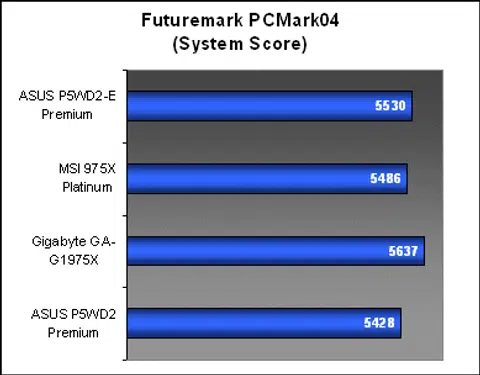
Results - Futuremark PCMark04
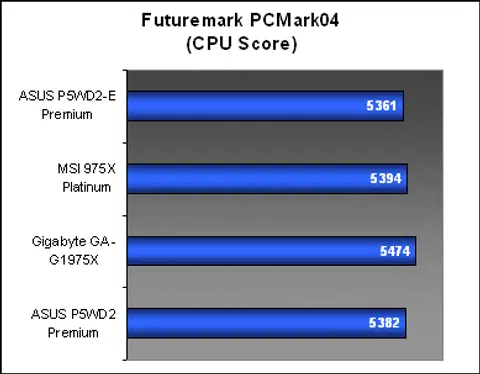
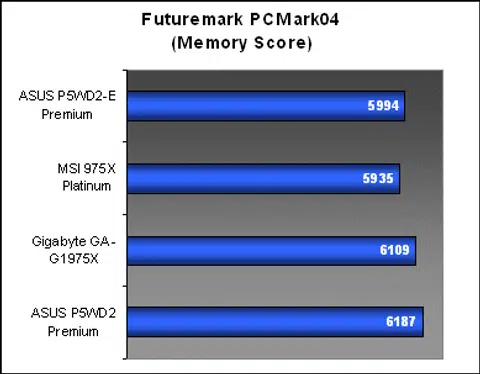
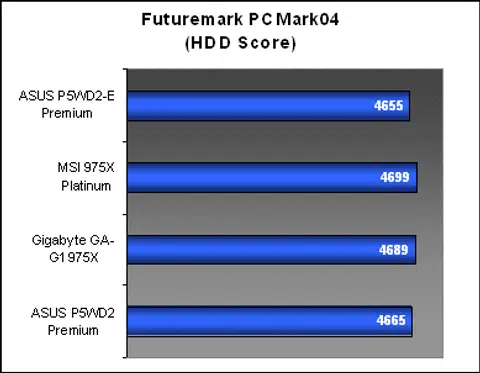
PCMark04 results showed a similar performance trend like SYSmark with the P5WD2-E Premium scoring within the range of the MSI 975X Platinum. The board actually showed a better System and Memory score than the MSI 975X, though the two overclocked boards still hold the lead.
Results - SPECviewperf 8.01
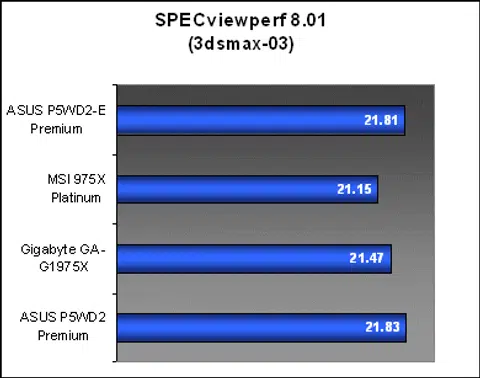
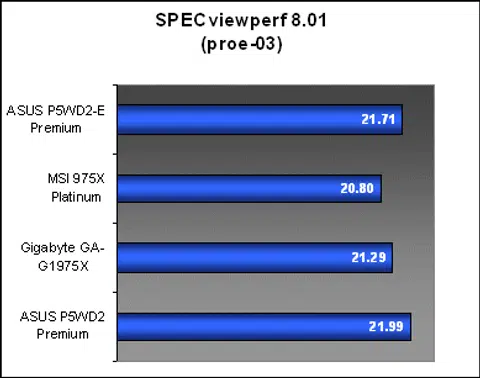
Although the Gigabyte GA-G1975X had an overclocked FSB, both the ASUS motherboards posted higher SPECviewperf results. Since this is an OpenGL benchmark, ASUS' default PEG Link optimizations helped the two boards gain a higher score.
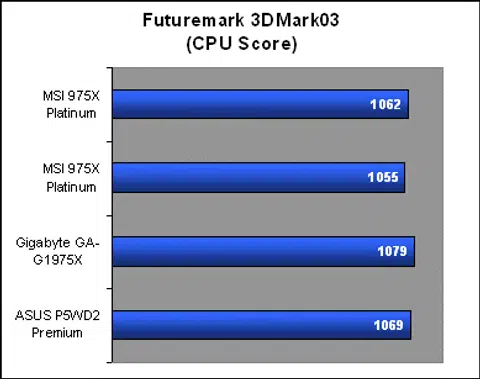
Results - Futuremark 3DMark03
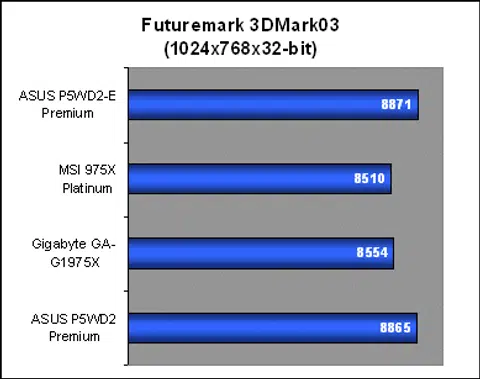
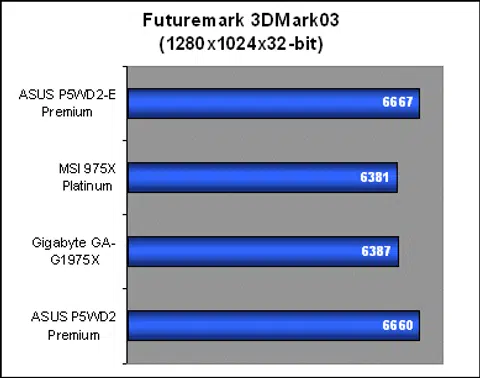
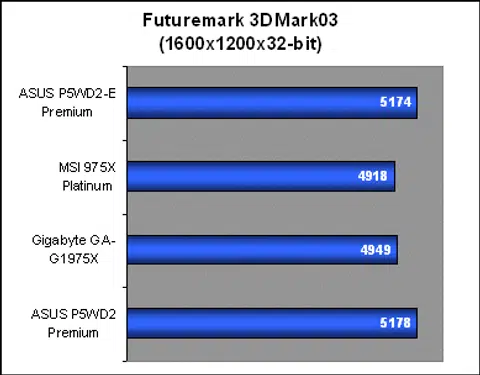
3DMark03 results were exactly the same as SPECviewperf. As a graphically dependant benchmark, the PEG Link enhanced ASUS boards both share the lead. However, when you look at the CPU subsystem scores, the Gigabyte GA-G1975X's overclocked FSB gave it the lead followed by the P5WD2 Premium.
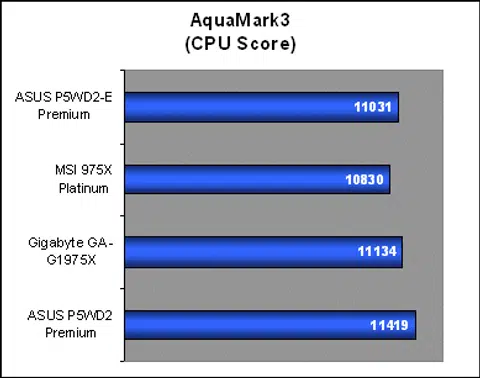
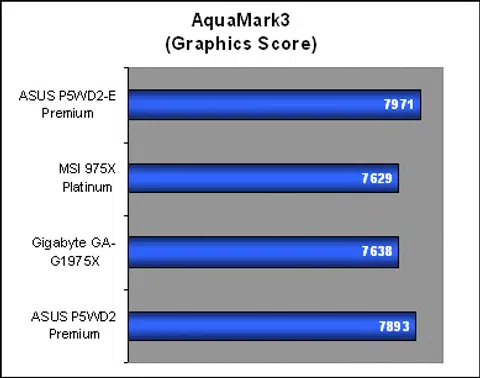
Results - AquaMark3
AquaMark3 is another gaming benchmark that showed the two ASUS boards taking the lead due to ASUS' default PEG Link optimizations. In terms of system performance though, the overclocked boards take the lead again though the P5WD2-E Premium consistently scored slightly better than the MSI 975X Platinum.
Conclusion
The P5WD2-E Premium (i975X Express) succeeds the P5WD2 Premium (i955X Express) in all ways with a newer chipset, multi-GPU CrossFire support, updated storage and networking features as well as packing more expansion slots. With CrossFire as its major selling point, the P5WD2-E Premium has turned from a premium lifestyle motherboard to appeal to the more gamer-centric crowd, which seems to have prompted ASUS from removing the Wi-Fi TV bundle that was last made available to the P5WD2 Premium.
Our focus then falls on the performance features of the P5WD2-E Premium. Now this portion might get slightly confusing, so we'll lay out the basics first. What we have on hand are different boards with their own specific optimizations, making them excel in one area or another. The Gigabite GA-G1975X comes with a factory overclock to the FSB and the ASUS P5WD2 Premium has a memory divider issue unintentionally causing our board to run at DDR2-710 instead of the reference DDR2-667. Then we have the ASUS P5WD2-E Premium that comes with PCI Express optimizations. The MSI 975X Platinum is actually the most 'normal' motherboard used in this review and should be considered as the reference for a 'no frills' setup.
From what we've seen of the P5WD2-E Premium, the board performs mostly on par with the MSI 975X Platinum, though it did prove to have a slightly more optimized memory subsystem, generally edging out the MSI board in most benchmarks. The older overclocked P5WD2 Premium and Gigabyte GA-G1975X were the constant leaders in desktop productivity benchmarks, though the P5WD2-E Premium managed to excel in all graphical and gaming benchmarks due to ASUS' PEG Link technology. Since PEG Link cannot be disabled, all users will automatically receive this 'free' performance boost right out of the box.
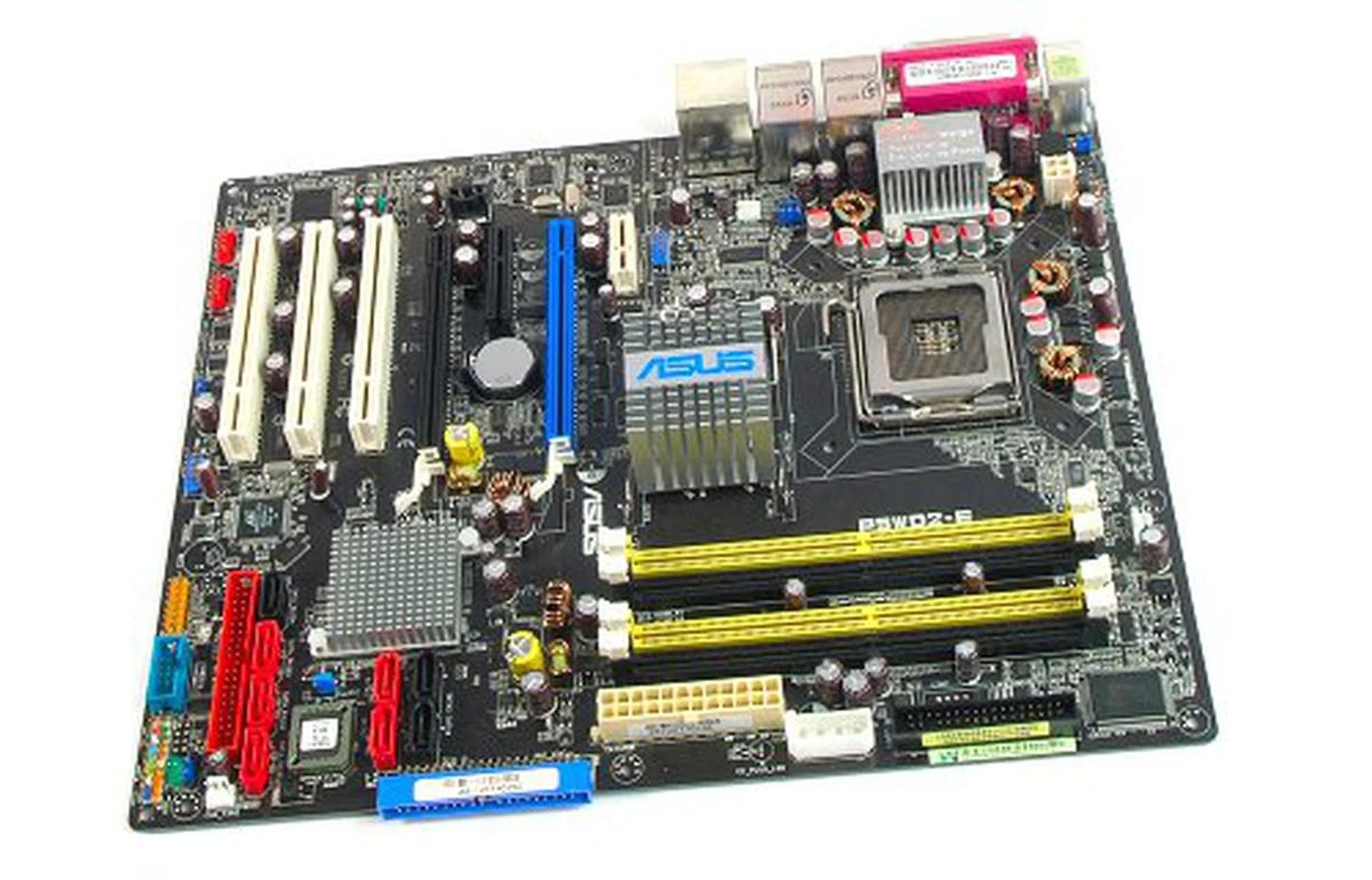
The P5WD2-E Premium is designed for those who are willing to invest in the best.
In terms of actual performance, the elaborate Gigabyte GA-G1975X with its Turbojet technology will surely draw in the crowd, but the higher overclocking capabilities of the P5WD2-E Premium makes up for its stock performance deficit in the hands of an enthusiast. Now here is the kicker, the ASUS P5WD2-E Premium will set you back a cool US$220, but in a rare turn of events, it is not the most expensive Intel 975X Express motherboard we've come across. The Gigabyte GA-G1975X retails for US$230.
Our verdict?
The ASUS P5WD2-E Premium is a solid motherboard with a well matured and optimized BIOS for enthusiasts to run wild with and if you're intolerant of noise, ASUS' fully passive cooling technologies should make the board your number one choice. We were impressed with the P5WD2 Premium before, but make no mistake, the P5WD2-E Premium is the definitive enthusiast LGA775 motherboard from ASUS.
Our articles may contain affiliate links. If you buy through these links, we may earn a small commission.