
AMD Athlon 64 FX-60
AMD welcomed the new year with a spanking new AMD Athlon 64 FX-60 processor. Based on the Toledo core, it's a dual-core processor clocked at 2.6GHz. Find out how much faster is the new FX-60 as compared to the FX-57 and the X2 4800+.

AMD Blasts Into 2006 with FX-60
As if having the fastest desktop processor on earth wasn't enough, AMD blasts into the new year with yet another processor in the FX series. Taking over from the FX-57, AMD recently launched the FX-60 to take the position as the highest performing desktop processor there is today.
It's not hard to see AMD's success in the processor business and much of it can be seen from their recently released financial results. In 2005 alone, AMD achieved record sales of US$3.94 billion, making a 48 percent increase from 2004 (excluding results from the Memory Products Group). In the fourth quarter of 2005, AMD recorded sales of US$1.35 billion, achieving a whopping increase of 78 percent as compared to the fourth quarter of 2004. The numbers alone can tell you how much AMD has succeeded to capture the desktop processor market and how their technologies have made it possible for AMD to keep the pressure on their rival, Intel.
Now, if you've been following AMD's processor line-up, the FX-57 is based on AMD's single core technology and it's by far the highest clocked single core Socket-939 processor there is today. We don't see the new FX-60 as a replacement of their single core series since it's now based on the dual-core part. Thus, we think of the FX-60 as a complement of their current FX series since AMD has bumped up its clock speed to make it the highest performing processor in their desktop line-up. AMD gave it the FX-60 nomenclature to label it as a more superior product than the FX-57 and obviously, two cores are better than one. However, as you'll see in other tests, the FX-57 did manage to hold its ground in certain tests since the clock speed of the single core processor is still significantly higher than the dual-core part. We don't think the FX-60 will make a complete replacement as far as clockspeed is concerned. Still, you can tell that AMD will make the transition of its FX series into dual-core products from this point forth.
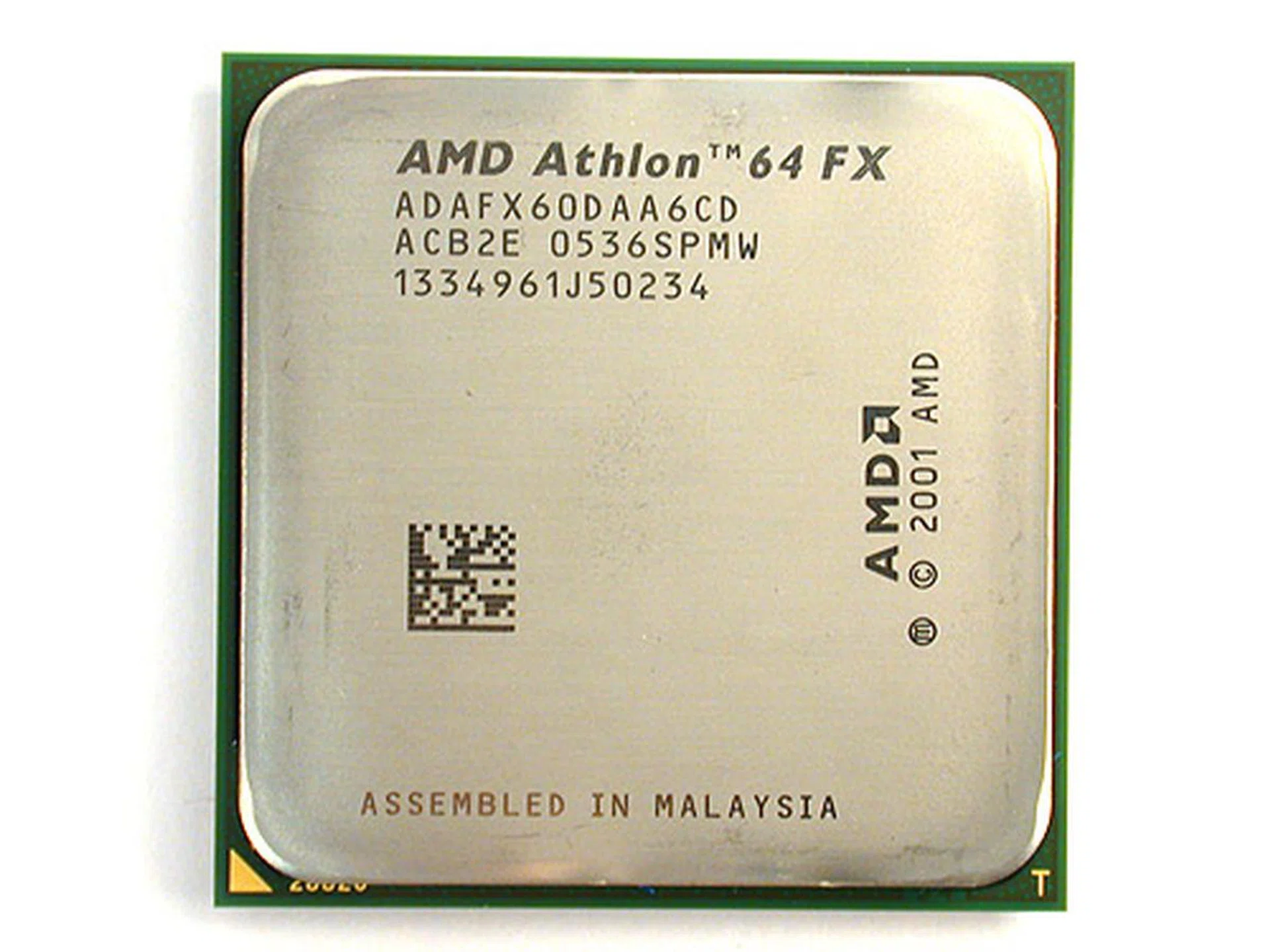
AMD Athlon 64 FX-60 processor.
To give you a better idea on the current processor specifications of AMD's processors, let's look at the updated technical specifications below. We added Intel's high-end processors in the table for comparison as well.
Processor Name | AMD Athlon 64 | AMD Athlon 64 | AMD Athlon 64 X2 | Pentium Extreme Edition | Pentium Extreme Edition |
Processor Number | FX-60 | FX-57 | 4800+ | - | 840 |
Processor Frequency | 2.6GHz | 2.8GHz | 2.4GHz | 3.73GHz | 3.2GHz |
No. of Cores | 2 | 1 | 2 | 1 | 2 |
Hyper-Threading Technology | - | - | - | Yes | Yes |
No. of Logical Processors | 2 | 1 | 2 | 2 | 4 |
Front Side Bus (MHz) | - | - | - | 1066 | 800 |
HyperTransport Bus | 1GHz (2000MT/s) | 1GHz (2000MT/s) | 1GHz (2000MT/s) | - | - |
L1 Cache (data + instruction) | (64KB + 64KB) x 2 | 64KB + 64KB | (64KB + 64KB) x 2 | 16KB + 12KB | (16KB + 12KB) x 2 |
L2 Cache | 1MB x 2 | 1MB | 1MB x 2 | 2MB | 1MB x 2 |
L3 Cache | - | - | - | - | - |
VID (V) | 1.35 - 1.40 | 1.35 - 1.40 | 1.35 - 1.40 | 1.25 - 1.40 | 1.20 -1.40 |
Icc (max) (A) | 80 | 74.9 | 80 | 119 | 125 |
TDP (W) | 110 | 104 | 110 | 115 | 130 |
Execute Disable Bit | Yes | Yes | Yes | Yes | Yes |
Intel EM64T / AMD64 | Yes | Yes | Yes | Yes | Yes |
Enhanced Intel SpeedStep Technology (EIST) / AMD Cool 'n' Quiet | Yes | Yes | Yes | No | No |
Packaging | Socket-939 | Socket-939 | Socket-939 | LGA775 | LGA775 |
Process Technology | 90nm SOI | 90nm SOI | 90nm SOI | 90nm | 90nm |
Processor Codename | Toledo | San Diego | Toledo | Prescott 2M | Smithfield |
Die Size | 199mm² | 115mm² | 199mm² | 135mm² | 206mm² |
No. of Transistors | 233.2 million | 113 million | 233.2 million | 169 million | 230 million |
As you can see, AMD did not introduce a new core design with the FX-60 and it's still pretty much based on the Toledo core used by their X2 series. Even the voltage, current and TDP requirements of the processor are pretty much similar to the highest end Athlon 64 X2 4800+. In fact, it's just 200MHz faster than the 4800+ and 200MHz slower than the FX-57. It's not entirely exciting at the specifications level, but it does tell you that AMD has been getting better process yields at their current 90nm SOI technology and you should expect to see greater clock gains when they make the transition to 65nm. Having said that, you can expect the quantities of such a high-speed processor to be limited since even their mainstream products are highly sought after today.
Test Setup and Benchmarks
There's little to discuss about the new FX-60's features as it's based on a known core. In fact, the FX-60 may be the final Socket-939 processor from AMD as they prepare to move into the new Socket M2 later this year. If you look at it from the performance standpoint, the DDR memory technology is really looking dated right now and it may no longer be sufficient to meet the demands of AMD's high performance processors. In addition to that, the cost of DDR2 memory modules are really at a very affordable point right now and it doesn't seem beneficial to be buying DDR400 modules in this day and age. Anyway, all that will come with the new Socket M2 along with the new Windsor and Orleans cores, which will make its debut sometime in Q2 this year.
In this review, we'll be comparing results from the new Athlon 64 FX-60 processor with Intel's Pentium 4 Extreme Edition at 3.73GHz and dual-core performance results from AMD and Intel. We kept the system setup similar in the testbeds so as to minimize any performance variation arising from the use of different hardware components.
The components used in the AMD Athlon 64 testbed include:-
- ASUS A8V Deluxe (VIA K8T800 Pro chipset)
- AMD Athlon 64 FX-57/FX-60 and Athlon 64 X2 4800+ processor
- 2 x 512MB Kingmax DDR400 non-ECC memory modules
- Seagate Barracuda 7200.7 80GB SATA hard disk drive (one single NTFS partition)
- MSI GeForce FX 5700 256MB (AGP) - with NVIDIA Detonator XP 61.34 (beta)
- Microsoft Windows XP Professional with Service Pack 1
The components used in the Intel Pentium 4 testbed include:-
- Intel D925XECV2 Desktop Board (Intel 925XE Express chipset)
- Intel Pentium 4 3.73GHz Extreme Edition processor (with Hyper-Threading)
- 2 x 512MB Micron DDR2-533 non-ECC memory modules
- Seagate Barracuda 7200.7 80GB SATA hard disk drive (one single NTFS partition)
- MSI GeForce PCX 5750 128MB (PCI Express x16) - with NVIDIA Detonator XP 61.34 (beta)
- Microsoft Windows XP Professional with Service Pack 1
The components used in the Intel dual-core testbed include:-
- Intel D955XBK Desktop Board (Intel 955X Express chipset)
- Intel Pentium Processor Extreme Edition 840 processor (with Hyper-Threading)
- 2 x 512MB Micron DDR2-533 non-ECC memory modules
- Seagate Barracuda 7200.7 80GB SATA hard disk drive (one single NTFS partition)
- MSI GeForce PCX 5750 128MB (PCI Express x16) - with NVIDIA Detonator XP 61.34 (beta)
- Microsoft Windows XP Professional with Service Pack 1
The benchmarks used in this review include:-
- BAPCo SYSmark 2004
- BAPCo Webmark 2004
- SPECCPU 2000 v1.2
- Lightwave 3D 7.5
- Futuremark PCMark 2004 Pro
- Cinebench 2003
- WSTREAM
- Cachemem
- XMpeg 4.5 (DivX encoding)
- Futuremark 3DMark 2001SE Pro
- Futuremark 3DMark03 Pro
- Futuremark 3DMark05 Pro
- Unreal Tournament 2003
- Unreal Tournament 2004
- AquaMark3
Results - BAPCo SYSmark 2004
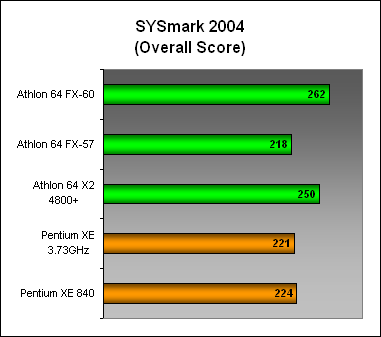
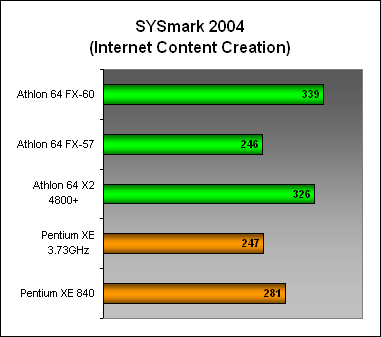
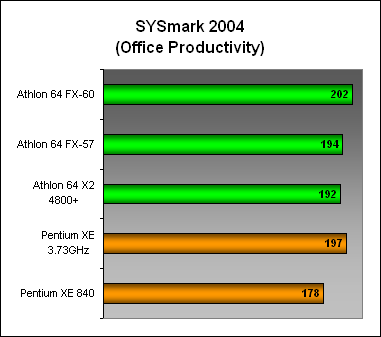
The results from SYSmark 2004 places the new Athlon 64 FX-60 at the top of the charts with an overall performance gain of more than 20%. Although the clock speed of the FX-60 is lower than the FX-57, SYSmark 2004 does take advantage of multi-processing and it is the reason why we saw a marked increase here. Much of the increase is due to applications in the Internet Content Creation suite and not Office Productivity applications.
Results - SPECCPU 2000 v1.2
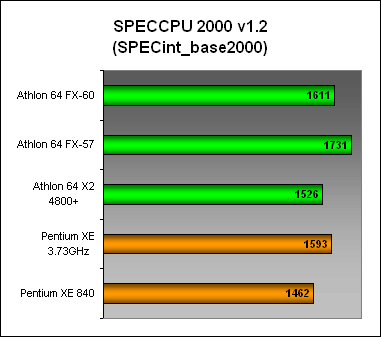
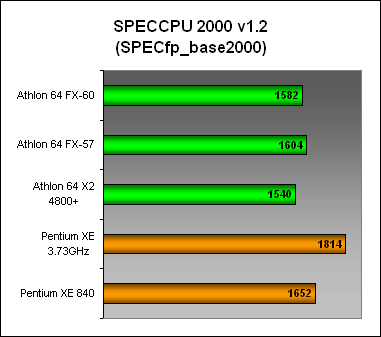
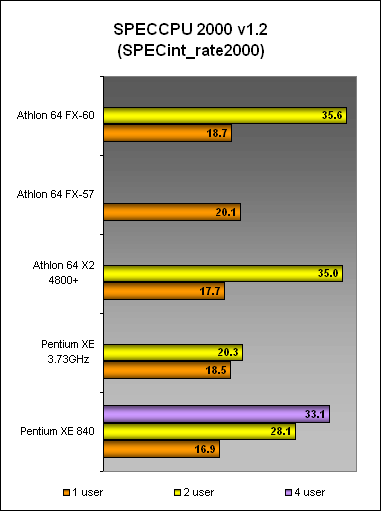
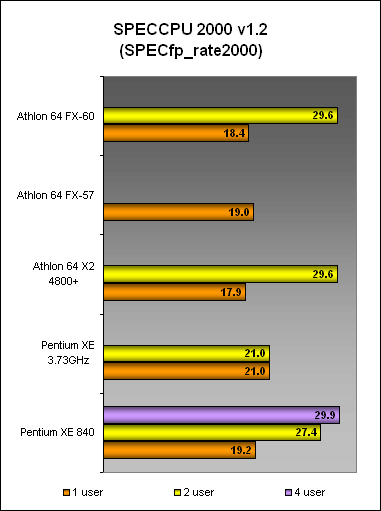
The SPECCPU 2000 base results only measure the performance of a single core and here you'll see the FX-57 scoring better than the FX-60. Thus, if you have applications that are predominantly single threaded, like most games, you'll find the FX-57 delivering better performance as compared to the more expensive FX-60.
Results - WebMark 2004 & XMpeg 4.5
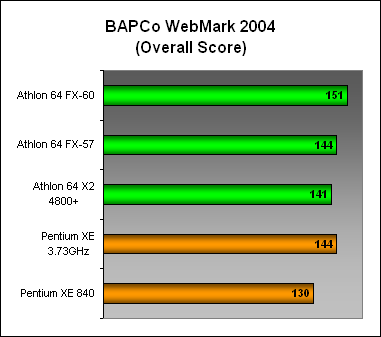
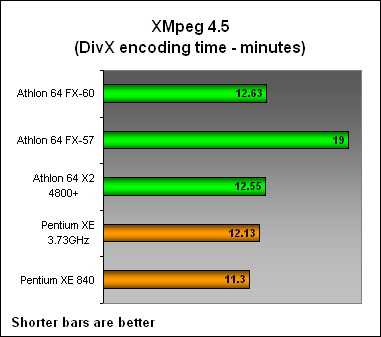
We did not see much performance gains in WebMark 2004 although there was a slight 4% increment. Most web-based applications don't take much advantage of dual-core processors and it shows quite clearly. However, when it comes to encoding video using XMpeg, you could see vast improvements in speed, with encoding times cut by as much as 50%.
Results - Lightwave 3D 7.5
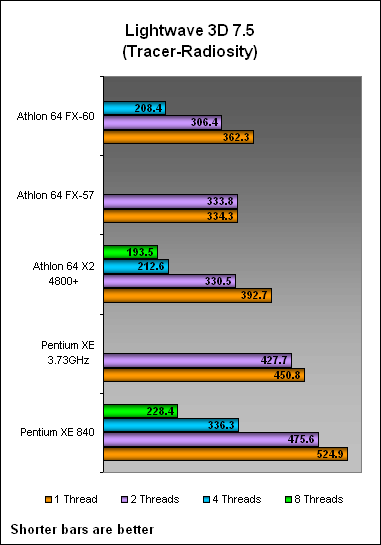
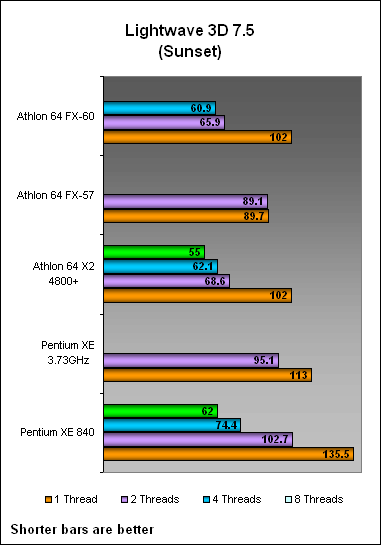
Comparing just single threaded rendering time elapsed, the Athlon FX-60 is expectedly slower than the FX-57. This is due to the processor's slower clock speed. However, when we increase the number of threads in the application to two and four, you can see that the FX-60 really taking the performance lead here. The FX-57's performance already saturated at two threads but the FX-60 took rendering times down by up to 73%. Compared to the Athlon 64 X2 4800+, the FX-60 is a little faster, thanks to its 200MHz speed advantage.
Results - Cinebench 2003 & PCMark 04
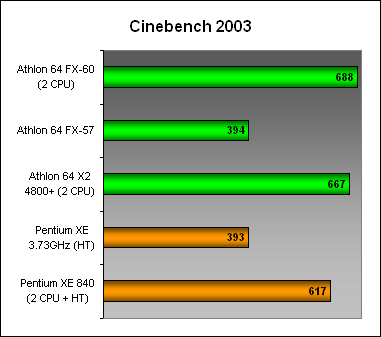
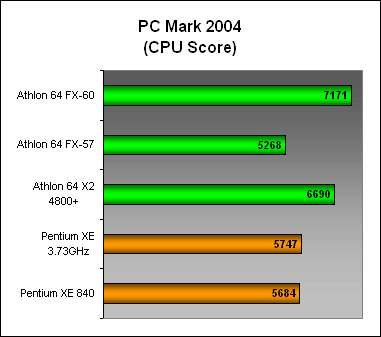
Similar to what we've observed in SYSmark 2004 and SPECCPU, both Cinebench 2003 and PCMark 04 show results favoring the dual-core processors. This simply means that as applications begin to have more parallelism in them, the performance of dual-core processors will only continue to climb.
Results - WSTREAM
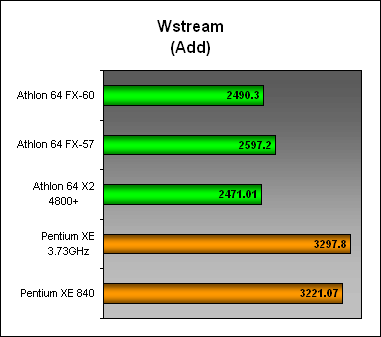
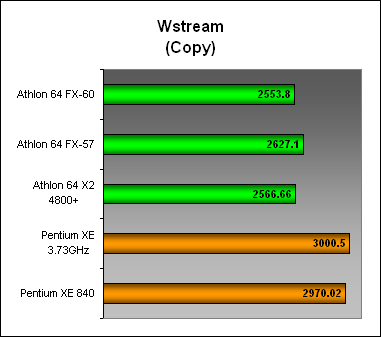
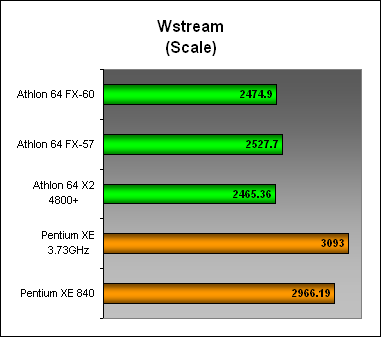
WSTREAM results have always been affected by the clock speed of the processors and although there's dependency on frequency, its effects are rather minimal as this is predominantly a memory bandwidth benchmark. The Athlon 64 FX-57 seems to be the better of the AMD camp, but the Athlon 64 has always been at the mercy of Intel's higher speed memory subsystem and better-optimized dual-channel memory controllers.
Results - Futuremark 3DMark 2001SE, 03, 05
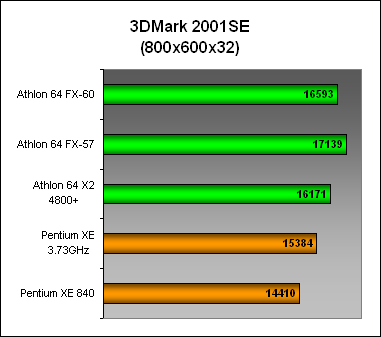
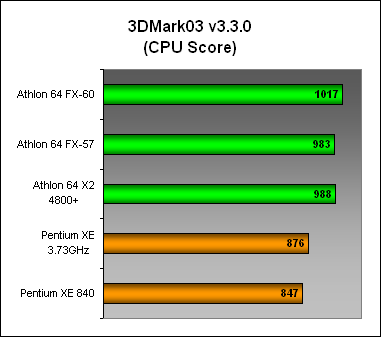
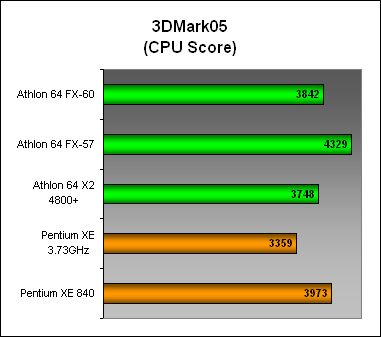
As mentioned earlier, games are normally single threaded applications and from the results below, you can see that games really favor the higher clocked Athlon 64 FX-57. Although 3DMark03's CPU test favored the dual-core processors, its effects were minimal.
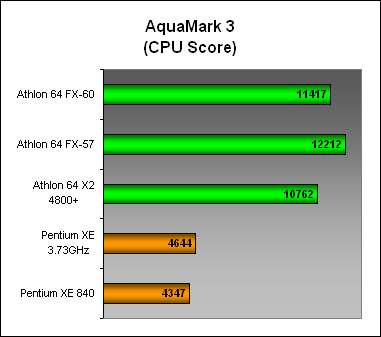
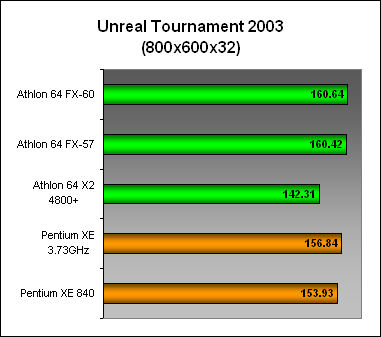
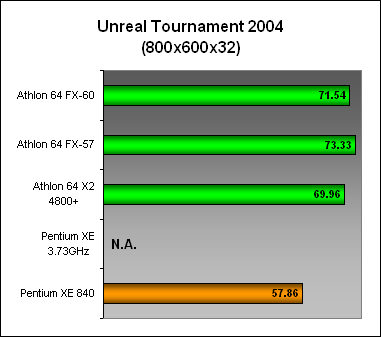
Results - UT 2003/2004 & AquaMark 3
Once again, in AquaMark 3 and Unreal Tournament 2003/2004, you can see the Athlon 64 FX-57 taking the crown. However, it is not leading by a large margin as it's only 200MHz faster. Still, for demanding gamers who cannot afford to lose out that fraction of a frame, the Athlon 64 FX-57 may still be the processor of choice.
Conclusion
The year 2006 began with AMD upping its desktop processor dominance by another notch with the introduction of the new Athlon 64 FX-60. The processor is not based on any new architecture nor a new core design but one that's been used by their Athlon 64 X2 series. Sporting a processor clock speed of 2.6GHz, the FX-60 is only 200MHz faster than the Athlon 64 X2 4800+. Compared to the previous FX-57, the new FX-60 now has two cores (instead of one previously) but is only 200MHz slower than the FX-57.
While most of the benchmarks used in our review favored the new Athlon 64 FX-60 processor, the fact remains that once you have an older single-threaded application, the FX-57 would still be the faster processor. Clock speed plays an important role in performance and it is a fact that you cannot deny no matter how much manufacturers want to steer clear of the GigaHertz game. This is apparent in games where the great majority of them still single-threaded in nature and they do not take much advantage of the second core. Whether you like it or not, the Athlon 64 FX-57 still remains to be the fastest CPU for gaming, thanks to its 200MHz clock advantage over the FX-60.
Still, as applications begin to get its share of parallelism, you'll see dual-core processors eventually gaining popularity. From the operating system (next generation Windows Vista) to applications for the office or content creation, the dual-core performance advantage will be exploited by developers. The future of dual-core is a bright one and it will only get better with time. Games will benefit as well since developers are now beginning to use the processing capabilities of the CPU to handle game physics and A.I. This is one reason why AMD will keep its line of FX processors to dual-core from this point onwards, simply because they recognize the performance advantage of their dual-core architecture. As they continue to shrink their process and introduce newer cores with higher clock speeds that match their single core counterparts, the FX series will continue to remain as AMD's top-end product.
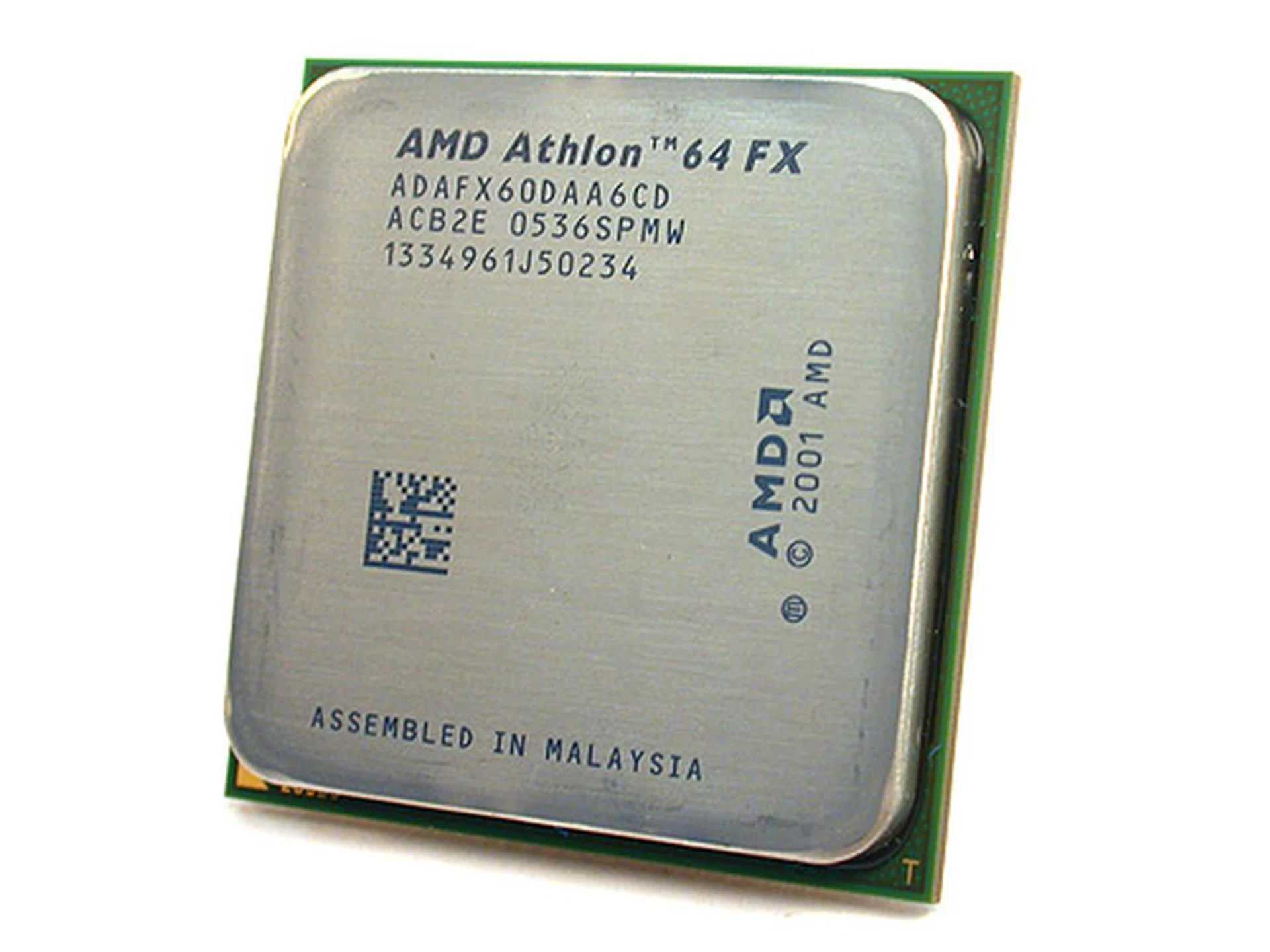
The new Athlon 64 FX-60 processor.
The new Athlon 64 FX-60 will set you back by as much as US$1,031 and we expect the quantities of this processor to be rather limited. We don't think it will be that highly sought after as it is getting too close to the transition into the next form factor which is the Socket M2. Upgraders may find this a gem, possibly at later stages, but for now, it's a hefty price to pay for performance. But for bragging rights, yes, by all means go grab one now!
Our articles may contain affiliate links. If you buy through these links, we may earn a small commission.