
Aftershock XG13-V2 - A Champion Gets Refreshed
Aftershock has just refreshed its 13-inch XG13 model, which also happens to be our Tech Awards 2014 winner for best portable gaming notebook. Apart from the various hardware tweaks, it now also comes with an optional QHD high-resolution display. We check it out to see if it can handle gaming at such extreme resolutions.

Going Beyond 1080p
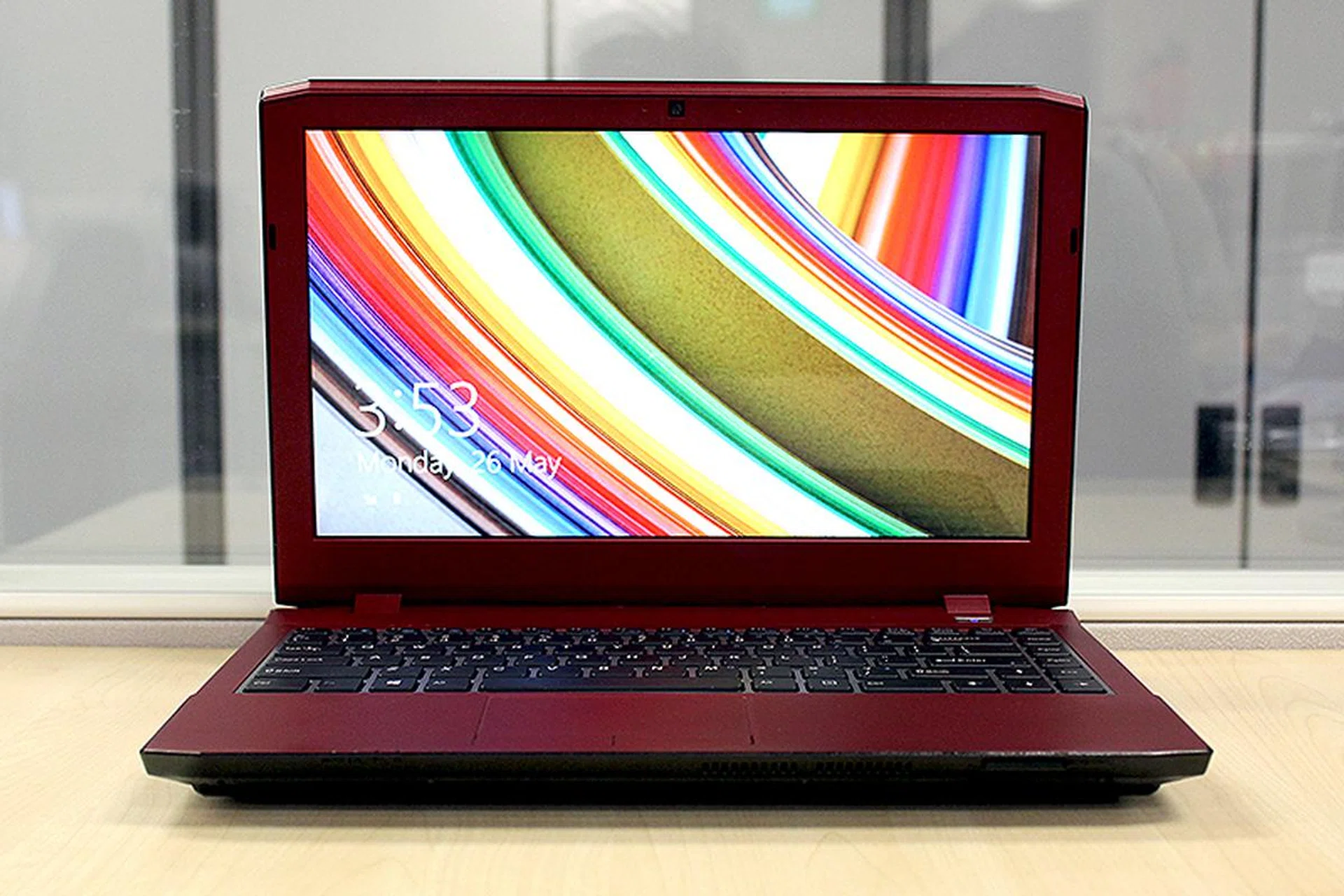
Even though the new Aftershock XG13-V2 looks just like its predecessor, it features a host of important upgrades under the hood.
The original Aftershock XG13 is something of a gaming gem. It combines excellent performance, good features and a very attractive price - three things that a gamer would find very hard to say no to. As a result, is it any surprise that it was the winner of the Best Portable Gaming Notebook category is in our last Tech Awards? We think not.
Not one to rest on their laurels, Aftershock has dutifully refreshed the XG13 (now called XG13-V2) following NVIDIA’s announcement of their new GeForce GTX 800M series of mobile GPUs. However, the GPU was not the only component that got upgraded. After listening to feedback from its users, Aftershock has also improved the XG13’s audio features by integrating a headphone amplifier, and also updated its front-facing webcam to a Full-HD one.
But perhaps most importantly, the new XG13-V2 can now also be outfitted with an optional QHD (3200 x 1800) resolution display. We all know higher resolution displays generally look sharper, but how beneficial is it really? And can one really play games at such extreme resolutions? Let’s find out.
The Hardware
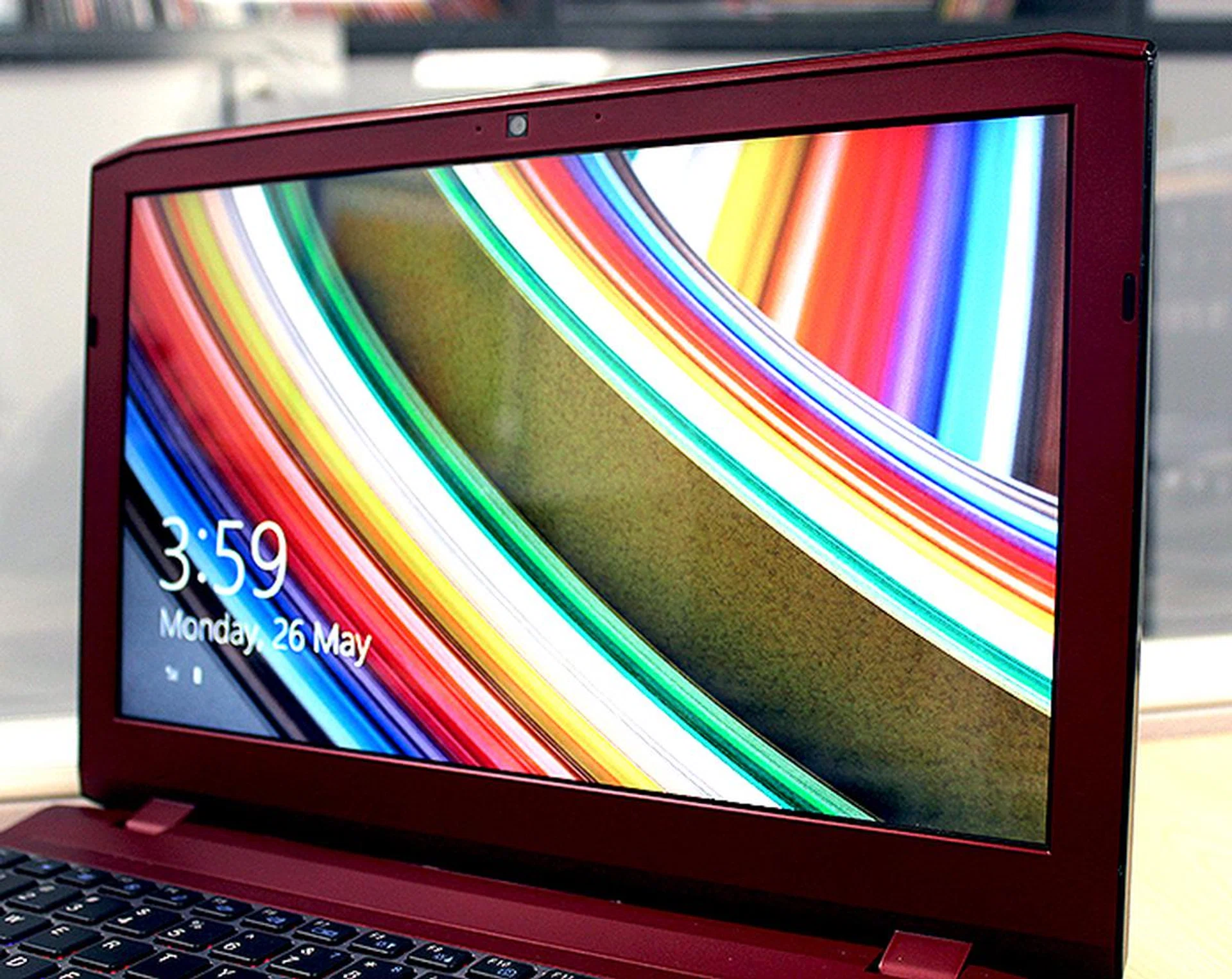
The QHD display is vibrant, and with a 3200 x 1800 pixels resolution, text and images look super sharp.
Inside the Aftershock XG13-V2, one will find a quad-core Intel Core i7-4700MQ processor (2.4GHz, 6MB L3 cache), which is pretty much the default choice of processor for most gaming notebooks these days. It's a beefy and powerful processor and we have no doubts that it will be up to the job.
On the graphics side, the XG13-V2 is powered by the latest NVIDIA GeForce GTX 860M mobile GPU. If you have been following our news, you would know that the GeForce GTX 860M is presently the most powerful mobile GPU that is based on the new Maxwell architecture. Hence, it will be interesting to see the performance boost that this new mobile GPU brings. In fact, considering our unit comes with the optional QHD display (3200 x 1800 pixels), the GeForce GTX 860M will need to be at its very best as we seek to find out if it is possible for a mainstream mobile GPU to sufficiently power a notebook to play games at this ultra-high resolution.
Elsewhere, the XG13-V2 is complemented by 8GB of RAM and storage capacity is provided for in the form of a 120GB Samsung SSD 840 EVO mSATA drive and a 1TB 7200rpm hard disk drive. This combination gives users the best of both worlds - performance and capacity- and we have reviewed the SSD 840 EVO earlier this year which was found it to be an excellent mainstream SSD. And since the XG13-V2 has two mSATA bays, it is entirely possible to have mSATA in RAID 0 for even faster storage performance.
Design & Features

Our unit has a custom "color-shift" paint, which changes hue depending on the lighting and viewing angle.
The chassis of the new XG13-V2 is highly similar to its predecessor, and as such it comes in at around 32mm thick and weighs about the same too at around 2kg. However, there has been numerous tweaks to its cooling and fan management as well as the materials to improve durability. The speakers have also been improved for better audio performance.
It terms of design, the chassis looks rather generic and uninteresting. Fortunately, Aftershock is able to customize the notebook with a variety of paints and automotive wraps to give it a more interesting look. Want an all-white notebook with yellow stars or an all-black Batman themed notebook? Just let the people at Aftershock know what you want and they will work something out for you, but at an extra cost, of course.
As for our review unit, it has been given a special "color shift" paint - a coat of paint that changes color depending on the lightning and angle that it is viewed - and as such it takes on a different hue every time we look at it. It is certainly an interesting look and adds much needed pizzazz to an otherwise plain chassis. On top of that, the display's bezel a well as the panels around the keyboard and trackpad have been painted in dark blood red.
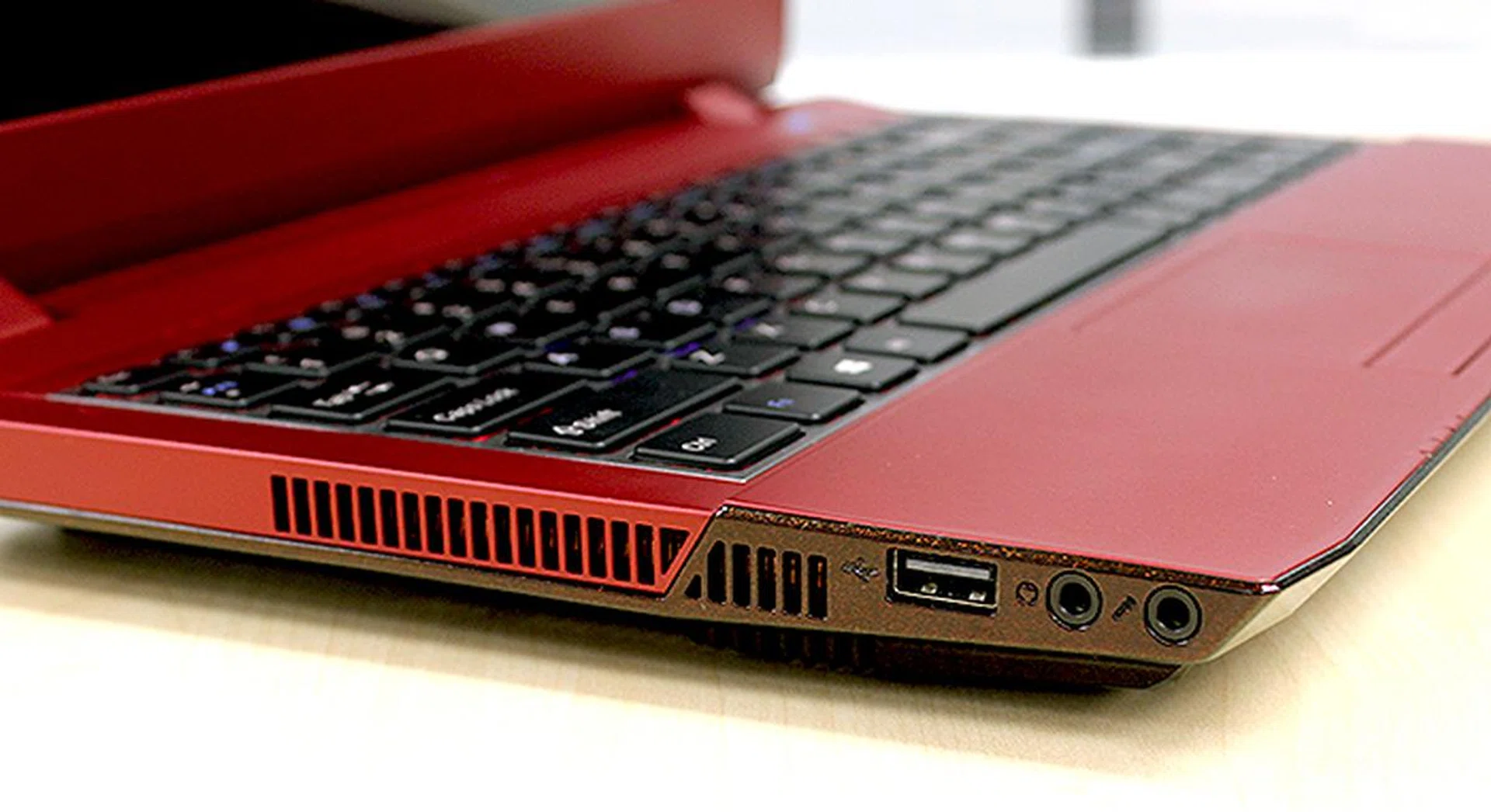
On the left are cooling vents as well as a USB 2.0 port and the headphones and microphone jacks.
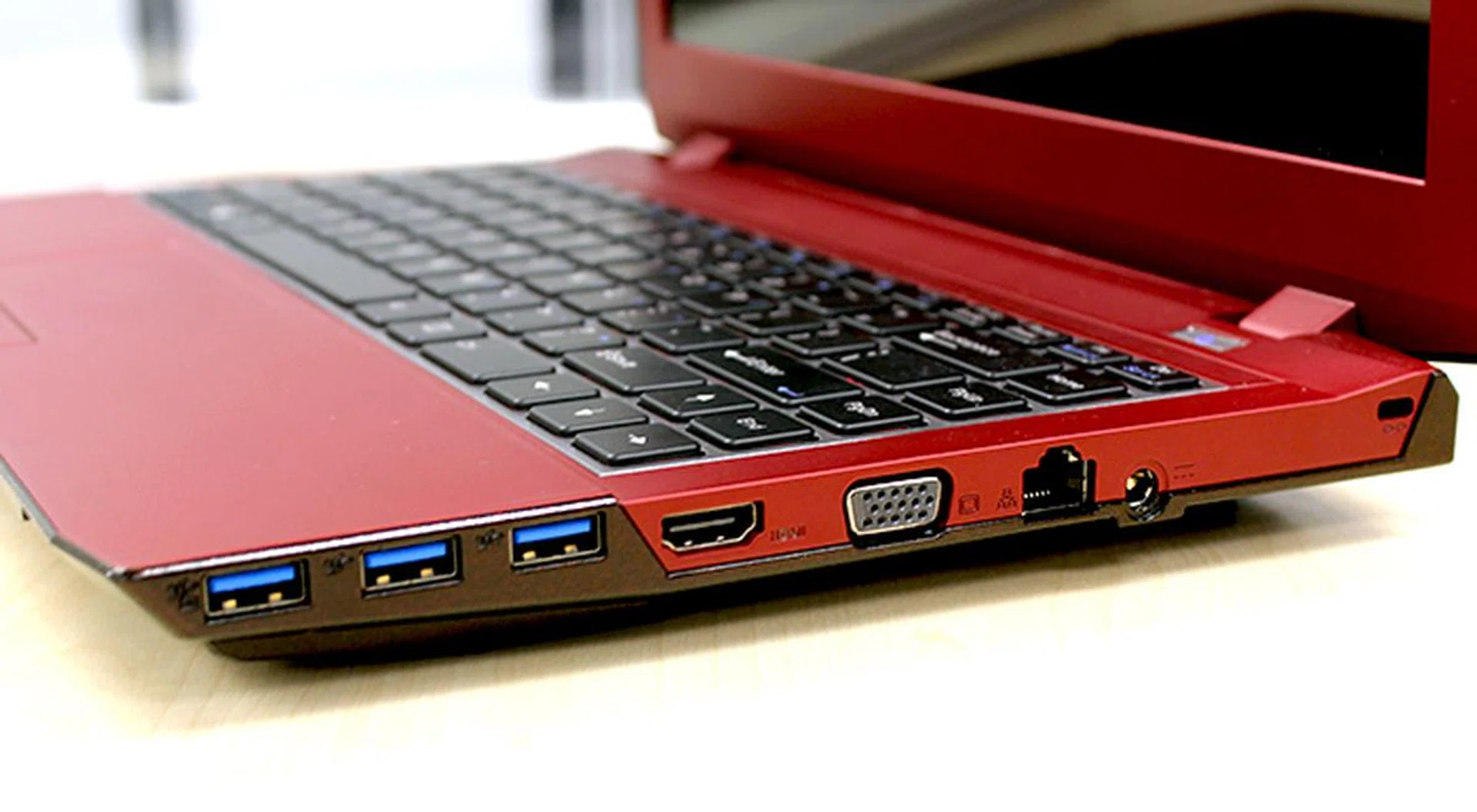
On the opposite side, you will find three USB 3.0 ports, HDMI port, VGA port and an Ethernet port a well as a DC-in jack.
Since the chassis is similar to the first generation XG13, the selection of I/O ports is identical to the older model, with the only exception being that there is now an integrated headphone amplifier so that high impedance headphones can be driven more adequately. Without the first generation XG13 to test side by side, it is difficult to say with certainty if the integrated headphone amplifier is truly effective but our cans do seem to play with more urgency and bass is more impactful.
Elsewhere the XG13-V2 comes with four USB ports (one USB 2.0, three USB 3.0), SD memory card reader, an Ethernet jack, a HDMI and a VGA port. Like we mentioned previously, we would have preferred that the VGA port be swapped for a DisplayPort (mini or regular) so that high resolution displays above Full-HD resolution can be driven easily.
Network connectivity is customizable and our unit was outfitted with the Intel's new Wireless-AC 7260 adapter that supports the latest Wireless-AC standard for faster wireless performance. Users can also opt for regular 802.11 b/g/n wireless adapter or the Killer Wireless-N 1202 adapter.
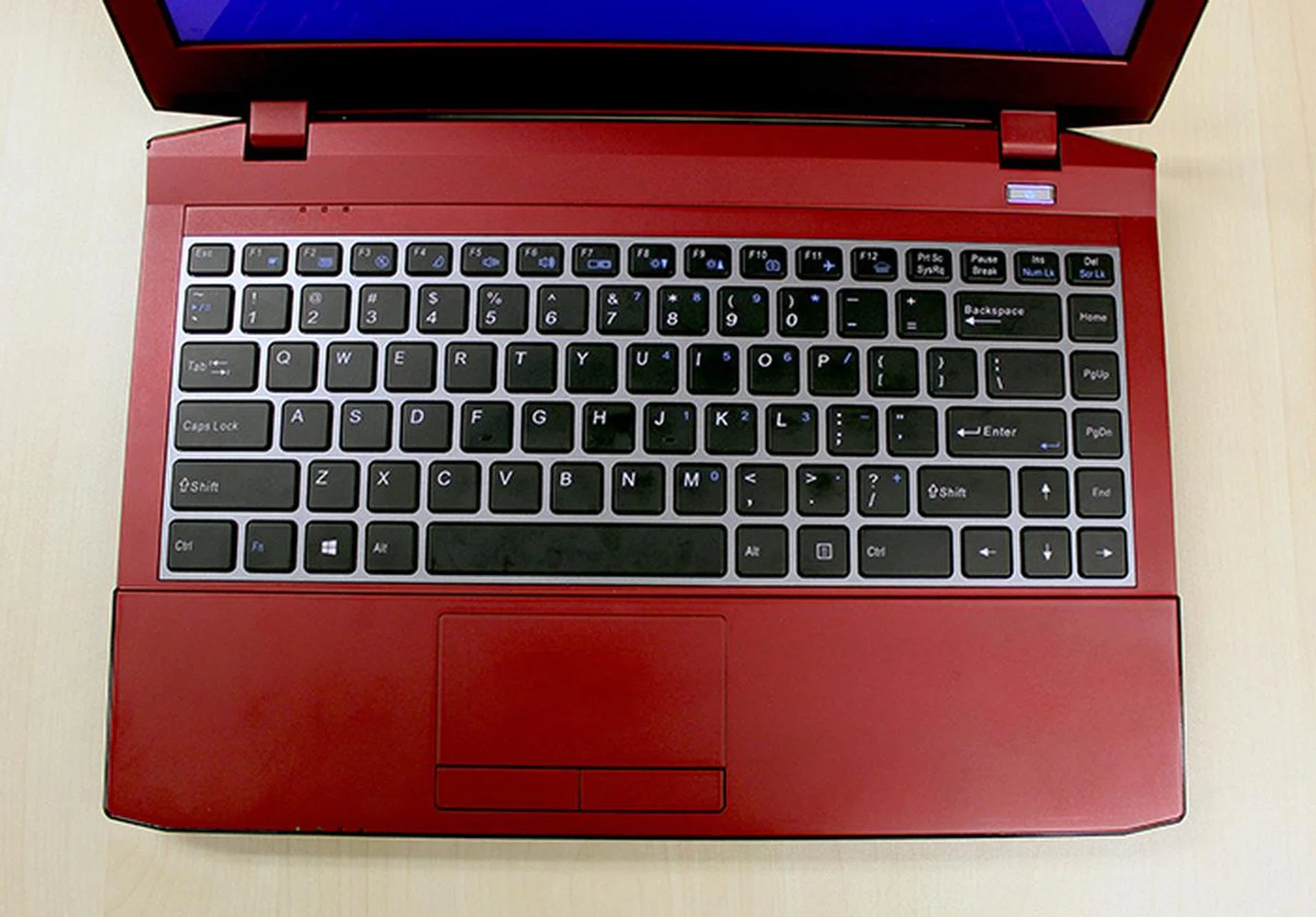
The keyboard is well sized, but the trackpad is too narrow to be used comfortably.

Our keyboard has red backlights with the exception of the WASD keys, which has purple backlights.
The chiclet keyboard remains well-sized and has a nice, snappy and tactile feel to it. However, a little more travel in the keys would be appreciated. The backlights are white by default, but can be customized like ours, which is red with purple WASD keys. The trackpad is not clickable, but has two separate button for the left and right click functions. The buttons are nicely sized, but at the expense of the trackpad, which is a little too small to be used comfortably. On the flip side, the trackpad is responsive and accurate to use.
Test Setup
To test the new Aftershock XG13-V2, we will be putting it through our slightly revised benchmarks. We have removed older benchmarks such as PCMark 7, 3DMark 11 and Far Cry 2 and have added in a new game in the form of Tomb Raider. You can see the full list below. New also to our evaluation of gaming notebooks is a temperature test, where we take readings from three spots on the notebook and also from GPU-Z. As for comparison, the XG13-V2 will be pitted against its predecessor a well as other portable gaming notebooks such as the MSI GE40, Razer Blade and Lenovo Y510p.
This is the full list of benchmarks used:
PCMark 8
3DMark 2013
Crysis 2
Tomb Raider
Here is how the Aftershock XG13-V2 stacks up against comparable notebooks.
[hwzcompare]
[products=456414,410998,428655,408160,399121]
[width=175]
[caption=Test Notebooks Compared]
[showprices=0]
[/hwzcompare]
PCMark 8
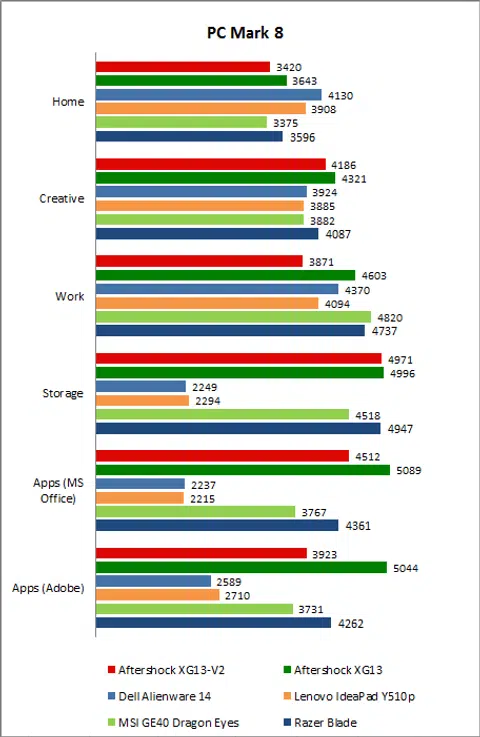
PCMark 8 is the latest benchmarking utility from Futuremark and was designed to measure the performance of Windows 8 systems. We will be testing the system using four different scenarios, Home, Creative, Work and Storage, which simulates different workloads that a user might subject the system to.
The new Aftershock XG13-V2’s performance on PCMark 8 was erratic and showed discrepancy that was not expected when compared against its predecessor. We had expected the new notebook’s scores to be close or better, but that was not the case. The older first-generation XG13 was the top performer here, but the new XG13-V2 still did fairly well when compared against older portable gaming notebooks such as the Razer Blade and MSI GE40.
3DMark 2013
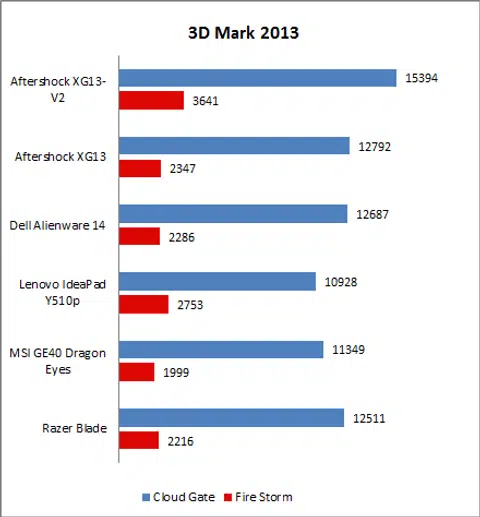
Based on the new Maxwell architecture, the GeForce GTX 860M in the XG13-V2 did not disappoint as it managed the highest scores on 3DMark 2013. Its scores of 15394 and 3641 on Cloud Gate and Fire Storm were more than 20% greater than the second highest scores managed by its competitors. In fact, the 3DMark results aren't far from the recently reviewed Gigabyte Aorus X7 gaming notebook with dual GeForce GTX 765M GPUs in SLI.
Crysis 2
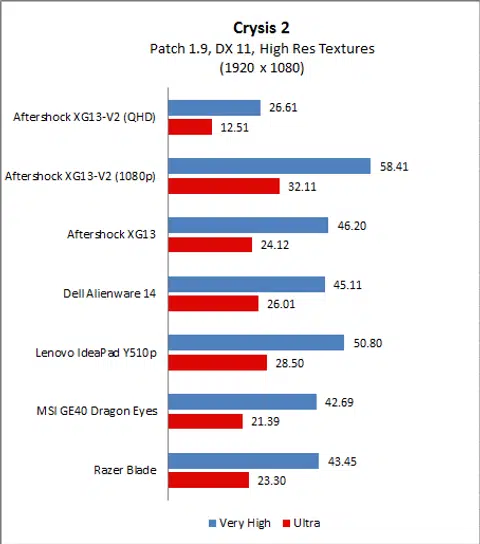
Crysis 2 is a demanding game and unsurprisingly, the XG13-V2 could not quite muster the graphics horsepower required to convincingly play the game at its QHD native resolution. However, at 1080p Full-HD resolution, the XG13-V2 was around 13% quicker than the Lenovo Y510p and its dual GeForce GTX 750M SLI configuration, which is pretty impressive. In fact, its results for Very High quality setting can rival the Gigabyte Aorus X7 machine; however at the Ultra quality setting, the Aorus X7 still stands out.
Tomb Raider
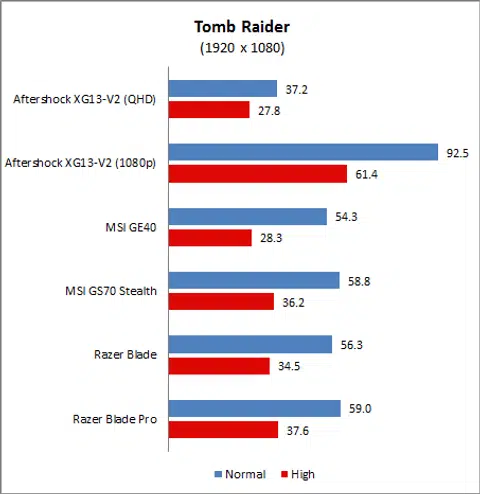
Tomb Raider, being less demanding, showed that the XG13-V2 could indeed play (some) games at QHD resolution if the settings were dialed down a little. It managed a respectable 37.2fps at "Normal" settings in QHD resolution and almost hit the 30fps threshold when we upped the graphics settings to "Ultra". At Full-HD resolution, the XG13-V2 blew the competition out of the water as it was over 50% faster than the next fastest notebook compared:-
Temperature
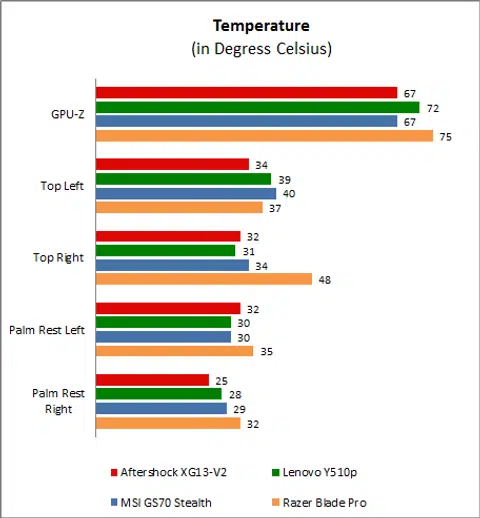
In our temperature test, we let the notebooks run Tomb Raider for 30 minutes so that they get sufficiently warm and then take a couple of readings. We measured the temperature using an infrared thermometer at the palm rests area and also the top two corners of the notebooks - the areas that typically get the warmest. We also recorded the temperature of the GPU using GPU-Z.
Aftershock said that the XG13-V2 has an improved cooling setup and on GPU-Z, the GeForce GTX 860M recorded a maximum operating temperature of 67 degrees Celsius, which is pretty good. Temperatures recorded around the surface of the chassis was good too and amongst the lowest.
Battery Life & Power Consumption
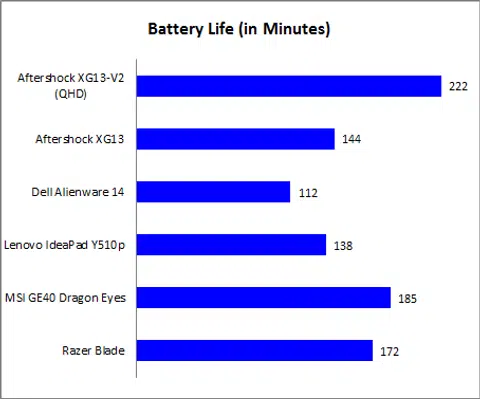
The new Aftershock XG13-V2 has a removable battery that has an unchanged capacity of 62.16wH. However, it managed to last 222 minutes - a stunning improvement of 78 minutes. This can be attributed mostly to the new and more energy efficient GeForce GTX 860M. The XG13-V2 even lasted over half an hour longer than the second-placed MSI GE40.
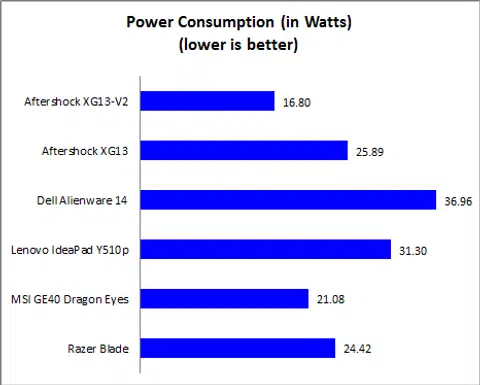
In terms of power consumption, the XG13-V2 sips power at just 16.8W, over 35% less than the model that it replaces. Proving that its long battery life timing was not because it has a large battery capacity, this figure of 16.8W is also the lowest amongst the other portable gaming notebooks in its class.
Portability Index
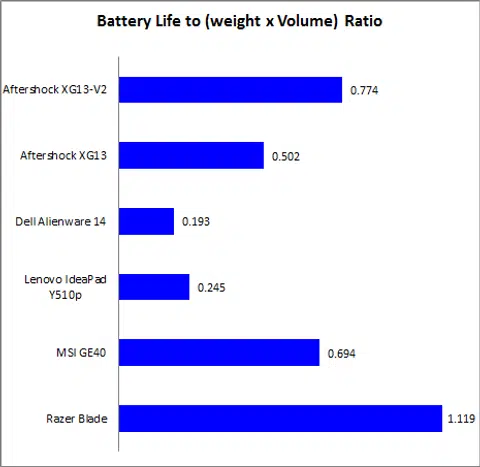
Our Portability Index factors in battery life, weight and volume so you can see which notebook is the most worthwhile to carry around. Thanks to the longer battery life and lower power consumption, the new XG13-V2’s portability index score is much improved over its predecessor - by around 54% - and only trails the ultra-slim Razer Blade. The new XG13-V2 is therefore much more portable and could have improved on its score even more if it had a slimmer and more compact chassis.
Staying at the Top
It is often said that it more challenging to stay at the top than to get there. And this is the exact predicament that Aftershock finds itself in - not that it is a bad one, of course. The first generation XG13 notebook was the winner of the Best Portable Gaming Notebook category in this year’s Tech Awards 2014, and while it might not be the lightest, slimmest or most well-built, it offered an unbeatable blend of performance, affordability and great features. To improve on it would be difficult, but this is exactly what Aftershock has done.
Somewhat erratic performance on PCMark 8 aside, the new second-generation XG13-V2 handily outperforms its predecessor in every other gaming benchmark, and by a considerable margin no less. In fact, in our gaming benchmarks, it was easily the best performing notebook in its class. Let’s not forget also that it has a substantially longer battery life and lower power consumption. To sum up, the performance of the XG13-V2 is pretty impressive and much of it can be attributed to the new GeForce GTX 860M mobile GPU.
Apart from performance, Aftershock has also done well to include an integrated headphone amplifier. Considering that most gamers would be using their headphones to play games on the go, this is a thoughtful move. In addition, the integrated headphone amplifier also helps drive audio output to your headphones, making them sound fuller and tighter.
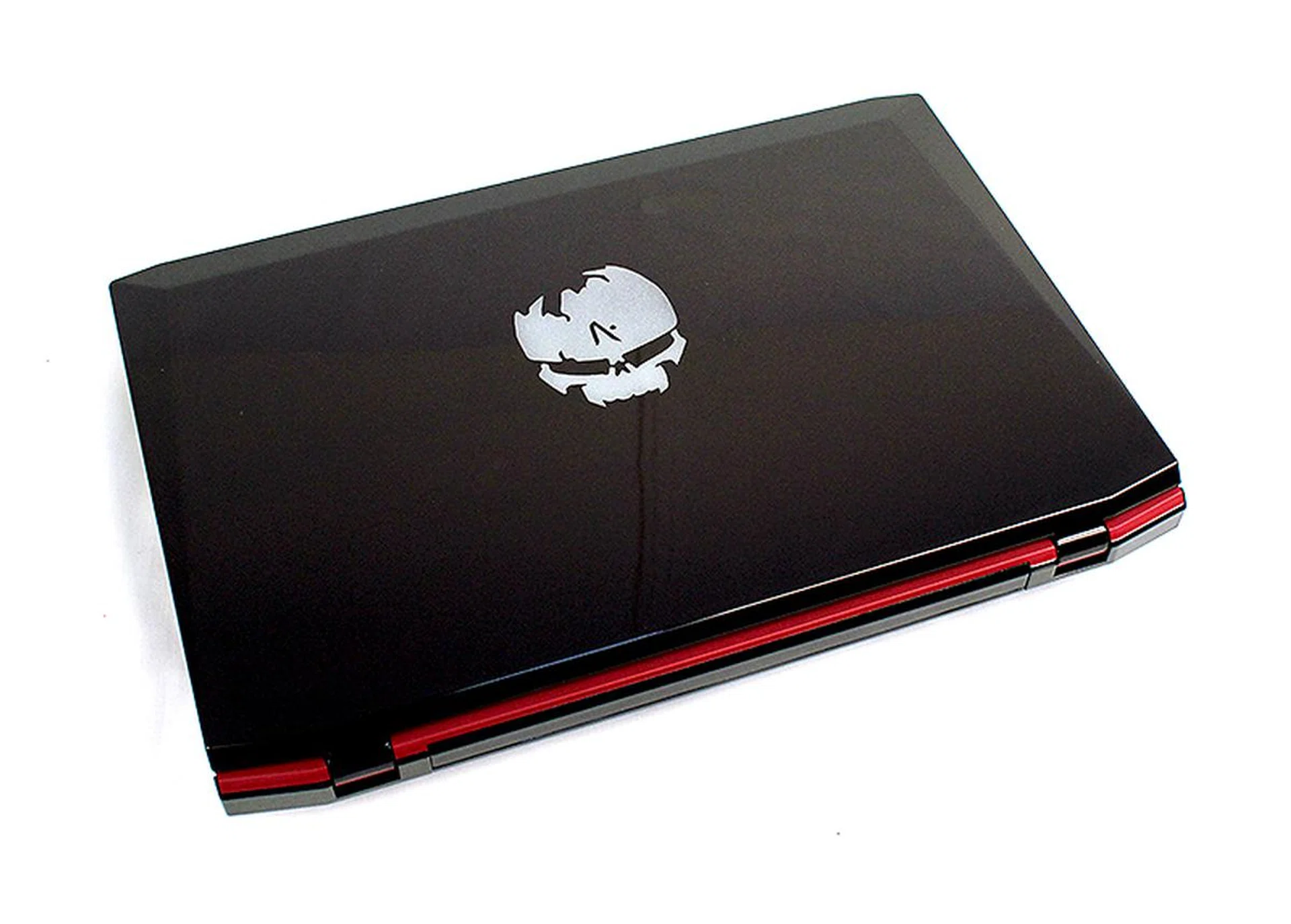
The second generation XG13-V2 keeps its predecessor's winning formula of great performance at an affordable price alive. Behold also, our review unit's custom paint job.
Prices of the XG13-V2 will begin from as low as S$1520, but before you get too excited, this is for a unit with no SSD, no OS, no QHD display and only standard Wireless b/g/n connectivity. If you want one that is as specced to the same levels as our review unit, you would be looking at S$2375. While the optional extras may increase the cost substantially, in the grand scheme of portable gaming notebooks, this price is still pretty hard to beat. In fact, it is only about $135 more than the first generation XG13 that we reviewed last year.
The QHD display is presently a S$195 option and one that we think users should forgo. Although the GeForce GTX 860M has just about enough juice to handle some games at such extreme resolutions, we think that the Windows operating system on a whole is not ready yet for such ultra-high resolutions. There are some issues with scaling and certain applications, windows and pop-ups look fuzzy and out of place when we ran the notebook at its native resolution. Without the QHD display, the price comes down to S$2185, which is very attractive.
Its most keen competitor in this segment is probably Razer’s updated Blade notebook, which has been upgraded with a QHD display and a GeForce GTX 870M mobile GPU. We have yet to review it, but on paper at least, the GeForce GTX 870M should give the Blade the performance advantage. However, this would come at the expense of a sizable premium considering prices of the Blade would begin at S$3199 for the 128GB SSD variant.
All in all, the second-generation XG13-V2 keeps Aftershock’s tradition of offering great value for money and would likely be amongst the forerunners for next year’s Best Portable Gaming Notebook category at our Tech Awards.
Our articles may contain affiliate links. If you buy through these links, we may earn a small commission.