
AMD 690G IGP First Looks and Performance
The AMD 690G chipset is finally launched today and we take a quick look a one of the first few motherboard samples available - the ECS AMD690GM-M2 - to see how the new Radeon X1250 graphics core performs. Check out our first hand experience with the AMD 690G right here.
The AMD 690 Arrives
Today, AMD finally makes available their long overdue 690 series of chipsets, with the initial launching of two RS690 IGP variants - AMD 690G and AMD690V. The discreet version of the AMD 690 (RX690), which was supposed to have launched in the same time frame however, is still nowhere to been seen at the moment. Originally rumored to debut somewhere in the first half of 2006, the RS690 is set to replace the aging Radeon Xpress 200 and Radeon Xpress 1100 in the integrated graphics market.
Generally, the RS690 are AM2 platform chipsets that support the full range of AM2 Athlon processors including the Athlon 64 X2 and FX dual core CPUs and dual-channel DDR2 memory up to DDR2-800. The RS690 will continue to feature a single PCIe x16 for discreet graphics support. AMD has also made some switches to some chipset functionality, moving audio and some PCIe lanes into the Northbridge, leaving the Southbridge to handle USB, Storage, LAN and PCI functions. The new chipset will still be using ATI's PCI Express based A-Link interconnect between the Northbridge and Southbridge. At present, most RS690 products will be paired with the existing SB600 Southbridge.
The main update to the RS690 family is its Radeon X1200 graphics core, an upgrade to the X300-based Radeon Xpress 200 and Radeon Xpress 1100 series. However, as IGP graphics go, the X1200 on the RS690 is really a cut-down variant of the Radeon X700 and does not share the architecture of ATI's X1000 series GPUs, meaning that it does not have decoupled pipelines and shader processing units. Built on an 80nm process, the 3D capabilities of the X1200 is based on a 400MHz DirectX 9, 4-pipeline engine, supposedly featuring two pixel and two vertex shaders. The X1200 IGP core will operate on the usual UMA memory architecture and will now be able to support a massive 512MB frame buffer; the Radeon Xpress 1100 only supports up to 256MB. Of course, the IGP will continue to make use of the HyperMemory function, and with this class of GPU, we highly doubt that anyone will need 512MB of locked shared memory, but more on that later.
What really differentiates the RS690 from the previous generation IGPs and its competition is its video processing capabilities. The RS690 family will have support for ATI AVIVO, making it capable of hardware acceleration of high-definition H.264 and VC-1 content. While this is a major feature of the chipset to enable next generation HTPCs supporting HD DVD or Blu-ray playback, given its limited GPU processing power and the way AVIVO functions we'll have to try that out first hand in the near future before we pass our verdict on this mode of usage. General video and DVD processing is also supposed to be of better quality, as the X1200 core is said to keep the 10-bit video processing unit like other AVIVO capable GPUs. This is a bit of surprise indeed since the Radeon X700 core itself didn't support AVIVO, but it looks like ATI incorporated AVIVO functionality from the X1000 series to keep the integrated GPU more current.
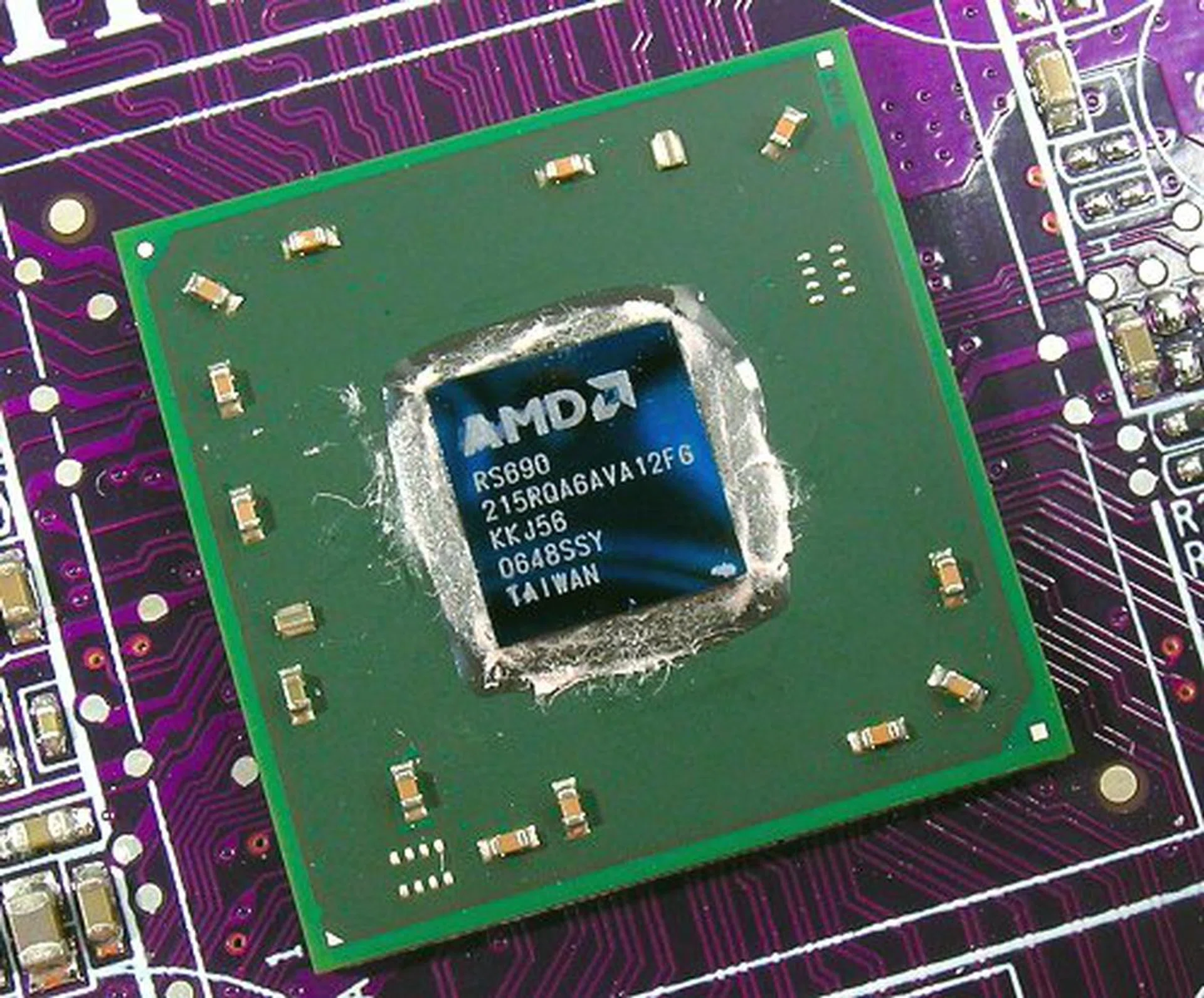
AMD 690G up close and personal ... finally.
Of the two chipsets launched today, the AMD 690G is classified under the mainstream segment and will feature the ATI Radeon X1250 graphics, while the AMD 690V is the low-end value equivalent with the ATI Radeon X1200 GPU. From what we gather, both the Radeon X1250 and X1200 have identical 3D performance with a 400MHz core. The only difference between the 690G and 690V is in their video output capabilities. The 690G supports TDMS, with DVI and HDMI (and HDCP) capabilities, in addition to regular VGA and TV-Out. The 690V only supports VGA and TV-Out modes, limiting its HD capabilities. The 690V also does not feature any external PCIe x16 slots.
ECS AMD690GM-M2
Among all the announced AMD 690 series motherboards, ECS was the first to have their board reach out labs for an early evaluation. Because the RS690 is pin compatible with the older RS485, ECS managed to get their board out with minimal redesign or development. The ECS AMD690GM-M2 is a micro-ATX board that shares a nearly identical PCB design and layout as its predecessor, the ECS RS485M-M. Based on the AMD 690G/SB600 combination, the AMD690GM-M2 will feature DVI and VGA output, but sadly no HDMI (or HDCP), which limits the 690G's usefulness and lessens its appeal as a HD capable motherboard. The board does have a PCIe x16 slot though, so you can still add an external graphics card. It also features one PCIe x1 and two PCI slots for upgrades.
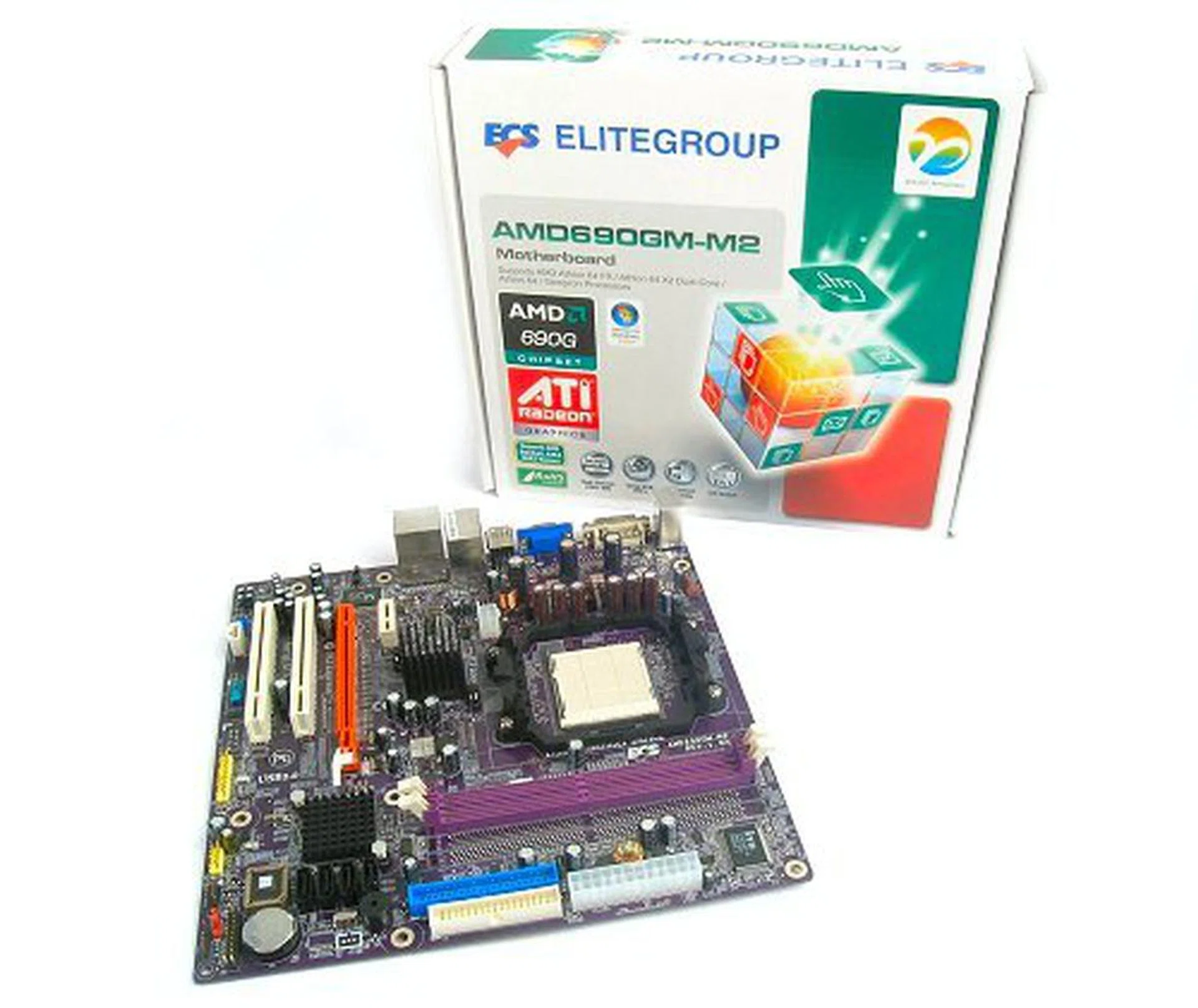
The ECS AMD690GM-M2 motherboard.
Onboard audio is powered by a Realtek 8-channel ALC883 HD Audio CODEC, though again it is disappointing that there are no available S/PDIF connectors onboard. ECS does include an S/PDIF and TV-Out header, but brackets do not seem to be provided in the package. Other features include ten USB 2.0 ports (four rear, six via headers), Gigabit PCI LAN (Realtek RTL8110SC), four SATA 3.0Gbps ports and an IDE port supporting two Ultra-ATA 133 devices. The SB600 SATA controller is capable of RAID 0, 1, 0+1 and also supports AHCI modes.
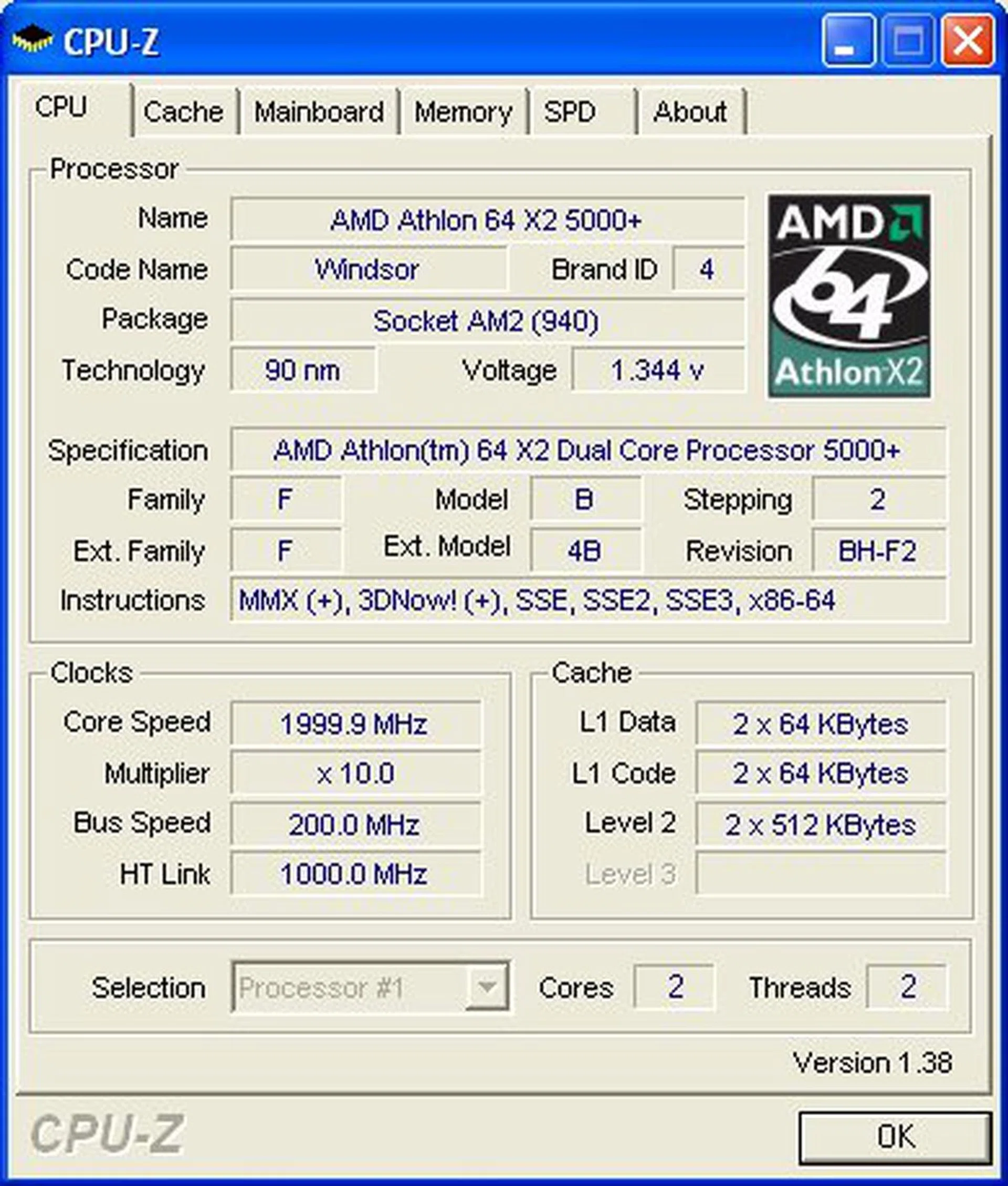
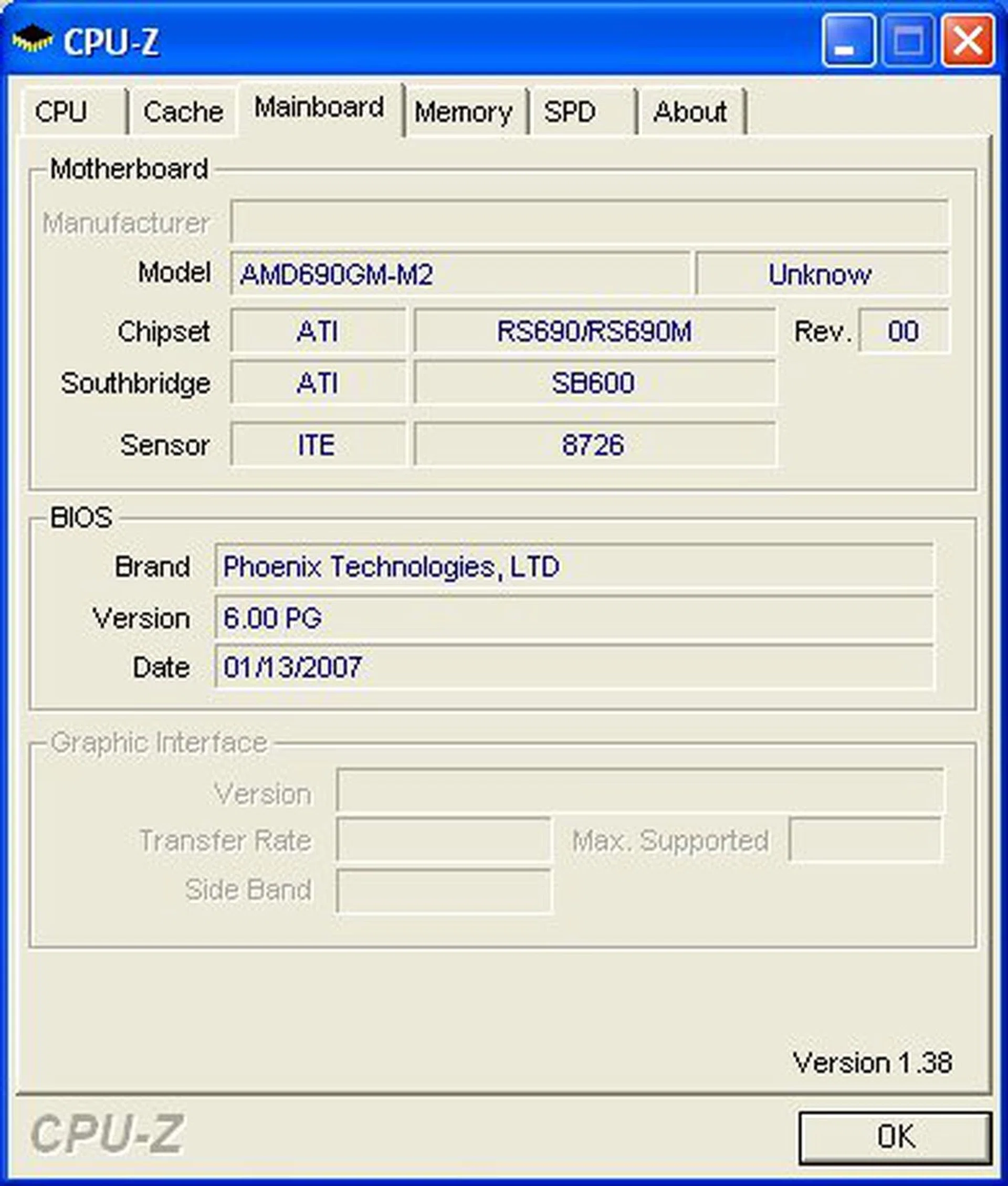
Though our board came properly packed in its full retail box, we suspect that the ECS is very early in its development BIOS. After playing around with the AMD690GM-M2 awhile, we found out that many of the options in our BIOS (dated 13/01/2007) were not really functional. There were no memory timing controls, so the board would only run with SPD timings. We also noticed that the board seemed to have its CPU ratio hard locked to 10x. After trying various CPUs from an Athlon 64 X2 5000+ to the latest Athlon 64 X2 6000+, the board properly identifies the processors, but only operates at 2GHz (10 x 200). We confirmed this through CPU-Z and running a few benchmarks to indicate approximate CPU performance. Because of these limitations, we felt that we were unable to properly conduct a full review of the board at this time.
On the other hand, we do have a fully working AMD 690G motherboard, so we were able to get some preliminary performance benchmarks of the new 690G IGP performance in comparison against the previous generation Radeon Xpress 1100 and NVIDIA's GeForce 6150.
Test Setup
To get a first look at where the new 690G stands in terms of onboard graphics performance, we compared the ECS AMD690GM-M2 with the ECS RS485M-M, its Radeon Xpress 1100 predecessor and a Foxconn WinFast 6150K8MA, which is a NVIDIA GeForce 6150 board. These two chipsets are among the two main IGPs for the AMD platform.
As with our proper reviews, we try to match hardware capabilities to achieve comparable performance numbers, but because of the discrepancies between the different chipsets, platforms and the hardware limitations of the AMD690GM-M2 motherboard however, these benchmarks are only a rough estimation on where the AMD 690G stands.
Due to limited time, GPU limitations and the hardware discrepancies mentioned, we've limited our benchmarking to the few gaming benchmarks that stress the graphics capabilities only. As we obtain retail-ready motherboards, we will conduct our usual comprehensive performance review. For this article, we've run Unreal Tournament 2004, Command and Conquer:Generals and 3DMark05.
The following list shows the hardware setup used to benchmark the ECS AMD690GM-M2, ECS RS485M-M and Foxconn WinFast 6150K8MA:-
- ECS AMD690GM-M2 and ECS RS485M-M
- AMD Athlon 64 X2 5000+ (Socket AM2, 2 x 512KB L2) @ 2.0GHz (10x200MHz)
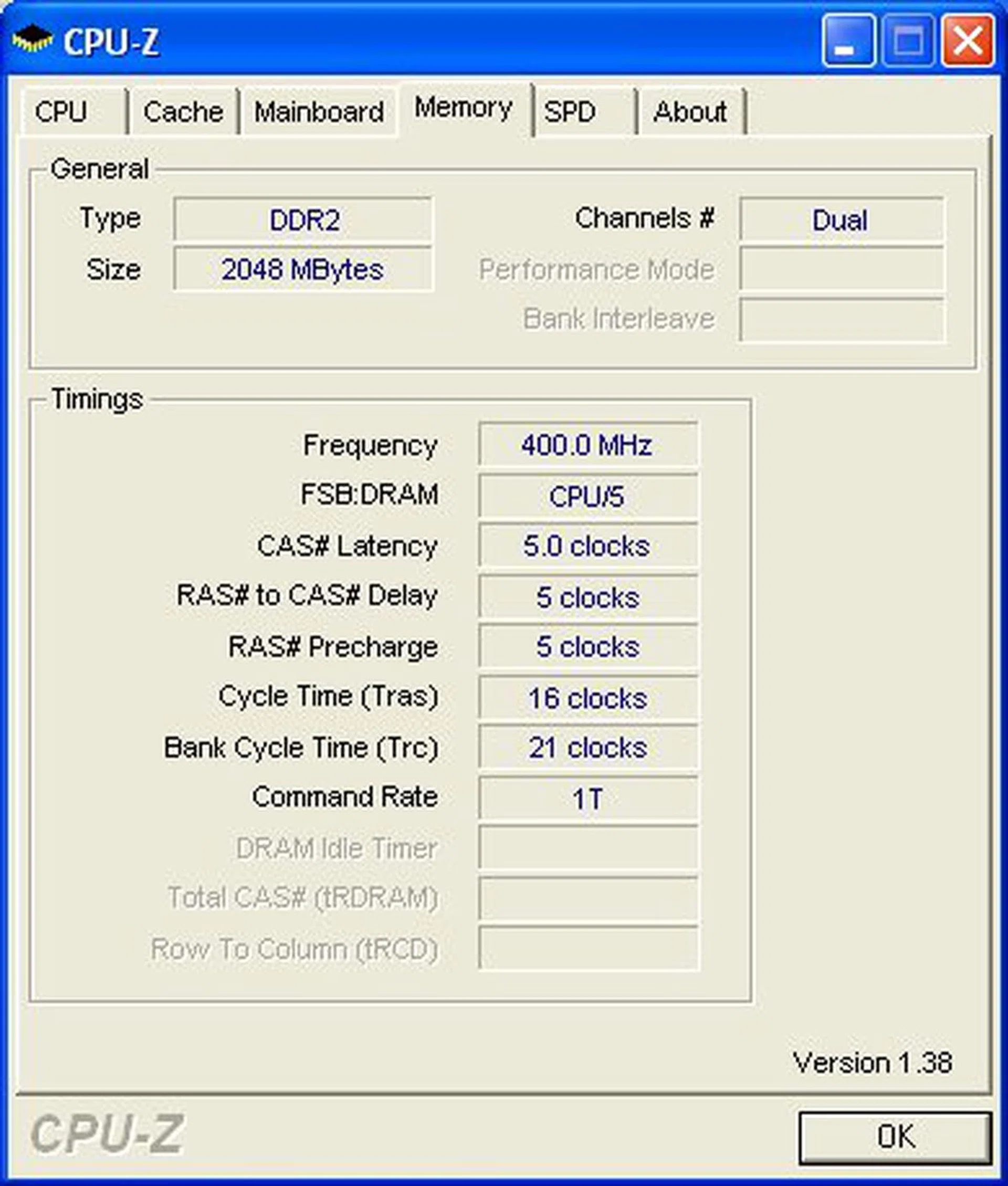
- 2 x 1GB Kingston HyperX DDR2-800 @ 15-5-5 CAS 5.0
- Seagate Barracuda 7200.7 80GB SATA hard disk drive (one single NTFS partition)
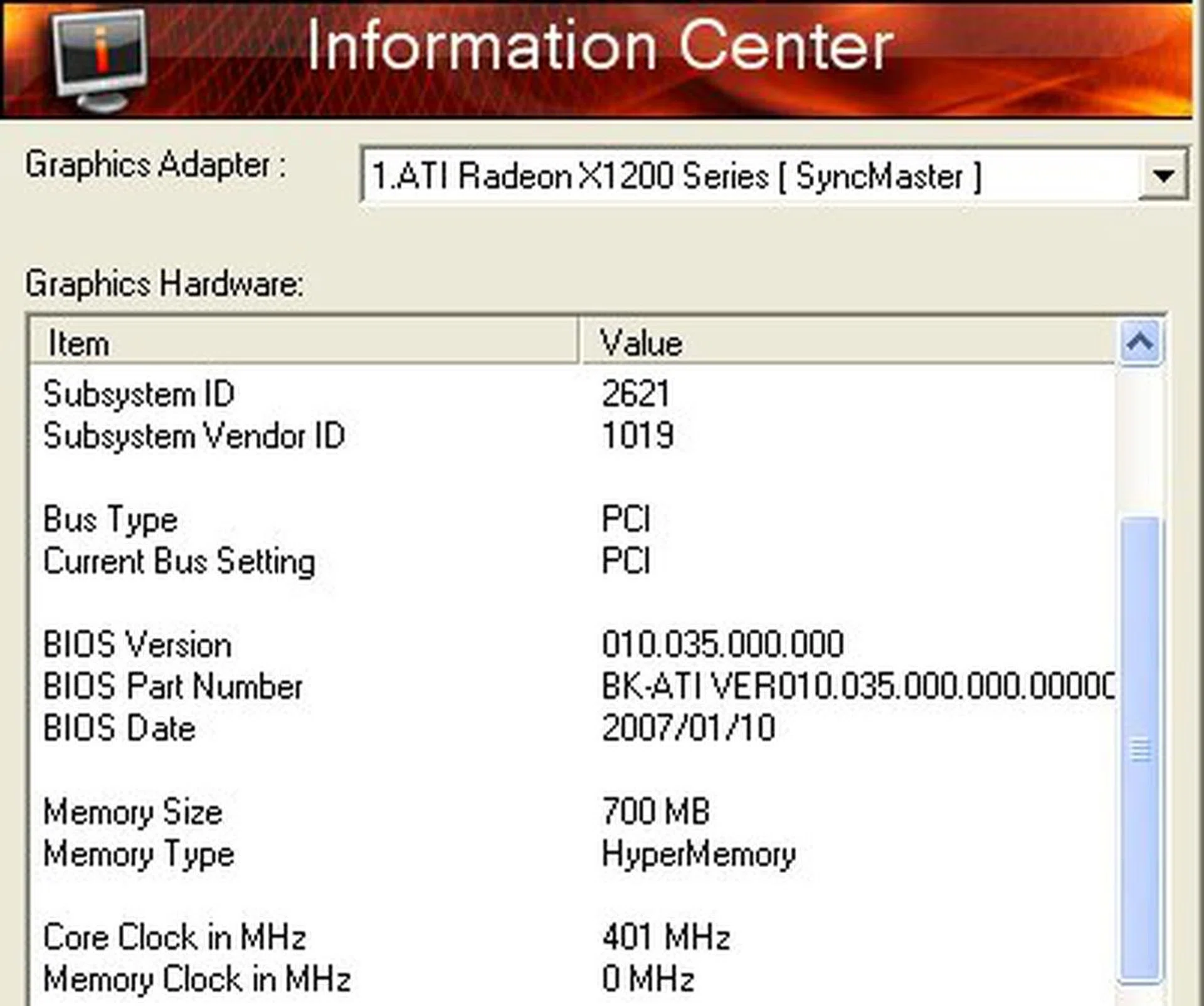
- ATI Radeon X1250 IGP 128MB/256MB UMA frame butter with HyperMemory (ECS AMD690GM-M2 only)
- ATI Radeon Xpress 1100 IGP 128MB UMA frame butter with HyperMemory (ECS RS485M-M only)
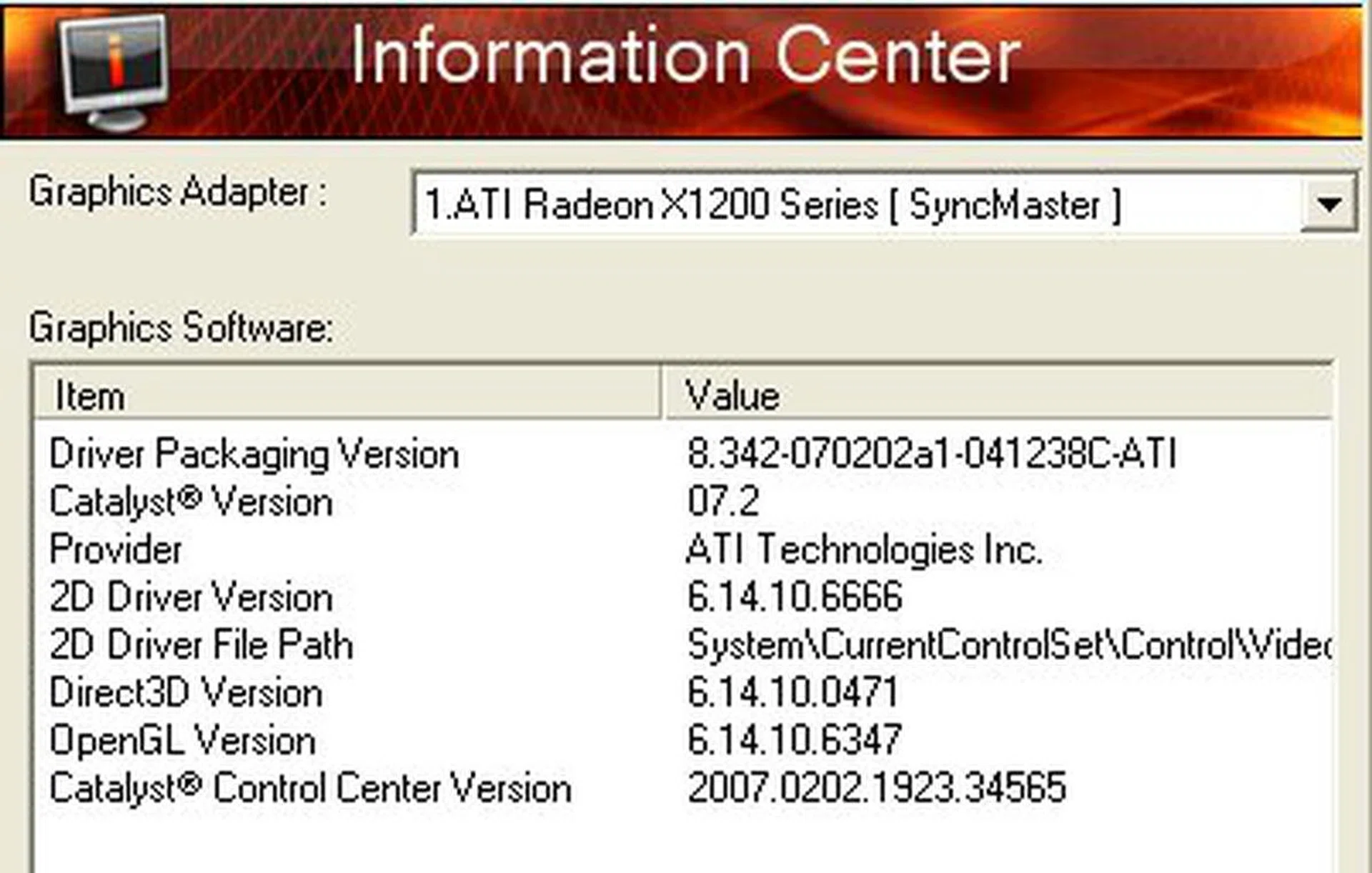
- ATI Catalyst 7.2 package
- Microsoft Windows XP Professional with Service Pack 2 (and DirectX 9.0c)
- Foxconn WinFast 6150K8MA
- AMD Athlon 64 FX-60 (Socket 939, 2 x 1MB L2) @ 1.8GHz (9x200MHz)
- 4 x 512MB Kingston HyperX DDR-400 @ 6-3-3 CAS 2.5
- Seagate Barracuda 7200.7 80GB SATA hard disk drive (one single NTFS partition)
- GeForce 6150 IGP 128MB UMA frame buffer with TurboCache
- NVIDIA ForceWare 93.71
- Microsoft Windows XP Professional with Service Pack 2 (and DirectX 9.0c)
Additional Notes
Before we go into the actual benchmarks, here are a few extra points that users need to note on why we've used certain configurations.
- The Foxconn WinFast 6150K8MA is a Socket 939 motherboard and not an AM2 board. This board was used because at time of writing, we did not have a comparable GeForce 6150 board for the AM2 platform.
- The AM2 Athlon 64 X2 5000+ has been down-clocked to 2GHz to match the anomaly in the AMD690GM-M2.
- The 939 Athlon 64 FX-60 has also been down-clocked to match its AM2 counterpart for this review. Since the FX-60 has a total of 2MB cache, we reduced its speed to 1.8GHz in order to match the 2GHz Athlon 64 X2 5000+ that has a total of 1MB L2 cache. For the purpose of our graphics comparison, we've in our older reviews verified that this sort of 'CPU performance' matching holds true whereby a 200MHz clock speed deficit of an AMD dual-core 2MB L2 cache CPU is equivalent to an AMD dual-core 1MB L2 cache CPU.
Performance Benchmarks
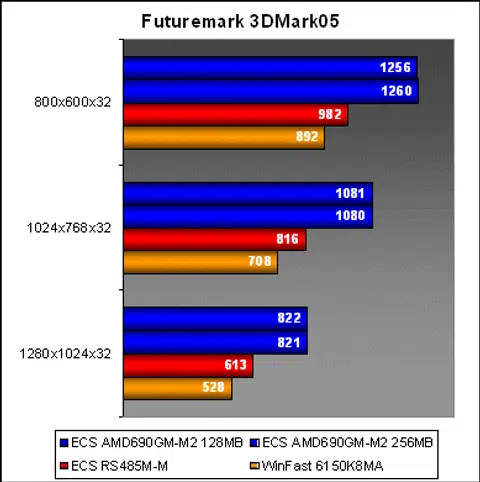
Under synthetic benchmarks like 3DMark05, the AMD690GM-M2 actually managed to show a rather big improvement in performance over the older Radeon Xpress 1100 and GeForce 6150 by about 30 - 40%. These are very impressive numbers considering that we've using readily available drivers (Catalyst 7.2) and not some optimized unofficial versions. The results that we managed to get actually follows AMD's claims of around 1000-1200 3DMarks at a 1024x768 resolution.
Moving on to actual game play however, the results are starkly different. In most cases, the AMD690GM-M2 performs little or in some cases even worse than the Radeon Xpress 1100 (and even the GeForce 6150 in C&C Generals). For UT2004, all three IGPs are on par at the resolution of 800x600, though the ATI boards pull away from the GeForce 6150 at higher resolutions. However, both the AMD 690G and Radeon Xpress 1100 are again deadlocked in performance within 1fps of each other, an insignificant number when all things are considered.
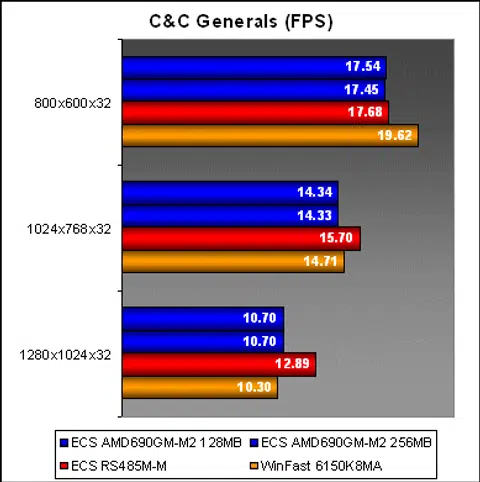
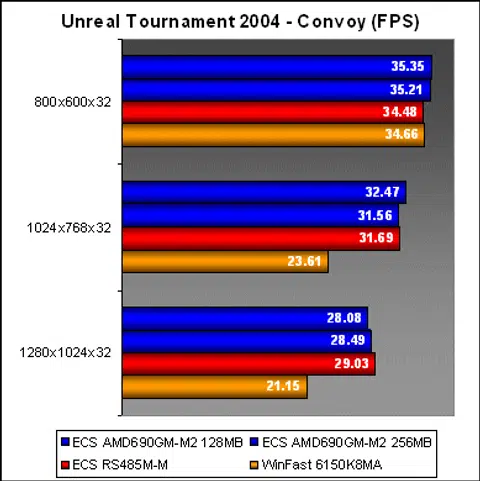
The AMD 690G doesn't change where IGP gaming stands and at best, it will still only be usable for moderate and simple gaming. UT2004 seemed to scale pretty well, but was not even able to push past 20fps at 800x600 in an old game like C&C Generals (at high quality settings). Of course, the upgrade in graphics capabilities means that you will get to enjoy Vista's fancy Aero interface, as well as the added AVIVO functionality.
*Update 01/03/2007 - For a more well rounded view, we've decided to include results from Quake 4 as well as it is a much more modern game, and one that is based on OpenGL. Note that for Quake 4 tests, the High Quality setting was used but all Advanced Graphics options were disabled - except for SMP.
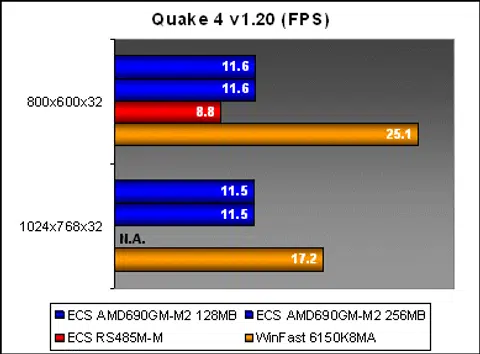
Looking at the results here, the 690G is an improvement over the older Radeon Xpress 1100. However, the small improvements we see here are well below our expectations of the new chipset. The 690G posted the same average results for both 800x600 and 1024x768, but at 11fps, the board isn't really cut out for gaming. Again, there is no real advantage of using a larger frame buffer and locking yourself out of valuable system memory.
The interesting comparison here is that the GeForce 6150 actually posted viable results at 800x600 with 25fps and managed 17fps at 1024x768. Not only was its performance higher than the new 690G IGP, we noticed a stark difference in visual quality as well with both the Radeon Xpress 1100 and the new AMD 690G having poor rendering quality. Whether this is due to the IGP core or driver optimizations is up to speculation at this early stage, but note that we were using retail ForceWare and Catalyst drivers all along.
Last Words
Since the Foxconn 61508KMA only supported a 128MB maximum memory frame buffer, all our benchmarks were run using the same settings. However, we did run a second pair of tests on the ECS AMD690GM-M2 using a 256MB frame buffer. From the scores above, you'd have noticed that increasing the IGP frame buffer doesn't affect performance that much. In fact, for UT2004 and Generals, it was even slightly detrimental. We did not include results for a 512MB frame buffer as we noticed no significant difference in performance again. The only benefit from increasing the frame buffer on the 690G is to allow higher resolution display and textures. However, considering the class of the Radeon X1250 graphics core and its use of UMA system memory, the 690G would buckle at high resolutions anyway.
There was also a very interesting option in the BIOS of the AMD690GM-M2, which allowed us to control the core clock speeds of the IGP up to 500MHz. Unfortunately, this was one of the non-functioning options on the board, so we were not able to test the hardware overclock and its impact on performance.
As with every new generation of IGP chipsets, we see a slight boost in performance - with an emphasis on the word 'slight'. Manufacturers may boast of updated cores based on more successful desktop GPUs, but the IGP cores always come in a stripped down and neutered form. As for the 690G, we have yet to see the 'X700 levels' of performance up from the X300-based Radeon Xpress 1100. It's actually disappointing that the quad pipelines of the Radeon X1250 GPU isn't any better than the dual-pipeline GPU integrated in the Xpress 1100 chipset. Factor in the AMD690GM-M2's crippled BIOS, we might not be seeing the true potential yet of the GPU, but we aren't holding our breath on that.
As mentioned early in the article, the most significant feature with arrival of the AMD 690G is an affordable platform for HD HTPC systems. The 690G will not be the chipset to revolutionize IGP gaming and performance, but a next generation entertainment powerhouse with AVIVO, HDMI and HDCP support. Remember, one will still need a properly powerful processor to decode H.264 due to the way AVIVO works, but the 690G should be good up to 720p at least - we'll check that claim in the future when the platform has its kinks ironed out.
It is of course up to motherboard manufacturers to come up with a board that utilizes its full potential. The ECS AMD690GM-M2 may not be such a board, but AMD has a very strong line-up for the 690G with Albatron, ASUS, Biostar, EpoX, Foxconn, Gigabyte, MSI and Shuttle all jumping onboard. Stay tuned meanwhile as we try to obtain boards that better embody the AMD 690G chipset to give you our full thoughts.
Our articles may contain affiliate links. If you buy through these links, we may earn a small commission.